
We’ve all been there—that sinking feeling in your stomach when your car starts lurching, making a strange noise, or just not shifting gears the way it should. If you’re searching for a "transmission service near me," chances are you're already dealing with one of these headaches and need clear, straightforward answers. Fast.
You've come to the right place. Consider this your complete guide to getting back on the road with confidence.
Your Search For Transmission Service Near Me Ends Here
We're going to pull back the curtain on your vehicle's most complex system. Think of your transmission as the bridge between your engine and your wheels—it’s in charge of delivering the right amount of power at the right time. When it’s not working properly, you feel it immediately.
Ignoring those early warning signs is a recipe for a much bigger, more expensive problem. A simple fluid issue today can easily turn into a complete transmission failure tomorrow, leaving you stranded and facing a hefty repair bill.

What You Will Learn
Our goal is to cut through the confusion and anxiety that often comes with car trouble. We'll walk you through everything from a basic fluid swap to a complete rebuild, so you can make a smart decision for your car and your wallet.
By the end of this guide, you’ll have a solid handle on:
- Common Warning Signs: Learn to spot the key sounds, smells, and feelings that scream "transmission trouble!"
- Types of Service: We'll break down the difference between a fluid change, a system flush, and other common repairs.
- Your Repair Options: Find out when a minor fix will do the trick and when you might need to consider a rebuild or replacement.
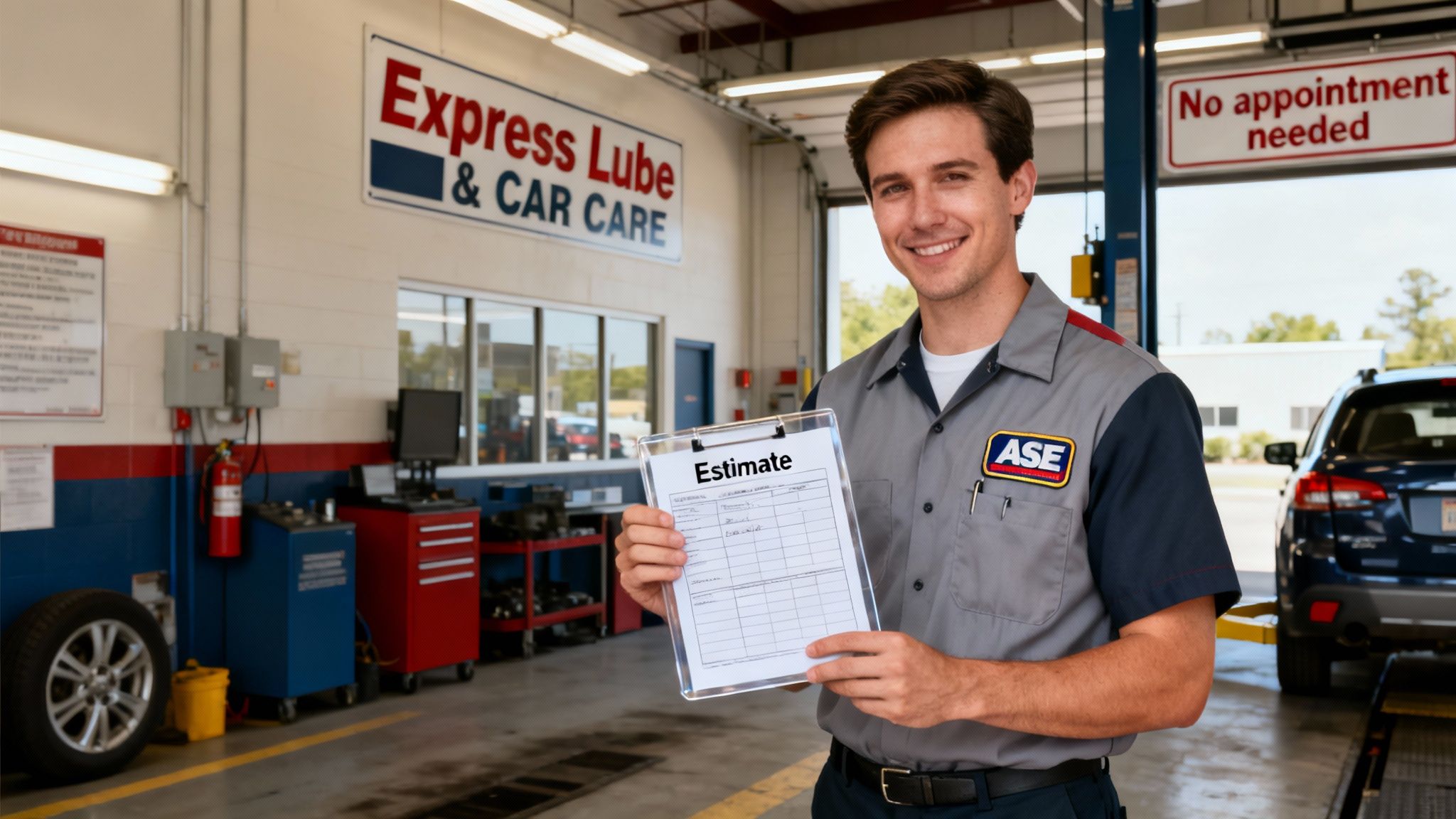
- The Express Lube Difference: See why your neighbors in Richland Hills, TX, count on our ASE-certified technicians for honest advice and transparent pricing.
For drivers right here in our community, Express Lube & Car Care is your go-to solution. No appointment needed—just walk in and let our experts get you back on the road safely.
Is Your Car Crying For Help? Common Transmission Warning Signs
Your car has a language of its own, and it’s constantly talking to you. When it comes to your transmission, those subtle (and sometimes not-so-subtle) hints are warnings you can’t afford to ignore. Missing them can lead to some of the most expensive repairs a car owner can face.
Think of your transmission as the bridge between your engine’s power and your wheels. If that bridge starts to crumble, you're going to hear it, feel it, and maybe even smell it. These aren’t just minor quirks; they're your car's way of telling you it needs a professional diagnosis, and fast.
Unusual Noises and Sensations
One of the first things you'll notice is a change in how your car sounds and feels. Modern transmissions are engineered to be quiet and smooth, so any new, strange noise is a major red flag.
Listen for these tell-tale sounds:
- Whining or Humming: A high-pitched whine that gets louder as you speed up often points directly to low or burnt-out transmission fluid.
- Clunking or Banging: A harsh clunk when you shift out of Park or a jarring bang between gears is a bad sign. This usually means there's a serious mechanical problem inside.
- Grinding Gears: You can't mistake this sound. If you hear grinding in an automatic transmission, it’s a cry for immediate help, indicating severe internal wear.
Performance Issues and Unpredictable Shifting
Beyond just noises, you'll feel transmission problems right from the driver's seat. Your car might start acting up, making your daily drive feel less like a routine and more like a gamble.
The most alarming symptom is gear slipping. This is when your engine revs high, but your car fails to accelerate, almost as if it's popped into neutral for a second. It's a classic sign that the internal clutches and bands are failing to grip.
Another classic issue is delayed engagement. You put the car in Drive or Reverse, hit the gas, and… nothing happens for a few seconds. That lag means your transmission is struggling to respond. If you're experiencing these issues, you need to figure out how to diagnose car problems or get your vehicle to a trusted mechanic right away.
Visual and Olfactory Warnings
Sometimes, the evidence is right there on your driveway or in the air. These are the signs you can see and smell, and they often point directly to the source of the trouble.
A puddle of bright red or dark brown fluid under your car is the classic sign of a transmission leak. Unlike engine oil, your transmission is a sealed system, so any fluid loss is a problem. Leaks compromise its ability to cool and lubricate itself, which is a recipe for disaster.
Even more serious is a distinct burning smell, like burnt toast or scorched oil. This means your transmission fluid is overheating and breaking down, losing its ability to protect the moving parts. If you see a leak or catch that burning odor, your next stop should be a repair shop. Catching it early can be the difference between a simple seal replacement and a complete transmission rebuild.
Here’s a quick guide to help you connect what you're sensing with a potential problem.
Transmission Problem Symptom Checker
| Symptom | What It Looks, Sounds, or Feels Like | Potential Cause |
|---|---|---|
| Slipping Gears | Engine revs up, but the car doesn't speed up. | Worn-out clutches or bands, low fluid. |
| Rough Shifting | Hard clunks or jerks when the car changes gears. | Low or dirty fluid, failing solenoids. |
| Delayed Engagement | A long pause before the car moves after shifting into Drive or Reverse. | Low fluid, internal seals leaking. |
| Whining Noise | A high-pitched hum that changes with engine speed. | Clogged filter, failing torque converter, low fluid. |
| Burning Smell | Smells like burnt toast or overheated oil. | Overheating fluid, which is losing its ability to lubricate. |
| Fluid Leak | Puddles of red or brown fluid under your car. | A cracked seal, gasket, or fluid line. |
| Check Engine Light | The dashboard warning light comes on. | A transmission sensor has detected a problem. |
Remember, this table is just a starting point. A real diagnosis requires professional tools and expertise to pinpoint the exact issue.
What A Professional Transmission Service Actually Includes
When you punch "transmission service near me" into your phone, you'll find the term can mean a few different things. It’s not one specific job but a whole category of services designed to keep your car’s gearbox running smoothly. Knowing what a technician is actually doing under there helps you make smart decisions and get the right care for your vehicle.
The most common service is a transmission fluid change. Think of it like a simple oil change, but for your transmission. A tech drains the old, broken-down fluid out of the transmission pan and refills it with fresh fluid that meets your car’s exact specs. This is a bigger deal than you might think—transmission fluid doesn't just lubricate, it also cools parts and creates the hydraulic pressure needed to shift gears.
Going Deeper Than a Simple Drain and Fill
For a much more thorough cleaning, many shops will recommend a transmission flush. This process is way more complete than a standard fluid change. Instead of just draining what’s in the pan, a specialized machine hooks up to your transmission’s cooler lines.
This machine actively pumps new fluid through the entire system while pushing all the old, gunky stuff out. The real difference is how much fluid gets replaced. A flush can swap out up to 95% of the old, contaminated fluid, getting rid of the gunk trapped in the torque converter and cooler lines that a simple drain-and-fill always leaves behind.
You can think of it like this: a fluid change is like quickly rinsing out a dirty coffee mug. A flush is like putting that same mug through a heavy-duty dishwasher cycle—it cleans everything, not just the parts you can easily see.
The Unsung Hero: The Transmission Filter
Along with clean fluid, any complete service has to include a new transmission filter. Tucked away inside the transmission pan, this filter’s only job is to trap tiny metal shavings and other contaminants that wear off the internal parts over time. Eventually, the filter gets clogged, which restricts fluid flow and can lead to serious performance problems.
Skipping a filter change is like putting a clean air filter in just one room of your house; it kind of defeats the purpose. A proper service always includes replacing the filter and the pan gasket to make sure the system is clean and totally leak-free. To get a better handle on this essential service, you can learn more about what is a transmission fluid change in our detailed guide.
Precision Diagnostics: What The Codes Tell Us
Finally, a truly professional transmission service always starts with diagnostics. If you’ve noticed your car acting up or the check engine light is glaring at you, an ASE-certified technician will hook up a sophisticated diagnostic scanner to your vehicle's computer.
This tool reads specific trouble codes that basically give us a roadmap to the problem. Instead of guessing, the technician can see if a sensor is on the fritz, a solenoid is stuck, or if the fluid pressure is dangerously low. This step is critical because it ensures you only pay for the work your car actually needs, saving you from expensive and unnecessary repairs. It’s the difference between a wild guess and an expert diagnosis.
Repair, Rebuild, Or Replace? Understanding Your Options
When transmission trouble gets serious, you're suddenly facing a decision that can feel pretty overwhelming. Knowing the difference between a repair, a rebuild, and a replacement is the key to having a confident conversation with your mechanic.
Each path solves a different level of problem, and they vary wildly in cost, time, and how intensive the work is.
Let's break it down using a home plumbing issue as an analogy. A small drip under the sink is a simple repair—you just fix the leaky faucet. In the same way, a transmission repair targets one specific, often external, component. This could mean replacing a bad sensor, a faulty solenoid, or a leaking gasket. It's the most direct and least expensive fix for isolated problems.
The Overhaul: A Full Transmission Rebuild
A rebuild is a much bigger job, more like overhauling your home's entire plumbing system. For a rebuild, our ASE-certified technicians remove the whole transmission from your vehicle. From there, it's completely taken apart on a workbench, piece by piece.
Every single part—from gears and clutches to seals and gaskets—is meticulously cleaned and inspected for wear. Any component that doesn't meet strict factory specifications gets replaced with a new, high-quality part. The transmission is then carefully put back together, tested, and reinstalled. It’s a labor-intensive job, but it restores the unit to its original performance standards.
A transmission rebuild is the most thorough solution you can get short of a full replacement. It tackles all internal wear and tear, not just a single failing part, which is key for long-term reliability.
Starting Fresh With A Replacement
Finally, a replacement is exactly what it sounds like. We swap out your entire problematic transmission for another unit. This "new" unit could be a brand-new transmission straight from the manufacturer, a used one from a salvage yard, or a remanufactured one.
A remanufactured transmission has already been rebuilt in a factory setting and comes ready to install. This option is often faster than a rebuild but can be more expensive, especially if you go for a brand-new unit. The right choice really depends on the specific failure, your vehicle's age, and your budget.
This chart helps visualize how routine maintenance can prevent you from ever needing these major, costly repairs in the first place.

As the decision tree shows, services like a fluid change, flush, or filter replacement are your first line of defense. And it’s a big deal—the global transmission repair market was valued at USD 213.45 billion in 2024, with North America leading the way.
With automatic transmission repair bills averaging a staggering $3,200, preventative maintenance is your best financial shield. You can explore more about these global transmission repair market trends to see just how massive this part of the auto industry is.
Why Richland Hills Drivers Trust Express Lube
When you’re looking for a "transmission service near me," you need more than a random garage. You need a team you can count on. At Express Lube & Car Care, we’ve built our reputation right here in Richland Hills on three simple things: genuine expertise, unmatched convenience, and straight-up honesty. Car trouble is a headache, and our entire goal is to make getting it fixed as painless as possible.
It all starts with our crew. Every single one of our technicians is ASE-certified, meaning they’ve passed tough, comprehensive tests to prove they know their stuff. That certification isn’t just a piece of paper—it's your guarantee that a real professional is working on your car, someone with the skills to get the diagnosis right the first time.

Our No-Appointment, Walk-In Promise
Let's be real—transmission problems don't pop up on a schedule. That’s exactly why we run on a no-appointment, walk-in basis. You can't plan for car trouble, so we don't think you should have to book an appointment to fix it. This flexibility means you can get the help you need, right when you need it.
Our shop is built around your real-life needs, making sure a sudden breakdown causes as little disruption to your day as possible. It's a core part of how we do things.
Honest Work and Transparent Pricing
There’s nothing worse than getting blindsided by a repair bill. We’re committed to clear communication and transparent pricing from the moment you walk in. You’ll always get a straightforward diagnosis and a detailed, upfront estimate before we touch a thing. We will never, ever pressure you into repairs you don’t actually need.
Our promise is simple: We provide an honest assessment and fair pricing, every time. We’re here to build relationships with our customers based on trust, not on upselling.
This focus on integrity is why drivers all over Northeast Tarrant County choose us. It’s also why we’re so big on proactive maintenance. Think about this: 90% of all transmission failures are caused by old, neglected fluid, leading to rebuilds that cost thousands. The global transmission repair market is even expected to hit USD 281.12 billion by 2033, which shows just how critical proper care is.
We combine expert technicians, quality parts, and a customer-first approach to give you total peace of mind. To see everything we offer, check out our guide on comprehensive transmission services.
Frequently Asked Questions About Transmission Care
Even with a good handle on the basics, you probably still have a few questions. That’s perfectly normal. Getting straight answers is the best way to feel confident about your car's maintenance. Here are the most common questions we hear every day from drivers just like you.
Think of this as your quick guide for everything related to transmission service, so you know exactly what to expect when you stop by.
How Often Should I Get My Transmission Fluid Changed?
The old 30,000-mile rule doesn't always apply anymore. Modern transmissions are built differently, and your owner's manual is the best place to start. You might see recommendations anywhere from 30,000 to over 100,000 miles.
But here's the thing: how you drive matters just as much as how many miles you've driven. If you’re constantly in stop-and-go traffic, towing a boat, or just dealing with our Texas heat, your transmission fluid is working overtime. For that kind of "severe" driving, it's smart to get it serviced closer to the lower end of that recommended range.
Our ASE-certified technicians can check your fluid’s condition any time you're here. We’ll give you an honest opinion based on its color and smell, not just a number on a sticker.
How Much Does Transmission Service Typically Cost?
The price tag can vary quite a bit depending on your car and what needs to be done. To give you a rough idea, here's how it usually breaks down:
- Transmission Fluid Change: This is your most basic and affordable option, usually running between $100 and $300. We drain the old fluid from the pan and refill it with fresh, clean fluid.
- Transmission Flush: This is a more thorough job where we use a machine to swap out nearly all the old fluid. It typically falls in the $200 to $500 range.
- Repairs and Rebuilds: If there's a bigger issue, costs can go from a few hundred bucks for a simple sensor fix to $2,500-$5,000 or more for a full transmission rebuild.
Here at Express Lube & Car Care, we don't do surprises. We always start with a proper diagnostic check and give you a clear, itemized estimate before we pick up a single tool.
How Long Does A Typical Transmission Service Take?
We get it—you've got places to be. Our no-appointment, walk-in service is all about getting you back on the road fast. A standard transmission fluid change is a pretty quick job, and we can often have it done in about one hour.
A full transmission flush takes a little more time because it involves special equipment, so plan on about 1.5 to 2 hours. If we find something that needs a real repair, we'll give you a solid time estimate right after our initial check so you can plan your day.
Is Automatic And Manual Transmission Fluid The Same?
Nope, not even close. Using the wrong one is one of the fastest ways to cause serious, expensive damage.
Automatic Transmission Fluid (ATF) is a pretty sophisticated fluid. It doesn't just lubricate; it also cools parts and creates the hydraulic pressure your car needs to shift gears on its own. There are tons of different types of ATF, and your car needs a very specific one to work right.
Manual transmission fluid is much simpler. It's basically a heavy-duty gear oil made to keep the big, tough gears in a manual gearbox lubricated. Our techs are trained to know the exact fluid your car needs, making sure we protect its performance and keep it healthy for the long haul.
Ready for professional service you can trust? At Express Lube & Car Care, our ASE-certified technicians are here to provide honest diagnostics and expert transmission care, no appointment needed. Visit us today to keep your vehicle running smoothly for years to come. Find out more at https://www.expressluberichlandhills.com.