

If your car bounces more than once or twice after a bump, dives hard when you brake, or you spot oily residue on a strut, you’re likely looking at shock absorber failure, and it’s worth acting on. Start with a quick visual and bounce check, then book a professional inspection. We run digital vehicle inspections with photos and ASE-certified technicians, so you’ll see exactly what’s going on before anything gets replaced.
TL;DR:
- A bounce check is only a screen: three or more rebounds suggest failed damping, but a lift inspection can confirm bent parts or internal failure.
- Stop driving and arrange an inspection if a shock has a severe leak, a component is bent, or the car feels unstable at speed.
- Worn damping can make tires lose road contact, lengthen stopping distances, and weaken braking and stability systems, especially during wet cornering or emergency maneuvers.
- A shop should review symptoms, drive the car, and inspect it on a lift before estimating; price and timing depend on parts and additional repairs.
- The shop documents findings with digital photos, and qualifying repairs carry a warranty of 24 months or 24,000 miles.
Table of Contents
- What Are the Warning Signs of Worn Shocks and Struts?
- What Causes Shock Absorbers to Wear Out or Fail?
- How Does Shock Absorber Failure Affect Your Safety on the Road?
- How to Check Your Shocks at Home Before a Shop Visit
- When Should You Get Shocks Inspected or Replaced?
- What Happens When You Bring Your Car to Express Lube & Car Care
- Why We Diagnose Before We Recommend Replacement
- Schedule a Suspension Inspection Today
- FAQ
- Sources
What Are the Warning Signs of Worn Shocks and Struts?
Shocks and struts control how your car’s body moves over bumps and through turns, so when they wear out, the signs show up in how the car feels and handles. A bouncy or floaty ride is the classic symptom: push down on a corner of the car, and if it bounces more than once or twice before settling, the damping is gone.
Nose dive under braking and rear squat during acceleration are both signs that your shocks aren’t controlling weight transfer anymore, which can affect stopping distance. Other signals include noticeable body roll or sway through corners, steering-wheel vibration at highway speed, and clunking or rattling noises over rough pavement.
- Bouncy or floaty ride that doesn’t settle quickly after a bump
- Nose dive when braking or squat when accelerating
- Body roll, sway in corners, or vibration in the steering wheel
- Uneven or cupped tire wear from inconsistent tire-to-road contact
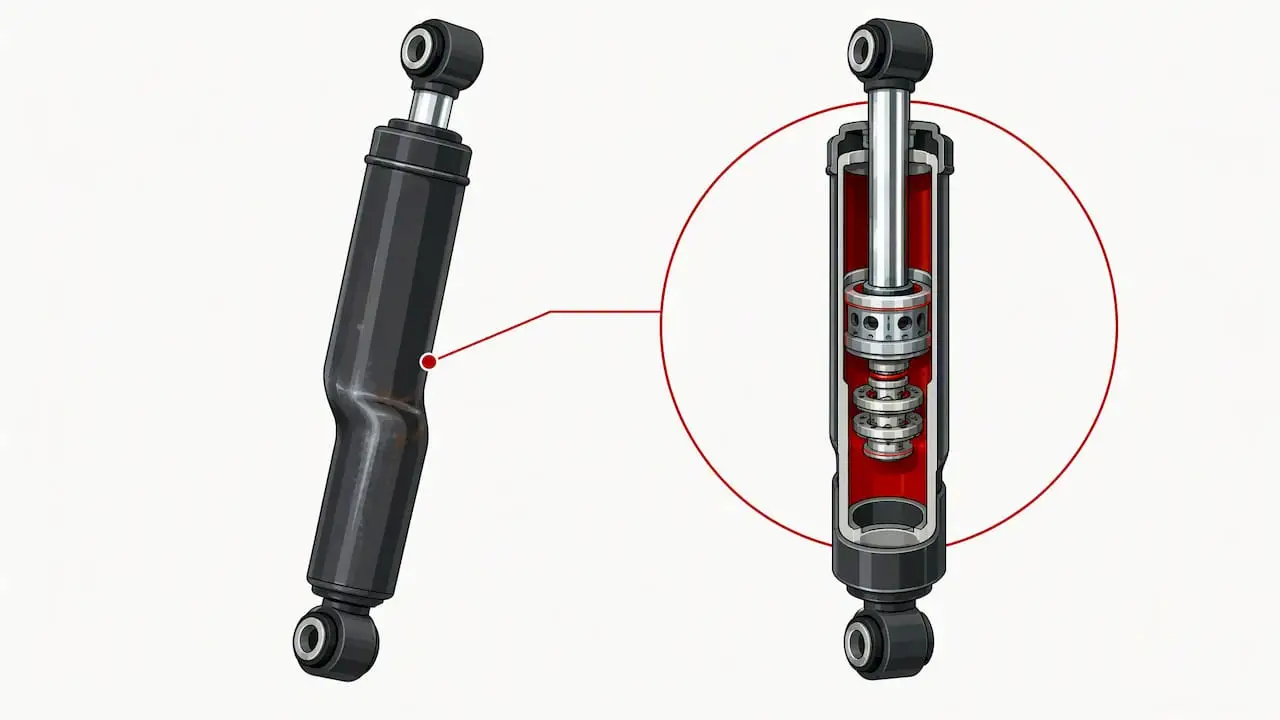
- Visible fluid leaks, dented shock bodies, or unusual clunking noises
Uneven tire wear, especially a scalloped or “cupped” pattern, often points to poor damping rather than a tire defect on its own.
What Causes Shock Absorbers to Wear Out or Fail?
Most shock absorber failure comes down to age and mileage: the internal valving and seals simply wear out over tens of thousands of miles of constant compression and rebound. Once a seal fails, hydraulic fluid leaks past the rod, and the shock loses its ability to control motion almost immediately.
- Normal wear of internal valves and seals over time and mileage
- Seal or rod damage that lets fluid leak out and kills damping
- Internal contamination, corrosion, or valve mechanism failure
- Impact damage from potholes, curbs, or collisions that bends rods or mounts
- Worn bushings or control arms that mimic or worsen shock symptoms
A hard pothole hit or a curb strike can bend a shock body or rod instantly, even if the vehicle seems to drive fine afterward, which is one reason a bounce test and visual inspection matter after any significant impact. Because shocks work alongside bushings and control arms, a full inspection helps sort out whether one part or several are contributing to what you’re feeling.
How Does Shock Absorber Failure Affect Your Safety on the Road?
Worn shocks don’t just make for a rougher ride, they change how your car behaves when you need it most. Reduced damping lets the tires skip and lose contact with the road surface, which can increase braking distance and make anti-lock braking and stability systems less effective, since both rely on consistent tire grip.
- Longer stopping distances when tires repeatedly lose road contact
- Reduced grip and control during cornering, especially in wet weather
- Higher risk during emergency braking or sudden lane changes
- Greater urgency to stop driving if leaks are severe or handling feels unsafe
Maintaining consistent tire contact with the road is central to vehicle control and stopping ability, which is why NHTSA’s tire safety guidance emphasizes keeping tires and the systems that support them in good working order. If you notice a sudden loss of control, a severe leak, or the car feels unstable at speed, it’s time to stop driving and have it looked at rather than waiting.

How to Check Your Shocks at Home Before a Shop Visit
A few minutes in your driveway can tell you a lot and give your technician a head start. Here’s a simple sequence to run through:
- Walk around the car and look for oily residue, torn dust boots, bent rods, or loose mounting hardware at each shock or strut, and snap photos of anything you find.
- Push down firmly on one corner of the car and let go. One or two rebounds is normal; three or more means the damping is likely shot.
- Check your tires for cupping or scalloped wear patterns, which often point back to suspension issues rather than alignment alone.
- Drive slowly over a bumpy stretch and listen for clunks or rattles, noting which corner they seem to come from.
Pro Tip: Keep a short note on your phone with what you noticed and when, since matching your description to what the technician finds speeds up the inspection.
A driveway check is a good first step, but it can’t confirm bent components or internal valve failure the way a lift inspection can, so treat it as information to bring in rather than a final diagnosis.
When Should You Get Shocks Inspected or Replaced?
Some signs call for immediate attention: a visible fluid leak, a bent or dented shock body, or handling that feels unsafe at any speed. If you notice any of these, schedule an inspection rather than waiting for the next oil change.
A typical shop visit starts with a conversation about your symptoms, followed by a test drive and a lift inspection that checks mounts, bushings, ball joints, and the condition of the shock or strut rod itself. From there, you should get a documented estimate before any work begins.
- Fluid leaks or visibly bent components mean inspect soon, not eventually
- Shop workflow typically includes symptom review, test drive, and lift inspection
- Cost depends on your vehicle, whether it uses shocks or full strut assemblies, parts quality, and labor time
- Many shock or strut jobs finish same-day, though some need extra time if other parts need attention
For a closer look at how replacement costs break down, our shocks and struts replacement cost guide walks through the variables that affect your estimate. A photo-backed inspection also makes warranty claims straightforward down the road, since there’s a clear record of what was found and repaired.
What Happens When You Bring Your Car to Express Lube & Car Care
We start every suspension visit by listening to what you’re noticing, then we take the car for a test drive and put it on a lift for a full visual inspection. Our ASE-certified technicians check mounts, bushings, ball joints, and the shocks or struts themselves, and we document every finding with digital vehicle inspection photos so you can see exactly what we see.
- Technicians inspect and diagnose before recommending any repair
- Digital inspection photos provide a clear, visual record of what needs attention
- Walk-ins are welcome, and same-day service is offered when the schedule allows
- Qualifying repairs are backed by a 24-month/24,000-mile warranty
If you want more detail before booking, our shocks and struts service page covers what we check, and our steering and suspension repair page explains how shocks relate to the rest of the system. For readers comparing symptoms to real-world signs, 7 unmistakable signs you need new shocks adds more examples.
Why We Diagnose Before We Recommend Replacement
We’d rather show you a photo of a leaking shock than tell you to trust us on it. Bring whatever notes or pictures you’ve taken, and we’ll walk through them together before recommending anything. Technicians and a 24-month/24,000-mile warranty back every repair performed for drivers in the area.
— Express Lube & Car Care
Schedule a Suspension Inspection Today
Bouncing, diving, or clunking doesn’t get better on its own, and catching shock absorber failure early protects your tires, your brakes, and your control behind the wheel. We offer suspension diagnostics and shocks and struts replacement backed by digital inspections, ASE-certified technicians, and a 24-month/24,000-mile warranty on qualifying work.
- Walk in anytime or schedule ahead, whichever fits your day
- Browse our full services page for everything beyond suspension work
- Visit our shocks and struts service page for details before you book
Call us at (817) 284-8478 or schedule your appointment online to get your suspension checked by our team.
FAQ
Can I Drive if My Shock Absorber Is Bad?
You can often drive short distances carefully, but worn shocks reduce tire contact with the road and can increase stopping distance, so it’s not something to put off. If you notice a severe leak, a bent component, or unstable handling, have the vehicle inspected before driving it further.
How Much Should It Cost to Replace Shock Absorbers?
Cost depends on your vehicle, whether it uses separate shocks or full strut assemblies, and the parts and labor involved, so there isn’t one set price. Our cost guide for shocks and struts replacement breaks down the factors that shape your estimate.
What Happens When a Shock Absorber Goes Bad?
A failing shock loses its ability to control bounce and rebound, so the car feels floaty, dives under braking, and may develop uneven tire wear. In more advanced cases, you’ll notice fluid leaks, clunking noises, or visibly bent components.
What Causes Shock Absorbers to Fail?
Most failures come from normal wear of internal seals and valves over time, though impact damage from potholes or curbs can also bend rods or deform mounts. Corrosion and internal contamination can also damage the valve mechanism and speed up failure.
Should I Also Check My Tires if I Suspect Worn Shocks?
Yes, uneven or cupped tire wear is a common sign tied to poor damping, so it’s worth a look alongside any bounce or visual checks. Regular preventive maintenance, as outlined in general vehicle maintenance best practices, can help you catch these patterns before they become bigger repairs.