

If one electrical accessory in your car suddenly quits while everything else works fine, a blown fuse is the most likely culprit. Switch the ignition and accessories off before you touch anything, then check the fuse visually or with a multimeter. In most cases that quick check tells you exactly what you’re dealing with and what to do next.
TL;DR:
- A failed accessory while other systems work points to its circuit, but an intact fuse may hide a hairline break; confirm continuity with a meter.
- Turn off the ignition and failed accessory before inspection; test voltage with the fuse seated first to check whether power reaches the circuit.
- Use the same amperage and type when replacing a fuse; a lower rated one is only temporary, and a higher rated one can overheat wiring.
- A fuse that blows again, charring, or a burning smell calls for stopping circuit use and getting professional diagnostics for a short or overloaded component.
Table of Contents
- 1. Vehicle symptoms and warning signs of a blown fuse
- 2. How to inspect and test a fuse safely
- 3. Where vehicle fuse panels are and how to find the right fuse
- 4. Replacing a fuse correctly and unsafe shortcuts to avoid
- 5. When a blown fuse points to a deeper electrical fault
- 6. How Express Lube & Car Care handles fuse-related diagnostics and repairs
- A balanced view on DIY checks versus professional diagnostics
- Schedule a diagnostic visit in Richland Hills
- FAQ
- Sources
1. Vehicle symptoms and warning signs of a blown fuse
The clearest sign of a blown fuse is simple: one accessory stops working while the rest of the car runs normally. Fuses protect individual circuits, so a dead radio with working headlights, or power windows that won’t budge while the dome light still works, points straight at a single blown fuse rather than a bigger electrical failure.
Watch for these common failure points:
- Power windows or door locks that stop responding
- A radio, infotainment screen, or backup camera that goes dark
- Interior lights, dome lights, or dashboard gauges that stop lighting up
- Windshield wipers that quit mid-cycle
- A heater or air conditioning blower that stops blowing air
- Power outlets or USB ports that no longer charge devices
Before a fuse fully blows, you might notice flickering lights, a clicking relay, intermittent power, or even a faint burning smell. Any of those deserve a closer look before the circuit fails completely.
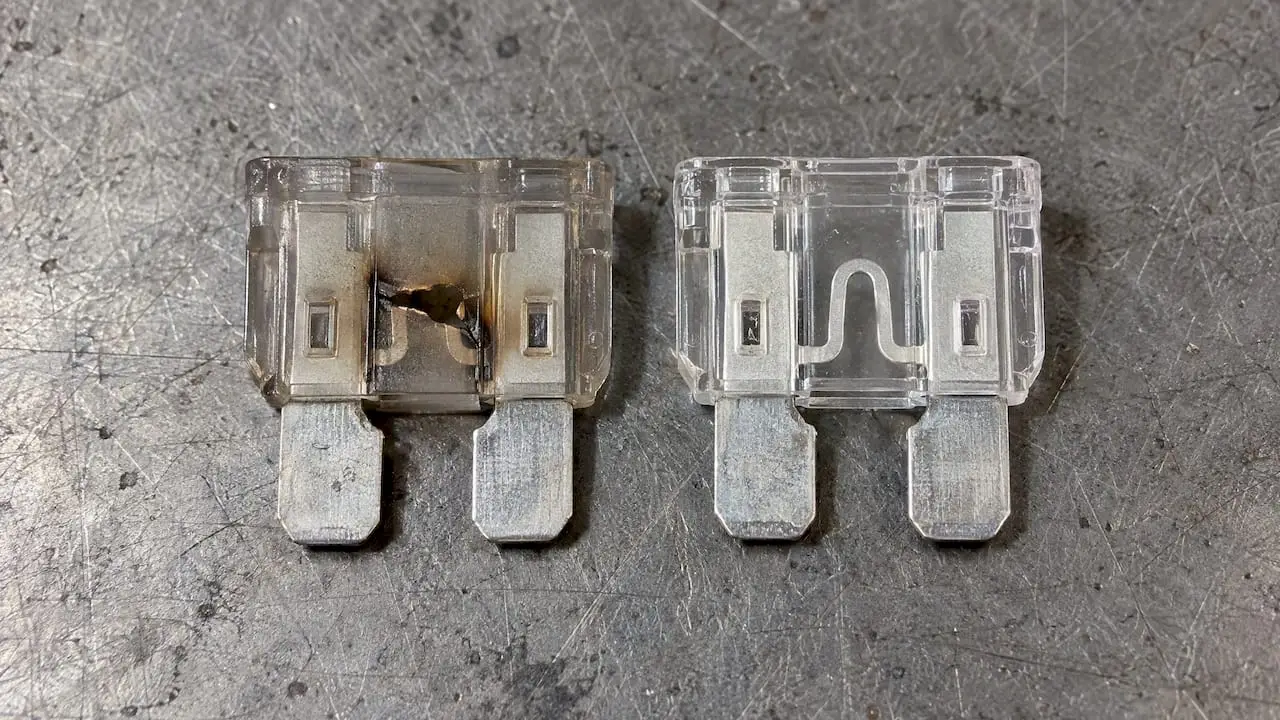
Once you pull the suspect fuse, the evidence is usually visible. A blown fuse typically shows a broken or melted filament, or a dark metallic smear across the inside of the clear plastic housing, since the internal wire melts to interrupt current flow when a circuit draws too much power, according to AutoZone’s guide on blown fuse symptoms. A healthy fuse shows an intact, unbroken filament with no discoloration, which makes the visual check a fast first diagnostic step before reaching for a meter. If more than one accessory fails at once, that often signals a shared circuit or a deeper wiring issue rather than one isolated fuse.
2. How to inspect and test a fuse safely
Before you touch a fuse panel, turn off the ignition and switch off the accessory that failed. For extra protection, especially if you’re working near the battery or a bolted fuse connection, disconnecting the negative battery terminal is worth the extra minute. Skip the shortcuts: never bridge a fuse slot with foil, a paperclip, or any metal object. Those tricks bypass the circuit’s protection entirely and invite a wiring fire.
Once you’re set up safely, work through these steps:
- Locate the suspect fuse using your owner’s manual or the panel’s printed legend.
- Remove the fuse with the plastic puller clipped into most fuse boxes, or needle-nose pliers if no puller is provided.
- Hold it up to the light and look for a broken filament or a dark smear inside the housing.
- If the fuse looks fine, confirm it with a test light: probe both metal prongs with the circuit powered on. A light on one side but not the other usually means the fuse is blown.
- For a more precise answer, use a multimeter set to continuity or resistance. A good fuse typically reads a very low resistance, indicating continuity, while a display of “OL” means the circuit is open, confirming the fuse is blown, according to this guide on checking and replacing fuses.
Pro Tip: Test for voltage with the fuse still seated in the panel first. That tells you whether power is reaching the circuit at all before you pull the fuse to check continuity, which avoids a false reading if the real problem is upstream of the fuse box.
3. Where vehicle fuse panels are and how to find the right fuse
Most vehicles have two fuse panels: one inside the cabin and one under the hood. Finding the right one saves time when you’re chasing down a specific symptom.
- A driver-side panel tucked under the dash or behind a small cover near the steering column
- A panel inside the glovebox, common on many sedans and compact SUVs
- An engine-bay fuse box near the battery, usually covering higher-draw components like the cooling fan or starter relay
Each panel has a printed diagram on the cover or nearby, mapping fuse numbers to the circuits they protect. If that diagram is missing, faded, or doesn’t match what you’re seeing, your owner’s manual will have the full fuse chart. Manufacturer guidance, like Kia’s owner’s manual fuse diagrams, lays out exactly which fuse protects which accessory for a given model.
4. Replacing a fuse correctly and unsafe shortcuts to avoid
Once you’ve confirmed a blown fuse, matching the replacement exactly matters more than it might seem. Every fuse slot is rated for a specific amperage, and swapping in a higher-rated fuse removes the protection that circuit depends on. Manufacturer technical guidance is direct about this: use the same amperage and type every time, because a higher-amp fuse lets more current flow than the wiring was designed to handle, raising the risk of overheating and fire.
A few rules keep the replacement safe:
- Match the amperage and fuse type (standard blade, mini, or low-profile mini) exactly to what you removed.
- Make sure the new fuse seats fully and sits flush. A loose fit creates poor contact, which can overheat the fuse holder itself even with the correct amperage installed.
- If the exact amperage isn’t available, a lower-rated fuse can serve as a short-term stopgap, but it may blow again under normal load and isn’t a lasting fix.
- Never substitute foil, wire, or any improvised conductor for a fuse. It defeats the entire purpose of the circuit protection.
If a freshly installed fuse blows again right away, stop using that circuit. That’s not a fuse problem anymore, it’s a sign of a short or an overloaded component that needs real diagnostics.
5. When a blown fuse points to a deeper electrical fault
A fuse that blows once and never again is usually a minor event. A fuse that blows repeatedly is a different story; it’s a warning sign, not a nuisance to work around.
Watch for these red flags:
- The replacement fuse blows again within minutes or hours of installation
- You notice charring, melted plastic, or a burning smell near the fuse panel or wiring
- Multiple circuits fail together, suggesting a shared ground or wiring harness issue
At that point, professional diagnostics go beyond a multimeter check. Technicians typically run voltage-drop and amperage tests, inspect wiring harnesses for chafing or corrosion, and isolate individual components to find where the excess draw originates, since scan tools have real limits when it comes to catching high-resistance faults that cause repeat fuse failures. Our engine diagnostics overview covers why this kind of deeper testing catches problems a quick scan can miss. OSHA guidance on reenergizing circuits is clear on this point too: a circuit that trips a protective device repeatedly should be evaluated by someone qualified before it’s powered back up again, not reset over and over.
6. How Express Lube & Car Care handles fuse-related diagnostics and repairs
When a blown fuse signals something bigger, we run the full diagnostic workup: electrical system and lighting repair, battery and alternator testing, and check-engine diagnostics that trace a fault back to its source rather than just swapping a part. Every inspection comes with a digital report and photos, so you see exactly what we found and why a repair is recommended. Our ASE-certified technicians handle both the diagnosis and the fix, with same-day service and walk-ins available for most jobs. If you’re seeing repeated blown fuses, any sign of heat or charring near the panel, or a bolted fuse connection that needs more than a quick swap, that’s the point to bring the car in rather than keep testing at home.
A balanced view on DIY checks versus professional diagnostics
A visual check and a multimeter reading are genuinely useful skills, and most drivers can confirm a blown fuse safely in a few minutes. Where people get into trouble is treating a fuse like a one-time fix instead of a clue. If the same circuit keeps blowing, or you smell something burning, that’s your signal to stop testing and get a qualified diagnosis, since the underlying short or overload requires professional repair. We run the deeper tests and back every finding with clear, photo-documented inspections so you know exactly what’s happening under the dash.
— Express Lube & Car Care
Schedule a diagnostic visit in Richland Hills
When a blown fuse keeps coming back or you’d rather have a technician confirm the cause, help is available. Full electrical diagnostics and repairs are backed by a warranty on qualifying work, and technicians provide digital inspection reports that show exactly what was found.

Walk-ins are welcome, or you can book ahead through our service appointment page. Call us at (817) 284-8478 and we’ll get your vehicle looked at promptly.
FAQ
How do I tell if a fuse is blown or not?
Pull the fuse and look for a broken filament or a dark smear inside the clear housing, which usually confirms visually that it’s blown. For a definite answer, a multimeter set to continuity should read 0 to 5 ohms on a good fuse and show “OL” on a blown one, according to this fuse testing guide.
Can a car fuse be blown without looking like it?
Yes, some blown fuses look intact to the naked eye even though the internal filament has failed. A multimeter continuity test or a test light is the only reliable way to confirm the fuse is actually open, since a visual check alone can miss a hairline break.
What is the most common cause of a blown fuse?
Blown fuses usually result from a short circuit, a failing component drawing more current than normal, or an overloaded circuit from added accessories. Repeated blowouts on the same fuse point to one of these underlying faults rather than a defective fuse itself.
How expensive is it to fix a blown fuse?
The fuse itself is inexpensive, but cost depends on whether a simple swap solves the problem or whether an underlying short or failing component needs diagnosis and repair. We don’t publish fixed repair pricing since it depends on the vehicle and the cause, but you can request a quote through our service page or during a walk-in visit.
When should I stop troubleshooting and call a shop?
If a freshly replaced fuse blows again immediately, or you notice charring, melted plastic, or a burning smell near the panel, stop testing and get professional diagnostics. Our diagnostics overview walks through what a deeper electrical check typically involves.
Sources
- Symptoms of a Blown Car Fuse
- Honda owner’s/manual technical guidance (fuse replacement guidance)
- Checking and replacing fuses (PMC review/guide)
- OSHA interpretation on reclosing circuits and qualified personnel