

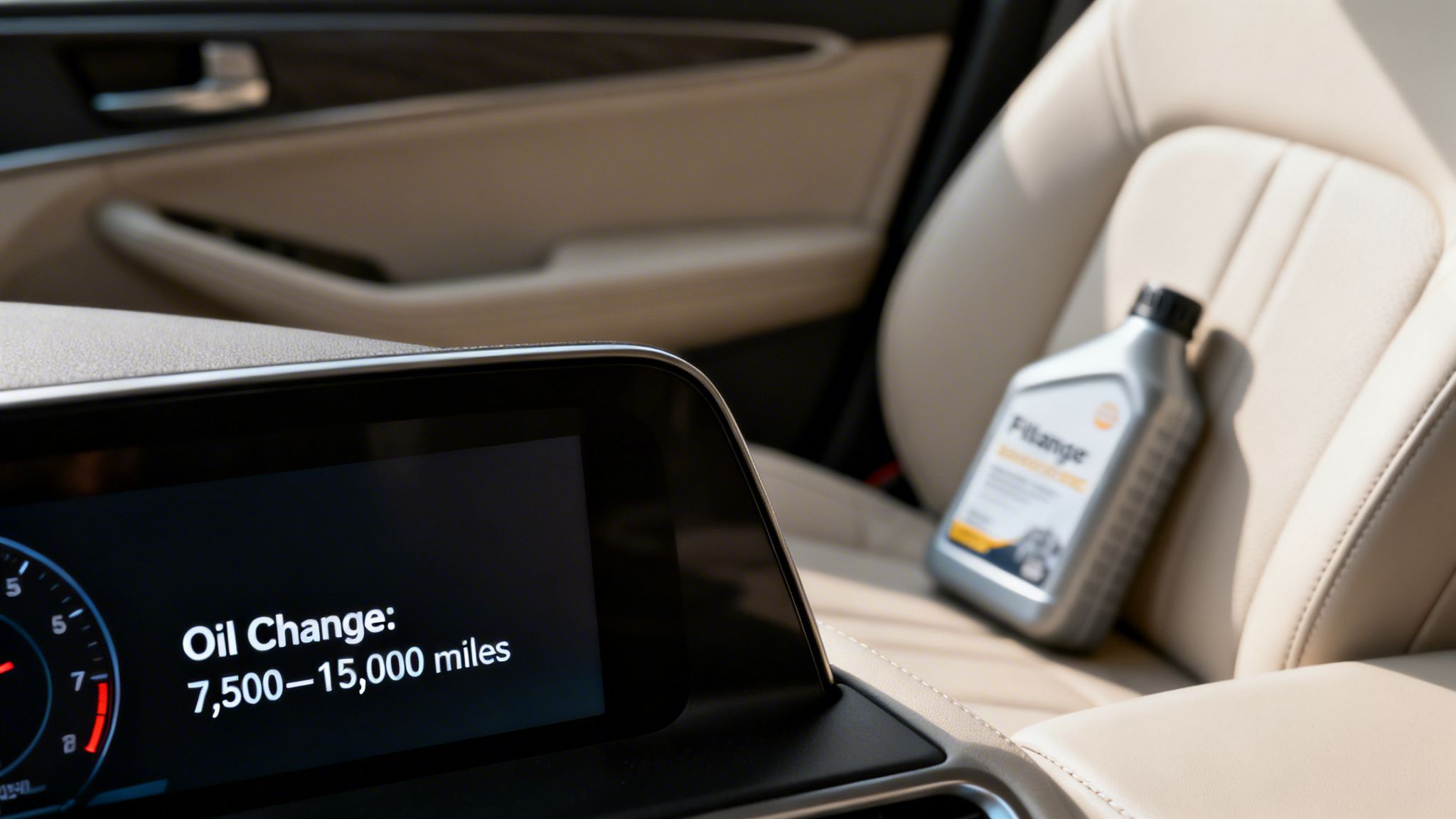
If you're still changing your oil every 3,000 miles, you might be living in the past. That old rule of thumb is officially history. For most cars on the road today, especially those using synthetic oil, the real sweet spot for an oil change is somewhere between 7,500 and 15,000 miles.
Of course, that's a big range. The exact number for your car depends on its age, the type of oil you use, and even how you drive.
The Old Rules No Longer Apply
Think of your car's maintenance schedule less like a hard-and-fast rule and more like a personalized prescription for its health. For decades, the 3,000-mile oil change was drilled into every driver's head. But thanks to huge leaps in engine technology and oil chemistry, that advice is now outdated and can be a waste of money.
Just like you wouldn’t use a clunky 1980s computer for today's work, you shouldn't stick to a 1980s maintenance schedule for a modern car. Understanding why things have changed is the key to keeping your engine protected without unnecessary trips to the shop.
From 3,000 Miles to 10,000+
That 3,000-mile standard dates back to the 70s, when cars ran on basic conventional oils and their engines were far less sophisticated. Today, things are completely different. Modern synthetic oils and better-built engines mean most vehicles can easily go 5,000 to 7,500 miles or more between services.
That’s a 67% to 150% longer interval than the old benchmark. It saves you time, money, and reduces waste.
So, What Changed?
The move to longer oil change intervals comes down to two big improvements: smarter engineering and better oil. Today's engines are built with much tighter tolerances and more efficient designs, so they don't beat up the oil nearly as much as older engines did.
At the same time, motor oil itself has had a massive upgrade.
Think of it this way: conventional oil is like a basic daily vitamin—it works, but it breaks down pretty fast. Full synthetic oil is more like a high-performance supplement, engineered with powerful detergents and stabilizers to keep protecting your engine for thousands of extra miles.
This powerful combination of better engines and superior oils is why your owner's manual now recommends going much longer between services. You can learn more about the specifics in our guide on oil and filter change services.
To give you a clearer picture, here’s a quick breakdown of modern recommendations.
Modern Oil Change Intervals at a Glance
This table provides a simple overview of what to expect based on your vehicle's age and the type of oil it uses.
| Oil Type | Older Vehicles (Pre-2010) | Modern Vehicles (Post-2010) |
|---|---|---|
| Conventional Oil | 3,000–5,000 miles | 5,000–7,500 miles |
| Synthetic Blend Oil | 5,000–7,500 miles | 7,500–10,000 miles |
| Full Synthetic Oil | 7,500–10,000 miles | 10,000–15,000+ miles |
Remember, these are general guidelines. The best advice for your specific car will always be in your owner's manual.
Why the 3,000-Mile Rule No Longer Applies
Sticking to the 3,000-mile oil change is a lot like using a flip phone in a smartphone world. Sure, it still works, but you're missing out on some incredible advancements. For decades, that number was the gold standard, a rule passed down from one driver to the next. But that advice is now officially a relic from a different era of car technology.
That old rule came about in the 1970s when engines were simpler and the oil lubricating them wasn't nearly as sophisticated. Cars back then ran hotter, were built with looser tolerances, and used basic mineral-based oils that broke down fast. A 3,000-mile schedule wasn't just a suggestion—it was necessary to keep sludge from ruining your engine.
Fast forward to today, and the entire game has changed. Modern engines and motor oils have evolved side-by-side, creating a powerful combination that makes longer intervals not just possible, but the new standard.
How Engine Technology Changed the Game
Today’s engines are engineering marvels, built with incredibly tight tolerances measured in microns. That precision means less friction between moving parts, which puts far less stress on the oil.
On top of that, sophisticated computer systems constantly monitor and optimize everything from fuel injection to temperature. A smoother, more efficient operation means the motor oil isn't getting cooked like it used to, allowing it to hold up for thousands of extra miles.
The bottom line is simple: Today's engines don't "punish" oil the way older engines did. They run cleaner and are designed from the ground up to work with advanced lubricants.
The Real Star of the Show: Modern Motor Oil
While engine design is a huge factor, the single biggest reason for longer oil change intervals is the oil itself. Modern motor oils are highly engineered chemical cocktails, a world away from the basic refined crude of the past.
Think of it like this:
Conventional Oil (The Sugar Rush): This is your classic, mineral-based oil. It gives you a quick burst of lubrication but breaks down quickly under heat and pressure. It's effective, but its lifespan is short.
Full Synthetic Oil (The Complex Carbohydrate): This oil is created in a lab. It’s designed with uniform molecules and a potent mix of additives like detergents, dispersants, and viscosity modifiers. These additives actively clean your engine, prevent sludge, and maintain a stable lubricating film across a huge range of temperatures.
This engineered stability is why a modern vehicle using full synthetic oil can often go 10,000 to 15,000 miles between changes. The oil is simply built to last, providing sustained protection that conventional oil just can't match. This evolution in oil chemistry is why answering "how many miles before an oil change?" has become a much more personalized question.
What Really Determines Your Oil Change Schedule
That little sticker on your windshield is a great reminder, but it’s just a starting point. The real answer to “how often should I change my oil?” isn’t a single number—it’s a moving target based on how, where, and what you drive.
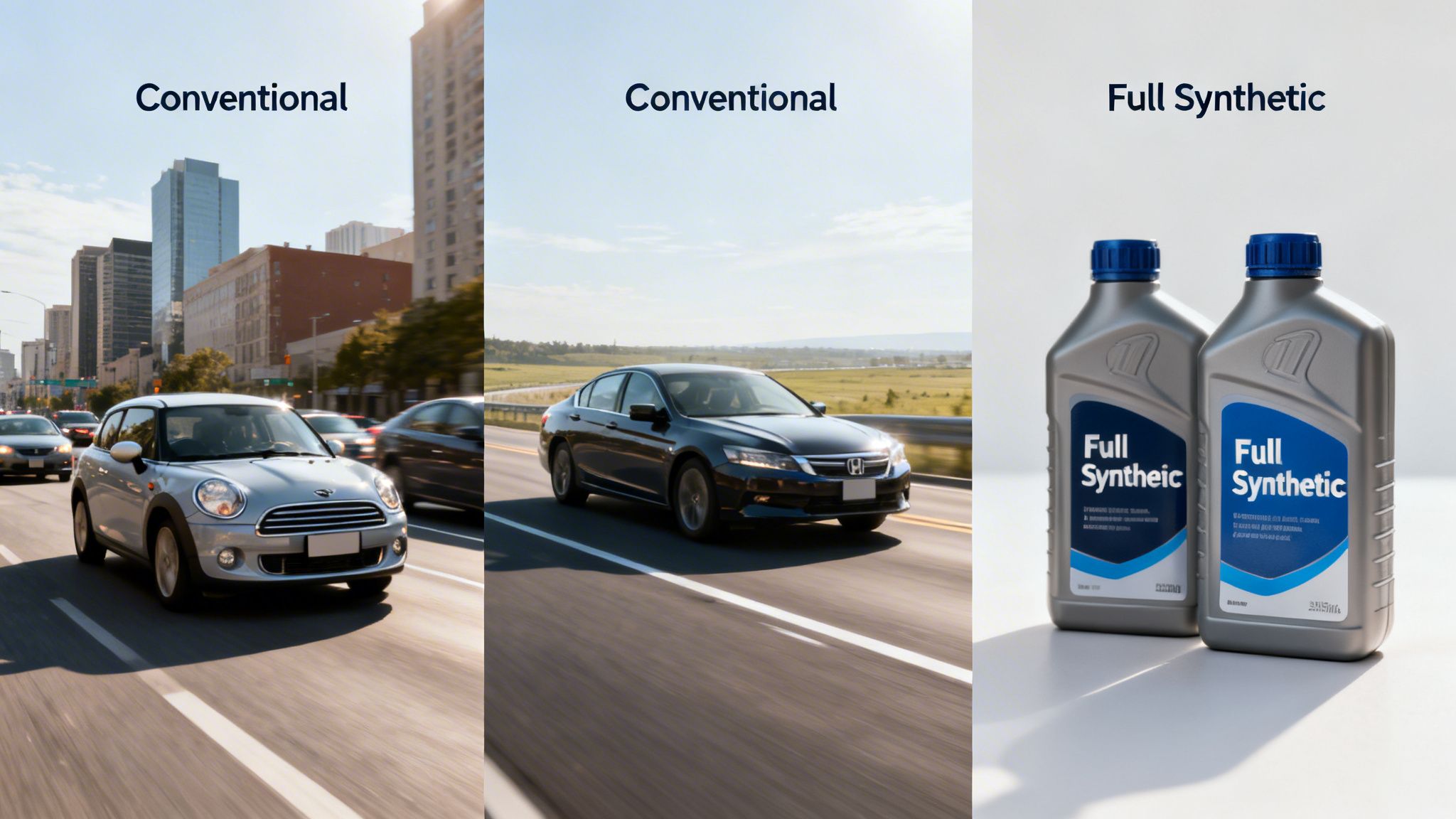
Think of your engine oil like a marathon runner. A long, steady highway cruise is a pretty easy jog. But a daily commute filled with stop-and-go traffic? That’s like a grueling sprint session, and it wears the oil out much, much faster. Let's break down the four big factors that really set your car's unique maintenance clock.
Your Driving Habits Matter Most
By far, the single biggest influence on your oil’s lifespan is how you drive. A mile is not always a mile in the world of engine wear.
We generally split driving conditions into two buckets: normal and severe. Here's the catch: what most people think of as "normal" driving is actually considered severe service by your engine.
Severe Driving: This is the reality for most of us. It includes frequent short trips (under 10 miles), endless stop-and-go city traffic, towing a trailer, or driving in extreme heat or cold. These conditions prevent the engine from getting hot enough to burn off condensation and fuel contaminants, which then sludge up the oil and break it down.
Normal Driving: This is the easy life for an engine—mostly long-distance highway driving at steady speeds. This is the ideal scenario where the engine is fully warmed up and running efficiently, which is much easier on the oil.
If your routine looks more like the first list, you'll need to change your oil more often than the manual's "normal" schedule suggests.
The Type of Oil You Use
Next up is the oil itself. Modern motor oils are complex, highly engineered fluids, and what's in the bottle makes a huge difference in how long it lasts.
Conventional Oil: This is the old-school, budget-friendly option made from refined crude oil. It does the job, but it breaks down faster under heat and stress. It’s mostly suited for older, simple engines.
Full Synthetic Oil: This is the top-tier stuff, engineered in a lab for maximum performance. It stands up to extreme temperatures, is packed with detergents to keep your engine clean, and flows better when it's cold. This is the magic ingredient that lets modern cars go 10,000 miles or more between changes.
Synthetic Blend Oil: This is your happy medium. It mixes conventional and synthetic oils to give you better protection than conventional alone, but without the full price tag of a full synthetic.
Choosing a full synthetic is a smart investment in your engine’s health, letting you safely go longer between service appointments.
Vehicle Age and Manufacturer Design
The year your car was made and how its engine was built also play a massive part. An engine from the early 2000s just isn't built with the same precision or computer controls as a brand-new car.
Older engines often burn or leak a little oil over time, so they need more frequent top-offs and changes. On the flip side, today's high-performance or turbocharged engines are built specifically for high-quality synthetic oil. Using a lower-grade oil or stretching the interval too far can cause serious damage.
Your owner's manual is your best friend here. It gives you the manufacturer's specific recommendations, which are based on thousands of hours of testing on your exact engine.
Interestingly, those recommendations can change depending on where you are in the world. A Volkswagen in Europe might have a 15,000-mile oil change interval, while the same car in the U.S. might be rated for 7,500 miles. This is due to different fuel quality, emissions laws, and oil standards. If you're curious about the technical details, you can learn more about these global oil standards on MachineryLubrication.com.
Climate and Environmental Factors
Finally, where you drive is almost as important as how you drive. Living somewhere with punishing temperatures—like a blistering Texas summer—puts a ton of extra stress on your engine and oil.
High heat makes oil oxidize and thicken faster. Down at the other end, extreme cold makes oil syrupy and thick, forcing your engine to work harder on startup. Both scenarios wear out your oil more quickly, so if you live in a harsh climate, you should lean toward a more frequent service schedule.
How to Spot the Warning Signs of Old Oil
Your car has its own way of telling you when something’s wrong. When it comes to old engine oil, it almost never stays quiet. Long before your next oil change sticker says it's time, your vehicle will drop hints that its most important fluid is getting tired. Learning to catch these signals is the key to stopping a small issue from becoming a massive, wallet-draining repair.
Think of your engine oil like the water in a fish tank. Fresh, clean oil lets everything run smoothly. But as it gets old and filled with gunk, the whole system starts to suffer. By staying alert, you can spot the trouble early.
The Dipstick Tells a Story
One of the simplest health checks for your engine is right under the hood. The dipstick gives you a direct look at what's going on inside. When you pull it out, you’re looking for two things: the color and the feel of the oil.
- Healthy Oil: Fresh oil has a clean, light amber color, almost like honey. It should feel smooth and slick between your fingers.
- Old Oil: Oil that's past its prime will be dark brown or even black. If it feels gritty or you can see tiny particles, it’s full of contaminants and isn't lubricating your engine parts correctly anymore.
An oil filter can only hold so much grime. Eventually, old oil gets saturated with dirt, tiny metal shavings, and sludge. When it gets that dark and thick, it can't flow properly to protect critical engine parts. Want a quick tutorial? Check out our guide on how to check your car oil level.
Dashboard Warning Lights
Your dashboard is your car's main communication center. While plenty of lights can pop up, two are especially important when it comes to your oil.
- Check Engine Light: This is a general warning and can mean dozens of different things. But sometimes, problems caused by old, sludgy oil are enough to trigger it.
- Oil Pressure Light: This light, which usually looks like an old-school oil can, is much more serious. It means there isn’t enough oil pressure to keep your engine safely lubricated. If you see this light, pull over safely and shut off the engine immediately to prevent catastrophic damage.
Sounds and Smells to Watch For
Sometimes, your ears and nose will notice a problem before anything else. Your car should run smoothly, so any new or strange noises are a definite red flag.
An engine that’s starved for good lubrication might start making a knocking or rumbling sound. That’s often the sound of metal parts grinding against each other without that protective film of oil.
You might also notice a burning oil smell inside the car, which can point to an oil leak where drops are hitting hot engine components. Likewise, if you see blueish or grayish smoke coming from your tailpipe, it often means oil is burning up inside the engine. Recognizing these oil-related issues is just as crucial as knowing other serious signs, like wrong fuel in car symptoms, which can also save you from a major breakdown.
Personalized Oil Change Plans for Every Driver
Knowing the "why" behind oil changes is a great start, but what really matters is how it applies to your car and your daily grind. To help you figure that out, we've sketched out three common driving styles we see all the time right here in our area.
Just find the profile that sounds most like you, and you’ll have a clear, no-nonsense maintenance plan for your vehicle.
The City Commuter Profile
This is the driver who spends most of their time in stop-and-go city traffic, rarely hitting highway speeds for more than a few minutes. Most trips are short, which means the engine often doesn't get hot enough to work at its best. This is what we in the business call "severe service" driving.
For the City Commuter, the engine oil is constantly under fire from all that accelerating, braking, and idling. It never gets a good, long run to burn off contaminants like moisture, which can lead to nasty sludge buildup over time.
For this kind of driving, a more frequent oil change schedule is non-negotiable. Stretching the time between changes is just asking for accelerated engine wear, worse gas mileage, and potentially some very expensive repair bills down the road.
This little flowchart is a great visual for when it's time to take action, starting with that impossible-to-miss light on your dashboard.
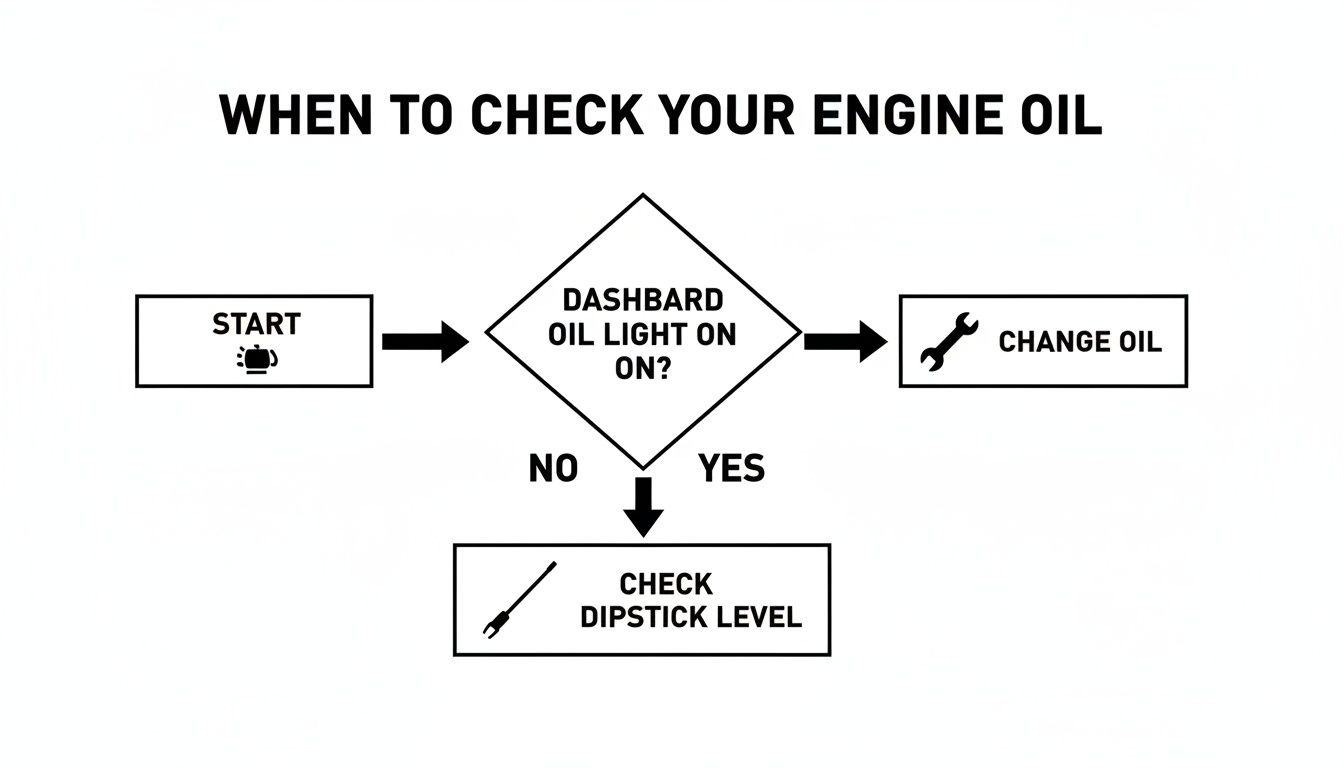
It’s pretty straightforward: if that oil light pops on, it’s time. If not, a quick check of the dipstick will tell you the real story about your oil's condition.
The Suburban Parent Profile
We all know this driver—the family car is a true workhorse, handling school drop-offs, grocery runs, and trips to practice. These are mostly short hops with lots of stops and starts, which, just like city driving, also falls into that "severe service" category.
The engine almost never stays at a high temperature for long, putting a similar strain on the oil. The only difference is that the occasional longer weekend drive can help evaporate some of that built-up gunk. Getting the oil type right is key here; you can learn more in our article about the best oil change interval with a synthetic blend.
The Highway Traveler Profile
Now, this is the driver who puts on serious mileage, mostly cruising on the highway at a steady clip. Think of a sales rep who covers a wide territory or someone with a long commute down the interstate. This is the "normal service" driving that car manufacturers dream about.
The engine runs efficiently for long stretches, letting the oil get up to its ideal temperature and stay there. This helps keep the oil clean, stable, and working at its best for a lot longer. For these drivers, it’s not just okay to extend the time between oil changes—it’s actually the smart move. Under these ideal conditions, modern engines can easily go 10,000-15,000 miles between changes.
To put that in perspective, the average Texas driver covers about 12,097 miles a year. For the highway traveler, that could mean just one or two service stops a year, saving a ton of time.
To make things even easier, we've put together a simple table that matches these driving styles with our expert recommendations.
Tailored Oil Change Schedules for Local Driving Styles
This chart breaks down the best oil type and service interval for each of the driver profiles we just talked about. Find yours and stick to the plan to keep your engine happy.
| Driver Profile | Recommended Oil Type | Oil Change Interval (Miles/Months) | Additional Service Notes |
|---|---|---|---|
| The City Commuter | Full Synthetic | 5,000 miles or 6 months | Check your air filter more often because of city pollution. |
| The Suburban Parent | Synthetic Blend or Full Synthetic | 7,500 miles or 8 months | All those turns and stops wear tires, so don't skip rotations. |
| The Highway Traveler | Full Synthetic | 10,000 – 15,000 miles or 12 months | Keep an eye on tire pressure for the best possible fuel economy. |
No matter which profile fits you best, following a consistent schedule is the most important thing you can do for your vehicle’s health.
Oil Change FAQs: Your Top Questions Answered
To wrap things up, let's tackle a few of the most common questions we hear from drivers every day. Getting clear, straightforward answers is the best way to feel confident about your car's maintenance.
Think of this as a quick chat with your trusted mechanic.
Can I Switch Between Synthetic and Conventional Oil?
Absolutely. Switching from conventional oil to a synthetic blend or full synthetic is a great move for your engine. In fact, the advanced detergents in synthetic oil can actually help clean up some of the gunk left behind by conventional oils. It’s a solid upgrade.
If you ever decide to go back to conventional, just remember you'll also be going back to those shorter oil change intervals. The most important thing is to stick with the right schedule for whatever oil you're using.
How Accurate Is My Car's Oil Life Monitor?
That little light on your dashboard is smarter than you might think. Modern oil life monitors are surprisingly reliable because they don't just count miles. They use a complex algorithm to track how you actually drive.
The system keeps an eye on things like:
- How hard the engine is working
- Operating temperatures
- How long your trips are
- Time spent idling in traffic
By analyzing all that data, it calculates the real-world condition of your oil. So, when that light pops on and says you have 15% oil life remaining, you can trust that it's time to book your next service.
Is Topping Off Low Oil Enough?
Adding a quart of oil when you're low is a decent temporary fix, but it's no replacement for a full oil change. It's like adding a glass of clean water to a bucket of muddy water—the whole bucket is still dirty.
Old oil is contaminated with dirt, tiny metal shavings, and other byproducts that grind away at your engine. Topping it off doesn't get rid of any of that. Only a complete drain-and-fill with a fresh filter can truly clean things out and restore protection.
What Happens if I Wait Too Long for an Oil Change?
Honestly, putting off an oil change is one of the worst things you can do to your car. As oil breaks down, it stops lubricating properly, and that’s when the expensive problems start.
First, you'll probably notice your gas mileage getting worse and your car feeling a bit sluggish. But over time, that old oil turns into thick sludge that clogs up vital engine passages. This leads to friction, overheating, and eventually, total engine failure. What starts as a simple maintenance task can quickly snowball into a repair bill that costs thousands.
When you're ready for fast, reliable service you can count on, come see us at Express Lube & Car Care. Our ASE-certified technicians are here to help, and you never need an appointment. Stop by today for an expert oil change and see why your neighbors trust us to keep their cars running right. https://www.expressluberichlandhills.com