The best time to change your oil is based on your vehicle manufacturer’s recommended maintenance schedule—not a universal mileage rule. Your vehicle, engine, required oil specification, driving conditions, and oil-life monitoring system can all affect when service is due.
For many modern vehicles, the old advice to automatically change oil every 3,000 miles doesn’t reflect the manufacturer’s recommended schedule. Some vehicles require shorter intervals, while others are designed for longer intervals. Your owner’s manual or maintenance guide should be your primary reference.
In this guide, we’ll explain how to determine when your oil needs changing, how oil-life monitors work, what can shorten an oil-change interval, and which warning signs shouldn’t be ignored.
How Often Should You Change Your Oil?
There isn’t one oil-change interval that’s correct for every vehicle.
The appropriate schedule depends on factors such as:
Your vehicle’s manufacturer-recommended maintenance schedule
Engine design
Required oil specification and viscosity
Vehicle age and mileage
Driving conditions
Trip length and frequency
Towing or hauling
Oil-life monitoring system, when equipped
That’s why two vehicles—even two similar vehicles—may have different maintenance requirements.
Start With Your Owner’s Manual
Your owner’s manual or manufacturer maintenance guide is the best place to start. It provides the recommended oil specification and service schedule developed for your particular engine.
Some manufacturers provide separate recommendations based on operating conditions. Others rely heavily on an electronic oil-life monitoring system.
Following the manufacturer’s schedule also helps ensure you’re using the correct oil rather than choosing an interval based solely on whether an oil is labeled conventional, synthetic blend, or full synthetic.
Is the 3,000-Mile Oil Change Rule Still Necessary?
Not for every vehicle.
The traditional 3,000-mile recommendation originated when engine designs, oil formulations, filtration systems, and maintenance requirements were different from many vehicles on the road today.
Modern engines may use advanced oil formulations and electronic maintenance systems that allow the manufacturer to specify a different service interval.
However, that doesn’t mean 3,000 miles is automatically wrong either. Certain vehicles, operating conditions, older engines, or manufacturer recommendations may call for shorter intervals.
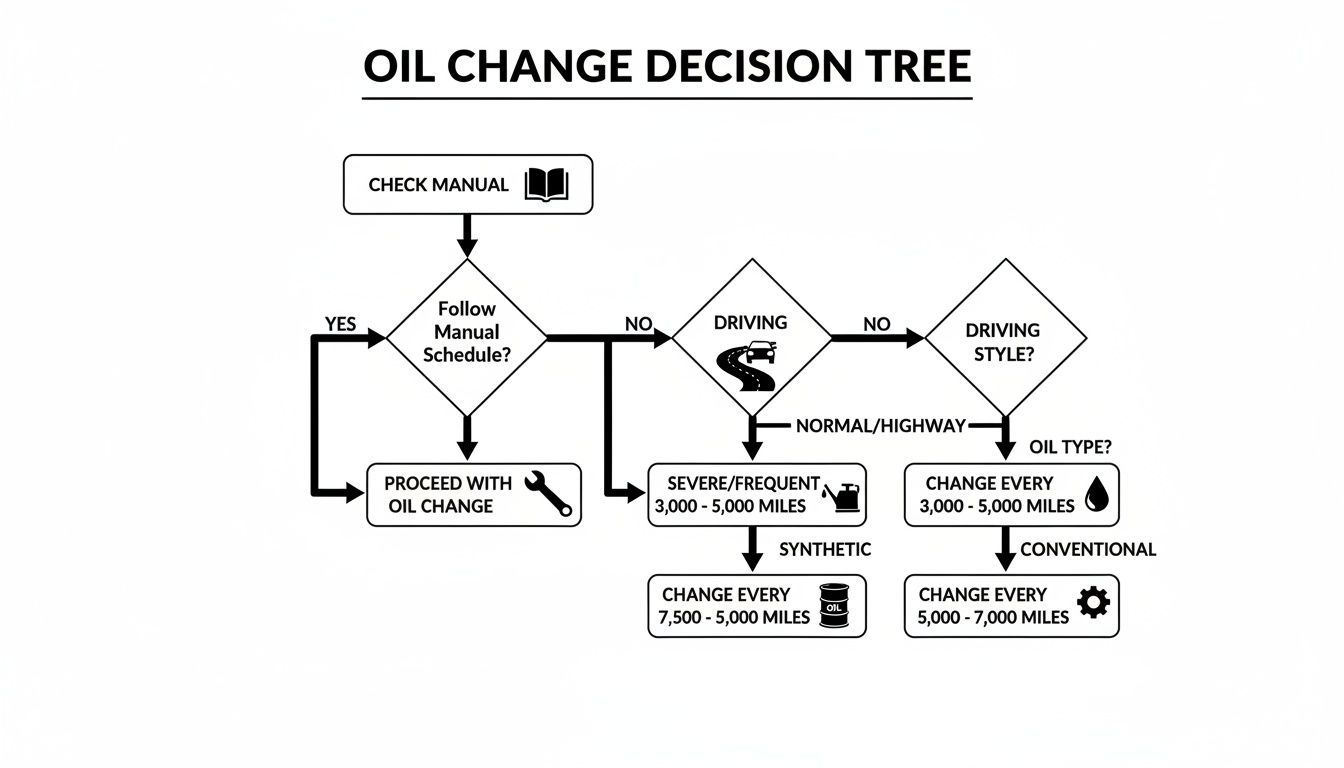
The better rule: follow the maintenance schedule specified for your vehicle rather than relying on one mileage number for every car.
What Does Your Oil-Life Monitor Tell You?
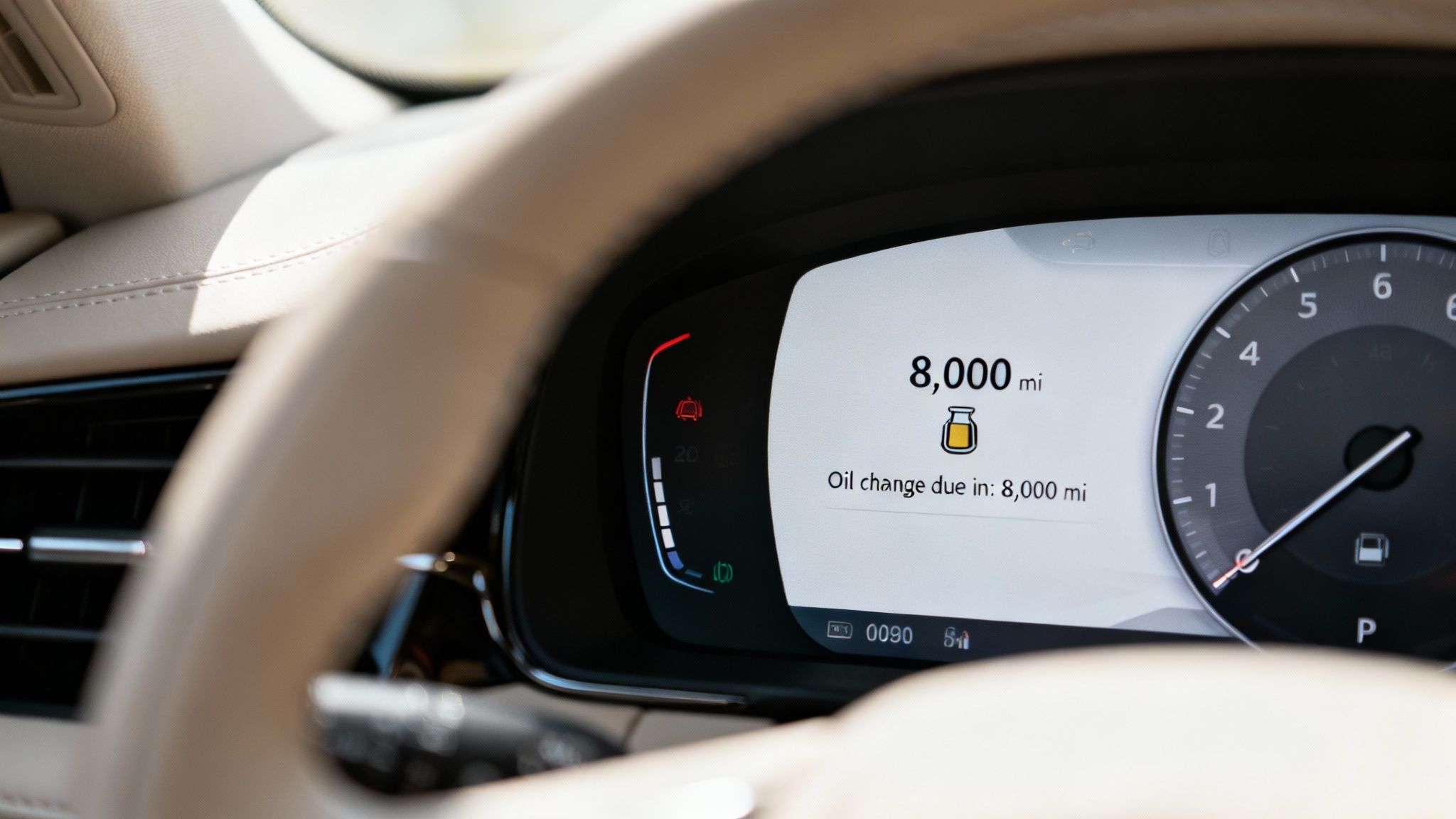
Many newer vehicles have an oil-life monitoring system that helps determine when an oil change is due.
Depending on the vehicle, the system may calculate remaining oil life using operating information such as engine use, temperature, driving patterns, mileage, and other conditions programmed by the manufacturer.
Most oil-life monitors do not directly analyze a sample of the engine oil. Instead, the vehicle uses its programmed strategy and operating data to estimate when maintenance should be performed.
Oil-Life Monitor vs. Oil Pressure Warning
It’s important to understand that an oil-change reminder and an oil-pressure warning light are not the same thing.
Oil-life or maintenance reminder: Indicates scheduled maintenance is approaching or due.
Oil-pressure warning light: May indicate inadequate engine oil pressure and should be treated as an urgent warning.
If the oil-pressure warning light comes on while you’re driving, safely pull over and shut off the engine. Continuing to drive with genuinely low oil pressure can cause serious engine damage.
Learn more in our guide to what low oil pressure means and what to do.
Does Synthetic Oil Change How Often You Need an Oil Change?
The type and specification of motor oil matter, but you shouldn’t determine your service interval based on the word “synthetic” alone.
Some engines require full synthetic oil. Others may permit different formulations that meet a particular manufacturer specification.
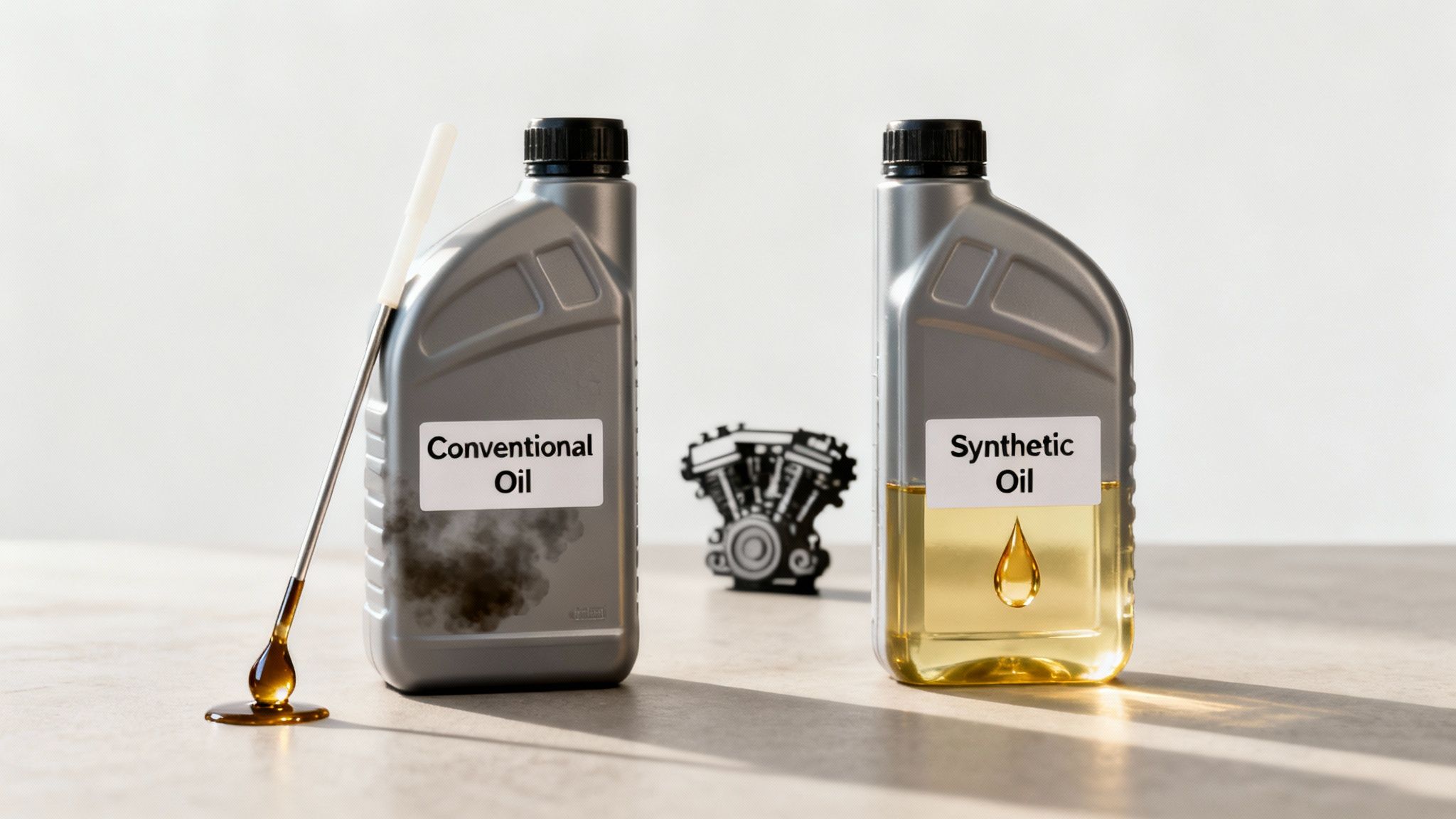
Conventional Motor Oil
Conventional motor oil is refined from petroleum-based crude oil and may be appropriate for vehicles whose manufacturers permit its use.
Synthetic Blend Motor Oil
Synthetic blend oil combines conventional and synthetic base oils. Its suitability depends on whether it meets the specifications required by your vehicle manufacturer.
Full Synthetic Motor Oil
Full synthetic oils are formulated to provide consistent performance across demanding operating conditions and temperature ranges. Many modern vehicles require or recommend synthetic motor oil.
Regardless of the oil type, use the viscosity and specification required for your engine and follow the vehicle manufacturer’s maintenance schedule.
Using a high-quality oil doesn’t automatically mean you should extend the service interval beyond what your vehicle manufacturer recommends.
Can Your Driving Habits Affect Oil Change Intervals?
Yes. Some manufacturers specify different maintenance recommendations for vehicles operated under particular conditions.
Examples may include:
Frequent short trips
Extended idling
Repeated stop-and-go driving
Operating in very hot or cold conditions
Driving in dusty environments
Frequent towing
Carrying heavy loads
These conditions can place additional demands on the engine and its lubricating system.
Short Trips
Repeated short trips can prevent an engine from spending much time at normal operating temperature. Depending on the vehicle and conditions, this can contribute to moisture or fuel contamination in the oil.
Stop-and-Go Driving
Heavy traffic can involve significant engine operating time even when the odometer isn’t accumulating miles quickly. This is one reason mileage alone doesn’t always tell the entire maintenance story.
Texas Driving Conditions
Richland Hills and the surrounding North Texas area can experience high summer temperatures and heavy traffic. Your manufacturer’s maintenance information can help determine whether your particular driving pattern calls for a different service schedule.
Towing and Heavy Loads
Towing and hauling increase engine workload. If you regularly use your vehicle this way, check the manufacturer’s maintenance recommendations for towing or severe-duty operation.
Should You Change Oil Based on Mileage or Time?
Both can matter.
A vehicle that isn’t driven very often may reach a manufacturer-specified time interval before reaching the corresponding mileage interval.
That’s why maintenance recommendations are sometimes expressed as mileage or time, whichever comes first.
If your vehicle sits for long periods or accumulates very few miles each year, don’t assume the oil never needs service simply because the odometer hasn’t moved much.
How to Check Your Engine Oil Between Services
Checking the engine oil between services can help you identify a low oil level or other concerns before they become more serious.
Follow your vehicle manufacturer’s instructions because dipstick procedures can vary. A typical check may involve:
Park the vehicle on level ground.
Follow the manufacturer’s recommendation for engine temperature and wait time.
Remove the dipstick.
Wipe it clean.
Fully reinstall it.
Remove it again and check the level against the indicated range.
If the oil level is low, use the correct oil specification when adding oil.
For more details, see our guide on how to check your car’s oil level.
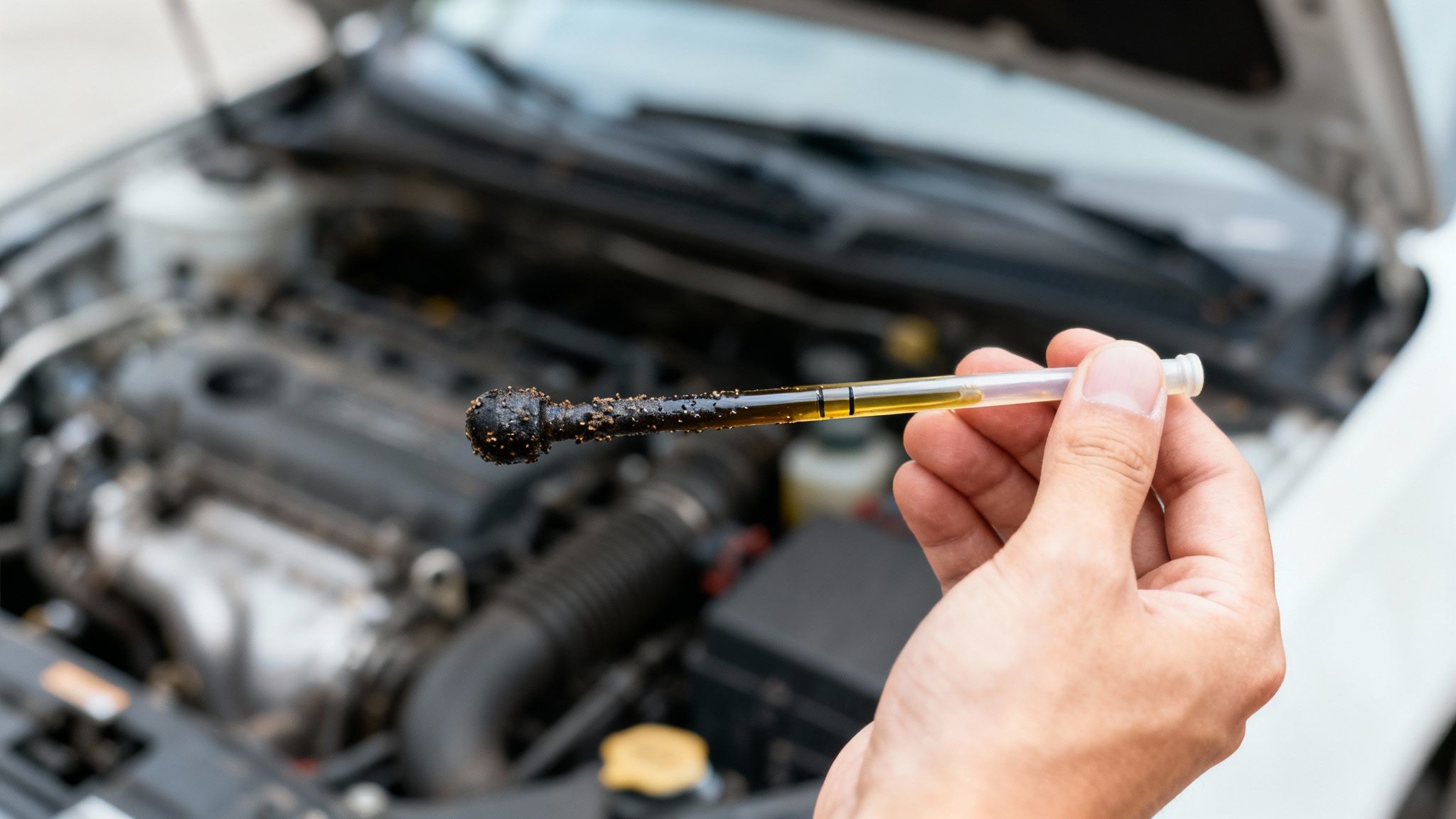
Don’t Judge Oil Life by Color Alone
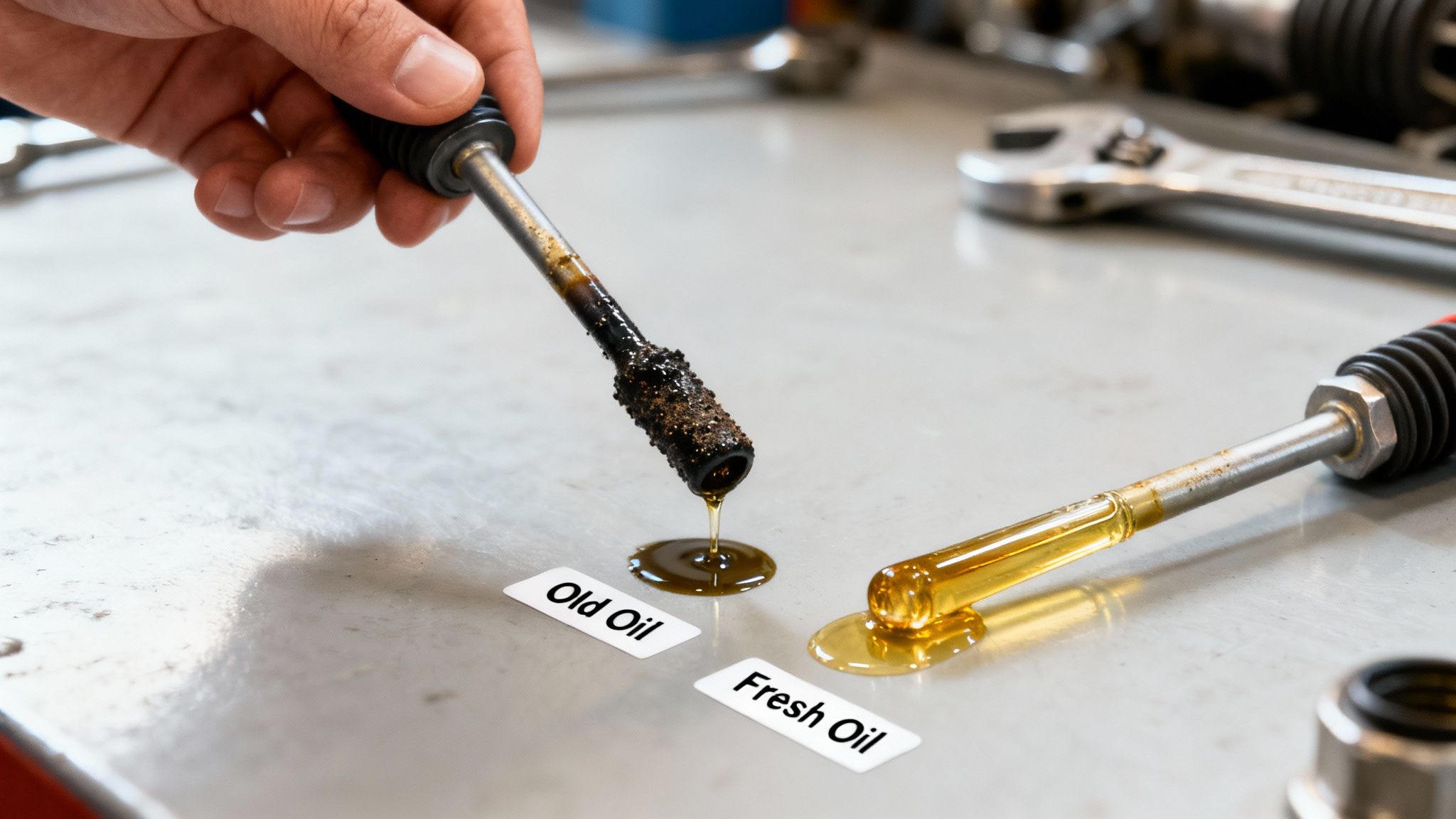
Engine oil often becomes darker as it circulates and performs its cleaning functions. Dark oil by itself doesn’t necessarily mean the oil is overdue for replacement.
Instead, use your manufacturer’s maintenance schedule or oil-life monitor as your primary guide.
If you notice contamination, an unusual consistency, a significant change in oil level, or other abnormal conditions, have the vehicle inspected.
Signs Your Vehicle May Need Attention Before the Next Oil Change
An oil-change interval is a maintenance schedule—not a reason to ignore symptoms between services.
Have your vehicle checked if you notice:
An oil-pressure warning light
A low engine oil level
Oil leaking underneath the vehicle
A burning-oil smell
Unusual ticking, knocking, or other engine noises
Blue or gray exhaust smoke
Repeated need to add engine oil
These symptoms don’t necessarily mean the vehicle simply needs an oil change. They can indicate leaks, oil consumption, lubrication problems, or other mechanical conditions that require diagnosis.
What Happens If You Wait Too Long to Change Your Oil?
Engine oil performs several important jobs. It lubricates moving components, helps control friction and heat, carries contaminants toward the filter, and helps keep internal engine surfaces clean.
As oil remains in service, its additives and protective properties can change. Extending maintenance significantly beyond the manufacturer’s recommendation may contribute to deposits, sludge, accelerated wear, and other lubrication-related problems.
Regular oil and filter service is therefore an important part of protecting engine performance and longevity.
Oil Change & Preventive Maintenance in Richland Hills, TX
If you’re unsure when your vehicle’s next oil change is due, Express Lube & Car Care can help you determine the appropriate service based on your vehicle and its maintenance requirements.
Our team can provide the appropriate engine oil and filter service while checking for visible maintenance concerns that may need attention.
If your vehicle is due for service, learn more about our oil change and preventive maintenance services in Richland Hills, including oil and filter service based on your vehicle’s requirements.
Regular maintenance is also a good opportunity to check fluid levels, filters, belts, hoses, battery condition, and other vehicle components based on your vehicle’s needs.
Frequently Asked Questions About Oil Changes
How many miles can I go between oil changes?
There isn’t one mileage interval that’s appropriate for every vehicle. Follow the oil-change interval specified by your vehicle manufacturer or its oil-life monitoring system. Driving conditions and vehicle use may also affect the recommended schedule.
Do I need to change my oil every 3,000 miles?
Not necessarily. Many modern vehicles have manufacturer-recommended intervals longer than 3,000 miles. However, the appropriate interval depends on your specific vehicle and operating conditions, so consult the owner’s manual or maintenance guide.
Should I trust my car’s oil-life monitor?
When used according to the manufacturer’s instructions, an oil-life monitoring system can be an important guide for scheduled oil service. You should still check the engine oil level as recommended and respond to leaks, warning lights, or other symptoms between services.
Does full synthetic oil last longer?
Synthetic oils are designed to perform well under demanding conditions, and some vehicles using synthetic oil have longer manufacturer-specified service intervals. However, you should not extend an oil-change interval solely because synthetic oil is being used. Follow your vehicle manufacturer’s recommendation.
Does engine oil go bad if I don’t drive much?
Time can be part of a manufacturer’s maintenance recommendation even when a vehicle accumulates very little mileage. If you don’t drive often, follow the time-based maintenance interval specified for your vehicle.
Can I switch between conventional and synthetic oil?
What matters most is using an oil that meets the viscosity and performance specifications required by the vehicle manufacturer. If you’re considering changing oil types, verify that the replacement oil meets those requirements.
Does dark oil mean I need an oil change?
Not necessarily. Motor oil can darken during normal use. Color alone isn’t a reliable way to determine whether an oil change is due. Follow your manufacturer’s maintenance schedule or oil-life monitoring system.
Do hybrid and electric vehicles need oil changes?
Hybrid and plug-in hybrid vehicles that use an internal-combustion engine generally require engine oil maintenance according to the manufacturer’s schedule. Fully electric vehicles do not have a gasoline or diesel engine and therefore do not require conventional engine oil changes.
Need an oil change in Richland Hills? Express Lube & Car Care provides oil changes and preventive maintenance for drivers throughout Richland Hills and surrounding communities. Schedule your service or stop by the shop for assistance.