

Yes, using synthetic oil can improve your gas mileage. Because the molecules in synthetic oil are uniform and engineered, they create less internal friction inside your engine. This means your engine doesn't have to work as hard, wastes less fuel, and you see a real, measurable improvement in miles per gallon (MPG).
How Synthetic Oil Actually Impacts Your Gas Mileage
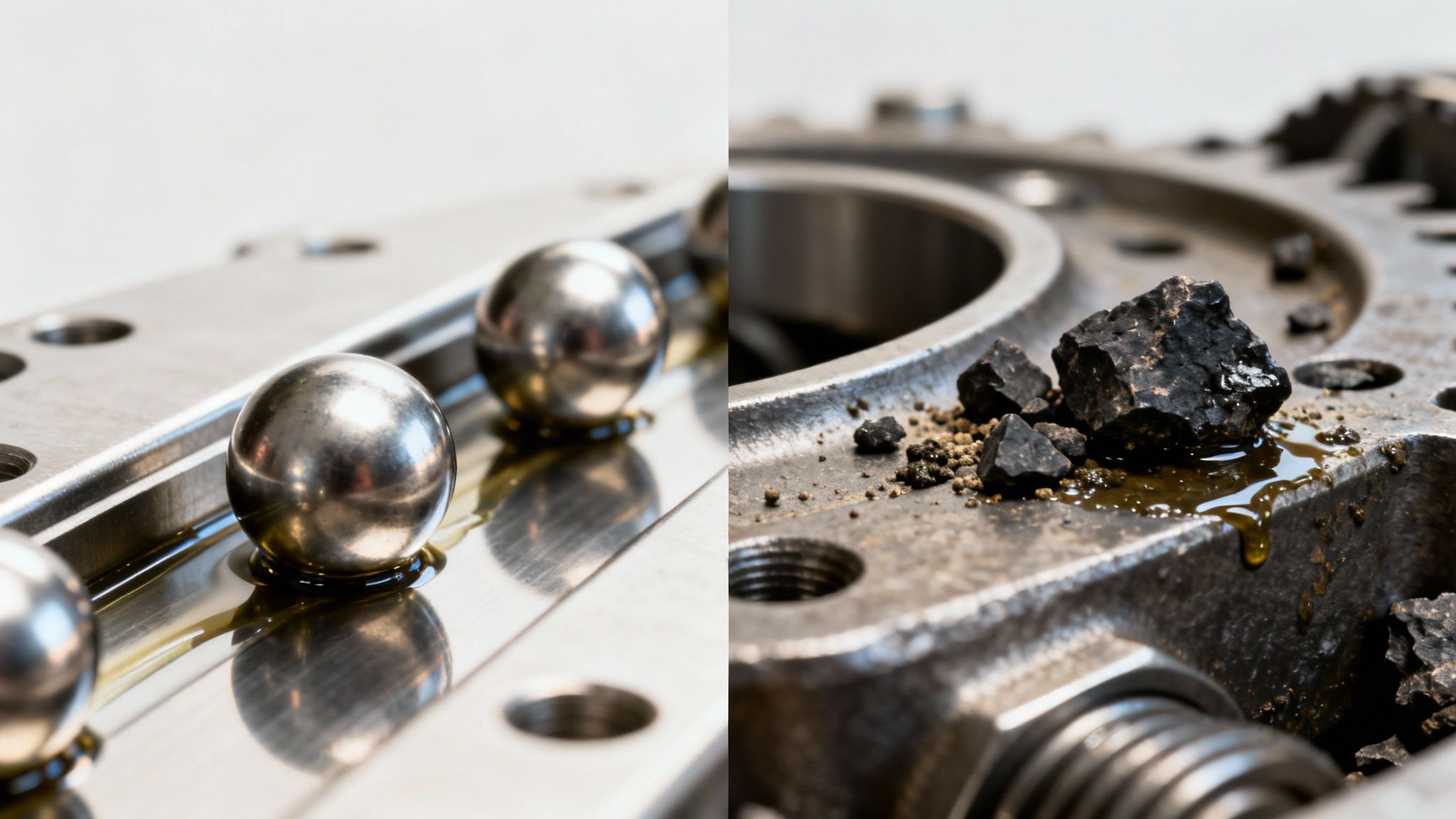
Every time your engine is running, its metal parts are moving against each other at incredible speeds. The whole point of motor oil is to create a thin, protective film between those parts to prevent damaging metal-on-metal contact.
But not all oils are up to the task equally.
The key to understanding the link between synthetic oil mileage and better fuel economy comes down to one simple word: friction. Friction is the enemy of efficiency. It creates drag, forcing your engine to burn more gas just to overcome it. This is where the difference between conventional and synthetic oil really shines.
The Science of a Smoother Engine
Think of conventional oil on a microscopic level. It’s refined directly from crude oil, which means its molecules are all different shapes and sizes—like a bag full of jagged rocks and tiny pebbles. They get the job done, but those irregular molecules create a lot of internal drag as they grind past each other.
Synthetic oil, on the other hand, is built from the ground up in a lab. Its molecules are pure, uniform, and perfectly consistent.
It’s like swapping out those jagged rocks for a handful of perfectly smooth, identical ball bearings. They just roll over each other with almost no resistance. That's exactly what synthetic oil does inside your engine, and it dramatically cuts down on the friction that robs you of fuel.
This superior molecular design helps synthetic oil perform better across the board, especially for Richland Hills drivers who deal with blazing Texas summers and the occasional chilly winter morning.
Why Less Friction Means Better MPG
When your engine runs with less internal friction, it doesn't have to work nearly as hard to generate power. That efficiency gain goes straight back to your fuel tank.
A smoother, cooler-running engine can put more of its energy into moving your car forward and less into fighting itself.
While the improvement might not sound huge—often a 2-3% increase in MPG—it really adds up over thousands of miles. The benefits go beyond the gas pump, too, since less friction also means less wear and tear on your engine over its lifetime. To get the full picture, exploring whether synthetic oil is better gives a much deeper look into its protective qualities.
Ultimately, the superior lubrication you get from synthetic oil is the foundation for both better mileage and a healthier, longer-lasting engine.
The Science Behind a More Fuel-Efficient Engine

So, how does synthetic oil actually squeeze more miles out of a gallon of gas? It comes down to how it's made. Conventional oil is just refined crude oil, but synthetic oil is engineered from the ground up at a molecular level. It’s designed purely for performance.
This high-tech engineering process gives synthetics three huge advantages that directly boost your fuel economy. Each one helps your engine work less, use less fuel, and run better. For drivers in Richland Hills, that means real savings at the pump, especially with our hot summers and stop-and-go traffic.
Let’s dive into what makes it so effective.
Superior Viscosity Stability
An oil's viscosity is just a technical term for its thickness. The big problem with conventional oil is that its thickness changes a lot with the temperature. It gets thick like molasses when it’s cold, making your engine struggle to start, but thins out like water when it gets hot, which reduces protection.
Synthetic oil, on the other hand, is incredibly stable. It holds its ideal thickness across a massive temperature range.
- On Cold Starts: It flows easily to lubricate vital parts right away, so your engine doesn't waste energy just getting itself going.
- In Texas Heat: It maintains its strength, providing a consistent, slick film that keeps friction low even on the hottest days.
This stability means your engine runs with less internal drag all the time, which is a key factor in improving your synthetic oil mileage.
The bottom line is an engine that works smarter, not harder. By staying at the right consistency from a cool morning start to a sweltering afternoon commute, synthetic oil keeps your engine in its most efficient, fuel-sipping state.
It's a level of consistent performance that conventional oils just can't deliver.
Enhanced Thermal Resistance
Your engine is a brutal environment, full of intense heat and pressure—especially when you’re stuck in traffic on NE Loop 820. This heat literally "cooks" conventional oil, causing it to break down and form nasty sludge and varnish.
Think of these deposits like cholesterol clogging your engine's arteries. They block narrow oil passages and create drag on moving parts, forcing the engine to burn more gas just to do its job.
Because synthetic oil is so pure, it has incredible thermal resistance. It can handle much higher temperatures before it even thinks about breaking down. This prevents performance-killing sludge from ever forming, keeping your engine clean and friction-free. A clean engine is always a more efficient engine.
Advanced Detergent Additives
The final piece of the puzzle is the advanced additive package mixed into synthetic oils. These aren't just simple lubricants; they are sophisticated formulas designed to actively clean and protect your engine.
You can think of these additives as a tiny cleaning crew working 24/7 inside your motor.
- Detergents actively scrub away old sludge and varnish left behind by lesser oils.
- Dispersants grab those gunk particles and keep them suspended in the oil so they can’t clump together and form new deposits.
- Friction Modifiers create an ultra-slick coating on metal parts, cutting down the energy needed to move pistons and gears.
This constant cleaning action helps your engine run like it was designed to from the factory. By getting rid of the internal gunk that creates drag, these additives help restore lost performance and fuel economy. A clean motor is essential for long-term efficiency and is a core part of our approach to expert engine care and maintenance.
Calculating Your Potential Mileage Gains and Savings
The science is interesting, but what really matters is how a switch to synthetic oil impacts your wallet. Let's move past the theory and look at what those small percentage gains actually mean for a typical driver here in Richland Hills.
Even a small bump in fuel efficiency adds up over a year of driving. When your engine runs with less internal friction, it simply doesn't have to work as hard—or burn as much gas—to get you where you're going. That's where you start to see the real value.
Translating Percentages to Dollars
So, what kind of improvement are we talking about? Industry data consistently shows that switching to a full synthetic can boost your mileage by up to 2-3% compared to conventional oil.
That might not sound like a huge number at first. For a sedan that gets 28 MPG, a 2.5% improvement is about 0.7 extra miles per gallon. But over a year of driving, say 12,000 miles, that small gain means you could buy nearly 20 fewer gallons of gas. This push for efficiency is why automakers increasingly rely on low-viscosity synthetics (like 0W-20) to meet modern emissions standards, a trend you can read more about in recent market trend analyses.
Think about your daily commute from Richland Hills to downtown Fort Worth. All that stop-and-go traffic is tough on your engine and guzzles fuel. A more efficient oil helps cut down on that waste, turning those tiny daily savings into a real annual benefit.
By reducing the energy your engine wastes fighting its own friction, synthetic oil basically gives you a small rebate on every gallon of gas you buy. Over a year, that "rebate" can easily cover the extra cost of the premium oil itself.
This isn't just a perk for drivers; it's a critical part of modern automotive engineering. Car manufacturers are under constant pressure to meet strict Corporate Average Fuel Economy (CAFE) standards. They use high-quality synthetics from the factory to help their vehicles hit those targets. It’s proof on a massive scale that the synthetic oil mileage gains are real and measurable.
Potential Annual Fuel Savings with Synthetic Oil
To bring this home, the table below breaks down the potential savings for common vehicles you see around town. We're using a conservative 2.5% MPG improvement to estimate what you could save in a year.
| Annual Miles Driven | Vehicle's Average MPG (Conventional) | Improved MPG (Synthetic) | Annual Gallons Saved | Estimated Annual Savings (@ $3.25/gallon) |
|---|---|---|---|---|
| 12,000 Miles | 22 MPG (SUV/Truck) | 22.55 MPG | 24.5 Gallons | $79.63 |
| 12,000 Miles | 28 MPG (Sedan) | 28.7 MPG | 19.2 Gallons | $62.40 |
| 15,000 Miles | 22 MPG (SUV/Truck) | 22.55 MPG | 30.6 Gallons | $99.45 |
| 15,000 Miles | 28 MPG (Sedan) | 28.7 MPG | 24.0 Gallons | $78.00 |
As you can see, the savings are real. For a family with two vehicles, that could easily add up to over $150 per year in fuel alone. And that's before you even factor in the other benefits, like reduced engine wear and longer times between oil changes. The numbers make it pretty clear: switching to synthetic isn't just a maintenance choice, it's a smart financial one.
Go Longer Between Oil Changes and Extend Your Engine's Life
While getting a few extra miles per gallon is a nice bonus, the real game-changer with synthetic oil is its long-term value. Think of it as a serious upgrade for your engine's health and your own schedule. Synthetic oil is engineered from the ground up to be tougher and more resilient than conventional oil, resisting breakdown for far longer.
This built-in durability is what lets you stretch the time between oil changes. Because it holds up so well under pressure, you can confidently go more miles without sacrificing protection. For many drivers, this is the single biggest reason to make the switch.
Fewer Trips to the Shop Saves You Time and Money
Let's be honest, nobody enjoys sitting in a waiting room. For busy families and local businesses here in Richland Hills, time is money. Conventional oil typically requires a change every 3,000 to 5,000 miles. With a quality full synthetic, that interval can often be pushed to 7,500, 10,000, or even 15,000 miles, depending on your car and how you drive it.
That means what used to be three or four oil changes a year might turn into just one or two. That’s less downtime for your vehicle, more time for you, and a lower overall maintenance bill.
This isn’t just a trend for passenger cars; it’s making a huge impact in the commercial trucking world, too. Heavy-duty fleets are switching because synthetic’s stability allows for drain intervals up to 2-3 times longer than conventional oils. For them, it can slash maintenance costs by 20-30%.
How Longer Intervals Actually Protect Your Engine
Going longer between oil changes doesn't mean you're cutting corners. In fact, you're giving your engine better protection. The strong, uniform molecules in synthetic oil keep it from thinning out in brutal Texas heat or turning to sludge in the cold. It’s also packed with powerful detergents that actively scrub your engine clean.
This chart shows how those small efficiency gains add up to real money saved at the pump.
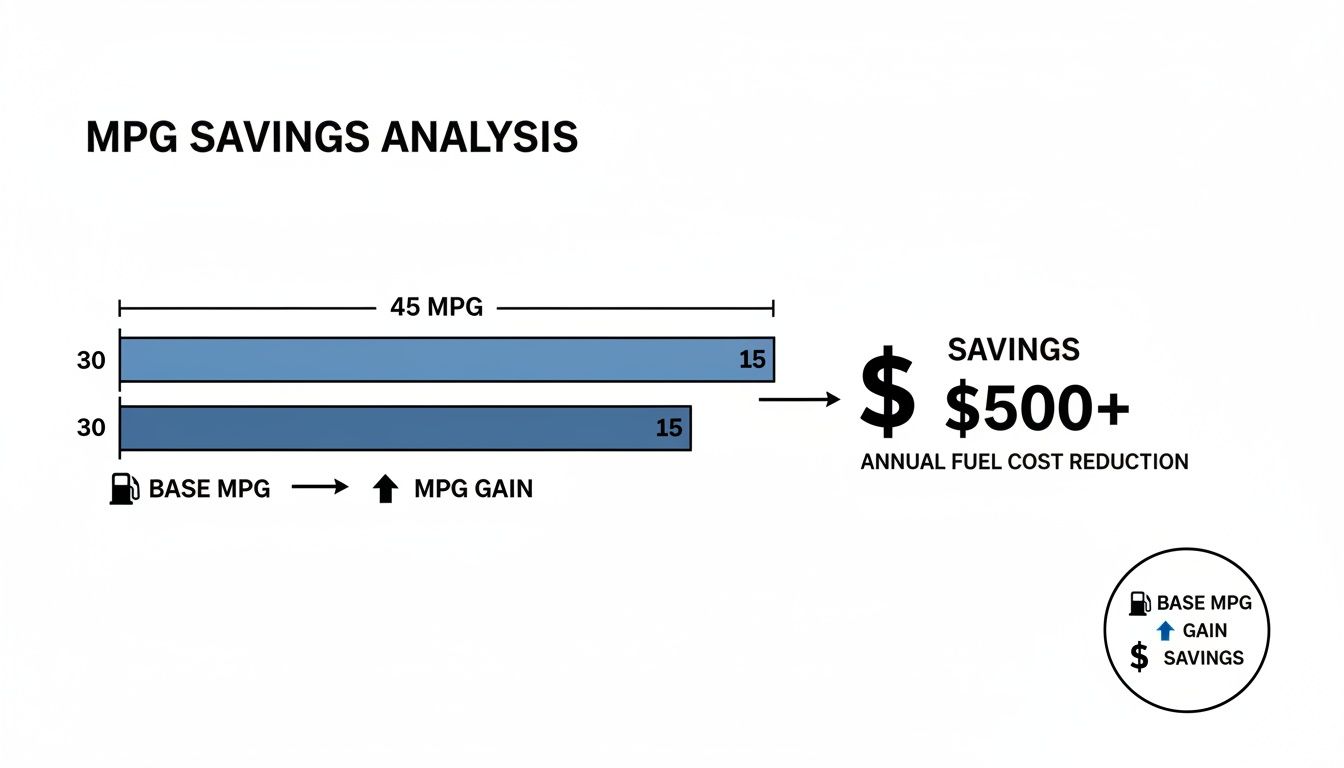
When you combine fuel savings with fewer oil changes, the financial benefits become pretty clear.
Conventional oil, on the other hand, starts breaking down much faster. As it degrades, it creates sludge and varnish that can clog up the narrow passages inside your engine. This forces the engine to work harder, causing extra wear on critical parts like pistons and bearings.
With synthetic oil, you get:
- Consistent Lubrication: A strong film of oil clings to metal parts, protecting them even in stressful stop-and-go traffic.
- A Cleaner Engine: Advanced additives work like a cleaning crew, removing harmful deposits and keeping things running smoothly.
- Less Wear and Tear: By fighting friction and sludge, synthetic oil dramatically reduces the microscopic damage that ages an engine over time.
This superior, long-lasting protection is how you safeguard your vehicle as a long-term investment.
The Clear Link to a Longer Engine Lifespan
Every bit of wear and tear you prevent adds up, directly contributing to a longer, healthier life for your engine. It's not complicated: the number one cause of catastrophic engine failure is a breakdown in lubrication.
By using an oil that’s designed to resist breaking down, you’re tackling the root cause of engine aging head-on. This is especially critical for modern engines with turbochargers and other complex parts that are extremely sensitive to oil quality.
Stretching your oil change interval with a high-quality synthetic isn't just about saving a few bucks today. It's about preventing the thousand-dollar repair bills that pop up from engine wear down the road. If you’re looking for a middle ground, our guide on the oil change interval with a synthetic blend can help you find the right balance for your car.
Making the Switch to Synthetic Oil the Smart Way
Deciding to upgrade to synthetic oil is a great move for your engine's health and your wallet. But getting the best results isn't as simple as just pouring in a different product. To really unlock those fuel economy gains and superior protection, you need to know when to switch and what to choose.
Think of it as an investment in your vehicle's future. A little know-how ensures you get the full return on that investment, so let's walk through the practical side of making the change with confidence.
When Is the Best Time to Switch?
This is one of the most common questions we get, and the answer is simple: you can switch to synthetic oil at any time. It doesn't matter if your car is brand new or has seen a lot of miles. Modern conventional and synthetic oils are designed to be completely compatible, so you don't need any special engine flushes or prep work.
While you can switch whenever you like, a few moments are especially perfect for it:
- At Your Next Oil Change: This is the easiest and most logical time. Just tell us you're ready to upgrade to full synthetic, and we'll take care of the rest.
- When You Buy a Used Car: Since you can't be sure of its service history, starting fresh with a high-quality synthetic oil sets a new, higher standard of care from day one.
- Before a Big Road Trip: Synthetic oil's ability to handle high temperatures gives you an extra layer of protection during those long, demanding highway drives.
Forget the old myth that you can't put synthetic oil in a high-mileage car. It's just not true. In fact, it’s one of the smartest things you can do for an older engine.
Many modern synthetics are specifically formulated for high-mileage vehicles. They contain special seal conditioners and additives that can help reduce minor leaks and clean out the gunk that has built up over the years, often improving how the engine runs.
Understanding Oil Viscosity Grades
When you look at a bottle of oil, you’ll see a code like 5W-30 or 0W-20. That's the viscosity grade, which is just a fancy way of saying how thick the oil is at different temperatures. Using the right one is non-negotiable for your engine's health.
Here’s what those numbers mean:
- The first number with the "W" (for Winter): This tells you how well the oil flows when it's cold. A lower number is better because it means the oil gets moving faster to protect engine parts on a cold start.
- The second number: This measures the oil's thickness once your engine is fully warmed up and running.
You're seeing more and more manufacturers requiring thinner oils like 0W-20 these days. Why? It's all about hitting those tough fuel efficiency targets. Low-viscosity full synthetics are proven to boost fuel economy by 2-5% because they reduce friction so effectively. If you want to dive deeper, you can see how the entire automotive lubricant market is shifting toward these advanced formulas.
Using the wrong viscosity can hurt your fuel economy and, in a worst-case scenario, cause serious engine damage. At Express Lube, we take the guesswork out of it. Our ASE-certified technicians always use the exact oil grade your manufacturer specifies, ensuring your engine gets precisely what it needs to deliver peak performance and maximize your synthetic oil mileage.
Of course. Here is the rewritten section, crafted to sound completely human-written and match the expert, direct tone of the provided examples.
Your Top Questions About Synthetic Oil Answered
Even after hearing all the good things, it’s smart to have a few questions before changing up your car's maintenance routine. Making the right call is what gets you the most out of your vehicle. To help you feel confident about the switch, we’ve put together answers to the most common questions we hear from Richland Hills drivers.
Here are the straightforward answers you need.
Will I See a Mileage Improvement Immediately After Switching?
While synthetic oil gets to work protecting your engine right away, the boost in gas mileage is usually gradual. Don’t expect a huge jump in your MPG numbers on the first tank. The real benefits to your synthetic oil mileage show up over time.
Think of it like starting a healthier diet; the good effects build up. Your engine needs a little time to respond to the better lubrication. You'll probably see the most consistent improvement after a few full tanks of gas, which gives the oil's detergents time to clean out old gunk. It's a long-term efficiency gain, not an instant fix.
Is Synthetic Oil Worth the Extra Cost for an Older Car?
Absolutely. In fact, putting synthetic oil in a high-mileage vehicle is one of the best moves you can make. It's a common myth that synthetics are just for new cars, but older engines often benefit the most from the upgrade.
Here's why it's such a smart choice for a trusted, older car:
- Helps Stop Leaks: High-mileage synthetic oils have special additives that help recondition old, brittle rubber seals. This can slow down or even stop the small oil drips that many older cars develop.
- Cleans Out Sludge: Over the years, conventional oil can leave behind gunk that clogs up your engine and hurts performance. The strong cleaning agents in synthetic oil dissolve that sludge, restoring lost efficiency.
- Better Protection for Worn Parts: An older engine has seen its share of wear and tear. The stronger oil film from a synthetic provides a better cushion for those worn parts, helping you get more life out of your engine.
Using a quality synthetic is a great way to keep a reliable car on the road for years to come.
How Do I Know My New Oil Change Interval?
This is a big one, because there's no single answer. While synthetics are known for lasting a lot longer, your ideal oil change schedule depends on a few things. Just stretching out the time between changes without thinking it through can be risky.
Always start with your owner's manual. Most newer cars that recommend synthetic oil will list intervals between 7,500 and 15,000 miles. But how you drive makes a huge difference.
Your driving style is the biggest variable. Lots of short trips, stop-and-go city traffic, towing, or driving in the Texas heat all count as "severe" conditions that are tough on oil.
If you drive under these conditions, you’ll need to change your oil more often than the maximum interval. The best plan is to check your manual, then talk it over with a certified technician. They can help you figure out a schedule that gives you maximum protection without wasting money.
Can I Switch Back to Conventional Oil After Using Synthetic?
Yes, you can. Modern oils are made to be compatible, so switching from synthetic back to conventional won’t hurt your engine.
But you need to know what you’re giving up. The moment you switch back, you lose all the benefits of the premium oil.
That means you’ll no longer get:
- The improved fuel economy and better synthetic oil mileage.
- The superior protection against engine heat and wear.
- The convenience of going longer between oil changes.
If you do go back to conventional, you have to go back to the much shorter oil change schedule—usually every 3,000 to 5,000 miles. Sticking to the longer synthetic interval with conventional oil will put your engine at risk.
Ready to feel the difference for yourself? The ASE-certified team at Express Lube & Car Care is here to help you make the smart switch to full synthetic oil. We only use top-quality products that meet your car's exact specs. Drive in today for a fast, expert oil change—no appointment needed.
Find out more about our services at https://www.expressluberichlandhills.com.