

The battery light means your charging system isn’t charging properly, not necessarily that your battery is dead. Your car may soon be running on stored battery power alone, and it can stall without warning. If the light comes on while you’re driving, pull over safely as soon as you can and get the charging system checked before you keep driving.
TL;DR:
- The battery light mostly indicates a failing alternator, a worn belt, or wiring issues, not necessarily a dead battery, so testing is essential before replacing components.
- Immediately pull over and turn off non-essential accessories if the light appears, then check for dimming lights, unusual noises, or low voltage readings with a multimeter.
- Proper diagnosis involves visual inspections, battery voltage tests, alternator load tests, diode checks, and scanning for fault codes, not just simultaneous part swaps.
- Common causes include a failing alternator, loose or corroded battery terminals, a slipping serpentine belt, or a faulty voltage regulator; a failing alternator often presents with dim headlights and whining sounds.
- Preventative measures include monitoring battery age, keeping terminals clean, inspecting belts routinely, and requesting charging-system output checks during regular service visits.
Table of Contents
- What Does the Battery Light On Your Dash Actually Mean?
- What to Do the Moment the Battery Warning Light Comes On
- How Technicians Diagnose a Charging System Problem
- The Most Common Causes Behind a Battery Light
- Preventing the Next Charging System Scare
- When Driving Isn’t Worth the Risk
- What Our Shop Sees When the Battery Light Comes On
- Get Your Charging System Checked Today
- Sources
- FAQ
What Does the Battery Light On Your Dash Actually Mean?
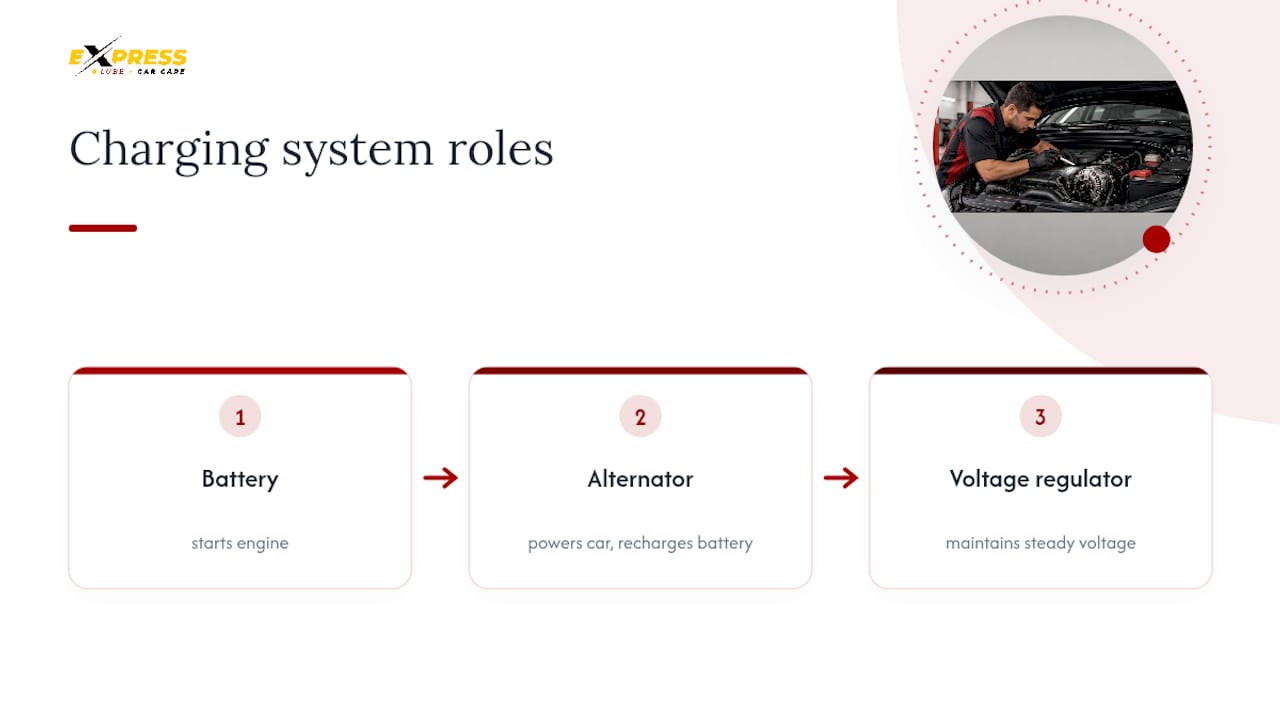
Your car’s charging system runs on three parts working together: the battery, the alternator, and the voltage regulator. The battery starts the engine. Once running, the alternator takes over, generating power to run everything electrical while keeping the battery topped off. The voltage regulator keeps that output steady so nothing gets overcharged or starved.
When you turn the key, the battery light should flash on for a second or two as part of a startup self-check, then go out once the engine catches. That’s normal. If it stays on or starts flickering while you’re driving, your car’s computer has detected that the charging system isn’t producing or regulating power the way it should.
Here’s the part a lot of drivers get backwards: a lit battery light almost always points to a charging problem, not a dead battery. The battery itself might be perfectly healthy. It’s the alternator, the belt driving it, the wiring, or the regulator that’s usually at fault. Treating this as “the battery is bad” and swapping it out without checking the rest of the system is one of the most common (and costly) mistakes we see.
What to Do the Moment the Battery Warning Light Comes On
Don’t panic, but don’t ignore it either. Work through this list in order:
- Pull over when it’s safe. Find a parking lot or a wide shoulder rather than stopping in a live lane.
- Turn off nonessential accessories. Kill the radio, seat heaters, phone chargers, and blower fan to reduce the load on a struggling charging system.
- Listen for a belt squeal or a whine. A screeching or whining noise from under the hood often points to a slipping belt or a failing alternator bearing.
- Check for other warning messages. Some dashboards pair the battery light with a low-voltage alert or a check-engine light, which helps narrow down the cause.
- Try a quick voltage check if you have a multimeter. A healthy running charging system reads roughly 13.5 to 14.5 volts at the battery terminals. Lower than that suggests the alternator isn’t keeping up.
- Call for a tow or roadside assistance if the engine sounds rough or dims further. Don’t gamble on making it home.
Pro Tip: If your headlights look noticeably dimmer at idle than at higher RPM, that’s a classic sign of alternator output dropping off, and it’s worth heading straight to a shop instead of finishing your errands first.
How Technicians Diagnose a Charging System Problem
A shop visit for a battery light isn’t guesswork. A proper diagnostic follows a sequence designed to find the actual failure point instead of throwing parts at the problem.
- Visual inspection first. Technicians check the serpentine belt for glazing or looseness, and look at battery terminals and wiring for corrosion or damage.
- Battery voltage test at rest and while running, which shows whether the battery holds a charge and whether the alternator is actually charging it.
- Alternator load test, which measures output under real electrical demand rather than just at idle.
- Diode and rectifier checks, since a failing diode can cause erratic voltage that a basic test might miss.
- OBD-II scan for stored electrical fault codes that point to a specific component.
Replacing a battery without testing the charging system frequently fails to fix the underlying issue, because the new battery drains right along with the old one if the alternator isn’t charging it. At Express Lube & Car Care, ASE-certified technicians run these tests as standard practice and document findings with digital vehicle inspections, including photos, so you can see exactly what’s failing before you approve any repair. For a closer look at the specific tests involved, see our technician tests for battery, alternator, or starter breakdown.
The Most Common Causes Behind a Battery Light
Several failure points can trigger the same warning light, which is exactly why testing matters more than guessing.
- A failing alternator. Dimming headlights, a whining noise, and the battery light together are classic signs the alternator isn’t producing enough power.
- A worn or slipping serpentine belt. If the belt that drives the alternator is loose, cracked, or glazed, the alternator can’t spin fast enough to keep up with demand.
- Loose or corroded battery terminals. Corrosion builds resistance into the connection, which can mimic a charging failure even when the alternator is fine.
- A faulty voltage regulator or diode. This causes erratic voltage swings instead of a clean, steady charge, and it’s a fault that a quick glance under the hood won’t catch.
- Parasitic electrical drain. Aftermarket stereos, dash cams, or a glovebox light left on can quietly drain the battery faster than the alternator can replace the charge.
One thing worth knowing: some intermittent charging faults come from high-resistance connections or a partially shorted diode that can pass a simple bench test but still trip the warning light under certain loads or temperatures. That’s part of why a hands-on shop diagnostic beats a quick parts-store battery test almost every time.
Preventing the Next Charging System Scare
Most charging-system failures give you warning signs long before you’re stranded, if you know where to look.
- Know your battery’s age. Most batteries last three to five years, and performance drops noticeably as they approach the end of that window.
- Keep terminals clean and tight. A quick visual check for corrosion (that white or bluish crust around the posts) can catch a problem before it strands you.
- Have belts inspected during routine service. A belt that’s starting to glaze or crack is easy to spot during an oil change if someone’s actually looking.
- Schedule a charging-system check if you notice slow cranking or flickering interior lights, even before the dash light comes on.
Pro Tip: Ask your technician to check charging-system output the next time you’re in for an oil change. It takes a few minutes and can catch a weakening alternator months before it fails completely.
When Driving Isn’t Worth the Risk
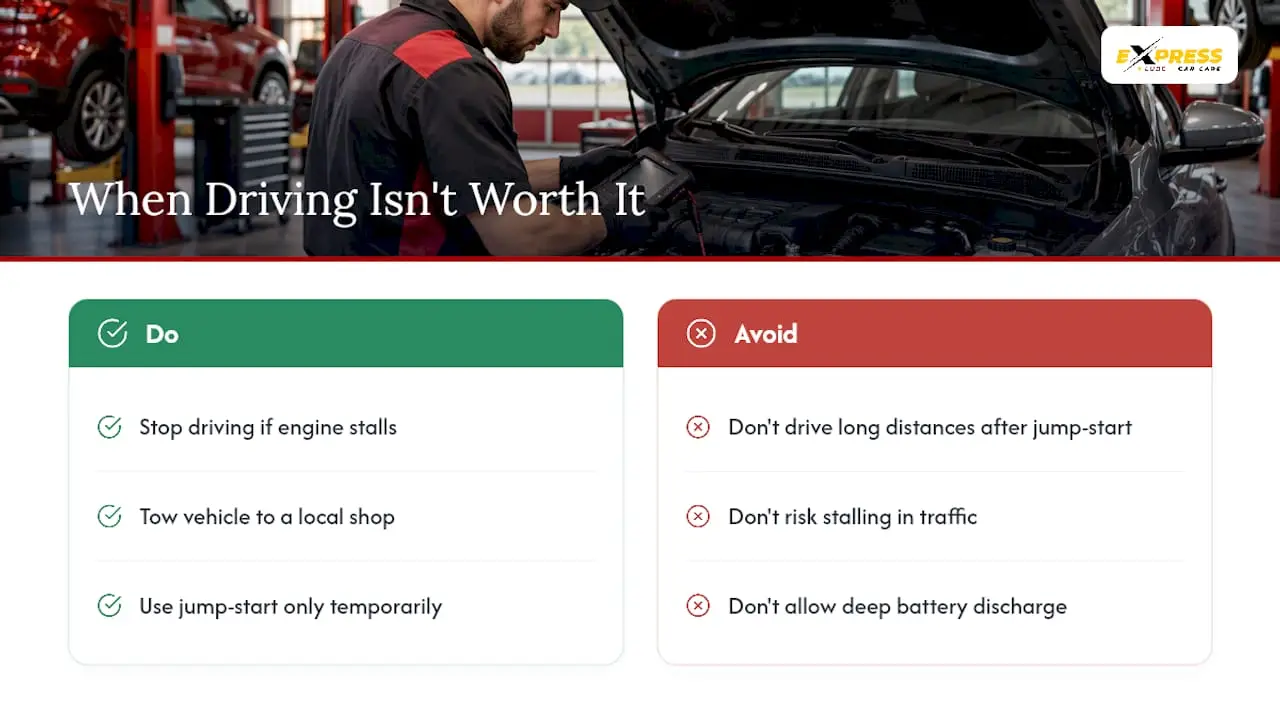
Stop driving if the engine stalls, restarts roughly, or your headlights dim severely. That’s your charging system telling you it’s nearly out of runway. A jump-start gets you moving again, but it’s a temporary fix, not a solution. Don’t rely on it for a long drive home. Towing to a local shop is usually the safer call. It avoids the risk of stalling in traffic and prevents the kind of deep discharge that can permanently shorten a battery’s life.
What Our Shop Sees When the Battery Light Comes On
Often, a failing alternator, worn belt, or corroded battery cables cause the battery light to come on. Rarely is a straightforward battery swap the whole fix. Customers receive a digital inspection with photos, a clear estimate before work starts, and technicians handle the diagnosis. Repairs may be backed by a warranty, so coverage details should be confirmed in advance.
— Express Lube & Car Care
Get Your Charging System Checked Today
This kind of situation—an illuminated dash light that you don’t want to ignore but can’t diagnose yourself—calls for a professional charging-system diagnostic rather than guessing at parts. Many shops offer walk-in service or appointments with certified technicians who can perform this diagnostic.

Our electrical diagnostics and Battery, Alternator & Starter Service cover exactly what a lit battery light calls for: a battery voltage test, an alternator load test, and a look at belts, cables, and wiring. Every inspection comes with digital photos so you see the actual problem, not just a verbal estimate you have to take on faith. Repairs are backed by our 24-month/24,000-mile warranty. Schedule service online or call (817) 284-8478 to get your charging system checked before a small fault turns into a stall on the side of the road.
Sources
- What’s wrong if battery or charging system light comes on | AAA
- 5 Reasons Your Car’s Battery Light Could Be On | CARFAX
FAQ
Can I still drive my car with the battery light on?
You can drive a short distance if the light just came on and the engine still sounds and runs normally, but you’re on borrowed time. The safer move is to head straight to a shop or arrange a tow rather than continuing a longer trip.
What causes a battery light to come on?
The most common causes are a failing alternator, a worn or slipping drive belt, loose or corroded battery terminals, or a bad voltage regulator. High electrical demand from aftermarket accessories can also trigger the warning.
Does the battery light mean I need a new alternator?
Not always, but a failing alternator is one of the most frequent culprits, especially when dimming lights or a whining noise accompany the light. A load test at a shop confirms whether the alternator is actually the problem before you replace anything.
Why is my battery light on even though the car runs fine?
The charging system can develop a fault, such as a loose belt or a corroded connection, before symptoms become obvious. The car may run fine for a while on stored battery power, but that window closes fast once the battery depletes.
How much does it cost to fix a battery light issue?
Cost depends on the actual cause, whether it’s a belt, terminal cleaning, or an alternator replacement, so there isn’t one flat number. Express Lube & Car Care provides a clear, itemized estimate after diagnostics, and current pricing is available at the shop’s services page.