

If the shake only shows up when you press the brake pedal, you’re almost certainly dealing with rotor thickness variation, pad transfer, or a sticking caliper, not a tire or drivetrain problem. A shudder that’s there at steady cruising speed instead points to tires or wheel balance. Either way, run the quick checks below first, and pull over if you notice grinding, a burning smell, or a soft pedal.
TL;DR:
- Most brake vibration issues are caused by rotor thickness variation, pad transfer, or sticking calipers and require measuring runout and thickness to confirm before repair.
- Tire or wheel imbalance, bent rims, or suspension wear can cause steering wheel vibrations at steady speed and should be checked with cruise tests and visual inspections.
- Proper bedding-in of new brakes and thorough hub cleaning during installation help prevent repeat vibration caused by uneven rotor wear or improper assembly.
- Ignoring brake shudder can lead to accelerated component wear, increased repair costs, and potential damage to suspension and steering parts over time.
- Cost estimates vary based on vehicle size, parts condition, and whether resurfacing is possible, but a measured inspection is essential to identify the true cause.
Table of Contents
- Why Does My Car Vibrate When Braking?
- Three Quick Self-Checks Before You Head to a Shop
- Common Causes of Vibration When Braking, Ranked
- What Does a Proper Brake Inspection Actually Check?
- When Vibration Means You Should Stop Driving
- DIY Checks vs. What Belongs at a Shop
- What Does It Cost to Fix Brake Vibration?
- Prevention: How to Bed In Brakes and Avoid Repeat Vibration
- What Happens If You Ignore Brake Vibration Long-Term?
- Do Drum Brakes Vibrate the Same Way as Disc Brakes?
- Our Approach to Diagnosing Brake Vibration
- Get Your Brakes Measured, Not Guessed At
- Sources
- FAQ
Why Does My Car Vibrate When Braking?
Vibration when braking almost always traces back to something at the wheel that only becomes a problem under braking pressure and heat. The most common culprit is rotor thickness variation, or DTV, where the rotor’s surface wears unevenly and creates high spots that pulse against the pad every time it spins. That pulsing is what you feel in the steering wheel or through the brake pedal, and it’s the mechanism behind most cases people describe as a warped rotor.
Pad transfer and glazing are close behind on the list. When brakes get hot, resin from the pad material can deposit unevenly onto the rotor face, building the same kind of high spots without the rotor ever actually bending. A sticking caliper, a dragging slide pin, tire or wheel imbalance, worn suspension joints, or a wheel hub with rust between the mating surfaces round out the usual suspects. Standard industry vocabulary calls this whole category “brake judder” or “brake shudder,” and you’ll see both terms used alongside “vibration when braking” throughout the repair world.
Three Quick Self-Checks Before You Head to a Shop
Before you spend money on parts you might not need, three simple tests can narrow down whether the problem lives in the brakes, the tires, or somewhere else entirely.
- Location test. Feel it in the steering wheel? That usually points to the front rotors. Feel it in the seat or floor? That’s more often a rear-axle issue. Shaking through the whole car can mean both axles, or something more serious like a suspension component.
- Cruise-versus-brake test. Coast at around 50 mph without touching the brake pedal. If the car still shakes, the issue is tires or wheel balance, not the brakes. If it’s smooth until you brake, the brake system is the likely cause.
- Hot-wheel test. After a short, careful drive, check each wheel’s temperature (let it cool a bit before touching, since rotors can get dangerously hot). A wheel noticeably hotter than the others usually signals a caliper that’s dragging and not releasing fully.
Pro Tip: Run the cruise-versus-brake test on a straight, empty stretch of road with no traffic behind you. It only takes a few seconds and it can save you from paying for a rotor job when the real issue is a bent wheel.
Common Causes of Vibration When Braking, Ranked
Some causes show up far more often than others in the shop. Here’s the rough order technicians see them, along with what confirms each one and what typically fixes it.
- Rotor thickness variation (DTV). Feels like a rhythmic pulse that gets stronger as you brake harder. Technicians confirm it with a dial indicator measuring the rotor’s thickness at multiple points. The fix is usually replacing rotors and pads as a set per axle, then bedding them in properly.
- Pad transfer and glazing. Happens after the brakes get very hot, often from repeated stops or riding the brakes downhill, and leaves an uneven film of pad material baked onto the rotor. Fresh pads and a correct bedding-in process usually solve it without touching the rotor itself.
- Sticking caliper or seized slide pins. Shows up as pulling to one side under braking, plus a hot wheel afterward from the pad dragging against the rotor even when you’re off the pedal. Cleaning and lubricating the slide pins fixes it early; a caliper that’s badly seized needs replacement.
- Tire or wheel issues. Wheel imbalance, a flat-spotted tire, or a bent rim causes shaking at cruising speed as well as under braking. Balancing, replacing the tire, or repairing the rim resolves this category, and the cruise test above will flag it quickly.
- Worn suspension or steering joints. Vibration here tends to feel inconsistent and change with road surface, since play in the joints amplifies under braking load. This calls for a suspension inspection and possibly an alignment check afterward.
- Wheel hub, bearing, or lug-torque problems. Rust built up on the hub’s mating surface, or lug nuts torqued unevenly, can throw off a brand-new rotor’s runout right after installation. Cleaning the hub surface and torquing lugs to spec is part of doing the repair correctly the first time.
What Does a Proper Brake Inspection Actually Check?
A real diagnosis goes well beyond a visual glance at the pads. Technicians start with a road test to reproduce the exact vibration and confirm where it’s coming from, then move to measurements.
- Rotor lateral runout, measured with a dial indicator, and thickness variation, measured with a micrometer at several points around the rotor.
- Caliper operation, including a wheel-temperature comparison after a short drive to catch a caliper that’s dragging.
- Wheel balance, tire condition, and rim shape, since a full inspection covers suspension and steering joints too. Many symptoms that look like a rotor problem trace back to these components instead.
- Hub mating surface cleanliness and lug nut torque, checked and corrected before any new rotor goes on.
When Vibration Means You Should Stop Driving
Most vibration when braking is annoying rather than dangerous, but a few signs mean you shouldn’t keep driving on it.
- Tow it now: loud grinding noises, a burning smell, a brake pedal that sinks toward the floor, an illuminated ABS or brake warning light, or a wheel that’s hot enough to worry you.
- Safe to drive slowly to a shop: light vibration with a firm, normal-feeling pedal and no unusual noise.
- Avoid riding the brakes on long downhill stretches, and treat any sudden change in braking performance as a signal to get it checked soon rather than later.
DIY Checks vs. What Belongs at a Shop
You can safely run the location test, the cruise-versus-brake test, a tire pressure check, and a quick visual look for missing wheel weights or obviously worn tread on your own.
- Do the location and cruise tests described above to narrow down the source.
- Check tire pressure and glance over the tread for uneven wear or flat spots.
- Leave rotor runout and thickness measurement, caliper diagnosis under load, and any hub or bearing work to a shop with the right tools.
- When you’re not sure what you’re looking at, get a measured inspection from an ASE-certified technician rather than guessing and replacing parts that may be fine.
What Does It Cost to Fix Brake Vibration?
Repair costs vary by vehicle and how far the problem has progressed, so think in ranges rather than a fixed number. Rotor and pad replacement per axle, caliper service or replacement, and wheel balancing each carry their own cost range depending on your specific situation.
- Vehicle make and rotor size affect parts pricing significantly, especially on larger trucks and SUVs.
- Whether rotors can be resurfaced versus needing full replacement changes the labor involved, and many modern rotors are too thin to resurface safely.
- Hub cleaning or bearing replacement, if needed, adds to both cost and time.
- Parts quality varies, and that shows up in both price and how long the fix lasts.
An inspection is often completed the same day, and a straightforward pad-and-rotor job frequently wraps up same-day as well. Hub or suspension work tends to take longer since it may involve ordering specific parts.
Prevention: How to Bed In Brakes and Avoid Repeat Vibration
Most repeat vibration after a brake job comes down to skipped steps during installation or the first few miles afterward.
- Clean the hub mating surface thoroughly before mounting new rotors, since rust or debris there creates runout immediately.
- Torque lug nuts to the manufacturer’s spec with a torque wrench, in the correct pattern, rather than an impact gun guess.
- Replace pads and rotors as a set per axle rather than mixing old and new components.
- Bed in the new brakes with a series of moderate stops from around 35 to 40 mph down to about 5 mph, followed by a cooling lap with no braking, repeated several times without coming to a complete stop or sitting with the pedal held down.
- Avoid hard, repeated stops in the first several hundred miles, and don’t ride the brakes on long downhill grades afterward.
Pro Tip: If a shop skips the torque-to-spec step and just uses an impact wrench without checking the final numbers, ask about it. Uneven lug torque is a surprisingly common reason a brand-new rotor comes back with the same shudder within a few weeks.
What Happens If You Ignore Brake Vibration Long-Term?
Vibration when braking rarely fixes itself, and letting it run for months tends to spread the damage rather than keep it contained. A rotor with thickness variation forces the caliper piston to pulse in and out constantly, which accelerates wear on the caliper seals and slide pins well before their normal service life is up.
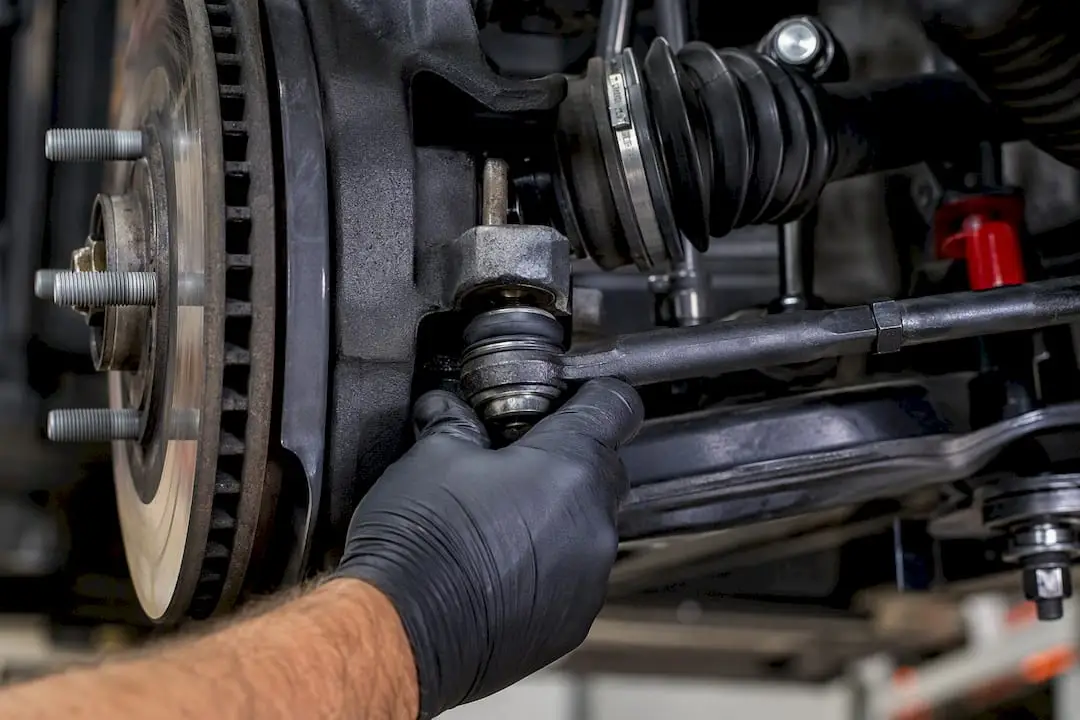
That uneven contact also concentrates heat unevenly across the rotor face, which can deepen the high spots that caused the problem in the first place and turn a mild pulse into a pronounced shake. Suspension components take a hit too. A wheel or tire that’s out of balance sends repeated small shocks through the steering knuckle, tie rod ends, and ball joints every time you brake, and those parts wear faster under that kind of constant, uneven load than they would with a smooth, balanced wheel.
There’s a driver-behavior cost as well. A car that shudders under braking makes people brake earlier and harder to compensate, which increases pad and rotor wear on top of the original problem. Left unaddressed long enough, a $200 to $400 category repair can escalate into hub, bearing, or suspension work that costs considerably more, simply because the root cause never got resolved. Catching brake shudder early and getting a measured diagnosis is almost always cheaper than waiting for it to worsen.
Do Drum Brakes Vibrate the Same Way as Disc Brakes?
Disc and drum brakes fail differently, so the vibration they produce and the fixes involved aren’t identical. On disc brakes, the vibration usually traces to the rotor itself, whether from thickness variation, pad transfer, or runout introduced during a poor installation, and the fix centers on measuring and replacing that single rotor and pad set per axle.
Drum brakes vibrate for different reasons. An out-of-round drum, where the drum’s inner surface wears unevenly instead of the flat rotor face developing high spots, produces a similar pulsing feel but requires different tools to diagnose. A technician checks drum roundness with an internal micrometer rather than the lateral runout gauge used on rotors. Worn or unevenly adjusted brake shoes, weak or broken return springs, and a self-adjuster mechanism that’s stuck can also create pulsing or grabbing that feels like vibration, none of which have a disc-brake equivalent.
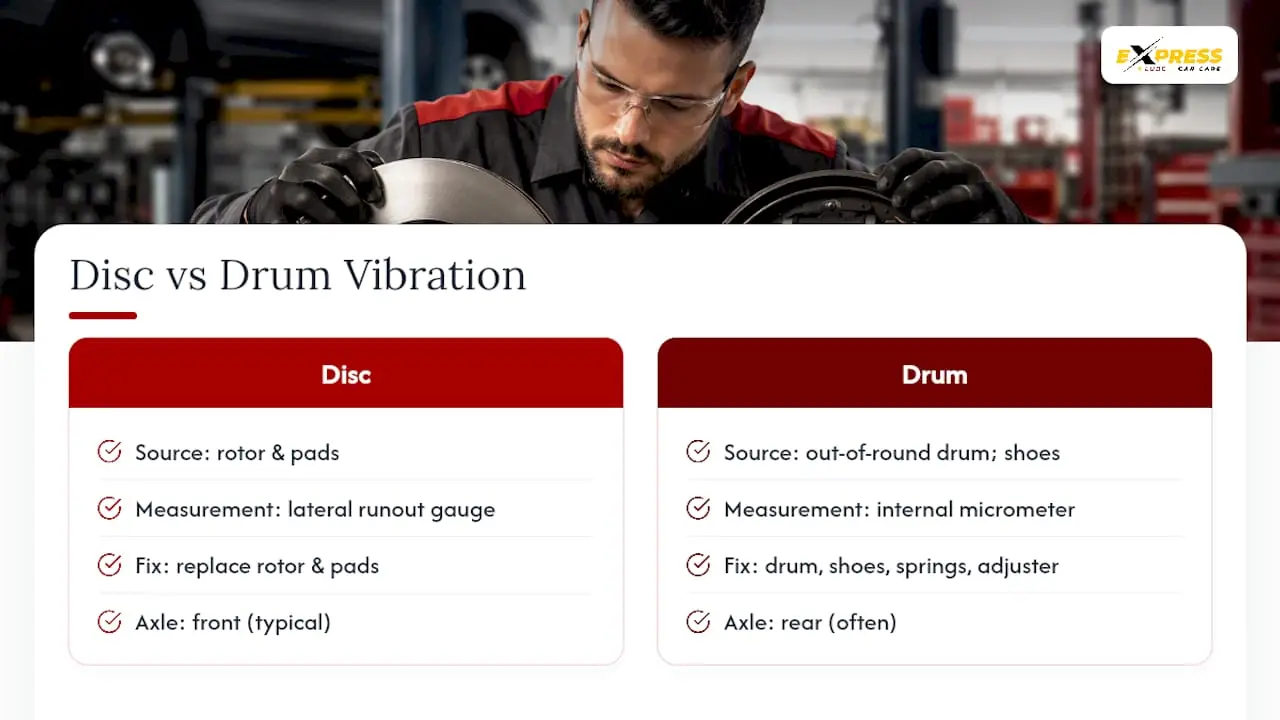
Most vehicles on the road today use disc brakes on the front axle at minimum, with some trucks and older or economy models still running rear drums. If your vehicle has rear drums and the vibration is coming from the back of the car, the repair conversation shifts from “rotor or pads” to “drum, shoes, or adjuster,” which is exactly the kind of distinction worth raising when you describe your symptoms to a technician.
Our Approach to Diagnosing Brake Vibration
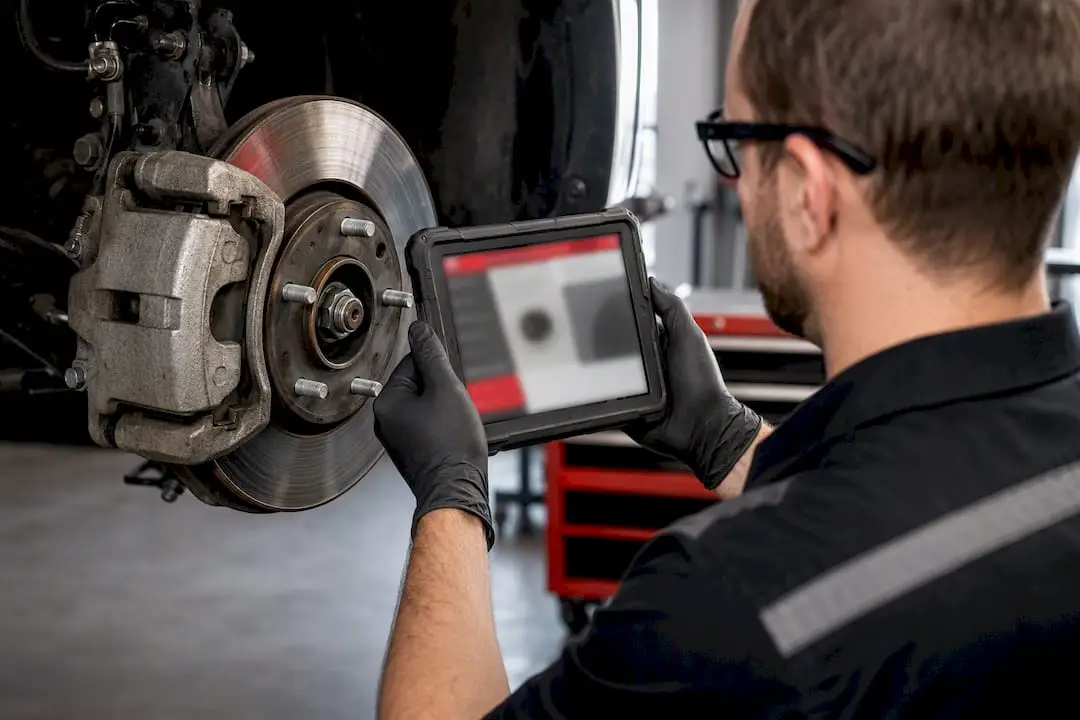
We’d rather measure than guess. A rotor swapped without checking runout or thickness first is a coin flip, and we’ve seen plenty of “new” rotors shake again within weeks because nobody addressed the actual cause. Our ASE-certified technicians run a road test and take real measurements, then back it up with a digital vehicle inspection that includes photos, so you can see exactly what we found before approving any work. Qualifying repairs carry our 24-month/24,000-mile warranty. Bring it in and let’s find the actual cause.
Get Your Brakes Measured, Not Guessed At
A shop that replaces rotors without measuring runout and thickness first is asking you to pay for a guess. Express Lube & Car Care runs the measured inspection instead, checking rotor thickness, caliper drag, and wheel balance before recommending a single part, and we back qualifying brake repairs with our 24-month/24,000-mile warranty.

Our technicians handle the full diagnostic picture: brake inspection, rotor and pad replacement, caliper service, and a look at suspension components that can mimic a brake problem. Every job comes with a digital inspection report and photos, so you see what we see. Walk-ins are welcome for same-day service, and current brake service offers can help offset the cost of getting it fixed right. If you’re also due for routine maintenance, ask about oil change specials while your car is in the bay. Schedule an appointment online or call us at (817) 284-8478 to get your vibration diagnosed properly.
Sources
- Why Do Brake Pedals Vibrate? | PowerStop Brakes
- Vibrating or shaking brakes, brake shudder explained | Ferodo
- Car shudders when braking — diagnostic location tests | Pulscar
- Why Does My Car Vibrate or Shake When Braking? – AutoZone
FAQ
Is It Safe to Drive With Brake Vibrations?
Light vibration with a firm pedal and no unusual noise is generally safe to drive short distances to a shop. Grinding, a burning smell, a soft or sinking pedal, or a warning light means you should stop and have the vehicle towed instead.
How Much Does It Cost to Fix Brake Vibration?
Costs vary by vehicle and cause, since rotor and pad replacement, caliper service, and wheel balancing each fall into different price ranges. Factors like rotor size, parts quality, and whether hub or bearing work is needed all affect the final estimate, so a measured inspection gives you the most accurate number.
Can Bad Struts Cause Vibration When Braking?
Worn struts and other suspension components can contribute to vibration that feels inconsistent and changes with road surface, especially under the added load of braking. A full inspection that checks suspension and steering joints alongside the brakes helps confirm whether struts are part of the problem.
Can a Bad CV Joint Cause Vibration When Braking?
A failing CV joint typically causes vibration that changes with acceleration or turning rather than braking specifically, but worn components in that area can sometimes contribute to a broader vibration pattern. A road test that reproduces the exact conditions of the shake is the best way to tell a CV joint issue apart from a brake-specific cause.
Why Does My Steering Wheel Shake Only When I Brake?
A shake felt specifically in the steering wheel during braking almost always points to the front rotors, most often from thickness variation or pad transfer. If the same shake appears at steady cruising speed without braking, wheel balance or tire condition is the more likely cause.