

Most drivers pay between $100 and $400 for a full spark plug replacement, with simple four-cylinder jobs landing near the bottom and V6 or V8 engines with buried plugs pushing toward the top. Plug material, cylinder count, and how much of the engine has to come apart to reach the plugs drive most of that spread. If your plugs sit right on top of the engine, DIY is realistic; if they’re buried under the intake, let a shop handle it.
TL;DR:
- Complex engine designs, such as V6 and V8, with buried or dual-spark plugs can increase labor costs to over $400, especially if intake removal is necessary.
- The price per plug varies significantly by material, with iridium and ruthenium costing up to $25 or more each, driving higher overall replacement costs.
- Labor rates differ by shop type, with dealership and independent shops charging $80 to $150 per hour, impacting total costs based on accessibility and engine layout.
- DIY replacement is cost-effective only if plugs are easily accessible and you are confident with tools, but risking damaged threads can lead to costly repairs.
- Waiting beyond recommended intervals for replacement may cause additional issues like misfires or coil damage, resulting in higher repair costs.
Table of Contents
- Spark Plug Replacement Cost: Parts and Labor Breakdown
- How Much Does a Spark Plug Change Cost by Engine Type?
- What Factors Push the Price Higher?
- Is DIY Spark Plug Replacement Worth the Risk?
- How Long Does It Take and When Should You Replace Plugs?
- How Do You Get a Fair Spark Plug Replacement Price?
- How Express Lube & Car Care Prices Spark Plug Jobs
- What Surprises Customers Most About This Job
- Get an Honest Spark Plug Quote in Richland Hills
- Sources
- FAQ
Spark Plug Replacement Cost: Parts and Labor Breakdown
The two numbers that build your total are the price per plug and the hours a technician needs to reach them. AAA reports parts running $5 to $25 per plug, with total jobs landing between $100 and $250 for most cars, occasionally topping $500 on labor-heavy engines. That’s a wide range because plug material changes the math dramatically.
- Copper plugs: roughly $2 to $5 each, but they wear fastest
- Single platinum: about $6 to $12 each
- Iridium: typically $12 to $25 each, per Motor1’s pricing breakdown
- Ruthenium: usually mid-teens up to $28 each
| Component | Typical Range |
|---|---|
| Parts (per plug) | $2 to $28 depending on material |
| Shop labor rate | $80 to $150 per hour |
| Simple job labor time | 0.6 to 1.2 hours |
| Complex job labor time | 2 to 4+ hours |
On an easy four-cylinder, parts and labor are close to even. On anything requiring an intake teardown, labor takes over the bill entirely.
How Much Does a Spark Plug Change Cost by Engine Type?
Engine layout changes the total more than plug material does. Carparts, with parts typically running $80 to $120 of that and labor covering the rest.
| Engine Type | Low | Typical | High |
|---|---|---|---|
| 4-cylinder, easy access | $100 | $180 | $250 |
| V6, moderate access | $180 | $260 | $400 |
| V8 or dual-plug | $250 | $390 | $500 |
- Four-cylinder engines with plugs on top of the block are the cheapest and fastest jobs in the shop.
- V6 engines often hide rear-bank plugs under intake plumbing, adding an hour or more of labor.
- HEMI and other dual-plug V8 designs double the plug count and often the labor time.
- European and luxury models frequently need specialty tools or dealer-level diagnostics, which raises the hourly rate.
AutOwner’s data shows labor eating up roughly two-thirds of the total bill on full-service estimates, so a quote heavy on labor hours isn’t automatically a red flag. It usually means your engine just isn’t an easy one to work on. If a shop quotes a four-cylinder job at V8 labor rates, ask why before you approve the work.
What Factors Push the Price Higher?
Two nearly identical cars can generate very different invoices, and it almost always comes down to access with specialized wiring harnesses. Pulling an intake manifold to reach rear-bank plugs can turn a 45-minute job into a three-hour one, and Carparts compared to an easy-access engine.
- Accessibility: buried plugs, coil-on-plug wiring harnesses, and rear-bank cylinders all add labor time.
- Cylinder count and dual-spark designs: eight plugs cost more than four, and dual-plug engines double that again.
- OEM vs. aftermarket parts: OEM-spec plugs often cost more but match the manufacturer’s intended interval.
- Coil and boot replacement: worn coils sometimes get replaced at the same time, and coil work can add $150 to $400 or more per unit.
- Shop type: independent shops, dealerships, and mobile mechanics all set different hourly rates, which is a big reason two shops quote different totals for the same job.
Is DIY Spark Plug Replacement Worth the Risk?
If your plugs sit in plain sight under the hood, doing it yourself can save real money. First-timers usually spend $130 to $180 on tools and parts combined, since a torque wrench, spark plug socket, anti-seize compound, and dielectric grease all add up. Repeat jobs drop to roughly $50 to $95, mostly just the plugs themselves.
- Confirm your plug type and torque spec in the owner’s manual before buying anything.
- Buy a spark plug socket (usually 5/8 inch or 13/16 inch), a torque wrench, anti-seize, and dielectric grease.
- Work one cylinder at a time to avoid crossing up the firing order.
- Torque each plug to spec. Overtightening cracks the ceramic insulator; undertightening causes misfires.
The risk isn’t the plug itself. It’s what happens around it. Seized plugs in aluminum heads can strip threads on removal, and a stripped hole often means a much pricier repair than the plug job you started with.
Pro Tip: If a plug won’t turn after a firm, steady effort, stop. Soak it with penetrating oil and walk away for 20 minutes rather than forcing it. Stripped aluminum threads turn a $150 DIY job into a $400+ shop repair.
If your plugs are buried under an intake manifold, or you’re not fully confident reading a torque wrench, hand it to a professional. The labor savings rarely outweigh the risk on a complex engine.
How Long Does It Take and When Should You Replace Plugs?
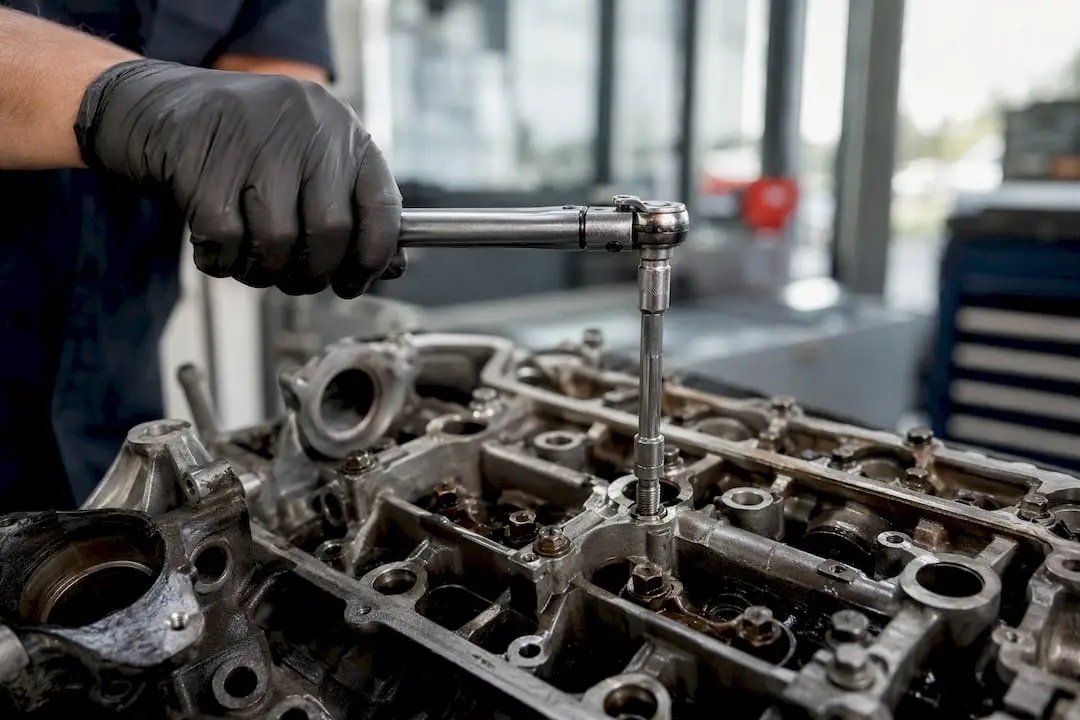
A simple four-cylinder job often takes 0.6 to 1.2 hours of hands-on labor. V6 and V8 engines requiring intake removal commonly run 2 to 4 hours or more, which is the real reason those quotes look bigger.
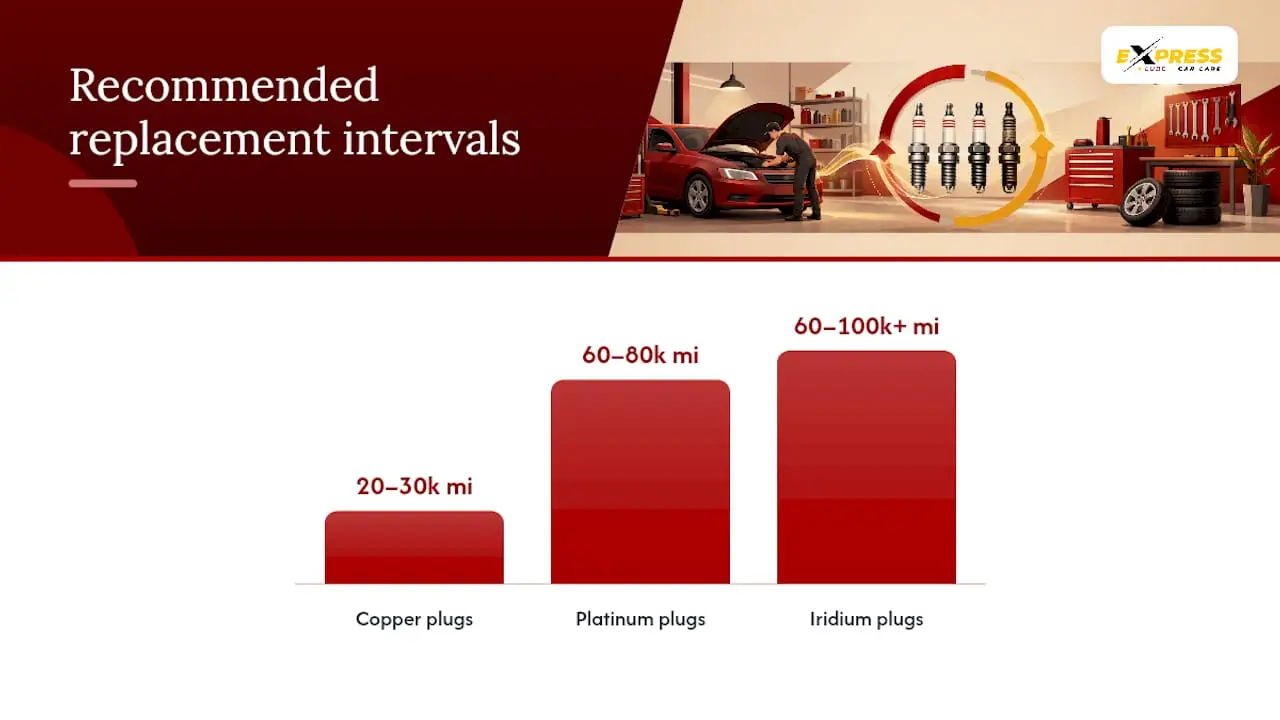
Service intervals depend heavily on plug material:
- Copper plugs: roughly every 20,000 to 30,000 miles
- Platinum plugs: typically 60,000 to 80,000 miles
- Iridium plugs: often 60,000 to 100,000+ miles, per Motor1’s material comparison
Waiting for misfires, rough idle, or a noticeable mpg drop before replacing plugs usually means you’ve already gone past the recommended interval, and that can strain your ignition coils in the process.
How Do You Get a Fair Spark Plug Replacement Price?
A fair quote is a specific one. Vague estimates are where surprise charges hide.
- Ask for the parts price, exact part numbers, labor hours, and the shop’s hourly rate separately.
- Request photos of the old plugs, especially if oil fouling or unusual wear is mentioned.
- Get an itemized invoice, not a single lump-sum total.
- Ask whether bundling with an oil change or fluid service lowers the combined labor charge.
Pro Tip: If a shop can’t break down labor hours from parts cost on request, that’s worth questioning. A shop confident in its pricing will show you the math without hesitation.
Independent shops generally run lower hourly rates than dealerships for this kind of routine work, and AutoZone’s own guidance backs a better price-to-quality ratio at independents when the technician carries ASE certification.
How Express Lube & Car Care Prices Spark Plug Jobs
Every spark plug job at Express Lube & Car Care goes through ASE-certified technicians, and we back the work with a 24-month/24,000-mile warranty. That’s not marketing language. It’s how we structure the invoice.
- We separate parts, labor, and shop supplies into their own line items, so you see exactly what you’re paying for.
- We can show photos of the removed plugs on request, whether that’s oil fouling, unusual gap wear, or carbon buildup.
- If your plugs are accessible and your schedule is tight, we’ll tell you straight when it’s a job you could reasonably do yourself.
- If your engine requires intake removal or dual-plug service, we’ll walk through why that adds labor hours before you approve anything.
What Surprises Customers Most About This Job
The biggest surprise isn’t the plugs. It’s what’s around them. Buried rear-bank plugs, dual-plug HEMI setups, and worn ignition coils discovered mid-job all change the number after the fact. We handle that by quoting itemized estimates before we start, using photo diagnostics so you see what we see, and backing the finished work with our warranty. If you’re not sure what your engine needs, bring it in for a quick look before committing to a number.
— Express Lube & Car Care
Get an Honest Spark Plug Quote in Richland Hills
Express Lube & Car Care is the straightforward alternative to guessing at online estimates or gambling on a DIY job with the wrong torque spec. Our ASE-certified technicians itemize parts, labor, and supplies before any work begins, show you photos of your old plugs on request, and back the finished job with our 24-month/24,000-mile warranty.

For engines that need more than a plug swap, like coil replacement or intake work, our engine diagnostics and repair services cover the full job under one roof, and easy financing is available if the estimate runs higher than expected. Check our current service specials to see if bundling saves you money, then schedule an appointment and get a real number instead of a guess.
Sources
- What is the Average Spark Plug Replacement Cost? | AAA Automotive
- Carparts
- Spark Plugs: How Much Should They Cost? | Motor1
FAQ
How much should I pay to replace spark plugs?
Most vehicles run $100 to $400 total, with simple four-cylinder jobs near the low end and V6 or V8 engines with buried plugs pushing toward $400 or higher.
Will AutoZone change spark plugs?
AutoZone sells plugs and offers DIY guidance, but installation work is generally handled by repair shops rather than the store itself.
What is the lifespan of a spark plug?
Copper plugs typically last 20,000 to 30,000 miles, platinum plugs 60,000 to 80,000 miles, and iridium plugs often reach 60,000 to 100,000 miles or more.
How long does it take a mechanic to change spark plugs?
Simple, accessible four-cylinder jobs usually take 0.6 to 1.2 hours, while V6 or V8 engines requiring intake removal often take 2 to 4 hours or more.