

You back out of a parking spot, turn the wheel, and hear a whining sound that was not there last week. Or the steering suddenly feels heavier than normal at a stoplight. That gets your attention fast.
For a lot of Richland Hills drivers, a search for power steering repairs near me starts the same way. Something feels off, and you need to know whether it is a minor service, a bigger repair, or a safety issue that should not wait. The good news is that steering problems usually leave clues before they turn into a complete loss of assist.
This guide is written the way I would explain it at the counter or in the bay. Clear symptoms. Real causes. What a shop checks first. What repairs are common. What they typically cost. And one point that matters more every year, whether your vehicle uses an older hydraulic setup or a newer electric system.
Is Your Steering Trying to Tell You Something?
A steering problem rarely starts with total failure. Most of the time, the car starts talking to you first.

One driver notices a groan while pulling into a driveway. Another says the wheel feels fine at highway speed but stiff in a parking lot. Someone else spots fluid under the front end and hopes it is just water from the A/C. Those details matter. They help narrow the problem before a technician even opens the hood.
The signs drivers mention most
- A whining noise while turning. On a hydraulic system, that often points toward low fluid, air in the system, or a pump that is struggling to build pressure.
- A stiff steering wheel at low speed. If the wheel suddenly feels like work during parking maneuvers, the assist may be weak or inconsistent.
- Groaning or growling at full turn. That can happen when the system is under strain. In hydraulic systems, it may indicate restricted flow or pump wear.
- Fluid under the vehicle. A leak from a hose, fitting, seal, or steering rack can reduce assist and damage other parts if ignored.
- Jerky or uneven steering feel. Instead of one smooth motion, the wheel may feel notchy or inconsistent from side to side.
- A warning light on the dash. On many newer vehicles, this is the first clue because electric power steering does not use fluid the way older systems do.
Tip: If the steering changes suddenly, do not wait for your next oil change. Steering issues affect vehicle control, especially in parking lots, intersections, and quick lane adjustments.
Some drivers also confuse a steering fault with an ignition or lock issue. If your wheel is physically jammed and the key will not turn, that can be a different problem entirely. This guide on Steering Wheel Lock Stuck is useful for sorting out that specific situation before you assume the power steering system failed.
If you are seeing drips, this breakdown of power steering fluid leak symptoms can help you identify what to look for before visiting a shop.
What deserves immediate attention
Not every noise means the car is unsafe that minute. But some symptoms deserve same-day inspection:
- Steering effort changed abruptly
- The wheel feels heavy and inconsistent
- A warning light appears with poor steering response
- You hear noise plus see fluid loss
Drivers usually know when a car feels wrong. Trust that instinct. A good diagnosis starts with the exact symptom you felt, when it happened, and whether it shows up cold, hot, parked, or moving.
Understanding Your Car's Power Steering System
You turn into a tight parking spot in Richland Hills and the wheel suddenly feels heavier than it used to. At that point, it helps to know which system your car has, because the repair path is very different on an older hydraulic setup than it is on a newer electric one.
Older vehicles usually use hydraulic power steering. Newer models often use electric power steering, or EPS. Both systems reduce steering effort. They just do it in different ways, fail in different ways, and get diagnosed with different tools.
Hydraulic steering in plain English
A hydraulic power steering system uses pressurized fluid to assist your steering input. The main parts are straightforward:
- Pump
- Fluid reservoir
- Pressure and return hoses
- Steering gear or rack
When everything is working properly, the pump builds pressure and the steering gear uses that pressure to help turn the wheels. The result is a lighter, smoother feel at low speeds.
When I inspect hydraulic steering problems, the same trouble patterns show up again and again. Fluid leaks lower assist. Old or contaminated fluid can make the pump noisy. A worn pump may still work when the car is cold, then struggle once the fluid warms up. Cracked hoses, loose clamps, or air entering the system can also cause whining, jerky assist, or foamy fluid in the reservoir.
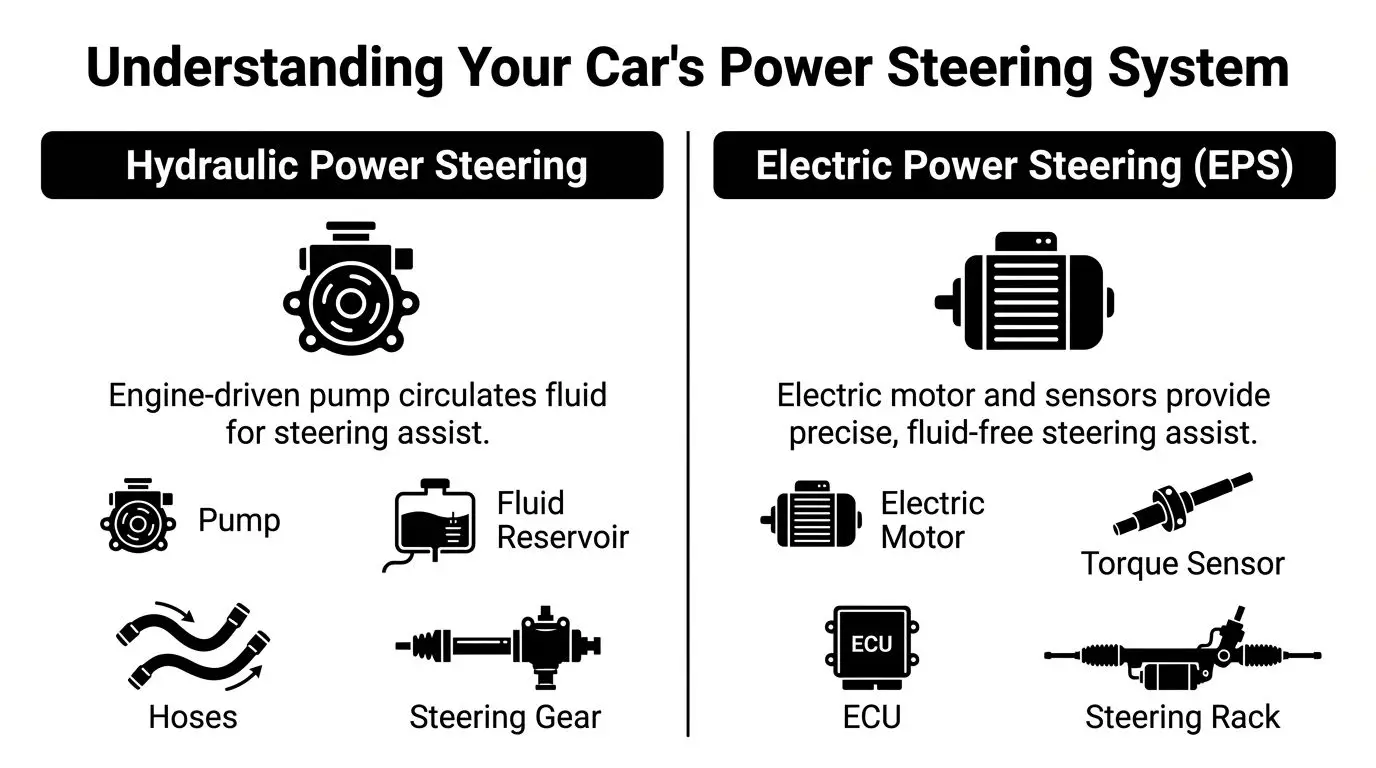
Hydraulic systems are familiar to many drivers because they were the standard for years. They are usually easier to understand at a glance because you can often see the reservoir, inspect the fluid, and spot an active leak.
Electric steering works differently
EPS does not use hydraulic fluid for steering assist. It uses an electric motor, steering angle and torque sensors, wiring, and a control module. The system reads how much assist you need and adds it electronically.
That changes both the symptoms and the repair process.
With EPS, you usually will not find a low-fluid problem because there is no hydraulic circuit to top off. Trouble often shows up as a warning light, inconsistent assist, a steering wheel that feels heavier in one situation than another, or assist that cuts in and out. Some EPS faults are caused by a failing motor or sensor. Others come from wiring problems, low system voltage, calibration issues after suspension or alignment work, or faults stored in the control module.
That is why guessing wastes money. Pouring fluid into an EPS vehicle will not fix anything, and replacing a hydraulic pump on a leak-free system will not solve an electrical fault.
For Richland Hills drivers, this matters at the estimate stage too. Hydraulic repairs often involve visible parts like hoses, pumps, seals, or the rack. EPS repairs may require scan data, pinpoint electrical testing, and sometimes programming or calibration after parts are replaced. The labor approach is different, even when the symptom from the driver's seat feels similar.
If the steering wheel feels like it is shaking rather than getting hard to turn, this guide on what causes steering wheel vibration can help you sort out whether the issue points to steering assist, tires, brakes, or suspension.
What to Expect During a Professional Diagnosis
Drivers often feel better once they know the shop is not guessing. A proper steering diagnosis follows a sequence.
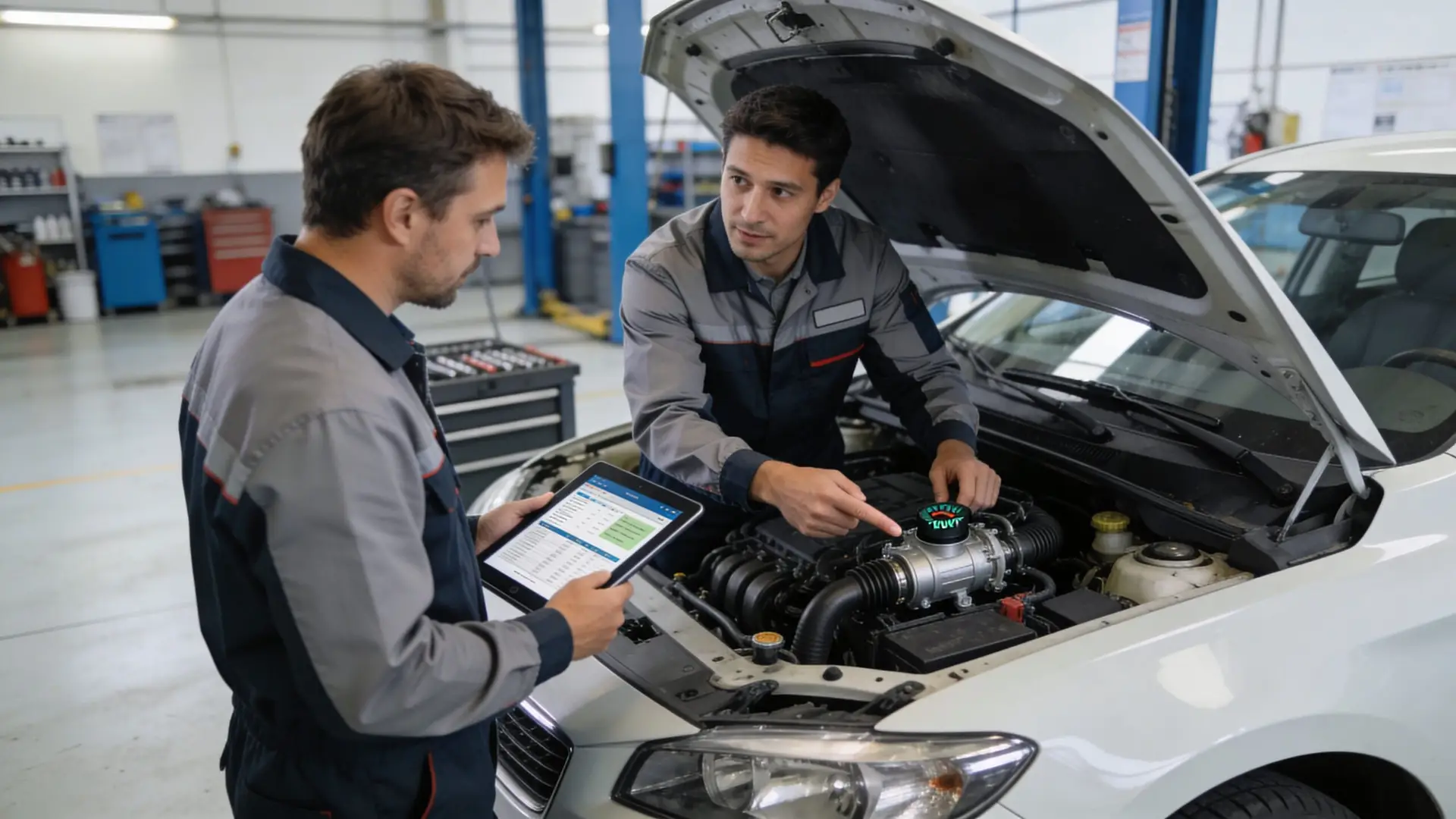
It starts with your description. The best write-up is simple and specific. Does it whine only when cold? Is the wheel hard to turn only when parking? Did the warning light come on before or after the steering changed? Those details point the technician in the right direction.
What the technician checks first
A hydraulic system usually gets a visual inspection before anything else:
- Leak check around hoses, pump, fittings, reservoir, and rack boots
- Fluid condition check for level, color, and signs of contamination
- Belt and pulley inspection where applicable
- Steering feel test with the vehicle running and during low-speed turns
Then the shop moves to confirmation tests. If the fluid is low, the next question is why. If the pump is noisy, the next question is whether it is worn out, starved for fluid, or pulling in air.
Why pressure testing matters
On hydraulic systems, a pressure test separates a weak pump from other faults. That matters because replacing parts without testing can waste money.
According to technical guidance summarized by PSS1 Technical Information, hydraulic systems for light trucks typically need 1300 to 1600 PSI system pressure, and restricted flow below the 2 GPM minimum required for rack-and-pinion operation can lead to symptoms such as growling at full turn. The same guidance notes that pump failures are common in high-mileage fleets and can be linked to heat and clogged filters.
A good shop also checks whether air is trapped in the system after prior work. Improper bleeding can create inconsistent assist and a steering shimmy that feels like a major failure when the fix may be procedural.
Later in the process, a modern steering system may need electronics checked too.
EPS diagnosis looks different
On EPS vehicles, the technician may use a scan tool to look for steering-related fault codes, sensor readings, or a module that needs recalibration. There may be no leak to find and no fluid to inspect.
That is why a thorough diagnosis matters more than assumptions. The symptom is steering trouble. The cause may be hydraulic, mechanical, or electronic.
Common Power Steering Repairs and Typical Costs
After diagnosis, the repair usually falls into one of a few buckets. For Richland Hills drivers, the biggest price difference often comes down to system type. Older hydraulic steering can need hoses, pumps, seals, or a rack. Newer electric power steering can shift the job toward sensors, wiring, modules, or calibration.
The repairs shops see most often
Leak repairs are often the least expensive starting point on a hydraulic system. A pressure hose, return hose, fitting, reservoir seal, or rack seal may be leaking. Catch it early and the repair may stay limited to the leak itself. Wait too long, and low fluid can take out the pump or damage the rack.
Pump replacement is common on aging hydraulic vehicles, especially after repeated low-fluid operation or fluid contamination. Typical repair cost can range from a few hundred dollars to well over a thousand, depending on the vehicle, parts quality, and whether the system also needs a flush, pulley service, or additional leak repair. The smart question is not just "What does the pump cost?" It is "Why did the pump fail, and what is included to keep the new one alive?"
Rack and pinion repair or replacement is a bigger job. Internal seal failure, binding, hard spots in the wheel, or fluid leaking from the bellows can point to the rack instead of the pump. I have seen plenty of cars come in with a new pump already installed, and the actual problem was still sitting lower on the subframe in the steering gear.
EPS repair can look very different from hydraulic work. There may be no fluid leak and no pump noise. The fault may involve a torque sensor, steering angle sensor, motor, wiring issue, or a control module that needs setup after related steering or suspension work. If the vehicle also has uneven tire wear or pull concerns, it helps to maintain proper auto alignment and suspension because steering and front-end problems often overlap in the way they feel from the driver seat.
Cost and time expectations
A realistic estimate starts with the confirmed failure, not the symptom. Two vehicles can both have stiff steering and end up needing very different repairs.
| Repair Type | Estimated Cost | Estimated Time |
|---|---|---|
| Power steering leak repair | Varies by leak source and parts required | Often shorter than major component replacement |
| Power steering pump replacement | Moderate to high, depending on vehicle and related service | Often same day |
| Steering rack and pinion repair or replacement | Higher parts and labor cost than most leak or pump repairs | Commonly longer because of access, bleeding, and follow-up checks |
| EPS diagnostic and electronic repair | Varies widely by fault, parts, and programming needs | Depends on testing, calibration, and part availability |
Labor can change the number fast. On some vehicles, a pump is easy to reach. On others, the rack is buried and the job takes much longer. EPS repairs also carry a different trade-off. Parts replacement may be quicker, but programming, initialization, or scan-tool setup can add time that customers do not expect.
If you are reviewing quotes from different shops, this guide to auto repair cost comparison helps explain why one estimate includes testing, fluid service, calibration, and higher-grade parts while another leaves those items out.
What works and what does not
A few shop truths help customers avoid paying twice:
- Adding fluid only buys time. It does not fix the leak.
- A new pump should not go into dirty fluid. Contamination can ruin the replacement part.
- Rack leaks rarely stay small for long. Delay usually raises the final bill.
- EPS problems need proper testing. Guessing at modules or sensors gets expensive fast.
Shop-floor advice: A complete estimate will detail the failure, the diagnostic test that confirmed it, and the steps included to protect the new component.
Proactive Maintenance to Keep Your Steering Smooth
You back out of the driveway in Richland Hills, turn the wheel, and it feels a little heavier than it did last week. That is often the first warning. Catch it early, and you may be looking at fluid service or a small leak repair. Wait too long, and a pump or rack can end up in the estimate.
Preventive service matters most on older hydraulic systems because fluid condition directly affects pump life, seal life, and steering feel. On newer electric power steering systems, there is no power steering fluid to check, but the front end still needs attention. Tire wear, alignment, and suspension play a bigger role in steering effort and return-to-center than many drivers realize.
For hydraulic systems, monthly visual checks are simple and worth the minute or two. As noted earlier from J.D. Power, regular fluid inspections and full fluid replacement when contamination is present can help prevent pump damage and extend component life. If the reservoir is low, the fluid is dark, or it smells burnt, schedule an inspection before the system starts whining or losing assist.
A quick check can reveal several early problems:
- Low fluid level, which often points to a leak
- Dark fluid, which usually means age or contamination
- Foamy fluid, which can mean air is getting into the system
- Burnt odor, which suggests heat and fluid breakdown
Flushes have their place, but only when the condition calls for it. I do not recommend flushing every car on a fixed schedule without looking at the fluid first. If the fluid is clean and the system is dry, leave it alone. If it is dirty, overheated, or full of debris after a component failure, cleaning the system is part of protecting the new parts you are paying for.
That last part matters. Installing a new pump into contaminated fluid is one of the fastest ways to shorten the life of the replacement.
Steering feel also depends on parts outside the steering system. A vehicle with worn tie rods, uneven tire wear, or poor alignment can feel loose, heavy, or inconsistent even if the pump or motor is doing its job. If you want the whole front end to track correctly and steer predictably, it helps to maintain proper auto alignment and suspension.
Good maintenance gives you time to plan. Neglect turns a minor steering complaint into a safety issue and a larger bill.
Your Trusted Local Solution for Power Steering Repairs
If you searched power steering repairs near me, you probably do not need theory. You need a local shop that can tell the difference between a low-fluid hydraulic problem, a worn pump, a leaking rack, and an EPS fault that needs scan-tool diagnosis.
That is where local experience matters. Richland Hills drivers need a shop that sees commuter mileage, family vehicles, older hydraulic systems, and newer electronically assisted steering in the same week. The right repair starts with listening to the symptom, testing the system, and explaining the result in plain language.
A dependable local solution should offer a few basics without making you fight for them:
- ASE-certified technicians
- Clear estimates before major work
- Modern diagnostic equipment for EPS and warning-light issues
- Walk-in convenience for busy schedules
- Straight answers about what can wait and what should not
For families, commuters, and fleet vehicles in Northeast Tarrant County, that combination matters. Steering problems are stressful enough without vague communication or parts-swapping.
If the wheel feels heavy, noisy, loose, or unpredictable, get it inspected before it turns into a larger repair and a larger safety risk.
Frequently Asked Questions About Power Steering
Can I still drive if my power steering fails
Sometimes the car will still move, but that does not mean it is safe to keep driving normally. Steering effort can increase sharply, especially at low speeds and during parking or emergency maneuvers. If the wheel suddenly becomes hard to turn or feels inconsistent, have the vehicle checked as soon as possible.
Is a noisy power steering pump dangerous
It can be. Noise is often an early warning that the system is low on fluid, pulling in air, or wearing internally. A whining or growling pump may still work for a while, but continued driving can turn a smaller service into a larger repair.
How do I know whether my vehicle has hydraulic steering or EPS
If you have a power steering fluid reservoir, it is likely hydraulic or electrohydraulic. If there is no reservoir and the vehicle shows a steering warning light with no leak, it may use EPS. Your owner's manual or a quick inspection by a technician can confirm it.
Does insurance cover power steering repairs
Usually, standard auto insurance does not cover mechanical wear or maintenance-related failure. Coverage may apply in limited situations tied to collision damage or a specific service contract. The best move is to check your policy details or any extended warranty paperwork before authorizing major repairs.
If your steering feels heavy, makes noise, leaks fluid, or triggers a warning light, Express Lube & Car Care in Richland Hills can help you get a clear answer fast. Their ASE-certified team handles walk-in diagnostics, explains what failed and why, and gives straightforward repair recommendations for both hydraulic and modern electric steering systems. If you want a local shop that values safety, fair pricing, and efficient turnaround, they are a solid place to start.