

The maintenance light comes on when you're pulling into the driveway after a week of Highway 183 traffic, quick school runs, and a few idling minutes in a hot parking lot. That's usually when most Toyota owners start wondering the same thing. Is it really time yet, or can it wait a little longer?
Around Richland Hills, that question matters more than people think. A Toyota Camry used for commuting, a Highlander hauling family all over Northeast Tarrant County, or a RAV4 doing daily errands all face the same local stressors: heat, stop-and-go traffic, short trips, and dust. Oil has to handle all of it.
An oil change toyota service isn't just routine maintenance. It's the simplest way to protect the engine you already paid for, keep the vehicle running the way Toyota intended, and avoid the kind of wear that sneaks up on people slowly. Most engine problems tied to lubrication don't show up all at once. They build over time when oil gets dirty, thins out, or stays in service too long for the way the vehicle is driven.
Keeping Your Toyota Running Smoothly in Texas
Many local drivers find themselves in a similar situation. They understand that Toyotas are engineered for longevity, yet they also recognize that Texas driving conditions can be harsh on engine oil. A Corolla used primarily for short commutes might need more frequent attention than a vehicle that accumulates mostly easy highway miles.

Summer heat, long idle times, and traffic around the mid-cities change how I think about maintenance. Oil doesn't just lubricate. It also helps manage heat and carry contaminants away from internal engine parts. When a Toyota spends its life in real-world city driving instead of ideal conditions, the service schedule deserves a closer look.
Why local driving changes the conversation
In Richland Hills, many drivers don't use their Toyota in a perfect textbook pattern. They make short runs to the store, sit in traffic, wait in school pickup lines, and drive through long hot stretches where the engine works even when the car isn't moving much. That kind of use is harder on oil than many realize.
Practical rule: The right oil interval depends on both the vehicle and the way you drive it. The owner's manual matters, but so does your daily routine.
A family Highlander and a commuter Camry can both be “well maintained” on paper and still need different service timing in practice. That's why blanket advice doesn't help much. Toyota maintenance works best when you match the schedule to the engine, the oil type, and local conditions.
What owners usually want
Majority of drivers aren't looking for the cheapest possible oil change. They want three things:
- Reliability: The engine starts cleanly, runs smoothly, and stays protected in Texas heat.
- Savings over time: Regular oil service costs far less than internal engine work.
- Confidence: They want to know the correct oil and filter went into the vehicle.
That's the actual value of paying attention to oil service on a Toyota. You're not just checking off maintenance. You're protecting resale value, daily drivability, and long-term engine life.
When Does Your Toyota Need an Oil Change
A Camry that spends its week on Airport Freeway, school pickup duty, and short errands around Richland Hills does not age its oil the same way as a Toyota that gets steady highway miles. That is why the right interval starts with your model, then gets adjusted for how you drive.
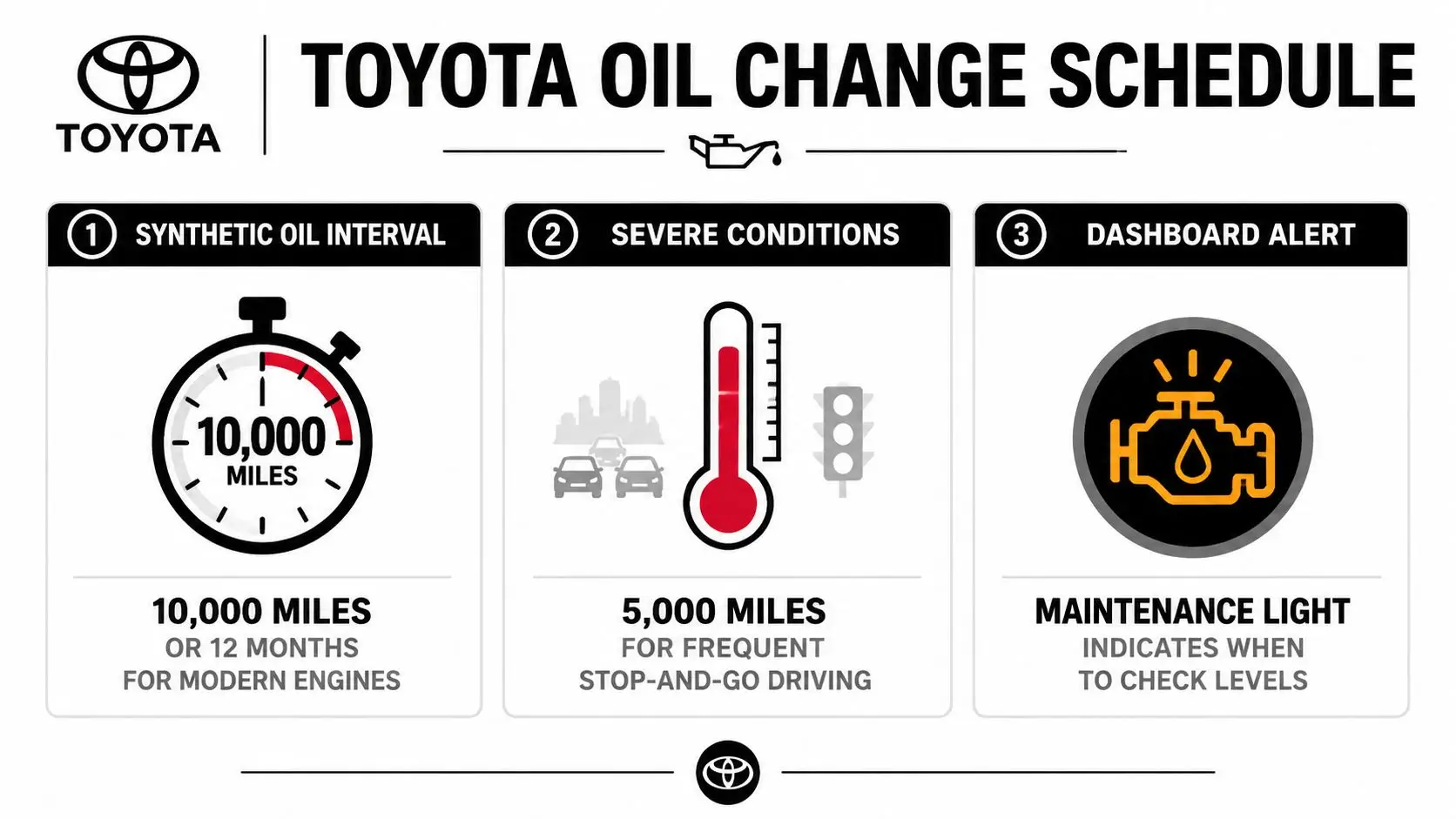
For many newer Toyotas, a 10,000-mile or 12-month oil change interval is normal when the engine uses full synthetic oil and the vehicle is driven under lighter conditions. Older models, or Toyotas that call for different oil types, often need service closer to every 5,000 miles or 6 months. The catch is simple. Factory intervals assume a certain type of use, and many local drivers do not fit that pattern.
In this area, I see three situations that shorten the practical interval fast. Short trips where the engine barely reaches full temperature. Long idle time in traffic or pickup lines. Summer heat that keeps oil under stress even when mileage stays low. If that sounds like your routine, a shorter interval often makes better sense than stretching it to the maximum on paper.
A safe working rule for many Richland Hills drivers is to treat oil service as a range, not a single magic number. Some Toyotas can comfortably go longer between changes. Others are better served earlier because the oil is dealing with heat cycles, dust, and repeated stop-and-go driving. If you want a quick refresher on matching oil type to vehicle requirements, this guide on how to choose the right oil for your car helps clear up the common mix-ups.
The maintenance light matters too, but it is not the whole story. It tracks service intervals. It does not test oil quality in real time. A Toyota can still drive normally with oil that is overdue, and that is exactly why some owners get caught off guard.
Check the car sooner if you notice any of these:
- Maintenance or oil warning light: Service is due, or the engine may be low on oil.
- Engine sounds louder than usual: Ticking or extra valvetrain noise can point to reduced lubrication.
- Dirty oil on the dipstick: Dark color alone is not a diagnosis, but gritty or heavily contaminated oil deserves attention.
- Burning smell or visible smoke: That can signal an oil leak, oil consumption, or another problem that should be checked right away.
- Mostly short-trip driving: Low mileage does not always mean low oil wear.
The best schedule is one you can follow consistently and one that fits how your Toyota lives in Tarrant County. If you are unsure, a local shop that sees Toyotas every day can look at the model, mileage, oil spec, and your driving habits, then recommend an interval that protects the engine without selling you service sooner than you need it.
Choosing the Right Oil for Your Toyota Model
A lot of Toyota owners in Richland Hills run into the same problem. They know the car needs clean oil, but they are not always sure which oil the engine was built to use. On newer Toyotas, that guess can get expensive.
Oil choice comes down to two separate specs, and both matter.
- Oil type: conventional, synthetic blend, or full synthetic
- Viscosity: the grade, such as 0W-20, 5W-30, or 0W-16
Those are not interchangeable terms. A bottle can be full synthetic and still be the wrong viscosity for your engine.
For many late-model Toyotas, the correct fill is 0W-20 full synthetic. Some newer engines use 0W-16. Many older Toyota engines still call for 5W-30 or another grade. The right answer depends on the exact year, engine, and in some cases the emissions label under the hood. A Camry, Corolla, RAV4, and Tacoma may all be Toyotas, but they do not all use the same oil.
Texas driving adds another layer. In Richland Hills, I see plenty of short trips, long idling with the A/C on, summer heat, and highway runs across Tarrant County in the same week. That mix puts real stress on oil. The wrong viscosity can slow oil flow on startup, change how the variable valve timing system responds, and leave the engine working harder than it should in hot weather.
A practical starting point for common Toyota models
Use this table as a quick reference, then confirm with your owner's manual or under-hood label.
| Toyota Model | Engine | Recommended Oil Viscosity |
|---|---|---|
| Camry | Varies by engine | 0W-20 on many modern models |
| Corolla | Varies by engine | 0W-20 on many modern models |
| RAV4 | Varies by engine | 0W-20 on many modern models |
| Highlander | Varies by engine | 0W-20 on many modern models |
| Tacoma | 2TR-FE and others vary | Check exact engine and factory spec |
| Tundra | Varies by engine | Check exact engine and factory spec |
One detail that gets missed often is that some Toyota trucks and older engines need closer attention to the exact engine code, not just the model name. That matters in Tarrant County because trucks used for towing, jobsite driving, or long idle periods can be much harder on oil than a commuter Corolla.
If you want a broader explanation of how automakers match engines to oil grades, this guide on oil recommendations for my car gives a solid overview.
Common mistakes that cost Toyota owners money
Using a thicker oil because it feels safer is one of the biggest ones I see. Thicker is not automatically better. Toyota engineers set oil clearances, timing system operation, and startup lubrication around a specific viscosity range.
Another mistake is buying by brand first and spec second. Brand matters less than meeting the required grade and service standard for your engine.
And if your Toyota burns a little oil between services, that does not mean you should switch grades on your own. Check the level regularly and have the cause looked at. Sometimes the fix is simple. Sometimes it points to a leak, consumption issue, or PCV problem.
A good local shop helps with more than the oil change itself. It helps you match the factory recommendation to how your Toyota is driven in Richland Hills. That kind of clear, practical advice is part of the same local trust that helps businesses grow through strategies for winning more service jobs.
What to do before you buy oil
Have three pieces of information ready:
- Model
- Year
- Engine
Without all three, it is easy to buy the wrong oil or filter. If you are not sure, a shop that sees Toyotas every week can check it quickly and keep you from paying twice for the same service.
The safe move is simple. Use the exact viscosity Toyota specifies, use the correct oil type, and verify it against your engine instead of assuming every Toyota takes the same bottle.
DIY vs Professional Oil Change in Tarrant County
Some owners enjoy changing their own oil. There's nothing wrong with that if you have the right tools, enough time, and a safe place to work. A careful DIY oil change can be done well.
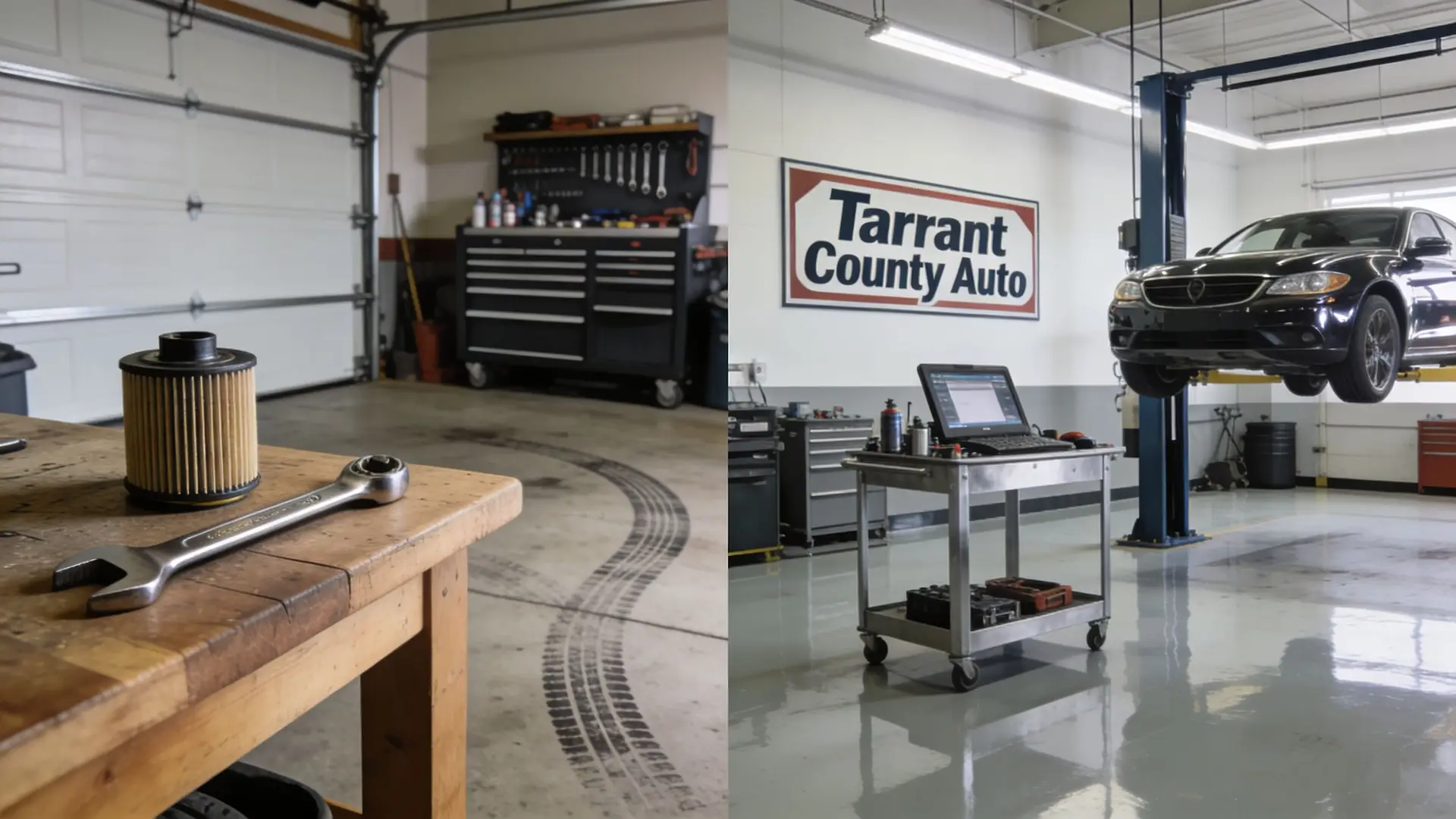
The problem is that most driveway oil changes aren't happening in ideal shop conditions. In Tarrant County, sloped driveways are common. That changes the job more than people expect.
The hidden problem with a driveway oil change
Performing a DIY oil change on a non-flat surface can trap 5-10% of the old contaminated oil in the pan, and a professional level bay can exchange up to 20% more contaminated oil, according to the cited discussion of SAE-based drainage concerns in this Toyota service article on level-bay oil changes. For modern Toyotas, that leftover oil isn't harmless. The same source notes the risk of accelerated wear on components like the VVT-i system when drainage is incomplete.
That's a real trade-off. Saving money at home sounds good until the engine keeps carrying a portion of old oil and contaminants after every service.
Side-by-side comparison
| Factor | DIY oil change | Professional oil change |
|---|---|---|
| Surface level | Depends on your driveway or garage | Flat service bay |
| Oil drainage | Can be incomplete on a slope | More controlled drainage |
| Time | Setup, cleanup, disposal | Faster for most drivers |
| Tools and filter access | You provide everything | Shop equipment already in place |
| Used oil disposal | Your responsibility | Handled for you |
| Inspection value | Limited unless you know what to check | Technician can spot issues early |
For some owners, DIY still makes sense. If you have ramps, stands, proper safety habits, and a level workspace, you can do solid work. But if the vehicle is low to the ground, the filter housing is awkward, or your driveway slopes toward the street, that “simple” weekend job gets less simple fast.
Convenience matters too
There's also the practical side. Most drivers don't want to spend part of a Saturday gathering oil, a filter, drain pan, gloves, and cleanup supplies, then dealing with disposal. They want the correct oil in the engine and the car back on the road.
This quick video gives a general look at professional oil service workflow and why setup matters before the drain plug ever comes out.
If you're weighing cost alone, this article on whether it's cheaper to change your own oil is worth reading because it breaks down the decision in practical terms instead of treating every vehicle the same.
Why shops focus so much on process
Good shops don't just sell oil. They sell consistency. Correct viscosity, a properly installed filter, a leveled bay, safe lifting, and a reset maintenance reminder all matter.
That's also why auto businesses spend time improving communication and visibility online. If you're curious how reputable local service companies attract the right customers, these strategies for winning more service jobs give a useful look at the business side of earning trust before a customer ever walks in.
The best oil change is the one done correctly, safely, and on time. Convenience only helps if the work itself is right.
Your Toyota Oil Change at Express Lube Richland Hills
Most Toyota owners want a process that's easy to fit into a normal week. Pull in, get the right service, understand what was done, and leave without wondering if anyone guessed on the oil grade.

That's why a walk-in oil service model works well for busy drivers in Richland Hills. You don't have to rearrange the whole day around basic maintenance. For commuters, families, and small business vehicles, that convenience matters.
What a proper visit should include
A correct Toyota oil service should be straightforward and thorough:
- Drain the old oil completely: The engine needs the used oil removed before fresh oil goes in.
- Replace the oil filter: Fresh oil pushed through an old filter defeats part of the purpose.
- Refill with the correct oil type and amount: Toyota engines are particular about viscosity and fill level.
- Reset the maintenance reminder: The vehicle should leave with the service indicator properly updated.
- Perform a courtesy check: Fluids, visible leaks, and general under-hood condition should be reviewed.
That process sounds basic, but execution matters. Tighten the drain plug correctly. Install the filter correctly. Use the right oil. Confirm the level. Those details separate a clean service from a sloppy one.
Why technician training matters
ASE-certified technicians bring value because they know where Toyota service gets specific. Cartridge filter housings, crush washers, oil capacity differences by engine, and model-specific service reminders all matter. On some vehicles, a small mistake turns into a leak, stripped threads, or an incorrect oil level.
Clear communication matters just as much. Drivers should know what oil went in, whether anything unusual showed up during inspection, and what needs attention now versus later. That's how you keep maintenance practical instead of stressful.
Good oil service should leave you with fewer questions, not more.
Local service should feel local
A neighborhood shop should understand how local drivers use their vehicles. In Richland Hills, many customers aren't coming in because they love talking about motor oil. They're stopping by between errands, after work, or before a road trip.
That's where transparency helps. Fair pricing, no-appointment convenience, and community-minded specials for groups like military members, first responders, healthcare professionals, and weekly Ladies Day customers make a difference because they respect how people manage car care. The service feels less like a disruption and more like regular upkeep handled properly.
Beyond the Oil Change A Toyota Maintenance Checklist
A good oil service is also a chance to catch small problems before they become expensive ones. That's why a Toyota maintenance visit shouldn't stop at the drain plug and filter.
Here's a practical checklist to keep in mind. If you want a broader owner-friendly guide, this car maintenance checklist is a useful reference.
What to check while the hood is open
- Coolant level: Your Toyota relies on stable engine temperature. Low coolant can lead to overheating, especially in summer traffic.
- Brake fluid condition: Braking performance depends on clean fluid at the proper level.
- Transmission fluid: Not every vehicle has an easy dipstick anymore, but transmission condition still deserves attention.
- Power steering fluid if equipped: On models that use it, low fluid can affect steering feel and component life.
- Battery condition: Corrosion, weak terminals, and aging batteries often show warning signs before failure.
- Air filter: A dirty engine air filter can restrict airflow and affect drivability.
- Tire pressure: Proper inflation helps handling, tire wear, and everyday safety.
Why this matters on a Toyota
Toyotas have a reputation for lasting a long time, but they still depend on routine checks. A neglected battery, low coolant bottle, or badly underinflated tire can leave you stranded just as quickly as a missed oil service.
The best maintenance mindset is simple. Handle the easy items before they turn into inconvenient ones.
Toyota Oil Change Questions Answered
Is synthetic oil worth it for a Toyota
In many Toyotas, yes.
A lot of newer Toyota engines are designed around 0W-20 full synthetic oil. Using the oil grade and type listed for your model helps cold-start protection, supports the service interval Toyota calls for, and keeps oil flowing properly during hot Richland Hills summers and short errand trips around town. On an older Toyota that was built for conventional or a different viscosity, the right answer is to follow the spec for that engine, not a one-size-fits-all rule.
How much does a Toyota oil change usually cost
Price depends on the engine, oil capacity, filter type, and where you have it serviced. A basic four-cylinder Toyota usually costs less than a V6 or a model that takes more oil.
One Toyota service overview from Royal Moore Toyota notes that many newer Toyota oil changes using full synthetic often fall in the typical dealer range of $60 to $85, and it also points out that waiting too long can hurt performance, fuel economy, and resale documentation value. Local independent shops may price a little differently, and the better comparison is what is included with the visit, not just the lowest number on the invoice.
What happens if I wait too long
Oil breaks down over time. It also gets contaminated by heat, moisture, and combustion byproducts.
Once that happens, the engine loses some of the protection it needs. I usually explain it this way to Toyota owners in Tarrant County. Delaying service once may not cause an immediate failure, but repeated delays can lead to sludge, extra wear, noisy startup, and higher repair costs later. That risk goes up with short trips, heavy traffic, long idle time, and summer heat.
Do new Toyotas tell you when service is due
Many newer Toyotas have a maintenance reminder system on the dash. It is useful, but it is still a reminder, not a substitute for paying attention to your driving conditions and service history.
That matters here in Richland Hills. A Toyota that spends its life on steady highway miles may age oil differently than one that idles in drive-thru lines, makes short school runs, or sits for days and then gets driven hard.
If I don't drive much, can I wait longer
Low mileage does not always mean the oil is still in good shape.
A Toyota that sees short trips, infrequent use, or long periods parked can still need service based on time and operating conditions. Moisture buildup and repeated cold starts are hard on oil, even if the odometer barely moves. For drivers around Richland Hills, that is one reason a local shop that knows your habits and your model can give better advice than a generic mileage sticker.
If your Toyota is due for service and you want a fast, straightforward visit from a local team, Express Lube & Car Care offers walk-in oil changes and full-service auto care in Richland Hills. Their ASE-certified technicians handle routine maintenance with clear communication, fair pricing, and the kind of practical attention that helps your Toyota stay reliable in North Texas driving.