

An oil change inspection is an oil-and-filter service bundled with a multi-point vehicle check. It is not a substitute for a state-mandated safety or emissions inspection, and confusing the two catches a lot of drivers off guard. What it does replace is guesswork: ASE-certified technicians typically spend 10 to 15 minutes checking your fluids, brakes, and tires while your oil drains, then hand you documentation instead of a shrug.
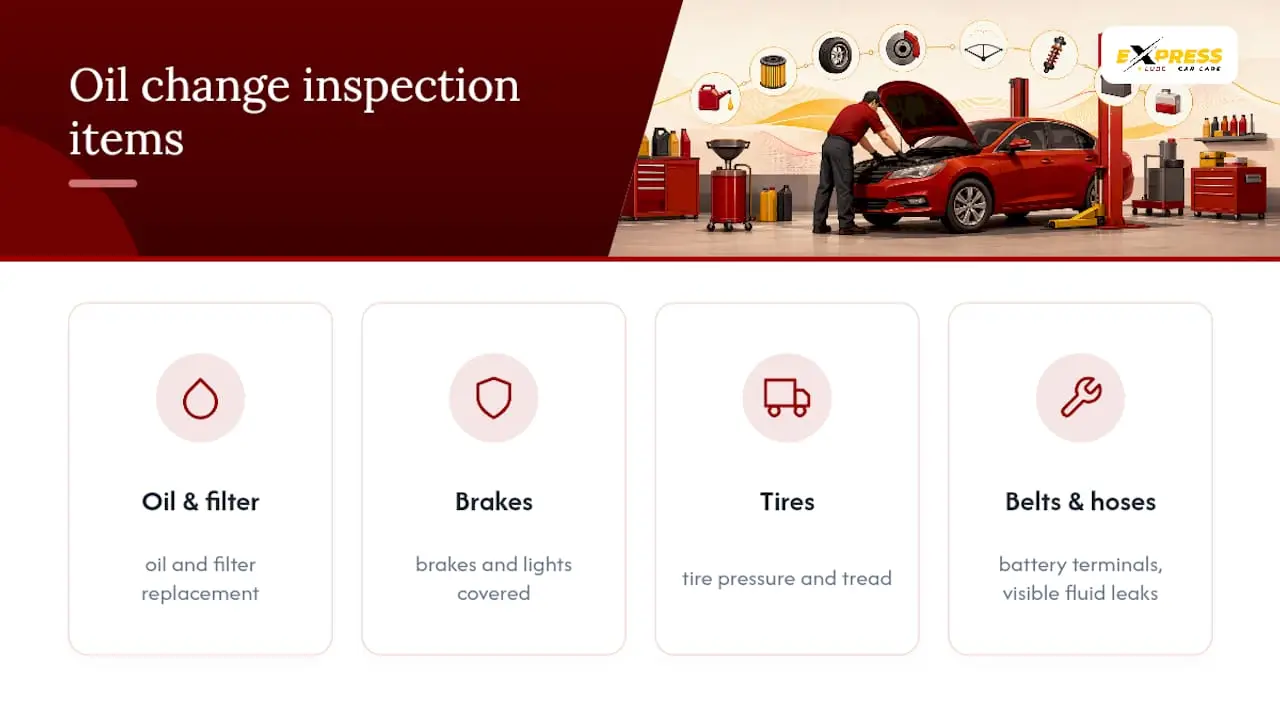
Here’s what a typical oil change inspection covers:
- Oil and filter replacement using the manufacturer-specified grade
- Basic brake pad and rotor visual check
- Lights, belts, and hoses
- Tire pressure and tread depth
- Visible fluid leaks under the vehicle
Most quick-lube shops now back this up with a digital vehicle inspection, complete with photos, so you’re not just taking someone’s word for it.
Key Takeaways
A proper oil change inspection combines an oil and filter service with a documented multi-point vehicle check, but it never replaces an official state safety or emissions test.
| Point | Details |
|---|---|
| Know the difference | Routine service inspections are courtesy checks; state inspections are official, regulated, and require authorized stations. |
| Oil alone won’t fail you | Needing an oil change isn’t an inspection failure trigger, but active leaks or emissions codes can be. |
| Ask for documentation | Request photos or a written inspection report before you leave the shop. |
| Confirm pricing upfront | Ask if the quoted price includes your specific oil type and quart count before work begins. |
| Choose documented service | Express Lube & Car Care pairs every oil change with a digital vehicle inspection and ASE-certified technicians backed by a 24-month warranty. |
Table of Contents
- What Happens During a Multi-Point Oil Change Inspection
- Is a Routine Inspection the Same as a State Safety Check?
- Can You Fail an Inspection Because You Need an Oil Change?
- How Long Does a Combined Oil Change and Inspection Take?
- How to Prepare for Your Visit
- A Technician-Grade Checklist to Verify Your Service Was Done Right
- When Do You Actually Need an Official State Test?
- Why We Treat Every Oil Change as a Full Vehicle Checkpoint
- Get Your Oil Change and Inspection Done Right the First Time
- Where to Verify the Details
- Sources
- FAQ
What Happens During a Multi-Point Oil Change Inspection
Technicians work through a set routine while your car is up on the lift, and it’s more thorough than most drivers expect. Brakes get a visual check on pad thickness and rotor condition. Lights, belts, and hoses get inspected for wear or cracking. The tech checks for visible fluid leaks, inspects tire pressure and tread, checks battery terminals for corrosion, and looks at the air filter. On the mechanical side, they confirm the drain plug and filter are torqued correctly so you don’t end up with a leak on the drive home.
The best shops document all of this with photos, uploaded to a digital vehicle inspection report you can review on your phone.
- Brakes (pads, rotors, visible wear)
- Lights, belts, hoses
- Fluid levels and visible leaks
- Tire pressure and tread
- Battery terminals and air filter
- Drain plug and filter torque
Pro Tip: Ask to see the actual inspection report or photos before you leave, and confirm which recommended items are genuinely urgent versus which can wait until your next visit.
Is a Routine Inspection the Same as a State Safety Check?
No, and this distinction trips up a lot of people. A routine service inspection is a courtesy check a shop performs alongside your oil change. It’s not legally binding and it doesn’t generate official paperwork. A state safety or emissions inspection is a formal, government-regulated test performed at an authorized station, with documented pass/fail criteria tied to your registration.
Official inspections often check things a quick-lube visit doesn’t touch at all:
- Emissions monitor readiness status
- Official state seals or stickers
- Formal paperwork filed with the state or DMV
Whether a quick-lube location is authorized to perform official state inspections varies by state, and it requires specific station certification. Never assume your oil change shop can also issue your state inspection sticker; ask directly.
Can You Fail an Inspection Because You Need an Oil Change?
Needing an oil change, by itself, is not a valid reason to fail a state safety or emissions inspection. Inspectors aren’t checking your oil life percentage. There are exceptions worth knowing, though. An active oil leak, visible smoke from the tailpipe, or a check-engine light tied to an emissions monitor can absolutely cause a failure, and those issues often show up around the same time your oil is due.
- Simply needing oil: not a failure trigger
- Active leaks: can cause a failure
- Smoke or emissions-related codes: can cause a failure
Pro Tip: If your oil change turns up a leak, get it fixed and ask the technician to document the repair before you head to your state inspection. A clean bill of health on paper makes the process faster.
How Long Does a Combined Oil Change and Inspection Take?
The process usually follows a predictable sequence: check-in and vehicle details, oil and filter replacement, an underbody and multi-point check on the lift, documentation, and a service reminder reset before you drive off. An express oil change with a multi-point inspection generally takes a short amount of time, enough to perform a thorough check without undue delay. A full state or emissions test, if you’re getting one done separately, runs closer to 30 to 60 minutes because of the formal testing equipment and paperwork involved.
Cost ranges vary depending on oil type, with conventional oil changes typically running less than full synthetic. Extra quarts beyond the standard fill, specialty filters, or add-on services can push the price up, and advertised starting prices don’t always include everything your vehicle needs.
- Confirm your oil type and quart count before the tech starts
- Ask whether the quoted price is all-in
- Check for current specials before you book
How to Prepare for Your Visit
Show up with your vehicle’s year, make, model, and engine size, along with your last service mileage and any dashboard warning lights you’ve noticed. If you have your owner’s manual handy, even better, since confirming the correct oil viscosity and OEM specification matters more than most drivers realize.
Ask the technician directly: Does this shop perform official state inspections? Will you document findings with photos? Is the quoted price all-in, including up to a set number of quarts?
- Red flag: no documentation offered
- Red flag: pressure to buy unrequested services on the spot
- Red flag: a vague estimate given before anyone’s looked at your vehicle
A Technician-Grade Checklist to Verify Your Service Was Done Right
A proper oil change is more procedural than most drivers assume. A documented service verification checklist covers roughly 28 items across five categories and typically takes about 10 to 15 minutes to complete alongside the actual service. Here’s the general sequence a shop should follow:
- Confirm correct oil grade against your owner’s manual
- Cross-reference the correct oil filter for your engine
- Prepare drain plug gasket and washers
- Drain old oil completely
- Torque the drain plug to manufacturer spec
- Install and hand-tighten the new filter correctly
- Refill with the specified oil grade and quantity
- Run the engine briefly and check for leaks
- Recheck oil level on the dipstick
- Reset the oil life monitor
- Apply a service reminder sticker
- Log used-oil disposal per EPA waste-oil rules
Pro Tip: Ask whether your shop follows API and ILSAC oil standards. It’s a quick way to gauge whether they’re using genuinely spec-appropriate products rather than whatever’s cheapest.
Shops that document each of these steps give you a record that holds up if a warranty question or mechanical issue ever comes up later.
When Do You Actually Need an Official State Test?
Formal state or emissions tests get triggered by registration renewal, a prior failed emissions check, a check-engine light tied to an emissions monitor, or your state’s mandated inspection interval. A good technician can check your OBD readiness monitors in advance to flag whether you’re likely to pass before you book the official test. If they find an emissions-related problem, fix that first, then retest. Don’t gamble on a light clearing itself.
Why We Treat Every Oil Change as a Full Vehicle Checkpoint
We think the industry undersells what a routine oil change should be. Too many shops treat it as a five-minute drain-and-fill and call it done. We’d argue that’s a missed opportunity, because regular checkpoints build a maintenance history that catches small problems before they become expensive ones.
That’s why every visit includes a documented digital vehicle inspection with photos, performed by ASE-certified technicians, backed by a real warranty. For busy vehicle owners, that extra ten minutes at each visit is cheap insurance against a five-figure repair down the road.
Get Your Oil Change and Inspection Done Right the First Time
Skip the guesswork of wondering whether your last oil change actually included a real inspection or just a sticker on your windshield. Express Lube & Car Care combines fast, no-appointment service with a documented multi-point check on every visit, so you leave with photos and a real record, not a vague promise.
Our ASE-certified technicians handle everything from routine oil changes to brake work and A/C repair, and every job is backed by a 24-month, 24,000-mile warranty. If a bigger repair turns up during your inspection, flexible financing can help you handle it without derailing your budget. Check our current oil change and service specials and book your next visit today. Walk-ins are always welcome.
Where to Verify the Details
For deeper research on costs, checklists, and inspection standards, consult these sources directly:
- Kelley Blue Book’s oil change guidance for cost estimates and maintenance-versus-inspection distinctions
- PopProbe’s service verification checklist for a detailed procedural reference
- Castrol’s oil change checklist for OEM oil-spec guidance
Always confirm current rules with your state DMV or air quality board, since inspection requirements vary. To check whether a shop is an authorized inspection station, ask directly or look for posted state certification at check-in.
Sources
- Oil Change Prices & Cost Estimates | Kelley Blue Book
- Oil change checklist — Castrol (PDF)
- Oil change service verification checklist — PopProbe
FAQ
What Is Inspected During an Oil Change?
A typical oil change inspection covers brakes, lights, belts and hoses, tire pressure and tread, battery terminals, and visible fluid leaks, in addition to the oil and filter replacement itself.
Can I Get an Official Inspection at an Oil Change Shop?
Some quick-lube locations are authorized state inspection stations, but this varies by state and requires specific certification, so you should ask directly rather than assume.
Can You Fail a Safety Inspection Just Because You Need an Oil Change?
No, needing an oil change on its own isn’t a valid reason for a state inspection failure, though related issues like active leaks or a check-engine light can cause one.
How Long Does a Combined Oil Change and Inspection Take?
An express oil change with a multi-point inspection typically takes 10 to 15 minutes, while a full official state or emissions test usually runs 30 to 60 minutes.
Does Express Lube & Car Care Document the Inspection Findings?
Yes, every service includes a digital vehicle inspection with photos, performed by ASE-certified technicians, so you have a documented record of your vehicle’s condition.