

When your iDrive service reminder appears, most BMW owners in Richland Hills find themselves in the same three-way debate. Do you pay dealership prices, crawl under the car yourself, or trust a local shop that understands what a BMW needs?
That decision matters more than it does on a basic commuter car. A BMW oil service isn't just a drain-and-fill job. The engine oil spec has to be right, the filter has to fit and seal correctly, the car has to be lifted safely, and the service reminder has to be reset the right way. On newer cars, the vehicle is also tracking service needs through its own maintenance system, so guessing your way through an oil change bmw service can create more headaches than it solves.
For North Texas drivers, there's another wrinkle. A lot of local BMWs spend their lives in traffic, summer heat, short-trip driving, or on modified suspensions. That changes the practical maintenance conversation. Factory guidance is useful, but what works on paper and what protects an engine long term in DFW driving aren't always the same thing.
Why Your BMW Needs Specialized Oil Service
A BMW owner usually notices the same pattern. The car runs smoothly, the engine sounds normal, and then the service message appears. Suddenly the question isn't whether the car needs maintenance. It's who should do it, and whether a generic oil change is good enough.
On a BMW, generic usually isn't good enough. These engines are designed around specific oil performance standards, tight tolerances, and service procedures that don't leave much room for shortcuts. Turbocharged models, higher-capacity engines, and performance variants all put serious demands on the oil. If the wrong viscosity or the wrong approved formula goes in, the car may still run, but that doesn't mean the engine is getting the protection BMW engineered it for.
Why BMWs punish shortcuts
The problems usually don't show up at the counter. They show up later as seepage around a filter cap, an underfilled crankcase, a damaged splash shield, or a service light that never got reset properly. Those are the small mistakes that happen when a shop treats a BMW like every other car on the road.
A proper oil change bmw service means paying attention to details such as:
- Approved oil standards: BMW engines call for full synthetic oils that meet BMW Longlife requirements, not just any synthetic on the shelf.
- Correct filter fitment: The filter and sealing surfaces matter. Cheap filters and rushed installs create leaks and poor filtration.
- Proper lifting points: Modern BMW underbodies are not forgiving if someone guesses where to place a jack or lift arm.
- Service reset procedure: If the CBS system isn't reset correctly, the car may continue to show service warnings or track maintenance incorrectly.
Practical rule: If a shop can't tell you which BMW oil spec your engine needs, that shop shouldn't be changing your oil.
Why local driving changes the conversation
North Texas driving adds wear in ways many owners underestimate. Long idle time, stop-and-go traffic, hot pavement, and short trips all work oil harder than steady highway cruising. That doesn't mean every BMW needs the same schedule, but it does mean local conditions deserve more attention than a one-size-fits-all answer.
That's why owners who care about long-term reliability usually want more than the cheapest option or the most convenient factory script. They want the service done correctly, and they want advice that matches how the car is driven.
Understanding BMW Oil Change Intervals and Oil Specs
A lot of BMW owners in North Texas see the oil service reminder, notice the miles still look reasonable, and assume they have plenty of time. That can work on a car that spends its life cruising the highway. It is a weaker plan for a BMW that idles in heat, makes short trips, or gets driven hard in traffic.
BMW's factory schedule is built around Condition Based Service, or CBS. On many models, that means oil changes can land around once a year or at a higher mileage interval than many drivers expect, as outlined in BMW oil change interval guidance from BMWBlog. CBS uses operating conditions, mileage, and time to calculate service needs. It is a smart system, but it is still a factory target. It is not a guarantee that the longest allowed interval is the best choice for every engine or every Texas driving pattern.
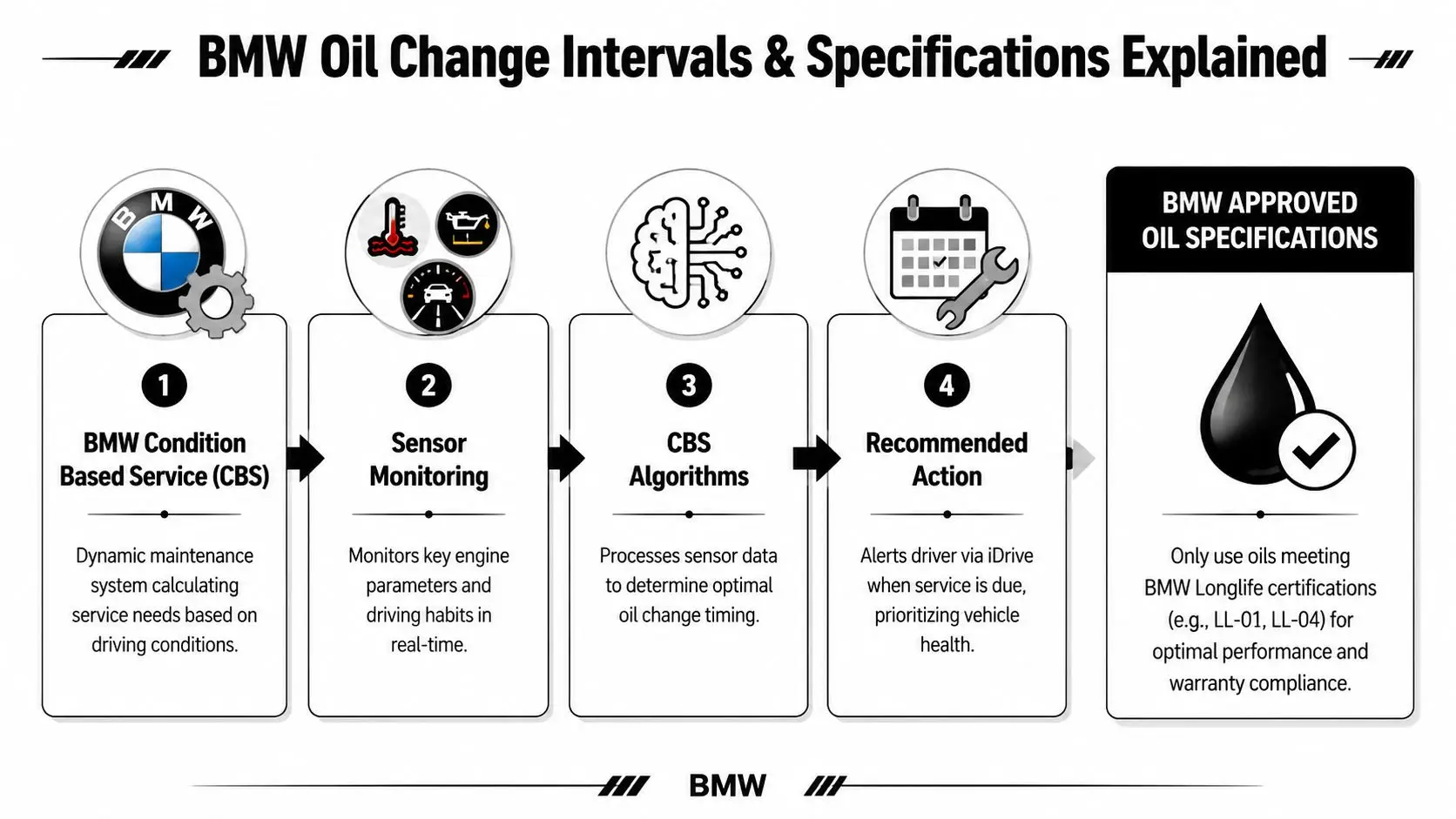
What CBS is actually doing
CBS does more than count miles. It tracks how the car is used, including temperature patterns, load, and trip history, then updates the service reminder through the car's onboard system.
That matters because two identical BMWs can need oil service at different times.
One may spend most of its life on steady highway runs between Fort Worth and Dallas. Another may sit in traffic, make short errands, and bake through a North Texas summer. The screen may still show a long interval, but those are not equal conditions for the oil.
The oil spec matters as much as the interval
BMW engines need full synthetic oil that matches the exact BMW approval for that engine. Depending on the model and year, that may be LL-01, LL-04, LL-17FE+, or a newer spec. If the oil weight looks right but the approval is wrong, the service is still wrong.
That is where owners get tripped up. Viscosity and approval are not the same thing. A bottle can say 0W-20 or 5W-30 and still not meet BMW's standard for wear control, deposits, and long-drain performance. For a plain-English overview of how oil grades and approvals differ, this guide on oil recommendations for my car helps explain the basics.
BMW chose those oil approvals to match bearing clearances, heat load, and service interval design. Using whatever synthetic is on sale is a gamble.
When shorter intervals are the better call
In the shop, I rarely base interval advice on the dashboard alone. I look at mileage, engine condition, driving habits, and whether the car has a history of oil consumption, sludge, or seepage. A BMW that is aging well and sees mostly highway use can often follow the factory logic without trouble. A higher-mileage car that lives in city traffic usually benefits from more frequent service.
North Texas owners should pay closer attention if the car sees:
- Frequent short trips: Oil stays contaminated longer when the engine does not fully warm up.
- Heavy traffic and long idle time: Heat and repeated load cycles wear oil faster than steady cruising.
- Higher mileage: Older seals, rings, and turbo components leave less margin for stretched intervals.
- Performance driving or modifications: Turbo BMW engines respond better to conservative oil service when they are worked hard.
- Newer low-viscosity applications: Thin oils used in some late models leave less room for shortcuts on spec, fill level, and service timing.
There is a real trade-off here. Longer intervals save a little money up front and match the dealership script. Shorter intervals usually cost less than the repairs that follow neglected turbochargers, timing components, or sludge-related issues. For many local owners, especially on N20, N55, B48, and B58 engines that deal with heat and traffic, a conservative schedule is the safer long-term choice.
The best interval is the one that fits how the car is driven, not just what the screen says on a mild day in ideal conditions.
What a Professional BMW Oil Change Includes
Pull a late-model BMW into the bay after it has been serviced at a bargain shop a few times, and the same problems show up over and over. Wrong oil spec. Filter cap overtightened. Missing belly pan hardware. Oil level off just enough to create noise, seepage, or a warning light a few weeks later. On these cars, an oil change is routine maintenance, but it still has to be done with precision.
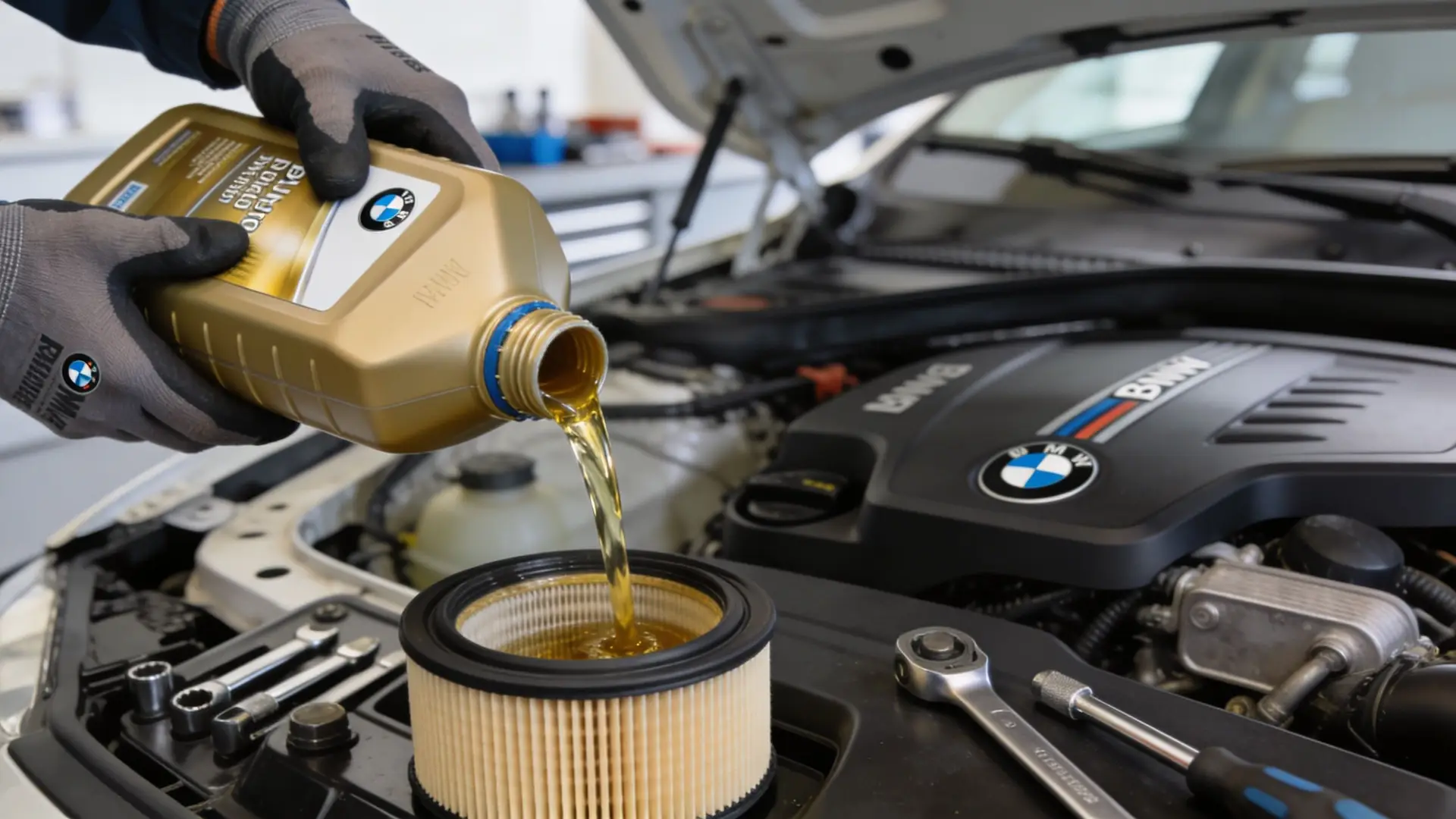
A professional BMW oil service starts before the drain plug comes out. The technician confirms the exact engine, checks the required BMW oil approval, and makes sure the car can be lifted safely without damaging the underbody panels or jack points. That matters even more on North Texas cars that see rough pavement, parking blocks, or aftermarket suspension changes.
Once the car is up, the job should be methodical:
- Drain the old oil fully: The car needs to be positioned correctly so the pan drains as completely as possible.
- Replace the filter and sealing parts: BMW filter housings and cartridge systems need the right filter, the correct O-rings, and proper torque.
- Refill with the correct BMW-approved synthetic oil: The spec matters as much as the viscosity grade.
- Set the oil level correctly: Too much oil can be just as hard on a BMW as too little, especially on turbo engines.
- Inspect while the car is in the air: This is the right time to catch seepage, cooling system stains, cracked splash shields, tire wear, or loose hardware.
- Reset the CBS or iDrive service reminder: The maintenance system needs to be reset properly so future service tracking stays accurate.
That inspection piece is where a good shop earns its keep. I have seen simple oil services turn up oil filter housing leaks, damp valve covers, torn control arm bushings, and undertray damage that the owner never noticed from the driveway. Catching those early usually saves money.
Equipment matters too. A shop that uses the right oil change equipment for clean, accurate service is less likely to leave stripped fasteners, spilled oil on covers, or loose panels under the car.
Why the price is higher than a standard oil change
BMW owners sometimes compare this service to a basic quick-lube oil change on a non-European sedan. That comparison misses what is being paid for. BMWs often take more oil, require a specific approved full synthetic, use filters and sealing parts that need to be installed correctly, and benefit from a technician who knows the common problem areas.
In real shop conditions, the price usually reflects the materials, the labor time, and the risk of getting it wrong. A cheap oil change on a BMW can become expensive fast if it leads to a damaged filter cap, a leaking drain plug, stripped underbody hardware, or the wrong oil in a turbo engine.
Paying less for the wrong oil service usually costs more later.
The Hidden Risks of a DIY BMW Oil Change
DIY is appealing for one obvious reason. It looks like a way to save money and control the quality of the work. For some owners with the right tools, the right space, and a stock-height car, that can be true.
But BMWs make DIY riskier than many people expect, especially around DFW where lowered sedans and modified crossovers are common. A lot of online guides show ideal conditions. Flat floor, easy clearance, stock suspension, no underbody surprises. Real cars don't always show up that way.
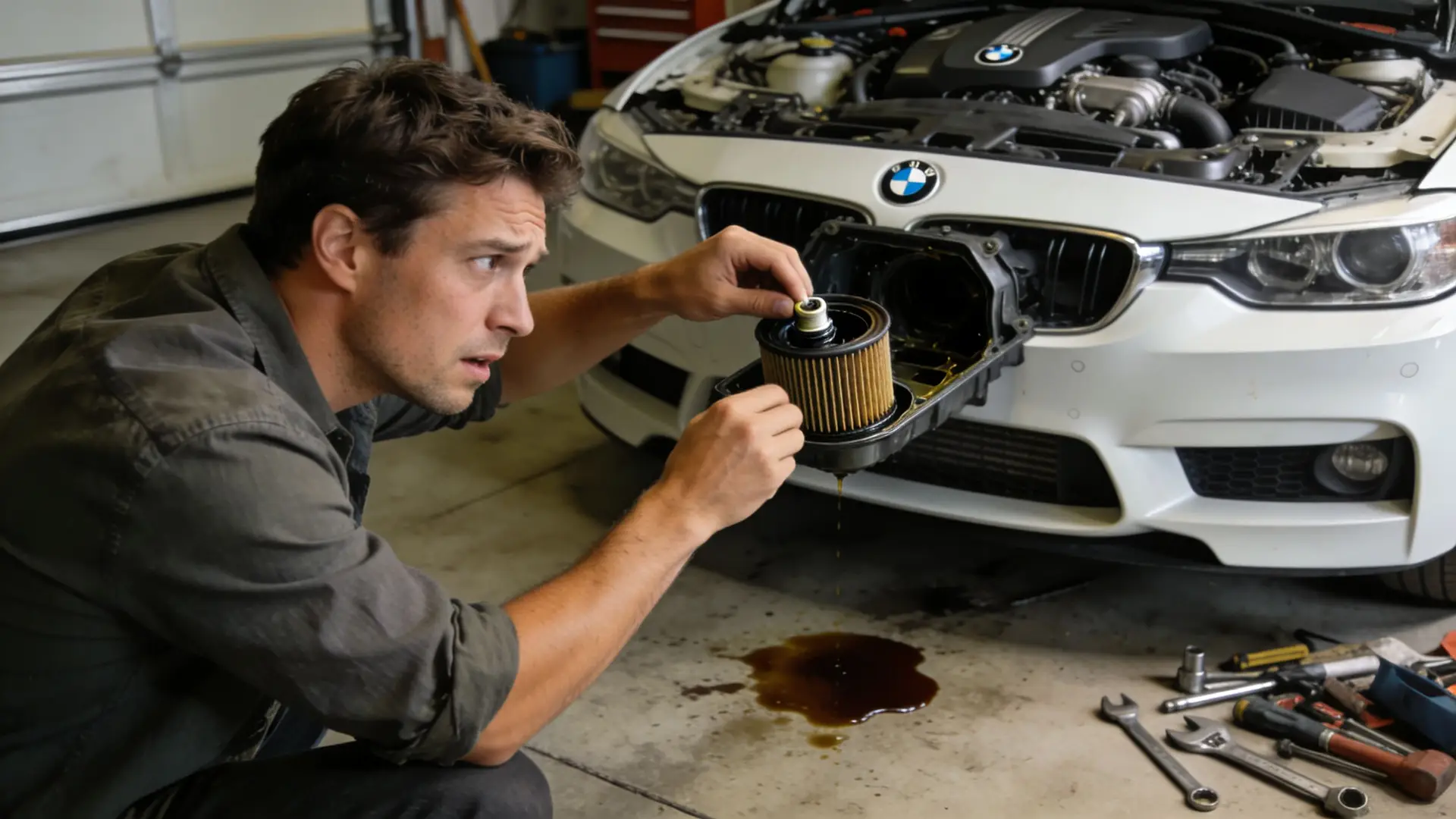
Lowered BMWs change the whole job
Many DIY guides don't address the primary challenge of servicing lowered BMWs. On these cars, improper jacking can damage aerodynamic panels or the oil pan, and owners may not get a full, level drain if the vehicle isn't positioned correctly, as discussed in this BMW oil change guide focused on practical fitment issues.
That's not a small detail. If the car can't be lifted safely and level, the entire service quality changes.
A few common DIY trouble spots:
- Front clearance problems: Low bumpers and splash shields don't like steep ramps or rushed jack placement.
- Bad jack-point access: BMWs need to be lifted correctly or the underbody takes the hit.
- Uneven draining: If the car isn't level, old oil can remain in the pan.
- Panel damage: Undertrays and aero pieces are easy to crack when clearance is tight.
The small hassles add up fast
Even when the lift issue is solved, BMW DIY service often needs more than a drain pan and a wrench. Some models need a specific oil filter housing socket. Others have tight access around the filter area. Then there's cleanup, disposal, and the maintenance reset.
The CBS reset is one of the steps owners underestimate. If you skip it or do it wrong, the car still thinks the oil service is overdue. That doesn't damage the engine by itself, but it defeats part of the reason owners want a clean, trackable maintenance routine.
For a broader look at the savings question, this article on whether it's cheaper to change your own oil gives a fair perspective.
If the job leaves you guessing about lift points, oil specs, or the service reset, it's no longer a simple oil change.
When DIY makes less sense
DIY usually stops making sense when the car is lowered, the owner lacks safe lifting equipment, or the service environment is less than ideal. That's especially true on modern BMWs with underbody panels, tighter packaging, and more model-specific details than older cars had.
Saving money only works when nothing goes wrong. On a BMW, one mistake can wipe out the savings from several oil changes.
BMW Dealership vs Independent Shop What's the Difference
Once you decide not to do the job yourself, the next choice is where to go. Dealerships have factory branding and model familiarity. Independent shops often win on flexibility, speed, and practical service advice.
The better option depends on what you value most. If you want convenience, straightforward communication, and service without the dealership routine, a good independent shop is often the better fit.
BMW Oil Service Dealership vs. Express Lube & Car Care
| Factor | BMW Dealership | Express Lube & Car Care |
|---|---|---|
| Scheduling | Often appointment-based | Walk-in convenience |
| Service approach | Usually follows factory schedule closely | More likely to discuss real driving conditions |
| Pricing style | Often higher and less flexible | Fair, transparent pricing |
| Customer experience | Brand-centered process | Local, practical, direct communication |
| Technician perspective | Factory-oriented maintenance flow | ASE-certified technicians focused on what works in daily driving |
| Modified or lowered cars | May be less flexible about non-stock situations | Better suited to practical problem-solving on local-driver cars |
| Upsell risk | Can feel more packaged | Usually more straightforward and selective |
What actually matters to most owners
Most BMW owners don't need marble floors and a branded coffee machine. They need correct oil, a proper filter, safe lifting, and someone who'll tell them the truth about whether their driving habits justify a tighter service interval.
That's where independent service tends to shine. The conversation is usually more practical. Less script, more real-world advice.
A dealership still has its place, especially for warranty-specific concerns or factory campaign work. But for routine oil service, many owners are better served by a local shop that knows how to handle BMWs without turning a maintenance visit into a half-day event.
Your Best Choice for a BMW Oil Change in Richland Hills
BMW ownership is easier when you keep the maintenance simple and consistent. Use the right oil. Change it on a schedule that fits how the car is driven. Don't treat a precision engine like it's the same as every other vehicle in the parking lot.
That matters even more in North Texas. Heat, traffic, short trips, and modified suspensions all add real-world considerations that generic advice misses. A professional oil change bmw service helps you avoid the common problems that show up with wrong oil specs, poor lift practices, incomplete draining, and skipped maintenance resets.
For most local owners, the best option is the one that combines BMW-aware service with everyday convenience. You want technicians who understand the details, explain the trade-offs clearly, and don't make routine maintenance harder than it needs to be.
If your service light is on, your mileage is climbing, or you're tired of wondering whether the dealership schedule really fits your driving, it's worth getting the car serviced by people who work on vehicles the way they're used around Richland Hills and the rest of DFW.
If your BMW is due for service, visit Express Lube & Car Care for fast, professional maintenance from ASE-certified technicians. You'll get walk-in convenience, clear recommendations, fair pricing, and the kind of careful oil service that protects your engine without the dealership hassle.