

Fast lube centers are purpose-built facilities that complete oil changes and routine vehicle maintenance in as little as 10 minutes, using engineered workflows rather than rushed labor. Understanding how fast lube centers work helps you make smarter choices about where to take your car and what to expect when you pull in. Operations at shops like Jiffy Lube and Express Lube & Car Care rely on specialized facility layouts, trained technicians working in coordinated roles, and standardized service steps that remove wasted motion from every visit. The result is a system that feels almost like a pit stop, and once you see how it’s built, the speed makes complete sense.
How do fast lube centers work so quickly?
The speed at a quick lube shop is not an accident. It comes from a deliberate combination of facility design, technician coordination, and repeatable service steps that eliminate the back-and-forth you’d find at a traditional auto shop.
Here’s how the process typically unfolds from the moment you pull in:
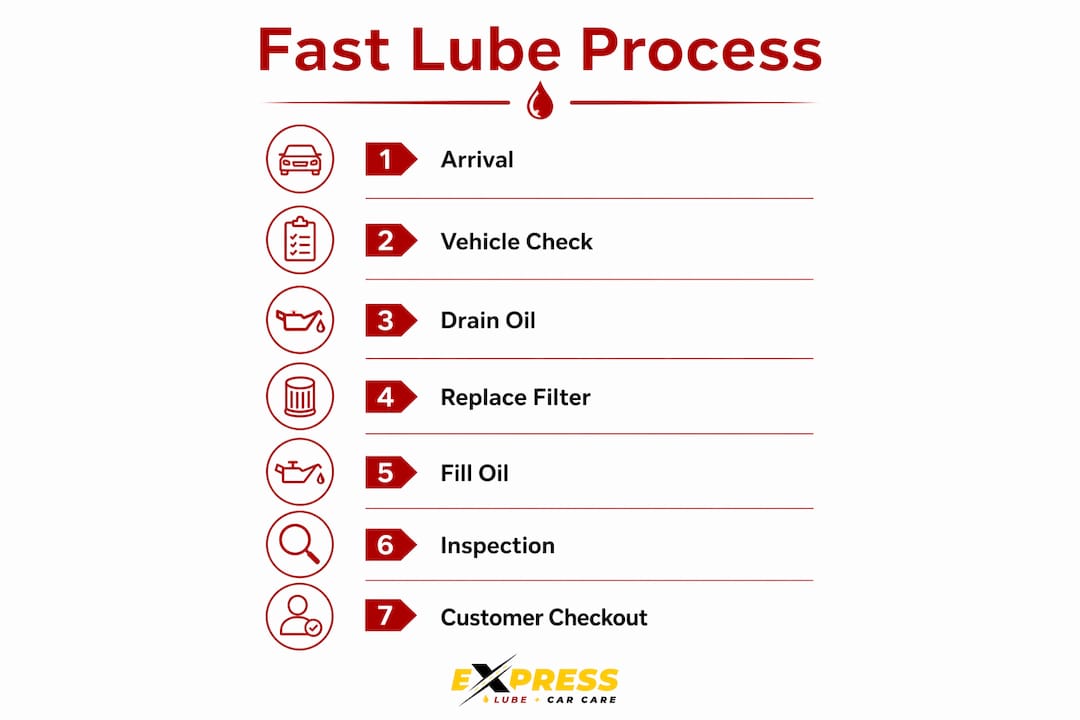
- Vehicle check-in. A service advisor greets you, confirms your vehicle’s make, model, and mileage, and recommends the correct oil type. This step takes about two minutes and sets up everything that follows.
- Bay entry. Your car rolls into a bay with roll-up doors and a below-grade pit underneath. That pit is the key to the whole operation. One technician stays topside while another works below the vehicle simultaneously, so draining the old oil and preparing the top of the engine happen at the same time.
- Simultaneous service. The below-grade pit design allows technicians to avoid time-consuming hydraulic lifts entirely. The technician below removes the drain plug and old oil filter while the topside technician removes the old oil fill cap and preps the new filter and oil. Neither person waits on the other.
- Oil and filter replacement. Fresh oil and a new filter go in. The technician below replaces the drain plug, and the topside tech fills the engine to the manufacturer’s specified level.
- Final checks and sign-off. The service advisor reviews the work, checks for leaks, resets the oil life monitor, and walks you through what was done. You’re handed a sticker for your windshield and a printed service record.
This pit crew style workflow is what separates a quick lube center from a general repair shop, where a single technician works alone and a lift must be raised and lowered for every job. The coordination is the product.
Pro Tip: Ask the service advisor to confirm the oil viscosity before the job starts. Manufacturer specs matter, and a 30-second confirmation prevents the wrong oil from going in.
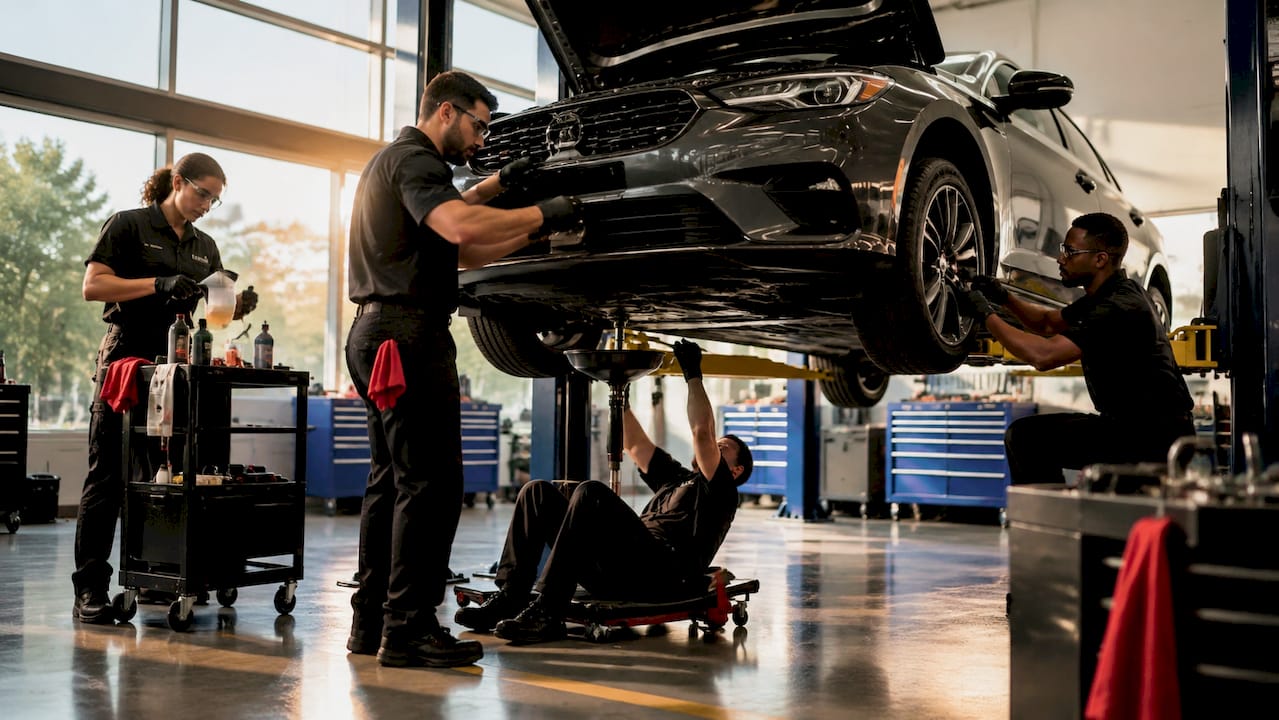
The oil change equipment used at these centers is also positioned for speed. Fluid dispensers, filter wrenches, and drain containers are mounted at fixed stations so technicians reach for tools without searching. Every second saved in tool retrieval adds up across dozens of cars per day.
Fast lube quality vs. traditional auto shop: how do they compare?
A common concern is whether speed means shortcuts. The short answer is no, and here’s why.
Fast lube centers use manufacturer-specified oils and filters, the same products a dealership would install. The difference is process, not parts. Jiffy Lube International’s leadership has publicly identified three operational pillars: efficient vehicle flow, technician safety, and service consistency. Those pillars exist precisely because speed without consistency produces errors.
| Factor | Fast Lube Center | Traditional Auto Shop |
|---|---|---|
| Average oil change time | 10–20 minutes | 45–60 minutes |
| Appointment required | No | Usually yes |
| Technician specialization | Oil changes and routine maintenance | Broad mechanical repairs |
| Vehicle lift method | Below-grade pit | Hydraulic lift |
| Multi-point inspection | Included as standard | Varies by shop |
Safety has also improved significantly over the years. Early open-pit designs created real hazards for technicians. Modern centers now use safety nets and updated protocols that protect employees without adding time to the service. That investment in safety reflects a broader commitment to doing the job right, not just doing it fast.
Where traditional shops have an edge is in complex diagnostics and major repairs. Fast lube centers are not designed for transmission rebuilds or suspension work. But for routine maintenance, the quality is comparable and the convenience is not.
Key differences worth knowing before you choose:
- Fast lube centers stay in your car with you present, so you can ask questions in real time.
- Traditional shops may require you to leave your vehicle for hours or days.
- Quick lube technicians perform the same service steps on every car, which reduces variability.
- Dealership service departments often charge more for the same oil and filter combination.
What services do fast lube centers actually perform?
Oil changes are the anchor service, but most centers do considerably more during your visit. Understanding the full scope helps you get more value out of every stop.
The standard oil change at a quality quick lube center typically includes a free 15-point inspection covering tire pressure, fluid levels, air filter condition, wiper blade wear, exterior lights, and battery terminals. That inspection takes only a few minutes and often surfaces small issues before they become expensive repairs.
Beyond the inspection, common add-on services include:
- Air filter replacement. A clogged air filter reduces fuel efficiency and engine performance. Swapping it takes under five minutes.
- Wiper blade replacement. Technicians check blade condition during the inspection and can replace them on the spot.
- Battery check. A quick voltage test tells you whether your battery is holding a charge or approaching the end of its life.
- Cabin air filter replacement. This filter affects your HVAC system and is easy to miss during regular maintenance.
- Fluid top-offs. Windshield washer fluid, coolant, and power steering fluid are checked and topped off as part of standard service at many centers.
Some centers have expanded into what the industry calls a “Multicare” model, incorporating brake and tire services alongside oil changes without extending the overall visit significantly. This model reflects how customer expectations have shifted. Drivers want one stop, not three.
Pro Tip: Review the 15-point inspection sheet before you leave. It’s a snapshot of your vehicle’s condition and a useful reference for your next visit.
Express Lube & Car Care offers fast lube service types that go well beyond a basic oil change, giving you a clear picture of what’s available so you’re not caught off guard at the counter.
What affects your wait time at a quick lube shop?
The actual service time at a fast lube center is consistent. A quick oil change completes in 10–20 minutes, and a full-service oil change runs 30–45 minutes. What varies is how long you wait before your car enters a bay.
Several factors influence total visit time:
- Time of day. Saturday mornings and lunch hours on weekdays are peak periods. Arriving early on a weekday typically means little to no wait.
- Number of service bays. A shop with four bays moves cars through twice as fast as a two-bay operation. Larger centers handle peak demand without the queue building up.
- Technician staffing. A fully staffed shift keeps all bays running. Understaffed shifts slow throughput even when bays are open.
- Walk-in versus scheduled visit. Some centers now offer online scheduling. Booking a time slot puts your car at the front of the line and removes the wait entirely.
The good news is that wait times from queues do not affect the service itself. The oil change takes the same amount of time whether you waited five minutes or twenty. You can use that wait time productively by reviewing the service menu or checking your vehicle’s maintenance history.
If you want to cut your total visit down, the guide on maximizing your quick lube visit covers practical steps you can take before you even pull into the lot.
Key takeaways
Fast lube centers deliver consistent, quality oil changes in 10–20 minutes through engineered facility layouts, coordinated technician roles, and standardized service steps that remove wasted motion from every job.
| Point | Details |
|---|---|
| Speed comes from design | Below-grade pits and simultaneous technician work eliminate the need for slow hydraulic lifts. |
| Quality matches traditional shops | Manufacturer-spec oils and filters are used, and service consistency is a core operational priority. |
| More than just oil changes | Standard visits include 15-point inspections and optional add-ons like air filters and battery checks. |
| Wait time is not service time | Queues vary by time of day, but the actual oil change consistently completes in 10–20 minutes. |
| Scheduling reduces total visit time | Booking online or arriving during off-peak hours cuts your wait before the service even begins. |
Why fast lube centers deserve more credit than they get
I’ll be honest: when people ask me whether a quick lube center is “good enough,” I think they’re asking the wrong question. The better question is whether the service fits the job.
For routine oil changes and maintenance checks, fast lube centers are not a compromise. They are the right tool for the task. The speed comes from purpose-built design, not from skipping steps. A technician working in a below-grade pit with standardized equipment and a clear checklist is less likely to miss something than a solo tech juggling three different jobs in a general repair bay.
What I’ve seen over the years is that the centers with the best fast lube center reviews are the ones that invest in technician training and safety protocols. Speed without training produces errors. Speed with training produces a repeatable, reliable service. That’s the difference between a shop that feels fast and one that actually is.
My practical advice: use a quick lube center for what it’s built for. Oil changes, fluid checks, filter swaps, and basic inspections are exactly where these shops shine. If your check engine light is on or you’re hearing a noise from the suspension, that’s a job for a full-service shop. Knowing the difference saves you time and money.
The modern quick lube model fits how most of us actually live. You don’t have to take a half-day off work to keep your car maintained. Fifteen minutes in and out, no appointment needed, and you’re back on the road with a fresh oil change and a written record of what was checked. That’s not cutting corners. That’s just smart.
— Express Lube & Car Care
Get your oil changed at express lube & car care in under 15 minutes
Express Lube & Car Care in Richland Hills completes oil changes in under 15 minutes with certified ASE technicians who follow the same standardized process every time. No appointment is needed, and every oil change includes a multi-point inspection so you leave knowing exactly where your vehicle stands.
Right now, Express Lube & Car Care has current oil change and service specials that cover everything from conventional and synthetic oil changes to air filter replacements and wiper blades. Honest pricing, no surprises, and a team that treats your car like their own. Stop in during your lunch break or on your way home and see why drivers in the Richland Hills area keep coming back.
FAQ
How long does a fast lube oil change actually take?
A quick oil change takes 10–20 minutes at most fast lube centers. A full-service oil change with additional checks runs 30–45 minutes.
Do fast lube centers use quality oil and filters?
Fast lube centers use manufacturer-specified oils and filters, the same products used at dealerships. Service consistency is a core operational standard at established quick lube operations.
Do i need an appointment at a fast lube center?
Most fast lube centers operate as walk-in facilities with no appointment required. Some centers offer online scheduling, which reduces your wait time before the service begins.
What is included in a standard fast lube visit?
Most visits include an oil and filter change plus a 15-point inspection covering tire pressure, fluid levels, lights, and wiper condition. Add-on services like air filters and battery checks are typically available on the spot.
Why do some visits take longer than others?
Longer visits are almost always caused by queue wait times during busy periods, not by the service itself. The oil change process remains consistent at 10–20 minutes regardless of how busy the shop is.