

Emergency vehicle maintenance is defined as the scheduled, proactive upkeep of emergency response vehicles to sustain peak performance, safety, and compliance with regulatory standards. This process covers everything from engine and brake inspections to specialized electrical systems, medical equipment power supplies, and communication devices. Compliance with NFPA 1901 and NFPA 1912 standards sets the baseline for fire apparatus and EMS fleets. The recommended service interval is every 2,500 miles or monthly, whichever comes first. Accurate documentation and crew involvement are not optional extras. They are the backbone of any maintenance program that actually works.
What is emergency vehicle maintenance and why does it matter?
Emergency vehicle maintenance is the systematic practice of inspecting, servicing, and repairing emergency response vehicles before problems arise. The industry term for this approach is preventive maintenance, and it applies to every system on the vehicle, not just the engine. NFPA 1912 and state EMS regulations require service every 2,500 miles or monthly to keep these vehicles compliant and ready. That interval exists because emergency vehicles operate under conditions that standard passenger vehicles never face.
The stakes are higher than they are for a personal car. A breakdown during an active response is not an inconvenience. It is a public safety failure. Preventive maintenance closes the gap between a vehicle that looks ready and one that actually is. When you treat maintenance as a readiness strategy rather than a repair bill, you change how the whole program runs.
What are the essential maintenance tasks for emergency vehicles?
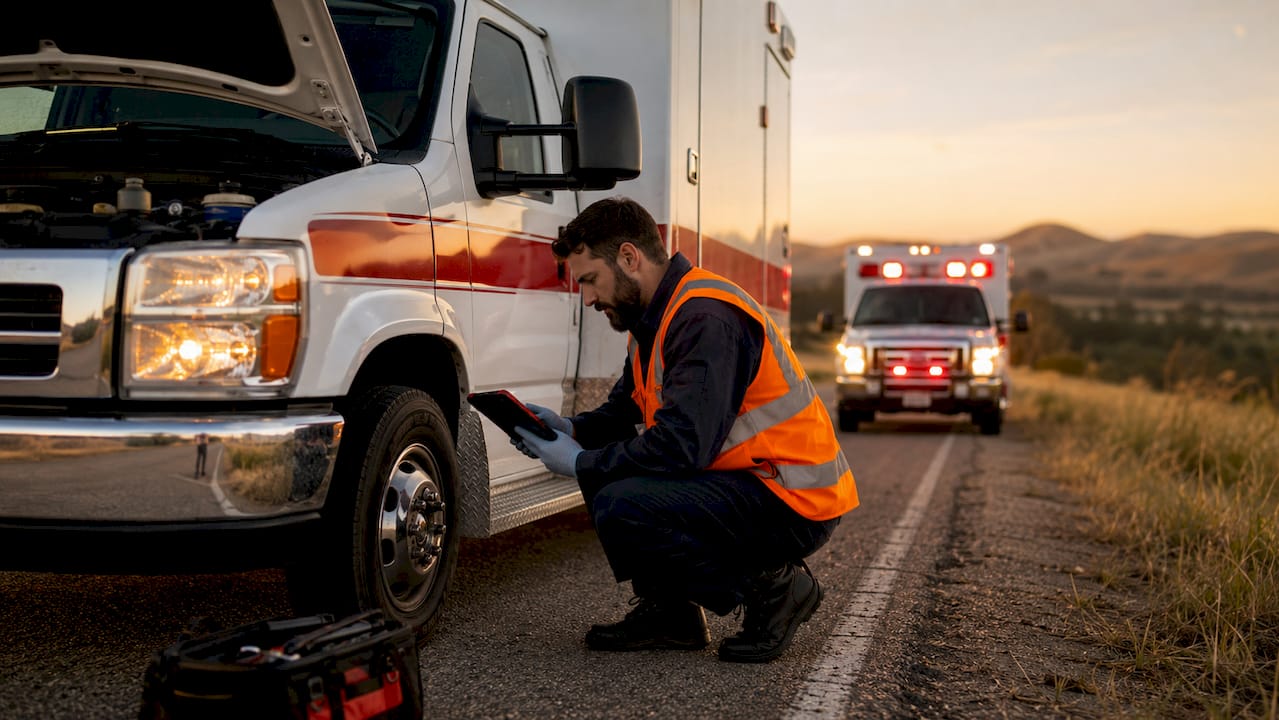
A complete emergency vehicle servicing program covers two categories: standard mechanical systems and specialized emergency systems. Both categories carry equal weight. Maintenance programs must cover the complete vehicle ecosystem to avoid on-scene failures, which means skipping the pump inspection because the engine looks fine is not an acceptable shortcut.
Core mechanical checks
- Engine: Oil level, coolant level, belts, hoses, and air filter condition
- Brakes: Pad thickness, rotor condition, brake fluid level, and hydraulic line integrity
- Suspension: Shock absorbers, steering linkage, and wheel bearing play
- Tires: Tread depth, inflation pressure, and sidewall condition
- Battery: Load test, terminal corrosion, and charging system output
- Cooling system: Thermostat function, radiator condition, and coolant concentration
Specialized emergency system checks
- Emergency lighting: All warning lights, scene lights, and interior lights functional
- Siren and PA system: Tone output, speaker condition, and control panel response
- Radio and communication: Signal clarity, antenna condition, and backup power function
- Hydraulic tools: Fluid level, hose integrity, and pressure output for rescue equipment
- Water pumps and foam systems: Pump and valve checks are as critical as the drivetrain on fire apparatus
- Medical equipment power supply: Inverter output, shore power connections, and battery backup
NFPA 1901 mandates daily, weekly, and monthly inspections to confirm fire apparatus readiness. Maintaining accurate maintenance logs ties directly to audit compliance and equipment performance tracking.
Pro Tip: Build your checklist around NFPA 1901 categories and assign each item to a specific crew member by name. Shared responsibility without named ownership means tasks get skipped.
Why is emergency vehicle maintenance different from regular vehicle maintenance?
Standard vehicle maintenance assumes moderate daily use, predictable load, and a driver who parks the car when something feels wrong. Emergency vehicles operate under none of those conditions. The differences are structural, not just a matter of degree.
- Higher operational strain. Emergency vehicles make frequent hard stops, accelerate aggressively, and idle for extended periods at scenes. That cycle destroys brakes and cooling systems faster than highway driving ever could.
- Electrical overload risk. Emergency electrical systems endure unique strain from high-demand lights, sirens, and radios during extended idling. Routine inspection of wiring harnesses and power connections prevents critical failures under stress.
- No option to pull over. A personal vehicle driver can delay a repair. An emergency crew cannot. The vehicle must be ready every single time it rolls out.
- Regulatory compliance. Emergency vehicles carry legal obligations that standard vehicles do not. Missing a required inspection creates liability exposure for the department and the municipality.
- Crew and patient safety. A mechanical failure on a fire apparatus or ambulance puts responders and the public at risk simultaneously.
“A proactive maintenance culture that tracks service trends and inventory differentiates operationally ready emergency services from reactive ones. Systematic maintenance approaches prevent failures and improve fleet readiness.”
The shift from reactive to proactive thinking is the single biggest upgrade any fleet manager can make. Waiting for something to break on an emergency vehicle is not a cost-saving strategy. It is a liability.
How do you develop an effective emergency vehicle maintenance schedule?
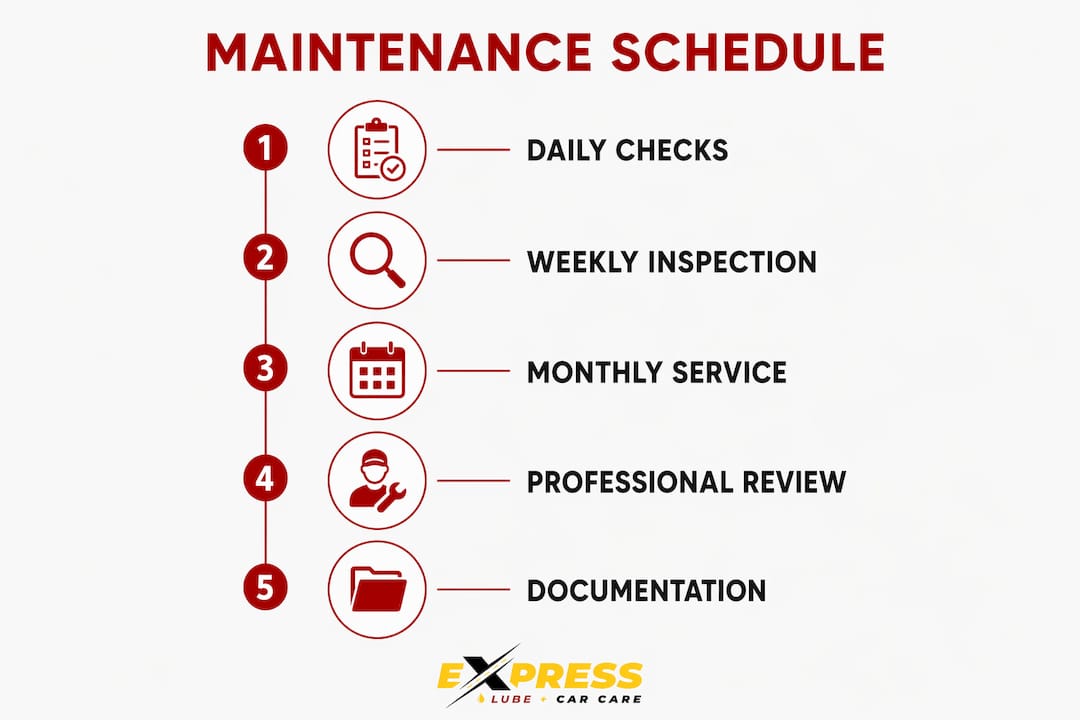
A solid maintenance schedule is built on three layers: daily operator checks, weekly crew inspections, and monthly professional service. NFPA 1901 guidelines define the framework for fire apparatus, and state EMS regulations mirror that structure for ambulances and rescue units.
| Inspection tier | Frequency | Who performs it | Key focus areas |
|---|---|---|---|
| Daily operator check | Every shift | Assigned crew member | Fluid levels, tire pressure, lights, radio function |
| Weekly crew inspection | Once per week | Full crew or officer | Brake condition, battery load, pump operation, equipment inventory |
| Monthly professional service | Every 2,500 miles or 30 days | Certified technician | Full mechanical and electrical diagnostic, fluid changes, compliance documentation |
| Annual apparatus inspection | Once per year | Certified apparatus inspector | Structural integrity, pump certification, aerial device testing |
Digital tracking changes how well this schedule actually holds up. Paper logs get lost, skipped, or filled in after the fact. A digital maintenance log creates a timestamped record that protects the department during audits and supports warranty claims with the original equipment manufacturer. Fleet engine replacement planning also depends on accurate service histories. Without them, you are guessing when a major component is due for replacement.
Setting maintenance specifications during the vehicle procurement phase is equally important. Maintenance specs integrated at procurement ensure the vehicle arrives with service access points, fluid capacities, and component choices that match your shop’s capabilities. Buying a vehicle without those specs in the contract means you inherit someone else’s maintenance headaches.
Pro Tip: Set a calendar alert for the monthly service date and tie it to mileage tracking in your fleet software. The first threshold reached, time or miles, triggers the service. Never wait for both.
What role does crew training and documentation play in maintenance success?
Crew training and documentation are not administrative tasks. They are the human layer of the maintenance program, and they determine whether the mechanical work actually holds.
- Crews who practice daily tasks with vehicle layout awareness improve response times and reduce the risk of mechanical mishandling during a call.
- Responder training on equipment handling and issue reporting is the frontline defense for vehicle longevity. A crew member who notices a soft brake pedal and reports it immediately prevents a brake failure on the next call.
- Written, dated service records protect the department from liability and support warranty claims with the OEM. Meticulous maintenance records are a legal safeguard, not just an operational best practice.
- Clear communication between operators and the maintenance shop closes the gap between what the crew notices and what the technician fixes. A verbal report that never gets written down is a missed repair.
- Building a maintenance culture means every crew member understands that their daily check is not a formality. It is the first line of defense for the vehicle and for the people riding in it.
The most reliable emergency fleets treat their operators as the first tier of the maintenance program. Mechanics fix what operators find. When operators stop looking, mechanics stop finding problems before they become failures.
Key Takeaways
A systematic maintenance culture is the strongest predictor of emergency vehicle reliability, combining scheduled inspections, crew training, and accurate documentation into one continuous readiness program.
| Point | Details |
|---|---|
| Service interval is fixed | Perform preventive maintenance every 2,500 miles or monthly, whichever comes first. |
| NFPA standards define the baseline | NFPA 1901 and NFPA 1912 set daily, weekly, and monthly inspection requirements for compliance. |
| Specialized systems need equal attention | Emergency lighting, sirens, pumps, and medical power supplies require the same rigor as the engine. |
| Documentation protects the department | Written, dated service records support warranty claims and shield against liability exposure. |
| Crew training is part of the program | Operators who report minor issues early prevent major failures during active responses. |
What I’ve learned about emergency vehicle maintenance after years at the shop
At Express Lube & Car Care, we see a consistent pattern with fleet vehicles that come in after a problem rather than before one. The repair bill is always larger, the downtime is always longer, and the paperwork is always messier. Emergency vehicles make that pattern worse because the stakes are higher on every axis.
The insight that most fleet managers miss is the procurement phase. By the time a vehicle arrives at the shop, the maintenance decisions are already made. If the specs did not include service access points, fluid drain locations, or compatible component choices, the technician works around those gaps for the life of the vehicle. Writing maintenance requirements into the purchase contract is the highest-leverage move in the entire program, and most departments skip it entirely.
The second thing I would push back on is the idea that a good mechanic is enough. Mechanics fix what they can see. Crew members see the vehicle every shift. Training your operators to recognize and report early warning signs, a slight vibration, a slow-to-respond siren, a battery that takes longer to crank, turns every shift into a diagnostic opportunity. That combination of trained eyes and skilled hands is what actually keeps a fleet ready.
— Express Lube & Car Care
How Express Lube & Car Care keeps your fleet response-ready
Emergency vehicles cannot afford downtime, and the maintenance program behind them needs to be just as reliable as the vehicles themselves. Express Lube & Car Care provides preventive maintenance, oil changes, and full mechanical servicing for fleet and emergency vehicles in the Richland Hills area, performed by certified ASE technicians with no appointment required.
Whether you need a fast oil change and service to stay on your monthly maintenance interval or a full engine diagnostic and repair after a warning light appears, Express Lube & Car Care delivers honest pricing and transparent communication every visit. Walk in, get serviced, and get back on the road. Your fleet’s readiness depends on consistent care, and we make that easy to maintain.
FAQ
What is the required maintenance interval for emergency vehicles?
Emergency and EMS vehicles require preventive maintenance every 2,500 miles or monthly, whichever comes first, per NFPA 1912 and state EMS regulations.
What does NFPA 1901 require for fire apparatus maintenance?
NFPA 1901 mandates daily, weekly, and monthly inspections covering mechanical systems, emergency equipment, and accurate maintenance log documentation.
Why do emergency vehicles need more frequent servicing than regular vehicles?
Emergency vehicles face higher operational strain from frequent hard stops, extended idling, and heavy electrical loads from lights, sirens, and radios, which accelerates wear on every system.
What systems are unique to emergency vehicle maintenance checklists?
Emergency vehicle checklists include water pumps, foam systems, hydraulic rescue tools, medical equipment power supplies, sirens, and communication radios in addition to standard mechanical checks.
How does documentation protect an emergency vehicle fleet?
Written, dated maintenance records support warranty claims with the OEM and provide legal protection during audits or liability reviews following an incident.