

A coolant flush or coolant exchange replaces aging coolant in your vehicle’s cooling system with fresh coolant that meets the manufacturer’s specifications. The exact service procedure varies by vehicle, cooling-system design, coolant type, and the reason service is being performed.
Coolant does more than help prevent overheating. It also helps protect cooling-system components from freezing, corrosion, and other conditions that can affect engine temperature control.
If your vehicle is overheating, losing coolant, leaking, or showing signs of contamination, the cooling system should be inspected before assuming that a coolant flush alone will solve the problem.
Table of Contents
- What Does Engine Coolant Do?
- What Is a Coolant Flush?
- Coolant Flush vs. Drain-and-Fill
- Signs Your Cooling System Needs Attention
- Does Overheating Mean You Need a Coolant Flush?
- Why Does the Correct Coolant Matter?
- How Often Should Coolant Be Serviced?
- When Coolant Service Is Not Enough
- How Is the Cooling System Inspected?
- Coolant Service in Richland Hills, TX
- Frequently Asked Questions
What Does Engine Coolant Do?
Engine coolant circulates through the engine and cooling system to help control operating temperature.
Depending on the coolant formulation and vehicle requirements, coolant also provides freeze protection and contains additives designed to protect cooling-system materials and components.
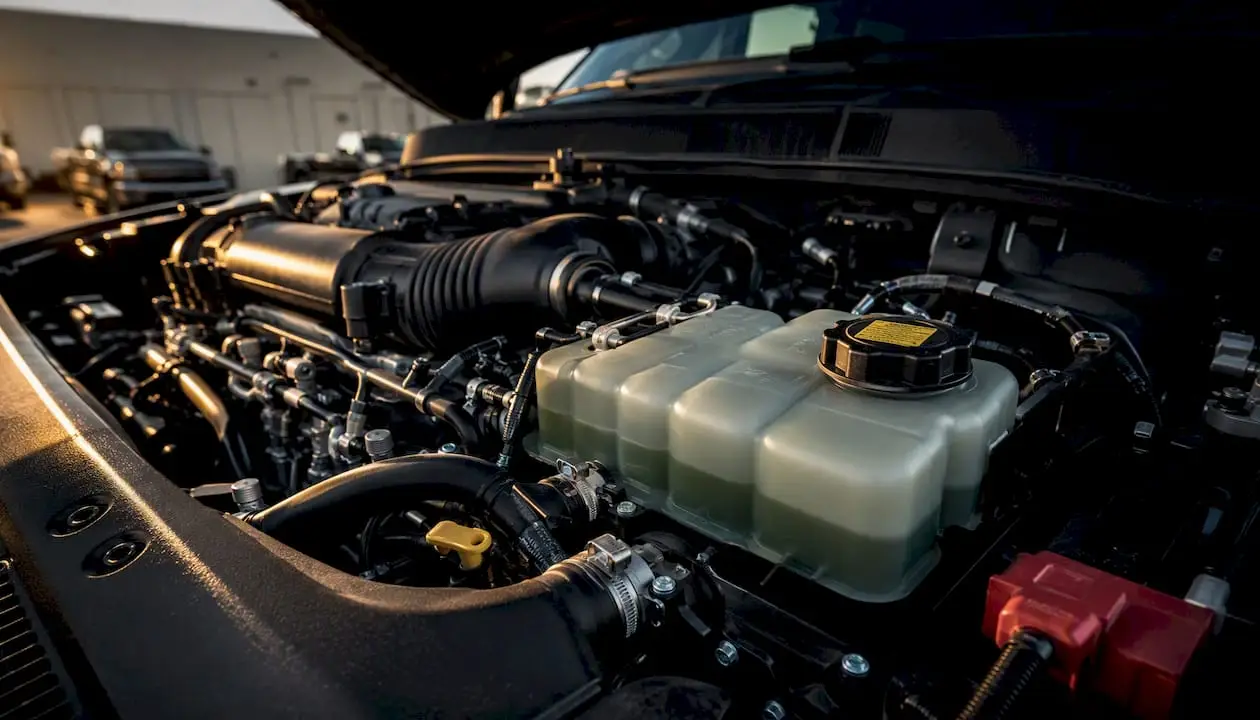
The cooling system includes several components that work together, which may include:
- Radiator
- Water pump
- Thermostat
- Cooling fans
- Coolant hoses
- Expansion or overflow reservoir
- Heater core
- Engine coolant passages
A problem with any part of the system can affect temperature control, which is why overheating should be diagnosed rather than automatically treated as a coolant-maintenance issue.
What Is a Coolant Flush?
A coolant flush or exchange is a cooling-system maintenance procedure that removes aging coolant and replaces it with fresh coolant that meets the vehicle manufacturer’s requirements.
The exact procedure is not identical for every vehicle. Depending on the cooling-system design and manufacturer service information, technicians may use different methods to remove and replace coolant, manage air in the system, and verify proper operation afterward.
A professional coolant service may also provide an opportunity to inspect the system for leaks, damaged hoses, reservoir problems, or other visible concerns.
Important: Coolant service is maintenance. It does not repair a leaking radiator, failed thermostat, damaged hose, failing water pump, or another mechanical cooling-system problem.
Coolant Flush vs. Drain-and-Fill: What’s the Difference?
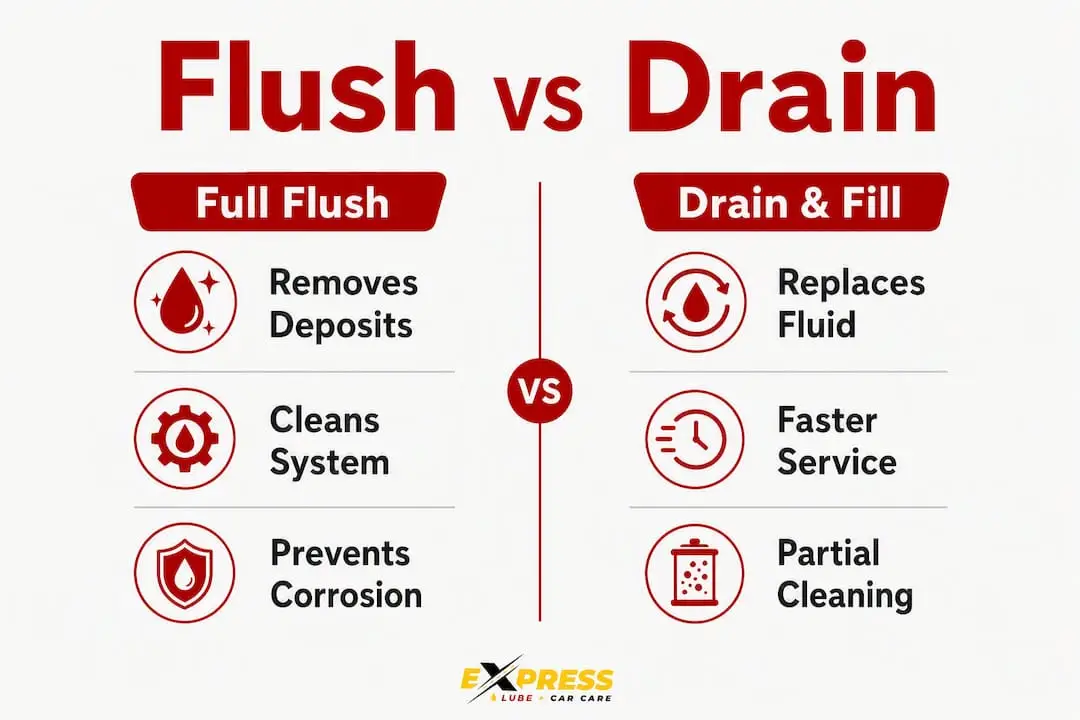
A drain-and-fill removes a portion of the existing coolant and replaces it with fresh coolant.
Other coolant-service procedures may exchange a greater amount of fluid or address the system differently.
The appropriate method depends on factors such as:
- Vehicle manufacturer service information
- Cooling-system design
- Required coolant specification
- Coolant condition
- Maintenance history
- Whether different coolant products may have been mixed
- Whether contamination or another cooling-system problem is suspected
Rather than assuming every vehicle requires the same type of flush, the service method should be selected based on the vehicle and the condition of its cooling system.
Signs Your Cooling System Needs Attention
Some cooling-system symptoms indicate that the vehicle needs inspection. They do not necessarily mean a coolant flush is the correct repair.
Watch for:
- Engine overheating: A temperature warning or higher-than-normal operating temperature requires attention.
- Low coolant level: Repeated coolant loss may indicate a leak or another problem.
- Visible coolant leak: Puddles, wet hoses, radiator leakage, or coolant around cooling-system components should be inspected.
- Unusual coolant appearance: Discoloration, contamination, particles, or an oily appearance may warrant further inspection.
- Sweet or unusual odor: Coolant leaking onto hot components can sometimes produce a noticeable odor.
- Steam from the engine compartment: Steam can indicate overheating or coolant loss and should be taken seriously.
- Cabin heater problems: Low coolant or cooling-system problems can sometimes affect heater performance.
Appearance alone does not identify the exact condition of the cooling system. If the coolant looks unusual or the vehicle has symptoms, inspection is more useful than assuming a flush will correct the problem.
Does Overheating Mean You Need a Coolant Flush?
Not necessarily.
Overheating can have many possible causes, including:
- Low coolant
- Cooling-system leaks
- Thermostat problems
- Water-pump problems
- Radiator restrictions or damage
- Cooling-fan problems
- Hose problems
- Air trapped in the cooling system
- Engine-related problems
A coolant service cannot repair a failed mechanical or electrical component.
If your vehicle is overheating, diagnosis should come before deciding which service or repair is appropriate.
For more information, read our guide on why a car may overheat.
Why Does the Correct Coolant Matter?
Coolants are formulated to meet different vehicle and manufacturer requirements. Color alone is not a reliable way to determine whether a coolant is correct for a particular vehicle.
The appropriate coolant should meet the specification required by the vehicle manufacturer.
That includes following the manufacturer’s requirements for:
- Coolant specification
- Concentration when applicable
- Service procedure
- Cooling-system bleeding or air-removal procedure
- Maintenance interval
If the existing coolant type or maintenance history is unknown, the system should be evaluated before adding or mixing products.
How Often Should Coolant Be Serviced?
There is no single coolant-service interval appropriate for every vehicle.
Maintenance requirements vary by manufacturer, model, engine, coolant specification, and operating conditions.
The best source for the appropriate interval is the maintenance schedule provided for your specific vehicle.
Some vehicles use long-life coolant formulations, while others may have different maintenance requirements. The word “long-life” should not be used as a reason to extend service beyond the manufacturer’s recommendation.
When Coolant Service Is Not Enough
A coolant exchange cannot correct every cooling-system problem.
Additional diagnosis may be needed when you notice:
- Persistent overheating
- Repeated coolant loss
- Visible leaks
- Oil or another substance appearing in the coolant
- Coolant appearing in engine oil
- Steam or significant pressure-related symptoms
- Poor cabin heat combined with other cooling-system symptoms
- Cooling fans that do not operate correctly
These symptoms can indicate mechanical, electrical, sealing, or other cooling-system problems that need to be identified before maintenance service is performed.
How Is the Cooling System Inspected?
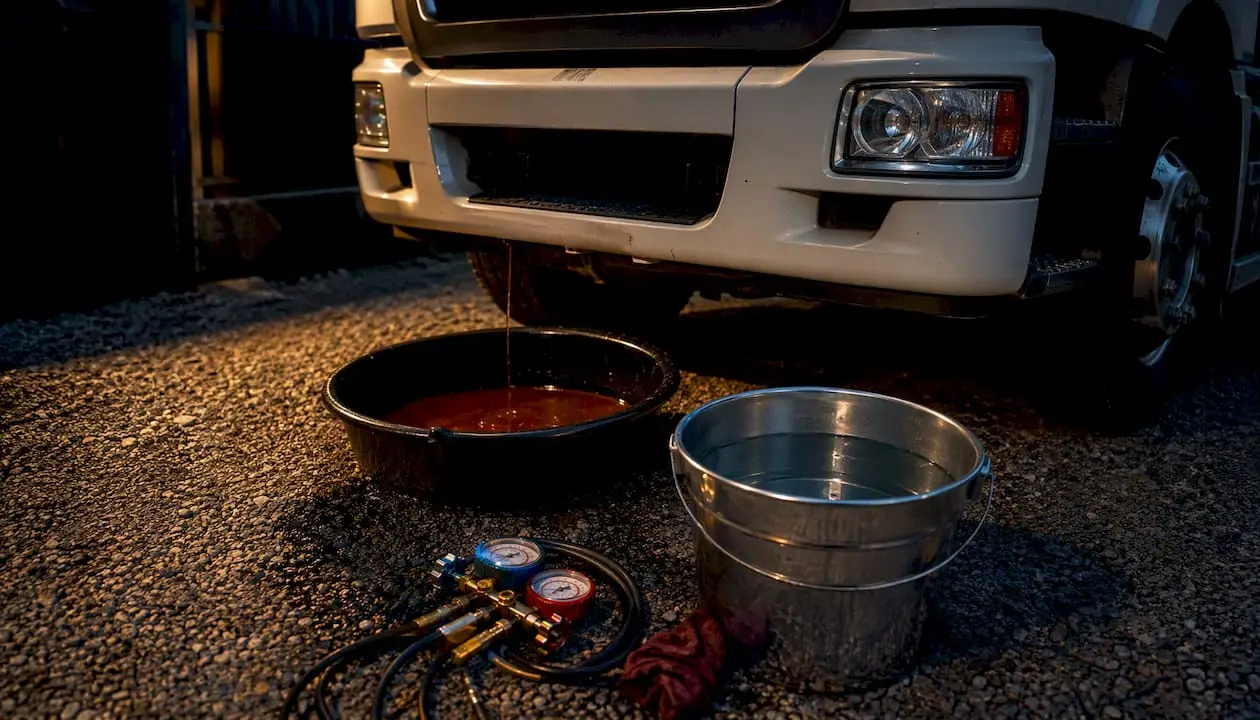
The appropriate inspection depends on the symptoms and vehicle.
A cooling-system evaluation may include:
- Checking coolant level and visible condition
- Inspecting hoses and connections
- Looking for visible leaks
- Inspecting the radiator and reservoir
- Checking cooling-fan operation when applicable
- Evaluating thermostat or water-pump concerns when symptoms indicate a problem
- Pressure testing when appropriate
- Reviewing vehicle-specific service information
The objective is to determine whether the vehicle needs routine coolant maintenance, leak repair, component replacement, or additional diagnosis.
Coolant Service in Richland Hills, TX
Express Lube & Car Care provides cooling-system inspection, coolant service, and related repairs for drivers in Richland Hills and surrounding communities.
Our technicians can inspect the system, identify visible leaks or other concerns, and determine the appropriate coolant and service procedure based on your vehicle’s requirements.
Learn more about our radiator and cooling system repair services in Richland Hills.
If the vehicle is overheating, losing coolant, or showing another cooling-system warning, let our team know when scheduling service so the underlying problem can be evaluated.
Frequently Asked Questions About Coolant Service
What is a coolant flush?
A coolant flush or exchange removes aging coolant and replaces it with fresh coolant that meets the vehicle manufacturer’s requirements. The exact service procedure varies by vehicle and cooling-system design.
Is a coolant flush the same as a drain-and-fill?
Not necessarily. A drain-and-fill typically replaces a portion of the coolant, while other service procedures may exchange a greater amount of fluid. The appropriate procedure depends on the vehicle manufacturer’s recommendations and the condition of the cooling system.
How often should coolant be changed?
Coolant-service intervals vary by vehicle, engine, coolant specification, and manufacturer. Follow the maintenance schedule provided for your specific vehicle rather than a universal time or mileage interval.
Does overheating mean I need a coolant flush?
No. Overheating can result from coolant loss, leaks, thermostat problems, water-pump problems, radiator issues, cooling-fan faults, or other conditions. The cause should be diagnosed before deciding which service is needed.
Can I mix different coolant types?
Do not assume different coolant products are compatible based on color or general type. Use coolant that meets the specification required by your vehicle manufacturer. If the existing coolant is unknown, have the system evaluated before mixing products.
Does dark or discolored coolant mean it needs to be flushed?
Unusual coolant appearance can be a reason to inspect the cooling system, but color alone does not identify the exact condition or required service. The coolant specification, maintenance history, symptoms, and system condition should all be considered.
Can a coolant flush fix a leak?
No. A coolant service does not repair a leaking radiator, hose, water pump, gasket, or other failed component. The source of coolant loss should be located and repaired.
What coolant should my vehicle use?
Use coolant that meets the specification required by your vehicle manufacturer. The correct product and concentration depend on the vehicle and cooling-system design.
Does Express Lube & Car Care provide coolant service?
Yes. Express Lube & Car Care in Richland Hills provides coolant service, cooling-system inspection, and related radiator and cooling-system repairs based on the vehicle’s needs.
Cooling system need attention? Express Lube & Car Care provides cooling system and radiator service in Richland Hills, TX. If your vehicle is overheating or losing coolant, proper diagnosis can help identify the cause before repairs are recommended.