
Choosing a local mechanic comes down to one question: can you trust them with something you depend on every day? The local auto repair community trust factors that actually move the needle are transparency in pricing, ASE certification, honest communication, warranty coverage, and genuine community involvement. Get all five working together, and you have a shop worth staying loyal to. Miss one, and doubt creeps in fast.
Here is what to look for, and why each factor matters more than you might expect:
- ASE certification confirms technicians have passed rigorous, standardized exams
- Transparent, itemized estimates show exactly what you are paying for before work begins
- Written warranties back the shop’s confidence in its own work
- Clear, jargon-free communication keeps you in control of every decision
- Community involvement signals long-term accountability, not just a transaction
- Online reviews with responses reveal how a shop handles problems, not just praise
- Ethical service practices like refusing pressure sales and respecting your service history
How local auto repair shops build trust through transparency and ethics
Transparency is the single fastest way a shop can either earn or destroy your confidence. When a technician hands you a vague estimate or rushes past your questions, suspicion fills the gap. The shops that consistently earn loyalty do the opposite.
ASE certification is the most recognized starting point. The National Institute for Automotive Service Excellence currently has approximately 250,000 certified technicians across the country, each of whom has passed exams in specific areas like brakes, engine repair, and electrical systems. Seeing that certification posted in a shop tells you the person working on your car has been tested, not just hired. RepairPal certification adds another layer, connecting shops to a network that holds them to pricing and quality standards.
Pricing structure matters just as much as credentials. Itemized “good/better/best” repair options reduce customer suspicion more effectively than flat discounts, because they give context. When you see a flat price with no breakdown, it reads like a black box. When you see parts cost, labor cost, and tiered options explained side by side, you can make an informed choice instead of guessing whether you are being overcharged.
Visual proof closes the deal for skeptical customers. Photo and video inspections are among the strongest trust signals in the industry, pushing stated likelihood to approve recommended work into the 60–70% range among initially skeptical customers. Showing someone the worn brake pad or the cracked hose on a screen is far more convincing than describing it.
A few other ethical practices separate trustworthy shops from the rest:
- Written estimates provided and approved before any work begins
- Old parts returned to the customer on request
- No pressure tactics framing routine decisions as emergencies
- Service history acknowledged before recommending repeat services
- Warranty terms stated clearly in writing, not mentioned verbally and forgotten
Pro Tip: Ask to see the old parts when you pick up your vehicle. Reputable shops expect this request and welcome it. If a shop hesitates or refuses, that tells you something important.
How community involvement builds trust that advertising cannot buy
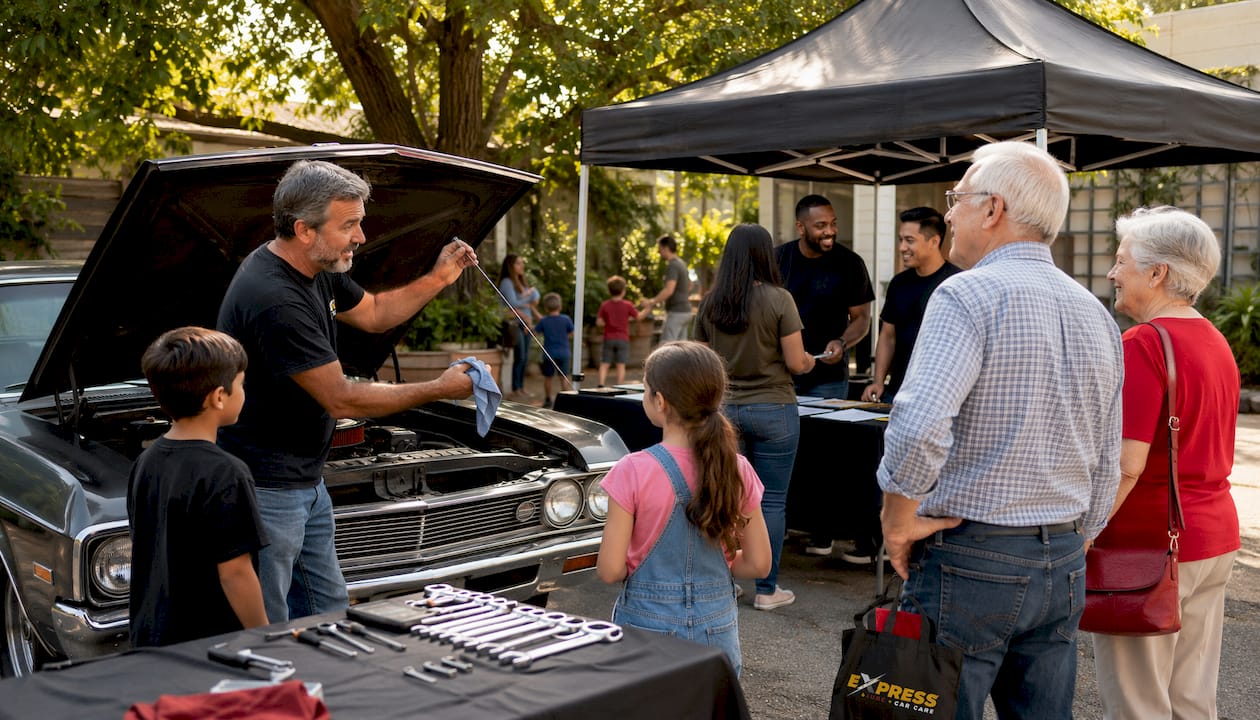
A shop that sponsors the local Little League team or donates to a neighborhood food drive is making a statement that goes beyond marketing. It is saying: we plan to be here, and we care what happens in this zip code. That kind of accountability is hard to fake over time.
Genuine community participation takes several forms:
- Sponsoring local sports teams, school events, or charity drives
- Participating in neighborhood festivals or car shows
- Partnering with local organizations for fundraisers
- Offering discounts or free inspections for first responders or veterans
- Supporting local schools through donations or vocational programs
The difference between authentic involvement and a PR move is consistency. A shop that shows up once for a photo opportunity and disappears is easy to spot. A shop that has been sponsoring the same youth soccer league for eight years has built something real. That history becomes part of its reputation, and neighbors talk about it.
Community engagement also drives word-of-mouth referrals in a way that paid advertising simply cannot replicate. Most customers trust online reviews as much as personal recommendations, but a neighbor’s unprompted endorsement at a school pickup still carries weight that no Google ad can match. Shops embedded in their communities collect those endorsements naturally, because people feel a connection beyond the transaction.
Longevity reinforces this effect. A shop that has operated in the same location for years has survived economic downturns, staff changes, and shifts in the industry. That track record is its own form of community trust, one that a brand-new location of a national chain simply cannot claim.
Why long-term customer relationships and communication keep drivers coming back
Trust builds across the entire service journey, from the first phone call to the follow-up text two days after you drive away. Shops that treat each visit as a standalone transaction miss the compounding value of a customer who returns for every oil change, every brake job, and every unexpected repair.
Clear communication is the engine behind that loyalty. Jargon-free explanations make customers feel informed rather than managed. When a technician says “your brake pads are at 2mm and the manufacturer recommends replacement at 3mm, so you have some time but should plan for it soon,” you leave feeling respected. When they say “your brakes are bad and need immediate attention,” you leave feeling pressured, even if the underlying fact is the same.
Listening matters as much as explaining. A shop that asks about your driving habits, your budget, and your timeline before recommending services is treating you as a partner, not a work order. That consultative approach, confirming the diagnosis before suggesting add-ons, is what separates shops with high approval rates from those that generate upsell suspicion.
Follow-up practices are underused but powerful. A quick call or text 24–48 hours after service to confirm everything feels right costs almost nothing and signals genuine care. Customers who receive that follow-up are far more likely to return and far more likely to refer friends.

Pro Tip: Before authorizing any repair, ask the shop to confirm the diagnosis first, then walk through any additional recommendations separately. This sequence protects you from feeling pressured and gives the shop a chance to earn your trust on each recommendation individually.
The best customer relationships in local auto repair look a lot like a family doctor relationship. The shop knows your vehicle’s history, catches patterns of wear before they become expensive failures, and gives you honest advice even when it means telling you a repair can wait.
How local shops compare to dealerships and national chains on trust
Local independent shops and large service chains solve the same problem, but the experience of trusting them feels very different. Understanding where each type of provider tends to excel helps you set the right expectations.
Local shops generally offer:
- Personalized service from technicians who recognize your face and remember your car
- Flexible pricing with room to discuss options rather than fixed menu pricing
- Transparent communication without corporate scripts or upsell quotas
- Deeper community ties that create accountability beyond a customer satisfaction survey
- Consistent staff so you build a relationship with the same people over time
Dealerships carry manufacturer-specific expertise and access to OEM parts, which matters for complex warranty repairs or newer vehicles with proprietary systems. National chains offer convenience through standardized processes and locations in multiple cities. But both tend toward transactional interactions, where the relationship resets with every visit and the advisor you spoke to last time may not be there today.
The trust gap often shows up in pricing transparency. Local shops that provide itemized estimates with tiered options give you context that flat-rate menu pricing at a chain does not. Customers who understand what they are paying for are less likely to feel taken advantage of, regardless of the final number.
Warranty coverage is another area where local shops can surprise you. Many independent shops back their work with warranties that match or exceed what chains offer, and they communicate those terms more directly because the owner of the shop is often the one handing you the keys. That personal accountability changes the dynamic entirely.
How Express Lube & Car Care builds community trust in Richland Hills
Express Lube & Car Care puts these trust factors into daily practice in a way that Richland Hills drivers can see and verify. The shop’s ASE and RepairPal certified technicians handle everything from routine oil changes to complex repairs, and that certification is not just a wall decoration. It means every technician has been tested and meets a nationally recognized standard of competence.
The no-appointment walk-in model removes one of the most common friction points in auto service. You do not have to plan days ahead or rearrange your schedule. You show up when it works for you, and the shop is ready.
Honest pricing and clear communication are built into the process. Customers receive itemized explanations of what needs attention, what can wait, and why, without pressure to approve everything at once. That consultative approach reflects the trust-first communication standard that separates shops drivers return to from shops they avoid.
The shop’s 24-month warranty on repairs is a direct statement of confidence in the work. When a shop backs its labor and parts for two years, it has skin in the game. That warranty, combined with positive local reviews and a consistent presence in the Richland Hills community, adds up to the kind of neighborhood auto shop credibility that takes years to build and is easy to verify.
Ready to experience straightforward auto care with no surprises? Visit Express Lube & Car Care in Richland Hills for certified service, honest pricing, and a warranty that actually means something. Walk in anytime.
Key Takeaways
Local auto repair shops build lasting community trust through a combination of ASE certification, transparent pricing, clear communication, warranty coverage, and genuine community involvement, all working together to give drivers confidence in every visit.
| Point | Details |
|---|---|
| ASE certification signals competence | Approximately 250,000 technicians hold ASE certification, making it the most recognized standard for consumers. |
| Itemized estimates reduce suspicion | Tiered “good/better/best” options give customers context that flat pricing cannot, lowering distrust. |
| Visual proof drives approvals | Photo and video inspections help more than half of skeptical customers approve recommended work. |
| Communication spans the full visit | Trust builds from the first greeting through the post-repair follow-up, not just during the estimate. |
| Community involvement creates accountability | Long-term local engagement, sponsorships, and consistent presence build reputation that advertising cannot replicate. |
FAQ
What is the most important trust factor in local auto repair?
Transparency in pricing and communication consistently ranks as the top trust driver. Shops that provide itemized written estimates and clear explanations before work begins give customers the confidence to approve repairs without feeling pressured.
How do I verify that a mechanic is ASE certified?
Ask the shop directly and look for the ASE logo displayed in the waiting area or on technician uniforms. You can also verify credentials through the National Institute for Automotive Service Excellence’s official directory.
How should I evaluate online reviews for an auto repair shop?
Look for patterns across multiple reviews rather than isolated comments. Shops with consistent mentions of fair pricing, clear communication, and timely service, combined with responses to negative feedback, demonstrate integrity and accountability.
What warranty should a trustworthy auto repair shop offer?
A reputable shop backs its work with a written warranty on both parts and labor. Express Lube & Car Care offers a 24-month warranty on repairs, which reflects genuine confidence in the quality of the work performed.
Why does community involvement matter when choosing a mechanic?
A shop that sponsors local events, supports neighborhood organizations, and maintains a consistent presence in the community has built accountability beyond the shop floor. That long-term commitment is a reliable indicator of a business that plans to be around and cares about its reputation with neighbors.