

Rideshare driving is classified as severe service by industry standards, which means your engine oil degrades significantly faster than it would under normal driving conditions. The operating conditions you face every shift, including extended idling, stop-and-go city traffic, and repeated short trips, accelerate oil breakdown in ways that standard maintenance schedules simply do not account for. Severe service intervals are typically half of normal intervals, reflecting how demanding rideshare use really is on your engine. That means oil changes every 3,000–5,000 miles instead of the 7,500–10,000 miles a typical personal vehicle driver might follow. ASE-certified technicians at Express Lube & Car Care consistently flag this gap as one of the most overlooked risks for rideshare drivers.
Why rideshare cars need frequent oil changes: the severe service factor
Rideshare driving puts your engine through conditions that most vehicle manufacturers classify as severe duty. Your personal vehicle owner’s manual was written for a driver who commutes 30 minutes each way on a mix of city streets and highway. Your rideshare shift looks nothing like that.
Idling degrades oil faster than highway driving because the engine never reaches the temperature needed to burn off moisture and combustion byproducts. Those byproducts stay suspended in the oil, diluting it and eating through its protective additives. Think of it like running a coffee filter over and over without replacing it. Eventually, it stops filtering anything useful.
The specific conditions that classify rideshare driving as severe service include:
- Extended idling while waiting for ride requests. Your engine runs but goes nowhere, building up moisture and fuel contamination in the oil.
- Stop-and-go urban traffic. Rapid temperature swings stress the oil’s additive package, which is the chemistry that keeps metal surfaces from grinding against each other.
- Frequent short trips. Trips under 10 miles rarely allow the engine to fully warm up, so combustion byproducts never fully burn off.
- High daily mileage accumulation. Rideshare drivers often log two to three times the annual mileage of a typical personal vehicle driver, compressing the timeline for oil degradation.
- Repeated cold starts. Every cold start puts maximum stress on engine components before oil pressure fully builds, and rideshare drivers do this dozens of times per shift.
Oil degradation accelerates with every cold start and idle period, making the cumulative effect on your engine far worse than the odometer reading alone suggests.
Pro Tip: Track your idle time, not just your mileage. If you spend two or more hours idling per shift, treat your oil change interval as closer to 3,000 miles rather than 5,000, regardless of what your dashboard reminder says.
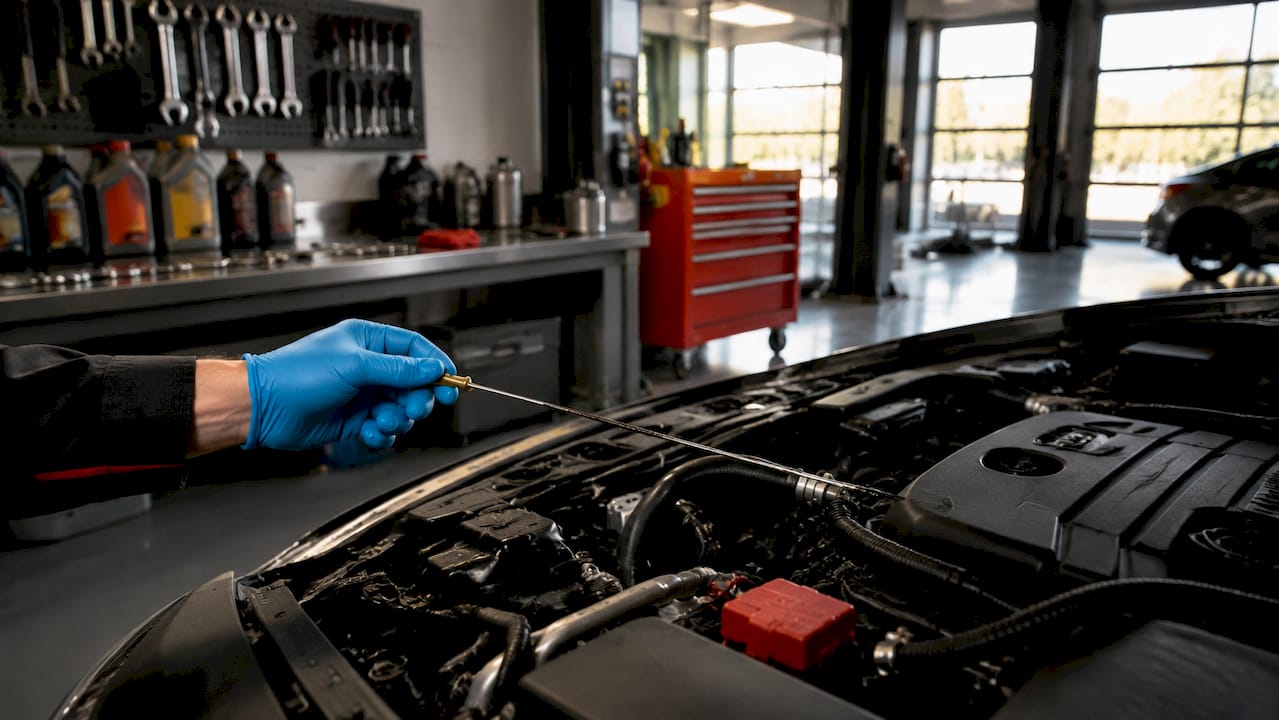
How does frequent oil changing protect your engine and passengers?
Fresh oil does two jobs at once: it lubricates moving parts and acts as a cleaning agent. When oil gets old and contaminated, it stops doing either job well.
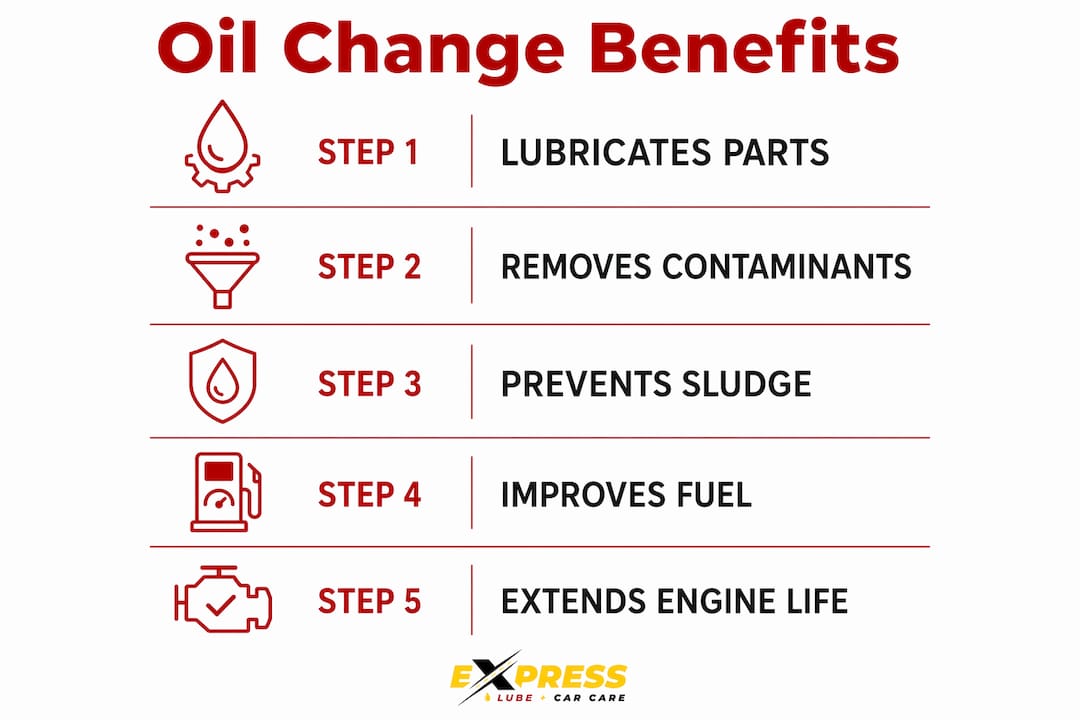
Engine oil suspends contaminants as it circulates, pulling carbon deposits, metal particles, and combustion byproducts away from critical surfaces. Once the oil reaches capacity, those contaminants stay in contact with engine parts and begin forming sludge. Sludge clogs oil passages, starves components of lubrication, and can cause catastrophic failures like timing chain damage or piston ring wear.
Here is what regular oil changes actually protect in your rideshare vehicle:
- Timing chain and camshaft. These components depend on clean, pressurized oil. Sludge buildup starves them first, and replacement costs can run into thousands of dollars.
- Piston rings. Dirty oil accelerates ring wear, which leads to oil burning and reduced compression over time.
- Turbochargers (if equipped). Turbos spin at extremely high speeds and are the first component to fail when oil quality drops.
- Bearings. Rod and main bearings rely entirely on a thin film of clean oil. Contaminated oil breaks that film down and causes metal-on-metal contact.
- Overall engine temperature regulation. Clean oil transfers heat away from engine components. Degraded oil loses this ability, contributing to overheating.
“Preventive maintenance is a vital business strategy for rideshare drivers. Frequent oil changes prevent costly breakdowns and income loss by minimizing unexpected repairs during peak earning times.” — Auto Repair for Gig Workers
A breakdown mid-shift does not just cost you a tow. It costs you lost fares, a potential drop in your driver rating, and possibly days off the road while repairs are completed. Proactive maintenance including oil changes, fluid services, and inspections reduces breakdown risks and improves fuel efficiency. Express Lube & Car Care’s oil change service goes beyond swapping oil and a filter. It includes fluid top-offs and a multi-point inspection, so you leave knowing your whole vehicle is road-ready, not just your oil level.
What oil change intervals should rideshare drivers follow?
The standard advice you see on oil change reminder stickers does not apply to rideshare driving. Those stickers are calibrated for normal driving conditions, not severe service.
Severe driving conditions like stop-and-go traffic, short trips, and heat require halving standard oil change intervals for effective engine protection. The table below shows how rideshare intervals compare to standard schedules.
| Driving Type | Conventional Oil | Full Synthetic Oil | Time-Based Maximum |
|---|---|---|---|
| Normal (personal vehicle) | 3,000–5,000 miles | 7,500–10,000 miles | 12 months |
| Severe service (rideshare) | 2,000–3,000 miles | 3,000–5,000 miles | 6 months |
Oil must be changed at least every 6 months even if you have not hit your mileage target. Low-mileage rideshare vehicles still accumulate moisture and acid in the oil over time, and those contaminants degrade performance just as surely as high mileage does.
Full synthetic oil is the better choice for rideshare vehicles. It handles temperature extremes better, resists breakdown longer under severe conditions, and provides stronger protection during cold starts. The higher upfront cost is offset by the slightly longer interval it allows and the engine protection it delivers.
Vehicle age also matters. Older engines with higher overall mileage may have worn seals that benefit from conventional oil’s slightly thicker viscosity. If your vehicle has over 100,000 miles, ask your technician whether a high-mileage formula makes sense for your situation.
Pro Tip: Set a calendar reminder for every 90 days as a check-in point. If you have hit your mileage target, book the oil change. If not, check your oil level and color on the dipstick. Dark brown or black oil that smells burnt needs to come out regardless of the odometer.
What maintenance strategies help rideshare drivers stay on the road?
Staying on the road is your income. Every hour your car sits in a shop is money you are not making. The goal is to make maintenance fast, predictable, and never an emergency.
- Schedule oil changes proactively. Do not wait for the oil life monitor to hit zero. Book your next appointment when you leave your current one, based on your average weekly mileage.
- Use full synthetic oil. It provides better protection under severe conditions and gives you a slightly longer window if your schedule gets tight.
- Combine services when possible. Pair your oil change with a tire rotation, brake inspection, and air filter check. Catching wear early costs far less than emergency repairs.
- Check your oil between services. Pull the dipstick once a week. Clean oil is amber-colored and translucent. Dark, gritty oil means you are overdue.
- Use no-appointment service options. Walk-in oil change centers like Express Lube & Car Care let you get in and out between shifts without blocking off half a day.
- Keep a maintenance log. Record every oil change with the date, mileage, and oil type. This protects your warranty, helps you spot patterns, and adds resale value to your vehicle.
The benefits of regular oil changes go beyond engine health. Clean oil improves fuel economy, reduces emissions, and keeps your engine running quietly. Passengers notice a smooth, quiet ride. A rough, noisy engine is not a great first impression.
Pro Tip: Use a quick oil change between shifts rather than scheduling a full day off. A 20-minute stop at Express Lube & Car Care costs you far less than a single lost shift, let alone an engine repair.
Rideshare driving also qualifies as a business expense in most cases, which means your oil changes may be tax-deductible. Keep your receipts and track your maintenance costs as part of your overall business accounting.
Key Takeaways
Rideshare cars require oil changes every 3,000–5,000 miles because severe-service conditions degrade oil far faster than standard driving schedules account for.
| Point | Details |
|---|---|
| Severe service classification | Rideshare driving qualifies as severe duty, cutting standard oil change intervals roughly in half. |
| Idling accelerates degradation | Extended idling prevents oil from burning off contaminants, speeding up additive breakdown. |
| 6-month time limit | Change oil at least every 6 months even if mileage targets are not met, to prevent acid and moisture buildup. |
| Full synthetic is the better choice | Synthetic oil handles temperature extremes and cold starts better, making it the right fit for rideshare conditions. |
| Maintenance protects income | Preventing breakdowns through regular oil changes directly protects your earning potential and passenger safety. |
What we have learned from watching rideshare engines age
We see a clear pattern at Express Lube & Car Care. Rideshare drivers who come in every 3,000–4,000 miles have engines that look years younger than their odometer suggests. Drivers who stretch their intervals to match personal vehicle schedules come in with sludge buildup, worn bearings, and oil that looks more like tar than lubricant.
The outdated 3,000-mile rule gets dismissed a lot in general automotive circles, and for a normal driver, that criticism is fair. But for rideshare driving, that interval remains relevant because the additive breakdown happens faster under severe conditions. The chemistry does not care what the calendar says.
What I find drivers underestimate most is the cost of doing nothing. A single engine repair can cost more than a full year of oil changes. Lost income during a breakdown adds to that number fast. Treating your oil change as a business expense rather than an inconvenience changes how you think about scheduling it.
Your vehicle is your business asset. Protect it like one.
— Express Lube & Car Care
Oil change specials for rideshare drivers at Express Lube & Car Care
Rideshare drivers need fast, reliable service that fits between shifts, not a half-day appointment at a dealership.
Express Lube & Car Care in Richland Hills offers walk-in oil changes performed by ASE-certified technicians, with no appointment needed. Every service includes a multi-point inspection and fluid top-offs, so you know your vehicle is fully road-ready when you pull back onto the road. Check out the current oil change specials to find the right service for your vehicle and budget. Keeping your oil fresh is one of the most cost-effective ways to protect your income, your passengers, and your engine for the long haul.
FAQ
How often should rideshare drivers change their oil?
Rideshare drivers should change their oil every 3,000–5,000 miles for full synthetic oil, or at least every 6 months if mileage is low. Severe service conditions like idling and stop-and-go traffic cut standard intervals roughly in half.
Is full synthetic oil worth it for rideshare vehicles?
Full synthetic oil is the better choice for rideshare vehicles because it handles temperature extremes and repeated cold starts better than conventional oil. It also resists breakdown longer under the severe conditions that rideshare driving creates.
What happens if a rideshare driver skips an oil change?
Skipping oil changes allows contaminants to build up and form sludge, which can damage the timing chain, bearings, and piston rings. Neglecting oil changes leads to costly mechanical failures and unexpected downtime that directly cuts into driver income.
Does idling really damage oil faster than driving?
Yes. Idling prevents the engine from reaching the temperature needed to burn off moisture and combustion byproducts, which accumulate in the oil and degrade its protective additives faster than highway driving does.
Can rideshare drivers deduct oil changes as a business expense?
Oil changes and other vehicle maintenance costs are generally deductible as business expenses for rideshare drivers who use their vehicle for work. Keep all receipts and consult a tax professional to confirm eligibility based on your specific situation.