

If you’ve ever driven past a local garage with a community-focused name and wondered what exactly sets it apart from a chain oil change shop, you’re not alone. A community auto service center is a broad term covering two distinct types of auto care providers: locally owned repair shops that serve and prioritize neighborhood drivers, and nonprofit or social-enterprise programs that offer subsidized or free vehicle repairs to families in need. Both models share a focus on accessible, trustworthy car care. This article breaks down what each type offers, what to expect, and how to find the right one for your situation.
Table of Contents
- Key takeaways
- What is a community auto service center?
- Community centers with a social-impact mission
- Core services and benefits of choosing a community center
- How to find and choose the right local auto services
- Limitations and challenges to know about
- My honest take on community auto care
- Express Lube & Car Care: local service you can count on
- FAQ
Key takeaways
| Point | Details |
|---|---|
| Two types exist | Community auto centers include both local for-profit shops and nonprofit assistance programs with different goals. |
| Nonprofits fill a real gap | Programs like Car Care Program have completed over 1,000 repairs and gifted hundreds of vehicles to qualifying families. |
| Services are broad | Most centers cover oil changes, brake repair, engine diagnostics, A/C, and transmission work. |
| Eligibility matters for nonprofits | Assistance programs require income documentation, vehicle ownership proof, and written repair estimates. |
| Local shops offer real advantages | Certified independent shops frequently provide warranty-backed repairs and more transparent communication than large dealerships. |
What is a community auto service center?
The phrase “community auto service center” gets used in a couple of different ways, and knowing the difference saves you confusion when you’re looking for help. In the most common usage, it simply refers to an independent, locally owned auto repair shop that positions itself as a neighborhood resource rather than a faceless chain. Think of a shop where the owner knows your name and where trust is built over years, not manufactured through a loyalty points program.
In a more specific sense, it can describe a nonprofit or social-enterprise auto program that provides affordable or free vehicle repairs to low-income families. These two models are different in purpose, but they share a community-centered philosophy.
Most locally owned community auto centers offer a wide range of services. According to a business spotlight on Community Auto Care in Waco, typical offerings include:
- Brake services (pads, rotors, calipers)
- Oil changes and fluid maintenance
- Engine diagnostics and repairs
- A/C service and recharging
- Transmission service and replacement
What separates these shops from big dealerships is not just price. It’s the personal investment in your vehicle’s long-term health and a willingness to explain what they found and why it matters to you.
Pro Tip: When you call a local shop for the first time, ask whether they employ ASE-certified technicians. That credential is the industry standard for proven mechanical competence and tells you a lot about how seriously the shop takes quality.
Community centers with a social-impact mission
Some community auto service centers operate as full nonprofit or social-enterprise programs. Their goal is not profit. It’s transportation equity. The idea is straightforward: if your car does not run, you cannot get to work, take your kids to school, or make it to a medical appointment. Removing that barrier is the mission.
The Car Care Program in Minnesota is one of the more well-known examples. Since 2013, it has gifted over 550 vehicles and completed more than 1,000 repairs, serving families across four Minnesota counties. Their framing centers on removing transportation barriers that block access to essential daily life, not just fixing cars.
Another example is Non-Profit Wrench, a garage in Kasson, Minnesota run by a single founder who donates his mechanical skills to people who cannot afford repairs. The catch is demand. With space for only two vehicles, the founder turns away roughly ten times as many clients as he can actually help. That ratio is sobering and worth keeping in mind.
Nonprofit programs typically operate with specific criteria:
- Focus on operability and safety, not cosmetic repairs
- Eligibility tied to income level, vehicle ownership, and geographic area
- Some programs include vehicle donations for families whose cars are beyond repair
- Many incorporate automotive education so recipients can handle basic maintenance themselves
“Our mission is to remove transportation barriers and provide reliable vehicles so families can access work, school, and healthcare.” — Car Care Program
The Miami Valley Community Action Partnership takes a similar approach. Their repair assistance program caps support at $1,500 per repair, excludes cosmetic and body work entirely, and requires applicants to submit proof of ID, income, insurance, and vehicle ownership. The program also asks for two written estimates submitted within 30 days. That level of documentation is standard across most assistance programs and worth knowing before you apply.
Core services and benefits of choosing a community center
Whether you’re looking at a local shop or a nonprofit program, the service menu at most community auto centers covers the repairs that actually keep a vehicle road-worthy.
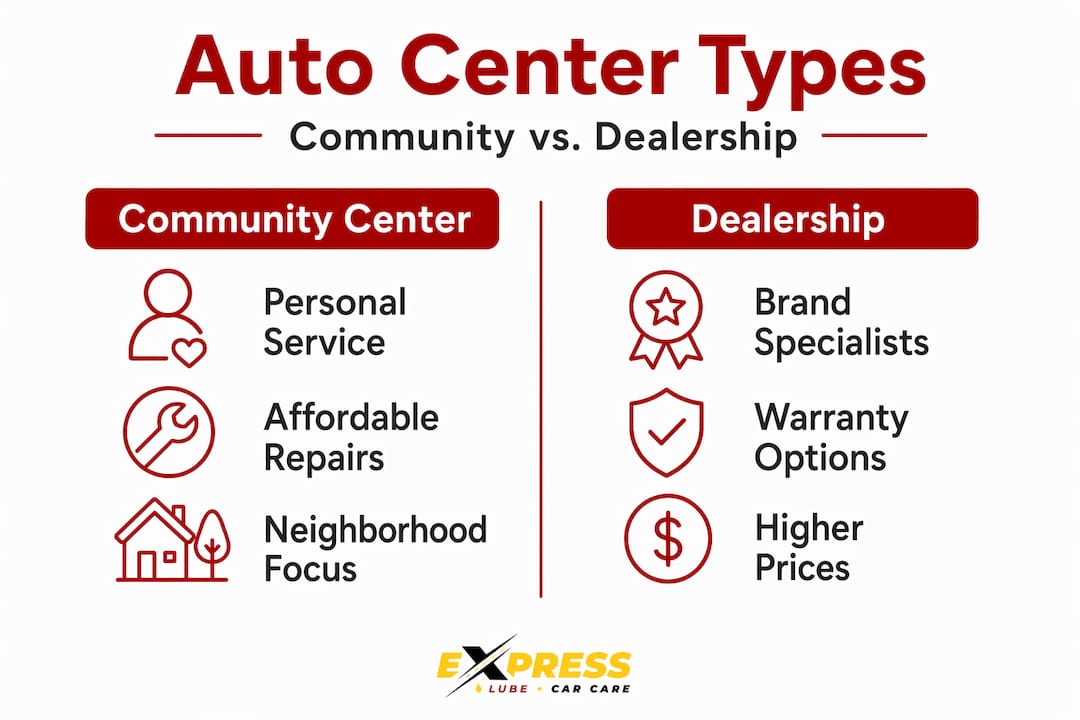
| Service Category | Community Auto Center | Large Dealership |
|---|---|---|
| Oil changes | Fast, affordable, often walk-in | Appointment required, higher cost |
| Brake repair | Competitive pricing, trusted labor | Often uses OEM parts at premium cost |
| Engine diagnostics | Thorough, explained in plain language | May push additional dealer services |
| Transmission service | Available at most full-service shops | Expensive, can involve unnecessary upsells |
| Warranty on repairs | Many offer multi-year warranties | Dealer warranties often tied to brand loyalty |
| Customer relationship | Personal, ongoing, name-recognized | Transactional, staff turnover common |
One thing that stands out about the better independent community shops is how they handle the post-inspection conversation. Centers like Limitless Auto Center offer a 3-year/36,000-mile warranty and use digital vehicle inspections to walk customers through findings without pressure. That kind of transparency builds real trust over time.
The benefits of working with a local community-focused shop extend beyond just getting a good price. You’re supporting a business that reinvests in your neighborhood. You’re building a relationship with mechanics who have a long-term stake in your satisfaction. And you get the kind of honest conversation about your vehicle’s condition that’s harder to find at a high-volume dealership service bay.
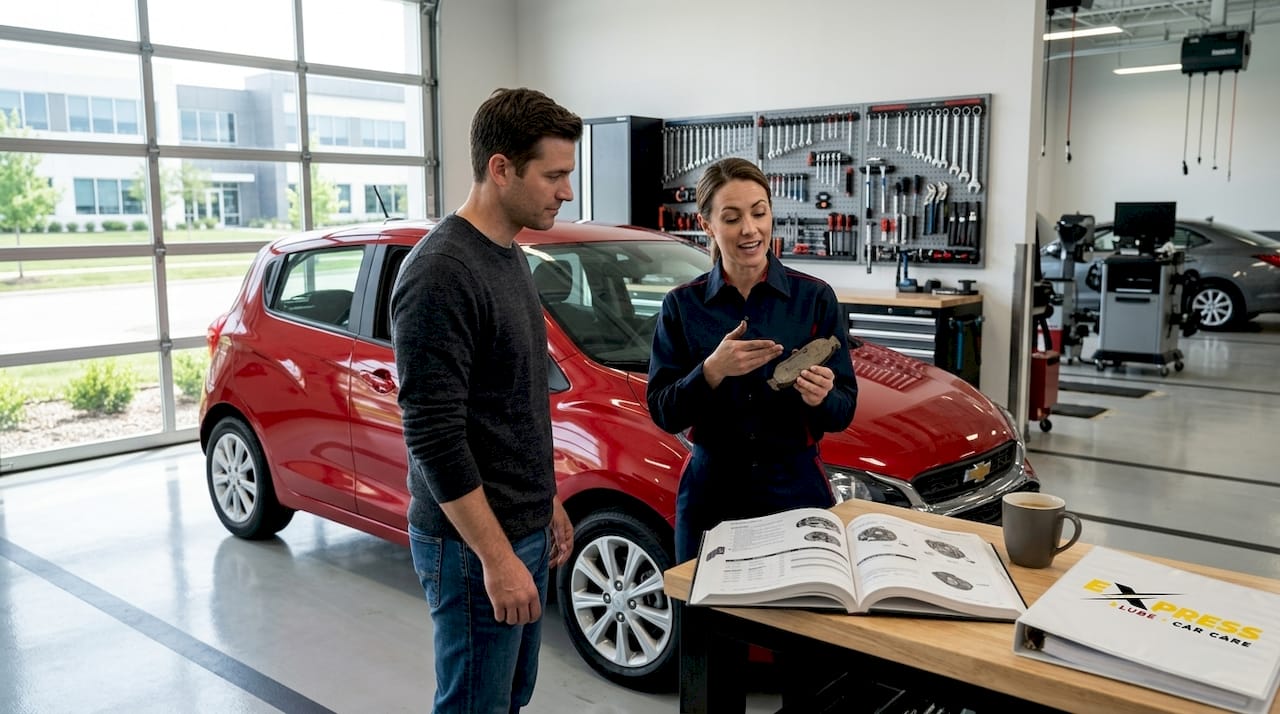
Pro Tip: Ask whether the shop offers a written warranty on parts and labor before you authorize any repair. A reputable community auto center should back its work. If the answer is vague or nonexistent, that tells you something important.
How to find and choose the right local auto services
Choosing the right local auto services for your needs comes down to a few clear steps. Here’s how to approach it without getting overwhelmed.
-
Check for certifications. Look for ASE-certified technicians and RepairPal certification. These credentials mean the shop has been independently evaluated for quality and fair pricing. They’re not just marketing badges.
-
Read recent reviews. Focus on reviews from the last 12 months. Pay attention to how the shop responds to negative feedback. A professional, calm response to a complaint is often more telling than a string of five-star reviews.
-
Ask about warranties. Any shop worth your business should offer at minimum a 12-month/12,000-mile warranty on parts and labor. The stronger shops go further.
-
Clarify the service scope. Some community centers specialize in specific repairs while others are full-service. Make sure the shop you choose can handle the work your vehicle actually needs. You can learn more about local car care options available in your area to set realistic expectations.
-
For nonprofit programs, gather your documents early. Most assistance programs require proof of income and ownership along with multiple repair estimates. Collecting those before you apply shortens the process significantly.
-
Ask about walk-in availability. For routine maintenance like oil changes, a shop that accepts walk-ins respects your schedule. Appointment-only models are fine for major repairs, but for quick services, flexibility matters.
Understanding what vehicle maintenance covers before you walk in also helps you ask smarter questions and avoid unnecessary add-ons.
Limitations and challenges to know about
Community auto centers, especially nonprofit ones, are genuinely valuable. But they come with real constraints that you need to factor into your planning.
- Limited physical capacity. Many nonprofit garages operate with just one or two service bays and a small volunteer crew. That directly limits how many vehicles they can serve each week.
- High demand, low supply. The gap between demand and capacity is stark. Programs regularly turn away far more applicants than they can help. If you need a repair quickly, a nonprofit program is likely not your fastest option.
- Waitlists are common. Even after you qualify, you may wait weeks before a service slot opens. Plan ahead if this is your route.
- Documentation requirements are strict. Assistance programs require detailed paperwork. Missing a single item can delay or disqualify your application.
- Repairs prioritize safety, not appearance. Programs focus on getting your car to run safely, not making it look good. Cosmetic fixes like dents or paint are typically excluded.
For local for-profit community shops, the limitations are different. Busy shops may have longer wait times during peak seasons. Smaller operations may not carry every specialty part in stock. The key is communication: a good shop will tell you upfront what the timeline looks like.
My honest take on community auto care
I’ve seen what happens when drivers dismiss smaller, community-oriented shops in favor of convenience chains and end up with a repair that doesn’t hold because no one took the time to actually diagnose the root cause. That pattern is more common than people realize.
What I’ve learned watching how the better community auto centers operate is that the personal stakes are higher. When the shop owner lives in your neighborhood, their reputation is tied to your experience in a way that a regional manager overseeing 40 locations simply does not feel.
The nonprofit model is impressive in mission but genuinely hard to scale. The demand and capacity math does not work in most communities yet, and expecting it to replace a proper repair shop for everyone is unrealistic. But for families who genuinely cannot afford repairs, these programs change lives. Transportation access connects directly to economic stability, and that matters beyond the car itself.
My take: if you have the means, find a certified independent shop that treats you like a person and stands behind its work. If you need financial assistance, research the nonprofit programs in your county and start gathering your documents now. Either way, you’re better served by a community-focused provider than by a shop that treats your car as a transaction.
— Express Lube & Car Care
Express Lube & Car Care: local service you can count on
At Express Lube & Car Care in Richland Hills, we operate as exactly the kind of community-focused auto center this article describes: ASE and RepairPal certified, straightforward about pricing, and committed to repairs that actually last. Our technicians explain what they find in plain language, and we back our work with warranty-covered repairs so you’re never left guessing. From oil changes and seasonal specials to brake service and engine diagnostics, we handle it all with no appointment necessary for most services. Check our certified service credentials and see why Richland Hills drivers keep coming back.
FAQ
What makes a community auto service center different?
A community auto service center is either a locally owned independent repair shop focused on neighborhood drivers or a nonprofit program offering subsidized vehicle repairs. Both prioritize accessible, trustworthy service over volume-driven profit.
Do nonprofit auto repair programs cost anything?
Many nonprofit programs offer free or heavily subsidized repairs for qualifying families, but eligibility requirements apply. Applicants typically need to provide income documentation and repair estimates to be considered.
What services do community auto centers typically offer?
Most full-service community auto centers cover brake repair, oil changes, engine work, A/C service, and transmission repairs. Nonprofit programs usually focus only on repairs that affect vehicle safety and operability.
How do I know if a local shop is reputable?
Look for ASE certification, recent positive reviews, and a written warranty on parts and labor. Shops that offer digital inspections and transparency tend to build the strongest long-term customer relationships.
Can I walk into a community auto center without an appointment?
At many locally owned community service centers, yes. Walk-in availability depends on the shop, but it’s a common feature at independent centers that prioritize convenience for local drivers. Nonprofit programs typically require an application and scheduled appointment.