

When you drive a Mercedes, you hear the term "certified mechanic" thrown around a lot. But what does it actually mean? The label can point to two very different types of technicians, and knowing the difference is key to getting the right service for your car.
A mechanic might be factory-certified by Mercedes-Benz itself, or they could be an ASE-certified technician at an independent shop with proven expertise across many complex brands—including yours.
Decoding 'Certified Mercedes Mechanic'
For a precision vehicle, "certified" is a word that should bring peace of mind. You want to know the person under your hood has the right skills. But not all certifications are the same, and understanding the distinction helps you make the best choice for your Mercedes-Benz.
It’s a bit like medicine. A factory-certified technician is a specialist who trained at one specific "hospital"—the dealership—on systems exclusive to Mercedes. They are the go-to experts for the very latest models and brand-specific tools.
An ASE-certified technician, on the other hand, is more like a board-certified physician. They’ve passed tough, industry-wide exams and have years of hands-on experience proving their skills across a huge range of complex automotive systems. This broad expertise means they can diagnose and fix your Mercedes with skill, often bringing a wider perspective from working on other high-end German and luxury cars.
This infographic breaks down the two main tiers of mechanic certification.
As you can see, both paths produce highly skilled technicians. One focuses on brand-specific training, while the other centers on comprehensive, industry-standard excellence.
Let’s take a closer look at how these two types of certification compare side-by-side.
Factory-Certified vs. ASE-Certified At a Glance
| Attribute | Factory-Certified Mercedes Mechanic | ASE-Certified Technician |
|---|---|---|
| Training Source | Direct from Mercedes-Benz | National Institute for Automotive Service Excellence (ASE) |
| Focus | Brand-specific models, tools, and warranty work | Broad expertise across all makes and models |
| Experience | Deep knowledge of the latest Mercedes technology | Wide-ranging diagnostic experience on diverse vehicles |
| Typical Location | Mercedes-Benz dealerships | Independent auto repair shops |
| Best For | In-warranty repairs, brand-new models, recalls | Routine maintenance, post-warranty repairs, diagnostics |
This table shows the core differences, but the bottom line is that both offer a high standard of quality. The right choice often depends on your car's age and your specific needs.
Finding Expertise Beyond the Dealership
The great news for Mercedes owners in Richland Hills is that top-tier service isn't limited to the dealership. A trusted independent shop staffed with experienced, ASE-certified professionals is a powerful and reliable alternative for everything from routine maintenance to complex engine diagnostics.
For many drivers, the most important factor is trust and consistent quality. An independent shop with a strong local reputation often builds long-term relationships, providing a level of personalized service that larger dealerships can't always match.
These technicians bring their deep, broad diagnostic knowledge right to your German-engineered vehicle. Because they work on a wide variety of high-end cars, they get very good at spotting both common and unusual issues quickly and efficiently.
You can learn more about how shops like ours achieve this through programs that recognize top-tier service and expertise. This blend of proven skill, better value, and customer-first service gives you more confidence and choice when it comes to caring for your Mercedes.
Understanding the Two Paths to Certification
So, how does a mechanic actually get the title "certified"? It’s not one-size-fits-all. There are really two main paths a technician can take, and knowing the difference helps you pick the right pro for the job.
One path leads straight to the source: the car manufacturer itself. This is what we call factory-certified. Technicians on this track get intense, specialized training directly from Mercedes-Benz. They learn the ins and outs of the brand’s unique diagnostic tools, like the XENTRY system, and become experts on the complex tech in the newest models.
This creates a technician with incredibly deep knowledge, but it's also very narrow. They are the go-to experts for brand-new cars, warranty repairs, and recall work. Their world revolves almost entirely around the Mercedes-Benz ecosystem.
The Industry Standard of Excellence
The other path is much broader. This one leads to the auto repair industry's gold standard: ASE (Automotive Service Excellence) certification. Think of this less like a brand-specific course and more like a comprehensive degree in automotive repair. It's a highly respected credential that proves a mechanic knows their stuff across a wide range of vehicles, not just one.
To get ASE-certified, a technician has to pass a series of tough exams. But just as important, they must have proof of at least two years of hands-on, in-the-shop experience. This isn’t just about knowing the textbook; it’s about proving you can apply that knowledge in the real world. The best of the best earn multiple certifications to become a "Master Technician."
This blend of difficult testing and verified experience is exactly why ASE certification is held in such high regard. It's a guarantee that a mechanic has a rock-solid foundation in how cars work and the practical skill to solve tough problems on any vehicle—including your Mercedes-Benz.
Versatile Expertise for Your Mercedes
An ASE-certified technician brings a different kind of strength to the table: versatility. Because their knowledge isn’t locked into a single brand’s way of doing things, they often have a much wider perspective when diagnosing a tricky issue.
This wide-ranging experience helps them spot patterns and solve problems that might stump a specialist. They are true masters of the fundamental principles that govern all modern cars, from complex engine performance to finicky electrical systems.
A technician with these credentials can handle your Mercedes service with confidence and skill. Whether you're in for routine maintenance like a Service A/B or trying to figure out a mysterious check engine light, their proven diagnostic process ensures your car gets the expert care it needs. This is the level of skill you’ll find at a top-tier independent shop, making it a reliable and smart alternative to the dealership.
How Certification Impacts Your Service Costs
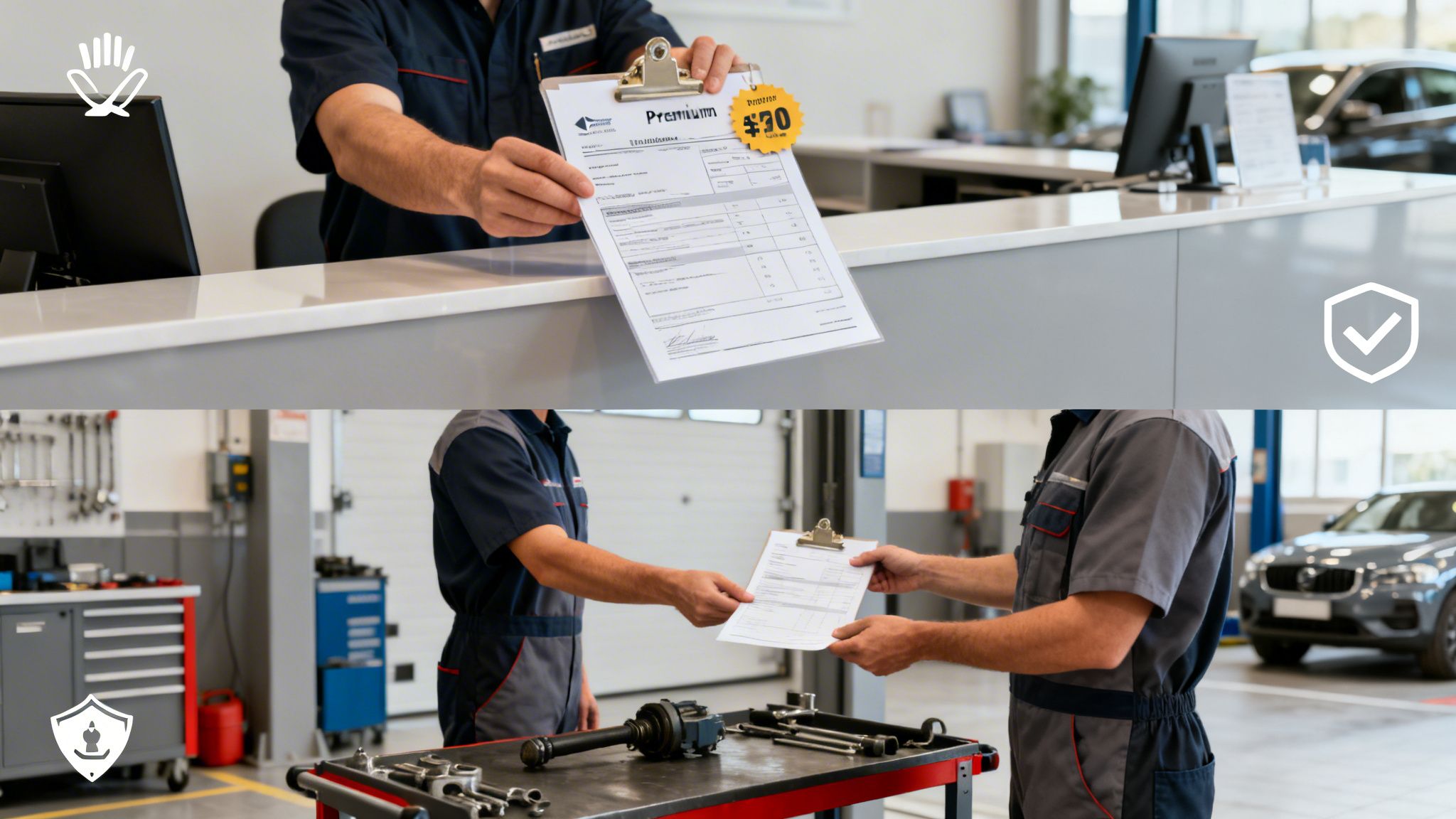
Ever get that feeling of sticker shock after a routine service at the dealership? You're not just imagining it. The price difference between a dealership and a great independent shop isn't just a few bucks—it's a direct result of two completely different business models.
When you pull into a dealership, the price on your invoice covers a lot more than just parts and labor. You’re also paying for the fancy showroom, the complimentary espresso bar, and all the high-dollar marketing it takes to maintain that brand image. Those overhead costs get passed straight to you.
A trusted independent shop, on the other hand, operates on a much leaner model. We skip the showroom gloss and focus on what really counts: hiring skilled technicians and investing in the right tools for the job. That means we can offer more competitive labor rates without cutting corners.
The True Cost of Expertise
Now, this doesn't mean skilled labor is cheap. A technician with factory-level Mercedes training is a valuable professional, and their pay reflects that specialized knowledge.
A certified Mercedes mechanic earns, on average, around $52,283 a year, which works out to about $25.14 per hour. That's a significant step up from a general auto technician, and for good reason—they're masters of complex German engineering.
That salary premium is for the mechanic's skill, not the dealership's high overhead. An independent shop can employ top-tier technicians without passing on exorbitant facility costs, giving you direct access to expertise at a fairer price.
Getting Value Without Compromise
This is where a good independent auto repair shop really shines. By keeping our operation focused, we can afford the same state-of-the-art diagnostic tools and high-quality parts as the dealer but charge a much more reasonable labor rate.
The focus shifts from paying for brand prestige to paying for genuine, hands-on skill.
You end up with the best of both worlds: your Mercedes gets the expert service it needs from seasoned pros, but you avoid the "dealership tax" that inflates the final bill. To see a clearer breakdown, check out our guide on how auto repair costs are calculated. It’s all about getting exceptional care for your car without the unnecessary financial sting.
When to Visit the Dealer vs an Independent Shop
So, where should you take your Mercedes for service? It's a question that pits the dealership against a local independent shop, and the right answer really depends on what your car needs.
Both have their place. Knowing the difference helps you get the right expertise for the job without spending more than you have to.
When the Dealership Is Your Best Bet
Think of the dealership as the factory’s direct line. There are a handful of times when going to an official, factory-authorized dealer is the only real option. These situations almost always involve work tied directly to the manufacturer.
You absolutely need to head to the dealership for:
- Warranty Work: If a repair is covered by your new car or extended warranty, it must be done at a dealership. This is non-negotiable for getting the work covered.
- Official Safety Recalls: Manufacturers issue recalls to fix known safety defects, and these repairs are always free. Only a dealer is authorized to perform and document this official recall service.
- Extremely New or Complex Software Issues: On the very latest models, dealers occasionally have exclusive access to brand-new diagnostic tools or software patches for a short time.
For these specific jobs—warranty, recalls, and bleeding-edge tech—the dealership is the only way to go. But outside of that, your options get a lot better.
Why an Independent Shop Is Ideal for Everything Else
For nearly every other service your Mercedes will need, a quality independent shop is your best bet for value, convenience, and personal attention. This is where you handle the day-to-day health of your vehicle.
A trusted independent mechanic is perfect for:
- Routine Maintenance: Things like Service A/B, oil changes, tire rotations, and fluid flushes are our bread and butter.
- Common Repairs: We handle brake jobs, battery replacements, suspension work, and A/C repairs all day long.
- Diagnostics: An experienced technician can quickly get to the bottom of a check engine light or any other dashboard warning.
The trick is finding a reliable shop you can trust. If you need help, our guide on how to find a good mechanic has some great tips. A skilled independent team saves you money and hassle while giving your Mercedes the expert care it deserves.
How to Verify a Mechanic's Credentials
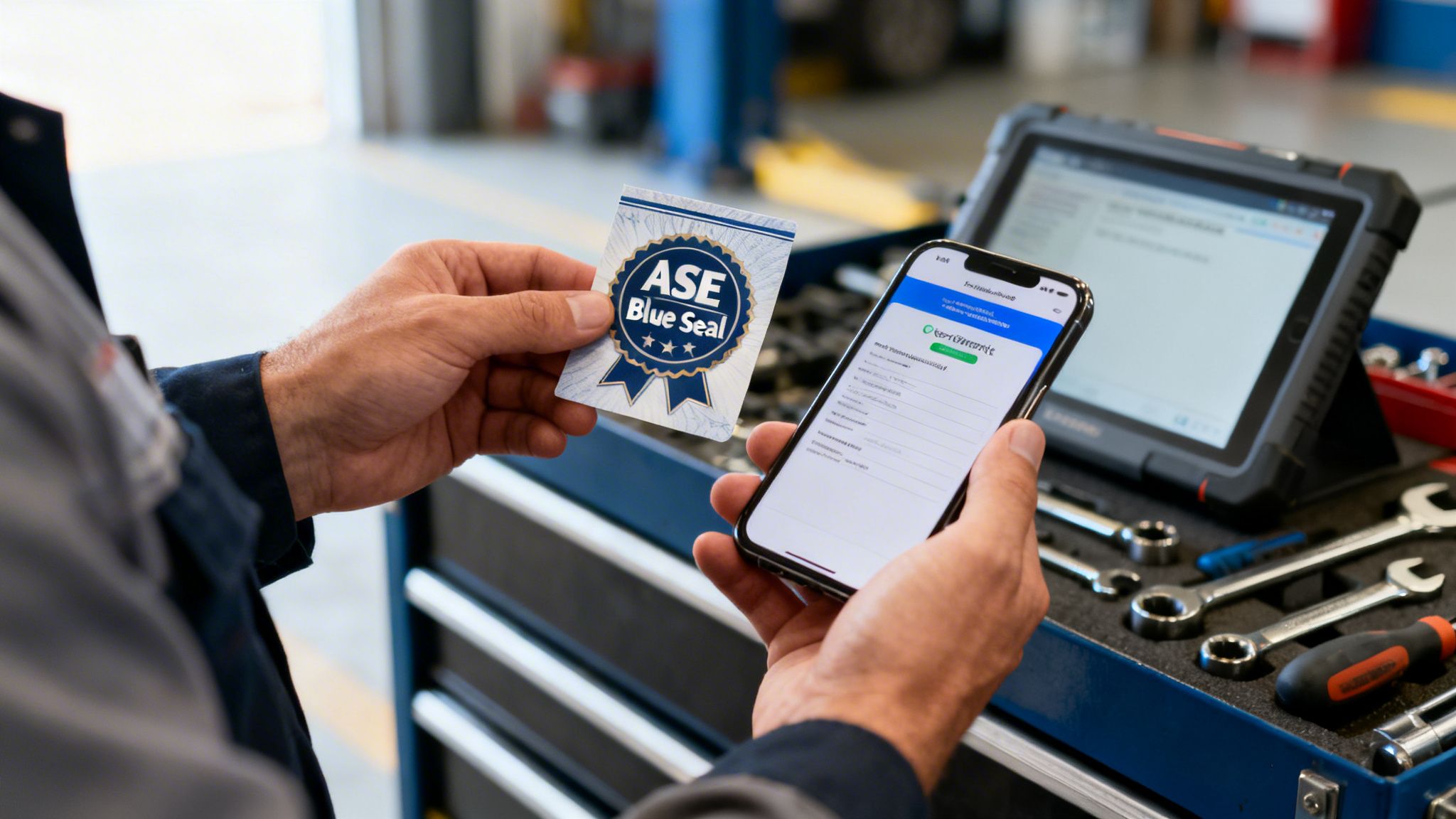
When it comes to car repair, trust is earned. You should never just take a shop's word for it—always check their credentials for yourself. This goes for a certified Mercedes mechanic at a dealership just as much as it does for a trusted independent technician.
If a shop claims to have ASE-certified technicians, look for the proof. Any legitimate business will have the ASE Blue Seal of Excellence posted right on their door or in the office.
Even better, don't be shy. Ask to see a technician’s individual certifications. They should be able to show you their wallet card or a formal certificate without any hesitation.
Green Flags of a Trustworthy Shop
You can tell a lot about a shop before a wrench ever touches your car. The best mechanics run a professional operation, and it shows.
Keep an eye out for these "green flags" that signal you’re in good hands:
- A Clean and Organized Workspace: A tidy shop shows they respect their work and, more importantly, your vehicle.
- Modern Diagnostic Tools: You can't service a sophisticated car like a Mercedes without the right equipment.
- Clear Communication: The service advisor should be able to explain the problem and the fix in a way you can understand.
- Willingness to Show You: A great mechanic is proud of their work and happy to show you the old parts they replaced and explain why.
Red Flags to Watch For
Knowing what to avoid is just as important. If you spot any of these warning signs, it’s probably time to head for the door.
A mechanic's job is to solve your problem, not create new ones. High-pressure sales tactics or a refusal to provide clear answers are major warning signs that the shop may not have your best interests at heart.
Be suspicious of vague estimates that don't break down parts and labor costs. A refusal to put a quote in writing is another huge red flag. Even dealerships have extensive operational standards to meet, like having a proper dealership insurance plan, and any reputable shop should be transparent about their own business practices.
If they won't give you straight answers, find someone who will.
Your Trusted Alternative to the Dealership
So, where should you take your Mercedes-Benz? While a factory-trained mechanic at the dealership is a great choice for certain complex jobs, they aren’t your only option for expert care.
For most of your car’s needs—from routine maintenance to diagnostics—a trusted independent shop with seasoned, ASE-certified technicians is often the smarter, more personal choice. It’s about building a relationship with a local team you can count on, not just a service order number.
Getting the Best of Both Worlds
A good independent specialist gives you dealership-level skill without the dealership’s price tag. You get mechanics with the proven diagnostic ability to handle sophisticated German engineering, but with a more convenient and affordable service experience.
This even includes guidance on advanced electronic needs like Mercedes key programming, which requires very specific knowledge.
You get the best of both worlds:
- Fairer Pricing: Lower overhead means more competitive labor rates on everything from oil changes to complex repairs.
- Personalized Service: You can actually talk to the technicians working on your car, building trust and transparency.
- Proven Expertise: ASE certification means technicians bring a wide range of diagnostic experience from working on many high-end vehicles.
Local Expertise You Can Rely On
Even Mercedes-Benz itself relies heavily on independent shops. In 2022, over 80% of its Certified Collision Repair Centers were independent businesses sponsored by dealers.
As detailed in the Mercedes-Benz Group's 2024 annual report, this strategy empowers local experts to deliver high-level service.
At Express Lube & Car Care in Richland Hills, our ASE-certified technicians deliver that same level of precision and care for your Mercedes. We combine modern diagnostic equipment with a commitment to honest, transparent service.
We invite you to experience the confidence that comes from having a trusted, local partner keeping your vehicle performing at its absolute best.
Your Top Questions, Answered
When you own a Mercedes-Benz, you want the best for it. But that doesn't always mean going back to the dealership for every little thing. Let's tackle some of the most common questions we hear from Mercedes drivers here in Richland Hills about their service options.
Will I Void My Mercedes Warranty by Using an Independent Shop?
Absolutely not. This is a huge myth, but the law is on your side. The Magnuson-Moss Warranty Act is a federal law that gives you the right to choose where you get your car serviced for routine maintenance and repairs.
As long as you stick to the factory-recommended service schedule and the shop uses parts that meet or exceed OEM (Original Equipment Manufacturer) standards, your warranty is safe. Any good independent shop—like us—will keep meticulous records of all the work done, giving you a clear paper trail and complete peace of mind.
Can an ASE-Certified Mechanic Really Handle Complex Mercedes Electronics?
Yes, and this is where a top-tier independent shop truly shines. Modern cars are rolling computers, and we've invested heavily in the same advanced diagnostic scanners and specialized software used by the dealerships for luxury brands like Mercedes-Benz.
An ASE-certified Master Technician has passed tough exams and proven they can diagnose the tricky electrical systems in today's vehicles. They're trained to:
- Read and understand Mercedes-specific fault codes, not just generic ones.
- Fix problems with your infotainment, navigation, and other onboard tech.
- Calibrate and repair advanced driver-assistance systems (ADAS).
This deep diagnostic skill means they can find the real source of an electrical gremlin quickly, saving you time and money.
Is an Independent Shop a Good Fit for My Older Mercedes?
It’s an outstanding choice, especially for an out-of-warranty Mercedes. Once a car gets a few years on it, dealership labor rates can make even minor repairs feel incredibly expensive. Their main focus also tends to shift toward the newest models, not the classics.
For an older model, a seasoned independent mechanic is a goldmine of practical knowledge. They’ve seen your model's common quirks and know exactly what to look for, having worked on countless similar vehicles over the years.
Plus, an independent shop has the flexibility to source high-quality parts from a wider range of suppliers, including both OEM and premium aftermarket options. This gives you more control over the cost of repairs, making it much more affordable to keep your high-mileage or classic Mercedes running perfectly.
At Express Lube & Car Care, our ASE-certified technicians have the expertise to handle your Mercedes-Benz with the precision and care it deserves. For fast, reliable service you can trust, stop by our Richland Hills shop today. Learn more about our full range of services at https://www.expressluberichlandhills.com.