

In Richland Hills, battery failures usually show up in the worst part of the day. You come out of a store on a triple-digit afternoon, turn the key or press the button, and get a slow crank or nothing at all. Around North Texas, that kind of no-start problem often starts weeks earlier with heat stress, weak charging, corrosion, or an aging battery that is already near the end of its service life.
Hot weather shortens battery life. High underhood temperatures speed up fluid loss and internal wear, and an older battery has less margin when the heat settles in for weeks at a time. That is why batteries in Texas often fail before drivers expect them to, especially after several summers of short trips, heavy accessory use, or long hours parked outside.
Most battery problems give some warning before they leave you stranded. Slow starts in the afternoon, dimming during crank, repeated jump-starts, and swelling around the case all deserve attention. Catching those signs early usually means a simple inspection and test instead of a tow.
This guide focuses on what helps in Richland Hills. Clean connections, voltage and load testing, proper hold-downs, charging system checks, and replacing a battery before it becomes unreliable. If corrosion is already starting around the posts, our guide on how to prevent car battery corrosion covers what to look for before the connection gets weak. If you want a second opinion from another shop perspective, Express Lube Plano's battery tips cover many of the same fundamentals.
1. Regular Battery Terminal Cleaning and Corrosion Removal
You turn the key after work in Richland Hills, the dash lights come on, and the engine hesitates like the battery is half dead. Quite a few times, the battery is not the whole problem. Corrosion at the terminals is choking off the connection.
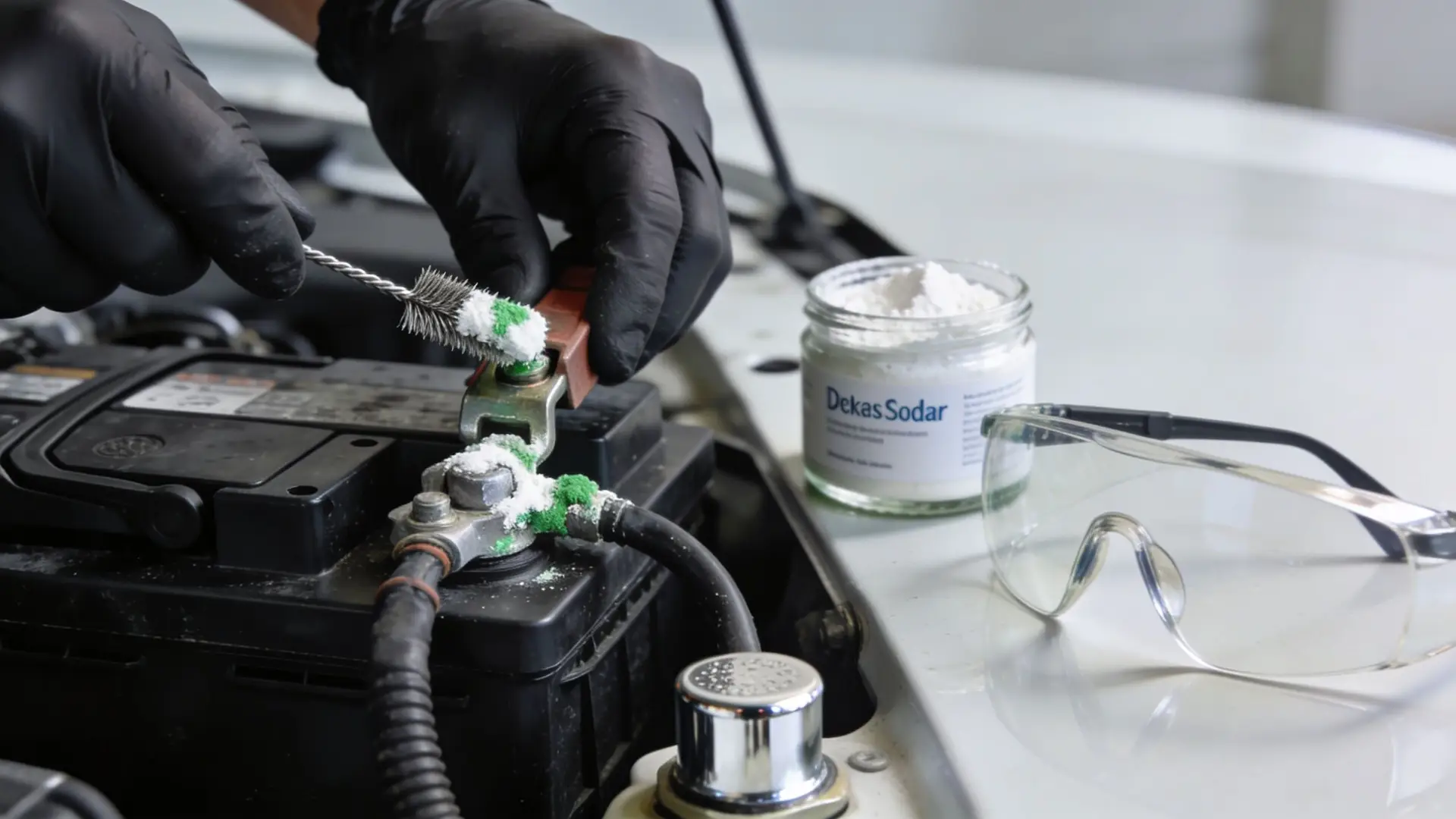
Heat in North Texas speeds up battery wear, and it also makes small connection problems show up sooner. White, green, or blue crust around the posts adds resistance where the cable needs full contact. That can lead to slow cranking, charging problems, flickering electrical behavior, or an intermittent no-start that is hard to pin down.
In the shop, I treat visible corrosion as a real fault, not a cosmetic issue. A battery can still test decent and fail to deliver power cleanly through dirty terminals. Cleaning the posts and cable ends early is cheaper than burning up time on jump-starts, towing, or replacing a battery that still had some life left.
Clean it the right way
Safe cleaning is simple, but the order matters.
- Disconnect the negative cable first: That lowers the chance of accidental contact and sparking while you work.
- Remove the positive cable next: With both cables off, you can clean the contact surfaces fully instead of just brushing around them.
- Use a baking soda and water mixture: It neutralizes acidic residue and helps break up corrosion on the terminals and cable ends.
- Scrub the metal contact points: A wire brush or battery terminal tool works best where the clamp touches the post.
- Dry everything before reconnecting: Moisture left behind can start the corrosion cycle again.
- Reconnect positive first, then negative: That is the safer order when putting the battery back in service.
- Add a light protective coating: Petroleum jelly or terminal protectant helps slow future buildup.
A quick visual check once in a while goes a long way, especially on vehicles that sit outside through Texas summer heat. If corrosion keeps coming back, there may be more going on than dirty terminals. Repeated buildup can point to leaking battery acid, overcharging, or loose connections. Our guide on how to prevent car battery corrosion explains what to watch for.
Shop rule: If corrosion is visible, clean it now. Waiting usually turns a small maintenance job into a starting problem.
A quick walk-through helps if you've never cleaned terminals before.
2. Monitor Battery Voltage and Perform Load Testing
A battery can pass a quick glance and still leave you stuck in a Richland Hills parking lot after work. Texas heat shortens the margin between "starts a little slow" and "won't crank at all."
When a driver says the engine hesitated once or twice but then started normally, I treat that as an early warning. Heat puts extra stress on battery chemistry, especially on cars that make short trips, sit for days, or spend most of their time outside. Waiting for a full no-start usually means you waited too long.
Voltage checks help, but they only show part of the picture. A battery can show acceptable voltage at rest and still fall on its face under starter load. That is why load testing matters. It shows whether the battery can deliver current when the engine needs it.
What to check, and when to check it
Routine testing makes the most sense before summer heat sets in and again later in the year. In this area, that schedule catches a lot of weak batteries before August does. If the battery is a few years old, test it sooner than later.
Pay attention to these warning signs:
- Slow cranking: The engine turns over sluggishly, especially after the car has been sitting.
- Intermittent starting trouble: One weak start can turn into a no-start fast in hot weather.
- Electrical odd behavior: Flickering lights, accessory resets, or inconsistent power can point to battery or charging trouble.
- Battery age: An older battery deserves testing even if it has not failed yet.
- Recent jump-starts: A jump-start gets you going. It does not confirm the battery is still healthy.
A good battery test also needs context. If voltage is low or the load test is borderline, check the charging system and cable connections at the same time. I have seen plenty of batteries replaced when the underlying problem was poor charging output or resistance in the cables.
A battery that starts today can still fail on the next hot afternoon if reserve capacity is already dropping.
For Richland Hills drivers, the practical move is simple. Test before peak summer, test again if starting gets uneven, and do not assume a single normal start means the battery is fine. At Express Lube & Car Care, that approach helps catch weak batteries before they strand someone in Texas heat.
3. Keep Battery Clean and Dry to Prevent Internal Short Circuits
A battery can look fine at the terminals and still cause trouble from the top down. In Richland Hills, heat, dust, and underhood grime build up fast, and that layer of residue can hold moisture against the case longer than drivers expect.
The result is simple. A dirty battery is harder to inspect, easier to misread, and more likely to hide early warning signs like seepage, case damage, or swelling from heat stress.
The battery case tells you a lot
Keep the top of the battery clean and dry so you can see what condition it is in. A quick wipe with a dry shop towel during an oil change or basic underhood check is usually enough. If the surface feels damp or sticky, find the source instead of brushing it off. Moisture may be coming from a leak nearby, and oily residue can trap more dirt around the battery.
That matters more in North Texas because summer heat already shortens battery life. Once grime and moisture collect on the case, inspection gets harder and heat-related damage is easier to miss.
What to inspect while you're there
- Battery top surface: Wipe away dust, residue, and film so the case stays dry and visible.
- Battery tray: Remove leaves, dirt, and buildup around the base so moisture does not sit under the battery.
- Signs of leakage: Look for coolant, oil, or water dripping into the battery area from another component.
- Case condition: Check for swelling, cracks, stains, or warped plastic that can point to heat damage.
- Hold-down area: Make sure the battery stays planted in the tray and is not shifting around.
I see this in the shop all the time. A driver comes in thinking the battery suddenly failed, but the battery area is coated with grime, the tray is damp, and the case has been hiding signs of trouble for months. Keeping it clean will not save every old battery, but it gives you a much better chance of spotting a problem before a hot Texas afternoon turns it into a no-start.
At Express Lube & Car Care, this is one of the simple checks that helps Richland Hills drivers avoid preventable battery problems.
4. Check Battery Water Levels in Conventional Batteries
Some DIY advice is incorrect. Not every battery should be opened, and not every battery owner should be topping off electrolyte.
Some older wet-cell batteries still need water-level checks. Many newer batteries don't. If you treat every battery the same, you can make a mess at best and damage the battery at worst.
Know what type of battery you have
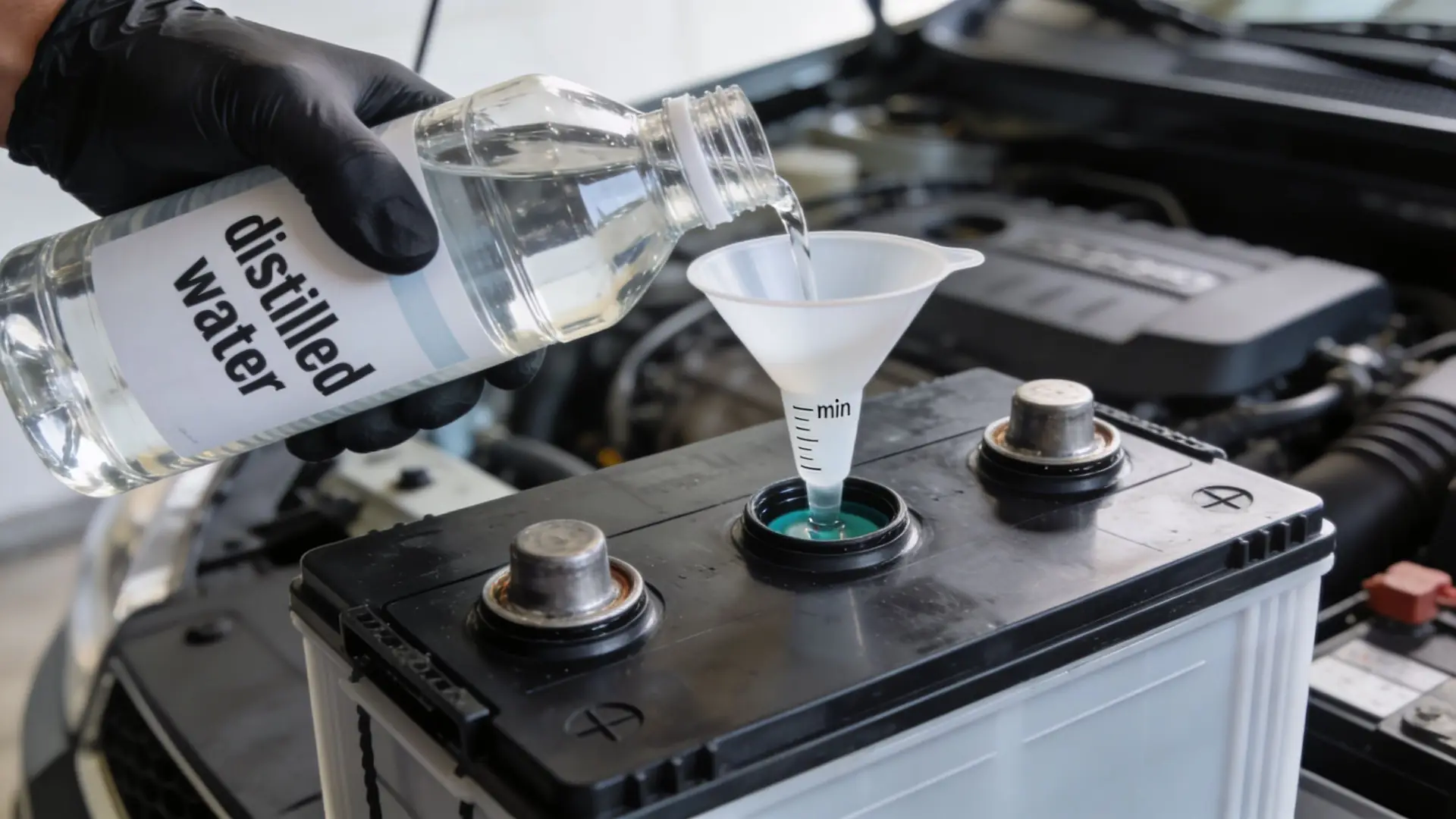
CBAC points out that many vehicles now use AGM batteries, which typically need professional routine checks rather than DIY watering. By contrast, wet-cell batteries may need water-level checks every 2-3 months with distilled water and careful filling (CBAC battery maintenance guidance).
That's an important distinction for drivers in Richland Hills because heat increases battery stress, and many people still follow outdated battery advice they learned years ago.
- If it's a wet-cell battery: Check fluid level only if the battery is designed to be serviced, and use distilled water only.
- If it's an AGM or sealed battery: Don't pry caps open or try to add water. Have it inspected professionally if you suspect a problem.
- If you're not sure what you have: Read the battery label before doing anything. The case usually tells you whether it's sealed, maintenance-free, AGM, or serviceable.
Don't assume an older battery routine applies to a newer vehicle. Battery design has changed, and the maintenance steps have changed with it.
For drivers with older trucks, work vehicles, or equipment that still uses serviceable batteries, regular water checks can still matter. For most newer passenger vehicles, identifying the battery correctly is the smarter first move.
5. Protect Battery from Extreme Temperatures and Heat Damage
You leave work in Richland Hills after a 100 degree afternoon, the car starts, and everything seems fine. That is exactly how heat damage hides. A battery can keep cranking for weeks after summer has already shortened its life.
Heat is harder on batteries here than many drivers realize. High under-hood temperatures speed up chemical wear inside the battery, and the damage often shows up later as a weak start on an ordinary morning. In the shop, that delayed failure pattern is common through late summer and early fall.
What Texas heat changes
Battery life ratings are based on normal conditions. Richland Hills driving is often tougher than that. Long stretches of parked time in direct sun, stop-and-go traffic, and hot engine bays all raise battery temperature and reduce the cushion you would have in milder climates.
Short trips make it worse. The battery works hard to start the engine, then may not get enough drive time to recover fully, especially with the A/C running hard, lights on, and cabin electronics pulling power. That combination wears batteries out faster in North Texas than many owners expect.
What actually helps
- Park out of direct sun when possible: Shade, covered parking, and a garage lower heat soak and reduce stress on the battery case and internal components.
- Look at the battery case during routine checks: Swelling, bulging sides, or a sharp sulfur smell point to overheating and call for prompt inspection.
- Keep heat shields in place: If your vehicle came with a factory battery shield or insulating wrap, do not leave it off after service. Some setups need it. Others do not.
- Avoid long periods of disuse in extreme heat: A vehicle that sits too long in summer is more likely to have a weak battery when you need it.
- Get the battery tested before it strands you: If the battery is already a few Texas summers old, a quick test at Express Lube & Car Care can tell you whether it still has usable reserve capacity.
Heat damage is usually a slow loss of margin, not a dramatic warning. For Richland Hills drivers, the smart move is to treat summer as battery-aging season and check condition before the first no-start.
6. Secure Battery Hold-Down Clamp and Prevent Vibration Damage
A battery can test fine and still fail early if it is bouncing around in the tray. In Richland Hills, that matters more than many drivers realize. Railroad crossings, patched pavement, potholes, and daily stop-and-go miles across Northeast Tarrant County add up fast.
I see this after battery replacements more often than drivers expect. The battery was installed, the car starts, and everybody assumes the job is done. Then months later the vehicle shows up with a loose terminal, a cracked case, or an intermittent no-start that only happens on some days.
Why clamp tension matters
Even slight battery movement puts stress on the case, posts, and internal plate connections. You may never hear a rattle. The damage still builds with every bump.
That is why the hold-down hardware deserves a quick check during routine service, especially on vehicles that carry kids, tools, deliveries, or heavy daily commuting mileage in Texas heat. Heat already shortens battery life. Vibration removes even more margin.
- Check that the battery does not move by hand: If it shifts, the clamp needs attention.
- Inspect the tray and hold-down pieces: Missing bolts, bent brackets, cracked wedges, and rusted hardware all reduce clamping force.
- Make sure the battery sits level in the tray: A tilted battery usually means the base is not seated correctly or the wrong size battery was installed.
- Look at the terminals after rough-road use: Repeated movement can loosen cable connections and create electrical symptoms that look like a charging problem.
- Recheck the hold-down after battery replacement: A rushed install is one of the most common reasons a battery ends up loose.
A loose battery can also send you chasing the wrong repair. Flickering electrical issues, random starting trouble, and charging complaints sometimes start with battery movement, not the alternator. If you are sorting out those symptoms, this guide to signs of a failing alternator helps separate charging problems from battery mounting issues.
For a broader look at battery-related electrical problems, Kwik Kar's car battery insights are also worth a read.
Shop-floor advice: If the battery can slide, twist, or rock in the tray, fix that before it turns into terminal damage or a roadside no-start.
At Express Lube & Car Care, this is one of the simple checks that can save Richland Hills drivers from a battery problem that should have been preventable.
7. Test and Maintain Charging System Function to Prevent Battery Drain
A battery that keeps going dead in a Richland Hills summer often has a charging problem behind it. Texas heat already shortens battery life. If the alternator is undercharging, the battery has to work from a weak starting point every day.
I see this a lot after a battery replacement. The new battery fixes the symptom for a short time, but the underlying problem is still there. Low alternator output, slipping belts, poor cable connections, and key-off electrical drain can all leave a good battery discharged.
Driving habits matter too. Cars that make short school runs, quick errands, or long stretches of sitting in the driveway may never get the battery fully recovered after startup. That is harder on batteries in hot weather because heat speeds up wear inside the case while low charge keeps the battery stressed.
What to check before the battery gets blamed again
- Repeated no-starts after the car sits overnight: That usually points to a drain issue, weak charging, or both.
- Battery or charging warning light on the dash: Test the charging system, not just the battery.
- Dim lights or slow power accessories at idle: That can show low system voltage.
- Mostly short-trip driving: The battery may not be getting enough recharge time between starts.
- Belt noise or visible belt wear: A slipping belt can reduce alternator performance.
If the symptoms overlap, start with the full charging system instead of guessing. Our guide to common signs of a bad car battery helps separate battery failure from charging trouble, and these signs of a failing alternator can narrow it down further.
For another local reference on drain-related causes, Kwik Kar's car battery insights are useful.
Shop-floor advice: If a battery dies more than once, stop treating it like a battery-only problem. At Express Lube & Car Care, a charging and draw test usually tells the story faster than replacing parts and hoping for the best.
8. Replace Battery Before End of Warranty Period to Ensure Roadside Reliability
A battery usually picks the worst moment to quit. In Richland Hills, that often means a hot afternoon, a full parking lot, and a car that clicks instead of starts.
Waiting for total failure rarely saves money. It turns a planned service visit into a tow, missed work, or a late school pickup. Around North Texas, heat shortens the useful life of older batteries, so the last stretch before the warranty runs out is not the time to gamble on one more season.
Replace based on risk, not just whether it still starts today
A battery can pass a few normal mornings and still be close to the end. That is why age, summer exposure, and daily use matter as much as whether the engine started yesterday. If the battery is getting up in years and your vehicle spends time in Texas heat, replacement before the warranty period ends is often the safer call for roadside reliability.
I usually tell drivers to treat the warranty window as a planning marker, not a finish line. If you wait until the battery is completely done, you lose the advantage of choosing the time, the battery type, and the shop visit.
Practical replacement habits that prevent roadside trouble
- Record the install date: If the age is unknown, replacement decisions get harder than they need to be.
- Plan around summer, not after it: Heat is hard on batteries in Richland Hills, especially older ones.
- Use the correct battery type: Start-stop vehicles, trucks with accessories, and electronics-heavy cars may need a specific battery, including AGM in some cases.
- Keep your receipt and warranty paperwork: If there is a problem, documentation makes the warranty process much easier.
If the battery has started showing weak-crank or intermittent no-start behavior, review these warning signs of a bad car battery before you decide to push it any longer.
At Express Lube & Car Care, we see this trade-off all the time. Replacing a battery a little early can cost less than dealing with a breakdown in August traffic.
8-Point Car Battery Maintenance Comparison
| Maintenance Action | Complexity 🔄 | Resources ⚡ | Expected Outcomes 📊 | Ideal Use Cases 💡 | Key Advantages ⭐ |
|---|---|---|---|---|---|
| Regular Battery Terminal Cleaning and Corrosion Removal | Low 🔄 (15–20 min; simple steps) | Minimal tools, baking soda, wire brush, PPE ⚡ | Improved connections, better starting/charging; +1–2 yrs life 📊 | Routine maintenance, humid/coastal areas, older vehicles 💡 | Prevents electrical damage; low cost and fast ⭐ |
| Monitor Battery Voltage and Perform Load Testing | Moderate 🔄 (requires correct procedure) | Multimeter or professional load tester; trained technician ⚡ | Early detection of weak batteries; planned replacements; fewer breakdowns 📊 | Vehicles >3 yrs, fleets, extreme climates, pre-winter checks 💡 | Accurate condition assessment; predictive maintenance ⭐ |
| Keep Battery Clean and Dry to Prevent Internal Short Circuits | Low 🔄 (regular inspections, simple cleaning) | Dry cloth, dielectric grease, occasional shop inspection ⚡ | Reduced parasitic drain and corrosion; better reliability 📊 | Humid climates (e.g., Texas), outdoor/parked vehicles, fleets 💡 | Prevents internal shorts and premature discharge; low effort ⭐ |
| Check Battery Water Levels in Conventional Batteries | Low–Moderate 🔄 (safety precautions required) | Distilled water, funnel, PPE; access to filler caps ⚡ | Maintains electrolyte chemistry; prevents cell damage in heat 📊 | Older vehicles, RVs, commercial equipment with serviceable batteries 💡 | Inexpensive upkeep; significant life extension when applicable ⭐ |
| Protect Battery from Extreme Temperatures and Heat Damage | Moderate 🔄 (insulation/ventilation design) | Insulation blankets, heat shields, ventilation checks ⚡ | Slows heat degradation; extends lifespan (often 1–2 yrs) 📊 | Vehicles in hot regions, parked in sun, high-idle fleets 💡 | Preserves battery life in heat-prone environments ⭐ |
| Secure Battery Hold-Down Clamp and Prevent Vibration Damage | Low 🔄 (quick adjustment; care not to overtighten) | Wrench/socket; possible clamp replacement ⚡ | Prevents vibration-induced plate damage and terminal separation 📊 | Rough roads, frequent stop-start driving, delivery/fleet vehicles 💡 | Simple, fast fix that prevents sudden failures ⭐ |
| Test and Maintain Charging System Function to Prevent Battery Drain | Moderate–High 🔄 (diagnostics and component checks) | Professional diagnostic equipment; possible alternator/belt repairs ⚡ | Identifies charging faults; prevents repeated battery failures 📊 | Recurrent drains, dim lights/charging warnings, high-electronics vehicles 💡 | Addresses root causes; saves replacement and downtime costs ⭐ |
| Replace Battery Before End of Warranty Period to Ensure Roadside Reliability | Low 🔄 (planning and timely replacement) | New battery cost, installation, recycling/disposal ⚡ | Maximizes reliability and warranty coverage; reduces roadside stranding 📊 | Batteries near end-of-life, fleet rotation, seasonal prep 💡 | Highest immediate reliability; warranty protection and peace of mind ⭐ |
Your Go-To for Battery Care in Richland Hills
Good battery care isn't complicated, but it does require consistency. Clean terminals matter. A secure hold-down matters. Driving habits matter. So does paying attention to battery age before the heat does the deciding for you.
For Richland Hills drivers, the biggest mistake is assuming a battery will give obvious warning before it fails. Sometimes it does. Sometimes all you get is one slow crank in a parking lot, then silence the next time you turn the key. That's why the most useful car battery maintenance tips are the simple ones you can follow: inspect the battery regularly, keep the connections clean, don't ignore corrosion, and test batteries that are getting older.
Texas heat changes the timeline. A battery that might hang on longer in a milder climate often won't do the same here. If your vehicle sits a lot, if you mostly make short trips, or if the battery is already past its third year, you're in the group that should be more proactive. That doesn't mean replacing parts early for no reason. It means checking the battery before it leaves you stuck at the gas pump, in your driveway, or in a store parking lot on a hot afternoon.
There are also real trade-offs between DIY care and shop service. Cleaning visible corrosion, checking for a loose clamp, and keeping the battery area clean are reasonable for many drivers. Load testing, charging-system diagnosis, battery-type matching, and drain diagnosis are better handled with the right equipment. That's especially true on newer vehicles with heavier electrical demands.
If you want a professional battery check in Richland Hills, Express Lube & Car Care is one local option. The shop offers no-appointment-needed service with ASE-certified technicians, which is useful when you need a quick battery inspection, terminal cleaning, diagnostic check, or replacement without rearranging your week. For busy commuters and families, that kind of walk-in convenience can make the difference between preventive maintenance and waiting until the car won't start.
The goal is simple. Fewer surprises, fewer tow calls, and more reliable starts through the worst of the Texas heat. Stay ahead of the battery, and you'll usually stay ahead of the breakdown.
If your battery has been slow to crank, looks corroded, or you're not sure how old it is, schedule a visit with Express Lube & Car Care. Their team can inspect the battery, test the charging system, and help you decide whether a cleaning, recharge, or replacement makes the most sense for your vehicle.