

You pop the hood because something feels off. The car still runs, but it doesn't feel as smooth as it did a few months ago. Maybe throttle response is lazy pulling onto Highway 121. Maybe fuel stops seem more frequent. Maybe you've been driving past road work in Richland Hills for weeks and know that dust has been getting into everything.
One of the first things I'd check in that situation is the engine air filter.
If you're searching for how to check air filter on car, this is one of the more approachable driveway checks you can do yourself. It usually takes only a few minutes, doesn't require specialty equipment, and can tell you a lot about how your engine is breathing. Around Northeast Tarrant County, where construction dust and daily traffic can load a filter faster than many drivers expect, it's worth making this part of your regular routine.
Why Your Engine Air Filter Is a Hidden Hero
Your engine air filter has one job. It keeps dirt, debris, and road dust out of the air your engine pulls in for combustion. If you've ever heard a technician call it the engine's lungs, that's not far off.
When the filter starts to clog, airflow drops. The engine has to work with more restriction, and that can show up in ways drivers notice before they ever look under the hood. A clogged engine air filter can reduce fuel efficiency by up to 10 to 15% in normal driving conditions, according to Fleetio's air filter maintenance guide. For commuters around Richland Hills, that matters.
Why local driving conditions matter
Richland Hills drivers deal with conditions that are hard on filters. Construction zones, shoulder dust, heavy corridor traffic, and stop-and-go driving all add airborne debris. A filter that might last comfortably in milder conditions can load up sooner here, especially if you spend time near busy roads or developing neighborhoods.
That doesn't mean every dirty-looking filter is automatically bad. It does mean you shouldn't ignore it and hope the owner's manual alone tells the whole story.
Practical rule: If your driving includes dusty roads, road work, or frequent traffic, inspect earlier rather than waiting until the car gives you a symptom.
A lot of drivers stay on top of oil changes but forget the intake side of the engine. That's why broader maintenance reading can help. If you like practical upkeep advice beyond this one item, these general car care guides and tips are a useful supplement.
Finding the Air Filter Housing Under Your Hood
Start with a cool engine and the vehicle turned off. You don't need much for this job. In many cars, your hands are enough. In others, you may need a Phillips screwdriver, a small socket, or a nut driver to open the housing.
Most engine air filters sit inside a black plastic air box somewhere near the top or side of the engine bay. Look for a large plastic housing connected to an intake tube. That tube usually runs from the front of the vehicle toward the engine.
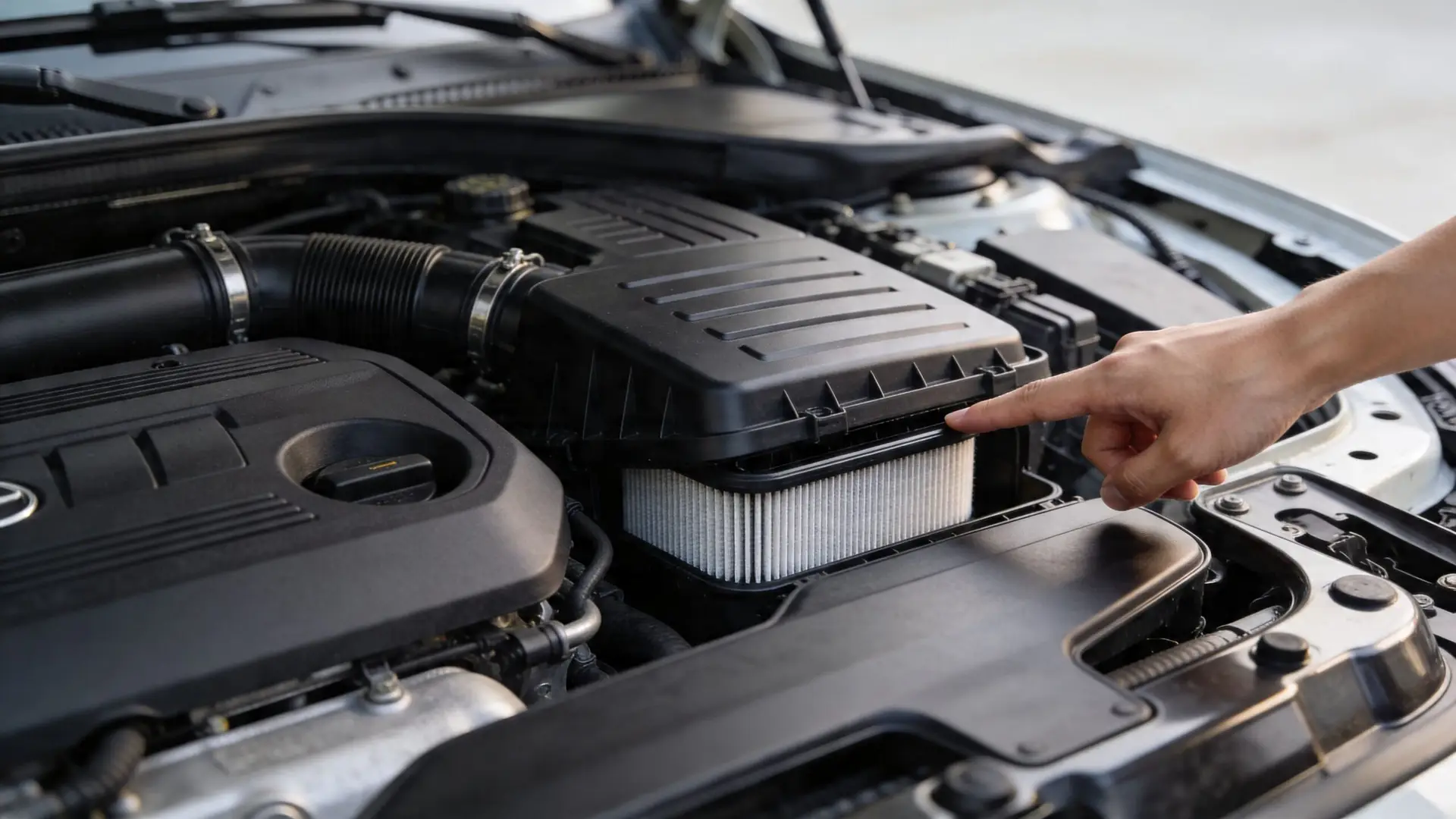
What the housing usually looks like
A few common clues help:
- Box shape: Many housings are rectangular or square with clips around the edge.
- Large intake tube: Follow the plastic ducting from the front grille area.
- Fasteners: Expect spring clips, Phillips screws, Torx screws, or small bolts depending on the vehicle.
- Replaceable lid: The top or side section usually lifts enough to slide the filter out.
If you're not sure what you're looking at, use your owner's manual. Vehicle layouts vary, and some engines tuck the housing deeper than others. If you want a visual reference before you start, this guide on where the air filter is in a car can help you identify the housing style.
Before you open anything
Take a second and clear the work area. Leaves, loose dust, and grit around the air box can fall inside once the cover comes off. I also recommend setting your phone nearby so you can snap a quick photo before removing the filter.
That photo matters more than people think. Some filters only fit one way cleanly, and putting one back in crooked or reversed can create sealing problems.
If the air box clips feel brittle or the screws fight you right away, don't force them. Plastic underhood parts get fragile with heat and age.
How to Properly Inspect Your Car's Air Filter
The inspection itself is where people either make a good decision or guess. A quick glance isn't always enough. A better check follows the same basic pattern technicians use in the shop.
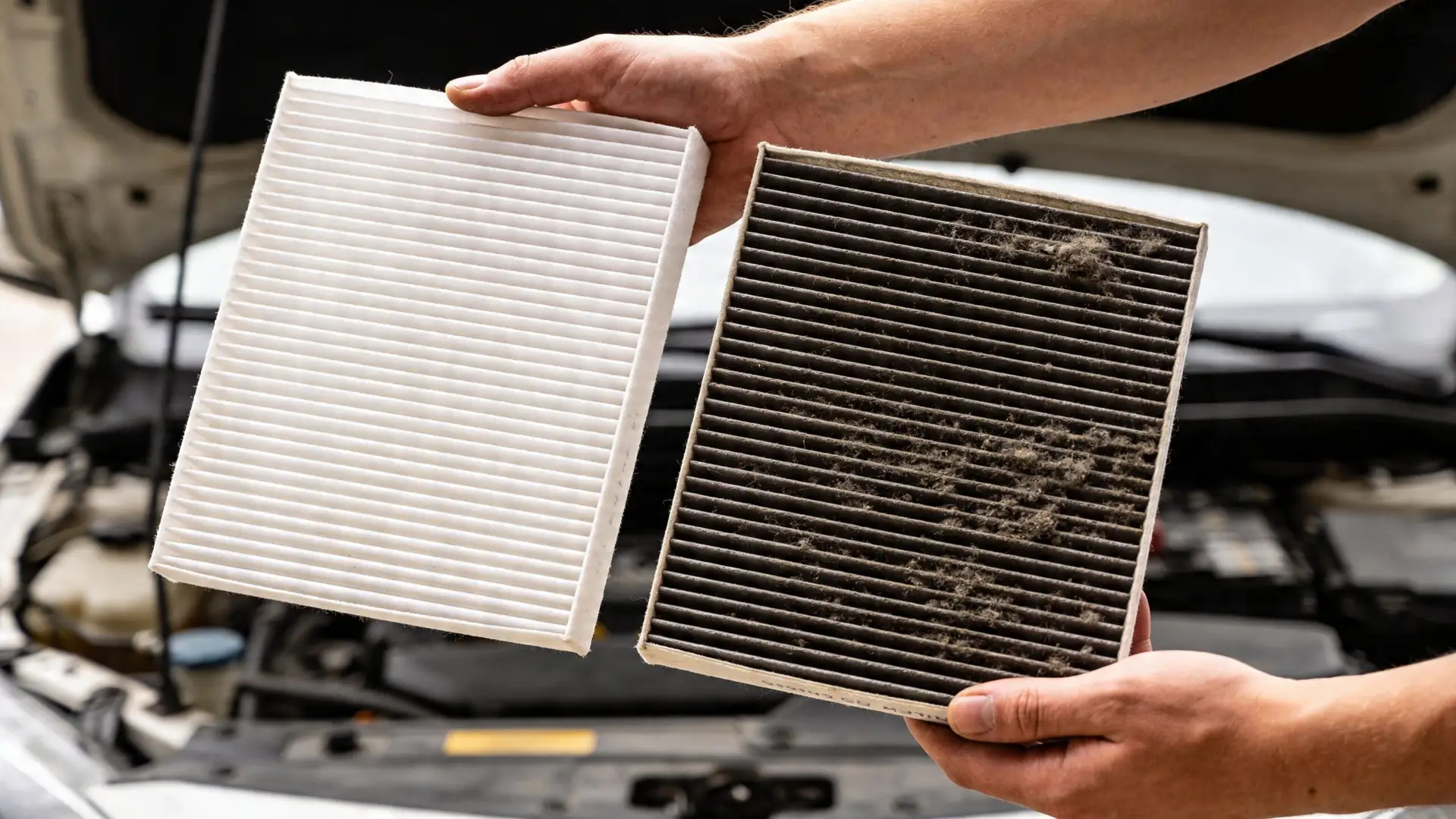
The professional diagnostic approach uses three stages: hold the filter to a light source, perform a tactile contamination test, and note the filter's orientation before removal. That last point matters because improper reinstallation can allow unfiltered air to bypass the element entirely, as explained in BAC Auto's inspection guidance.
Step by step in your driveway
-
Open the housing carefully
Unclip or unscrew the lid without prying harder than necessary. On many vehicles, the cover lifts enough to access the filter without disconnecting the entire intake tube. -
Note the filter position
Before you pull it out, look at how it sits. Pay attention to the rubber seal, pleat direction, and which side faces up. A quick photo is the easiest insurance. -
Remove the filter gently
Lift it straight out if possible. If it drags against the edge, slow down. You don't want to dump built-up debris into the lower housing.
How to judge the filter condition
Use more than one check.
-
Light test
Hold the filter up to a bright light. If light passes through easily with minimal blockage, the filter may still be serviceable. If it looks dark and packed with debris, it's telling you something. -
Tactile test
Run your hand lightly across the filter surface. If your hand comes away visibly dirty, the filter is at the end of its service life. -
Edge and seal check
Look for torn pleats, damaged corners, or a warped sealing edge. A filter can look decent in the center and still fail at the perimeter.
Don't skip the housing
The lower air box matters too. Check inside for leaves, grit, insects, or loose dust. Wipe it out or vacuum it carefully before reinstalling the filter. If you leave debris in the housing, the new or reused filter starts its life in a dirty environment.
Here's a visual walkthrough if you'd like to see the process in motion before you put your hands on it.
What works and what doesn't
What works is a calm, clean inspection with attention to fitment. What doesn't is banging the filter around aggressively, blowing compressed shop air through a disposable paper element, or reinstalling it without checking the seal.
A filter that looks only mildly dirty can still be a problem if the pleats are loaded deep or the sealing edge is damaged.
If the filter looks questionable and you're on the fence, compare what you see with your driving conditions and service history. Dusty local routes usually push me toward replacement sooner, while a clean, evenly colored filter with no damage may still have life left.
Telltale Signs an Air Filter Replacement Is Due
Sometimes the filter tells the story. Sometimes the car does.
Many drivers don't think about the air filter until the vehicle starts acting different. According to FRAM's dirty air filter symptom guide, 70 to 80% of drivers overlook air filter maintenance until symptoms show up, and that neglect can correspond to 5 to 10% power loss.
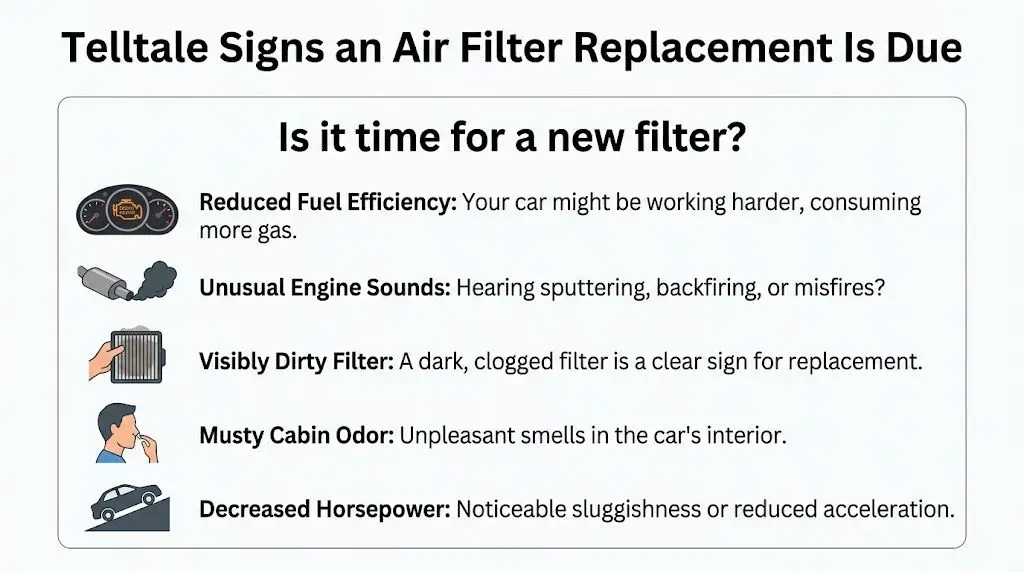
Signs you may notice from the driver's seat
A clogged filter doesn't always announce itself the same way on every vehicle. Still, a few patterns show up often:
-
Sluggish acceleration
The car feels flat when you pull away from a stop or merge into traffic. -
Fuel mileage that seems worse than normal
If your commute hasn't changed but the tank empties faster, restricted airflow is one item to check. -
Check engine light
This doesn't automatically mean the air filter is the only cause, but intake and airflow issues can contribute. -
Rougher engine behavior
Some vehicles idle less smoothly or feel a little hesitant under load. -
A visibly dirty filter
If you remove it and see heavy dark buildup, that's useful evidence, not just a cosmetic issue.
Symptoms need context
None of those signs prove the filter is the only problem. Spark plugs, sensors, intake leaks, and fuel issues can overlap. That's why it's smart to compare symptoms with what you see in the housing.
If you're trying to line up this check with the rest of your routine service items, a mileage-based plan helps. This car maintenance schedule by mileage is a practical way to keep filter checks from becoming an afterthought.
If the car feels weaker and the filter is obviously loaded with dirt, replacement is a sensible first step. If the symptom stays after that, keep diagnosing.
DIY Replacement or a Quick Stop at Express Lube
If you've opened the housing, checked the filter, and everything came apart cleanly, replacing it yourself is usually manageable. Most drivers with basic hand tools can do it. The key is buying the correct filter, cleaning the housing, and seating the new filter properly before closing the lid.
DIY makes sense when the fasteners are accessible and the housing isn't fighting you. It makes less sense when clips are brittle, screws are stripped, or access is tight enough that you can't tell if the filter is sealing evenly.
When I'd recommend handing it off
A professional is the better call if you run into any of these:
- Damaged hardware that won't tighten correctly
- A warped lid or housing that may not seal
- Unclear fitment between aftermarket filter options
- Other symptoms like a persistent warning light or drivability issue
For work vehicles and small fleets, convenience matters as much as the part itself. If you're comparing service approaches, especially for trucks that can't afford downtime, it's worth seeing how providers handle field support. This mobile light-duty truck repair service is a useful example of how some operations keep fleet maintenance moving.
For local drivers who'd rather not deal with clips, housings, and filter fitment, replace car air filter guidance can help you decide whether to do it yourself or have it handled during routine service. At Express Lube & Car Care, ASE-certified technicians check and install filters with the housing cleaned and the fit verified, and the shop runs on a walk-in model for drivers who don't want another appointment on the calendar.
Your Air Filter Questions Answered
A few questions come up almost every week at the counter, especially from drivers trying to avoid replacing a filter too early or too late.

How often should you check or replace it
General guidance often points to 12,000 miles, but manufacturer schedules vary quite a bit. Champion Auto Parts notes that Chevrolet may recommend 45,000 miles, while some Ford and Hyundai models suggest 30,000 miles, and some Hyundai applications call for 15,000 miles in heavy traffic.
That means the owner's manual always gets the final say. Your actual driving conditions matter too.
Can you clean a paper engine air filter instead of replacing it
Usually, no. A disposable paper filter isn't something I like to "clean" and put back into service once it's loaded or damaged. Light loose debris can fall away during inspection, but that doesn't restore the filter media to like-new condition.
If the filter is dirty, dark, torn, or no longer sealing well, replace it.
Is the engine air filter the same as the cabin air filter
No. The engine air filter protects the engine intake. The cabin air filter cleans the air you breathe inside the vehicle. People mix them up all the time because both are called air filters, but they live in different places and do different jobs.
What if the filter doesn't look terrible but the car feels off
Then don't stop at the filter. Check the basics, but stay open to other causes. A decent visual appearance doesn't rule out other engine or intake problems.
If you'd rather have a technician check it for you, Express Lube & Car Care offers walk-in service for Richland Hills drivers who want a quick, straightforward inspection without adding another stop to a busy week.