

Your car's odometer isn't just counting miles—it’s tracking its health. Each major milestone, like 30,000, 60,000, or 100,000 miles, is a signal that specific parts have done their job and now need a check-up.
This is the whole idea behind a mileage-based maintenance schedule.
Why Mileage Is Your Car's Most Important Health Metric
Sure, you could follow a time-based schedule (like every six months), but mileage tells a much more accurate story. A car that racks up 20,000 miles a year sees way more action—and stress—on its engine and brakes than one that only drives 5,000 miles.
Think of it like a person's life stages. Your car has different needs as it gets older, and its mileage is the best way to track that aging process.
The Early Miles (Under 30,000)
This is your car's "childhood." We focus on basic care like oil changes and tire rotations to make sure it starts off strong and healthy.
Mid-Life Maintenance (30,000-90,000 Miles)
Now your car is in its "prime adult" years. This is when preventative care becomes critical. We replace key fluids, filters, and belts to stop major problems before they start—think of it as avoiding an automotive mid-life crisis.
High-Mileage Care (100,000+ Miles)
In its "senior years," a car needs special attention to keep it running strong. We inspect and replace parts that have seen a lifetime of wear, like timing belts, water pumps, and suspension components.
Following a mileage-based schedule isn't about spending money; it's an investment. Proactive care based on how much you drive is the best way to prevent catastrophic failures, boost fuel economy, and keep your car's value high.
Every mile puts a little bit of wear on your vehicle. Stop-and-go traffic is tough on your brakes; long highway trips put a steady strain on the engine. Mileage adds it all up.
When you stick to a service schedule based on these numbers, you’re not just paying for a repair. An oil change at 5,000 miles is a small investment to prevent major engine damage. A transmission fluid exchange at 60,000 miles is an investment in avoiding a multi-thousand-dollar replacement down the road.
It’s the smartest way to keep your car safe, dependable, and on the road for years to come.
A Realistic Car Maintenance Schedule by Mileage
Forget about just tracking your car’s age. The single best way to keep your vehicle safe and reliable is to follow a maintenance schedule based on its mileage. After all, miles are what really measure the work your engine, brakes, and tires have done.
Think about it—your car’s timing belt doesn’t care if it’s been in the engine for three years or five. It only knows it has endured 60,000 miles of work. That’s why tracking mileage takes the guesswork out of car care, shifting you from costly reactive repairs to smart, proactive maintenance.
Below is a straightforward guide to the services your car needs at key milestones. As the miles add up, the check-ups become a bit more involved, but sticking to this roadmap is your best bet for a long and healthy vehicle life.
This timeline gives you a bird's-eye view of the major service points in your car's journey.
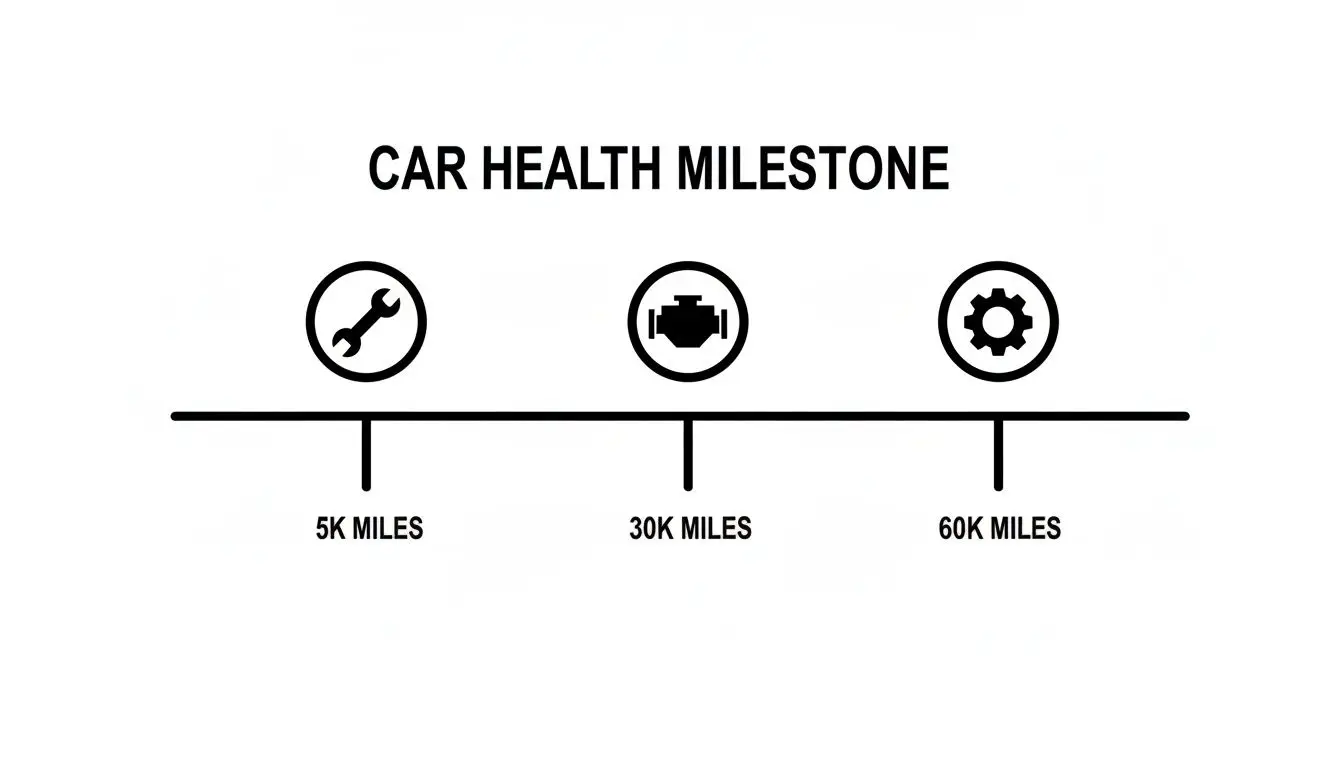
As you can see, the needs evolve from the basics to more significant component checks as your car gets older.
Here’s a more detailed breakdown of what to expect at each major service interval. We've laid it all out in a simple chart to show you what gets done, why it's so important, and whether it’s a job for a Saturday morning or one for the pros.
Complete Car Maintenance Schedule by Mileage
| Mileage Interval | Services Recommended | Why It's Important | DIY or Pro Service? |
|---|---|---|---|
| Every 5,000 to 7,500 Miles | • Oil & filter change • Tire rotation • Fluid level check • Visual inspection of belts & hoses |
Fresh oil is your engine's lifeblood, preventing wear and overheating. Rotating tires ensures they wear evenly, giving you better handling and longer tire life. | DIY-friendly: Checking fluids. Pro recommended: A mess-free oil change and proper tire rotation are quick and affordable at a shop. |
| Every 15,000 to 30,000 Miles | • All 5K services • Engine air filter replacement • Fuel filter replacement • Cabin air filter replacement • In-depth brake system inspection |
A clean air filter boosts fuel economy and engine performance. A new fuel filter protects your engine from debris. A fresh cabin filter keeps the air you breathe clean. | DIY-friendly: Replacing air filters is usually straightforward. Pro recommended: Fuel filter replacement can be tricky and messy; best left to an experienced tech. |
| Every 30,000 to 60,000 Miles | • All previous services • Coolant (antifreeze) flush • Transmission fluid service • Spark plug replacement (depending on model) • Power steering fluid check/flush |
New coolant prevents corrosion and overheating. Fresh transmission fluid ensures smooth shifting and prevents costly damage. New spark plugs restore fuel efficiency and power. | Pro recommended: These fluid services require specific tools, proper disposal of old fluids, and an understanding of your vehicle's systems. This is not beginner territory. |
| Every 60,000 to 100,000 Miles | • All previous services • Timing belt replacement (if applicable) • Battery replacement (if needed) • Brake pad/rotor replacement • Shocks & struts inspection/replacement |
The timing belt is critical—if it fails, it can destroy your engine. Worn brakes are a major safety hazard. Old shocks and struts lead to a bumpy ride and poor handling. | Pro recommended: These are major jobs involving critical safety and engine components. A mistake here can be catastrophic and expensive. Trust an ASE-certified technician. |
Staying on top of this schedule is the best investment you can make in your vehicle. It keeps you safe, saves you from surprise breakdowns, and helps your car hold its value for years to come. If you want to dive deeper into why these fluid changes are so crucial, our guide on how many miles to go between oil changes has you covered.
The Critical 30,000 Mile Service Turning Point
Think of your car's first 30,000 miles as its "settling in" period. This service isn't just another oil change—it’s the first major checkpoint in your car's life.
Up until now, maintenance has been about basic upkeep. But at the 30k mark, the daily grind of stop-and-go traffic and highway driving starts to show. This is where we pivot from simple tasks to proactive care that sets your vehicle up for the next 100,000 miles and beyond.
Breathing New Life into Your Engine and Cabin
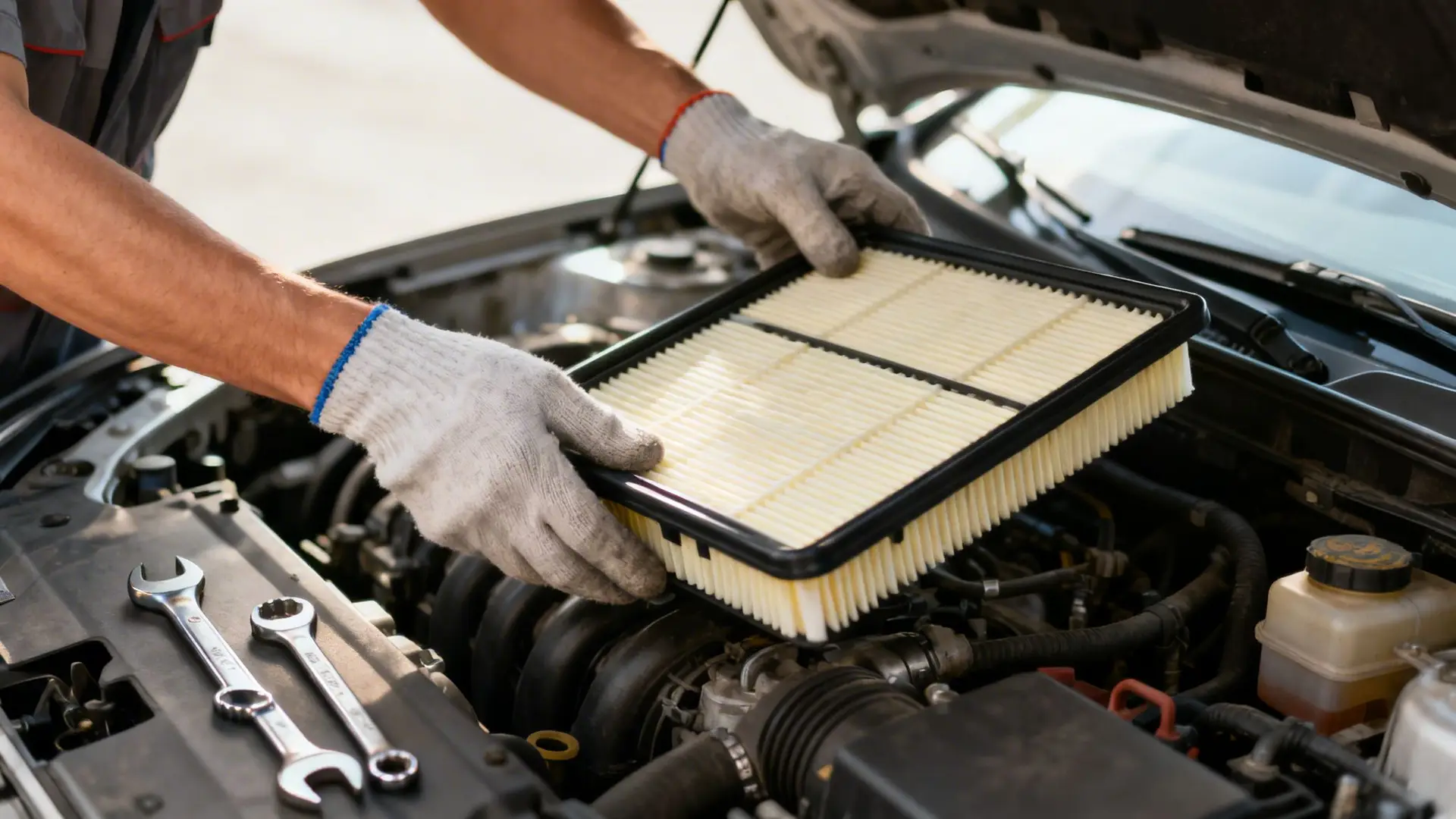
After 30,000 miles, your car’s filters have inhaled a ton of dirt, dust, and grime. They’re your vehicle's lungs, and it's time for them to be replaced.
- Engine Air Filter: A clogged air filter forces your engine to work harder, almost like trying to breathe through a straw. This robs it of power and can slash your fuel efficiency by as much as 10%. A new filter is a cheap and easy way to get that performance back.
- Cabin Air Filter: This is what cleans the air you and your passengers breathe. If it’s clogged, you’ll get musty smells and a steady flow of allergens right into the car.
Fuel System and Fluid Health Check
Next up are the systems that have been processing thousands of gallons of fuel. A 30,000-mile service is the perfect time for a deep inspection.
A technician will check your fuel lines, cap, and tank for any leaks or weak spots. Many carmakers also recommend a new fuel filter at this point. A clogged filter makes your fuel pump work overtime, leading to early failure—a much more expensive fix down the road. It’s also common to replace the engine coolant and transmission fluid to prevent corrosion and keep everything running smoothly.
The 30,000-mile maintenance milestone is the kickoff to the classic "30-60-90" schedule that most manufacturers swear by. It’s a foundational service that has a massive impact on vehicle longevity.
In fact, studies show that vehicles sticking to these 30,000-mile intervals can last 45% longer, easily pushing them past 200,000 miles. You can review more about the importance of scheduled maintenance to see how it directly boosts safety and vehicle life.
Inspecting Brakes and Suspension
By 30,000 miles, your brake pads have handled tens of thousands of stops. A professional inspection is a must for your safety.
We’ll measure your brake pad thickness and check the rotors for wear. Catching worn pads now saves you from damaging the rotors, which turns a simple fix into a much bigger, more expensive brake job.
At the same time, your suspension—the shocks, struts, and other parts giving you a smooth ride—gets a thorough look. While these components are built to last, an early inspection can catch leaks or damage from potholes before they affect your car’s handling. Skipping this service is a gamble on your car's future reliability and safety.
Navigating High Mileage Maintenance Beyond 60,000 Miles
Once your car crosses the 60,000-mile mark, your maintenance strategy needs to evolve. We’re no longer just focused on routine upkeep; now, it’s about proactively protecting your vehicle from the major, expensive failures that can happen as components age.
This isn’t about waiting for a breakdown. It's about smart, preventative care that keeps your high-mileage car reliable and saves you a fortune in the long run.
The Critical Timing Belt Replacement
One of the single most important jobs in this mileage range is replacing the timing belt. While some cars use a timing chain that lasts much longer, if your vehicle has a belt, this service is an absolute must—usually between 60,000 and 100,000 miles.
The timing belt keeps your engine's moving parts perfectly synchronized, making sure the valves and pistons never collide. It’s a precision job.
- What happens if it fails? If that belt snaps while you’re driving, the pistons will slam into the engine valves. The result is catastrophic, often requiring a complete engine replacement.
- Why replace it proactively? A timing belt gives almost no warning before it breaks. Replacing it on schedule is a small price to pay to avoid a repair that can cost thousands.
This is a job for the pros, period. It demands specialized tools and a deep understanding of your specific engine to get it right.
Transmission Fluid: The Unsung Hero
Your transmission has been working hard for tens of thousands of miles, and its fluid is getting tired. By 60,000 miles, the fluid has often broken down, losing its ability to properly cool and lubricate all the intricate gears and clutches inside.
A transmission fluid service is one of the most effective ways to prevent the single most expensive repair a car owner might face. Fresh fluid helps ensure smooth shifting, prevents overheating, and dramatically extends the life of your transmission.
Ignoring this can lead to jerky shifting, slipping gears, and eventually, total transmission failure. If you want to dive deeper into the different fluids that keep your car running, you can learn more about a full fluid change in a car in our other guide.
Shocks, Struts, and Your Safety
Your car’s shocks and struts do way more than just smooth out the bumps—they are critical safety parts. Their main job is to keep your tires firmly planted on the pavement, which is essential for steering, handling, and effective braking.
After 60,000+ miles of hitting potholes and bumps, they start to wear out. You'll probably notice:
- A bouncier, less controlled ride.
- The front of your car "diving" forward when you brake.
- Patchy or uneven wear on your tires.
Worn-out shocks can actually increase your stopping distance, which could be the difference-maker in an emergency. Getting them inspected and replaced if needed isn't just about comfort; it brings your car's handling and safety right back to where it should be.
Spark Plugs and Engine Vitality
Finally, don’t forget the spark plugs. These little parts fire millions of times to ignite the fuel in your engine. After 60,000 miles, they’re worn out and can cause all sorts of noticeable issues, from a rough idle to poor acceleration.
A new set of spark plugs is a simple fix that can restore lost power and even improve your gas mileage. It’s a small, inexpensive service that helps your engine run smoother and more efficiently for miles to come.
Deciding Between DIY Maintenance and Professional Service

One of the biggest questions we get is, "Can I do this myself, or should I bring it in?" Knowing when to roll up your sleeves and when to call a pro is key to smart car ownership. Making the right call saves you time and money, but more importantly, it keeps you and your family safe.
Let's break it down with a simple traffic light system: Green for easy DIY jobs, Yellow for tasks that need some know-how, and Red for the jobs best left to the professionals.
Green Light Tasks for Every Driver
These are the simple, low-risk checks any car owner can—and should—do regularly. They require few, if any, tools but make a huge difference in your car's reliability and safety. Think of them as the easy wins.
- Checking Fluid Levels: Popping the hood to check your engine oil, coolant, brake fluid, and windshield washer fluid is one of the most basic and vital checks you can perform.
- Inspecting Tire Pressure: A simple pressure gauge is all you need to make sure your tires are properly inflated. This improves gas mileage and prevents uneven tire wear.
- Replacing Wiper Blades: This is a quick, tool-free job that has a massive impact on your visibility in bad weather.
- Checking Lights: Take a quick walk around your car to make sure your headlights, taillights, and turn signals are all working. It’s a fundamental safety habit.
Yellow Light Tasks for Enthusiasts
Now we’re getting into jobs that are a step up in complexity. These often require more specific tools, a bit of research, and carry a moderate risk if you get them wrong. They're great for the weekend mechanic who's comfortable getting their hands dirty.
A classic "yellow light" job is the oil change. It's more involved than just checking the level—you have to safely lift the car, drain the old oil, swap the filter, and add the correct amount of fresh oil. It's doable, but one small mistake can lead to oil leaks or even engine damage.
Choosing a professional for these tasks is often about more than just convenience. It’s about ensuring the job is done with precision, using the right parts, and properly disposing of hazardous materials like used oil and coolant.
When weighing the costs, it's also interesting to see how an electric car's maintenance bill stacks up against a gas-powered one.
Red Light Tasks for the Pros
Finally, we have the "red light" jobs. These tasks are complex, deal with critical safety systems, and demand specialized diagnostic equipment and years of experience. Trying to tackle these yourself is a major risk to both your car and your safety.
Stop and call a professional for:
- Brake System Repairs: Anything beyond a quick visual check, like replacing pads, rotors, or calipers.
- Timing Belt Replacement: Get this wrong, and you could destroy your entire engine.
- Transmission Service: This is a sealed, complex system that requires specific fluids and procedures.
- Suspension Work: Replacing shocks and struts directly affects your vehicle’s alignment and handling.
For these critical jobs, bringing your car to a trusted shop isn't just an expense—it's an essential investment in its safety and long-term health.
Finding Your Local Maintenance Partner
A maintenance schedule is a great roadmap, but you still need a good guide to navigate the journey. That’s where a trusted local auto shop comes in. They become more than just a place for repairs—they're your partner in keeping your car healthy and reliable.
Choosing the right shop turns maintenance from a chore into a smart investment. It’s the difference between guessing what your car needs and knowing it’s in the hands of experts who see the big picture.
Why ASE-Certified Expertise Matters
When you bring your car to a shop like Express Lube & Car Care, you’re getting more than just a standard service. You’re getting the knowledge of ASE-certified technicians. Think of this certification as the gold standard—it proves a mechanic has mastered the complex systems in modern vehicles.
A certified pro can:
- Spot problems before they turn into expensive, catastrophic failures.
- Understand the specific quirks and needs of your car’s make and model.
- Do the job right the first time, protecting your investment and your safety.
It's simple: you wouldn't ask a general doctor to perform heart surgery. For critical jobs like a timing belt replacement or transmission service, you want a certified specialist who lives and breathes this stuff.
Transparency and Trust Go Hand in Hand
A great mechanic doesn't just tell you what needs to be done; they show you the worn-out part and explain why it's a problem in plain English. This kind of open communication is the foundation of a trustworthy relationship.
A strong relationship with your local mechanic is one of the best money-saving tools a car owner can have. It ensures you're only paying for necessary services, preventing both over-maintenance and neglect, which ultimately saves you thousands over the vehicle's lifetime.
Our goal at Express Lube is to give you the right information. We’ll show you what we see, explain the risks of waiting, and provide clear, upfront pricing. No surprises, no pressure—just honest advice focused on keeping you safe on the road. It's what you should expect when looking for dependable car maintenance near me.
Quality Parts Protect Your Car and Your Warranty
Using high-quality, OEM-equivalent parts isn't just a good idea; it's essential for keeping your car running right and protecting your warranty. A professional shop knows that cheap, off-brand parts often fail early, leading to bigger repair bills and even putting your safety at risk.
Whether it’s a simple filter or a complex sensor, using the right component ensures your vehicle performs exactly as the manufacturer designed it to. This commitment to quality is the mark of a shop that truly cares about its customers.
Ready to see what honest, professional car care looks like? Stop by Express Lube & Car Care for your next service. From a quick oil change to a major milestone check-up, our friendly, certified team is here to be your trusted partner on the road ahead.
Common Questions About Car Maintenance Schedules
Even with a detailed maintenance schedule in hand, a few questions always seem to pop up. Here are the straight answers to the questions we hear most often from drivers right here in our shop.
Does My Driving Style Affect My Maintenance Schedule?
Yes, absolutely. The schedule in your owner's manual is for "normal" driving. But what most of us do every day is actually considered "severe" by manufacturers.
This includes things like:
- Lots of short trips (less than five miles each)
- Stop-and-go driving in city traffic
- Towing trailers or hauling heavy loads
- Driving in extreme Texas heat
These habits put extra strain on your engine, transmission, fluids, and brakes. That means you'll likely need to change your oil and other fluids sooner than the book suggests to avoid unnecessary wear and tear.
What Happens If I Miss a Scheduled Maintenance Interval?
Missing a service by a few hundred miles isn't the end of the world, but don't make a habit of it. Pushing your luck with maintenance is a big gamble.
Think of it this way: The maintenance schedule is all about prevention. Skipping oil changes invites engine sludge and damage. Ignoring a timing belt replacement is risking a catastrophic failure that can destroy your entire engine.
If you realize you've missed a service, don't sweat it. Just book an appointment as soon as you can. We’ll get the required services done, check for any issues caused by the delay, and get your car right back on a healthy schedule.
Is It Safe to Use a Different Oil Than My Manufacturer Recommends?
No, you should always stick to the specific oil weight (like 5W-30) and type (synthetic, conventional, etc.) your owner's manual calls for. This is critical.
Modern engines are built with incredibly precise parts, and the oil is engineered to protect them under specific conditions. Using the wrong oil can cause poor fuel economy, faster engine wear, and can even void your vehicle's warranty. Always use a quality oil that meets your car's specs—it's the best way to keep your engine protected.
The ASE-certified technicians at Express Lube & Car Care make staying on schedule easy and transparent. We're here to help you drive with total confidence. Stop by today for fast, friendly, and reliable service you can count on.
Find a location and see our monthly specials at expressluberichlandhills.com