

Let's get straight to the point: that old 3,000-mile oil change rule you grew up with? It's officially a thing of the past. For most cars on the road today, the real answer for how many miles you should go between oil changes is somewhere between 5,000 and 15,000 miles.
That’s a huge range, I know. But it’s because your car's needs are unique, and a one-size-fits-all approach just doesn’t cut it anymore.
The New Rules for Oil Change Mileage
For decades, the "every 3,000 miles" mantra was gospel. It made perfect sense back when engines were less efficient and conventional motor oils were all we had. But times have changed.
Today’s engines run hotter, harder, and smarter, and they demand a lot more from their oil. Thankfully, oil technology has kept pace. Modern synthetic oils offer incredible protection and longevity that make the old standard completely obsolete for the vast majority of drivers.
Out with the Old, In with the New
This shift away from a single, simple rule is great news for car owners. It means fewer trips to the shop and more money in your wallet, as long as you’re following the right schedule for your vehicle.
To give you a clearer picture, here’s a quick breakdown of what you can expect from modern oils.
Quick Guide to Modern Oil Change Intervals
| Oil Type | Typical Mileage Interval | Best For |
|---|---|---|
| Conventional Oil | 3,000–5,000 miles | Older vehicles or low-mileage drivers. |
| Synthetic Blend | 5,000–7,500 miles | A great balance of performance and value for daily drivers. |
| Full Synthetic Oil | 7,500–15,000 miles | High-performance engines, heavy-duty use, and maximum protection. |
As you can see, the type of oil you use is the single biggest factor in determining how long you can go between changes.
Even the U.S. Department of Energy now points out that many vehicles can easily go 5,000 to 7,500 miles on synthetic blends. If you’re using a full synthetic, you can often push that to 15,000 miles under the right conditions. It's all about a smarter, more personalized approach to car care.
How Local Conditions Impact Your Mileage
Now, let's bring it home to Texas. Our blistering summer heat and the endless stop-and-go traffic around DFW put a ton of extra stress on your engine. These are considered "severe" driving conditions, and they can break down your oil much faster than smooth, steady highway cruising.
Your local environment plays a huge role in determining your ideal oil change interval. An engine battling 100°F heat needs more frequent care than one cruising in mild weather.
This is exactly why just looking at the miles isn't enough. You have to think about the kind of miles you’re driving. To learn more about how this works, check out our guide on finding the right oil change interval with synthetic blend oil. When you start considering these real-world factors, you can make a truly informed decision that keeps your engine healthy for the long haul.
So, How Many Miles Should You Really Go Between Oil Changes?
Figuring out the right oil change interval isn't a simple one-size-fits-all answer anymore. Think of it like a personalized fitness plan: what works for a weekend jogger is totally different from what a marathon runner needs. Your car is the same way.
The old 3,000-mile rule is a relic from a time when engine technology and motor oils were far less advanced. Today, your car's specific needs depend on four key things: the type of oil you use, your car's age, your driving habits, and the tech built right into your dashboard. Getting this right is crucial for keeping your engine healthy for the long haul.
It All Starts With the Oil Itself
The biggest factor by far is the kind of oil circulating through your engine.
Conventional oil is the old-school, reliable choice. It gets the job done, but it breaks down faster under heat and stress. For most cars using conventional, you'll want to change it every 3,000 to 5,000 miles. It’s still a solid option for older, low-mileage vehicles.
Full synthetic oil is the modern, high-performance stuff. It's engineered in a lab to resist breakdown, fight off sludge, and protect your engine under extreme conditions. This lets it go much, much longer—typically between 7,500 and 15,000 miles. Want to dive deeper? Check out our guide on whether synthetic oil is better for your car.
This chart gives you a quick visual on how the right interval can change based on what's in your engine.
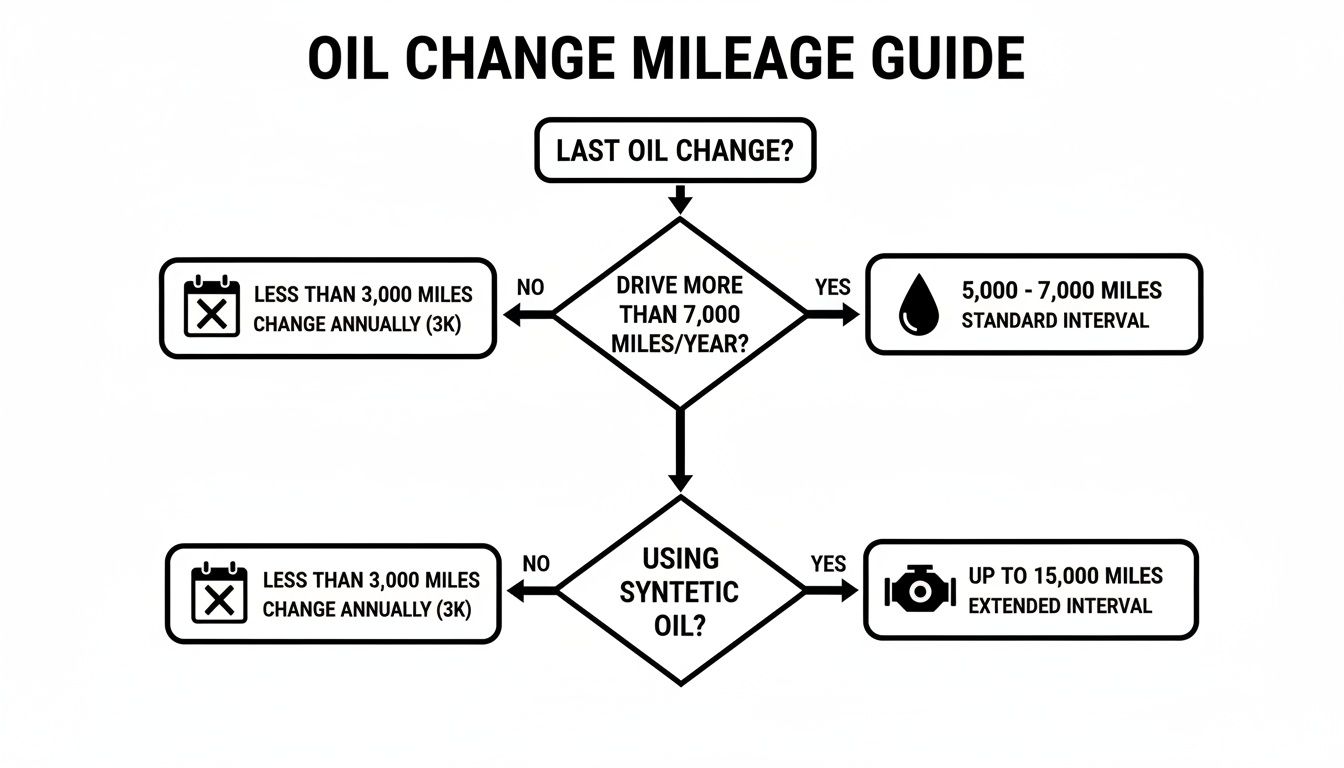
As you can see, sticking to a 3,000-mile schedule with a good synthetic oil is often just wasting money and perfectly good oil.
Your Car's Age and Your Driving Style Matter, Too
Just like people, cars have different needs as they get older. An engine with a lot of miles on it, especially one that has run on conventional oil its whole life, might benefit from more frequent changes to help clear out accumulated gunk and manage wear.
Your daily driving habits also play a huge role. You might be surprised to learn that making a bunch of short trips is one of the hardest things you can do to your engine. These quick jaunts don't let the oil get hot enough to burn off moisture and other contaminants that build up.
What qualifies as "severe" driving?
- Lots of trips under five miles.
- Constant stop-and-go city traffic.
- Towing trailers or hauling heavy loads.
- Driving in extreme heat, cold, or dusty conditions.
If any of that sounds like your daily commute, you’ll want to be on the shorter end of your oil's recommended change interval—even if you're using a top-tier synthetic.
Listen to Your Car's On-Board Brain
Most cars made in the last decade or so have an Oil Life Monitoring System (OLMS). This isn't just a simple timer or mileage counter. It's a smart system that actively tracks things like engine temperature, RPMs, and how long you spend idling.
Using all that data, the OLMS calculates the actual remaining life of your oil based on how you personally drive. When that "Change Oil Soon" light pops up on your dash, it’s not a guess. It’s a calculated, data-driven alert from your car telling you it’s time for a service, making it one of the most accurate indicators you have.
Finding Your Car's Official Maintenance Schedule
When it comes to the right answer for how many miles you should go between oil changes, there's one source that cuts through all the noise: your owner's manual.
Seriously, that little book tucked away in your glove compartment is the official guide straight from the folks who designed and built your engine. It lays out the exact maintenance schedule your specific make and model needs to run reliably for years.
Can't find the physical copy? No worries. Most carmakers have digital versions on their websites. A quick search for your car’s year, make, and model plus "owner's manual" will usually get you what you need. This is always the best place to start.
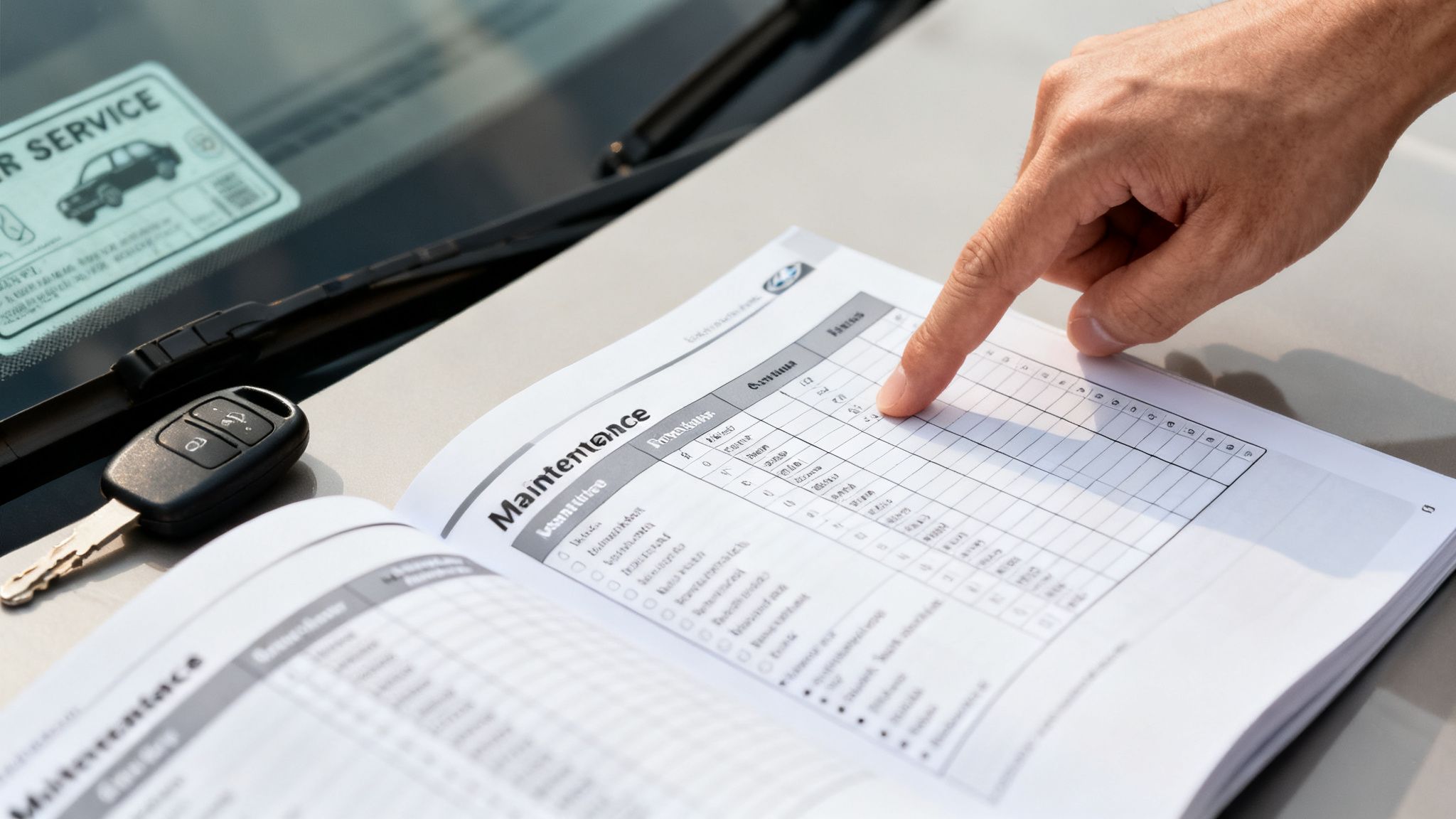
Decoding Your Maintenance Schedule: Normal vs. Severe Driving
Once you flip to the maintenance section, you'll probably see two different schedules. This is where a lot of drivers get a bit confused, but it’s actually a good thing—it’s the manufacturer’s way of personalizing their recommendation.
Normal Service (often called Schedule 2): This schedule is for ideal, almost perfect, driving conditions. Think long, steady highway cruises in a mild climate where the engine isn't working too hard.
Severe Service (often called Schedule 1): This one is for the real world. If your daily drive includes lots of short trips, stop-and-go city traffic, dusty roads, or dealing with that blistering Texas heat, this is the schedule for you.
To be honest, most of us in the Dallas-Fort Worth area fall squarely into the "severe" category. It just makes sense to follow the more frequent schedule to account for the extra strain our daily commutes put on the engine and its oil.
To help you figure out where you land, here's a quick breakdown of what car manufacturers consider "normal" versus "severe" driving.
| Normal vs Severe Driving Conditions Defined | ||
|---|---|---|
| Driving Condition Category | Examples (Normal Driving) | Examples (Severe Driving) |
| Trip Length | Mostly long-distance trips on highways. | Frequent short trips (under 5-10 miles). |
| Traffic | Driving at steady speeds with minimal stopping. | Heavy stop-and-go city traffic. |
| Climate | Moderate temperatures, low humidity. | Extreme heat (like a Texas summer) or freezing cold. |
| Road Conditions | Paved, clean roads. | Dusty, muddy, or salted roads. |
| Towing/Hauling | Rarely carrying heavy loads or towing. | Regularly towing a trailer or hauling heavy cargo. |
| Engine Idling | Minimal idling time. | Extended periods of idling (e.g., waiting in long lines). |
As you can see, what sounds "severe" is actually just normal, everyday driving for a lot of people. It’s always smarter to be realistic about your habits and follow the schedule that matches.
What About the Sticker on Your Windshield?
After every oil change, we put a little reminder sticker on your windshield with a date and mileage for your next visit. You might notice that it suggests a shorter interval, like 3,000 or 5,000 miles, even if your manual says you can push it further. So, which one should you follow?
The sticker is a helpful reminder, but it’s a general guideline from the service shop, not a command from the factory. It’s based on a conservative, "better safe than sorry" approach, which is never a bad thing when it comes to your engine's health.
The best strategy is to balance both. Use your owner's manual to understand the maximum your car can handle under perfect conditions, then lean on the service shop’s advice—especially if your driving habits fit that severe schedule. This way, you’re not wasting money on unnecessarily frequent changes but are still giving your engine the protection it needs to handle the daily grind.
Warning Signs Your Car Needs an Immediate Oil Change
While that little sticker on your windshield is a great reminder, your car has its own ways of telling you it needs help right now. Learning to spot these signals is crucial, because ignoring them can turn a cheap oil change into an expensive engine repair.
Think of it this way: your maintenance schedule is like a regular doctor's check-up, but these warning signs are the symptoms that mean you need to head to urgent care. Don't wait for your next appointment if you notice any of them.
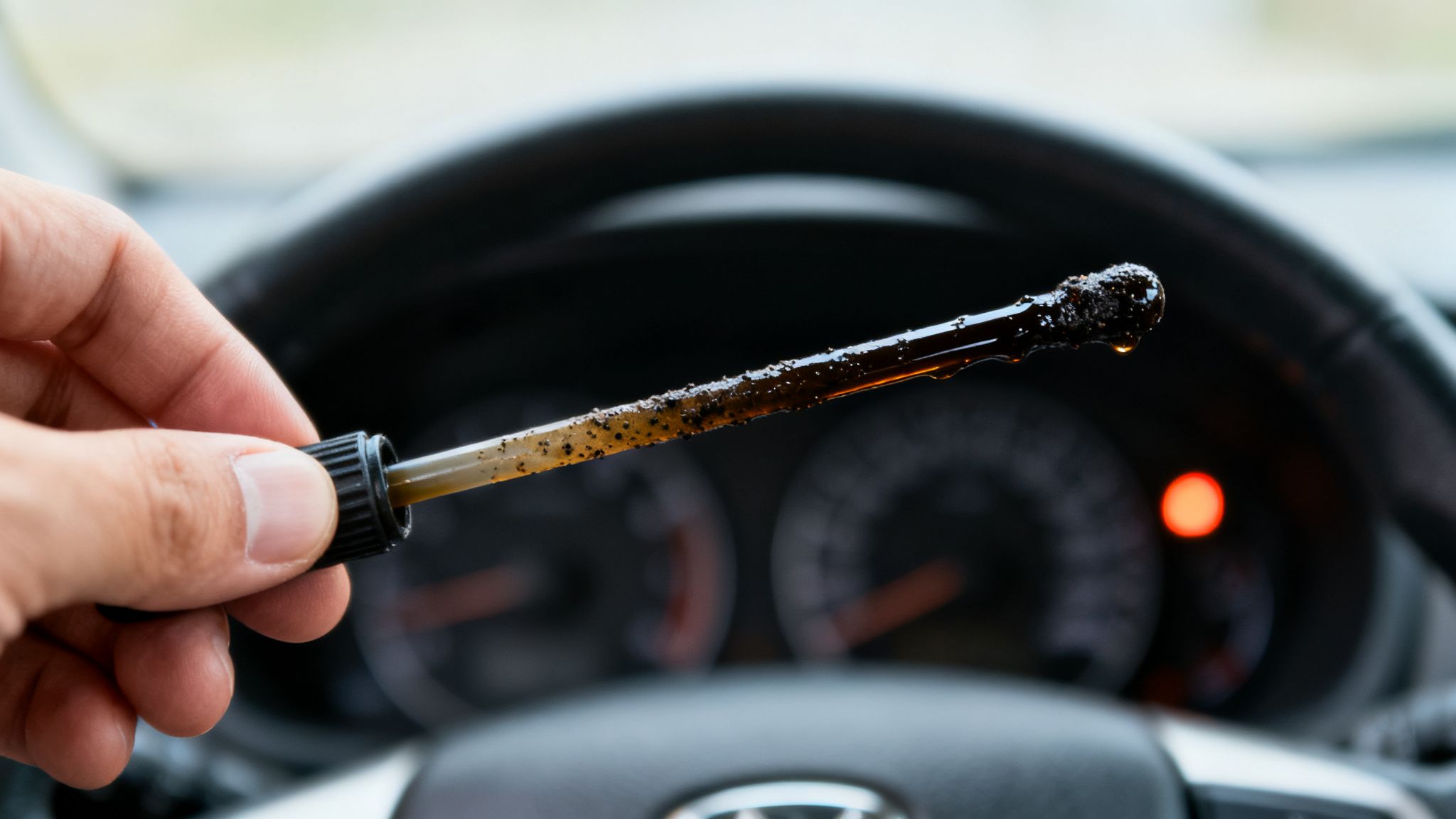
Interpreting Your Car's SOS Signals
Your vehicle will let you know when its oil isn't doing its job anymore. You just have to pay attention to what you see, hear, and smell.
These five signs are your car's most direct pleas for fresh oil:
Check Engine or Oil Light: This one is impossible to miss. While a check engine light can mean a lot of things, it’s often tied to oil pressure. If you see the little oil can symbol light up, that's a direct warning that demands immediate attention.
Loud Engine Noises: Good oil cushions your engine's metal parts. When that oil breaks down, you start getting metal-on-metal contact. This creates a distinct knocking, rumbling, or ticking sound that usually gets louder as the engine heats up.
Oil Smell Inside the Cabin: If you catch a whiff of burning oil while driving, you likely have a leak. When oil drips onto a hot engine or exhaust parts, it creates a sharp, unpleasant smell that easily finds its way into the car.
Visible Exhaust Smoke: A little bit of white vapor from the tailpipe on a cold day is normal. But if you see thick, blue, or gray smoke, that’s a major red flag. It usually means oil is leaking into the combustion chambers and getting burned up with the gasoline.
Dark and Gritty Oil: Fresh oil is a clean, amber color. Over time, it picks up gunk and turns black. If you check your dipstick and the oil looks thick, dark, or gritty, it has stopped protecting your engine. To see what to look for, you can learn more about how to check your car oil level.
Catching these issues early is the difference between a routine maintenance visit and a costly engine overhaul. Your car is constantly communicating its health—these signs are its language.
By staying vigilant, you can spot trouble before it turns into a real headache. If you notice any of these symptoms, it’s best to get your vehicle checked out by a professional right away.
Your Trusted Partner for Expert Car Care
Knowing when to get an oil change is one thing. Knowing the job was done right is another thing entirely. And while it might seem simple enough, a professional oil change is a lot more than just draining old oil and pouring in some new stuff—it’s a crucial health check for your engine.
When you bring your car to a shop like Express Lube & Car Care, you’re putting it in the hands of ASE-certified technicians. These are pros who know the ins and outs of modern engines. That expertise means we use the right type and amount of oil every time, protecting your engine from damage that can build up over thousands of miles.
What to Expect During a Full-Service Oil Change
Think of a professional oil change as a quick check-up for your whole car. It's the perfect chance to spot little issues before they spiral into big, expensive problems.
When you pull into our bay, our technicians run through a multi-point inspection that covers the essentials:
- Essential Fluid Top-Offs: We’ll check and top off other vital fluids, like your windshield washer fluid, power steering fluid, and coolant.
- Tire Pressure Check: Properly inflated tires are a must for safety and fuel economy. We’ll make sure yours are set exactly to your vehicle manufacturer’s specs.
- Filter Inspection and Replacement: A clean oil filter is just as critical as clean oil. We also inspect your engine and cabin air filters and can swap them out if they’re getting clogged.
Peace of mind is really what you get with a professional oil change. It's the confidence of knowing an expert has looked everything over, making sure your car is safe and dependable for the road ahead.
The Value of Professional Expertise
At the end of the day, a professional oil change is a smart investment in your car's future and your own safety. Our technicians are trained to spot potential trouble that’s easy to miss, from a worn belt to the first signs of a fluid leak. Catching these things early helps you dodge surprise breakdowns and big repair bills later on.
By trusting your car to us, you’re not just buying an oil change; you’re getting a partner in keeping your vehicle healthy. We give you clear, honest advice without any pressure, so you can make smart decisions about maintenance. When you drive away, you can feel confident your car is in top shape, ready for every mile.
Your Top Oil Change Questions, Answered
Even when you know the basics, a few specific questions always pop up. After all, your car and your driving habits are unique. Here are some quick, straightforward answers to the questions we hear most often at the shop.
Can I Stretch the Time Between Oil Changes?
It’s tempting to try and push it a little further to save a few bucks, but that’s a risky move. Your owner's manual provides a recommended interval for a reason—it’s based on extensive testing of your specific engine.
Pushing past that recommended mileage causes the oil to break down significantly. Once it degrades, it can't lubricate properly, leading to sludge, gunk, and accelerated wear on critical engine parts. In some cases, ignoring the schedule can even void your car's warranty. While a top-tier synthetic oil gives you more wiggle room, sticking to the schedule is always the smartest bet for protecting your investment.
Does the Oil Filter Quality Really Matter?
Absolutely. Think of the oil filter as your engine’s bodyguard. Its entire job is to trap nasty contaminants—tiny metal shavings, dirt, and carbon deposits—before they can circulate and grind away at sensitive components.
A cheap, low-quality filter will either clog up way too soon or simply fail to catch the smaller, damaging particles. This means your fresh, clean oil gets dirty almost immediately, defeating the purpose of the oil change.
Using a high-quality filter is non-negotiable for protecting your engine. It keeps your oil clean and effective for the entire time between services, which is critical for long-term engine health.
A premium filter is a small price to pay now to avoid major, costly repairs down the road.
Is It Okay to Mix Conventional and Synthetic Oil?
If you're in a real pinch and the dipstick is dry, adding any oil is better than letting the engine run low. That said, mixing conventional and synthetic oils is a bad long-term habit you should avoid.
When you mix them, you're essentially watering down all the benefits of the synthetic oil. You immediately lose its superior resistance to heat and breakdown, and the blend will behave more like standard conventional oil. That means you’ll have to get it changed much sooner, which defeats the purpose of paying for synthetic in the first place. At your next service, drain the mix completely and stick to one type.
Is Expensive Synthetic Oil Always Worth the Price?
For most modern cars, the answer is a resounding yes, especially if you have a turbocharged or high-performance engine. While the upfront cost is a bit higher, synthetic oil offers far better protection, performs better in extreme hot and cold weather, and lets you go much longer between changes.
Over the life of your vehicle, using synthetic oil can actually lead to lower overall maintenance costs. The superior protection prevents sludge buildup and reduces engine wear, helping you steer clear of major repairs. An experienced technician can help you decide if it’s the right call for your specific car, budget, and how you drive.
When you need expert advice you can trust, the ASE-certified technicians at Express Lube & Car Care are here to help. We provide fast, reliable oil changes and clear, honest recommendations to keep your vehicle running smoothly for every mile ahead. Visit us today for service you can count on at https://www.expressluberichlandhills.com.