

So, you’re wondering how long your car battery really lasts? The quick answer you’ll hear everywhere is 3 to 5 years, but that’s just a ballpark estimate. The real story, especially for those of us driving in Texas, is a lot more complicated.
What's the Real Lifespan of a Car Battery?
Think of that 3-to-5-year figure as a starting point. Your car's battery life is less like a "best by" date and more like a countdown timer that speeds up or slows down depending on how you drive and where you live.
For drivers here in the Richland Hills area, things like brutal summer heat, lots of short trips to the store, and all the power-hungry electronics in modern cars can slash that lifespan significantly. A battery that might happily last five years up north is under constant attack from the Texas climate.
Why Texas Heat Is a Battery Killer
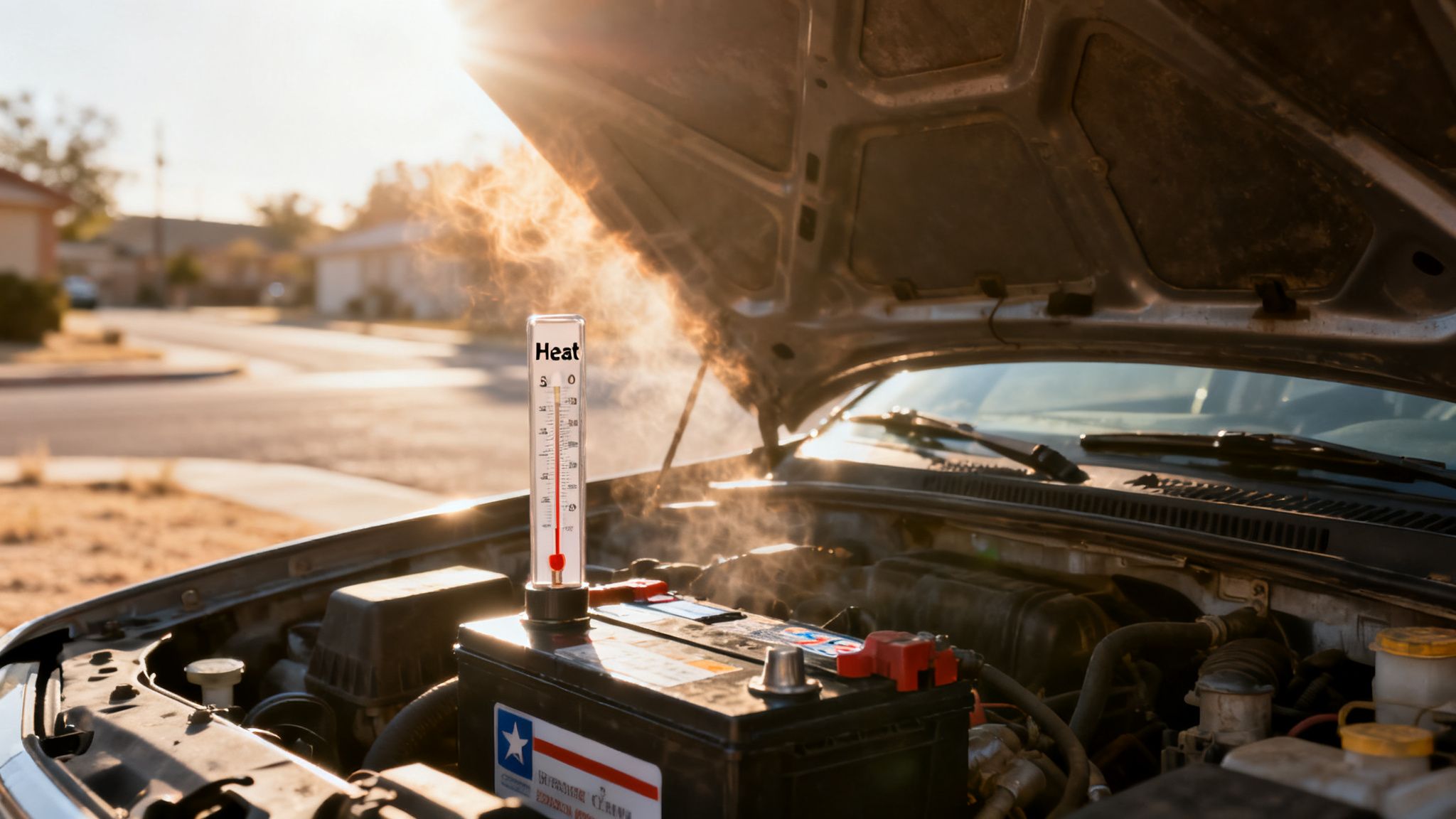
Heat is, without a doubt, the number one enemy of your car battery. It speeds up the chemical reactions inside, causing the battery's internal fluids to evaporate and its components to degrade way faster than they should.
This is why a battery that seemed perfectly fine all summer can suddenly give up the ghost on the first chilly morning. The damage was already done during those scorching hot months; the cold weather just delivered the final blow.
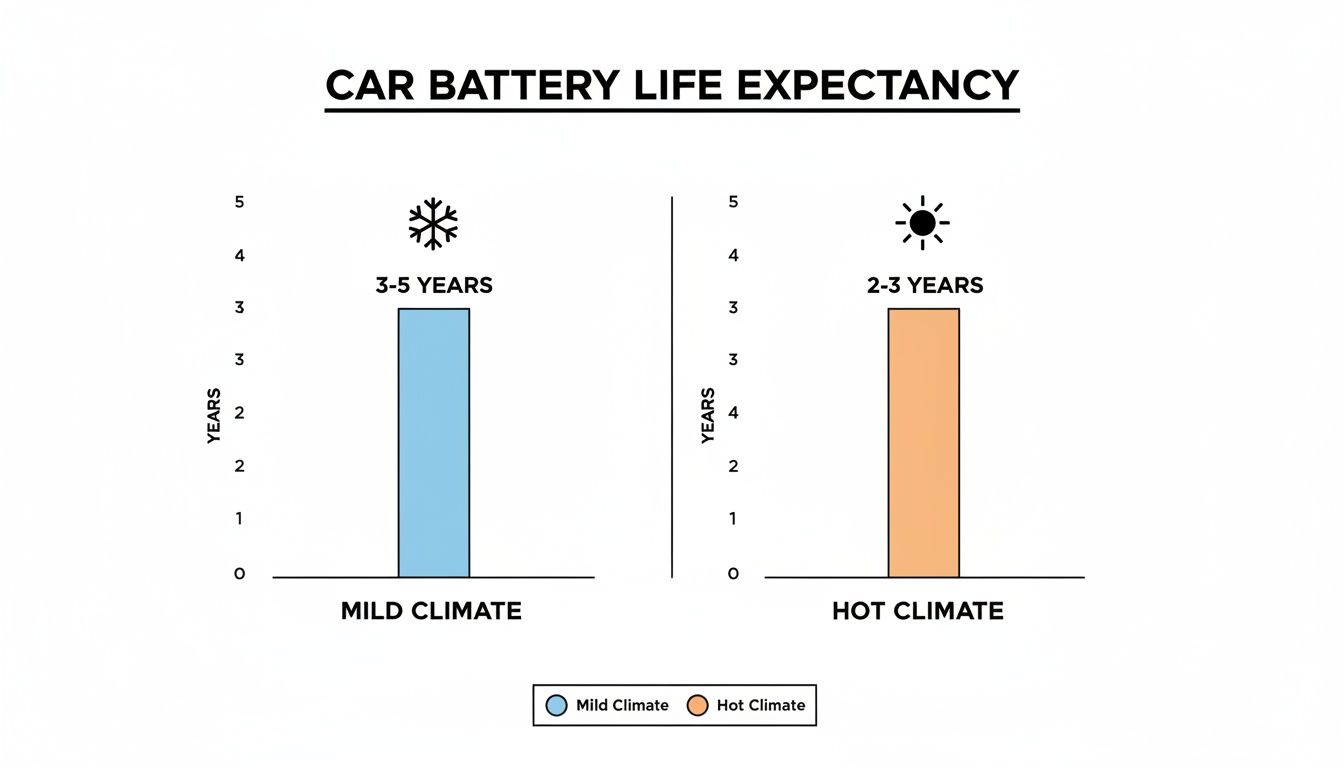
As you can see, a battery in a hot climate like ours might only last half as long as the same one in a cooler state. This makes getting it checked regularly an absolute must.
Car Battery Lifespan At a Glance
To make it simple, here’s a quick breakdown of what you can generally expect based on battery type and our local climate.
| Battery Type | Lifespan in Mild Climates | Lifespan in Hot Climates (Like Texas) |
|---|---|---|
| Standard Lead-Acid | 3-5 Years | 2-3 Years |
| AGM (Absorbent Glass Mat) | 4-6 Years | 3-4 Years |
| EFB (Enhanced Flooded) | 3-5 Years | 2-3 Years |
This table shows just how much our Texas heat impacts even the most robust batteries, often cutting their expected life by a year or more.
Don't Just Take Our Word For It
Battery failure isn't just an occasional inconvenience—it's one of the most common reasons for a breakdown. A recent AAA study found that a shocking 50% of all vehicle breakdowns are tied directly to a dead battery.
Even worse, other data shows that car batteries in hot climates can have their lifespan cut by up to 30%, sometimes failing in just two or three years. Knowing the facts helps you stay ahead of the game and avoid getting stranded. If you want to dive deeper, you can read the full research about these automotive reliability findings and see just how big of an issue this really is.
Why Texas Heat Is Your Battery's Worst Enemy
Here in Texas, we all know the summer heat can be brutal. But what many drivers don't realize is that the relentless, scorching temperatures are public enemy number one for your car's battery.
It’s a common myth that cold weather is what kills a battery. While a freezing morning can certainly be the final straw for a weak battery, the real damage, the stuff that drains its life away, happens during our long, hot summers.
The Science Behind Heat Damage
Think of your battery's internal chemistry like a controlled chemical reaction. Extreme heat throws that process into overdrive, causing it to work way too hard, way too fast. This creates a couple of big problems:
- Fluid Evaporation: The electrolyte fluid inside a traditional battery starts to boil off, exposing the internal lead plates to air.
- Internal Corrosion: The supercharged chemical reaction also causes the internal components to break down and corrode much faster than they should.
This one-two punch of fluid loss and corrosion permanently weakens the battery's ability to hold a charge. The damage builds up silently all summer long, just waiting for a cold snap to reveal itself.
A battery that dies on a cold winter morning didn't just fail overnight. It was likely cooked and weakened during the previous Texas summer, and the cold was just the final push it couldn't handle.
The Sobering Statistics
This isn't just a theory; the numbers prove it. Data from the Battery Council International shows that for every 10°C (18°F) jump in temperature above 77°F, a battery's lifespan is cut by roughly 50%.
With Northeast Tarrant County summers regularly pushing past 95°F, our local batteries often only last 2.5 to 3.5 years. That's a huge drop compared to the 4 to 6 years you might see in a cooler climate. A recent study of over 22,700 vehicles confirmed this, showing a much faster decline for batteries in hot regions. You can explore more insights on how temperature impacts battery life to see the science for yourself.
This is exactly why getting your battery checked before the summer heat kicks in is one of the smartest things a Texas driver can do. It's the best way to avoid getting stranded when the temperatures are peaking.
How Your Driving Habits Impact Battery Health
It's not just the relentless Texas heat that cooks your battery; your daily driving routine plays a huge part in how long it survives. It all comes down to the relationship between your alternator and your battery. Think of the alternator as a tiny power plant under your hood, constantly recharging the battery after it uses a big jolt of energy to start your car.
But here's the catch: that recharging process isn't instant. It needs time—real driving time at a decent speed—to get the battery back to full strength. This is where some very common driving habits can unknowingly sabotage your battery's lifespan.
The Problem with Short Trips
Zipping around town for quick errands is one of the worst things you can do for your battery. Each time you start the car, you use up a massive amount of power. If your trip is just a few minutes long, the alternator never gets a chance to fully pay that energy back.
It’s like trying to fill a swimming pool with a garden hose but only turning it on for 30 seconds at a time. You're taking more out than you're putting back in. This leaves the battery in a constantly undercharged state, which puts a ton of stress on its internal chemistry and leads to a much shorter life.
In fact, studies show that quick trips of less than 20 minutes are a leading cause of premature battery death. Some reports suggest these short journeys are to blame for as many as 60% of early failures because the charging system simply can't keep up. The proof is in the pudding: longer, less frequent drives are your battery's best friend. You can discover more insights about how driving affects battery health to get the full picture.
Parasitic Drains and Their Hidden Impact
Another silent killer is something mechanics call a parasitic drain. This happens when electrical components keep sipping power from the battery even after you've turned the car off. Sure, your clock and security system need a tiny bit of juice to stay active, but other habits can create a much bigger problem.
These common battery-draining habits include:
- Leaving electronics plugged in: That phone charger or dash cam you leave in the 12V socket can slowly suck the life out of your battery.
- Using the radio with the engine off: Blasting tunes while you're waiting in the car is a classic drain.
- Constantly locking and unlocking: Every time you hit the fob, you're waking up computers and lights, causing a small but meaningful power draw.
Over time, these little sips add up to a big problem, preventing the battery from ever reaching a full charge. Combine that with an alternator that's already fighting an uphill battle on short trips, and you've got the perfect recipe for a dead battery when you least expect it.
Spotting the Warning Signs of a Failing Battery
A car battery almost never dies without giving you a few hints first. Learning to recognize these subtle (and sometimes not-so-subtle) warnings is the key to avoiding that sinking feeling of being stranded with a car that won't start.
Think about the last time you turned the key. Was the engine crank slow and sluggish? Did it make a drawn-out "rur-rur-rur" sound instead of its usual quick, confident turnover? This is often the very first sign that your battery is losing the power needed to deliver that critical jolt of electricity.
Another classic clue happens right after startup. Do your headlights seem to dim for a moment when you first turn the engine over, or do they flicker when you’re idling at a stoplight? This tells you the battery is struggling to provide enough power to both the starter and your car's other electronics at the same time.
Common Symptoms and Their Meanings
Beyond the sounds and lights, there are other physical signs to look out for. These often point to more serious internal issues that need immediate attention. A quick visual inspection can reveal a lot.
To help you connect the dots, here’s a quick-reference guide for diagnosing potential battery trouble.
Symptoms of a Failing Battery and What They Mean
| Symptom (What You See or Hear) | Potential Cause | Recommended Action |
|---|---|---|
| Slow Engine Crank | The battery lacks sufficient power to turn the starter motor effectively. | Get a professional battery test immediately. |
| Dimming Headlights/Interior Lights | The battery can’t support the full electrical load of the vehicle. | Have your battery and charging system checked. |
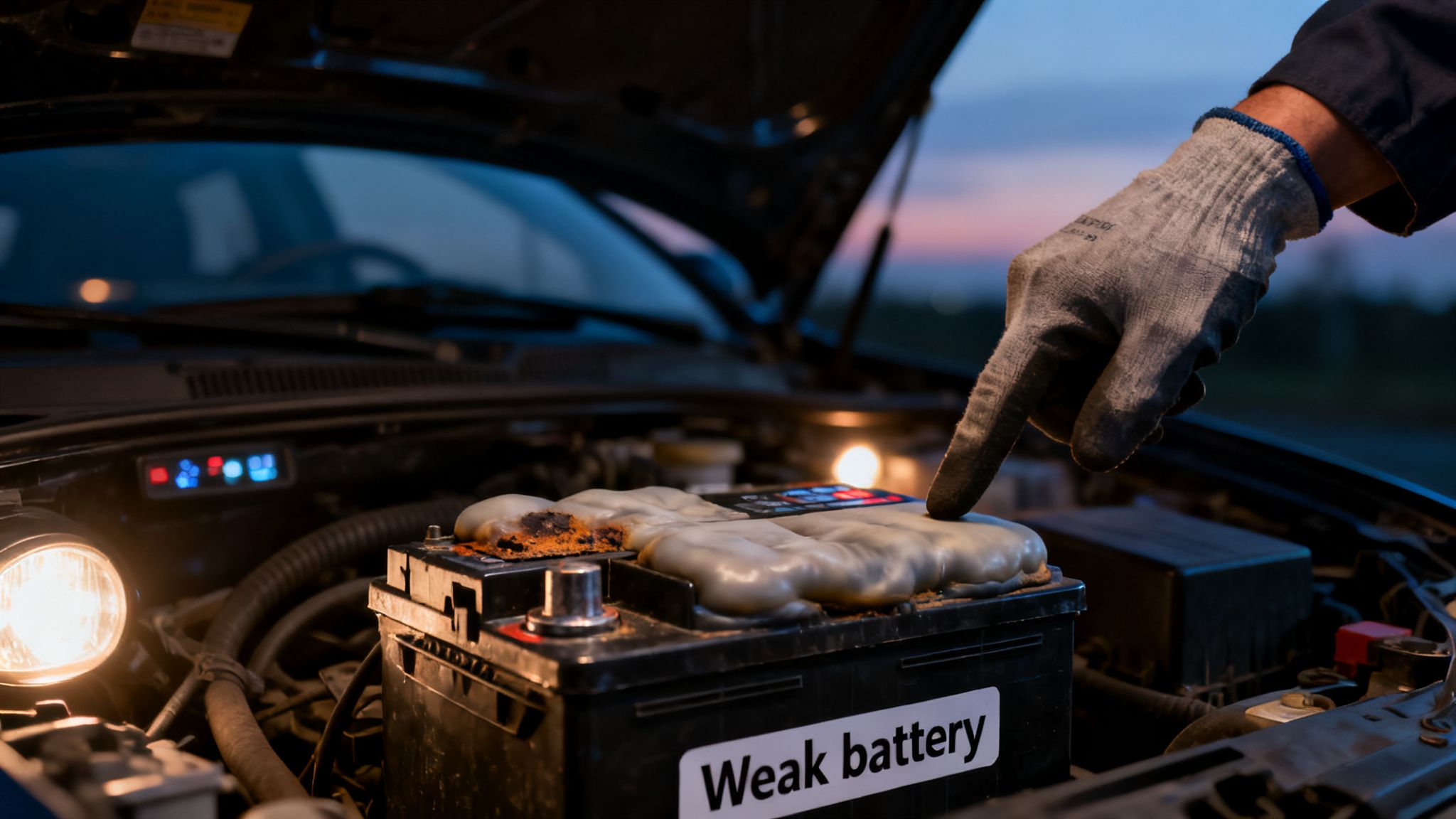
| Swollen or Bloated Battery Case | Extreme heat has caused internal damage and a dangerous buildup of gas. | Do not attempt to start the car. Call for professional service. |
| Rotten Egg Smell (Sulfur) | The battery is leaking sulfuric acid, often due to overcharging or internal failure. | This is a serious issue. Seek professional help right away. |
| Corrosion on Battery Terminals | Leaking acid is reacting with the metal terminals, blocking electrical flow. | Clean the terminals and get the battery tested for leaks. |
A swollen battery case is a major red flag that you should never ignore. It means the internal components have been compromised, usually by excessive heat, and the battery is no longer safe to use.
If you're noticing any of these issues, it's a clear signal that your battery is on its last legs. You can learn more in our detailed guide for Richland Hills drivers on how to know if your battery is failing. Getting a professional test can confirm the problem and help you get it replaced before it leaves you stranded.
Simple Maintenance to Extend Your Battery Life
While you can’t exactly turn down the Texas heat, you can take a few simple steps to protect your battery and stretch its lifespan. A little preventative care really does go a long way, potentially adding months or even years of reliable service.
Think of it as a wellness plan for your car’s electrical heart. These small tasks are easy to forget, but they have a massive impact on your battery's health and help you avoid the headache of a sudden breakdown.
Keep It Clean and Secure
One of the easiest yet most important things you can do is just pop the hood and look at the battery terminals. You might see a crusty, white or bluish-green buildup on the metal posts. That’s corrosion, and it acts like cholesterol in an artery—it chokes off the flow of electricity and makes it hard for your battery to charge or start the engine.
You can scrub this gunk off with a wire brush and a simple mix of baking soda and water. That one simple act ensures a solid, powerful connection. When you come into Express Lube & Car Care, this is a standard check we perform to keep your car running right.
Another big one? Make sure the battery is held down tight. A loose battery gets bounced and rattled around as you drive, which can damage the delicate plates inside and lead to a much shorter life.
Smart Habits for Longer Life
Beyond the physical checks, a few smart habits can make a huge difference. Try to minimize how much power you’re using when the engine is off. That means avoiding sitting in a parked car with the radio blasting, lights on, and the A/C running for long stretches.
Your car battery is designed to deliver a massive jolt of power to start the engine. It's not meant to be a deep-cycle power pack for all your accessories. Constantly draining it without the alternator running to recharge it will absolutely shorten its lifespan.
Here are a few more pro tips to keep your battery healthy:
- Take the Long Way Home: If most of your driving involves short little trips, make a point to go for a longer, continuous drive for at least 20-30 minutes once a week. This gives the alternator enough time to fully top off the battery's charge.
- Unplug Your Gadgets: Get into the habit of unplugging phone chargers, dash cams, and other devices from the 12V outlets when you park. Even small devices can create a slow "parasitic drain" that silently kills your battery over time.
- Schedule Regular Tests: The best way to catch a problem before it leaves you stranded is with a professional test. We recommend getting a quick battery and charging system check with every oil change, especially before the brutal summer heat or a winter cold snap.
This proactive approach is at the core of our philosophy on proper vehicle maintenance. A few minutes of prevention can save you from a major inconvenience down the road.
Choosing the Right Replacement Battery for Your Vehicle
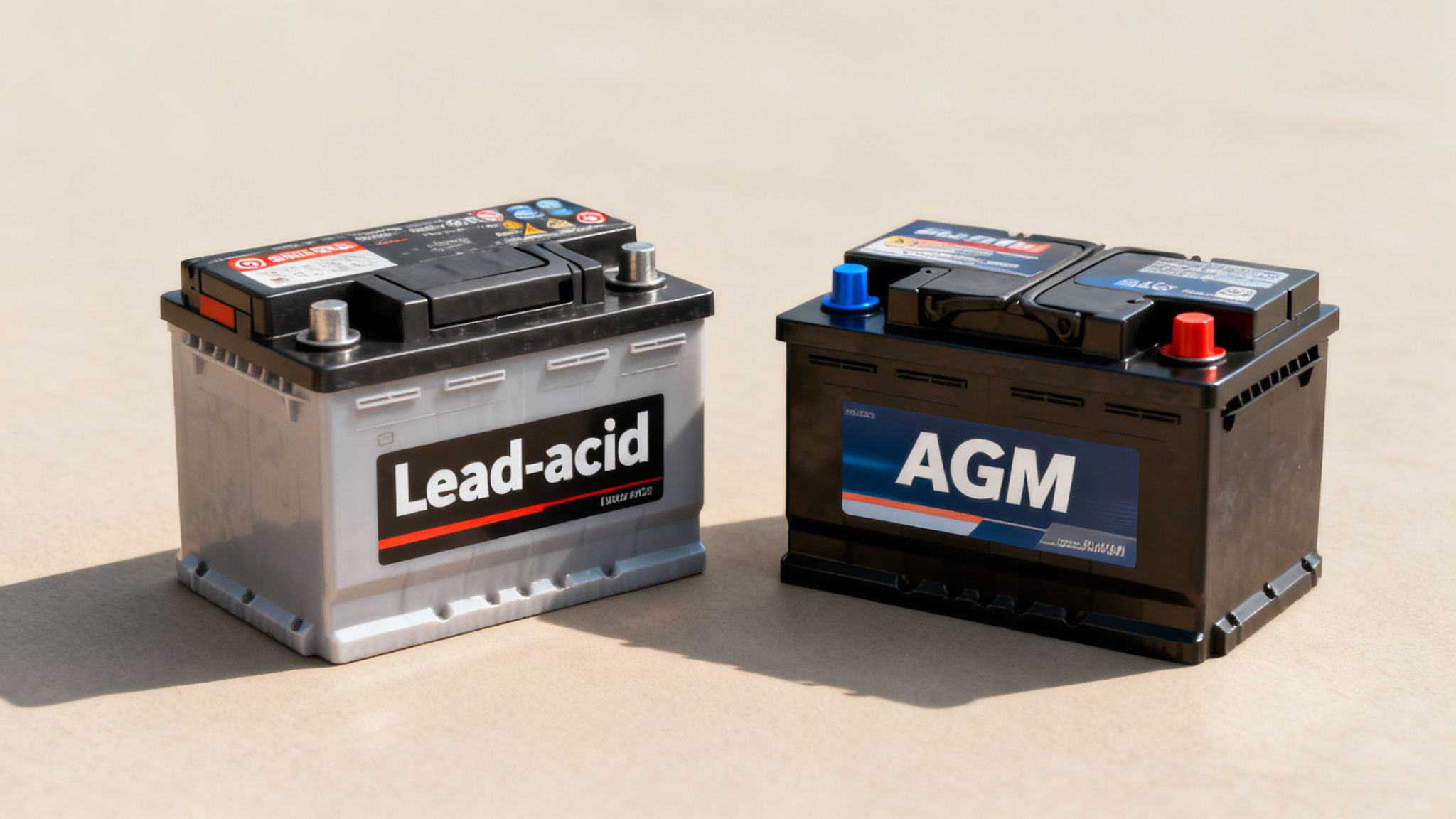
When your battery finally calls it quits, walking into an auto parts store can feel a bit overwhelming. Shelves are lined with options, but the choice usually boils down to two main players: the classic standard lead-acid battery and its modern counterpart, the Absorbent Glass Mat (AGM) battery.
Think of a standard battery as the reliable old workhorse. It's been the go-to for decades, does its job perfectly well in older vehicles with fewer electronics, and is easier on the wallet upfront. For a straightforward car without all the high-tech bells and whistles, it's often a solid choice.
An AGM battery, on the other hand, is more like a high-performance athlete built for today's demanding world. Its internal design is far more robust, allowing it to easily handle the intense electrical loads of modern vehicles.
Why AGM Is a Must for Modern Cars
Today's cars are essentially computers on wheels, packed with power-hungry features. We're talking large infotainment screens, advanced safety sensors, heated seats, and more. But the single biggest game-changer is start-stop technology, which shuts your engine off at red lights to save fuel.
This feature puts an incredible amount of strain on a battery. It has to restart the engine dozens of times during a single drive, a task a standard battery just wasn't built for. That constant cycling will cause a traditional battery to fail, and fail fast. AGM batteries are specifically engineered to handle these deep, frequent discharges and recharges without breaking a sweat.
Choosing the right battery isn't just about replacing a part; it's about matching the technology to your vehicle's specific needs. Putting a standard battery in a car designed for an AGM is a recipe for being stranded again in just a few months.
While an AGM battery costs more initially, its superior performance and much longer lifespan in a demanding vehicle make it a smarter investment in the long run. If your car has start-stop technology or a ton of electronics, an AGM isn't just an upgrade—it's a necessity. Our team can help you find the perfect car battery replacement for your specific make and model.
Frequently Asked Questions About Car Batteries
Let's wrap things up by answering some of the most common questions we hear from drivers about their car batteries. Getting straight, clear answers helps you make smart decisions for your car and your wallet.
How Much Does a New Car Battery Cost?
The price of a new battery really depends on what your vehicle needs to run properly. A standard lead-acid battery for an older, simpler car might run you between $100 and $200.
However, most modern cars need a more robust AGM (Absorbent Glass Mat) battery to power all the electronics and handle features like start-stop technology. You can expect those to range from $200 to over $350. Think of it as an investment in your car's reliability.
Can I Replace My Car Battery Myself?
You technically can, but it’s gotten a lot trickier than it used to be. On many newer cars, the battery is buried in a hard-to-reach spot, and worse, the vehicle’s computer system often needs to be reset after the new one is installed.
If you skip that step, you can run into all sorts of weird electrical gremlins. For safety and peace of mind, we always recommend a professional installation.
A professional installation ensures the battery is fitted correctly and, just as importantly, that the vehicle’s sensitive electronic memory is preserved. This prevents headaches with your radio, power windows, and onboard computer systems.
How Often Should I Get My Car Battery Tested?
We strongly recommend getting your battery tested at least twice a year—once before summer hits and again before winter sets in. That brutal Texas heat is especially tough on batteries, quietly weakening them long before they actually fail.
A quick test while you're getting an oil change can easily spot a battery that’s on its way out, saving you from being stranded later. It's a simple, preventative check that makes a huge difference.
What Does a Car Battery Warranty Cover?
Most battery warranties have two parts: a free replacement period and a prorated period. For example, a 36-month warranty might give you a completely free replacement if the battery dies within the first year or two.
After that, you’d get a credit toward a new one based on how long you used the old one. Our team can always walk you through the specifics for any battery we install so there are no surprises.
If you're noticing any of the warning signs or it’s just been a while, don't wait for your battery to leave you stranded. The ASE-certified technicians at Express Lube & Car Care can run a fast, professional battery test and help you find the perfect replacement if needed. Stop by today for a quick check and drive away with confidence! Learn more at https://www.expressluberichlandhills.com.