

"How often should I replace my brake pads?" It's a question we hear all the time, and the answer isn't as simple as a date on the calendar. The real answer depends on how and where you drive.
Generally, you can expect to replace your brake pads every 25,000 to 65,000 miles. That’s a huge range, and for good reason.
Your Quick Guide to Brake Pad Replacement
Think of it like this: a marathon runner who pounds the pavement every day is going to wear out their running shoes a lot faster than someone who just wears them for casual walks. Your brake pads are the same. Your daily commute, your driving style, and even the type of vehicle you own will determine how long they last.
There's no magic number, but understanding the basics is the first step. That 25,000 to 65,000-mile range is just a starting point. Here in Richland Hills, Texas, local driving conditions play a huge role. If you’re constantly dealing with stop-and-go traffic on I-820 or Highway 183, your pads are working overtime and will likely wear out closer to that 25,000-mile mark. You can learn more about brake pad replacement intervals and see just how much they can vary.
Key Takeaway: Your personal driving style is the single biggest factor. If you're an aggressive driver who brakes hard and late, you're generating a ton of heat and friction. That will chew through your brake pads much faster than someone who brakes smoothly and gradually.
To give you a better idea of what to expect, we put together a quick breakdown.
Brake Pad Replacement Mileage Estimates
Use this table as a starting point to estimate your brake pad life based on your daily driving realities in and around Richland Hills.
| Driving Style / Vehicle | Average Replacement Interval | Key Factors |
|---|---|---|
| Aggressive City Driving | 25,000 – 35,000 miles | Frequent hard stops, heavy stop-and-go traffic, and constant braking in dense urban areas. |
| Average Commuter | 40,000 – 60,000 miles | A mix of city streets and highway driving with moderate, predictable braking patterns. |
| Highway Dominant | 60,000 – 70,000+ miles | Primarily long-distance travel with minimal braking, leading to the longest pad lifespan. |
| Heavy Vehicles (Trucks/SUVs) | 25,000 – 45,000 miles | Increased vehicle weight requires more force to stop, causing faster pad wear even with normal driving. |
While these numbers are a helpful guide, nothing beats a hands-on look from a professional. A quick, no-obligation inspection right here at Express Lube & Car Care will give you a clear, honest answer about the exact condition of your brakes.
The 5 Key Factors That Determine Brake Pad Life
Thinking your brake pads have a fixed expiration date is a common mistake. It's more like asking how long a pair of running shoes will last—the answer completely depends on how you use them. The real lifespan of your pads is a direct reflection of the demands you put on your vehicle every day.
Understanding these key factors helps you get a much better feel for when it’s time to start thinking about a replacement.
Your Personal Driving Style
This is, without a doubt, the single biggest factor. Are you the type of driver who coasts to a stop, anticipating red lights from a block away? Or do you tend to be a "late braker," hitting the pedal hard at the last second? Aggressive, sudden stops generate a massive amount of heat and friction, which eats away at the brake pad material at a surprising rate.
This simple visual helps connect the dots between your driving habits, the miles you put on, and the kind of car you drive.
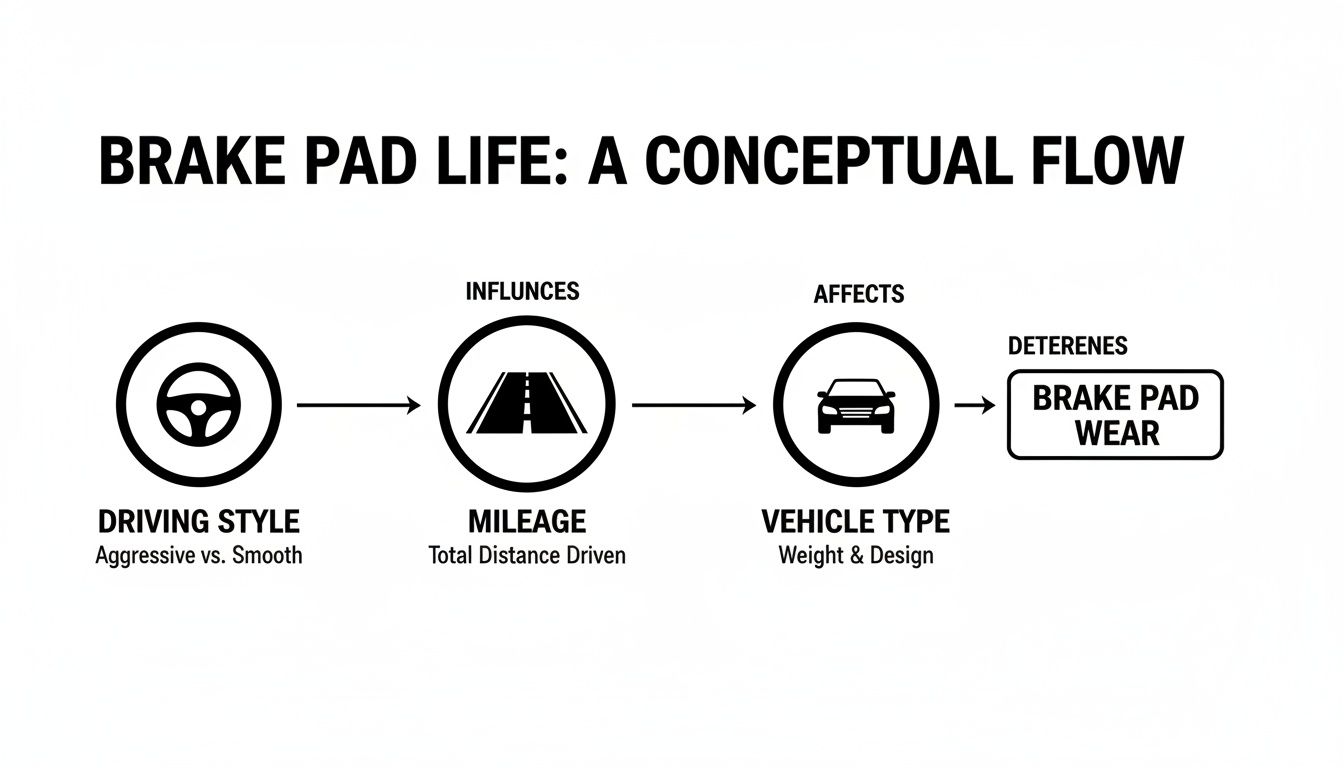
As you can see, all these things are tied together. Gentle driving in a lightweight sedan will always give you more miles out of your pads than aggressive driving in a heavy-duty truck. It's just simple physics.
Your Daily Driving Environment
Where you drive is just as important as how you drive. A daily commute through the constant stop-and-go traffic of downtown Fort Worth puts an incredible amount of stress on your brakes. Every time you inch forward and tap the pedal, you’re creating a little bit of wear.
On the flip side, someone who spends most of their time cruising on open highways like I-30 or State Highway 121 barely touches their brakes in comparison. Those long, steady stretches of road allow brake pads to last significantly longer, often pushing them toward the 70,000-mile end of their lifespan.
A vehicle that racks up 30,000 miles in heavy city traffic will show far more brake pad wear than one driven the same distance on the highway. It’s less about the total mileage and more about how many times you actually press the brake pedal.
Vehicle Weight and Load
Heavier vehicles, like big trucks and full-size SUVs, simply require more force to bring to a stop. That increased energy demand translates directly into faster wear on your brake pads and rotors.
Think about it this way: stopping a bicycle takes almost no effort, but stopping a freight train requires an immense amount of power. Your family SUV isn't a train, but the principle is the same. If you consistently haul heavy loads or tow a trailer, you’re amplifying that effect even more.
Brake Pad Material Composition
Not all brake pads are made the same. They come in a few different materials, and each one has its own trade-offs in performance, noise, and how long they last. The most common types you’ll see are:
- Organic: Made from a mix of fibers and resins. These are typically the quietest and most affordable option, but they also tend to wear out the fastest.
- Semi-Metallic: A tough blend of metals that offers great performance and handles heat well. The downside? They can be a bit noisier and produce more brake dust.
- Ceramic: These are the premium choice. They're quiet, create very little dust, and have a long lifespan, but they usually come with a higher price tag.
Matching the right material to your vehicle and driving habits is key to getting the balance of performance and longevity you want.
Overall Brake System Condition
Finally, your brake pads don’t work in a vacuum—they’re part of a whole system. The health of your rotors, calipers, and even your brake fluid has a direct impact on how your pads wear down.
For instance, if your rotors are warped or a caliper is sticking, it can cause uneven and premature wear on your pads. That’s why regular brake inspections are so important. You need to make sure all the components are playing nicely together.
7 Warning Signs Your Brake Pads Are Failing
Your car is always talking to you—you just have to learn its language. And when it comes to your brakes, listening is non-negotiable. Instead of just guessing how often to replace brake pads, learning to spot the signs of wear lets you take action before a small problem turns into a serious safety hazard.
Ignoring these clues doesn't just put you on the road with questionable stopping power; it almost always leads to bigger, more expensive repairs. Catching them early means you can get in and out with a simple, affordable brake service.
1. Squealing or Screeching Noises
This is usually the first sign you'll notice. Most modern brake pads have a tiny metal tab built right in called a wear indicator. When your pads get thin, this little tab starts scraping against the brake rotor, creating that ear-piercing squeal every time you touch the pedal.
Think of it as your car's built-in alarm system. It's not a full-blown emergency just yet, but it’s a crystal-clear signal to get your brakes checked out soon.
2. Deep Grinding or Growling Sounds
If you let that initial squeal go on for too long, it will eventually turn into a deep, guttural grinding noise. This sound is a much, much more serious warning. It means the friction material on your brake pads has completely worn away, and now you've got the metal backing plate grinding directly against the metal rotor.
This metal-on-metal contact is incredibly dangerous and destructive. It chews up your rotors in no time, turning what should have been a routine pad swap into a far more complex and costly repair. If you hear grinding, stop driving and get service immediately.
3. Vibrations in the Pedal or Steering Wheel
Ever feel a pulsing or shaking through the brake pedal or steering wheel when you slow down? This vibration is often a sign that your brake rotors have warped or developed an uneven surface, usually from the intense heat generated by repeated hard braking.
As the pads try to grip that uneven surface, you feel the inconsistency as a shudder or a pulse. It’s a pretty clear sign your rotors might need to be resurfaced or replaced along with your pads.
4. Longer Stopping Distances
Is it taking more road to come to a complete stop than it used to? If you have to push the pedal down further or anticipate stops earlier, your brake pads are probably worn thin. This can be a subtle change at first, but it points to a serious drop in your braking performance.
Your brain gets accustomed to how much pedal pressure it takes to stop. When that changes, it's a major red flag that your pads aren't grabbing like they should.
5. Your Vehicle Pulls to One Side
When you hit the brakes, your car should slow down in a nice, straight line. If you feel it consistently pulling to the left or right, you've likely got a problem in the braking system. This is often caused by uneven pad wear or a faulty brake caliper.
For instance, a caliper might get stuck on one side, causing that brake to drag and wear out the pad much faster, resulting in the pull.
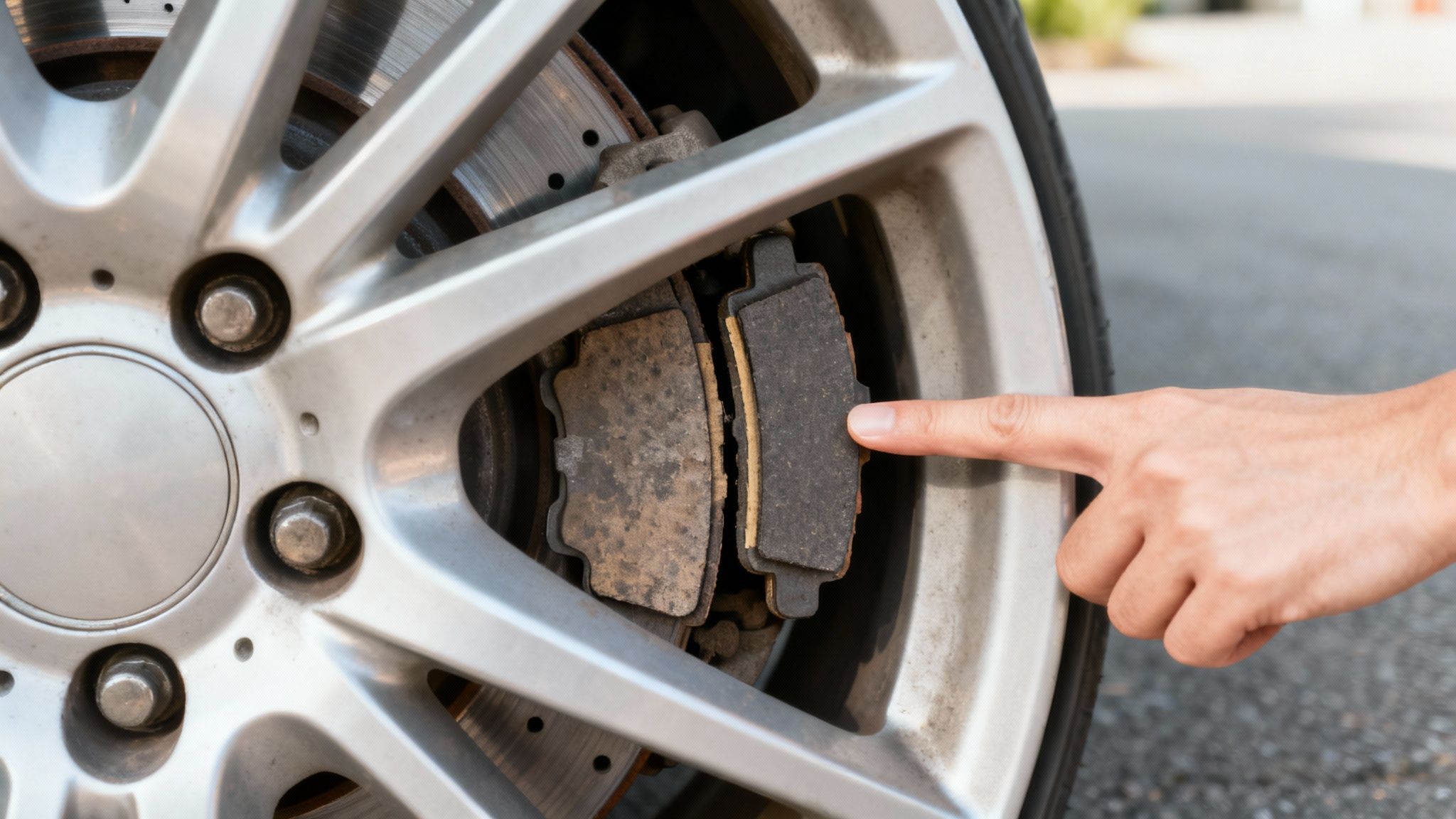
6. Thin-Looking Brake Pads
Sometimes, a quick visual check is all it takes. If you peek through the spokes of your wheel, you can see the brake pad clamped against the shiny metal rotor. Brand new pads are usually around 8-12 millimeters thick.
If you can see the friction material is down to 3-4 millimeters or less—about the thickness of two quarters stacked together—it's absolutely time to schedule a replacement.
7. Brake Warning Light Activates
Finally, the most direct message of all: a warning light on your dashboard. Many modern cars have sensors that will trigger a light once the brake pads wear down to a critical level. Don't ever ignore this light. It's your car's way of telling you to see a professional at a shop like Express Lube & Car Care right away.
How to Check Your Brake Pads at Home
You don't need a fancy garage setup to get a feel for your brake pad's condition. A quick visual check in your driveway is surprisingly easy and can give you a heads-up that it's time to see a pro. Think of it as a simple way to stay ahead of your car's safety.
First things first: park your car on a flat, level surface and make sure the engine has had time to cool down.
To get the best possible view, turn your steering wheel all the way to one side. Doing this opens up a window to the brake caliper—that's the clamp-like part that squeezes the shiny metal disc (the brake rotor).
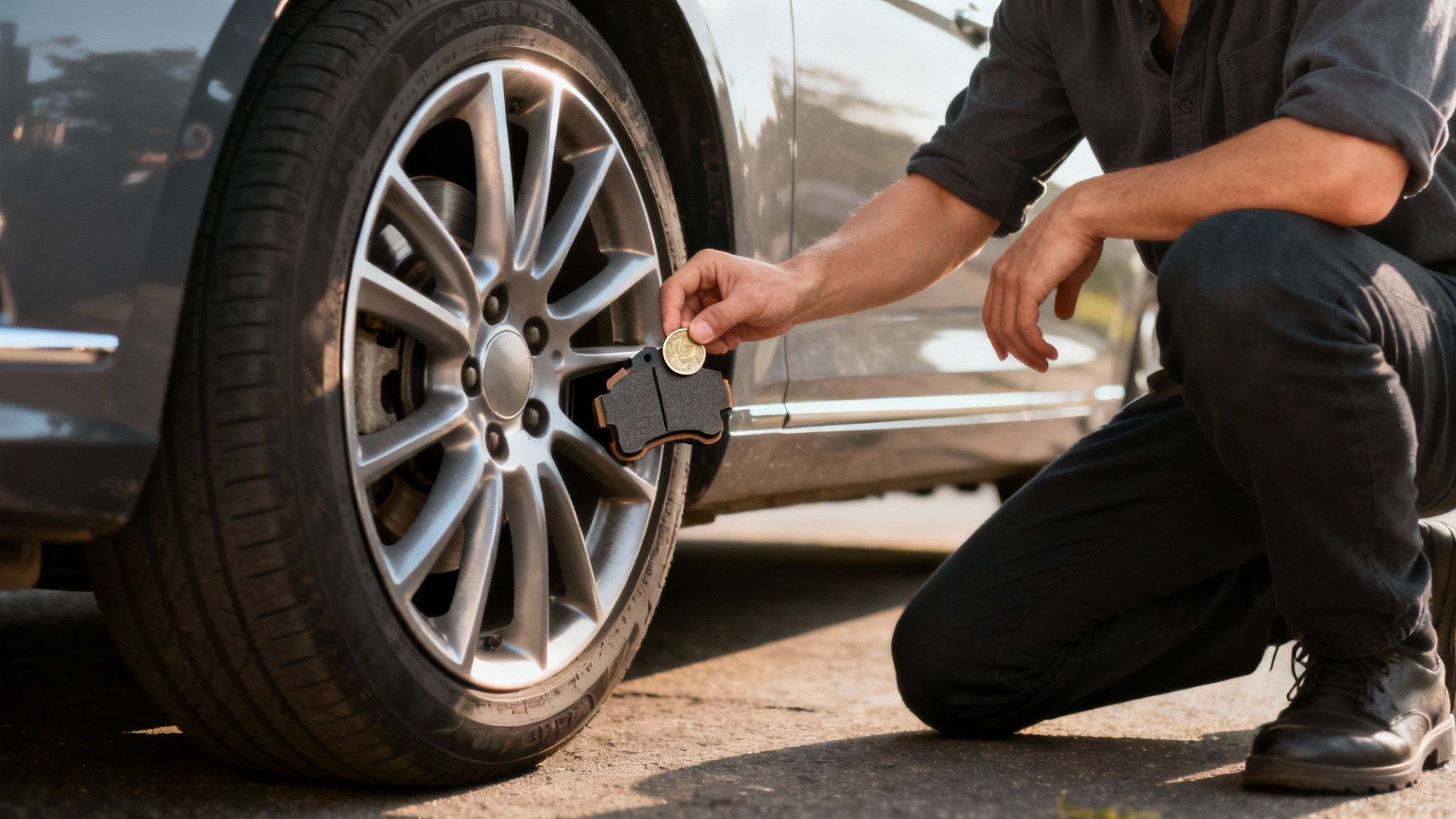
Now, peek through the spokes of your front wheel right at that caliper. You should be able to see the brake pad itself pressed up against the rotor. What you're looking for is the thickness of the pad's friction material.
Gauging the Thickness
A fresh-from-the-box brake pad usually has about 8-12 millimeters of friction material. The absolute thinnest you ever want to let it get is around 3 millimeters.
The Quarter Trick: A good rule of thumb is to use two quarters as a guide. If your brake pad material looks thinner than two quarters stacked together, you're officially in the replacement zone and should book a professional inspection right away.
This home check is a fantastic starting point, but it's not a replacement for an expert's measurement. A professional technician can measure the pad depth with precision; anything under 4mm is a clear signal that it’s time for a change. Catching it early helps you avoid bigger problems, like the rotor pulsation that affects a surprising 30% of cars with delayed brake service.
A driveway inspection also can't easily spot uneven wear or problems with the inner brake pad, which often wears down faster than the outer one. That’s why it’s so important to pair your own visual checks with a complete professional review, like the kind we cover in our car safety inspection checklist, to make sure nothing gets missed.
How Electric Vehicles Change the Rules of Braking
The rise of electric and hybrid vehicles is completely rewriting the old maintenance playbook, especially when it comes to brakes. If you've got an EV, the answer to "how often should I replace my brake pads?" is way different than you'd expect, all thanks to something called regenerative braking.
Think of a normal car's brakes: when you press the pedal, pads clamp down on a spinning disc, creating friction and heat to stop you. It's effective, but that friction wears the pads down over time. Electric vehicles have a much smarter way of doing things.
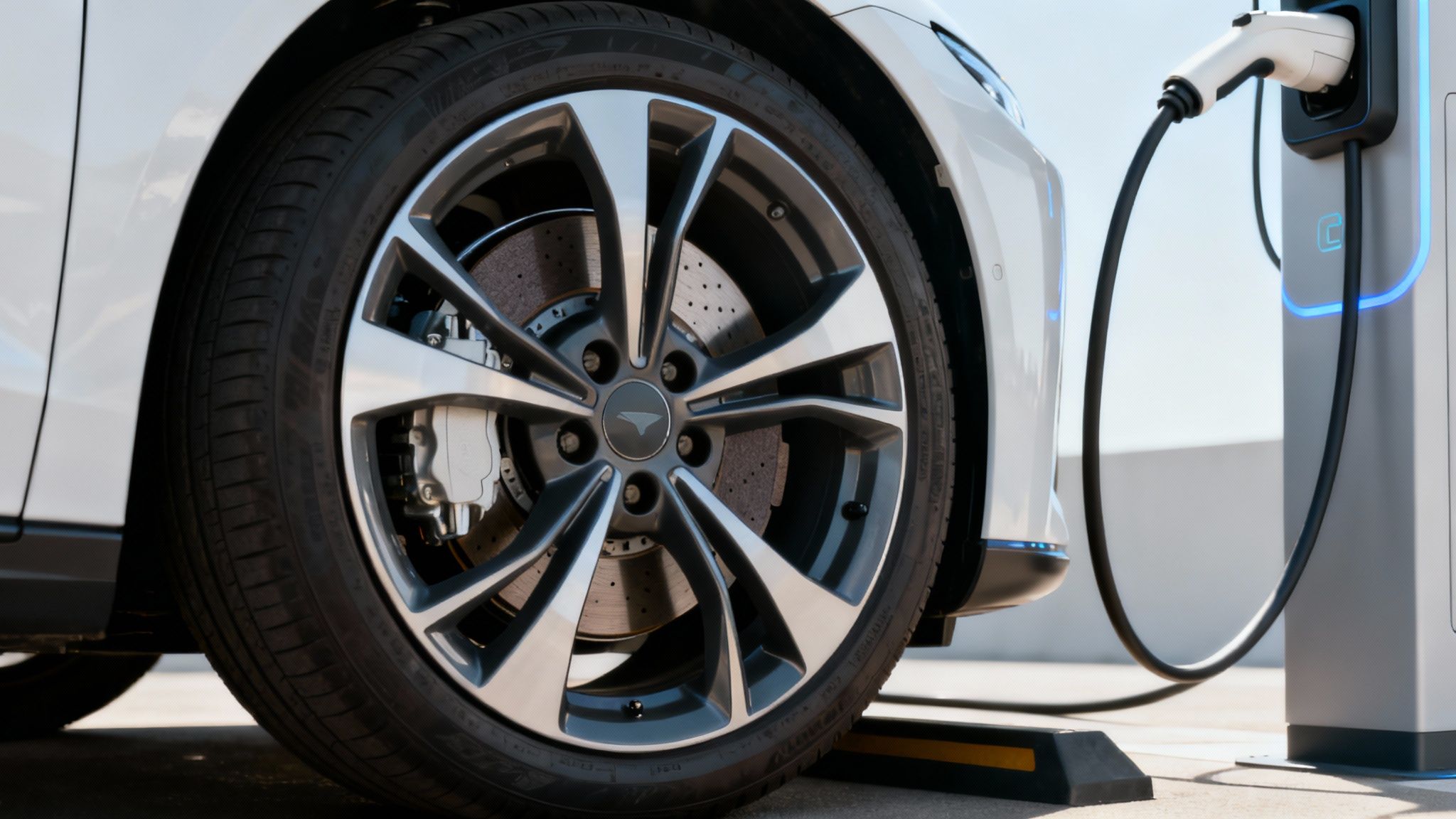
The Magic of Regenerative Braking
The moment you lift your foot off the accelerator in an EV, the electric motor flips its job. Instead of using battery power to turn the wheels, the car's forward momentum starts turning the motor. This process generates electricity that gets sent right back to the battery pack.
This motor resistance creates a powerful slowing effect, meaning your car brakes significantly without you ever touching the brake pedal. Your traditional brake pads are now a backup system, only really needed for sudden, hard stops or the final few feet before coming to a complete standstill.
Regenerative braking in electric vehicles slashes brake pad replacement frequency by over 50%. This allows drivers to go more than twice the distance—often 100,000+ miles—before needing service. This is a game-changer as EV adoption grows. You can explore the market trends for automotive brake pads to see the full impact.
What This Means for Your Maintenance Schedule
It’s no longer surprising to see an EV hit 100,000 miles or more on its original set of brake pads. A gas-powered car would have easily needed two or three sets in that same timeframe.
As more EVs hit the streets here in Richland Hills, shops like Express Lube & Car Care are staying ahead of the curve. Our ASE-certified technicians are trained to service both old-school and advanced braking systems, so your EV or hybrid gets the exact care it requires. While you'll be stopping in far less for brake pad replacements, routine inspections are still critical. We still need to check for other issues that can pop up from lack of use, like rust buildup or seized caliper pins.
What to Expect from a Professional Brake Service
Walking into an auto shop for a brake check can feel a bit like a mystery. You know it’s important, but what actually happens back there in the service bay? A proper, professional brake service isn't just a quick peek—it's a systematic process designed to give you a complete and accurate picture of your car's stopping power.
When you bring your vehicle to a shop you trust, a certified technician won't just glance at the pads. They'll perform a comprehensive inspection that covers every single critical part of the braking system, making sure nothing gets overlooked.
The Inspection Process Breakdown
The service kicks off with a detailed visual check and some very precise measurements. First things first, a technician will remove the wheels to get a clear, unobstructed look at the entire brake assembly.
Here’s what a detailed inspection usually includes:
- Measuring Pad and Shoe Thickness: Using a specialized gauge, the technician will measure the exact thickness of your brake pads and shoes, comparing the numbers to the manufacturer's safety minimums.
- Checking Rotor and Drum Condition: They'll inspect the rotors (the big metal discs) for any signs of warping, deep grooves, or uneven wear that could cause that annoying vibration when you brake.
- Inspecting Calipers and Hardware: The calipers, which are the clamps that house the brake pads, are checked to make sure they move freely and aren't sticking or seized up.
- Reviewing Brake Fluid: The tech will also check the brake fluid level and its condition. Old or contaminated fluid can seriously compromise your braking performance.
A professional inspection is about so much more than just finding wear and tear; it’s about making sure every part of the system works together exactly as it should. It’s the difference between guessing how often to replace brake pads and knowing for sure.
Clear Communication and Estimates
Once the inspection is done, the most important step is clear, honest communication. A reliable shop will never start work without your say-so.
Instead, they'll give you a detailed report explaining what they found, what needs immediate attention, and what can safely wait. You can learn more about what's involved in a typical brake repair service in Richland to understand the full picture.
You should always receive a clear, itemized estimate that breaks down the costs for parts and labor. This transparent approach puts you in the driver's seat, allowing you to make an informed decision about your vehicle’s safety without any pressure or last-minute surprises.
Your Brake Pad Questions Answered
Alright, let's wrap up by tackling some of the most common questions drivers have about their brakes. Think of this as your go-to cheat sheet for making smart, safe decisions about your vehicle.
How Much Does It Typically Cost to Replace Brake Pads?
This is a big one, and the final price tag can swing quite a bit. The cost depends on your vehicle's make and model, the kind of brake pads you choose, and whether your rotors need to be resurfaced or replaced along with them.
There’s a general ballpark, of course, but the only way to get a firm number is with a direct quote. You can get a much better idea by checking out our guide on brake service prices near you. A good, trustworthy shop will always give you a free, no-pressure inspection and a clear estimate before they pick up a single tool.
Should I Replace All Four Brake Pads at Once?
It’s a fair question, but the answer is almost always no. Brake pads are always replaced in pairs—either the front two or the rear two. Your front brakes handle the lion's share of the work (up to 70% of your car's stopping power), so they naturally wear out much faster than the rears.
A quick professional inspection will tell us exactly which axle needs attention, making sure you only pay for the work your car actually needs.
Key Insight: Replacing pads in pairs (both fronts or both rears) is non-negotiable. This is critical for ensuring balanced, even braking. If you don't, your car could pull to one side when you stop, which is a serious safety hazard.
What Is the Difference Between Ceramic and Semi-Metallic Pads?
Think of it like choosing running shoes—you pick the right type for the job. Each one has its own strengths.
- Semi-Metallic Pads: These are the tough, durable workhorses of the brake world. Made with metal fibers, they provide fantastic stopping power and are perfect for heavier vehicles like trucks and SUVs. The only trade-off is they can be a bit noisier and kick up more brake dust.
- Ceramic Pads: These are the smooth, premium operators. They're known for being incredibly quiet, creating very little dust, and delivering a comfortable, consistent feel every time you hit the pedal. They're an excellent match for most daily drivers and commuter cars.
What Happens If I Wait Too Long to Replace My Brakes?
Putting off brake service is a dangerous and expensive gamble. Once that friction material is gone, you’re left with the pad’s metal backing plate grinding directly against the metal rotor.
That horrible grinding noise is the sound of your brake rotors being destroyed, turning a straightforward maintenance job into a much more costly repair. More importantly, it drastically reduces your ability to stop safely. Whatever you do, don't wait for the grind.
When it comes to safety, there's just no substitute for a professional eye. If you have any questions or you're noticing any of the warning signs we've covered, the ASE-certified team at Express Lube & Car Care is here to help. Swing by our Richland Hills shop for a free, honest brake inspection and get the peace of mind you deserve. Visit us online at https://www.expressluberichlandhills.com.