

It’s a feeling every car owner dreads: seeing a repair estimate that’s way higher than you expected. But those numbers aren't just pulled out of thin air. An auto repair cost comparison shows that prices are shaped by big-picture trends like parts inflation, rising labor rates, and the incredibly complex electronics in newer cars—all of which hit drivers right here in Richland Hills.
Decoding Auto Repair Costs in Richland Hills

To really understand what you're paying for, you have to look beyond the final number on the bill. The cost of auto repair is tied to a much larger economic story. Once you know why prices are what they are, you can make smarter, more confident choices for your vehicle's care.
So, what’s actually driving up the cost of keeping your car running smoothly? It usually boils down to a few key things:
- Increasing Parts Complexity: Cars today are rolling computers. A simple bumper replacement isn’t so simple anymore when it means recalibrating a half-dozen sensors and safety systems. That adds hours of highly specialized labor to the job.
- Inflation and Supply Chain Issues: The cost of steel, plastic, and microchips has a direct impact on everything from brake pads to catalytic converters. Those higher costs get passed down from the manufacturer, to the shop, and finally, to you.
- Skilled Labor Demand: Good ASE-certified technicians need constant training to keep up with today's technology. As cars get more complex, the demand for true experts goes up, and that's reflected in the shop's hourly labor rates.
National Trends Impacting Local Prices
These aren't just small shifts, either. Recent data shows that in 2025, auto repair costs jumped by a massive 15% year-over-year nationwide—the biggest single-year increase ever recorded. That spike has turned routine maintenance into a major expense for a lot of families.
For example, a standard brake pad and rotor replacement that used to be a predictable expense now averages $350 to $600. Even just getting a check engine light diagnosed can run you $150-$200 before any work even starts.
The bottom line is that the same repair job costs more today than it did a few years ago. This context is crucial for any fair auto repair cost comparison.
Quick Look at Common Auto Repair Price Ranges
To give you a realistic baseline, here’s a quick breakdown of what you can expect to pay for some common jobs. This should help you see how costs can vary between a dealership and an independent shop.
For a more detailed look at one of these services, check out our guide on understanding your brake repair cost estimate.
| Service | Typical Price Range (Dealership) | Typical Price Range (Independent Shop) | Key Factors Influencing Cost |
|---|---|---|---|
| Brake Pad & Rotor Replacement | $450 – $750+ | $350 – $600 | Vehicle make/model, rotor quality, and pad material (ceramic vs. semi-metallic) |
| Check Engine Light Diagnostic | $150 – $250 | $120 – $200 | Complexity of the underlying issue and the need for advanced testing |
| Full Synthetic Oil Change | $90 – $140 | $70 – $110 | Oil brand, filter quality, and the vehicle's required oil capacity |
| Alternator Replacement | $600 – $1,000+ | $500 – $850 | OEM vs. aftermarket parts and the accessibility of the alternator in the engine bay |
Keep in mind, these are just ballpark figures. Dealerships often have higher overhead and use brand-specific parts, which drives up their prices. Independent shops, on the other hand, can often provide more competitive rates without sacrificing quality.
The Three Core Elements Driving Your Repair Bill
To really compare auto repair costs, you have to look past the final number on the quote. Every estimate, whether it's from a big dealership or a local shop like ours, is built on three key things. Once you understand them, you can ask smarter questions and know if you're getting a fair deal.
The three big drivers of any repair bill are: your car, the parts being installed, and the cost of the mechanic's time. Each one plays a huge role, and a high price in just one of these areas can throw the whole estimate out of whack.
Your Vehicle: Make, Model, and Age
The single biggest factor in what you'll pay is the car you drive. It's just a fact. A brake job on a ten-year-old Chevy sedan will almost always be cheaper than the same repair on a new BMW SUV. This isn't random; it comes down to how the car is built.
Here’s why your specific vehicle matters so much:
- Parts Pricing: Luxury and high-performance brands use specialized parts that just cost more. There's no way around it. An official OEM (Original Equipment Manufacturer) part for one of these vehicles comes with a premium price tag.
- Labor Complexity: Some cars are built for speed, not for easy repairs. A technician might have to pull out three other components just to get to the one that's broken, which adds hours—and dollars—to the job.
- Advanced Technology: Newer cars are rolling computers. What used to be a simple side mirror replacement might now involve recalibrating lane-assist sensors, turning a quick fix into a complex electronic procedure.
A vehicle’s complexity directly impacts both parts and labor costs. Advanced Driver-Assistance Systems (ADAS) and sophisticated onboard computers often require specialized diagnostic tools and training, leading to higher diagnostic fees and longer repair times.
The Quality of Replacement Parts
The next major variable is the type of parts being used. This is where you'll often see the biggest price gaps between different shops. The choice usually boils down to using OEM parts or high-quality aftermarket alternatives.
OEM parts are made by your car's manufacturer and are identical to what your car came with. They guarantee a perfect fit and performance, but they're almost always the most expensive option.
On the other hand, high-quality aftermarket parts are made by other companies to meet (or even exceed) the original specs. They can save you a good chunk of money without sacrificing reliability, but "high-quality" is the key phrase here. A good shop sources parts from trusted brands that will last. Going for the absolute rock-bottom cheapest part often means you'll be back for another repair sooner than you'd like.
Local Labor Rates and Technician Skill
Finally, there's the labor rate—what you pay for the technician's time and expertise. This is where the local market really comes into play. Labor rates for mechanics can vary widely depending on the local cost of living and the demand for skilled technicians.
Recent industry data shows just how much location matters. The national average auto repair labor rate is $142.82 per hour in 2025, but Texas is a bit more competitive at $145.86 per hour. For a busy area like Richland Hills, that rate reflects what it costs to hire and keep experienced, certified technicians.
Think about it: a standard brake job can easily take two hours. At that rate, the labor alone could be close to $300 before a single part is added to the bill. You can dig into how different states stack up by checking out the 2025 labor rate survey.
This cost isn't just the mechanic's paycheck. It covers their constant training, the very expensive diagnostic equipment they need, and all the shop's overhead. A higher labor rate often means you're paying for a higher level of certification (like ASE-certified techs), which is a good sign you're getting quality work from an expert.
Dealerships vs. Independent Shops: A Scenario-Based Breakdown
One of the biggest questions we get is whether to take a car to the dealership or a trusted independent shop. It's a huge factor in any auto repair cost comparison, and the right answer really depends on the situation. Instead of just listing pros and cons, let's walk through three common scenarios a Richland Hills driver might face.
We'll look at the cost, the service you'll get, and the overall value for each.
Before we dive in, this infographic breaks down the three core pieces of any repair bill, which is exactly what we're comparing.
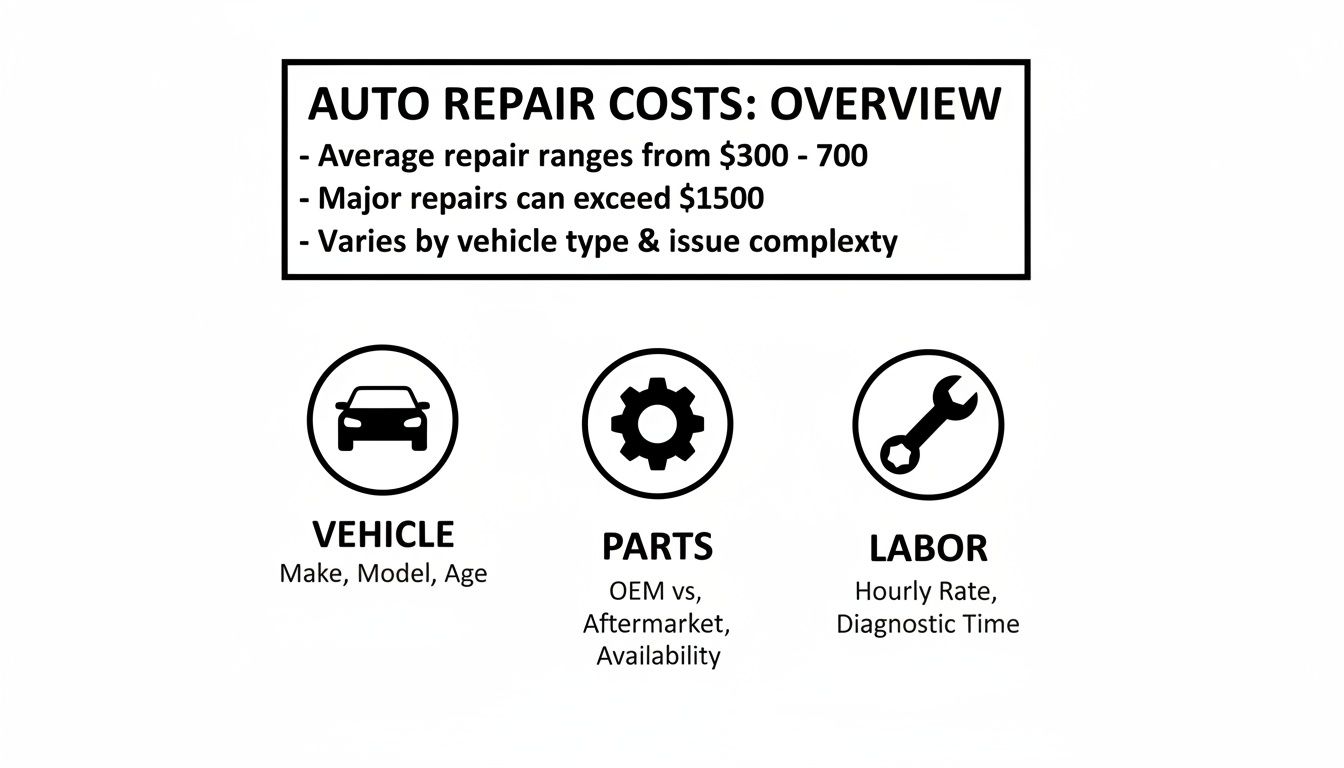
As you can see, the final price always comes down to a mix of your vehicle's specific needs, the parts used, and the shop's labor rate.
Scenario 1: The Routine Brake Job
Let's start with something simple. Your trusty Ford Explorer or Honda CR-V needs new front brake pads and rotors. This is bread-and-butter work for any mechanic.
-
The Dealership Approach: The dealer service center is going to use OEM (Original Equipment Manufacturer) parts. No question. These are the exact same parts your SUV came with from the factory, so the fit and feel are guaranteed. But that guarantee comes at a premium, and their higher labor rate reflects brand-specific overhead. You're essentially paying for the "official" factory service.
-
The Independent Shop Approach: A good local shop like Express Lube & Car Care gives you options. We can get OEM parts if you want them, but we'll often recommend top-tier aftermarket parts from brands like Bosch or Brembo. These parts meet—and sometimes even beat—OEM quality, but for a much friendlier price. Paired with more competitive labor rates, the savings add up fast.
The biggest difference here is choice. For a standard maintenance job on a common vehicle, an independent shop delivers the same (or better) quality and safety for less money.
Scenario 2: The Tricky Check Engine Light
Okay, now let's say the check engine light flicks on in your three-year-old sedan. It's loaded with modern electronics, and the problem isn't obvious. This one requires some real diagnostic detective work.
-
The Dealership Approach: This is where a dealership can really shine. Their techs get continuous, factory-direct training on your specific model. They also have proprietary diagnostic scanners that can dig deeper into the car's computer than many generic tools. For a truly weird electronic gremlin, that specialized access can mean a faster, more accurate diagnosis.
-
The Independent Shop Approach: Don't count the indie shop out. A top-tier local shop invests heavily in advanced diagnostic tools and employs ASE-certified technicians who can handle the vast majority of modern vehicles. However, for a brand-new model or a known manufacturer-specific glitch, the dealership is the ultimate specialist. They've simply seen it before.
When you're facing a complex, model-specific electronic issue on a newer car, the dealership's specialized tools might be worth the higher diagnostic fee. It can save time and prevent a costly misdiagnosis.
Scenario 3: The Major Drivetrain Service
Finally, let's picture a major, labor-intensive job. Your car has over 100,000 miles and it's time for a timing belt or water pump replacement. This is a job where precision is absolutely critical to your engine's long-term health.
-
The Dealership Approach: You're getting OEM parts installed by a technician who has probably done this exact job on your car's model hundreds of times. That repetition builds a ton of expertise and cuts down the risk of mistakes. The work will be backed by a strong warranty, but the final bill will be at the absolute top of the price range.
-
The Independent Shop Approach: An experienced independent mechanic is more than capable of nailing this service. They can offer a smart mix of OEM and premium aftermarket parts to help you manage the cost without cutting corners. The most important factor is the shop's reputation. A trusted local mechanic builds their business on doing these big jobs right and will stand behind their work, delivering serious value.
For major repairs on cars that are out of the factory warranty, a local independent shop with a proven track record is an incredibly compelling choice. You get the expertise you need at a price that makes sense.
Service Scenario Comparison: Dealership vs. Independent Shop
To put it all together, here’s a quick-glance table comparing how these scenarios might play out at a dealership versus a local shop right here in the Richland Hills area.
| Repair Scenario | Dealership Approach (Est. Cost & Time) | Independent Shop Approach (Est. Cost & Time) | Key Takeaway for Richland Hills Drivers |
|---|---|---|---|
| Routine Brake Job (Ford Explorer) | $650 – $850, 2-3 hours. Uses premium OEM parts exclusively. Higher labor rate. |
$450 – $650, 1.5-2.5 hours. Offers choice of OEM or high-quality aftermarket parts to control cost. |
For common maintenance, an independent shop offers significant savings without sacrificing quality. |
| Check Engine Light (3-yr-old Sedan) | $150 – $250 Diagnostic Fee, 1-4 hours. Uses proprietary tools for fastest diagnosis on brand-specific issues. |
$95 – $150 Diagnostic Fee, 1.5-5 hours. Uses advanced scanners; highly effective but may need more time for rare electronic faults. |
For new cars with tricky electronic issues, the dealer's specialty tools can be worth the extra cost. |
| Timing Belt Replacement (Honda Accord) | $1,100 – $1,500, 5-7 hours. High cost reflects OEM parts and specialized, repetitive technician experience. |
$800 – $1,100, 5-7 hours. Experienced ASE-certified tech uses quality parts to provide excellent value. |
On older vehicles, a trusted independent shop provides dealership-level expertise at a much better price. |
Ultimately, the right choice comes down to the specific repair, your vehicle's age, and your budget. Knowing where each type of shop excels helps you make the smartest decision for your car and your wallet.
How To Compare Auto Repair Quotes Without Getting Overwhelmed
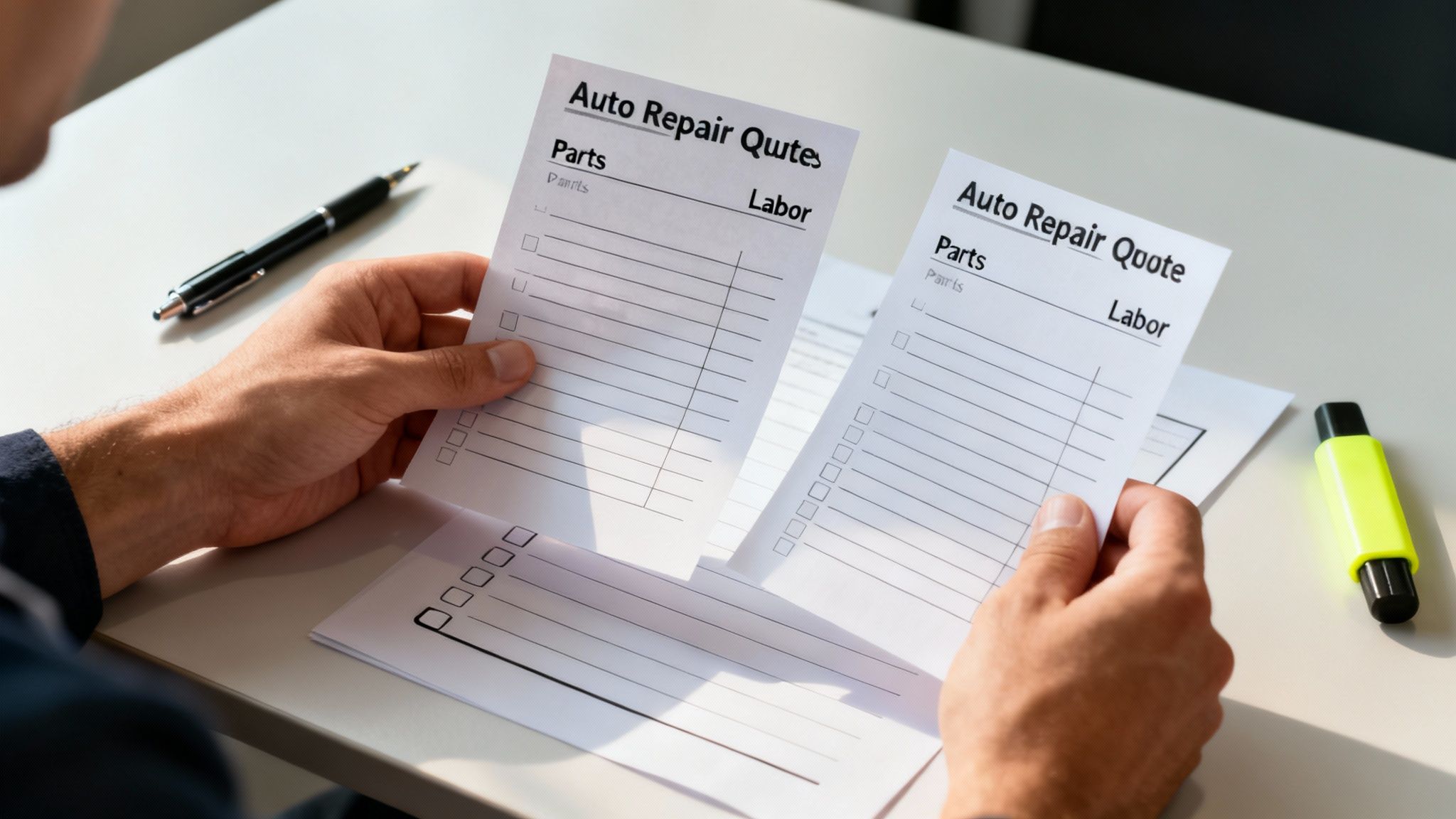
Getting a few different quotes is smart when you're facing a car repair, but just grabbing the cheapest one can be a huge mistake down the road. To really make a good auto repair cost comparison, you have to know how to read between the lines and figure out what you're actually paying for.
A detailed, easy-to-read quote is the first sign of a shop you can trust. It means they’re confident in their work and aren’t trying to hide anything. On the other hand, a vague, one-line estimate is a major red flag.
What A Good Estimate Looks Like
A proper repair estimate is more than just a price—it's a complete breakdown of the job. When you get a quote, it should be itemized and clear. If it's not, it's time to start asking questions.
Every solid quote should have these four key parts:
- Itemized Parts List: Every single part needed for the job should be listed out. This includes the part name, quantity, and individual price. The quote should also say if the parts are OEM (Original Equipment Manufacturer) or aftermarket.
- Detailed Labor Charges: The cost for labor shouldn't be a single lump sum. It needs to show the shop's hourly rate and the estimated time the job will take.
- Shop Fees and Supplies: Most shops add a small fee for things like cleaners, lubricants, and rags. That’s normal, but it should be its own line item, not sneakily baked into the labor cost.
- Warranty Information: The estimate should clearly spell out the warranty for both the parts and the labor. Any reputable shop will stand behind their work, usually with a guarantee of at least 12 months or 12,000 miles.
An estimate is more than a price—it's a contract of trust. A shop willing to put everything in writing, from part numbers to warranty terms, is a shop that respects its customers and is confident in the quality of its work.
Critical Questions You Need to Ask Your Mechanic
Once you have a few written estimates, your work isn't quite done. You need to make sure you're comparing apples to apples. Don't feel weird about calling the shop to get clarification.
Here’s a quick checklist of questions to ask:
- Is this price firm, or is it an estimate? You need to know if the final bill could change once they start working.
- Can you walk me through this charge? If there's a line item you don't recognize, ask them to explain it in simple terms.
- Are these parts OEM or aftermarket? If they’re using aftermarket parts, ask what brand. A good shop uses quality brands they stand behind.
- Is this fixing the root cause or just a symptom? This is a big one, especially for things like a check engine light. You want a real fix, not a temporary patch.
- What’s the warranty on this specific repair? Confirm the warranty terms for both the new parts and the labor itself.
- Will you call me before doing any extra work? A professional shop will never perform additional repairs or run up your bill without getting your approval first.
Asking these questions does more than just clarify the price; it gives you a gut check on the shop’s customer service. Finding a mechanic you can trust is just as important as getting a fair price. For more on that, check out our guide on how to find a good mechanic.
By taking the time to break down each estimate and ask the right questions, you're not just comparing prices anymore. You’re comparing the real value, quality, and peace of mind each shop offers, helping you make the best choice for your car.
Why the Cheapest Quote Is Rarely the Best Value
When you're comparing auto repair estimates, that one quote that comes in way under everyone else can feel like a huge win. But let’s be honest—a rock-bottom price often hides bigger problems that’ll cost you more in the long run. Real value isn’t just about what you pay today; it's about the quality of the parts, the skill of the mechanic, and whether the fix actually lasts.
Chasing the lowest price can backfire, and fast. A shop trying to undercut everyone else might be using cheap, low-grade parts that are just waiting to fail. Before you know it, you're right back in the shop for the exact same issue, paying for the job all over again.
The Hidden Costs of Subpar Work
An even bigger risk is a wrong diagnosis. If a technician just pulls a code from a generic scanner and starts replacing parts without digging into the real cause, the problem is guaranteed to come back. That leads to repeat visits, more diagnostic fees, and the headache of a car you just can't trust.
This is the classic difference between price and cost. The price is what you pay at the counter. The true cost includes the second repair you'll need in six months, the time you lose from work, and the stress of dealing with a car that keeps breaking down. A quality repair, even if it’s a bit more upfront, almost always ends up being the cheaper option over time.
This has never been more true. Globally, the average cost for auto repairs has jumped by 40% since 2021, thanks to pricier parts and more complex cars. Here in the U.S., drivers are spending around $838 per fix on average. A simple brake job can run $548-$629, while an alternator replacement can easily hit $754-$850. With that kind of money on the line, you want it done right the first time. You can read more about these trends in this comprehensive analysis from Solera.
Connecting Price to Real-World Quality Indicators
So, how do you actually spot a high-value shop? It's about looking for signs of quality that don't show up on an itemized bill. These are the things that tell you a shop invests in doing the job right.
Look for these key indicators:
- ASE-Certified Technicians: This certification is the gold standard. It means the mechanics have passed tough exams and proven they know what they’re doing, which seriously lowers the risk of a bad diagnosis.
- Modern Diagnostic Equipment: Good shops spend money on advanced, manufacturer-level scan tools. This equipment gives technicians the full picture, helping them find the root cause instead of just guessing.
- Clear Communication: A great mechanic will take the time to walk you through the problem and explain your options. They should be able to tell you why a part failed and exactly how they're going to fix it.
- Positive Reputation: See what other drivers in Richland Hills are saying. Solid, consistent feedback is a huge sign of quality work. If you want to get better at spotting the difference, our guide on reading auto repair shop reviews can help.
True value is the intersection of a fair price, durable parts, expert labor, and a solid warranty. A repair that lasts twice as long for a fraction more isn't more expensive—it's a smarter investment in your vehicle's safety and longevity.
By shifting your focus from the lowest price to the best overall value, you put yourself in a much better position. It’s the best way to avoid the costly cycle of repeat repairs and make sure your car gets the expert care it needs to stay reliable.
Practical Ways to Save on Car Repairs in Tarrant County
Navigating auto repair costs can often feel like you're playing defense, but a few smart habits can save you a surprising amount of money and stress. A good auto repair cost comparison is about more than just calling around for quotes; it’s about developing a strategy to keep your overall expenses low.
Your most powerful money-saving tool? Preventative maintenance. Following your car’s service schedule isn't an expense—it's a direct investment against catastrophic (and costly) failures. A timely fluid flush or belt replacement is a drop in the bucket compared to a new transmission.
Build a Relationship with a Trusted Shop
There's real value in finding a local mechanic you trust and sticking with them. When a shop knows you and your car's history, they can give you better advice and help you decide what needs fixing now versus what can wait. It’s a relationship that pays off in the long run with fairer pricing and honest service.
A shop you trust becomes a partner in your car’s health. They’ll get to know its little quirks and are far more likely to catch a small issue before it snowballs into a budget-busting disaster.
Proactive care is always cheaper than reactive repair. When you stay ahead of maintenance, you control the schedule and the cost. You're not stuck paying for emergency breakdowns and rushed decisions.
Smart Strategies for Immediate Savings
Beyond routine maintenance, there are a few simple ways Tarrant County drivers can cut their repair bills without sacrificing quality. These small savings really add up over the year.
Here are a few tips you can use right away:
- Look for Seasonal Specials: Many shops, including Express Lube & Car Care, run discounts on services like A/C checks in the spring or battery tests before winter hits. Timing your maintenance with these specials is an easy win.
- Ask About Community Discounts: Never be afraid to ask if a shop offers discounts for military personnel, first responders, teachers, or healthcare workers. Many local businesses are proud to support their community with special pricing.
- Bundle Services When Possible: If you're coming in for an oil change but know your brakes are feeling a little off, ask to have them inspected at the same time. Bundling jobs can often reduce the total labor time and save you some cash.
Ultimately, taking control of your auto repair budget comes down to being an informed and proactive car owner. Focus on preventative care, find a shop you trust, and keep an eye out for smart savings—it’s the best way to keep your car running smoothly without breaking the bank.
Your Top Questions About Auto Repair Costs, Answered
Let's wrap this up by tackling some of the most common questions we hear from drivers right here in Richland Hills. Getting straight answers helps you make smart financial decisions when you’re facing a repair bill.
Understanding the "why" behind the costs is the key to becoming a more confident car owner.
Is It Always Cheaper to Use Aftermarket Parts?
Not always. While a quality aftermarket part can save you money, the cheapest ones often fail early. That costs you more in the long run with repeat labor charges and another breakdown. A reputable aftermarket brand can be just as reliable as an Original Equipment Manufacturer (OEM) part.
The secret is to use trusted brands your mechanic recommends. For critical components on newer or specialized vehicles, OEM parts are often the best bet for a perfect fit and performance. A good shop will always walk you through the pros and cons of each option.
How Much Should a Check Engine Light Diagnostic Cost?
Around Tarrant County, a diagnostic for a check engine light typically runs between $120 and $200. That fee covers the technician’s time to hook up professional scan tools, pull the error codes, and run initial tests to pinpoint the root of the problem.
Remember, that fee is just for the diagnosis—the actual repair cost is separate.
Always ask if the diagnostic fee gets waived or credited toward the final repair bill if you decide to do the work there. It's a common practice that offers great value.
Why Is There Such a Big Price Difference in Oil Changes?
The price gap between a conventional and a full synthetic oil change is all about the oil itself. Conventional oil is refined from crude oil, while synthetic oil is engineered in a lab for superior engine protection, especially in extreme temperatures. It’s more stable and lasts longer. Simple as that.
A synthetic oil change costs more upfront because the oil and often the filter are more expensive. However, because synthetic lets you go much longer between changes, your overall cost per mile can be similar or even lower over time—all while keeping your engine healthier.
At Express Lube & Car Care, we believe clear answers lead to better decisions. If you have questions about an estimate or just want a trustworthy second opinion, our ASE-certified technicians are here with honest advice and transparent pricing. Visit us for fast, dependable service you can count on. https://www.expressluberichlandhills.com