

Driving is an everyday activity, but its safety is something we can never take for granted. Beneath the familiar hum of the engine and the comfort of the driver's seat lies a complex system of components, all working in harmony to keep you and your passengers protected. But what happens when one of those components begins to fail? A seemingly small issue, like a worn belt or low tire pressure, can quickly escalate into a major safety risk on the busy roads of Northeast Tarrant County.
That's where a proactive approach to vehicle maintenance makes all the difference. This comprehensive car safety inspection checklist is designed to empower you, the driver, with the knowledge to identify potential problems before they leave you stranded or compromise your safety. We break down the most critical systems, from the tires that grip the asphalt to the brakes that stop you on a dime, into simple, actionable checks.
This guide will walk you through each essential point, clarifying what you can easily inspect at home, what warning signs to never ignore, and when it’s time to trust the ASE-certified technicians at a reliable shop like Express Lube & Car Care for a professional evaluation. Following this checklist isn't just about routine car maintenance; it's a direct investment in the well-being of yourself, your family, and everyone else sharing the road. Let’s get started.
1. Brake System Inspection
Your vehicle's ability to stop safely and effectively is non-negotiable, placing the brake system at the absolute top of any car safety inspection checklist. A comprehensive brake inspection is a meticulous evaluation of all components that work together to slow and stop your car, preventing accidents and ensuring you maintain control in critical situations.
What a Professional Inspection Covers
When you bring your vehicle to Express Lube & Car Care, our ASE-certified technicians perform a multi-point brake check. This isn't just a quick look; it's a deep dive into the system's health.
- Brake Pads and Rotors: We measure the thickness of your brake pads, ensuring they are well above the minimum safe thickness of about 1/4 inch. We also inspect the rotors for signs of wear, warping, or scoring, which can compromise stopping power.
- Calipers and Hardware: The calipers that clamp the pads onto the rotors are checked for proper movement and signs of leaks or sticking.
- Brake Lines and Hoses: Technicians trace the brake lines, looking for rust, cracks, or leaks that could lead to a sudden loss of brake fluid and pressure.
- Brake Fluid: The level and condition of your brake fluid are assessed. Dark, contaminated fluid can hinder performance and damage internal components.
Pro Tip: Proactive brake inspections can save you hundreds of dollars. By catching worn brake pads early, our technicians can prevent them from damaging the more expensive rotors, a common and costly repair. For families in Richland Hills, this peace of mind is invaluable before a long road trip.
Key Warning Signs & When to Act
Your car often provides clear signals when its brakes need attention. Ignoring them is a significant safety risk.
- Audible Alerts: A high-pitched squealing or scraping sound often indicates the brake pad wear indicators are making contact.
- Pedal Feel: A brake pedal that feels "spongy," soft, or sinks to the floor points to a potential issue with the brake fluid or hydraulic system.
- Dashboard Lights: Never ignore the brake warning light or ABS light. It signals an immediate need for a professional inspection.
For optimal safety, the National Highway Traffic Safety Administration (NHTSA) recommends a professional brake inspection every 6,000 miles or at least twice a year.
2. Tire Condition and Tread Depth Assessment
Your tires are the only part of your vehicle that makes direct contact with the road, making their condition fundamental to a car safety inspection checklist. A thorough tire assessment ensures you have the necessary grip for acceleration, braking, and steering in all conditions, from dry Richland Hills highways to slick, rainy streets. It is a critical check for preventing blowouts and maintaining vehicle control.
What a Professional Inspection Covers
When you visit Express Lube & Car Care, our technicians go beyond a simple glance. We conduct a detailed evaluation of your tires' health to identify potential risks before they become dangerous problems.
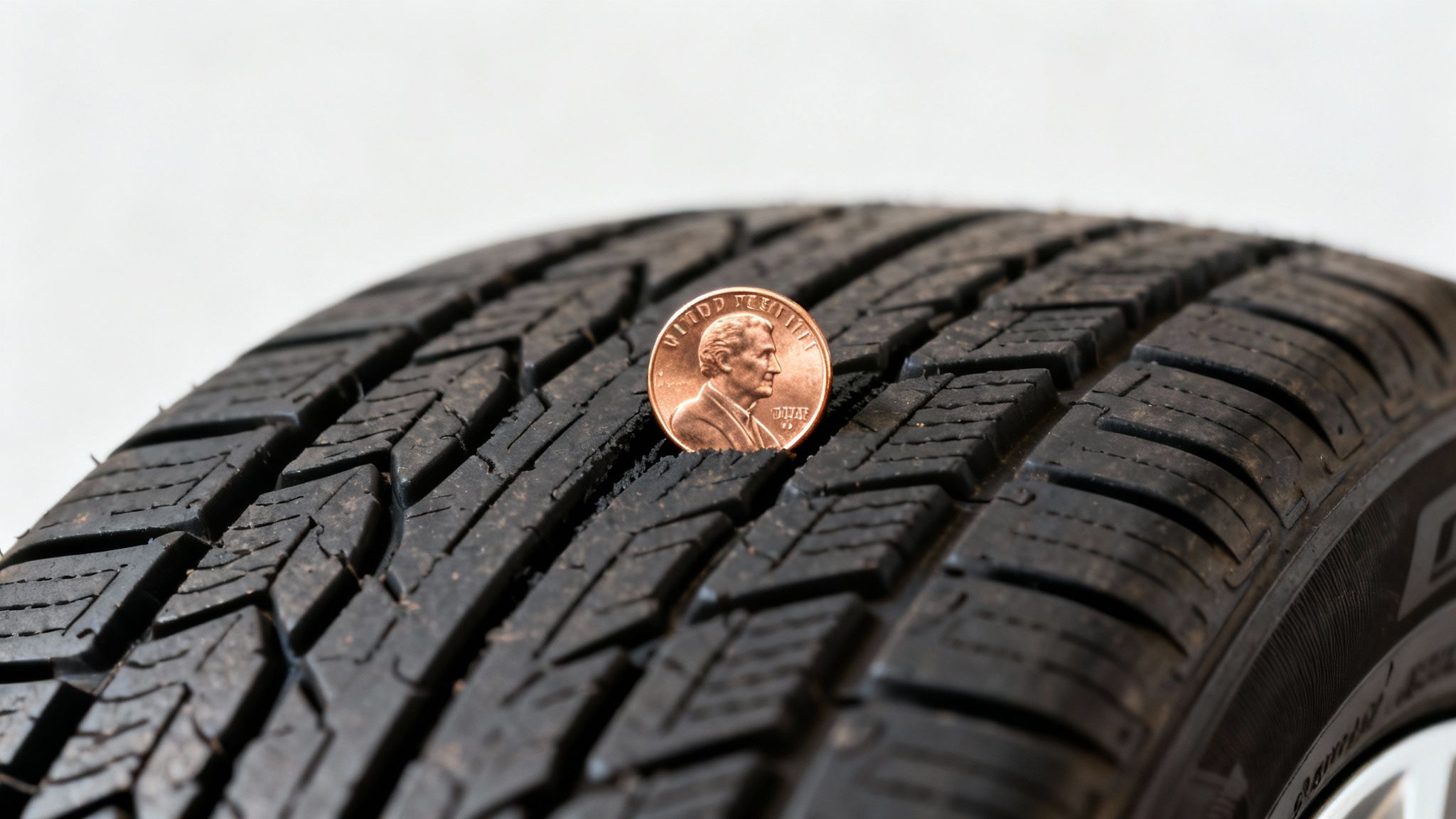
- Tread Depth Measurement: Using a professional gauge, we measure the tread depth. For optimal safety, especially in wet weather, we recommend replacement when the tread wears down to 4/32 of an inch, well before the legal minimum of 2/32.
- Tire Pressure and Inflation: We check and adjust the tire pressure to match your vehicle manufacturer's specifications, which is crucial for even wear, fuel economy, and proper handling.
- Sidewall and Surface Integrity: Our team inspects for cracks, bulges, cuts, or punctures in the tire sidewalls and tread area. These are often signs of internal damage that could lead to a sudden failure.
- Wear Pattern Analysis: Uneven wear patterns can indicate underlying issues. We look for signs of poor alignment, such as feathering or one-sided wear, and signs of imbalance or suspension problems.
Pro Tip: Budget-conscious drivers can significantly extend tire life by taking advantage of our monthly specials for tire rotation and pressure checks. Regular rotations, recommended every 5,000 to 7,000 miles, ensure even wear and can save you from a premature, full-set replacement.
Key Warning Signs & When to Act
Your tires often give you signals that they need professional attention. Being aware of these signs can help you prevent a hazardous situation.
- Visual Cues: If you can see the top of Lincoln's head when you place a penny upside down in the tread (the "penny test"), your tread is dangerously low.
- Vehicle Handling: A persistent vibration or a pull to one side while driving can indicate an issue with tire balance or alignment.
- Dashboard Lights: The Tire Pressure Monitoring System (TPMS) light is a direct alert that one or more of your tires is significantly under-inflated. Address it immediately to avoid damage and safety risks.
For comprehensive safety, tire manufacturer leaders like Goodyear and Michelin recommend a professional tire inspection at least twice a year and a pressure check monthly.
3. Fluid Levels and Condition Check
Just as a living being needs blood to function, your vehicle relies on a variety of essential fluids to run smoothly and reliably. This makes a thorough fluid inspection a foundational part of any car safety inspection checklist. This check goes beyond simply topping off levels; it involves assessing the condition, color, and consistency of each fluid to diagnose potential problems before they lead to catastrophic failure.
What a Professional Inspection Covers
At Express Lube & Car Care, our core service is built around fast and precise fluid management. Our technicians provide a comprehensive evaluation that protects your vehicle’s most critical systems.
- Engine Oil: We check the level and clarity of your engine oil. Milky, gritty, or dark, sludgy oil indicates serious internal issues or overdue service.
- Coolant (Antifreeze): The level in the reservoir is checked, and we inspect the coolant's condition. Contaminated or discolored coolant can lead to overheating and severe engine damage.
- Transmission Fluid: We assess the level and look for a bright red color. A dark brown color or burnt smell signals internal wear and the need for immediate service.
- Brake, Power Steering, & Washer Fluids: These fluids are inspected to ensure they are at safe operating levels, free from contaminants, and not indicating a hidden leak in their respective systems.
Pro Tip: A quick, no-appointment fluid check is one of the most effective forms of preventative maintenance. For busy professionals in Richland Hills, a 20-minute walk-in service during a lunch break can prevent a multi-thousand-dollar engine or transmission repair down the road.
Key Warning Signs & When to Act
Your vehicle’s fluids offer clear clues about its health. Knowing what to look for can help you address issues before they escalate.
- Puddles Under the Car: Bright green, pink, or oily black stains on your driveway are clear signs of a fluid leak that needs immediate attention.
- Dashboard Warning Lights: An oil pressure light or temperature warning light is a critical alert. Pull over safely and turn off the engine as soon as possible to prevent damage.
- Performance Issues: A whining noise when turning can indicate low power steering fluid, while rough gear shifts can point to a transmission fluid problem.
For a detailed breakdown of service intervals, you can learn more about when to change car fluids on our blog. Adhering to these schedules, typically checking fluids monthly, is key to your vehicle's longevity and your safety on the road.
4. Battery Health and Electrical System Testing
Your car’s engine may be its heart, but the battery and electrical system are the critical nervous system that brings it to life. An electrical system check is a vital part of any car safety inspection checklist, ensuring your vehicle starts reliably and powers all essential safety components, from headlights to airbags. Especially in the intense Texas heat, which can accelerate battery degradation, a proactive check prevents you from being stranded unexpectedly.
What a Professional Inspection Covers
When you visit Express Lube & Car Care, our technicians use modern diagnostic tools to get a complete picture of your electrical system's health. This goes far beyond a simple voltage check.
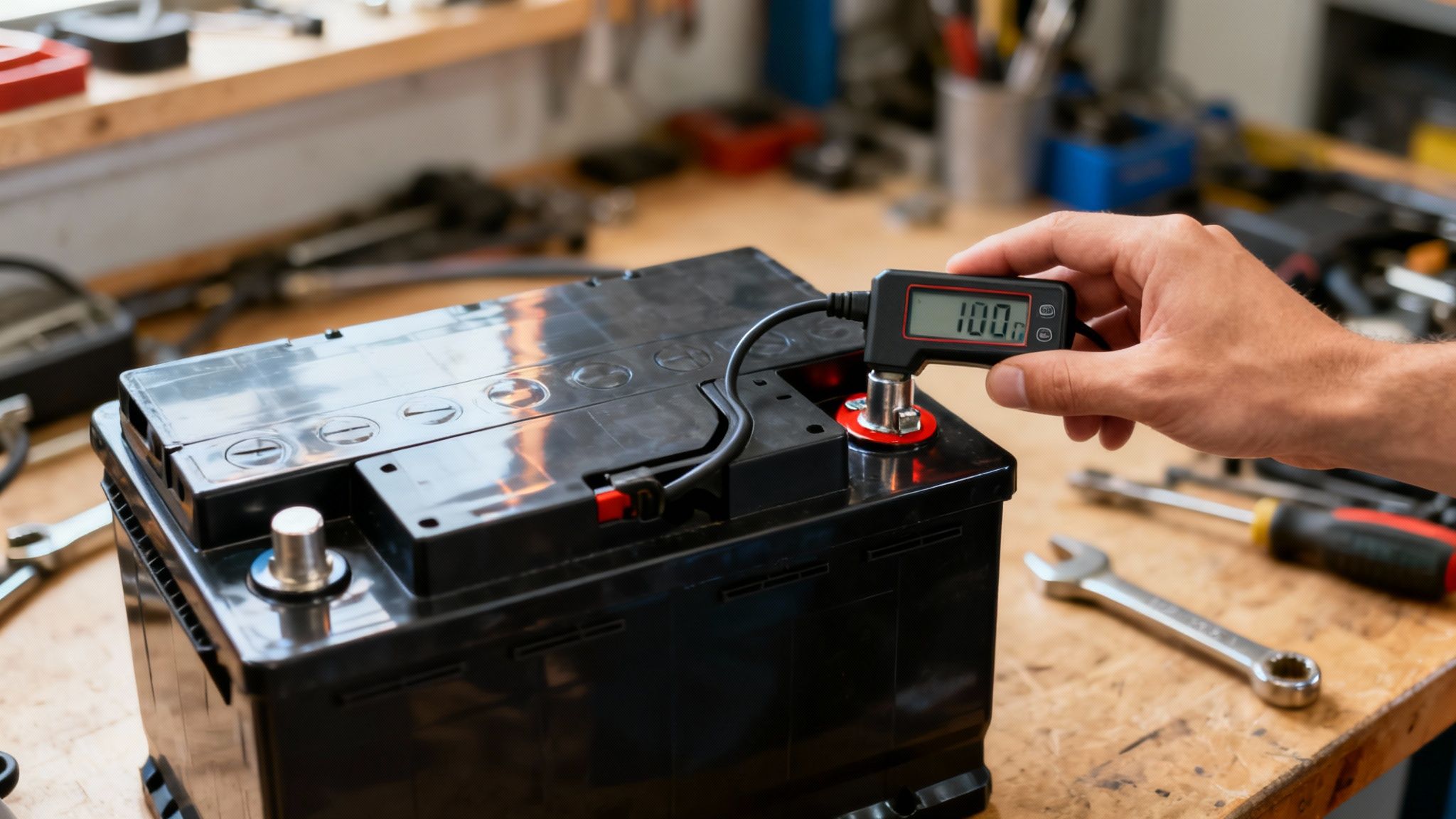
- Battery Load Test: We test the battery's ability to hold a charge under load and measure its Cold Cranking Amps (CCA) to ensure it has enough power to start your engine, even on colder mornings.
- Terminal and Cable Inspection: Technicians inspect battery terminals for corrosion, a common issue that restricts electrical flow. We also check for secure connections and the integrity of the battery cables.
- Alternator Check: The alternator recharges the battery while the engine is running. We verify it's producing the correct voltage to maintain the battery and power your vehicle’s electronics.
- Starter Draw Test: We measure the amount of energy the starter motor draws from the battery to ensure it's functioning efficiently and not putting excessive strain on the system.
Pro Tip: A failing battery often gives little to no warning before it dies completely. Regular testing allows our technicians to predict its remaining useful life, so you can replace it on your schedule, not on the side of the road. This is particularly crucial for Richland Hills commuters who rely on their vehicle daily.
Key Warning Signs & When to Act
Your vehicle’s electrical system will often hint at developing problems. Paying attention to these signs can prevent a no-start situation.
- Slow Engine Crank: If your engine turns over more slowly than usual when you start it, the battery is likely losing its charge.
- Dimming Lights: Headlights that dim when the engine is idling but brighten when you rev the engine often point to a failing alternator.
- Dashboard Lights: The battery or check engine light is a clear indicator that the system requires immediate professional attention. For a deeper understanding of these alerts, learn more about how to know if your battery is failing on expressluberichlandhills.com.
For maximum reliability, experts recommend having your battery and electrical system tested every six months, especially before the peak heat of summer and the chill of winter.
5. Lighting System Inspection
Your vehicle's ability to be seen by other drivers, and for you to see the road clearly, is fundamental to safe driving. The lighting system inspection is a crucial part of any car safety inspection checklist, ensuring all exterior and interior lights function correctly for visibility and communication on the road. A comprehensive check verifies that you can signal your intentions and navigate safely, especially at night or during poor weather.

What a Professional Inspection Covers
At Express Lube & Car Care, our technicians conduct a thorough evaluation of your entire lighting and electrical system. This check goes beyond a simple walk-around to ensure every component is operational and compliant with Texas traffic laws.
- Exterior Lights: We test headlights (both high and low beams), taillights, brake lights, and turn signals. We also verify the function of hazard lights, reverse lights, and license plate lights.
- Interior Illumination: Our inspection includes the dashboard warning lights, instrument cluster illumination, and interior dome lights, ensuring you can read your gauges and find controls in the dark.
- Bulb and Lens Condition: Technicians examine the bulbs for signs of dimming and inspect the headlight and taillight lenses for hazing, cloudiness, or cracks that can significantly reduce light output.
- Electrical Connections: We check for secure connections and look for any corrosion on wiring that could lead to intermittent or total lighting failure.
Pro Tip: Hazy or yellowed headlight covers can reduce light output by up to 50%, seriously compromising your night vision. Our technicians can often restore these lenses, a cost-effective alternative to a full replacement that immediately improves your safety on Richland Hills roads.
Key Warning Signs & When to Act
Your car's lights will often show signs of failure before they go out completely. Being proactive is key to avoiding a dangerous situation or a traffic ticket.
- Visual Cues: A flickering or noticeably dim bulb is a clear indicator that it is nearing the end of its life and should be replaced promptly.
- Driver Alerts: Other drivers may signal to you that a light is out. It’s wise to perform a quick walk-around check if this happens.
- Dashboard Lights: A "lamp out" or other specific warning icon on your dashboard is a direct message from your car's computer that a bulb requires immediate attention.
For optimal safety, we recommend having a professional check your lights during every oil change or service visit, at least twice a year. This simple step ensures you are always visible and compliant.
6. Suspension and Steering Component Assessment
Your vehicle's suspension and steering systems are crucial for maintaining control, ensuring a smooth ride, and preventing premature tire wear. This part of a car safety inspection checklist focuses on the components that connect your wheels to the car's frame, directly impacting handling, stability, and even your ability to stop effectively. A thorough assessment identifies worn parts before they can compromise your safety on the road.
What a Professional Inspection Covers
When you visit Express Lube & Car Care for a comprehensive vehicle check, our ASE-certified technicians examine the entire steering and suspension system. This is a hands-on evaluation to detect any looseness or wear that could lead to bigger problems.
- Shocks and Struts: We inspect these for signs of leaking fluid, physical damage, and perform a "bounce test" to check their damping ability. Worn shocks or struts can increase stopping distance and reduce control.
- Ball Joints and Tie Rods: Technicians physically check for any play or looseness in these critical steering components. A failed ball joint can cause a wheel to separate from the vehicle.
- Bushings and Mounts: We examine the rubber bushings and mounts for cracks, rot, or excessive wear, which can cause clunking noises and poor handling.
- Power Steering System: The inspection includes checking the power steering fluid level and condition, as well as looking for any leaks in the hoses or pump.
Pro Tip: Addressing a worn strut or ball joint early is a smart financial move. We often see customers at our Richland Hills shop who have saved over $400 in premature tire replacements simply by having us fix a minor suspension issue that was causing uneven wear.
Key Warning Signs & When to Act
Your vehicle will often give you clues that its steering or suspension needs attention. Being aware of these signs is key to maintaining safety.
- Unusual Noises: Listen for clunking or knocking sounds when driving over bumps, which often indicates worn shocks, struts, or bushings.
- Poor Handling: If your vehicle feels like it's drifting, pulling to one side, or you feel excessive vibration through the steering wheel, it's time for an inspection.
- Uneven Tire Wear: Noticeable wear on the inner or outer edges of your tires is a classic sign of alignment or suspension problems.
For optimal safety and performance, industry leaders like Monroe recommend a professional suspension inspection annually or every 15,000 miles, especially for SUVs and trucks that see heavy use.
7. Engine Air Filter and Cabin Air Filter Replacement
While not directly tied to stopping or steering, your vehicle's air filters play a crucial role in its long-term health and your own comfort, making them a key part of any comprehensive car safety inspection checklist. The engine air filter protects your engine from harmful debris, while the cabin air filter ensures the air you breathe inside the car is clean.
What a Professional Inspection Covers
At Express Lube & Car Care, we know that these often-overlooked components are vital for performance and air quality. Our technicians include them in our standard maintenance checks.
- Engine Air Filter: We access the filter housing and visually inspect the filter for dirt, dust, and debris. A clogged filter can restrict airflow, hurting fuel economy and engine performance.
- Cabin Air Filter: Typically located behind the glove box, we check this filter for trapped leaves, pollen, dust, and other allergens that can degrade the air quality inside your vehicle and strain your HVAC system.
- Housing and Seals: We ensure the filter housings are clean and the seals are intact to prevent unfiltered air from bypassing the filter and entering the system.
Pro Tip: For families with allergy sufferers, a clean cabin air filter can make a world of difference in comfort, especially during Texas pollen seasons. This inexpensive replacement is one of the most effective ways to improve your vehicle’s interior air quality.
Key Warning Signs & When to Act
Your car and your senses will often tell you when it's time for a filter change. Ignoring these signs can lead to reduced performance and unpleasant driving conditions.
- Reduced Engine Performance: If your engine feels sluggish or you notice a drop in fuel mileage, a clogged engine air filter could be the culprit.
- HVAC Issues: Weak airflow from your vents, even with the fan on high, or a persistent musty odor points directly to a dirty cabin air filter.
- Dashboard Lights: In some modern vehicles, a severely restricted engine air filter can trigger a "Check Engine" light.
For optimal performance, we recommend checking your air filters every 6,000 miles. Plan to replace the cabin filter every 12,000-15,000 miles and the engine filter every 15,000-30,000 miles, or more frequently if you drive in dusty environments. If you want to understand more, you can learn more about where the air filter in a car is located on expressluberichlandhills.com.
8. Hose and Belt Inspection and Replacement
Beneath your car's hood, a network of rubber hoses and belts performs critical functions, from cooling the engine to powering your alternator. These components are susceptible to wear from heat and age, making their inspection a vital part of any comprehensive car safety inspection checklist. A sudden failure can lead to engine overheating, loss of power steering, or a complete breakdown.
What a Professional Inspection Covers
When you visit Express Lube & Car Care for an oil change or other service, our technicians conduct a thorough visual inspection of these essential parts. This preventative check is crucial for catching problems before they leave you stranded.
- Belts (Serpentine & Timing): We examine the serpentine belt for cracks, fraying, or glazing that could cause it to slip or snap. We also advise on the manufacturer's recommended replacement interval for the timing belt, which is critical to engine health.
- Hoses (Radiator, Heater, Coolant): Technicians inspect all coolant and heater hoses for signs of bulging, cracking, or softening. We also check connection points for leaks or corrosion.
- Tensioners and Pulleys: The hardware that keeps belts running smoothly is also checked for proper tension and signs of wear, as a failed pulley can shred a new belt.
- Fluid Contamination: We look for oil or coolant leaks that may have saturated the belts, which can cause the rubber to degrade prematurely.
Pro Tip: Don't judge a belt by its appearance alone. Modern EPDM belts can look fine even when they are near the end of their service life. Our technicians in Richland Hills recommend adhering to mileage-based replacement schedules (typically 60,000 to 100,000 miles) to prevent unexpected failures.
Key Warning Signs & When to Act
Your vehicle often gives subtle clues that its hoses or belts need attention. Being aware of these signs can help you avoid a major repair bill.
- Audible Alerts: A persistent high-pitched squealing or chirping sound upon starting the engine or accelerating is a classic sign of a worn or slipping belt.
- Visual Cues: Puddles of green, pink, or orange coolant under your car indicate a leaking hose. Visible cracks or fraying on any belt means it needs immediate replacement.
- Dashboard Lights: The battery light may illuminate if a failing alternator belt isn't spinning the alternator properly. An overheating warning signifies a potential coolant hose or water pump belt issue.
Leading manufacturers like Gates and Dayco recommend professional inspections at every oil change to ensure these crucial components are road-ready.
9. Exhaust System Inspection and Emissions Testing
Your car's exhaust system does more than just quiet the engine; it's a critical safety and environmental component. It safely routes hazardous fumes like carbon monoxide away from the cabin and converts harmful pollutants into less dangerous gases. A compromised exhaust system can endanger occupants, harm the environment, and cause your vehicle to fail state-mandated emissions testing.
What a Professional Inspection Covers
When you visit Express Lube & Car Care for an exhaust system evaluation, our technicians conduct a thorough visual and diagnostic check. This detailed process is a key part of any complete car safety inspection checklist.
- Pipes and Muffler: We inspect all exhaust pipes, the muffler, and resonators for rust, holes, cracks, or corrosion that could lead to dangerous leaks.
- Hangers and Mounts: Technicians check the rubber hangers and metal mounts that secure the system, ensuring they aren't broken or loose, which can cause rattling or damage.
- Catalytic Converter: The catalytic converter is visually inspected for damage. We also check for signs of failure, like the "rotten egg" smell, which indicates it's not processing exhaust gases correctly.
- Emissions Systems: Using diagnostic tools, we check sensors and systems that monitor emissions, ensuring your vehicle is ready for its required Texas emissions test.
Pro Tip: Addressing a small exhaust leak early can prevent a much larger and more dangerous problem. A small pinhole can quickly rust and expand, allowing carbon monoxide to potentially enter the vehicle cabin, which is especially hazardous for families with children.
Key Warning Signs & When to Act
Your vehicle will often signal when its exhaust system needs attention. Ignoring these warnings can lead to failed inspections and serious safety risks.
- Audible Alerts: A loud roaring or rumbling sound that gets louder when you accelerate is a classic sign of a failing muffler or a hole in an exhaust pipe.
- Performance Issues: A clogged catalytic converter can cause a noticeable loss of engine power, sluggish acceleration, and reduced fuel efficiency.
- Dashboard Lights: The check engine light is often the first indicator of a problem with an oxygen sensor or the catalytic converter, which are vital for emissions control.
In Texas, many counties require an annual emissions test. We recommend having your system inspected by a professional at Express Lube & Car Care before your test is due to identify and fix any issues beforehand.
10. Vehicle Safety Recall and Software Update Verification
A critical, yet often overlooked, part of any modern car safety inspection checklist is verifying the status of manufacturer recalls and software updates. Unlike a mechanical wear-and-tear issue, a safety recall addresses a known defect from the factory that could compromise your vehicle's safety, while software updates are essential for the performance and security of today's computer-controlled cars.
What a Professional Inspection Covers
When you visit Express Lube & Car Care, we can help you stay informed about your vehicle's specific needs. This proactive check ensures that potential safety flaws are identified and addressed before they can lead to an on-road failure.
- Recall Check: We can use your Vehicle Identification Number (VIN) to check national databases for any outstanding safety recalls. These can range from faulty airbags to critical engine or brake components.
- Technical Service Bulletins (TSBs): Our technicians can also check for TSBs, which are manufacturer-issued repair guidelines for common, non-safety-related problems. Addressing a TSB can improve your vehicle's performance and reliability.
- Software Updates: We will advise if your vehicle's make and model commonly receives over-the-air or dealer-installed software updates that can fix bugs, improve infotainment systems, or even enhance engine and transmission performance.
Pro Tip: Don't ignore that letter from the manufacturer. Recall repairs are performed for free by the dealership. For fleet managers in Northeast Tarrant County, regularly checking for recalls across all company vehicles is a crucial step in fulfilling their duty of care and minimizing liability.
Key Warning Signs & When to Act
Unlike a squealing brake, recalls and software needs are often silent issues until it's too late. The best approach is proactive verification.
- Official Notices: Any letter or email you receive from your vehicle's manufacturer regarding a recall should be acted upon immediately.
- Persistent Glitches: If your infotainment system is buggy, or the vehicle exhibits strange, unexplainable behavior, it may be a sign that a software update is needed.
- Public Information: Major safety recalls are often covered in the news. If you hear about one for your make and model, it's time to check your VIN.
The National Highway Traffic Safety Administration (NHTSA) provides a free and easy-to-use tool on their website, NHTSA.gov/recalls, where you can enter your VIN to see any open recalls. We recommend checking this tool at least twice a year or asking us to check for you during your routine oil change.
10-Point Car Safety Inspection Comparison
| Service | Implementation Complexity 🔄 | Resource Requirements ⚡ | Expected Outcomes ⭐📊 | Ideal Use Cases 💡 | Key Advantages ⭐ |
|---|---|---|---|---|---|
| Brake System Inspection | 🔄🔄 (visual, diagnostics, road test) | Technician, lift, scanner, brake fluid tester; parts if needed (moderate–high) | ⭐⭐⭐ 📊 Prevents brake failure; improves stopping distance | Pre-trip, heavy/urban drivers, fleet safety checks | Detects wear early; critical for safety |
| Tire Condition & Tread Depth Assessment | 🔄 (visual + gauge) | Tread gauge, pressure gauge; replacements can be costly | ⭐⭐ 📊 Reduces blowouts; improves traction & fuel economy | Wet conditions, long trips, fleet rotation schedules | Cost-effective preventive maintenance |
| Fluid Levels & Condition Check | 🔄 (dipsticks, visual analysis) | Minimal tools; fluids on hand; quick service (low cost) | ⭐⭐ 📊 Prevents engine/transmission damage; identifies leaks | Routine maintenance, quick-lube customers, pre-trip | High ROI; extends engine life |
| Battery Health & Electrical Testing | 🔄🔄 (voltage/CCA, load tests) | Digital tester, alternator/starter checks; replacement moderate cost | ⭐⭐ 📊 Prevents roadside breakdowns; predicts failure | Hot climates, batteries >3 yrs, fleet readiness | Avoids being stranded; inexpensive preventive test |
| Lighting System Inspection | 🔄 (visual + beam check) | Bulbs, multimeter; some access difficulty on certain models | ⭐ 📊 Improves visibility; ensures legal compliance | Night driving, inspections, pre-trip checks | Prevents citations; enhances visibility |
| Suspension & Steering Assessment | 🔄🔄🔄 (visual, physical, test drive) | Lift, specialized tools, skilled tech; repairs can be costly | ⭐⭐ 📊 Improves handling; reduces uneven tire wear | Rough-ride complaints, SUVs/trucks, fleet safety | Detects safety-critical steering issues |
| Engine & Cabin Air Filter Replacement | 🔄 (simple swap) | Low-cost filters ($20–$50); minimal labor | ⭐ ⭐ 📊 Improves fuel economy, engine performance, cabin air | Dusty areas, allergy-sensitive occupants, routine service | High ROI; inexpensive and fast |
| Hose & Belt Inspection & Replacement | 🔄🔄🔄 (visual + tension checks; timing belts complex) | Variable: basic tools to major disassembly; timing belt high cost | ⭐⭐ 📊 Prevents overheating, loss of charging/steering; avoids catastrophic damage | High-mileage vehicles, pre-trip, aging rubber components | Prevents major engine/cooling failures |
| Exhaust System & Emissions Testing | 🔄🔄 (visual + diagnostics/emissions) | Emissions tester, sensors; catalytic converter costly if failed | ⭐⭐ 📊 Ensures compliance; prevents CO leaks; protects performance | Emissions test regions, check-engine alerts, fleet compliance | Protects environment and occupant safety |
| Recall & Software Update Verification | 🔄🔄 (VIN/database checks; some updates dealer-only) | VIN access, internet; software tools or dealer support | ⭐⭐⭐ 📊 Identifies free safety repairs; improves reliability/security | Used-car purchases, routine visits, fleet management | Often no-cost fixes; addresses known safety defects |
Your Partner in Proactive Car Care
Navigating the intricacies of vehicle maintenance can feel overwhelming, but this comprehensive car safety inspection checklist is designed to transform that complexity into confidence. By systematically working through each checkpoint, from the pre-trip glance to the detailed undercarriage inspection, you are no longer a passive passenger but an empowered, proactive owner. You've learned to interpret the language of your vehicle, recognizing the subtle warnings of worn brake pads, the quiet plea of low fluid levels, and the critical signals from your tire treads.
This guide has equipped you with the knowledge to perform essential DIY checks that serve as your first line of defense against unexpected breakdowns and costly repairs. Regularly assessing your lights, fluids, and tire pressure are simple yet powerful habits that significantly enhance your safety and extend the life of your vehicle. The goal isn't to replace your mechanic but to become an informed partner in your car's health, capable of identifying potential issues before they escalate.
From DIY Checks to Professional Assurance
While your at-home inspections are invaluable, it's crucial to recognize their limits. Certain systems demand the precision of advanced diagnostic equipment and the seasoned expertise of a trained professional. You can check your brake fluid level, but an ASE-certified technician can test its moisture content to prevent corrosion. You can look at your belts for cracks, but a professional can measure their tension and identify wear patterns that signal deeper engine problems.
This is where the partnership between a diligent owner and a trusted auto care center becomes essential. The inspections covered in this article, such as:
- Brake System Analysis: Moving beyond a simple visual check to measure pad thickness and rotor runout.
- Suspension and Steering Diagnostics: Identifying subtle wear in ball joints or tie rods that a visual inspection might miss.
- Electrical System Testing: Using a multimeter and other tools to accurately assess battery health, alternator output, and parasitic drain.
- Exhaust System Integrity: Performing a detailed inspection for leaks that could release harmful carbon monoxide into the cabin.
These are not just repairs; they are critical safety validations that provide ultimate peace of mind. Knowing when to transition from your own checklist to a professional one is the hallmark of a truly responsible car owner.
The True Value of a Consistent Inspection Routine
Mastering this car safety inspection checklist delivers benefits that extend far beyond the garage. It's about ensuring your family is protected on every journey, from a quick trip to the grocery store to a long-awaited road trip. It's about preserving the value of your investment, as a well-maintained vehicle commands a higher resale price and suffers fewer major component failures. Most importantly, it's about the profound confidence you gain from knowing your vehicle is as safe and reliable as it can possibly be.
Don't view this checklist as a chore, but as a routine that empowers you. It fosters a deeper connection with your vehicle and transforms maintenance from a reactive, stressful event into a proactive, manageable process. Every fluid you check and every tire you inspect is a step toward safer roads for yourself and everyone you share them with. Your diligence is the most important safety feature your car will ever have.
Don't wait for a warning light to dictate your next move. For a professional, thorough evaluation based on this car safety inspection checklist, visit the ASE-certified team at Express Lube & Car Care in Richland Hills. Our walk-in model means expert help is always convenient, ensuring your vehicle receives the attention it deserves without the hassle.