

Every driver knows that sinking feeling—a strange new noise starts up, or an unfamiliar light pops on the dash. Your first instinct might be to worry, but you can actually start figuring out what's wrong right from your driveway. This isn't about becoming a master mechanic overnight. It's about gathering clues so you understand what your car is trying to tell you, which makes for a much more productive conversation with a technician.
Your First Steps in At-Home Car Diagnostics
Long before you break out any tools or plug in a scanner, your own senses are the best diagnostic tools you have. A simple walk-around inspection can reveal a surprising amount of information about your car's health.
Start with Your Senses: Look, Listen, and Smell
Take a moment to just observe. Do you see any drips on the pavement where you normally park? Do any of your tires look a little low? This simple habit is the first line of defense in spotting problems before they get serious. You're basically playing detective, and your senses are gathering the first round of evidence.
This process breaks down into three simple actions:
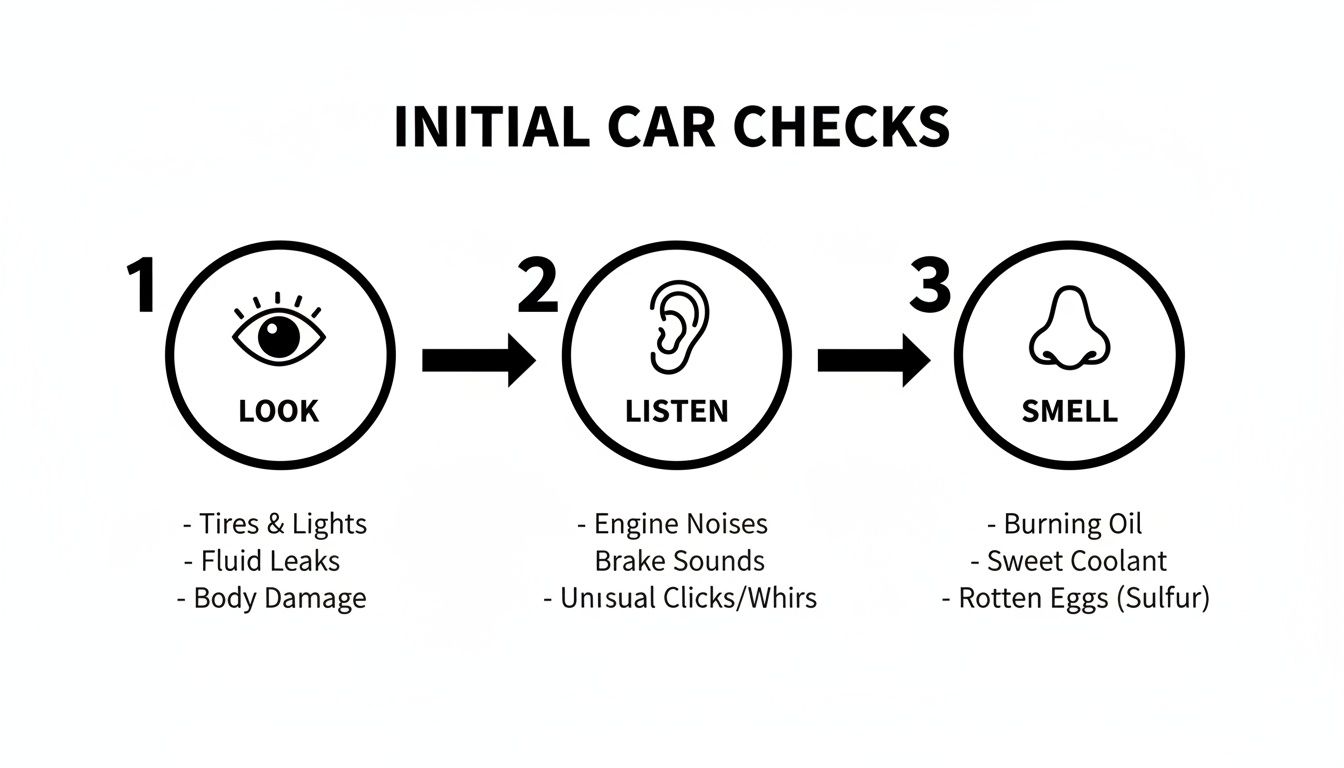
The biggest takeaway here is that you don't need any special equipment to start diagnosing your car. You just need to pay attention.
Identifying Potential Fluid Leaks
Spotting a puddle under your car can be alarming, but don't panic just yet. Clear water is usually just condensation from your A/C running, which is completely normal on a warm day. Other colors, however, are worth a closer look.
- Bright Green or Pink: This is almost always an antifreeze/coolant leak. Ignoring this can quickly lead to your engine overheating.
- Dark Brown or Black: You're likely looking at an engine oil leak, which could mean a failing gasket or seal.
- Reddish-Brown: This color points to either transmission fluid or power steering fluid—both are critical to keeping your car moving and steering safely.
Here's a pro tip: Slide a clean piece of cardboard under your car and leave it overnight. The next morning, you'll have a clear sample of what's leaking, making it much easier to identify the fluid and pinpoint where it's coming from.
Listening for Problem Sounds
Your car has a language of its own, and strange noises are its way of telling you something is wrong. A high-pitched squeal when you hit the brakes, for instance, is a classic sign your brake pads are worn down—it's actually a built-in warning indicator.
A rhythmic clicking sound that gets faster as you accelerate often points to an issue with a CV joint or axle. If you hear a grinding noise when you shift gears, that's a serious red flag for your transmission. Learning to recognize these auditory cues is one of the most valuable skills for catching problems early.
Decoding Dashboard Lights and OBD-II Trouble Codes
Your car’s dashboard is its primary way of talking to you. When a symbol lights up, it’s not just an annoyance—it's your car trying to tell you something important. Think of these lights less as a source of panic and more as a helpful heads-up before a small issue snowballs into a major repair.
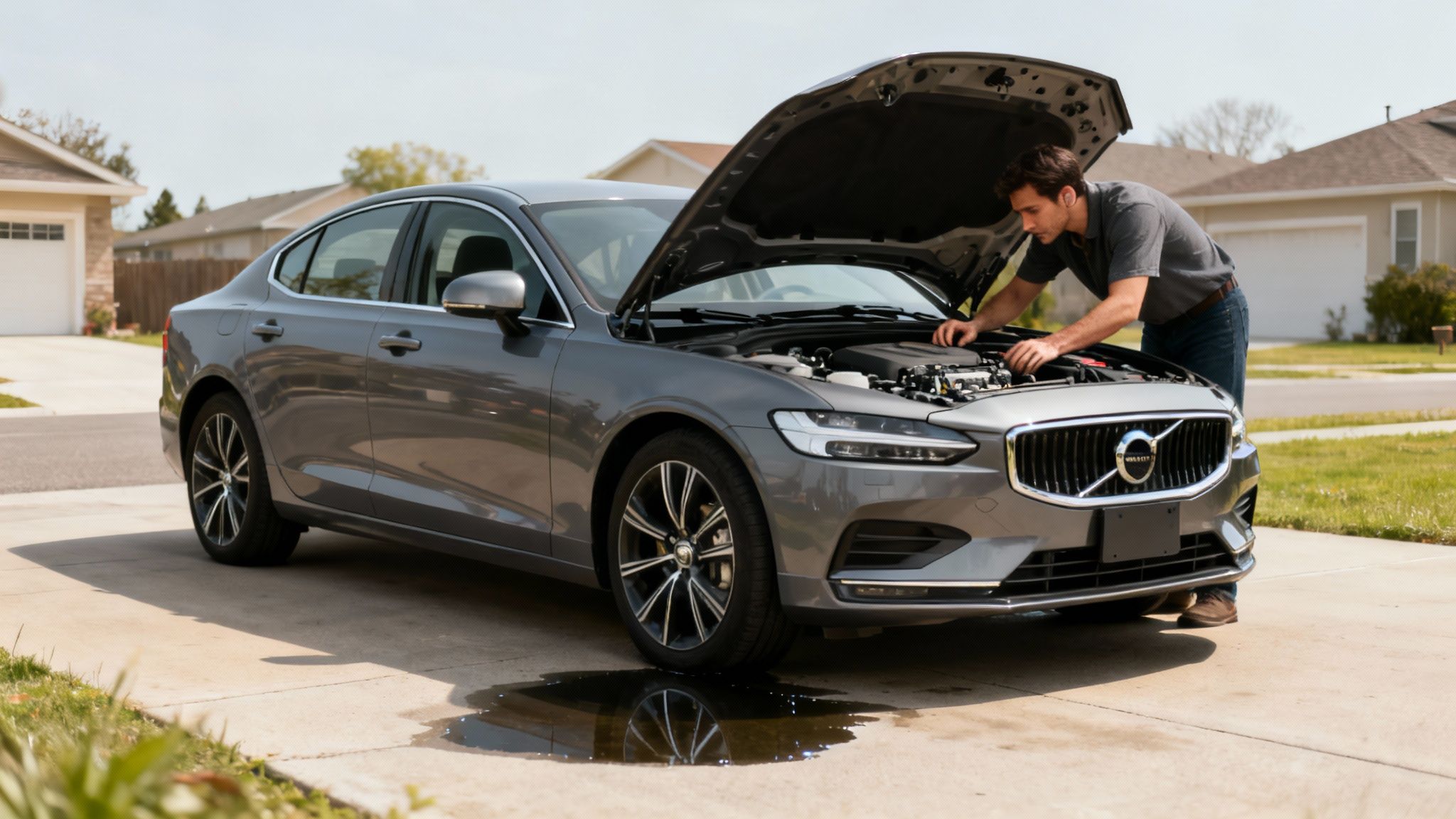
The most notorious of these is the Check Engine Light (CEL). We’ve all felt that little jolt when it pops on. It could be something incredibly simple, like a gas cap that wasn't tightened properly, but it could also point to a failing catalytic converter. If you're seeing it, our guide on how to diagnose a check engine light is a great place to start.
Other lights, like the battery warning (often an alternator issue) or the oil pressure light, are far more urgent. Seeing those means you need to pull over safely and shut the engine off immediately to prevent serious damage.
To help you quickly make sense of what you're seeing, here’s a quick-reference guide to the most common symbols and what they mean.
Common Dashboard Warning Lights and Their Meanings
| Warning Light Symbol | What It Means | Urgency Level | Common Causes |
|---|---|---|---|
| ⛽️ | Low Fuel | Low | You're running low on fuel and should find a gas station. |
| 🌡️ | Engine Temperature | High | Engine is overheating. Pull over and stop immediately. |
| 🔋 | Battery/Charging System | High | Alternator is failing or there's a battery connection issue. |
| ❗ | Brake System | High | Parking brake is on, brake fluid is low, or there's a system fault. |
| ⚙️ | Check Engine Light (CEL) | Medium to High | Varies from a loose gas cap to a serious engine problem. |
| 🛢️ | Oil Pressure | High | Loss of oil pressure. Stop the engine immediately to prevent damage. |
| 🚗💨 | Tire Pressure (TPMS) | Medium | One or more tires are significantly under-inflated. |
This table covers the basics, but it’s just the starting point. For anything beyond a simple reminder, you'll want to dig a little deeper.
The Power of an OBD-II Scanner
If your car was made after 1996, it has a secret weapon for diagnostics: the On-Board Diagnostics II (OBD-II) system. This is your car’s brain, constantly monitoring everything from the engine and transmission to the emissions system. When it finds a problem, it lights up the dash and saves a specific Diagnostic Trouble Code (DTC).
You can grab these codes yourself with an inexpensive OBD-II scanner. Just plug it into the port, usually found under the dash on the driver's side. In seconds, you’ll get a code—something like P0301 (which points to a misfire in cylinder 1) or P0420 (a classic for catalyst system issues).
A trouble code doesn't just say "something's broken." It tells you where the system is seeing a problem. It turns a vague warning light into a specific, actionable clue, putting you back in control.
It’s no surprise that the automotive diagnostic technology market has exploded, jumping over 40% from $37.4 billion in 2018 to an estimated $52.7 billion by 2025. Modern cars are too complex to guess at—these tools are essential.
Translating Codes into Action
Once you have a code, a quick online search will tell you what it means and list the usual suspects. A code for an oxygen sensor, for instance, might be caused by a bad sensor, but it could also be faulty wiring or even an exhaust leak.
Armed with that knowledge, you can have a much smarter conversation with a mechanic. Instead of saying, "My check engine light is on," you can walk in and say, "I pulled a P0420 code, and I think it might be the O2 sensor or the converter." That simple piece of information helps our ASE-certified team at Express Lube & Car Care zero in on the problem faster, saving you time and money.
Connecting Common Car Symptoms to Potential Causes
Long before that dreaded "Check Engine" light flickers on, your car is usually already telling you something is wrong. You just have to learn how to listen.
Think of it like learning a new language. The strange vibrations, odd smells, or unusual sounds are your vehicle’s way of communicating. The key is to catch these signals early.
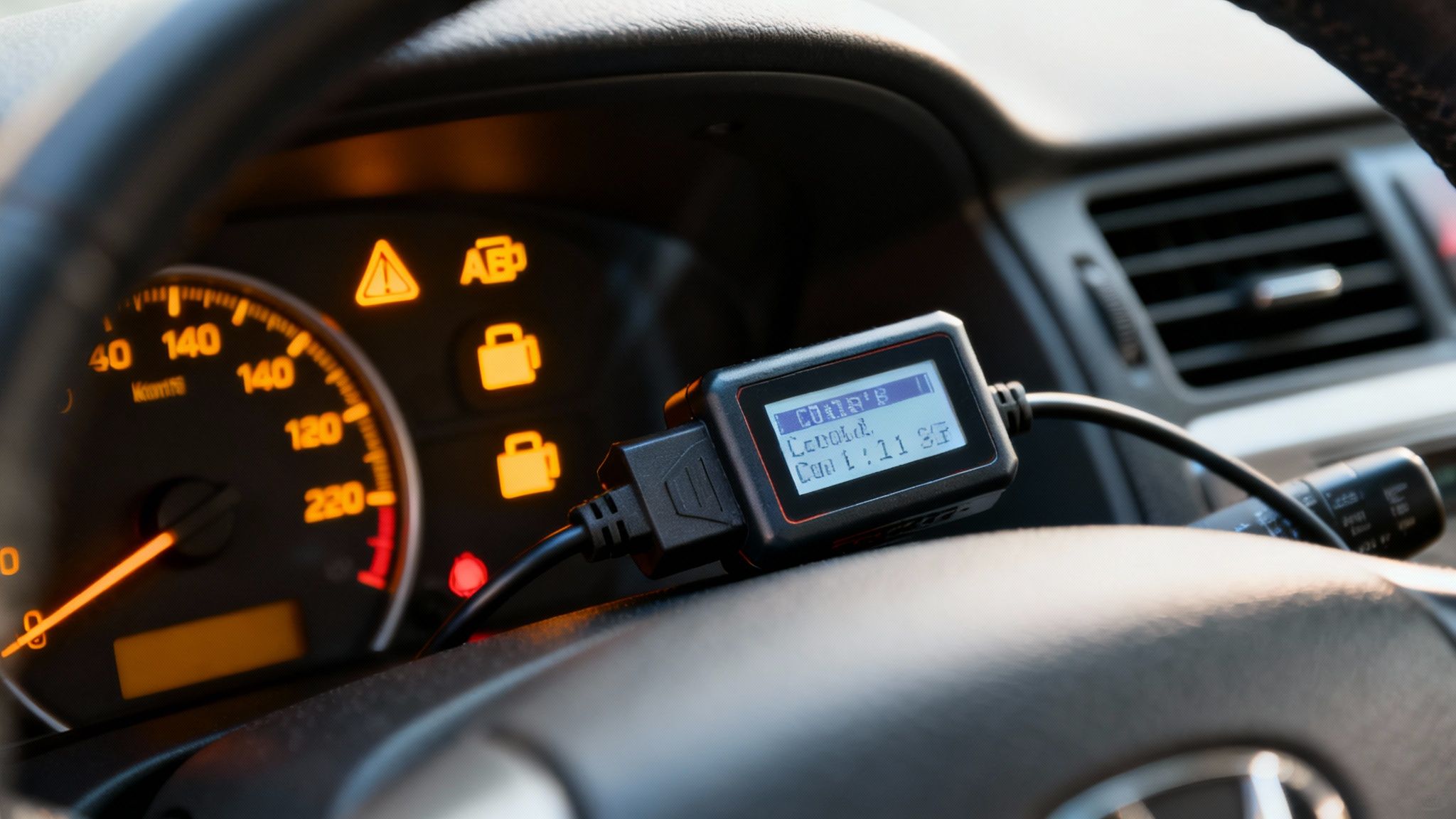
When you notice a new symptom, context is everything. Does that noise only happen when you're turning left? Does the car only shake when you hit highway speeds? These details are the clues that separate a wild guess from an accurate diagnosis.
Decoding Performance and Handling Issues
How your car feels on the road is one of the biggest tell-tale signs of its health. A sudden hesitation when you hit the gas or a new vibration can be alarming, but they often point to very specific problems.
For example, a vibration you feel in the steering wheel at higher speeds almost always means your front tires are out of balance. If you feel that same vibration more in your seat, the issue is likely with the rear tires. And if the car is actively pulling to one side or the other? That's a classic sign of bad wheel alignment.
Trouble starting the engine is another one we see all the time. While a dead battery is the usual suspect, it’s not the only possibility.
- Weak or Slow Crank: This is the most common sign of a weak battery, but it could also point to corroded terminals or even a failing alternator that isn't recharging the battery as you drive.
- A Single Click, Then Nothing: If you hear one sharp click when you turn the key, that often means the starter motor or solenoid has failed. If you hear a series of rapid clicks, the battery has just enough juice to trip the solenoid but not enough to turn the engine over.
- Engine Cranks but Won't Start: This is a different beast entirely. It means your battery and starter are doing their job, but you have a fuel or spark issue. Think clogged fuel filter, a bad fuel pump, or worn-out spark plugs.
Don’t forget about your gas mileage. If you suddenly find yourself at the pump more often, your car is trying to tell you something. It could be as simple as low tire pressure or as serious as a failing oxygen sensor.
Interpreting Strange Sounds and Smells
Your ears and nose are surprisingly powerful diagnostic tools. Unfamiliar noises and weird odors are your car’s way of screaming for help, signaling that something is failing, leaking, or overheating.
A high-pitched squeal when you hit the brakes is a built-in safety feature. It's the sound of the wear indicators on your brake pads telling you they're almost gone. Ignore it, and that squeal will turn into a grinding noise. That's the sound of metal-on-metal, meaning you've worn through the pads and are now destroying your rotors—a much more expensive fix.
Smells can be just as specific.
- Sweet, syrupy smell: That's coolant. You've got a leak somewhere in the cooling system.
- Burning rubber: Usually a slipping drive belt or a hose that’s come loose and is rubbing against a hot engine part.
- Burning carpet: This acrid smell often means you have an overheated brake caliper or, in a manual, a burnt-out clutch.
- Rotten eggs: This unmistakable sulfur smell is a dead giveaway that your catalytic converter is failing.
Paying attention to these details often gives you the early signs your car needs a tune-up. A good tune-up can catch failing spark plugs or dirty filters before they leave you stranded.
By learning to connect these symptoms to their likely causes, you become an empowered car owner. You’re no longer just a driver; you're the first line of defense in keeping your vehicle running safely and reliably.
Get Your Hands Dirty: Essential Checks for Every Driver
Alright, you’ve listened for weird noises and scanned for puddles. Now it's time to pop the hood and get a little more hands-on. These are the simple checks anyone can do, no fancy tools required, and they'll tell you a ton about what's going on with your car. Just make sure the engine is cool and you’re parked on level ground first—it’s safer and gives you more accurate readings.
Think of your car's fluids as its lifeblood. Checking them is probably the most important thing you can do under the hood, as each one serves a critical purpose. If a fluid is low or looks nasty, you’ve found a major clue.
Check Your Essential Fluids
First up, the engine oil. Pull out the dipstick, wipe it clean with a rag, and stick it all the way back in. Pull it out again and look at the level. Good oil is a translucent amber color. If it's black, gritty, or has a milky look to it (a dead giveaway that coolant is getting into your oil), it's definitely time for a change. For a deeper dive, check out our guide on how to check your car oil level.
This image shows a typical oil dipstick with markings to indicate the proper fluid level.
That cross-hatched area between "L" (Low) and "H" (High) is the sweet spot where your oil level should be.
Next, find the coolant overflow tank—it's usually a semi-clear plastic reservoir. The coolant should be between the "MIN" and "MAX" lines. Healthy coolant is usually a bright color like green, pink, or orange. If it looks rusty or has gunk floating in it, that's a problem. Never, ever try to open the radiator cap when the engine is hot.
Inspect Belts, Hoses, and the Battery
While you're under the hood, take a good look at the rubber parts. Your serpentine belt, which runs things like the alternator and water pump, shouldn't have any cracks, frays, or a shiny, glazed look. Give the big coolant hoses a squeeze. They should feel firm, not like a mushy sponge or a brittle, old twig.
A quick battery check is also a must. See that white or bluish chalky stuff building up around the terminals? That’s corrosion, and it can stop your battery from charging correctly, leading to starting problems. Make sure the cables connected to the terminals are tight and don't wiggle.
A slow, groaning engine start is the classic sign of a battery on its last legs. If you’ve had to jump-start your car lately, that’s your car screaming that something in the charging system is failing.
Give Your Tires a Quick Once-Over
Don't forget the tires! It’s not just about air pressure; the way your tires are wearing down can tell you a lot. Look closely at the tread for these patterns:
- Worn on both outer edges? Your tires are likely under-inflated.
- Worn down the center? You’ve probably got too much air in them.
- Wear on just one edge (inside or outside)? That’s a classic sign your wheels are out of alignment.
These simple, hands-on checks take you from guessing to knowing. Finding a low fluid level or a cracked belt gives you solid information, and that’s the first step to getting the right fix, fast.
Knowing When to Call in the Pros
Getting your hands dirty with DIY diagnostics is a fantastic way to understand your car better, but wisdom lies in knowing your limits. Recognizing when a problem is out of your league is the smartest move any car owner can make. It's the difference between a straightforward fix and an expensive, potentially dangerous mistake.
Changing an air filter or topping off your washer fluid? Go for it. But some jobs are best left to a certified technician with the right tools and training.
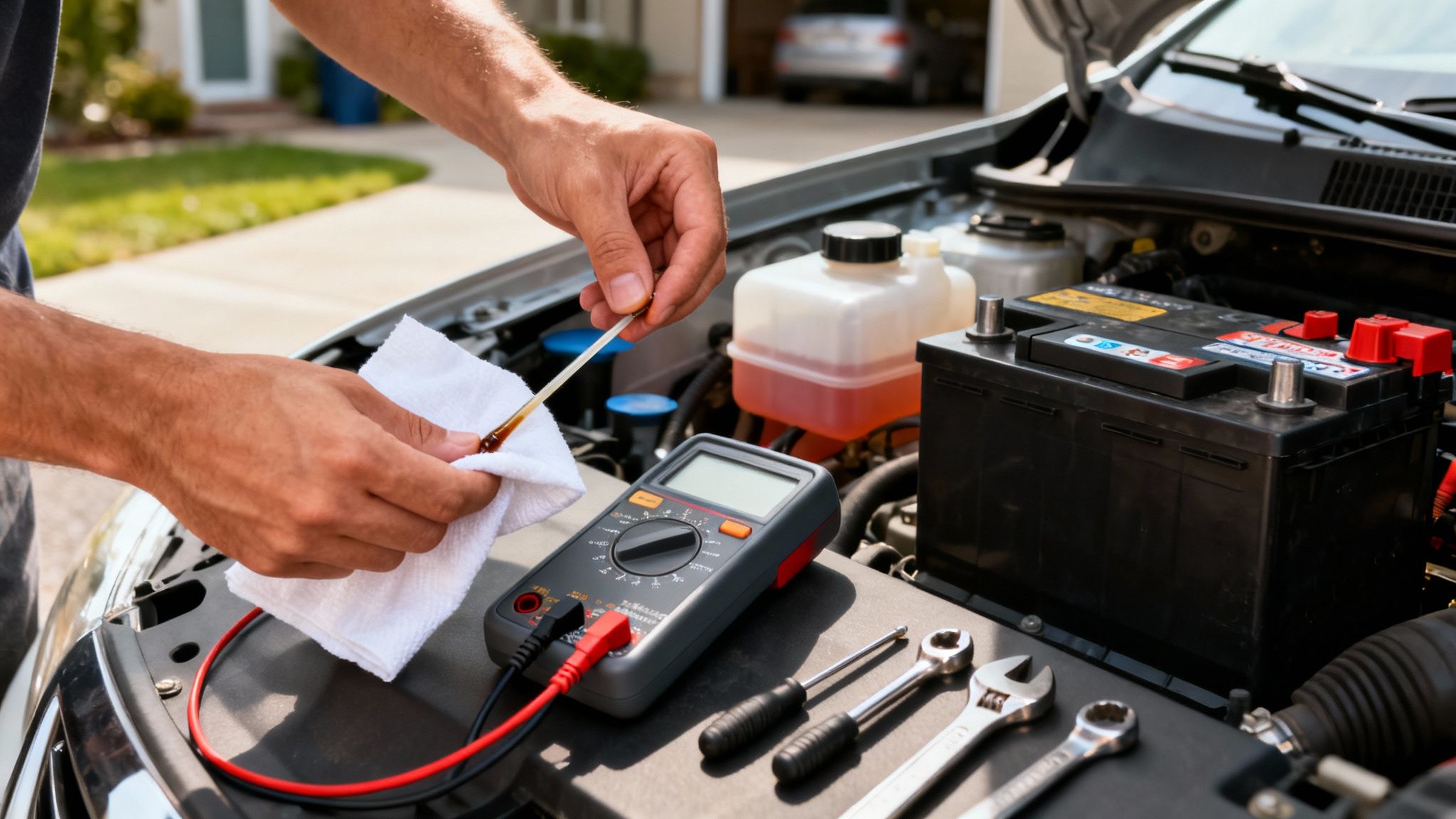
Certain systems in your vehicle demand specialized equipment, years of experience, and a healthy respect for safety protocols. Trying to tackle these yourself can lead to catastrophic failure.
Hands-Off: Red Flags That Demand a Professional
If you run into issues with any of the following, it’s time to put down the wrench and give us a call at Express Lube & Car Care. Seriously.
- Brake System Repairs: Anything beyond a quick visual check of your pads is a job for a pro. Your brake system is the single most important safety feature on your car. There's zero room for error.
- Engine or Transmission Work: Internal engine trouble, timing belt replacements, and transmission problems are complex jobs. One wrong move can grenade the most expensive parts of your vehicle.
- Airbag or SRS Systems: The supplemental restraint system (SRS) involves explosive charges. Mishandling these components can cause them to deploy, leading to serious injury, or worse, cause them to fail when you actually need them.
- Fuel System Issues: Working on fuel lines, pumps, or injectors is a major fire hazard. We have the specific equipment and safety measures to handle these repairs without turning your car into a bonfire.
A consumer-grade OBD-II scanner is a great tool for a first pass, but it only shows you the tip of the iceberg. Professional diagnostic equipment can read manufacturer-specific codes and interpret live data streams from your car's computer, revealing the why behind the what.
The Power of Professional-Grade Diagnostic Tools
Modern cars are essentially computers on wheels. Pinpointing the true cause of an issue often takes more than a generic trouble code. That's why the automotive diagnostic tools market, valued at $41.04 billion, is projected to more than double to $82.25 billion by 2034. For a shop like ours, investing in this tech isn't a luxury—it's essential for fixing cars right. You can read more about the trends in automotive diagnostic technology on precedenceresearch.com.
Our professional-grade equipment allows our ASE-certified technicians to see exactly what’s happening inside your engine in real-time. We can analyze sensor outputs, test individual components, and follow complex diagnostic flowcharts from the manufacturer.
This data-driven approach takes the guesswork out of repairs. It means we fix the root cause the first time, saving you money on parts you didn't need and the headache of coming back for the same problem. When you've hit a wall, trusting a professional with the right tools is always the fastest path to a reliable fix.
Got Questions? We've Got Answers
Even after walking through the basics, you’re bound to run into a few specific questions. It’s totally normal. Here are the most common ones we hear from drivers trying to get to the bottom of a car problem, along with some straight-shooting answers.
"My Check Engine Light Is On, But My Car Drives Fine. Can I Ignore It?"
Tempting, I know. But you should never ignore a check engine light, even if the car feels perfectly normal to drive.
That little light means your car's brain—the onboard computer—has found a problem in a key system. While it might seem fine for now, the issue could be silently wrecking your fuel economy or causing slow, unseen damage to expensive components like your catalytic converter.
Sure, it might be something as simple as a loose gas cap. But it could also be the first warning sign of a much bigger problem on the horizon. Getting the code scanned is always the smart move. It helps you catch a small issue before it snowballs into a major repair bill.
"Are Those Cheap OBD-II Scanners from Amazon Actually Accurate?"
Those affordable little code readers are a fantastic starting point for any DIY diagnosis. They're great for pulling the basic trouble codes and giving you a general idea of what's going on.
But it's important to understand their limits.
Professional diagnostic scanners can see a whole world of data that the consumer models can't. We're talking live sensor readings, manufacturer-specific codes, and detailed system histories. A cheap scanner tells you which system has a problem; a professional scan helps us figure out why. That extra depth is often the key to finding the real root cause and avoiding repeat trips to the shop.
"What Should I Tell My Mechanic to Help Them Figure Out the Problem Faster?"
The more specific details you can give us, the better. When you provide clear, detailed info, you help our technicians narrow down the possibilities so much faster. It's like giving us clues to solve the mystery.
Before you head over, try to make a mental note of these things:
- When does it happen? Is it only when you're accelerating? Turning left? Or just on cold mornings?
- What does it sound or feel like? Describe it! Is it a high-pitched squeal, a deep "clunk" from under the car, or a weird vibration you feel in the steering wheel?
- When did you first notice it? Did it start last week? Has it been getting worse over time? A timeline gives us an invaluable head start.
Giving us this kind of information turns a vague complaint into a set of actionable clues, which saves on diagnostic time and gets you back on the road sooner.
When your detective work at home points to a problem that needs a professional eye, Express Lube & Car Care is ready to step in. Our ASE-certified technicians use the latest equipment to give you an accurate diagnosis and a fix you can count on. Just swing by anytime—no appointment needed. Find out more on our website.