

If there's one piece of routine maintenance that's absolutely non-negotiable for your car, it's the oil and filter change. Think of it less as a chore and more as a complete refresh for your engine's insides. We're talking about draining out all the old, gunky oil, swapping the tired filter for a new one, and refilling the engine with fresh, clean oil. It’s the single most effective thing you can do to protect the heart of your car.
What Your Engine Oil Is Actually Doing
Motor oil is your engine's lifeblood, plain and simple. It’s constantly moving through all the critical components, doing several crucial jobs at once to keep everything running smoothly. Without it, the incredible heat and friction from all those moving parts would cause the engine to grind to a halt in just a few minutes.
An oil and filter change isn't just a simple top-off. It’s a full transfusion that keeps your engine humming. Here’s what’s happening under the hood:
- It Lubricates: Fresh oil forms a slick barrier over pistons, cylinders, and other moving parts, slashing friction and wear.
- It Cools: Oil pulls heat away from the hottest parts of your engine, like the combustion chamber, preventing it from overheating.
- It Cleans: Modern oils contain special detergents that grab onto dirt, tiny metal shavings, and sludge, keeping the engine’s pathways clear.
And Don't Forget the Filter
The oil filter is the quiet hero in all of this. As oil circulates, the filter traps all the nasty stuff that could scrape and damage your engine's delicate internals. But over time, it gets clogged and can’t do its job anymore. That's why we replace it every single time—to make sure only clean oil is circulating.
A clean filter is everything. Once it’s clogged, dirty oil can be forced to bypass it and go right back into your engine, making that fresh oil almost useless.
This simple one-two punch—clean oil and a new filter—is your best defense against expensive, premature engine repairs. In fact, studies show that regular oil changes can extend the life of an engine by up to 50%. They also help prevent the sludge buildup that’s responsible for a staggering 40% of early engine failures. Whether you’re managing a fleet of work trucks or just driving to work and back, that adds up to real savings and peace of mind. You can find more industry data on the importance of this service in the oil change service market report.
At the end of the day, it's all about protecting your investment and keeping your vehicle healthy for the long haul. Keeping that lifeblood clean ensures every drive is as smooth and efficient as the last.
Choosing the Right Oil for Your Car
Walking down the motor oil aisle can make your head spin. So many bottles, so many promises. But picking the right one for your car is actually pretty straightforward once you understand the basics. Think of it like this: you've got your standard, reliable option, a balanced middle-ground choice, and a high-performance, premium product.
Each type of oil is engineered for specific engines and driving habits. Making the right call during your oil and filter change service is one of the easiest ways to protect your engine and keep it running strong for years to come.
Conventional Oil: The Reliable Standard
Conventional oil is the old faithful. It’s refined from crude oil and has been the go-to for decades. For many cars, especially older models with less demanding engines, it provides perfectly good lubrication and protection under normal driving conditions.
It's a solid, budget-friendly choice if you have a low-mileage commute or an older vehicle. The trade-off? It breaks down faster than the newer formulations, so you'll need to change it more often—usually every 3,000 to 5,000 miles.
Full Synthetic Oil: Premium Performance
If conventional oil is the standard, full synthetic is the high-octane, top-shelf stuff. It’s created in a lab with a pure, uniform molecular structure that’s designed for maximum performance, especially when things get tough. Think scorching Texas summers or bitter cold snaps.
Because it's so resilient against breakdown and sludge, full synthetic oil protects your engine better and lasts way longer. We're talking 7,500 to 10,000 miles or even more between changes. It's the best you can get for high-performance cars, vehicles that tow heavy loads, or for anyone who simply wants the ultimate peace of mind. We take a closer look in our guide that asks, is synthetic oil better for your car?
Synthetic Blend: The Best of Both Worlds
A synthetic blend gives you a nice middle ground. It's a mix of conventional and synthetic oils, offering better protection and durability than conventional without the full price tag of a full synthetic. It’s a hugely popular option for a reason.
You get enhanced resistance to heat and sludge, giving you a little extra muscle for your daily drive. It's a smart upgrade for anyone looking to step up their engine protection.
A Quick Guide to Motor Oil Types
To make it even simpler, here's a quick breakdown of your options.
| Oil Type | Key Benefit | Best For | Change Interval |
|---|---|---|---|
| Conventional | Most affordable | Older cars, low-mileage driving | 3,000–5,000 miles |
| Synthetic Blend | Balanced performance and price | Daily drivers, moderate conditions | 5,000–7,500 miles |
| Full Synthetic | Maximum protection and longevity | High-performance, new, or hard-working vehicles | 7,500–10,000+ miles |
Your owner's manual is always the best place to start, but our technicians are here to help you match the perfect oil to your car and how you drive it.
This decision tree shows just how simple—and critical—the choice to get a regular oil and filter change is for your car's long-term health.
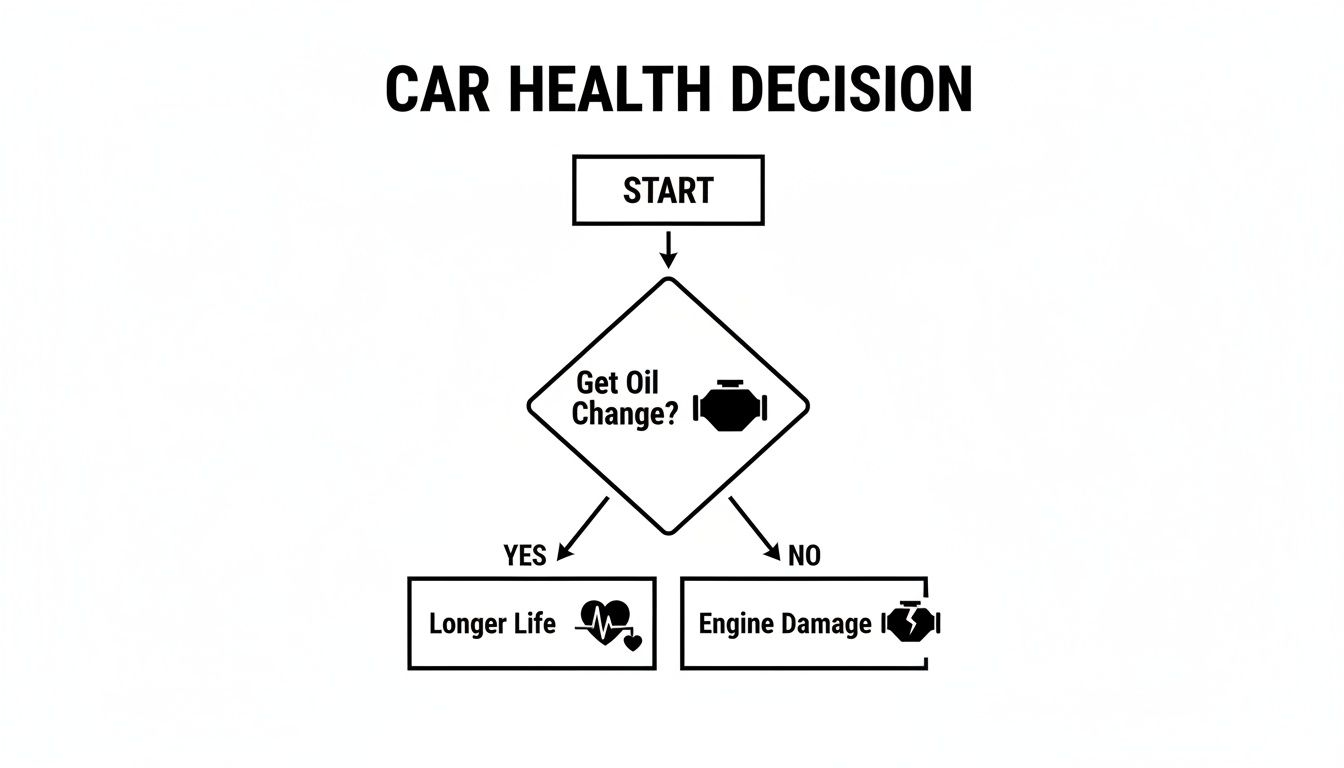
As you can see, the path is clear: routine service leads directly to a healthier engine and a longer life for your vehicle. Putting it off just isn't worth the risk of expensive damage down the road.
Recognizing the Signs Your Car Needs Service
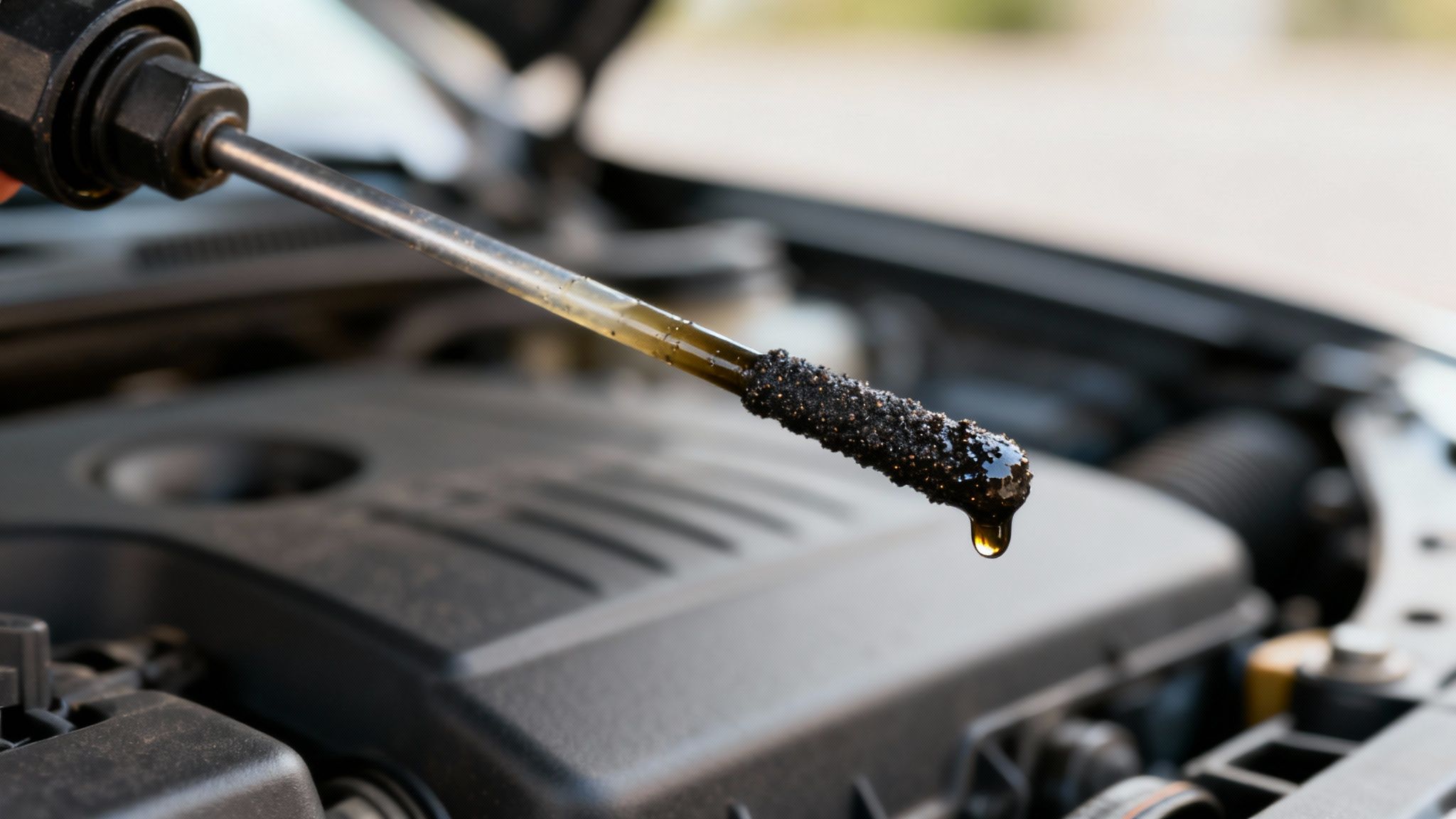
That old "change your oil every 3,000 miles" rule? It’s pretty much a relic of the past. Thanks to modern engines and much better oil, knowing when it’s time for an oil and filter change service is a bit more involved, but your car will give you plenty of clues if you know what to look for.
Your owner's manual is always the best place to start. The engineers who built your car laid out the ideal service intervals right there. For newer cars running synthetic oil, you might see recommendations anywhere from 7,500 to 10,000 miles. But if you don't drive that much, time is the real enemy—oil breaks down even when a car just sits. An annual change is a solid baseline for low-mileage drivers.
Listening to Your Engine
Beyond the little sticker on your windshield, your car has its own ways of telling you it needs fresh oil. These aren't just gentle suggestions; they're urgent warnings that your engine's health is on the line. Ignoring them is a recipe for expensive, catastrophic failure.
Here are the key signs to watch out for:
- Illuminated Oil Pressure Light: This is the big one. If this light pops on, your engine isn't getting the lubrication it needs to survive. Pull over safely and shut it off as soon as you can.
- Knocking or Rumbling Noises: That grinding or knocking sound is often the sound of metal-on-metal friction because the oil isn't doing its job. That’s causing serious, rapid wear.
- Visible Exhaust Smoke: A little vapor is normal, but if you see thick, blue, or gray smoke puffing out of your tailpipe, it's a classic sign oil is leaking internally and burning up.
- Dark and Gritty Oil: Fresh oil is a clean, amber color. When you check your dipstick, if the oil is black and feels gritty between your fingers, it’s loaded with gunk and has lost its protective properties. You can learn more by checking out our guide on when to change car fluids.
The High Cost of Neglect
Putting off an oil change is one of the worst things you can do to your vehicle. It’s a simple service, but the financial fallout from skipping it can be huge.
Believe it or not, neglected oil changes are a direct cause of 36% of engine issues. Sticking to a routine service schedule, on the other hand, can slash your potential repair bills by a whopping 25%.
And it gets better. Swapping out the filter, a core part of any real oil and filter change service, traps 99% of the harmful gunk that wrecks engines. Just that one simple step can even boost your fuel efficiency by 2-4% every time, saving you real money at the pump. Proactive maintenance isn’t just about avoiding disaster—it's a smart investment in your car's future.
What Happens During a Professional Oil Change
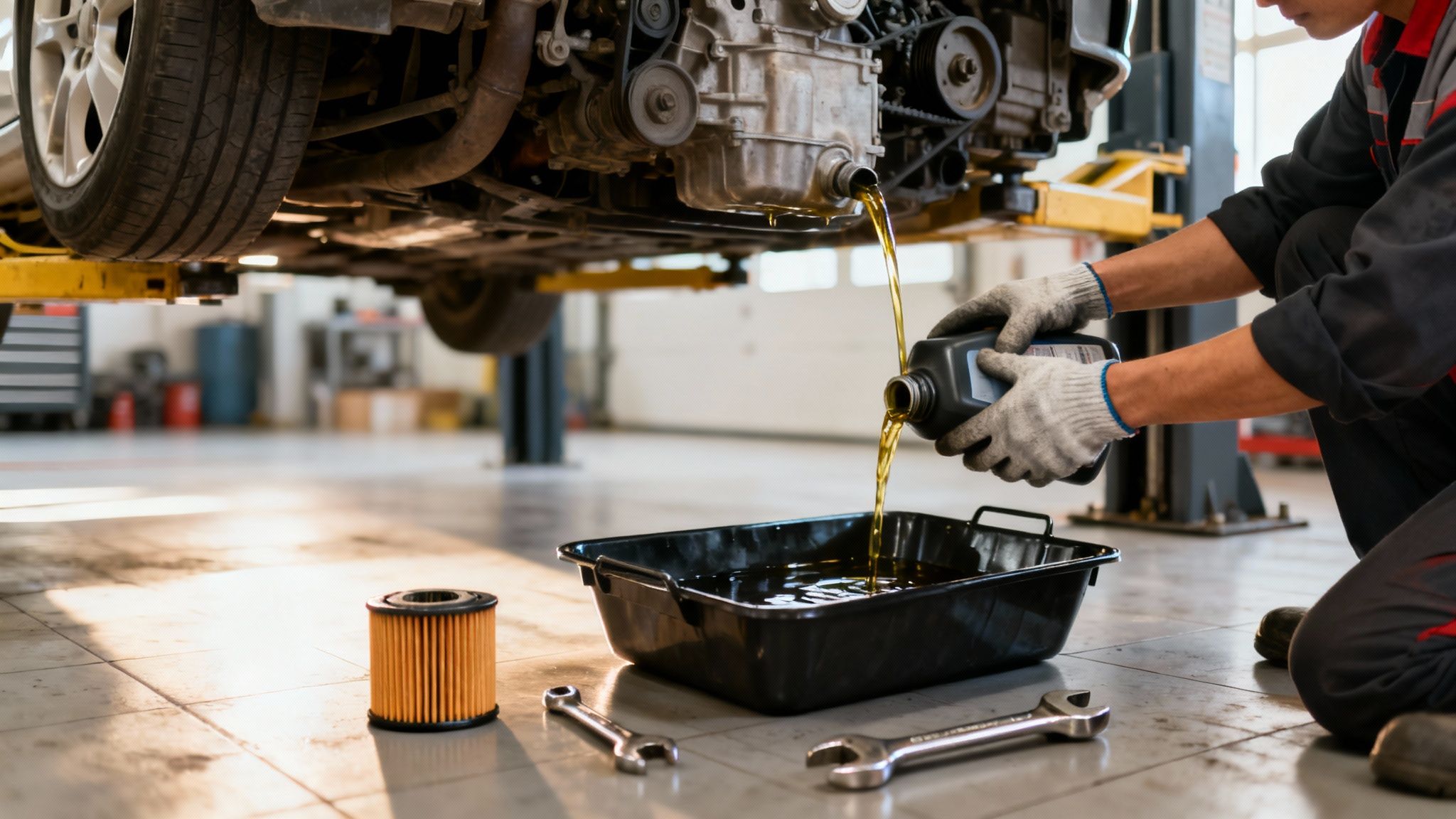
When you hand over your keys for an oil and filter change service, you’re trusting us with your engine’s lifeblood. It might seem like a simple job, but a lot of careful, precise work goes on behind the scenes to keep your car running smoothly.
Our ASE-certified techs don't just wing it; they follow a meticulous process that’s both fast and incredibly thorough. It all starts with safely raising your vehicle on a professional lift to get a clear look at everything underneath.
The Core Service Steps
First things first, we find the oil pan's drain plug. We position a large pan underneath and then carefully remove the plug, letting all the old, gritty oil drain out completely. This isn’t a rush job—we let it drain for several minutes to make sure every last bit of sludge and debris is gone.
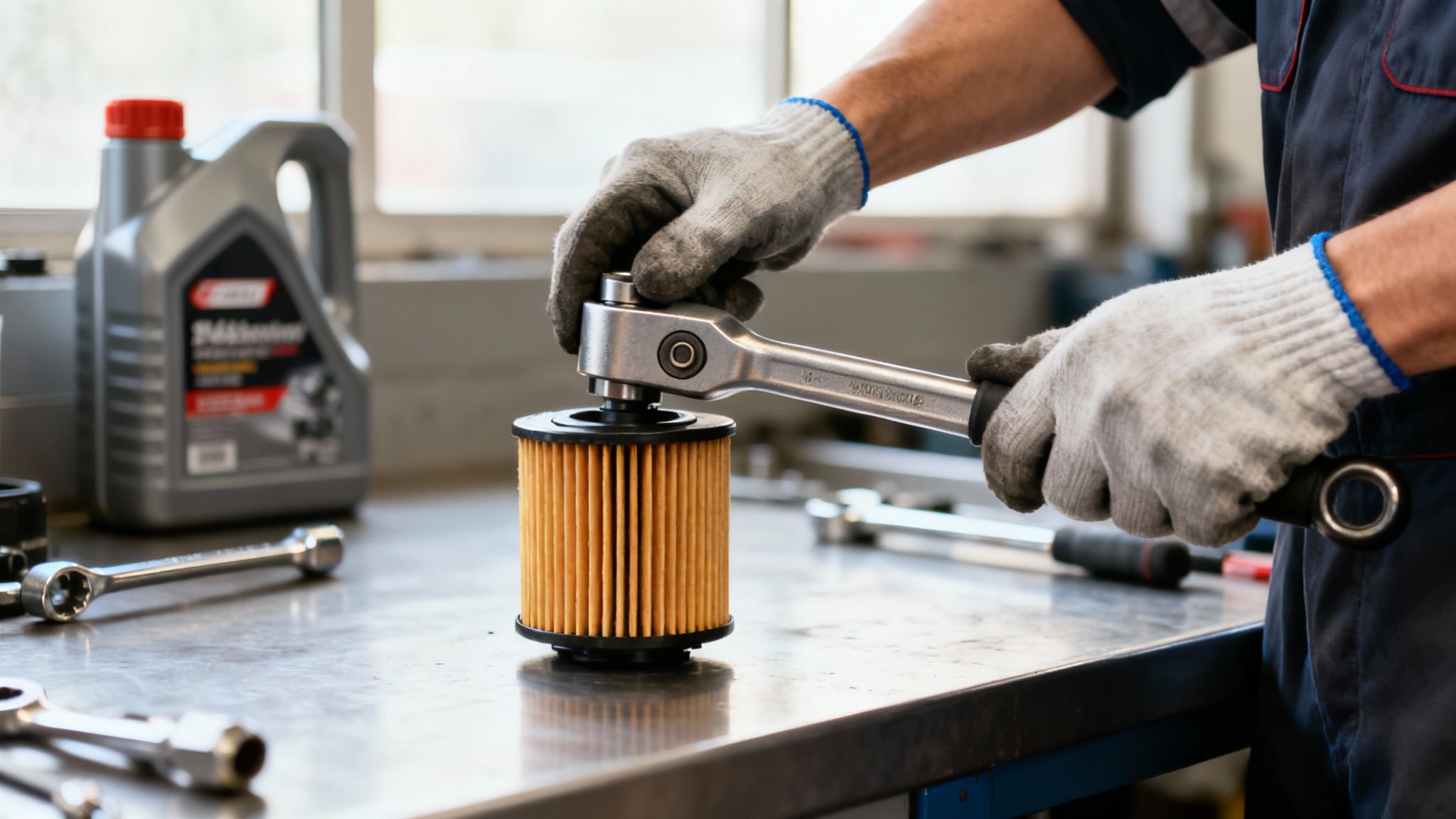
While the old stuff is draining, we turn our attention to the oil filter. It’s full of trapped gunk, so we use specialized tools to get it off. The new, high-quality filter gets prepped by lubricating its gasket with fresh oil, which helps create a perfect seal. We hand-tighten it, then give it one last, precise turn with a wrench to hit the exact torque spec.
It’s not just about swapping parts; it’s about precision. An improperly tightened filter can lead to dangerous oil leaks, which is why our technicians always torque it to the exact manufacturer specification.
Once the draining is complete, we clean up the drain plug area, put the plug back in, and tighten it securely. Then, we gently lower your vehicle and start refilling the engine with the exact type and amount of premium motor oil recommended for your car. We use a funnel to avoid any mess and double-check the volume.
More Than Just an Oil Change
A professional oil and filter change service at our shop is also a quick health checkup for your car. After the new oil is in, our technicians run through a complimentary multi-point inspection. It’s a great way to catch small issues before they turn into big, expensive problems.
Here’s what we look at:
- Checking fluid levels: We'll top off your coolant, brake fluid, power steering fluid, and windshield washer fluid if needed.
- Inspecting belts and hoses: We look for any cracks, frays, or signs of wear that could cause trouble down the road.
- Checking tire pressure: We make sure all your tires are inflated to the proper PSI for better safety and gas mileage.
Finally, we start the engine for a moment to let the new oil circulate, then do one last dipstick check to be sure the level is perfect. We’ll also reset your oil life monitor, put a fresh service sticker on your windshield, and make sure the old oil and filter are disposed of responsibly. You’ll drive away knowing everything was done right.
Why Professional Service Beats a DIY Oil Change
We get it—the idea of a DIY oil change sounds pretty good on paper. You save a few bucks and get a little garage time. But what seems like a simple weekend task can quickly spiral into a costly, messy headache. A professional oil and filter change service offers a whole lot more than just convenience.
For starters, doing it yourself means having the right tools. You need more than just a basic socket set; a proper torque wrench and the correct filter wrench are essential. Without them, it's easy to make a critical mistake. One of the most common DIY blunders is over-tightening the drain plug. That small slip can strip the threads on your oil pan, turning a $50 job into a repair that can cost hundreds.
Then you have to deal with the materials. You've got to track down the exact oil and filter your car needs, and a simple mix-up can starve your engine of proper lubrication. And let's not forget the mess. Used motor oil is considered hazardous waste, which means you can't just toss it. You have to store it and haul it to a designated recycling center.
The Value of Professional Expertise
Choosing a professional service just eliminates all that risk and hassle. When our ASE-certified technicians handle the job, you can relax, knowing it’s done right—every single time.
Here’s what you get when you leave it to us:
- Correct Parts Guaranteed: We use the precise oil viscosity and high-quality filter your manufacturer recommends. No guesswork involved.
- Precision Tools and Torque: Our professional-grade equipment ensures every component, from the drain plug to the filter, is tightened to exact factory specs.
- No Mess, No Hassle: We take care of everything, including the responsible disposal of all the used oil and materials.
But honestly, the biggest benefit of a professional oil change is the multi-point inspection that comes with it. Our techs can spot developing issues—like a worn belt or low transmission fluid—that could leave you stranded down the road.
At the end of the day, an oil and filter change service isn't just about swapping out old fluid. It’s a smart investment in your vehicle’s health, safety, and long-term reliability. For most drivers, it's easily the smarter, safer choice.
Your Local Advantage for Car Care
Picking a spot for your car’s oil and filter change service is about more than just finding the closest garage—it’s about finding people you can trust. Any shop can drain old oil, but a dedicated local team offers a completely different level of care. We're not just a business here in Richland Hills; we're your neighbors, and we’re committed to keeping our community’s cars running safely.
That commitment is why our team is built around ASE-certified technicians. These aren't just mechanics; they're pros who've proven their skills. They don't just go down a checklist. They use their experience to give your car exactly what it needs, making sure the job is done right the first time, every time.
Why Your Neighbors Choose Us
We designed our shop for the way real people live and drive around here. We know your schedule is packed, which is why we proudly have a no-appointment-needed model. Just walk in when it works for you, and we’ll get you back on the road without cutting any corners.
Our straightforward attitude applies to our pricing, too. You won’t find any hidden fees or confusing shop-talk here. We give you a clear, honest estimate before we touch your car, so you always know what you’re paying for.
We believe car care should be accessible for the people who keep our community running. That’s why we’re proud to offer special discounts for military members, first responders, and healthcare professionals.
We also do our best to make maintenance affordable for every family. Be sure to check out our monthly specials and weekly Ladies Day discounts—it's just one more way we help you save on the services your car depends on.
When you choose Express Lube & Car Care, you’re not just getting a one-time service. You’re getting a partner who’s invested in the long-term health of your vehicle. From a quick oil change to bigger repairs, you can always count on us for honest advice and solid work.
Answering Your Top Oil and Filter Change Questions
Even for a straightforward job like an oil change, you're bound to have questions. We get it. To make sure you feel totally comfortable with the process, here are some quick answers to the questions we hear most often from drivers.
How Long Does an Oil Change Take?
One of the best things about this service is how fast it is. When you bring your car to a professional shop like ours, we’ve got the process down to a science. You can expect to be back on the road in about 20 to 45 minutes, depending on how many cars are ahead of you. Our whole walk-in model is built to get you in, out, and on with your day.
Can I Switch From Conventional to Synthetic Oil?
Absolutely! In fact, we often recommend it. Making the jump from conventional oil to a synthetic blend or even a full synthetic is perfectly safe for your engine. This is an especially smart move for newer cars or vehicles with a lot of miles on them.
There's no special prep work involved—we just make the switch during your next service. The payoff is better engine protection, especially in extreme temperatures, and you can often go longer between oil changes.
What Happens if I Wait Too Long for a Service?
Putting off an oil change is one of the riskiest gambles you can take with your car. Over time, engine oil breaks down and gets contaminated with all sorts of gunk—dirt, tiny metal shavings, and sludge.
Once it’s that dirty, the oil can't do its job of lubricating and cooling your engine parts. That means more friction and more heat, which leads to premature engine wear, worse gas mileage, and in the worst cases, total engine failure.
It’s just not worth the risk.
Does My Driving Style Affect My Oil Change Schedule?
It sure does. The mileage recommendation you see in your owner's manual is usually for "normal" driving. If your daily drive is what the industry calls "severe," you'll need to get your oil and filter change service done more often.
So, what counts as severe driving?
- Lots of short trips (under 10 minutes), where the engine never really gets up to temperature.
- Constant stop-and-go city traffic.
- Driving in extreme heat or bitter cold.
- Towing a trailer or hauling heavy loads.
These things put extra stress on your engine and make your oil wear out faster. If you're curious about other ways to keep an eye on your vehicle's health, a great first step is learning how to check your car oil level. Catching things early can save you a lot of trouble down the road.
For an expert oil and filter change service with no appointment needed, swing by Express Lube & Car Care. Our ASE-certified technicians will get you back on the road safely and quickly. Stop by today or learn more at https://www.expressluberichlandhills.com.