

Let's be honest, the term "automobile tune-up" probably brings to mind an image of a greasy-handed mechanic tinkering under the hood of a classic car. But for today's computer-controlled vehicles, it's a completely different ballgame.
Think of a modern tune-up less as a specific set of adjustments and more like a detailed physical for your car's engine. It’s a preventative maintenance service designed to catch small issues before they become big, expensive headaches.
What a Modern Automobile Tune Up Really Means
Back in the day, a tune-up meant swapping out distributor caps, points, and fiddling with the carburetor. Today, it’s a comprehensive inspection and service focused on the high-tech systems that manage your engine's performance. The goal is the same—peak efficiency and reliability—but the process has evolved.
Instead of a one-size-fits-all checklist, a technician now tailors the service to your specific car’s age, mileage, and the manufacturer’s own service schedule. It’s all about keeping your engine running exactly as it was designed to.
From Simple Parts to Smart Systems
While today's cars are far more advanced, the core reason for a tune-up hasn't changed. Skipping this essential maintenance can lead to a 10-15% drop in fuel economy—a number that really stings at the pump. The market for these services is always changing, and you can explore detailed automotive aftermarket insights on Future Market Insights to see where things are headed.
A modern tune-up zeroes in on three critical areas of your engine:
- The Ignition System: This is all about the spark. It includes your spark plugs, ignition coils, and related wiring.
- The Fuel System: This ensures your engine gets the right amount of gas. Key parts are the fuel filter, fuel pump, and injectors.
- The Air Intake System: Clean air is just as important as clean fuel. This covers the engine air filter and various sensors.
By checking and servicing these connected systems, a mechanic makes sure your engine gets the perfect air-fuel mixture, ignited by a strong spark at precisely the right millisecond. The difference you'll feel is a smoother ride, better throttle response, and more miles to the gallon.
Core Services Included in a Comprehensive Tune-Up
So, what actually goes on when you bring your car in for a tune-up? Think of it less like a single repair and more like a full check-up for your engine's most important systems. It's a targeted series of inspections and replacements designed to bring back that "like-new" performance and efficiency.
A proper tune-up zeroes in on the three things every gasoline engine needs to survive: spark, fuel, and air. Get this trio working in perfect harmony, and your car will run smoother, stronger, and more efficiently.
This diagram shows you exactly how a tune-up pays off in real-world performance, better gas mileage, and long-term reliability.
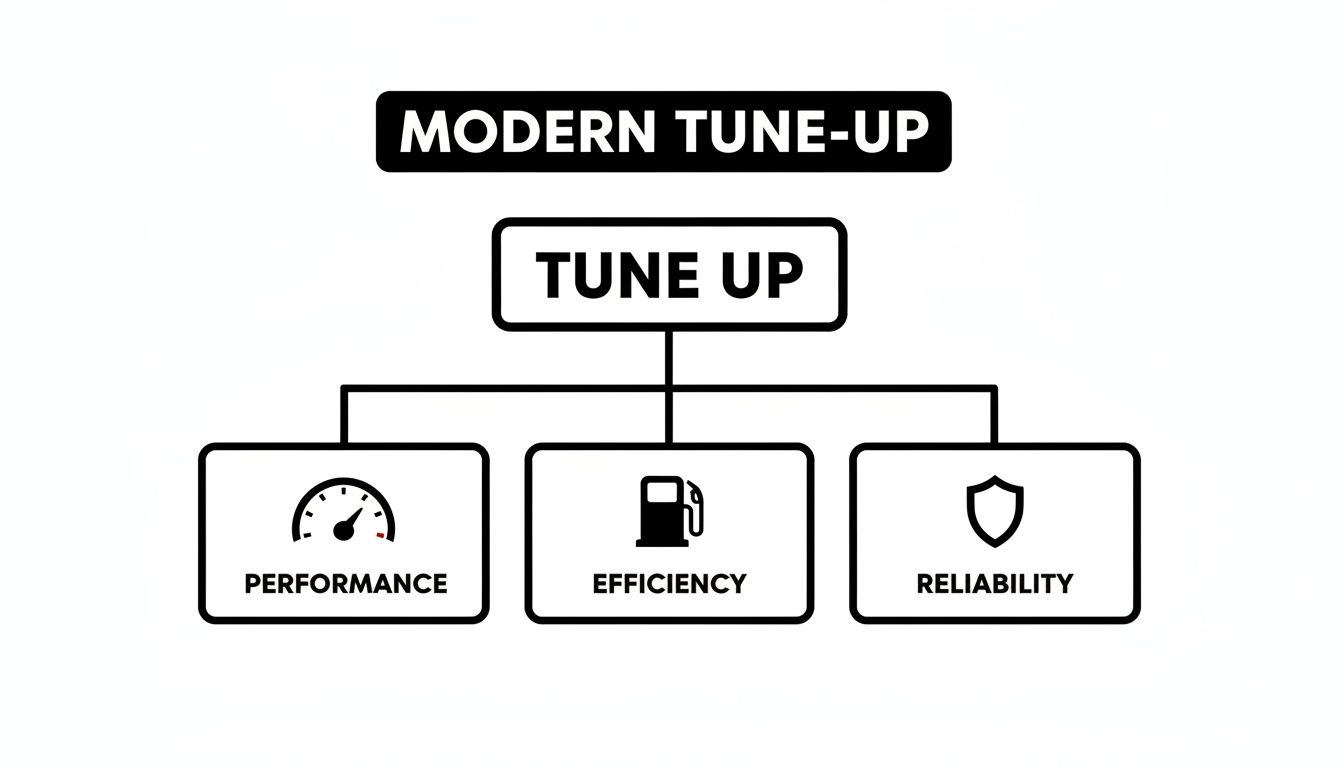
As you can see, the goal is to deliver improvements you can actually feel from behind the wheel.
To get a clearer picture, let's look at the essential parts and services that make up a modern tune-up.
| Modern Tune-Up Checklist: Core Components | ||
|---|---|---|
| Component | What It Does | Why It's Replaced |
| Spark Plugs | Creates the spark that ignites the air-fuel mixture in the engine. | Electrodes wear down over time, creating a weak or inconsistent spark that wastes fuel and reduces power. |
| Ignition Coils & Wires | Transforms the battery's low voltage into thousands of volts and delivers it to the spark plugs. | Wires can crack and coils can fail, leading to engine misfires, rough idling, and poor acceleration. |
| Fuel Filter | Screens out rust, dirt, and debris from the gasoline before it reaches the engine. | A clogged filter restricts fuel flow, starving the engine and causing hesitation or stalling. |
| Engine Air Filter | Prevents dust, bugs, and road grime from being sucked into the engine. | A dirty filter chokes the engine, forcing it to work harder and burn more gas to get the air it needs. |
Each of these components plays a crucial role. When one starts to fail, it creates a domino effect that impacts your entire driving experience.
Spark: The Ignition System
Your ignition system is what kickstarts the whole combustion process. Its only job is to deliver a powerful spark at the perfect millisecond to ignite the mixture of air and fuel in the cylinders. If that spark is weak or late, your engine sputters, acceleration suffers, and you end up wasting gas.
- Spark Plugs: These are the little guys doing the heavy lifting. Over tens of thousands of miles, their electrodes erode, making the spark weaker. Fresh plugs mean a clean, powerful bang every single time.
- Ignition Coils & Wires: Think of the coils as tiny transformers, amping up your battery’s 12 volts to the 20,000+ volts needed to jump the spark plug gap. Wires carry that massive jolt. We check them for any signs of wear that could cause a misfire.
When your ignition system is healthy, your engine fires up instantly and runs without missing a beat.
Fuel: The Fuel System
An engine is picky—it needs a clean, precise amount of fuel to run right. The fuel system filters out gunk from the gas tank and delivers that fuel to the engine at just the right pressure. After a while, though, filters get clogged and injectors get gummed up.
During a tune-up, we address this by:
- Replacing the Fuel Filter: This part catches all the nasty stuff in your gas tank. A clogged filter is like trying to drink a thick milkshake through a coffee stirrer—it just won’t work. The engine struggles for fuel, causing it to hesitate.
- Inspecting the Fuel Injectors: These spray a fine mist of fuel into the engine. If they get clogged, they can dribble instead of spray, leading to poor combustion. We’ll check them and recommend a cleaning if needed.
Air: The Air Intake System
Last but not least, your engine needs to breathe. It sucks in a huge amount of air to mix with fuel. The air intake system’s job is to make sure that air is clean and free of debris.
The most critical part here is simple but essential:
- Replacing the Engine Air Filter: This filter is your engine's bodyguard, stopping dirt, dust, and leaves from getting inside where they can cause serious wear and tear. A clogged air filter literally suffocates your engine, making it burn more fuel for less power.
By tackling these three core systems, a comprehensive tune-up brings your engine's most vital functions back to factory spec, making sure it runs as clean and strong as it possibly can.
7 Telltale Signs Your Car Needs a Tune Up
Your car has its own way of talking to you. It uses little sounds, feelings, and lights to let you know when something’s not quite right. Learning to listen to these cues is key, because ignoring them can turn a small issue into a major repair.
If your vehicle’s performance just feels… off, a good old-fashioned automobile tune-up is usually the perfect fix.
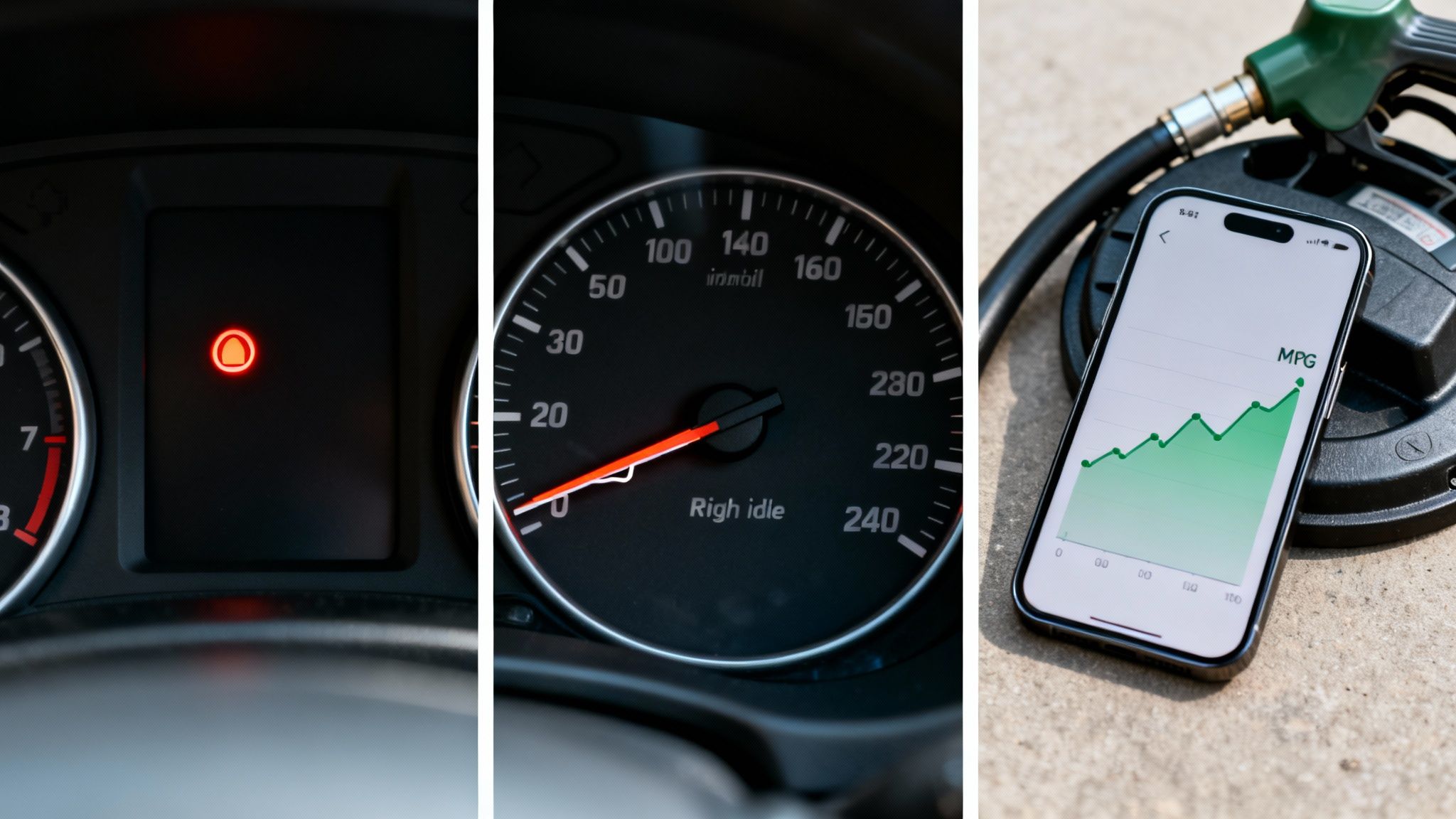
Not sure what to look for? Here are seven of the most common signs that it’s time to bring your car in for an engine check.
Decreased Fuel Efficiency
Finding yourself at the gas pump more often than you used to? A sudden nosedive in your miles per gallon (MPG) is one of the biggest red flags. When parts like your spark plugs get old or the air filter gets clogged, your engine has to work way harder—and burn more fuel—just to keep up.
That inefficiency costs you money every time you fill up. A tune-up gets those tired parts replaced, helping your engine breathe easy and use fuel efficiently again, bringing your MPG back where it belongs.
The Check Engine Light Is On
Okay, this one seems pretty obvious, but you’d be surprised how many people drive around for weeks with that little orange engine glowing on their dash. That light is your car's main alert system, telling you something is wrong with the engine, emissions, or even the transmission.
It could be something simple, like a gas cap that wasn't tightened properly, or it could be a sign of a more serious problem brewing. A tune-up always includes a diagnostic scan that reads the specific error code, so we can find the exact problem and fix it before it gets worse.
Rough Idling or Frequent Stalling
Does your car shudder, shake, or sound like it's sputtering when you’re stopped at a red light? That's a rough idle, and it's often caused by dirty spark plugs or clogged fuel injectors messing up your engine's smooth rhythm.
If the problem gets worse, your car might just stall out completely. Stalling isn't just annoying; it’s a serious safety risk, especially in traffic. It’s a direct signal that your ignition or fuel system needs immediate attention—exactly what a tune-up is designed for.
Sluggish Acceleration and Power Loss
You press the gas, but your car just doesn't… go. If it hesitates, feels weak, or struggles to merge onto the highway, its performance has taken a hit. This kind of sluggishness usually means the engine isn't getting the right air-to-fuel mixture, or the spark isn't strong enough to ignite it properly.
A tune-up gets right to the heart of these performance issues. By cleaning up the system and replacing worn parts, we restore that perfect balance of air, fuel, and spark. You'll get that crisp, responsive acceleration back.
Engine Misfires or Knocking Sounds
An engine misfire feels like a sudden jolt or hiccup from your engine while you're driving. It’s a sign that one of the cylinders isn't firing when it should. You might also hear a "pinging" or "knocking" noise from under the hood, especially when you’re accelerating.
These sounds are your engine crying for help. They often point to bad spark plugs, incorrect ignition timing, or a fuel delivery issue. While a hard-starting engine can sometimes mean battery trouble, it’s also a classic tune-up symptom. You can learn more by checking out our guide on how to know if your battery is failing.
Letting these misfires and knocks continue can lead to serious, expensive engine damage. A tune-up will pinpoint and replace the faulty parts to get your engine running smoothly and safely again.
Deciding Between DIY and Professional Service
When your car starts acting up, it’s tempting to roll up your sleeves and tackle the problem yourself. There's a certain pride that comes with fixing your own ride, and let's be honest, saving money on labor is a huge plus for any weekend mechanic.
If you’re driving an older car with a straightforward engine, a DIY tune-up changing out spark plugs and filters can be a satisfying and totally doable project. But modern cars? They're a different breed entirely, packed with complex computer systems and sensors that demand special tools and know-how.
The Rise of High-Tech Tuning
Today’s tune-ups have evolved way beyond just swapping out a few parts. A great example is engine remapping, where a specialist reprograms your car’s main computer—the Engine Control Unit (ECU)—to squeeze out more performance. This isn't something you can do in your driveway, but the results are impressive. A professional remap can boost horsepower by 15-25% and sharpen up your throttle response, sometimes even while cutting emissions.
This kind of high-tech work shows just how advanced car care has become. If you want to dive into the data, Market Research Future has a full report on the automotive performance tuning industry that shows how big this field is getting.
The Case for Professional Service
While a DIY job can feel great, going to a professional offers something you can't get from a YouTube video: peace of mind. Certified technicians have seen it all and have access to professional-grade diagnostic tools, like OBD-II scanners, that can read the error codes logged by your car's computer and pinpoint the exact problem.
That experience means the job gets done right the first time, helping you avoid a small mistake that turns into a massive, expensive headache later on. You also get a warranty on both the parts and the work, which is a safety net you just don't have when you go it alone.
A professional tune-up is an investment in your vehicle’s long-term health and reliability. You're not just paying for new parts; you're paying for precision, expertise, and the confidence that your car is in capable hands.
At the end of the day, the choice comes down to a balance of cost, time, and how comfortable you are under the hood. Basic stuff like checking fluids is a fantastic starting point for anyone wanting to get their hands dirty. In fact, understanding your car's oil is so important that we put together a simple guide on how to check your car oil level.
But for the complex systems running a modern engine, trusting a pro will almost always save you time, stress, and money in the long run.
Finding a Trusted Local Auto Shop
Let’s be honest, choosing where to get an automobile tune up can be as stressful as the service itself. With a shop on every corner, how do you find a mechanic you can actually trust? Your car is a huge investment, and you need technicians who treat it that way.
The first thing I always look for is proof of expertise. A shop that employs ASE-certified technicians is a fantastic sign. It means their team has passed tough, standardized tests on automotive repair. This certification isn't just a fancy piece of paper; it’s a real commitment to quality and staying current. You can learn more about why ASE and RepairPal certifications give you genuine peace of mind.

This focus on quality is more important than you might think. The U.S. auto repair industry is massive—it's projected to hit $413.7 billion in 2024. That growth shows just how much we all rely on dependable local shops to keep our cars safe and running longer. For more on this, you can check out the automotive aftermarket trends on FutureMarketInsights.com.
Communication and Transparency Are Key
Beyond credentials, pay close attention to how a shop talks to you. A great mechanic won't just slap a bill in your hand. They'll take the time to explain what’s wrong, maybe even show you the worn-out part, and walk you through why a specific repair is necessary.
Always look for a shop that provides clear, itemized estimates before they start any work. That kind of transparency prevents those nasty surprise charges and helps you understand exactly what you’re paying for.
A truly trustworthy auto shop acts as a partner in your car’s long-term health. They offer honest advice, prioritize repairs by what’s critical for safety, and never pressure you into services you don’t need.
Why Local Shops Stand Out
Honestly, choosing a local, community-focused shop often leads to a much better experience. These businesses build their reputation on word-of-mouth and repeat customers, so they have a real stake in doing the job right the first time. Plus, they usually stand behind their work with solid warranties on both parts and labor.
When you find a local auto shop that combines real technical skill with honest communication, you've found more than just a place to get an automobile tune up. You've found a reliable partner who’s dedicated to keeping your vehicle safe on the road for years to come.
Your Top Automobile Tune-Up Questions Answered
So, you get what a tune-up is, but a few questions are probably still rattling around in your head. That's completely normal. This is where we clear the air on things like how often you really need one, what it'll cost, and whether those new electric cars even bother with this stuff.
We’ve pulled together the most common questions we hear from drivers to give you the straight answers you need.
How Often Do I Really Need a Tune-Up?
That old rule of thumb about getting a tune-up every 10,000 miles? You can pretty much throw that out the window. Today's cars are engineered to go a lot longer between major services, so there's no single magic number. Your owner's manual is your best friend here—it has the exact maintenance schedule your car's manufacturer recommends.
For most modern vehicles, critical parts like high-quality iridium or platinum spark plugs can last anywhere from 60,000 to 100,000 miles. But don't just wait for the odometer to hit a certain number. If your car is giving you hints—like guzzling gas or flashing that check engine light—it's time to get it looked at. A yearly inspection is a great habit; it lets a pro spot small issues before they become big, expensive ones.
What's a Fair Price for a Car Tune-Up?
The cost of a tune-up isn't a one-size-fits-all deal. It's less like ordering off a menu and more like creating a service plan based on what your specific car needs right now. The final price tag depends on a few things:
- Your Car's Make and Model: Parts for a European import are almost always going to cost more than for a popular American sedan.
- What Parts It Needs: A basic job with new spark plugs and filters will be way more affordable than a major service that also needs ignition coils and a fuel system cleaning.
- Local Shop Labor Rates: What a mechanic charges per hour can vary from one part of town to another.
For a basic tune-up, you might be looking at $150 to $400. If your car needs more attention, the cost could climb to $500 or even over $1,000. The most important thing is getting a clear, itemized estimate before any work starts. A good shop will walk you through what's urgent and what can wait.
Will a Tune-Up Actually Improve My Gas Mileage?
Yes, absolutely. In fact, getting better fuel efficiency is one of the biggest reasons to get one. When your engine is running on worn-out spark plugs, a clogged air filter, or a dirty fuel system, it has to work a lot harder to get the job done. And that means it burns through more gas.
A proper tune-up is like hitting the reset button on your engine's performance. It lets the engine breathe right, get the perfect fuel-to-air mix, and create a powerful spark. Many drivers see a real difference in their MPG, sometimes a jump of as much as 15% depending on how worn the old parts were.
Think about it this way: the money you save at the pump every week can add up fast, often helping to pay for the tune-up itself over time.
Do Electric and Hybrid Cars Need Tune-Ups?
Great question, and one we're hearing more and more. While an all-electric vehicle (EV) doesn't have spark plugs or need oil changes, it definitely still needs regular service. Think of it as a modern tune-up—the checklist is just different.
Instead of focusing on a gas engine, the attention shifts to the high-tech systems that power these cars. Maintenance for an EV or hybrid often includes:
- Battery Health Checks: Making sure the main battery is cooling correctly and holding a solid charge.
- Electric Motor Inspection: Looking over the connections and components of the electric powertrain.
- Regenerative Braking Service: Checking the system that recharges the battery when you slow down.
Plus, they share plenty of common needs with gas cars, like tire rotations, brake fluid checks, and cabin air filter swaps. The automotive world is adapting fast. The market for performance parts for EVs and hybrids is already a USD 5.2 billion industry and growing, with EV sales jumping 25% in early 2024. You can see just how quickly this is changing in this mechanical performance tuning component market analysis on GM Insights.
No matter what you're driving, keeping up with maintenance is the secret to a long, trouble-free life for your vehicle. At Express Lube & Car Care, our ASE-certified technicians know their way around gasoline, hybrid, and electric vehicles. Swing by our Richland Hills shop—no appointment needed—for an honest estimate and service you can trust. Find out more or get directions at https://www.expressluberichlandhills.com.