Your Ultimate Car Maintenance Checklist: 11 Essential Tasks for 2026
Owning a vehicle is an investment in your safety, freedom, and daily routine. Like any valuable asset, it requires consistent care to perform reliably and efficiently day after day. Neglecting routine maintenance doesn’t just lead to surprise breakdowns and expensive, inconvenient repairs; it can directly compromise your vehicle’s safety systems, hurt its fuel economy, and significantly shorten its operational lifespan. This comprehensive car maintenance checklist is specifically designed to empower you with the knowledge to stay ahead of common automotive issues, shifting your approach from reactive repairs to proactive care.
An installed client and a browser tab behave differently: the app keeps a session open, sends notifications and loads assets locally, while the web version needs nothing but a link. Pages covering Vortex Game download explain the installation steps, device requirements and storage the package occupies. Neither option changes game maths or account balance. Choosing between them usually comes down to how often someone plays.
Pacing controls decide how a session unfolds: a stake selector, an autospin counter and a stop condition together determine whether a budget lasts twenty rounds or two hundred. Notes on the Wheel Out game describe those settings alongside the demo version available without registration. Automatic mode resolves spins far faster than manual clicking. Setting a round limit before switching it on keeps the speed from dictating the budget.
This guide moves beyond generic advice, breaking down the most critical maintenance tasks into a clear, actionable plan. We have organized everything by frequency (daily, weekly, monthly, and seasonal) and by your car’s core systems. You will learn everything from simple DIY inspections you can perform in your driveway to understanding the essential services best left to certified professionals. Our goal is to help you understand exactly what your car needs, precisely when it needs it, and why each service is so vital for its long-term health.
By following this structured checklist, you’ll gain the confidence to manage your vehicle’s upkeep, ensuring every mile you drive is as smooth, safe, and worry-free as possible. For those tasks requiring expert attention, Express Lube & Car Care is here to help with no-appointment service and ASE-certified technicians ready to keep your vehicle in peak condition. Let’s begin building a maintenance routine that protects your investment and keeps you securely on the road.
1. Oil and Filter Change
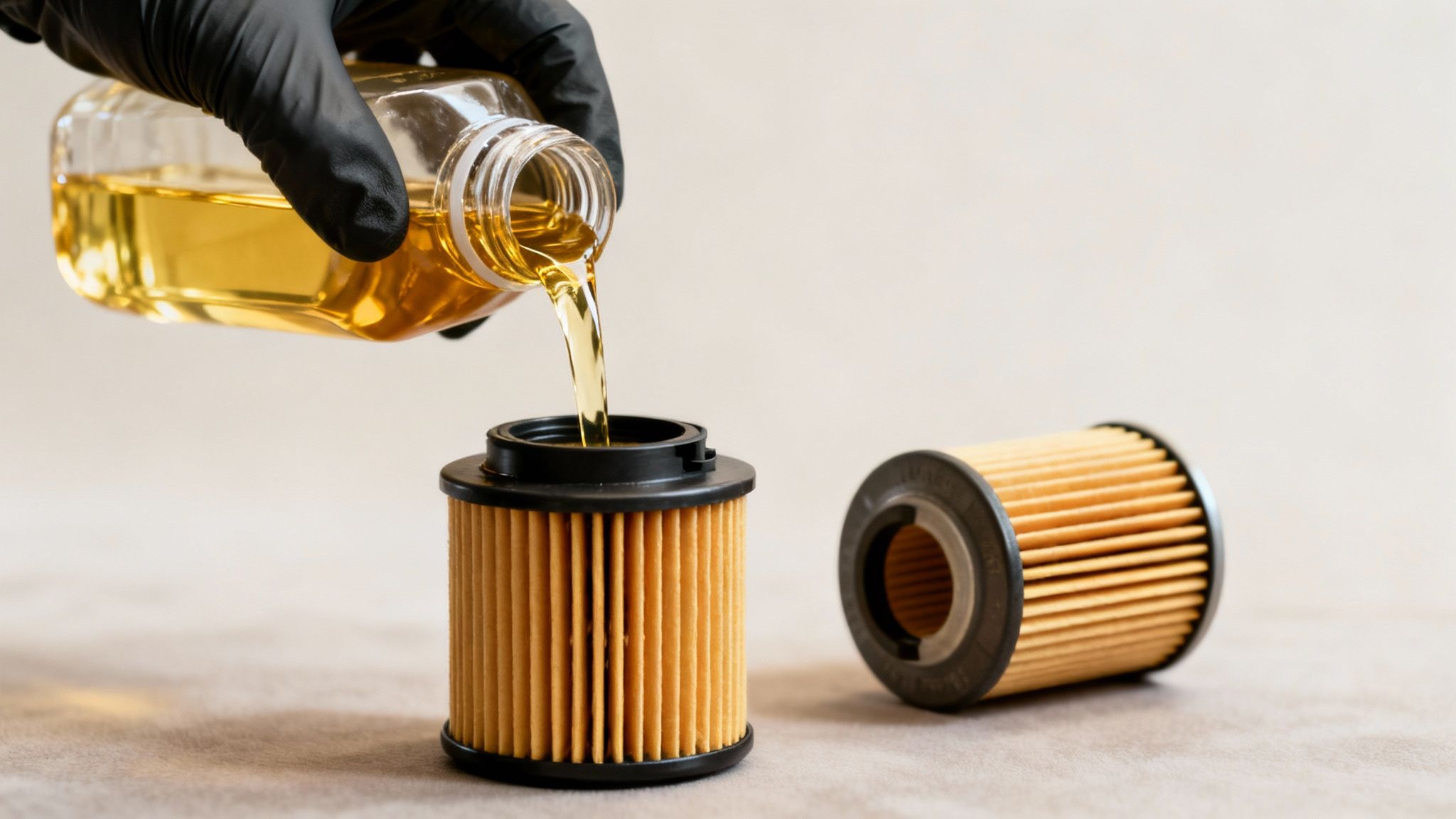
The oil and filter change is arguably the most critical service on any car maintenance checklist. Engine oil lubricates moving parts, reduces friction, minimizes heat, and carries away contaminants. Over time, heat and debris break down the oil, diminishing its ability to protect your engine. Replacing old, dirty oil and a clogged filter with fresh, clean supplies is essential for engine longevity and performance.
This simple procedure prevents the buildup of harmful sludge, reduces wear on critical components like pistons and bearings, and can even help maintain your vehicle’s warranty. While you should always consult your owner’s manual for specific intervals, a general rule is to change conventional oil every 3,000 to 5,000 miles and synthetic oil every 7,500 to 10,000 miles. You should also check your oil level monthly; learn how with our guide on how to check your car oil level.
Actionable Tips for Oil Changes
Follow the Manual: Always use the oil viscosity (e.g., 5W-30) and type (conventional, synthetic blend, or full synthetic) recommended by your vehicle’s manufacturer.
Consider Your Driving: If you frequently drive in stop-and-go traffic, extreme temperatures, or tow heavy loads, you may need more frequent oil changes.
Plan Ahead: Schedule your oil change before a long road trip to ensure your engine is prepared for the journey.
Save with Specials: Regular maintenance adds up. At Express Lube & Car Care, we offer monthly specials to make this essential service more affordable. Our ASE-certified technicians can handle it quickly, no appointment needed.
2. Tire Rotation and Balance
A key part of any car maintenance checklist, regular tire rotation and balancing is crucial for safety, performance, and longevity. Tire rotation involves moving each tire to a different position on the vehicle to ensure they wear down evenly. Balancing corrects any weight imbalances within the tire and wheel assembly, which prevents vibrations at higher speeds. Together, these services extend tire life, improve fuel efficiency, and ensure a smoother, safer ride.
This proactive maintenance helps you get the most value from your tires. For instance, families who rotate their tires every 6,000 miles can see tire life exceed 40,000 miles instead of just 30,000. For high-mileage commuters in Richland Hills, a proper balance can mean the difference between a shaky, uncomfortable highway drive and a smooth, controlled one. Neglecting this can lead to premature tire replacement and put unnecessary stress on your vehicle’s suspension components.
Actionable Tips for Tire Care
Follow a Schedule: Rotate your tires at every other oil change, or approximately every 6,000 to 8,000 miles, to promote even tread wear.
Monitor Tire Pressure: Check your tire pressure monthly, especially during Texas temperature swings. Underinflated tires wear unevenly and hurt your fuel economy.
Inspect Tread Depth: Use each rotation as a chance to inspect your tires for damage and check the tread depth. Uneven wear could signal an alignment issue.
Trust the Professionals: If you feel a vibration in your steering wheel or through your seat, it’s a clear sign you need a wheel balance. Our ASE-certified technicians at Express Lube & Car Care can perform a fast, precise rotation and balance to get you back on the road safely.
3. Brake Inspection and Service
Your vehicle’s braking system is its most important safety feature, and regular inspections are non-negotiable for any comprehensive car maintenance checklist. A thorough brake check involves evaluating pad thickness, rotor condition, brake fluid level and integrity, and the safety of brake lines and calipers. Proper maintenance ensures you have the stopping power you need, preventing catastrophic failure and avoiding costly emergency repairs down the road. This is especially true in Texas, where high heat can accelerate the wear of brake components.
Properly maintained brakes provide peace of mind. Families who get regular brake inspections can drive with confidence knowing their vehicle can stop safely, while commuters in stop-and-go traffic experience fewer sudden warning light surprises. Keeping your brakes in top condition is a small investment that pays huge dividends in safety and reliability.
Actionable Tips for Brake Maintenance
Listen to Your Car: Squealing, grinding, or clicking noises when you apply the brakes are clear indicators that your brake pads or shoes are worn and need immediate attention.
Feel the Pedal: If your brake pedal feels spongy, soft, or goes closer to the floor than usual, it could signal a problem with the brake fluid or a leak in the system.
Schedule Regular Checks: A great habit is to have your brakes professionally inspected every time you get an oil change. This ensures potential issues are caught early.
Don’t Forget the Fluid: Brake fluid absorbs moisture over time, which can cause internal corrosion. It’s recommended to have it flushed and replaced every two years, regardless of mileage.
Drive Defensively: Avoid “riding” your brakes on long downhill stretches by downshifting to let the engine assist with braking. This reduces heat and wear on your brake pads and rotors.
4. Battery Testing, Terminal Cleaning, and Electrical System Check
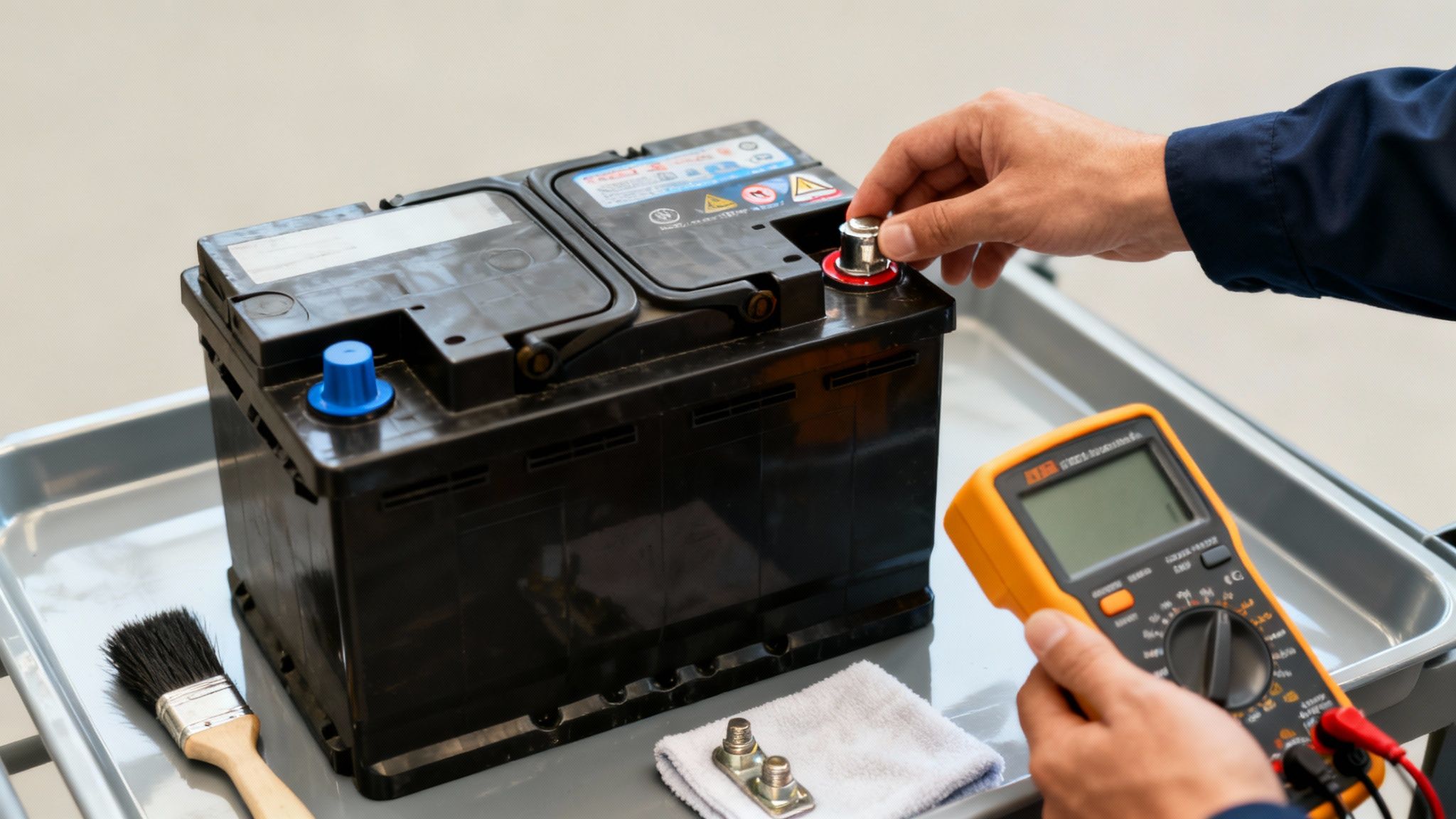
Your car’s battery is the heart of its electrical system, but its health depends on more than just holding a charge. A comprehensive check involves testing the battery’s voltage and load capacity, inspecting and cleaning terminals for corrosion, and verifying the alternator is charging correctly. This combined service is a cornerstone of any preventative car maintenance checklist, preventing unexpected no-start situations and protecting sensitive electronic components.
Corrosion, a common sight on battery terminals, acts as an insulator that disrupts the flow of electricity, weakening the starter’s ability to crank the engine and preventing the alternator from fully recharging the battery. Extreme Texas heat accelerates battery degradation, making regular testing crucial. By proactively addressing battery health, cleaning terminals, and confirming your charging system is strong, you ensure reliable starting power, especially when you need it most. If you’re seeing dim headlights or slow engine crank, learn the signs of a failing battery.
Actionable Tips for Battery & Electrical System Care
Test Every Six Months: We recommend a professional battery and alternator test every six months, and more frequently if your battery is over three years old or during extreme heat.
Inspect and Clean: Visually check the terminals for a fuzzy, white or blue-green powder during every oil change. If you see buildup, request a terminal cleaning service to restore proper contact.
Ensure a Tight Connection: After any service, double-check that the battery terminal clamps are tight and do not wiggle. A loose connection can cause the same issues as a corroded one.
Don’t Wait for Failure: For busy professionals and families, a dead battery is a major disruption. At Express Lube & Car Care, our ASE-certified technicians can perform a quick, no-appointment-needed battery test to give you peace of mind.
5. Fluid Level and Condition Checks
Beyond engine oil, your vehicle relies on a variety of specialized fluids to operate safely and efficiently. Regularly checking the levels and condition of your coolant, brake fluid, power steering fluid, transmission fluid, and windshield washer fluid is a crucial part of any car maintenance checklist. These fluids cool, lubricate, and create hydraulic pressure for essential systems. Low levels can signal a leak, while contaminated or discolored fluid indicates degradation and potential system damage.
This proactive inspection helps you catch problems before they become costly failures. For instance, a family might spot a low coolant level before a summer road trip, preventing a dangerous overheating situation on the highway. Similarly, a daily commuter noticing a drop in power steering fluid can address a minor leak before the steering becomes stiff and unresponsive. Keeping these fluids topped off and clean is fundamental to your vehicle’s health and your safety.
Actionable Tips for Fluid Checks
Make it a Habit: Ask our technicians to perform a comprehensive fluid check every time you visit for an oil change. They can show you the fluid levels and explain their condition.
Look for Puddles: Note any spots on your driveway. A colorful puddle (green, pink, or orange for coolant; reddish-brown for transmission fluid) indicates a leak that needs immediate attention.
Climate Considerations: If you live in a hot climate like Texas, check your coolant level more frequently to prevent overheating.
Know When to Flush: If a fluid appears dark, murky, or has a burnt smell, it’s time for a fluid flush service. At Express Lube & Car Care, our ASE-certified technicians can advise you on the right service intervals and perform the necessary flushes to restore system performance.
6. Air Filter and Cabin Air Filter Replacement
A key part of any car maintenance checklist involves ensuring your vehicle can breathe properly, which relies on two different filters. The engine air filter prevents dust, debris, and other contaminants from entering your engine, while the cabin air filter cleans the air you breathe inside the passenger compartment. Over time, both filters become clogged, restricting airflow and leading to noticeable problems with performance and comfort.
A dirty engine air filter can reduce acceleration and horsepower, negatively impacting your fuel economy as the engine works harder to draw in air. Similarly, a clogged cabin air filter can strain your HVAC system and reduce its effectiveness, while also allowing allergens and pollutants to enter the car. For families with allergy sufferers or commuters on dusty roads, a fresh cabin filter can significantly improve air quality and overall driving experience.
Actionable Tips for Filter Replacement
Follow the Schedule: A general rule is to replace the engine air filter every 10,000 to 15,000 miles and the cabin air filter annually or every 12,000 miles. Check your owner’s manual for manufacturer-specific recommendations.
Consider Your Environment: If you live in a dusty climate or frequently drive on dirt roads, you will need to replace both filters more often.
Ask to See the Old Filter: When you bring your vehicle in for service, ask our technicians to show you the old filters. Seeing the level of contamination helps you understand why replacement is necessary.
Inspect Visually: A quick visual check during an oil change can reveal if a filter is dirty ahead of schedule. At Express Lube & Car Care, our ASE-certified technicians can inspect your filters and provide an honest assessment, no appointment needed.
7. Wheel Alignment Check
A proper wheel alignment is a fundamental part of any comprehensive car maintenance checklist, ensuring your vehicle’s wheels are correctly angled relative to each other and the road. Your car’s suspension is designed to keep tires flat against the ground for optimal grip, but hitting potholes, curbs, or even normal wear and tear can knock these precise settings out of specification. This misalignment leads directly to uneven and premature tire wear, poor handling, and decreased fuel efficiency.
Correcting your vehicle’s alignment restores its handling characteristics, making it safer and more predictable to drive. It’s also one of the most effective ways to protect your investment in your tires, preventing the costly expense of replacing them sooner than necessary. Commuters often avoid hundreds of dollars in tire costs by catching misalignment early. A general rule is to have your alignment checked annually or any time you install new tires.
Actionable Tips for Wheel Alignment
Look for Warning Signs: If you notice your steering wheel is crooked while driving straight, your vehicle pulls to one side, or you feel vibrations, it’s time for an alignment check.
Inspect Your Tires: Check your tires for uneven wear patterns. Wear on the inner or outer edges is a classic sign of a bad alignment.
Check After an Impact: Always have your alignment checked after hitting a significant pothole, striking a curb, or being involved in a minor accident.
Stay Proactive: At Express Lube & Car Care, our ASE-certified technicians can quickly check your alignment using state-of-the-art equipment. Adding this simple check to your annual maintenance routine can save you significant money and keep you safer on the road.
8. Transmission Fluid Check and Service
Often overlooked, transmission fluid is the lifeblood of your vehicle’s gearbox. It lubricates moving parts, provides the hydraulic pressure needed for smooth gear shifts, and helps dissipate the intense heat generated during operation. As this fluid ages, it degrades, loses its protective qualities, and collects contaminants, which can lead to hard shifts, slipping gears, and eventually, catastrophic transmission failure.
Regularly checking and servicing your transmission fluid is a crucial part of any comprehensive car maintenance checklist. This proactive measure prevents the internal components from wearing out prematurely, ensuring your car shifts smoothly and reliably for years to come. Many modern sealed transmissions don’t have a dipstick, but the fluid still requires periodic service. For vehicles with a dipstick, a quick check during an oil change can prevent thousands of dollars in repairs. You can explore the process further with our guide on what a transmission fluid change involves.
Actionable Tips for Transmission Fluid
Check and Observe: Ask a technician to check the fluid level and condition at every oil change. Healthy fluid is typically bright red and transparent; dark brown or black fluid with a burnt smell indicates it’s time for a service.
Follow Manufacturer Intervals: Consult your owner’s manual for specific service intervals. Modern vehicles may recommend a fluid exchange anywhere from 60,000 to 100,000 miles, while some older cars benefit from a change every 30,000 to 50,000 miles.
Don’t Ignore Warning Signs: If you notice slipping gears, delayed shifting, or a transmission warning light, have your vehicle inspected immediately by a professional.
Trust the Experts: Transmission service is complex. At Express Lube & Car Care, our ASE-certified technicians can accurately assess your fluid and perform the correct service, whether it’s a drain-and-fill or a full fluid flush, to keep your transmission in peak condition.
9. Shocks and Struts Inspection
A vehicle’s shocks and struts are fundamental to its safety and comfort, acting as dampers that absorb bumps and keep your tires in firm contact with the road. This system is crucial for stable handling, effective braking, and a smooth ride. Over time, these components wear out, which can lead to a bouncy ride, reduced steering control, and dangerously increased stopping distances. A regular inspection on your car maintenance checklist is vital to catch wear before it compromises your safety.
Neglecting your suspension can cause more than just discomfort; it leads to accelerated and uneven tire wear, costing you money in premature replacements. Families often notice a significant improvement in ride quality and vehicle control after replacing worn struts, making every trip feel safer. Commuters also report less fatigue on their daily drives due to the smoother, more controlled handling provided by a healthy suspension system.
Actionable Tips for Shocks and Struts
Perform the Bounce Test: A simple DIY check involves pushing down firmly on one corner of your parked car and releasing. The vehicle should bounce once and settle. If it continues to bounce, the shocks or struts are likely worn.
Look and Listen: Visually inspect the shock absorbers for any signs of fluid leaks. While driving, listen for clunking or knocking sounds when going over bumps, which often indicates worn-out suspension components.
Check Your Tires: Look for uneven wear patterns on your tires, specifically “cupping” or “scalloping,” which appear as dips scooped out of the tread. This is a classic sign of failing shocks or struts.
Schedule Professional Inspections: For peace of mind, have our ASE-certified technicians at Express Lube & Car Care inspect your suspension system with every oil change. We can identify wear and recommend the right course of action to keep your vehicle handling safely and predictably.
10. Radiator and Cooling System Service
Your vehicle’s cooling system, which includes the radiator, hoses, thermostat, and coolant, is the engine’s primary defense against overheating. This system circulates coolant to absorb excess heat and dissipate it, maintaining an optimal operating temperature. Over time, coolant loses its protective properties and can become corrosive, while components like hoses can crack and leak, leading to potential engine failure, especially in hot Texas weather.
A complete coolant flush and system service is a vital part of any car maintenance checklist. This procedure removes old, degraded fluid and any accumulated sediment or rust, replenishing the system with fresh coolant. This prevents corrosion, ensures efficient heat transfer, and protects critical engine components from damage caused by extreme temperatures. Regular service gives commuters peace of mind on long highway drives and helps families avoid dangerous roadside overheating emergencies.
Actionable Tips for Cooling System Care
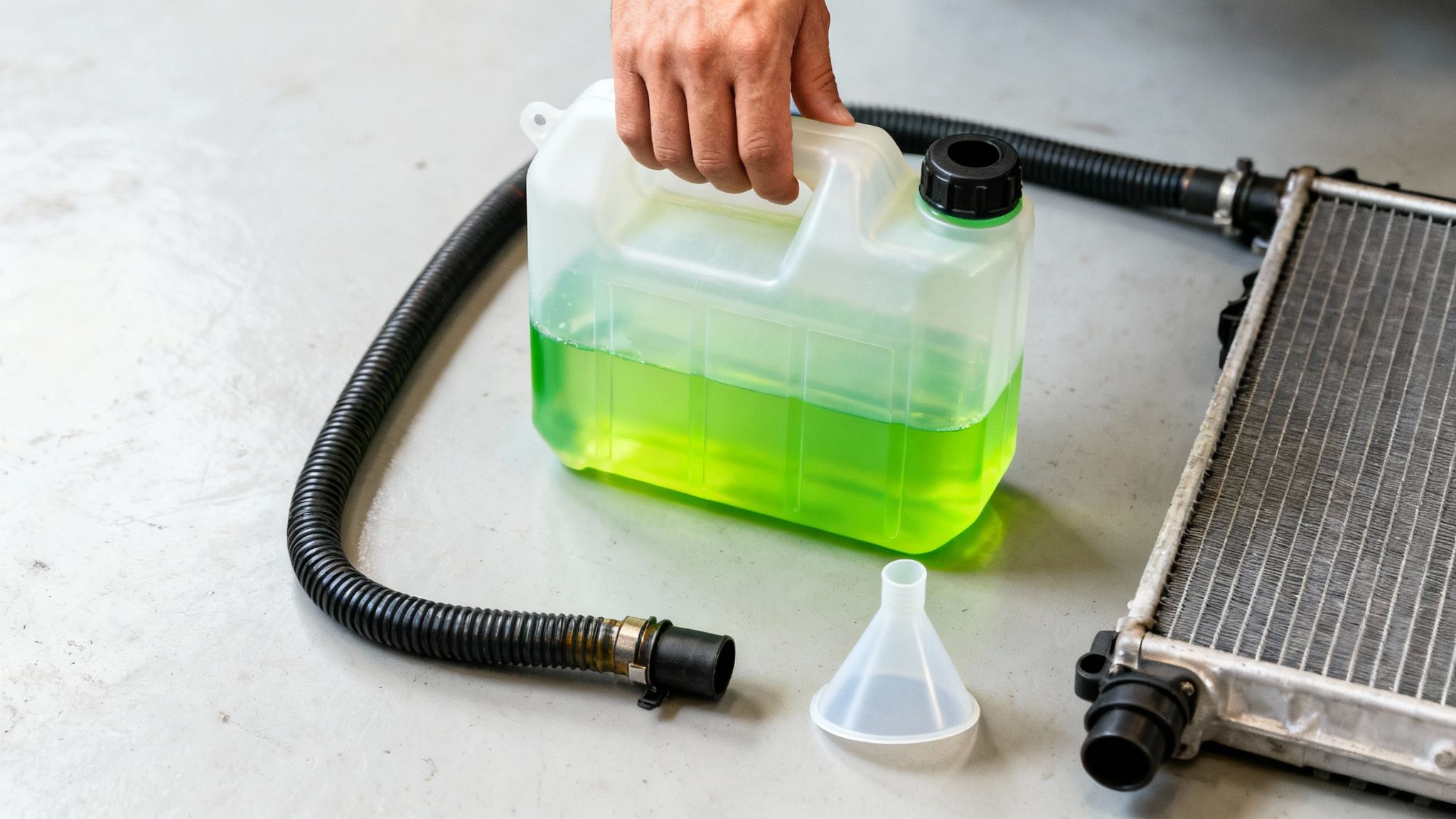
Check the Level: Monthly, check the coolant level in the overflow reservoir (when the engine is cool) and top it off if it’s below the “MIN” line.
Inspect the Color: Healthy coolant is brightly colored (e.g., green, orange, pink). If it looks brown, rusty, or milky, it’s time for a flush.
Follow Service Intervals: We recommend a coolant flush every 30,000 to 50,000 miles, or more frequently if you drive in extreme heat. Check your owner’s manual for specific requirements.
Use the Right Coolant: Always use the coolant type specified by your vehicle’s manufacturer. Mixing different types can cause harmful chemical reactions and clog the system. Our ASE-certified technicians at Express Lube & Car Care can ensure the correct fluid is used every time.
11. Check and Top Off Coolant
Your car’s coolant, also known as antifreeze, is the lifeblood of its cooling system. It circulates through the engine and radiator to absorb excess heat, preventing overheating in the summer and freeze-ups in the winter. A properly maintained cooling system is crucial for engine health, as overheating can lead to catastrophic damage like a cracked engine block or blown head gasket. Regularly checking your coolant level is a simple but vital part of any car maintenance checklist.
This fluid not only regulates temperature but also contains additives that prevent corrosion and scale buildup within the cooling system. Over time, these additives deplete, and the coolant can become acidic and less effective. You should check the coolant level in the reservoir tank monthly, but only when the engine is completely cool. If the level is below the “MIN” or “LOW” line, it needs to be topped off. A full coolant flush and replacement is typically recommended every 30,000 to 50,000 miles, but your owner’s manual will provide the exact interval.
Actionable Tips for Coolant Maintenance
Safety First:Never open the radiator cap or coolant reservoir when the engine is hot. The system is pressurized, and hot coolant can spray out, causing severe burns.
Use the Right Type: Coolant comes in different colors and formulations (e.g., IAT, OAT, HOAT). Using the wrong type can cause chemical reactions that damage your cooling system. Always use the coolant specified in your owner’s manual.
Inspect Hoses: While checking the fluid, visually inspect the radiator hoses for cracks, bulges, or softness. Worn hoses can lead to sudden, dangerous leaks.
Professional Service: If you frequently need to add coolant, it’s a sign of a leak. Bring your vehicle to Express Lube & Car Care. Our ASE-certified technicians can perform a pressure test to find the source of the leak and handle a complete coolant flush, no appointment needed.
11-Point Car Maintenance Comparison
Service
Implementation Complexity 🔄
Speed / Efficiency ⚡
Resource Requirements
Expected Outcomes 📊
Key Advantages ⭐
Ideal Use Cases 💡
Oil and Filter Change
Low — routine procedure
⚡ 15–30 min
Oil, correct filter, disposal facilities
Restored lubrication; less wear; improved MPG
Affordable preventive maintenance; extends engine life
Regular intervals (3k–10k mi); before long trips
Tire Rotation and Balance
Low–Medium — lift + balancer
⚡ 30–45 min
Lift, wheel balancer, technician
Even tire wear; reduced vibration; better handling
Extends tire life; saves replacement costs
Every 5k–7k mi or with oil changes; vibration present
Prevents overheating; maintains engine temperature control
Critical in hot climates; prevents major engine damage
Annual or 30k–50k mi; before hot-season trips
Drive Confidently with Expert Care from Express Lube & Car Care
Navigating the complexities of vehicle ownership can feel overwhelming, but as we’ve detailed, a structured approach makes all the difference. This comprehensive car maintenance checklist isn’t just a list of tasks; it’s a roadmap to a safer, more reliable, and longer-lasting vehicle. By breaking down maintenance into manageable frequencies—from daily glances to annual inspections—you transform a daunting responsibility into a series of simple, proactive habits.
Remember, the goal is to shift from a reactive mindset, where you fix problems as they arise, to a proactive one, where you prevent them from happening in the first place. This approach is the cornerstone of protecting your automotive investment.
Key Takeaways: From Checklist to Confidence
Let’s distill the most critical insights from our guide into actionable takeaways. Mastering these principles will empower you to take control of your vehicle’s health and your own peace of mind.
Consistency is King: The true power of a car maintenance checklist lies in its consistent application. A quick weekly tire pressure check is more effective than a detailed inspection performed once a year. Regularity builds a baseline, making it easier to spot subtle changes before they escalate into costly failures.
Know Your Limits: Embrace the DIY aspects of car care. Checking your oil, topping off washer fluid, and inspecting your tire treads are empowering tasks that connect you with your vehicle. However, it’s equally important to recognize when a job requires specialized tools and expertise. Tasks like brake service, wheel alignments, and transmission fluid exchanges are best left to trained professionals to ensure safety and precision.
Listen to Your Car: Your vehicle communicates through sounds, smells, and sensations. A new squeal when you brake, a slight pull in the steering, or an unusual smell from the vents are all signals that something needs attention. Your checklist provides the “what,” but your senses often provide the “when.” Never ignore these early warnings.
The Real-World Impact: Saving Time, Money, and Stress
Following a maintenance schedule does more than just keep your car running; it directly impacts your wallet and your daily life. A well-maintained engine with clean oil and a fresh air filter operates more efficiently, saving you money at the gas pump with every trip.
Consider this: A simple, inexpensive tire rotation, costing a fraction of a new set of tires, can extend the life of your current set by thousands of miles. Similarly, a timely cooling system flush can prevent a catastrophic engine overheat that could lead to repair bills in the thousands.
This preventative strategy is the most effective way to avoid the cascading effect of vehicle neglect, where one small, ignored issue creates a chain reaction of failures. By investing a small amount of time and money in routine care, you are actively preventing expensive, inconvenient, and potentially dangerous breakdowns.
The ultimate benefit is confidence. Confidence that your car will start on a cold morning. Confidence that your brakes will perform when you need them most. And confidence that your vehicle is safe for you and your family. That is the true return on investment for following a diligent car maintenance checklist.
At Express Lube & Car Care, we understand that you need a reliable partner to handle the more complex items on your checklist. Our team of ASE-certified technicians in Richland Hills is dedicated to providing honest, high-quality service without the hassle. We bridge the gap between your DIY checks and the professional care your vehicle deserves.
Ready to take the next step in your vehicle’s health? Let the expert team at Express Lube & Car Care handle the technical items on your car maintenance checklist with precision and care. Visit our Richland Hills location today for fast, no-appointment service, and drive away with the confidence that your vehicle is in peak condition.