

Skipping a scheduled oil change appointment is defined as delaying or avoiding routine engine oil replacement beyond your vehicle’s recommended service interval, and it directly reduces your engine’s lubrication, accelerates wear, and risks costly mechanical failure. Most drivers who skip aren’t reckless. They’re busy, cost-conscious, or genuinely unsure whether their car actually needs service yet. Consumer Reports, AAA, and most automaker owner’s manuals agree on one thing: the consequences of missing an oil change grow more serious the longer you wait. Understanding exactly what happens, and why drivers skip in the first place, puts you in a much better position to protect your engine without wasting money.
Why do drivers skip their oil change appointment?
The most common reason drivers skip scheduled oil service is cost, followed closely by time. 29% of drivers put off oil changes primarily to cut expenses, even though the short-term savings create far larger bills down the road. That math rarely works in the driver’s favor.
Here are the most common reasons drivers delay or avoid their oil change appointment:
- Cost concerns. A standard oil change runs $40 to $100 depending on oil type and vehicle. That feels like an easy skip when money is tight, but it’s a false economy when you consider what engine repairs cost.
- Busy schedules. Booking an appointment, dropping the car off, and waiting around takes time most people don’t feel they have. This is especially true for drivers juggling work, kids, and everything else.
- Confusion about intervals. The old 3,000-mile rule is outdated for most modern vehicles, but many drivers still use it as their benchmark. Others assume their car is fine because the dashboard light hasn’t come on yet.
- Mistrust of service advisors. Some drivers have been burned by upselling. The 6-month non-oil service trap is a real pattern where shops push extra maintenance unrelated to actual vehicle needs, which raises costs and makes drivers reluctant to come back for legitimate service.
Pro Tip: If you’ve avoided oil changes because of upselling pressure, look for a shop that itemizes every recommendation and explains why each service is needed. Transparency is the baseline, not a bonus.
The good news is that most of these barriers are solvable without putting your engine at risk. The key is knowing what’s actually happening inside your engine when you delay.
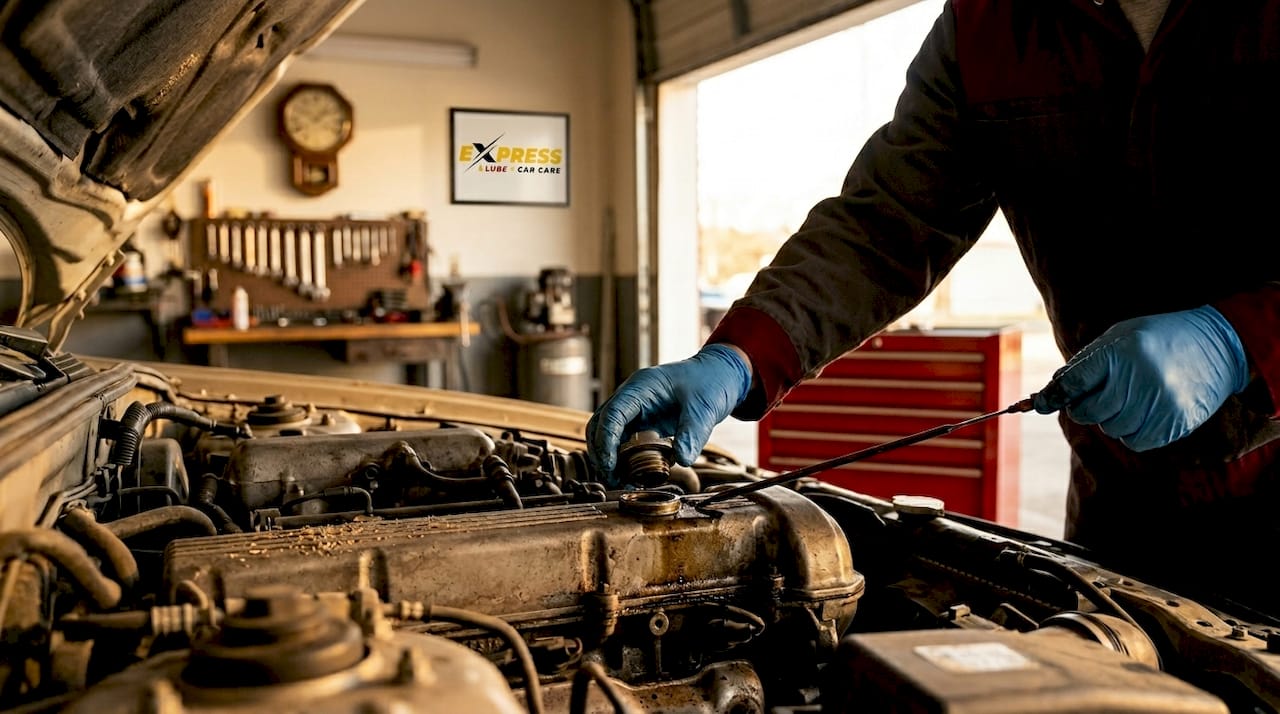
What happens inside your engine when you skip an oil change?
Engine oil does three jobs simultaneously: it lubricates moving parts, cleans contaminants, and helps cool the engine. When you skip an oil change, all three functions degrade together. Oil viscosity shifts and additive depletion reduce the protective film between metal surfaces, and the damage compounds over time.
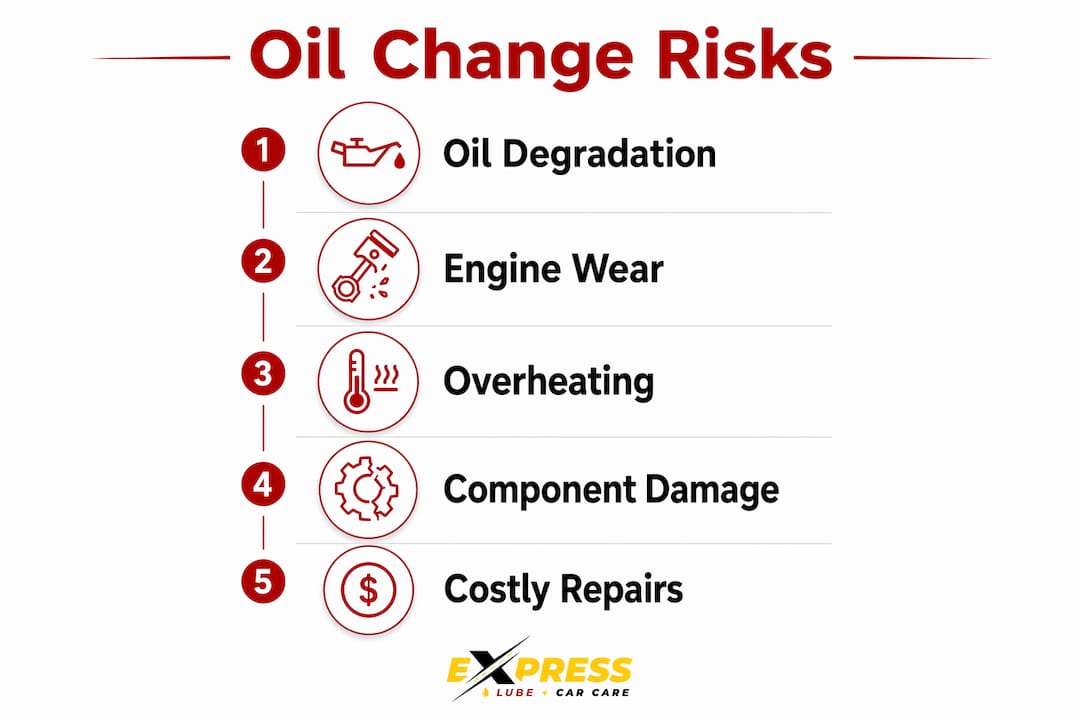
Here’s the sequence of what actually happens inside your engine as oil ages past its useful life:
- Viscosity breakdown. Heat and pressure thin the oil over time. Thin oil can’t maintain the protective film between metal components like crankshaft bearings and camshafts, so metal-on-metal contact begins.
- Additive depletion. Fresh oil contains detergents, dispersants, and anti-wear additives. These break down with use. Once depleted, acids form inside the engine from combustion byproducts, and those acids corrode metal surfaces.
- Sludge formation. Oxidized oil and contaminants combine into thick, tar-like sludge. This sludge clogs oil passages and starves bearings and other critical components of lubrication.
- Moisture accumulation. Short-trip and low-mileage drivers face a specific risk: moisture from combustion never fully evaporates when the engine doesn’t reach full operating temperature. That moisture mixes with oil and accelerates corrosion and contamination.
- Overheating and component failure. Without adequate lubrication and cooling, engine temperatures rise. Bearings wear prematurely, and in severe cases, the engine seizes entirely.
“Oil changes are one of the least expensive forms of preventive maintenance available to drivers. The cost of neglect is measured in engine replacements, not oil changes.” — AAA Club Alliance
The importance of regular oil changes becomes very concrete when you see this progression laid out. It’s not a scare tactic. It’s chemistry and physics working against an engine that isn’t being maintained.
How do modern oil change intervals affect the decision to skip?
Many drivers skip appointments because they’re genuinely uncertain about how often oil changes should occur. The answer has changed significantly in the past two decades. Many automakers now specify intervals at 7,500 to 10,000 miles or 6 to 12 months, replacing the old 3,000-mile standard that applied to older engine designs and conventional oil.
Here’s how different interval systems compare:
| Interval type | Typical range | Best for |
|---|---|---|
| Mileage-based (older vehicles) | Every 3,000 miles | Pre-2010 vehicles using conventional oil |
| Mileage-based (modern vehicles) | 7,500 to 10,000 miles | Newer engines with synthetic oil |
| Calendar-based | Every 6 to 12 months | Low-mileage or infrequent drivers |
| Oil-life monitor | Variable, system-calculated | Most 2010 and newer vehicles |
The oil-life monitor is the most misunderstood tool on modern dashboards. Oil-life indicators use algorithms that factor in driving conditions, engine load, and temperature to calculate remaining oil life. They don’t measure oil quality directly. They estimate it based on how hard the engine has been working.
One critical point many drivers miss: oil degrades even when the car is parked. Oxidation happens over time regardless of mileage. This is why the calendar minimum still applies even if your mileage is low. A car driven only 2,000 miles over 14 months still needs fresh oil.
Pro Tip: Pull out your owner’s manual and find the oil change section. It will specify both a mileage and a time interval. Follow whichever comes first. That’s the manufacturer’s actual recommendation, not a shop’s upsell.
Understanding how often to change oil for your specific vehicle removes the guesswork that leads many drivers to skip appointments they actually needed.
What are the real financial risks of skipping oil changes?
The financial case for not skipping is straightforward. A routine oil change costs $40 to $100. AAA frames oil changes as one of the least expensive preventive maintenance services available, especially compared to the cost of major engine repairs caused by neglect. Engine damage from oil starvation can cost thousands of dollars. An engine replacement can run $4,000 to $10,000 or more depending on the vehicle.
The financial risks of skipping go beyond just the oil itself:
- Missed bundled inspections. Oil changes include vehicle inspections covering belts, hoses, fluids, tires, and exhaust. Skipping the appointment means skipping the inspection. A worn belt or low brake fluid caught at an oil change costs almost nothing to address. Caught after failure, the repair bill multiplies.
- Accelerated component wear. Bearings, camshafts, and timing components all wear faster without proper lubrication. Replacing these parts individually is expensive. Replacing them all at once because of neglect is devastating.
- Reduced resale value. Vehicles with documented maintenance histories sell for more. Gaps in service records signal neglect to buyers and inspectors, which directly affects what your car is worth. Engine neglect affects resale value in ways that are hard to recover from.
- DIY as a cost-saving option. At-home oil and filter changes cost roughly $100 in supplies and remove the appointment barrier entirely. This is a legitimate way to stay current on maintenance without the time or cost of a shop visit, provided you use the correct oil specification and dispose of used oil properly.
The signs your car needs an oil change are often subtle until they aren’t. By the time you notice engine noise or performance loss, the damage is already underway.
How to make smart decisions about rescheduling or skipping an oil change
If you’ve already missed an appointment or you’re weighing whether to push it a little longer, here’s a practical process to follow:
- Check your oil level and condition. Pull the dipstick, wipe it clean, reinsert it, and check again. Low level means add oil immediately. Dark brown or black oil that looks gritty means change it soon. Milky or foamy oil means a more serious problem that needs a shop visit.
- Check your oil-life monitor. If your vehicle has one, note the percentage remaining. Below 15% is a firm signal to schedule service. Don’t wait for zero.
- Consult your owner’s manual. Confirm your vehicle’s recommended interval by both mileage and time. If either threshold has been crossed, the oil needs to be changed regardless of how the car feels.
- Consider a DIY change if cost is the barrier. DIY oil changes are a real option for drivers comfortable with basic maintenance. Use the oil grade specified in your manual and replace the filter every time.
- Treat your next service as a full reset. After skipping a scheduled oil change, the next appointment should include a thorough inspection to catch anything that may have developed during the delay. Reset your maintenance records from that point forward.
Pro Tip: Set a phone reminder for both your mileage milestone and your calendar date, whichever comes first. Two minutes of setup prevents months of forgetting.
The symptoms of an overdue oil change are worth knowing so you can catch problems before they become expensive.
Key takeaways
Skipping an oil change appointment is never truly free. The cost is just deferred, and it grows with every mile you drive on degraded oil.
| Point | Details |
|---|---|
| Oil degrades over time and mileage | Even parked vehicles need oil changes on a calendar schedule, not just by mileage. |
| Modern intervals are longer but still matter | Most vehicles need service every 7,500 to 10,000 miles or 6 to 12 months, whichever comes first. |
| Cost of skipping compounds fast | A $40 to $100 oil change prevents engine repairs that can cost thousands of dollars. |
| Bundled inspections add real value | Skipping the appointment also skips belt, hose, fluid, and tire checks that catch problems early. |
| Recovery is possible with a full reset | Treat the next service after a skip as a complete inspection and maintenance restart. |
What we’ve learned from years of seeing skipped oil changes
We’ve seen the full range at Express Lube & Car Care. Drivers come in with engines that are three months overdue and perfectly fine. We also see engines that are sludged up and starved of oil because someone stretched a 7,500-mile interval to 18,000 miles. The difference usually comes down to driving habits, not luck.
The drivers who get away with pushing intervals tend to drive highway miles in moderate climates with newer synthetic-oil vehicles. The ones who don’t are often short-trip city drivers who never let the engine fully warm up. Same interval on paper, very different outcomes in practice. That’s why I keep coming back to the owner’s manual and the oil-life monitor as the two most reliable guides. Generic rules don’t account for how you actually use your car.
What I’d push back on is the idea that skipping is ever truly a neutral decision. You might not see damage immediately, but the clock starts the moment oil passes its useful life. The inspection bundled with every oil change is also something people undervalue until they find out a belt was about to snap. That’s a $150 catch that prevents a $1,200 tow and repair. The math is never close.
— Express Lube & Car Care
Keep your engine protected with Express Lube & Car Care
Busy schedules shouldn’t mean a neglected engine. At Express Lube & Car Care in Richland Hills, we make oil changes fast, affordable, and genuinely useful. Our ASE-certified technicians handle your oil service and perform a complimentary vehicle inspection at the same time, so you leave knowing your car’s actual condition, not just guessing.
No appointment needed. Walk in, and we’ll get you back on the road quickly. Check our current oil change specials to find the best option for your vehicle and budget. We use quality oil grades matched to your manufacturer’s specification, and we keep our pricing transparent from the start. If you want certified, honest service without the upsell pressure, Express Lube & Car Care is the right stop.
FAQ
Why is skipping an oil change appointment a bad idea?
Skipping reduces your engine oil’s ability to lubricate, clean, and cool critical components, accelerating wear and potentially causing engine failure. AAA notes that the cost of an oil change is minimal compared to major engine repairs caused by neglect.
How often should oil changes occur for modern vehicles?
Most modern vehicles require an oil change every 7,500 to 10,000 miles or every 6 to 12 months, whichever comes first. Consumer Reports advises following your vehicle’s oil-life monitor or owner’s manual rather than the outdated 3,000-mile rule.
What are the consequences of missing an oil change for low-mileage drivers?
Low-mileage and short-trip drivers face higher risk because moisture and contaminants accumulate in oil even without high mileage. Consumer Reports warns that oil breaks down over time regardless of miles driven, making calendar-based intervals critical for these drivers.
Can I do anything if I’ve already skipped an oil change?
Yes. Check your oil level and condition immediately, then schedule service as soon as possible. AAA recommends treating the next appointment as a full maintenance reset with a thorough inspection to catch any issues that developed during the delay.
Is a DIY oil change a good way to avoid skipping service?
A DIY oil and filter change is a legitimate option that costs roughly $100 in supplies and removes the appointment barrier. Use the oil grade specified in your owner’s manual and replace the filter every time to maintain proper engine protection.