

Picking the right oil change type is more than just another box to check off on your car's to-do list. It’s a decision that directly affects your engine's health, how well it performs, and how long it lasts. Getting it right can even boost your gas mileage and save you from some seriously expensive repairs down the road.
Why Your Oil Change Type Is So Important

It’s easy to think of motor oil as just a simple fluid, but it’s really the lifeblood of your engine. It’s constantly working to lubricate all those fast-moving parts, pull away gunk and deposits, keep things cool, and stop rust from forming.
Think about it this way: you wouldn't use just any old oil to cook with, right? Olive oil and vegetable oil work differently. It’s the same with cars. Different engines, especially with their age and mileage, have very different needs.
Using the wrong kind of oil is a gamble. It might not cause a problem today, but over time it can lead to poor performance, lower fuel efficiency, and eventually, serious engine wear.
The Impact of Getting It Right
The choice you make at the service counter really does matter. Using the oil your car’s manufacturer recommends—whether it’s a specific weight like 5W-30 or a type like full synthetic—is key to keeping your engine running the way it was designed to.
Here’s exactly why it’s so critical:
- Better Engine Protection: The right oil forms a strong, protective layer between metal parts, cutting down on friction and wear. This is especially important in the Texas heat, where engines are always working harder.
- Improved Fuel Economy: Modern engines are designed to work with thinner, more efficient oils. Using the correct one reduces internal drag, helping you squeeze more miles out of every gallon.
- Longer Engine Life: Quality oil is designed to resist breaking down under heat and stress. It keeps your engine cleaner on the inside, which can add thousands of miles to its life and help you avoid a major repair bill.
Knowing what oil your car needs is one of the smartest things you can do as a car owner. It’s a small, proactive step that delivers huge returns in reliability and confidence on the road.
At the end of the day, understanding your options means you won’t get talked into paying for a premium oil you don’t need, or worse, skimping on protection your engine can’t live without. Here at Express Lube & Car Care, our guys are all about giving you clear, honest advice—no confusing jargon. We’ll help you pick the perfect oil for your car, your budget, and your driving habits.
Decoding the Different Motor Oil Types
Picking the right motor oil for your car can feel a lot like standing in the medicine aisle—so many bottles, all promising different things. But it doesn't have to be complicated. What really matters is matching the oil to your car’s age, engine type, and how you drive.
Getting this right is one of the easiest ways to keep your engine healthy for the long haul. Let's walk through the four main oil change types you'll see on our menu.
Conventional Oil
Think of conventional oil as the classic, no-frills original. It's refined straight from crude oil and has been the standard for decades. It provides good, basic lubrication and protection for a great price.
This is a solid choice for older vehicles with simpler, non-turbo engines or for folks who don't put a lot of miles on their car. The trade-off is that it breaks down more quickly, so you’ll need to stick to a regular oil change schedule, typically every 3,000 to 5,000 miles.
Synthetic Blend Oil
A synthetic blend is exactly what it sounds like—a mix of conventional and full synthetic oils. You get a dose of the advanced additives and durability found in synthetics, but at a price point that’s easier on the wallet.
It’s the perfect middle ground. Blends offer better protection against wear and high heat than conventional oil, making them a great fit for modern SUVs, trucks, and daily commuters that see a mix of city and highway driving.
Full Synthetic Oil
This is the top-shelf stuff. Full synthetic oil is completely man-made in a lab, engineered from the molecule up for maximum performance and engine protection. It’s cleaner, more durable, and flows better in both extreme cold and searing Texas heat.
Full synthetic oil is engineered for the toughest conditions. It offers unmatched resistance to thermal breakdown, provides better flow in all temperatures, and contains powerful detergents that keep your engine exceptionally clean.
Because it’s so robust, you can go much longer between oil changes—often 7,500 to 10,000 miles or even more, depending on what your car’s manufacturer recommends. It’s the required choice for most new vehicles, especially those with turbocharged or high-performance engines. The upfront cost is higher, but the superior protection and longer drain intervals often make it the most economical choice over time.
High-Mileage Oil
Once your odometer clicks past 75,000 miles, your engine's needs start to change. Over time, seals can dry out and shrink, which can cause small oil leaks or lead to your engine burning more oil.
High-mileage oil is formulated specifically for these seasoned engines. It includes special additives and seal conditioners that help swell and restore aging gaskets, stopping leaks before they start. It also helps clean out sludge and reduce oil burn-off, giving your older car the extra care it needs to keep running strong.
Motor Oil Comparison at a Glance
To help you see the differences side-by-side, here’s a quick-reference table breaking down the options.
| Oil Type | Best For | Key Benefit | Typical Change Interval |
|---|---|---|---|
| Conventional | Older cars, low-mileage driving | Most affordable option | 3,000-5,000 miles |
| Synthetic Blend | Daily commuters, SUVs, light trucks | Balanced performance and price | 5,000-7,500 miles |
| Full Synthetic | New cars, high-performance engines | Maximum protection and longevity | 7,500-10,000+ miles |
| High-Mileage | Vehicles over 75,000 miles | Conditions seals, reduces burn-off | 5,000-7,500 miles |
Ultimately, choosing the right oil change type is about giving your vehicle exactly what it needs to perform its best. If you're ever unsure, our technicians are always here to help you make the right call.
Matching Your Oil to Your Vehicle's Age and Mileage
A car's engine needs change over time. The oil that worked perfectly when your car was brand new isn’t always the best choice once you’ve put some serious miles on the odometer. Picking the right oil for your vehicle's age is one of the smartest things you can do for its long-term health.
Let's break down which oil you should be using based on how many miles are on your car.
New and Mid-Life Vehicles
For a brand-new car that's still under warranty, the choice is simple: use the exact oil your manufacturer specifies. No exceptions. Using the wrong oil can void your warranty, which is a massive—and expensive—headache you don't need. Most new cars today require full synthetic oil right from the factory.
Once your car gets into that mid-life range, somewhere between 30,000 and 75,000 miles, you have a bit more flexibility. A synthetic blend is often the perfect middle-ground, giving you better protection than conventional oil without the higher price tag of a full synthetic. It’s a great upgrade for your daily driver.
This chart makes it easy to see the decision points based on your car’s mileage.
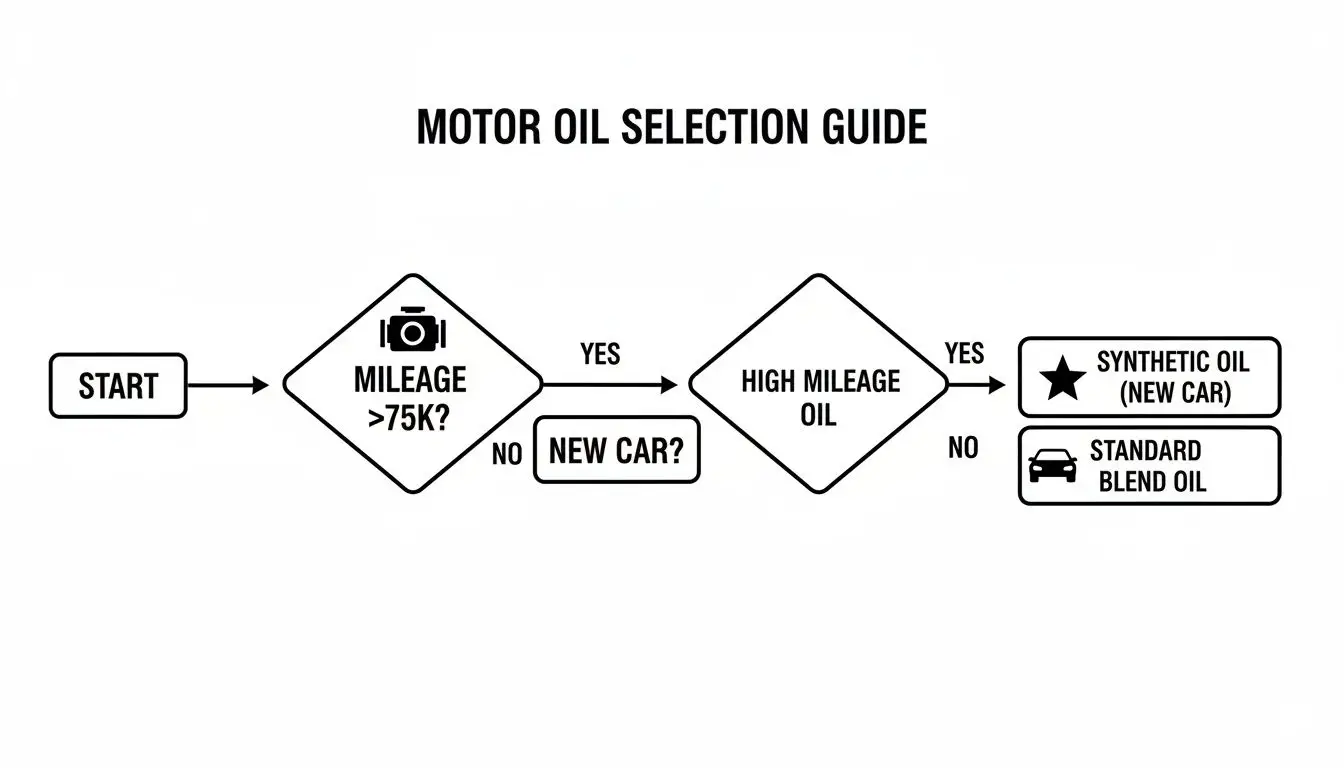
As you can see, mileage is the biggest factor when it's time to choose.
Cars Over 75,000 Miles
This is where your oil choice really starts to matter. After your odometer clicks past 75,000 miles, engine seals and gaskets have seen a lot of heat and pressure. They can start to get brittle, shrink, and lose their flexibility. That’s when you start seeing pesky oil drips on your driveway or notice you're burning through oil faster than you used to.
High-mileage oil is engineered specifically to help aging engines. Think of it less like simple lubrication and more like a treatment to keep your engine healthy.
This special formula is packed with additives and seal conditioners you won't find in other oils. These conditioners get absorbed by the old rubber seals, helping them swell up just enough to regain their original shape and pliability.
The result? This oil actively works to:
- Stop or reduce small oil leaks by reconditioning those worn-out gaskets.
- Cut down on oil consumption by improving the seal around piston rings.
- Clean out the sludge and deposits that have built up inside your engine over the years.
Switching to high-mileage oil is one of the easiest and most affordable ways to protect your older engine. To see exactly how it works, check out our guide on the benefits of a high-mileage oil change. It’s a simple step that can help you put off major repairs and keep your trusted car on the road for many more years.
Conventional vs. Synthetic Oil: A Deeper Dive
When you pull in for an oil change, one of the biggest choices you'll make is between conventional and full synthetic oil. It's a common question we get, and the answer makes a huge difference. Think of it this way: conventional oil is like a decent off-the-rack suit, while synthetic is like a perfectly tailored one. Both work, but one offers a level of precision the other can't touch.
Conventional oil is refined from the crude oil we pump out of the ground. Even after it's filtered, its molecules are naturally inconsistent—a mix of different shapes and sizes, like a handful of gravel. This irregularity means it breaks down faster under heat and pressure.
Full synthetic oil, on the other hand, is completely engineered. Scientists break down petroleum to its core molecules and rebuild them into uniform, perfectly consistent chains. It’s pure and incredibly stable right from the start.
The Real-World Benefits of Molecular Purity
That difference in molecular structure isn't just for science class—it has a massive impact on your engine's performance and lifespan. The uniform molecules in synthetic oil glide past each other with far less friction, which gives you some serious advantages.
Its biggest win is how it handles extreme temperatures.
- High-Heat Resistance: When your engine is working hard, especially in the Texas heat, conventional oil can start to burn off and form damaging sludge. Synthetic oil holds up much better, protecting your engine when it needs it most.
- Cold-Weather Flow: On a cold morning, conventional oil gets thick like molasses. This starves your engine of lubrication right when it’s working hard to turn over. Synthetics are engineered to stay fluid and flow immediately, protecting critical parts from the moment you start the car.
Because of its advanced formula, full synthetic oil also contains more powerful detergents and additives. These actively clean out existing sludge and deposits left behind by lesser oils, helping to keep your engine’s internal components running like new.
This superior performance is exactly why most modern cars—especially those with turbochargers or high-performance engines—now require full synthetic oil right from the factory. It’s the only way they can meet today’s demanding performance and emissions standards. To learn more, check out our guide: Is Conventional or Synthetic Oil Better for My Car?
Why Synthetic Is Becoming the New Standard
The entire auto industry is moving toward better performance and protection. It’s no surprise that the global automotive engine oil market is projected to hit USD 56.60 billion by 2033. That growth is fueled by the need for oils that deliver better fuel efficiency and lower emissions—something synthetic oil does best.
At the end of the day, choosing full synthetic is an investment in your engine’s health. Yes, it costs a little more upfront, but the longer time between oil changes and the superior protection it provides often makes it the smarter, more economical choice over the life of your vehicle.
Finding Your Local Oil Change Solution

Knowing the right oil change type is a great first step. Now, you need a shop you can count on to do the job right. This is where finding a trustworthy local team like Express Lube & Car Care makes all the difference.
We know your schedule is packed, which is why we’ve built our shop around convenience. You never need an appointment here. Just pull in when you’re ready, and we’ll get you back on the road fast without ever cutting corners on quality.
Honest Advice from Certified Experts
Real peace of mind comes from knowing your car is in the hands of professionals. Every technician on our team is ASE-certified, which means they’ve passed tough national standards for automotive service. Their job isn’t to push services you don’t need—it’s to give you clear, honest advice tailored to your vehicle.
When you come to our bay, we’ll help you pick the right oil based on your car’s age, mileage, and what the manufacturer recommends. We’ll also explain why it’s the best choice, so you always know what you’re paying for.
Our promise is simple: to deliver expert service with total integrity. We're not just here to change your oil; we’re here to be your partner in keeping your car healthy for the long haul.
It's a straightforward approach, but it’s what sets a great local shop apart. While the global oil change market is projected to grow to USD 2.07 billion by 2032, we know that earning your loyalty comes down to honest, convenient service, every single time.
Service and Savings for Our Community
We believe quality car care should be affordable for everyone in the Richland Hills community. Our service packages are priced to match the different oil types we’ve covered, from our standard conventional oil change to our premium full synthetic service.
We also offer several ways to help you save:
- Monthly Specials: Don’t forget to check our website for the latest deals on popular services.
- Ladies Day: We offer special discounts every week to make car care more accessible for everyone.
- Community Heroes: It’s our honor to provide savings for military members, first responders, and healthcare professionals.
These programs are our small way of saying thank you. Curious about what to expect? Read our guide on oil change prices for a breakdown of costs for each service.
Your Top Oil Change Questions, Answered
Let's cut through the confusion. When it comes to oil changes, there are a few common questions we hear from drivers all the time. Here are the straight answers you need to make the right call for your car.
How Often Do I Really Need a Synthetic Oil Change?
Forget the old 3,000-mile rule—that’s a thing of the past. With a good full synthetic oil, your car’s manufacturer might recommend going 7,500 to 10,000 miles between changes.
But that’s just a guideline. If you do a lot of city driving with stop-and-go traffic, make frequent short trips, or tow a trailer, your oil is working much harder. We can look at your car and talk about your driving habits to give you a personalized schedule that protects your engine without wasting your money.
Can I Switch Between Conventional and Synthetic Oil?
Absolutely. It’s perfectly safe to switch between conventional, synthetic blend, and full synthetic oils. You can upgrade anytime to get better performance and protection.
In fact, we highly recommend switching an older car to a high-mileage formula to help care for aging engine parts. You don’t need any special "engine flush" to make the change. The only thing that really matters is using the correct viscosity grade (like 5W-20 or 0W-30) specified for your vehicle. We’ll make sure you get the right one.
Being able to switch oil types gives you incredible flexibility. You can move from conventional to a synthetic blend for better protection or upgrade an older engine to a high-mileage formula to address specific needs like minor leaks.
Is Full Synthetic Worth It for My Older Car?
This is a great question. While full synthetic is the top-tier choice for protection, a high-mileage oil is often the smarter pick for a vehicle with over 75,000 miles. Think of it as specialized care for a seasoned engine.
High-mileage oils are packed with additives designed to condition aging seals, which helps reduce the small leaks and oil consumption common in older engines. They provide a fantastic balance of targeted protection and real-world value.
Our experts can walk you through the pros and cons to help you decide which oil change type is the right investment for your car and your budget. The right choice keeps your engine running strong and gives you peace of mind.
Ready to give your car the expert care it deserves? At Express Lube & Car Care, our ASE-certified technicians are here to help you choose the perfect oil and get you back on the road fast. Stop by anytime—no appointment needed! Learn more about our services at https://www.expressluberichlandhills.com.