

Your lunch break is 30 to 60 minutes, your car is overdue for an oil change, and you have a 1 p.m. meeting you cannot miss. Sound familiar? Getting the fastest oil change during lunch break is genuinely possible, but only if you know how to prepare, where to go, and what to watch for. Nearly 1 in 3 workers take 30 minutes or less for lunch, which means traditional dealership oil changes that run 45 to 90 minutes simply do not work. This guide walks you through everything from choosing the right provider to verifying the job was done right before you pull back into the parking garage.
Table of Contents
- Key takeaways
- What you need before the fastest oil change during lunch break
- Step-by-step: completing your oil change during lunch
- Common mistakes that slow you down or cost you later
- How to verify your car’s health after the service
- My take: fast oil changes can absolutely be done right
- Get your oil changed at Express Lube & Car Care during lunch
- FAQ
Key takeaways
| Point | Details |
|---|---|
| Express services fit your break | Stay-in-car oil change locations complete service in 10 to 15 minutes, leaving room in a 30-minute lunch. |
| Prep before you drive over | Know your car’s oil type and mileage ahead of time to avoid delays at check-in. |
| Skip appointments when you can | Walk-in express centers save the back-and-forth scheduling that eats into your available time. |
| Quality shortcuts exist | Reputable express providers use standardized training to maintain quality at speed, not just cut corners. |
| Post-service check takes 60 seconds | A quick look under the hood before driving off confirms the job was done right. |
What you need before the fastest oil change during lunch break
Showing up unprepared is the single biggest reason a quick oil change stops being quick. A few minutes of prep the night before will save you ten minutes of fumbling at the service bay.
Here is what to have ready:
- Your car’s year, make, model, and current mileage
- The oil type your vehicle requires (check your owner’s manual or the sticker from your last service)
- Your preferred service location’s address and hours confirmed in advance
- A rough idea of whether you want conventional, blend, or full synthetic oil
The choice of provider matters as much as the prep work. Not every shop that advertises speed actually delivers it. Look for locations that are explicit about their service window, have walk-in availability, and post clear pricing online. If you have to call and ask three questions just to find out how long the wait is, that is a sign the operation is not built for your schedule.
Pro Tip: Search “quick oil change near me” the evening before and check Google reviews specifically for comments about wait times. A place with 400 reviews that all mention being in and out fast is more reliable than one with a flashy website and no specifics.
| Service type | Appointment needed | Typical service time | Best for |
|---|---|---|---|
| Stay-in-car express lube | No | 10 to 15 minutes | Professionals with under 30 minutes |
| Quick-lube walk-in | No | 15 to 25 minutes | Those with 30 to 45 minutes |
| Dealership oil change | Usually yes | 45 to 90 minutes | Non-time-sensitive visits |
| Mobile oil change service | Scheduled in advance | 30 to 45 minutes | Those who want service at the office |
Walk-in no-appointment oil change centers are your best bet on a workday. They are designed for exactly this scenario and typically have multiple technicians working a single vehicle at once to cut the clock down.
Step-by-step: completing your oil change during lunch
Getting this right is mostly about managing the clock before you even start the engine. Give yourself a 5-minute buffer on both ends of the service window.
Here is a straightforward process that works:
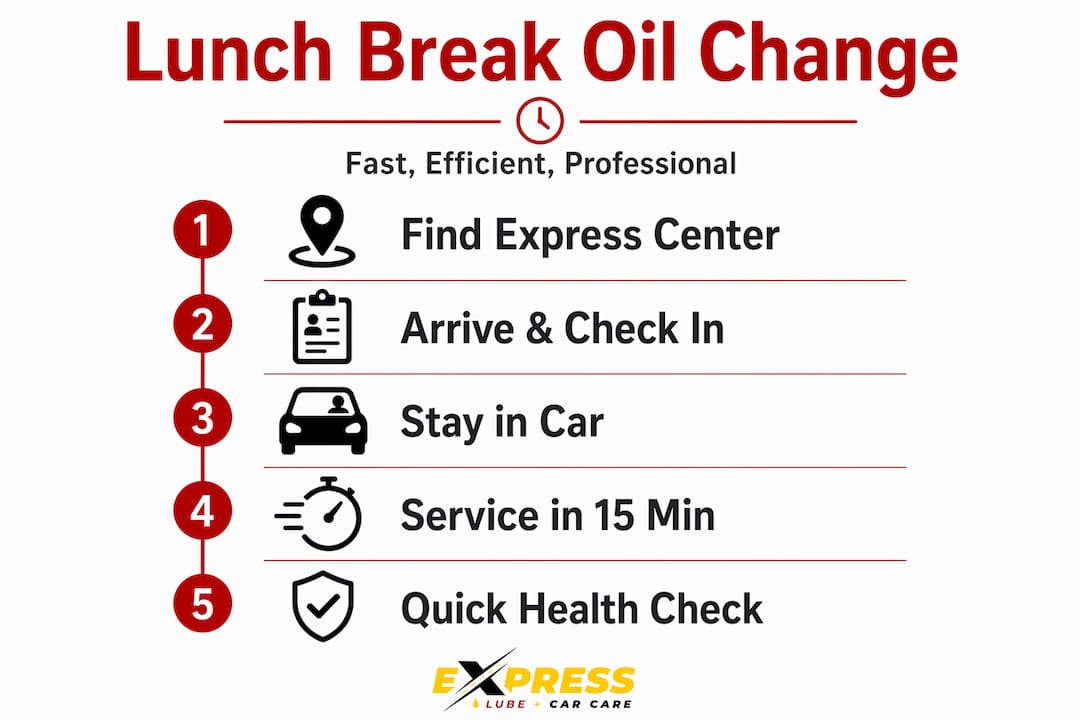
- Leave at the right time. Factor in driving time plus a 5-minute buffer. If your break starts at noon and the shop is 7 minutes away, leave by 12:05 at the latest.
- Call ahead if the shop allows it. Some express centers let you give your vehicle info by phone so you skip the intake form. One less form means two fewer minutes at the counter.
- Pull straight into the service bay. Most stay-in-car locations have clearly marked lanes. Drive in, roll down your window, and let the technician run the intake check.
- Stay in your car and keep working. Staying in your vehicle during service suits professionals who find it hard to disconnect, because you can continue calls or respond to emails without losing your flow.
- Monitor the service visually. A good tech will show you the dipstick reading before and after, plus walk through any fluid top-offs or filter findings. Pay attention. This takes 90 seconds and tells you a lot about the shop’s professionalism.
- Review and sign off quickly. Confirm the oil type used, the new mileage milestone for your next change, and the total cost before paying. No surprises, no delays.
- Do a 60-second check before leaving. Pop the hood, look at the oil cap, and glance underneath for drips. Drive the first block slowly and check your oil pressure light.
Express oil change efficiency comes down to standardized process, not just speed. Centers like Valvoline and Take 5 have eliminated dealership bottlenecks through proprietary multi-step procedures and consistent technician training, which is why a 10-minute oil change at a reputable express center is not a shortcut. It is a refined system. Take 5 Oil Change operates around 1,300 locations nationwide and averages a 10-minute service time, which is plenty achievable even on the shortest lunch break.
A typical express oil change during lunch covers more than just the oil. You should also expect the technician to replace the oil filter, check and top off windshield washer fluid, check tire pressure, and inspect the air filter visually. These are bundled in because they take seconds at the same service point, and skipping them at a quality shop is not really an option.
Pro Tip: Eat your lunch in the car while you wait. It sounds obvious, but most professionals forget they can reclaim that time and arrive back at the office both fed and finished.
Common mistakes that slow you down or cost you later
Speed-focused service is genuinely reliable when done right. The risk comes from choosing the wrong provider or ignoring a few critical details during the visit.
Watch for these red flags before and during your visit:
- No posted pricing. If a shop cannot tell you the cost upfront, expect sticker shock and a longer conversation at checkout.
- Vague service time estimates. “It depends” is not an answer from a shop designed for fast service. Express centers know exactly how long they take.
- Only one technician on your vehicle. Most express bays use two or three technicians simultaneously. One person working alone is a timing red flag.
- No confirmation of oil type before service. A tech who does not confirm your spec before draining is a tech who might use the wrong oil.
- Skipping the filter. Some budget shops skip or reuse the filter to save on cost and time. This defeats the whole purpose of the service.
The most technically serious mistake in express oil changes is the double gasket error. This happens when a technician installs a new oil filter without removing the old rubber seal, resulting in two gaskets stacking and eventually causing a rapid oil leak. It is not common at reputable shops, but it does happen when technicians are rushed or poorly trained.
Always verify your oil filter was replaced, not just topped off. Ask the technician to show you the old filter before they discard it. It takes five seconds and confirms the job was completed properly.
Checking your oil and filter change record before leaving the bay also protects you. A written receipt showing the oil type, filter part number, and technician’s initials is a shop that stands behind its work. No paper trail means no accountability.
How to verify your car’s health after the service
Most professionals skip the post-service check entirely because they feel pressed for time. Do not do that. A 60-second inspection protects you from a slow oil leak that turns into a $3,000 engine problem two weeks later.
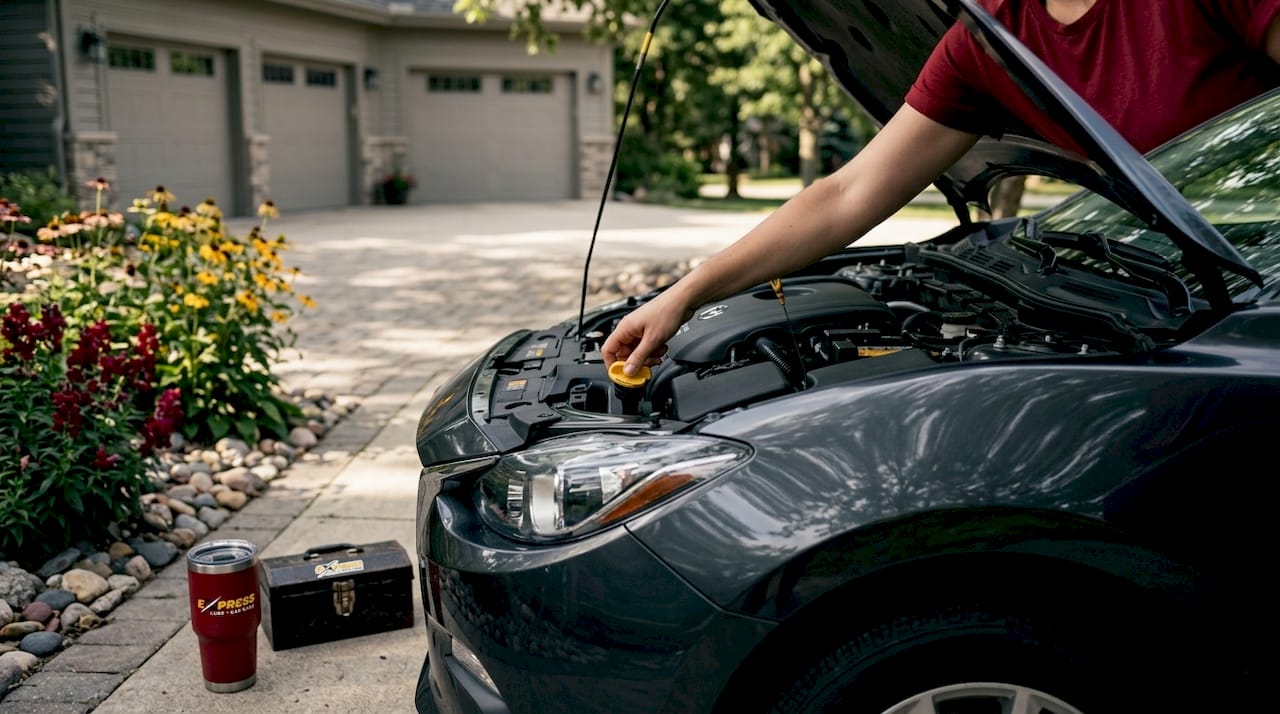
Here is a clear breakdown of what to do and why:
| Post-service step | What to check | Why it matters |
|---|---|---|
| Check oil cap seal | Make sure cap is tight and seated | Loose caps vibrate off at highway speed |
| Look under the car | Watch for drips near the drain plug | Confirms the plug was re-torqued properly |
| Check oil level on dipstick | Level should be near “full” mark | Confirms correct oil volume was added |
| Watch for warning lights | Oil pressure and check engine lights | Alerts you to a sensor or pressure issue |
| Smell test inside cabin | Burning smell can indicate oil on exhaust | Sometimes oil spills during fill and burns off |
Once you are back at work, snap a photo of your service receipt and store it in a notes app or your car’s glove box folder. This habit pays off when you sell the vehicle or when a future technician asks for service history. Keeping track of oil change benefits and intervals also helps you spot patterns. If your car is burning through oil faster than expected, that is diagnostic information your mechanic needs.
Pro Tip: Set a phone reminder for your next oil change mileage at the same time you store the receipt. It takes 20 seconds and you will never drive 2,000 miles past your interval again.
Regular short-visit maintenance is exactly what busy professionals need. Thirty minutes every three to five months is a lot less disruptive than a half-day shop visit to diagnose a neglected engine.
My take: fast oil changes can absolutely be done right
I have watched the express oil change industry shift significantly over the past decade. The old perception was that speed meant sloppy. That is genuinely outdated.
What I have seen firsthand is that the shift toward quick lubes was driven by consumer demand for convenience and real cost savings, and the best operators met that demand by building better systems, not by cutting corners. The providers worth trusting are the ones who invested in technician training, standardized processes, and transparent communication with customers.
My honest opinion: the bigger risk is not using an express center. It is using any center, fast or slow, without doing your homework. I have seen rushed mistakes at dealerships too. Speed is not the enemy. Accountability is what matters.
What actually works for busy professionals is treating lunch break vehicle maintenance the same way you treat any other appointment. Prepare the night before, choose a provider with a track record, and spend 60 seconds verifying the work before you leave. That habit removes almost all of the risk from fast oil changes.
Be informed. Ask one or two direct questions when you arrive. A good shop will answer them without hesitation, and that confidence is worth more than any time estimate on a sign.
— Express Lube & Car Care
Get your oil changed at Express Lube & Car Care during lunch
If you are in the Richland Hills area and looking for a fast oil change location that actually fits your schedule, Express Lube & Car Care was built for exactly that.
Our certified ASE technicians complete oil changes with no appointment required, so you can pull in on your lunch break without calling ahead. Every service includes a tire pressure check, fluid top-offs, and a full-service inspection so nothing gets missed in the rush. We use quality oil and filters on every vehicle, and our technicians will walk you through the service before you sign off. Check out our current oil change specials to see what fits your budget, and visit our oil change services page to learn what is included with every visit.
FAQ
How long does an express oil change actually take?
Most reputable express centers complete an oil change in 10 to 15 minutes, which fits comfortably inside a 30-minute lunch break when the shop is nearby.
Do I need an appointment for a lunch break oil change?
No. Walk-in express oil change centers are specifically designed to serve customers without appointments, making them ideal for unplanned or time-sensitive visits during the workday.
What is the double gasket problem and should I worry about it?
A double gasket happens when a technician installs a new oil filter without removing the old seal, which causes oil leaks. Ask the tech to show you the old filter before they discard it to confirm it was properly replaced.
Can I stay in my car during the oil change?
Yes, and many professionals prefer it. Stay-in-car service models let you keep working, take calls, or eat lunch while the service is completed, which suits professionals who cannot afford to lose that window of time.
What should I check after getting a quick oil change?
Confirm the oil level on the dipstick is at the full mark, look under the car for drips near the drain plug, make sure the oil cap is tight, and watch for any warning lights on your first short drive back to the office.