

Your car key fob quits at the worst time. You walk up to the car with your hands full, hit the button, and nothing happens. The same thing happens with a digital thermometer in the bathroom drawer, a small flashlight in the glove box, or a toy that suddenly goes quiet. Most of the time, the problem isn't complicated. It's one tiny button cell that has finally run out.
That's where battery replacement lr44 usually starts. You're not dealing with a big under-hood repair. You're dealing with a very small battery that powers a lot of everyday items, including some automotive accessories and compact electronics drivers keep close by. The good news is that replacing one is usually simple once you know what to look for, which battery names match, and when a same-size substitute is a smarter choice.
That Tiny Battery Powering Your Day
An LR44 battery usually comes to mind only after a small device lets you down. In the bays, I hear it as, “My remote stopped responding,” or “This little thing worked last week.” Around the car, that often means a compact accessory from the glove box, console, or key tray that suddenly acts dead when you need it.
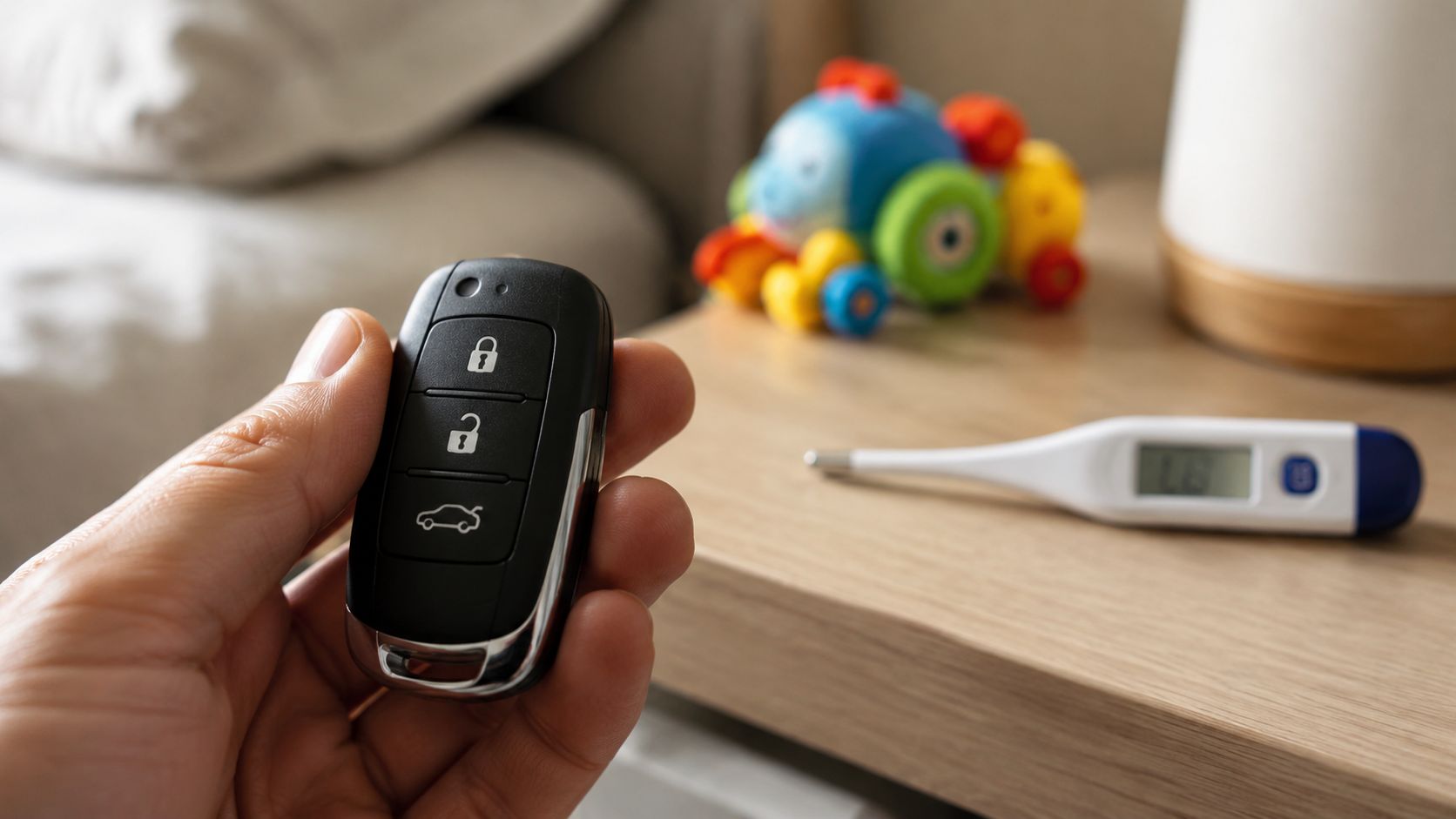
The LR44 is a common button cell used in small electronics because the physical size is standardized. Energizer lists the A76, a common LR44 equivalent, at 11.6 mm in diameter and 5.4 mm in height on its A76 battery specifications page. That consistency helps, especially when a battery swap needs to be quick and you do not want to guess.
Why this tiny battery causes outsized hassle
These batteries usually fail. A screen gets dim. A button works one time and not the next. Sometimes a device wakes up only after a second or third press.
That pattern fools people into chasing the wrong problem.
In a small automotive accessory or an older key-related device, the battery is often the first thing to check because it is cheap, easy to replace, and far more likely to be weak than the whole unit is to be broken. I tell customers the same thing I do in the shop. Start with the simple power source before replacing the device.
For drivers, it also helps to keep battery care in the bigger picture. Your key fob or accessory battery is a separate issue from the battery under the hood, but both can cause inconvenient no-start or no-access moments. If you want a quick refresher on the bigger one, these car battery maintenance tips are useful.
Why LR44 batteries show up so often
Manufacturers use LR44-size cells in compact items because they are easy to fit, easy to find, and inexpensive. That matters in small tools, thermometers, lights, and some vehicle-related accessories where there is not much room to spare.
For local drivers, that also creates a practical choice. You can replace one yourself in a few minutes, or you can have a shop handle it if the battery is buried in a tight case or the contacts are easy to bend. At Express Lube & Car Care, quick battery-related checks are a common ask from people who would rather not pry open a fragile plastic cover and risk breaking it.
Decoding the Codes Is It an LR44
A battery swap goes a lot smoother once you know what you are holding.
With LR44-size cells, the confusion usually starts with the label. The old battery may be scratched, the print may be faint, or the package on the store rack may use a different code for the same physical size. In the shop, I tell people to read the old cell first, then confirm the fit. That order prevents a lot of wrong purchases.
What to check on the old battery
Open the device carefully and look at the top of the battery under a bright light. If the lettering is hard to read, tilt the cell and rotate it slowly. The stamped code often shows up better from an angle than it does straight on.
If you can still read the marking, look for labels such as:
- LR44
- AG13
- A76
- L1154 or LR1154
- 157
Those names are commonly used for the same general button-cell size. A battery cross-reference chart from Microbattery is a good backup if the package label is not familiar. The physical size you are checking for is about 11.6 mm wide and 5.4 mm tall.
Why the code matters more than people expect
In automotive use, this comes up with small remotes and accessories, not just household gadgets. Drivers often assume every remote takes a flat CR-style coin cell because many key fobs do. Some older accessories, compact remotes, and small add-on devices still use LR44-size batteries instead.
That is why matching by appearance alone can get you in trouble. Two button cells can look close enough on the counter and still be the wrong thickness or the wrong chemistry for the device.
Common places drivers run into LR44-size batteries
You may see this size in:
- Garage door remotes kept on a key ring or visor
- Small accessory remotes used in or around the vehicle
- Pocket thermometers or mini tools stored in the glove box
- Compact flashlights, watches, and other carry items used during travel
A simple rule helps here. Trust the number printed on the old battery and the device marking before trusting a generic compatibility chart online.
A quick aisle-side check
If you are standing in front of the battery display, use this quick checklist:
| Check | What matters |
|---|---|
| Printed code | Match LR44 or one of its common equivalent labels |
| Physical size | The replacement should match the original diameter and height |
| Device tolerance | Basic accessories are usually less picky than precision electronics |
If the code and size line up, you are on the right track. If the battery compartment is tight, the cover feels brittle, or the remote is part of something you rely on every day, it may be smarter to let a technician handle it. At Express Lube & Car Care, that kind of quick battery check is a practical fix for drivers who would rather avoid breaking a small plastic case over a cheap battery.
Alkaline vs Silver Oxide Choosing the Best Replacement
A lot of LR44 replacement mistakes happen after the battery is already in hand. The new cell fits, the cover goes back on, and the device still works poorly or dies sooner than expected. In small automotive accessories like key fobs, visor remotes, and clip-on travel tools, battery chemistry can be the reason.
The practical difference
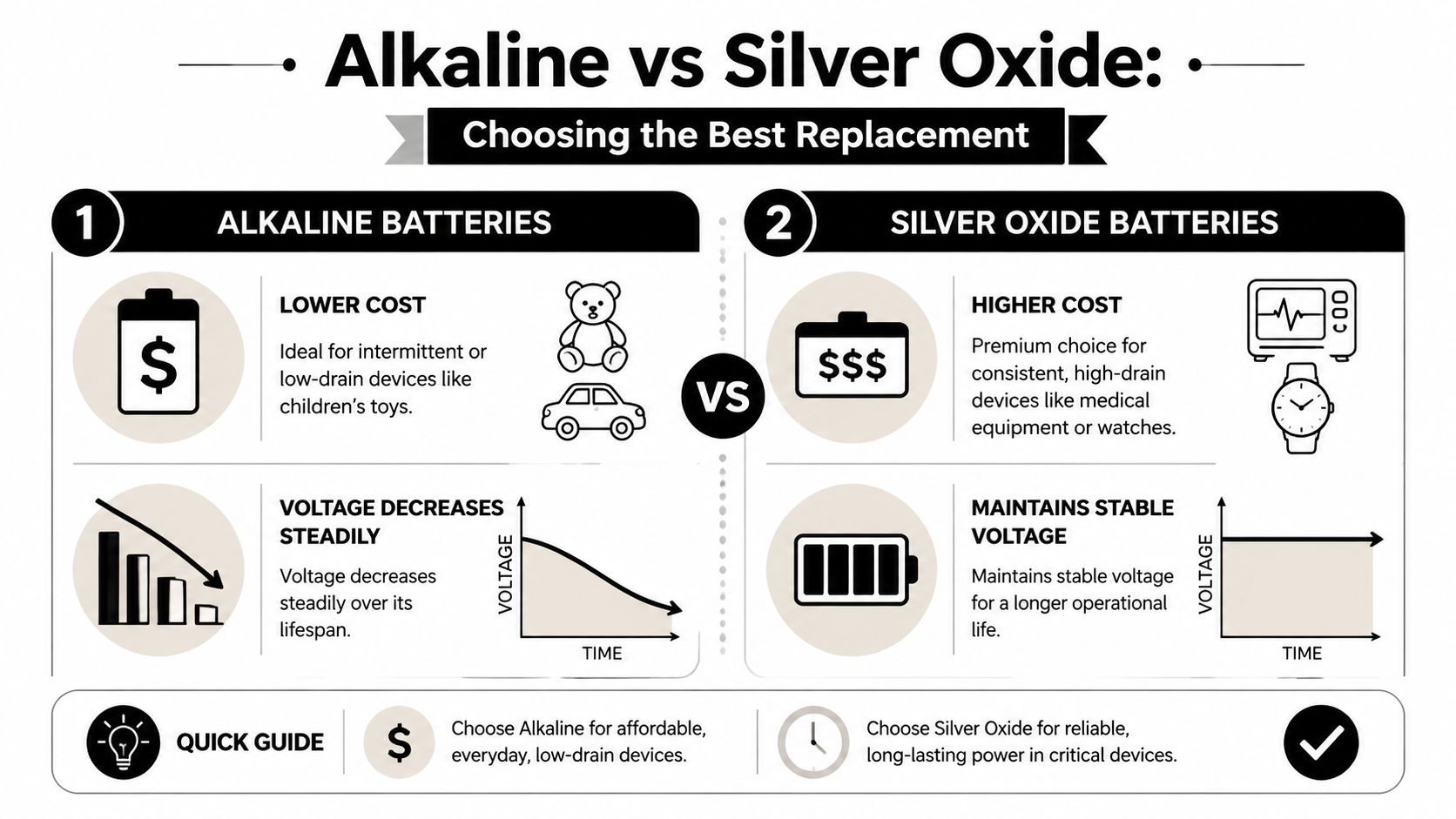
An alkaline LR44 is the cheaper, easy-to-find option. A silver-oxide SR44 or 357 is the same basic size, but it usually delivers steadier voltage and longer service life. As explained in this LR44 and SR44 comparison, silver-oxide versions are commonly used when a device needs more consistent output instead of a basic physical fit for the compartment.
That difference shows up in real use. Alkaline batteries tend to taper off as they drain. Silver-oxide batteries hold their voltage more evenly for longer, which helps small electronics stay predictable.
LR44 vs SR44 at a glance
| Feature | Alkaline (LR44/AG13) | Silver-Oxide (SR44/357) |
|---|---|---|
| Chemistry | Alkaline zinc-manganese | Silver-oxide |
| Typical use | Simple, low-drain devices | Precision and steady-output devices |
| Voltage behavior | Drops steadily during use | Stays flatter for longer |
| Cost direction | Lower | Higher |
| Best fit | Toys, calculators, basic thermometers | Watches, medical devices, sensitive electronics |
For a basic remote or simple accessory, alkaline usually does the job. For a key fob or another small device that gets finicky with weak voltage, silver-oxide is often the better buy.
What Works in Real Life
For low-drain items that are used once in a while, alkaline is usually acceptable. If the device is inexpensive and easy to open again, many drivers are fine trading shorter life for lower cost.
For devices you count on, silver-oxide is the safer choice. That includes many watches, compact measuring tools, and some small remotes carried in the car. If you need to replace your G-Shock watch battery, this is the same kind of decision. Matching the size is only part of the job. Using the right chemistry helps the device keep time and respond properly.
Brand quality matters too. Two LR44 batteries on the same store peg can perform very differently, even with similar labels. In the shop, I see that most often with bargain multipacks. They save a few dollars up front, then come back as a repeat repair because the remote range drops off or the battery quits early.
A simple decision rule
Pick the battery for the device, not just the battery tray.
- Choose LR44 or AG13 for basic, low-cost devices that are not sensitive to voltage drop.
- Choose SR44 or 357 for devices that need steadier output or are annoying to reopen.
- Follow the device spec if the manufacturer names a specific chemistry.
For automotive use, this matters most when the battery goes into something you rely on daily. If you are dealing with a stubborn key fob case or you would rather not risk breaking a small plastic tab, Express Lube & Car Care can handle a quick battery swap and make sure the replacement is the right type before the case is snapped back together.
The Simple Guide to Safe Battery Replacement
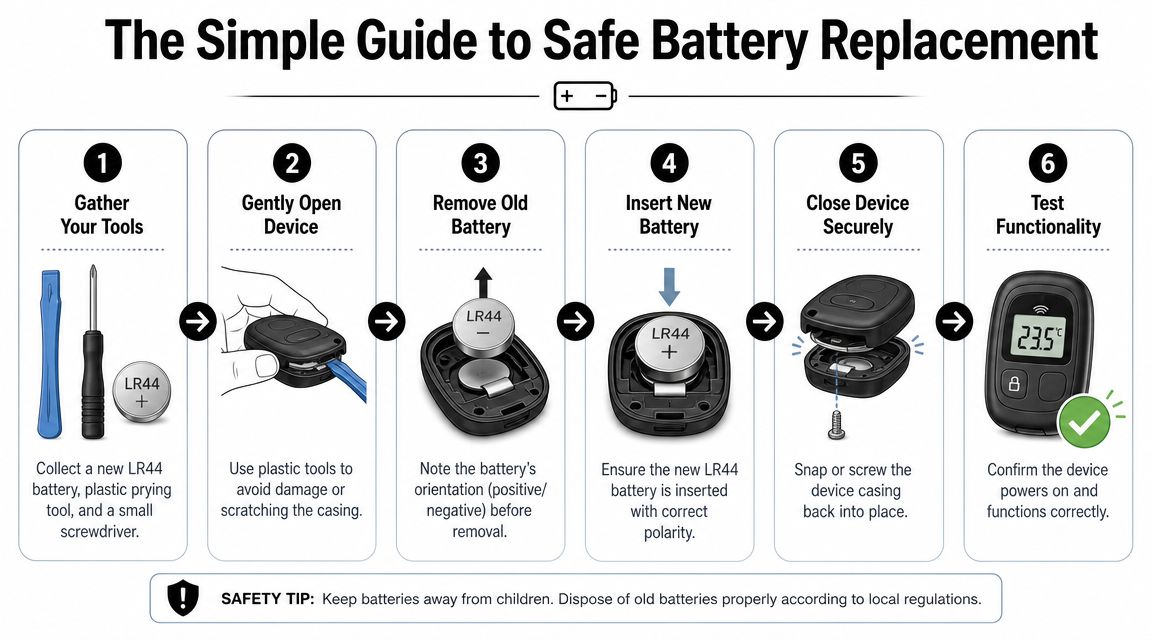
Good battery replacement lr44 work is mostly about staying gentle and paying attention. The parts are small, the battery compartment clips are easy to crack, and the contacts don't like dirt or corrosion. You don't need a full tool cart. You just need the right touch.
Before you open anything
Set the device on a clean towel or mat so the battery can't roll away. Have the replacement battery ready before you remove the old one. If the device has power, shut it down first.
For a reliable replacement, power the device down, use plastic or ceramic tweezers to remove the old cell, clean the contacts with isopropyl alcohol if they're corroded, and verify polarity before insertion as outlined in this technical LR44 replacement guide.
The swap itself
Here's the approach that avoids most problems:
Open the compartment carefully.
Use the correct mini screwdriver or a plastic pry tool. Don't force a snap tab if a hidden screw is holding the case.Notice the battery position before removal.
Look for the + mark on the battery and inside the tray. A quick phone photo helps if you think you might forget orientation.Lift the old cell with non-metal tweezers.
Plastic or ceramic tools reduce the chance of shorting the battery or scratching the contact surfaces.Inspect the contacts.
If you see white or green residue, clean it gently with isopropyl alcohol on a swab and let it dry.Seat the new battery fully.
Don't wedge it in sideways. It should sit flat and make even contact.Close the device and test it right away.
If it works immediately, you've likely got the fit and polarity right.
A lot of battery “failures” are really contact problems, not bad batteries.
A few mistakes that waste time
People usually run into trouble in the same spots:
- Using a metal tool and accidentally shorting the cell
- Forgetting polarity and installing the new battery upside down
- Ignoring corrosion that blocks a clean electrical path
- Forcing the case closed when the battery isn't seated correctly
If you're working on another compact device with a tight case and delicate seals, a visual guide like this one on how to replace your G-Shock watch battery can help you think through the same kind of careful handling.
When it makes sense to hand it off
If the case feels fragile, the contacts look damaged, or the device matters enough that you don't want to risk breaking a clip, a local service counter is a reasonable option. Express Lube & Car Care handles battery-related service, which is useful when you'd rather have someone else deal with small parts and avoid cracking a housing.
Smart Safety Disposal and Troubleshooting
Once the new battery is in, don't toss the old one on the counter and forget about it. Button cells are small enough to disappear fast, and that creates risk in homes with kids or pets. Put the old battery somewhere secure right away until you can dispose of it properly.
Safe handling after removal
Store used and new button batteries where children and pets can't reach them. A zip bag or small container is better than a loose battery in a junk drawer.
For disposal, check local recycling programs, municipal collection options, or store take-back programs in your area. Button cells shouldn't just bounce around in a cup holder or toolbox.
If the device still won't work
When a fresh battery doesn't solve it, slow down and go through a short checklist.
- Check the orientation. The plus side has to match the compartment marking.
- Inspect the contacts again. A clean battery on dirty contacts still won't perform well.
- Make sure the battery is seated flat. A battery that's cocked at an angle may not touch both contact points.
- Look for a damaged clip or bent terminal. Tiny metal tabs can lose tension.
- Verify the chemistry choice. Same size doesn't always mean same behavior in sensitive electronics.
A common mistake is assuming all equivalents are interchangeable in every device. While an LR44 and SR44 are the same size, their different chemistries and discharge behavior can affect sensitive electronics, as explained in this plain-language battery equivalence note.
If a device is picky, the problem may not be the battery size. It may be the battery chemistry.
Broader battery questions come up too
Sometimes people replacing a button cell are also comparing other battery types for household gear, toys, or test devices. If that's you, this guide on choosing 9-volt lithium-ion batteries is a useful companion read because it helps frame chemistry and application in simple terms.
And if your battery questions extend from tiny cells to the one under your hood, this walkthrough on how to replace a car battery covers the bigger job.
Fast Key Fob Battery Swaps in Richland Hills
Car key fobs make some people nervous for good reason. The plastic shells can feel brittle, the clips are small, and nobody wants to break a remote that costs far more than the battery inside it.
Why many drivers skip the DIY route
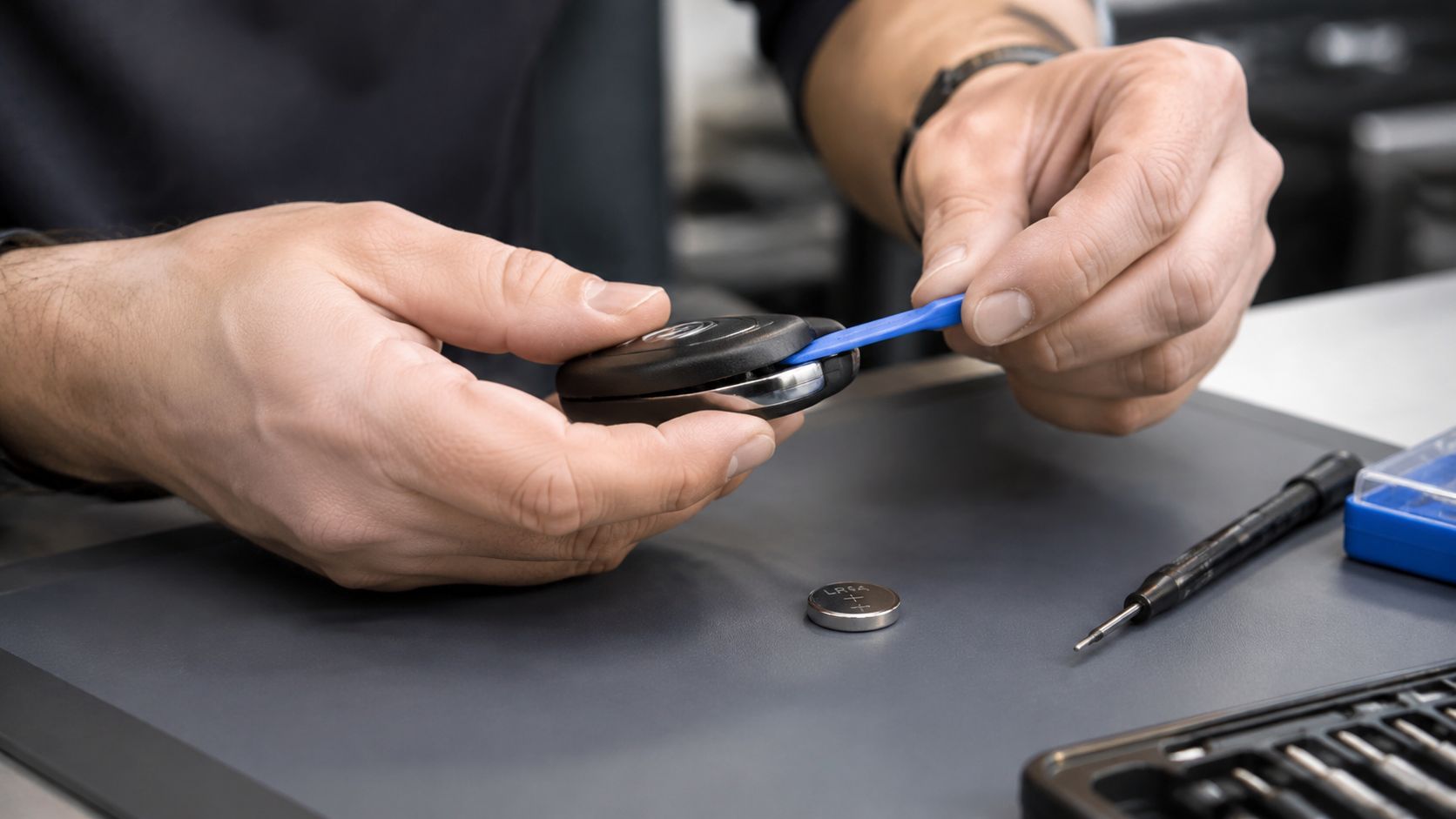
The battery itself may be simple. The housing often isn't. Some fobs pop open easily. Others hide seams so well that people pry in the wrong spot, scar the case, or snap a retainer tab.
That's usually the point where a quick errand beats a careful kitchen-table project. If you'd rather have someone open the case, swap the cell, and check that the remote still responds properly, scheduling a visit through the Express Lube & Car Care appointment page is the straightforward option.
A short visual can also help if you want to see the general process before deciding whether to try it yourself:
A simple local solution
For drivers in Richland Hills and nearby Northeast Tarrant County, key fob battery help is one of those small services that can save a surprising amount of aggravation. It's the same reason people ask for wiper installs or bulb changes. The job is small, but the wrong move can create a bigger problem.
If your remote is dead, inconsistent, or physically difficult to open, having a technician handle it can spare you the guesswork. That's especially true if you're already stopping in for routine maintenance and want one less thing on your list.
If your key fob, remote, or small electronic accessory has gone quiet and you'd rather not wrestle with tiny clips and button cells, Express Lube & Car Care is a practical local option. You can stop in for help with battery-related service, get a clear answer on what's going on, and get back on the road without turning a small problem into a frustrating one.