

A neighborhood car care center is a locally operated auto repair and maintenance facility that delivers trustworthy, convenient, and transparent vehicle services to drivers in its surrounding community. Unlike a dealership service department or a national chain, these shops are built around personal relationships, certified expertise, and honest pricing. You get your oil changed, your brakes inspected, and your check engine light diagnosed by technicians who know your car and your name. This article breaks down exactly what these centers offer, how they maintain quality, and why they often outperform the bigger alternatives for everyday drivers.
What is a neighborhood car care center and what services does it offer?
A neighborhood car care center, also called a community auto service center, is a locally owned or independently operated shop that handles everything from routine maintenance to complex mechanical repairs. The industry term you will hear most often is “independent auto repair shop,” but neighborhood car care center captures the community focus these businesses are built around.
The service menu at a well-run center covers far more ground than most drivers expect:
- Oil changes and fluid services (engine oil, transmission fluid, coolant flushes)
- Brake inspection and repair (pads, rotors, calipers, brake fluid)
- Wheel alignment and tire rotation
- Engine and transmission diagnostics
- Air conditioning and heating system repair
- Battery testing and replacement
- Suspension and steering repairs
- Scheduled factory maintenance for domestic, Asian, and European vehicles
Service completion times typically range from minutes for routine maintenance to same-day for many common repairs. That means you are not leaving your car overnight for a simple oil change or a brake pad swap. For busy drivers, that turnaround is the difference between a minor inconvenience and a full day disrupted.
Pro Tip: Ask the shop whether they service your specific make before you book. A center experienced with Toyota, Ford, and BMW will have the right tools and software to pull accurate diagnostic codes, which saves time and money.
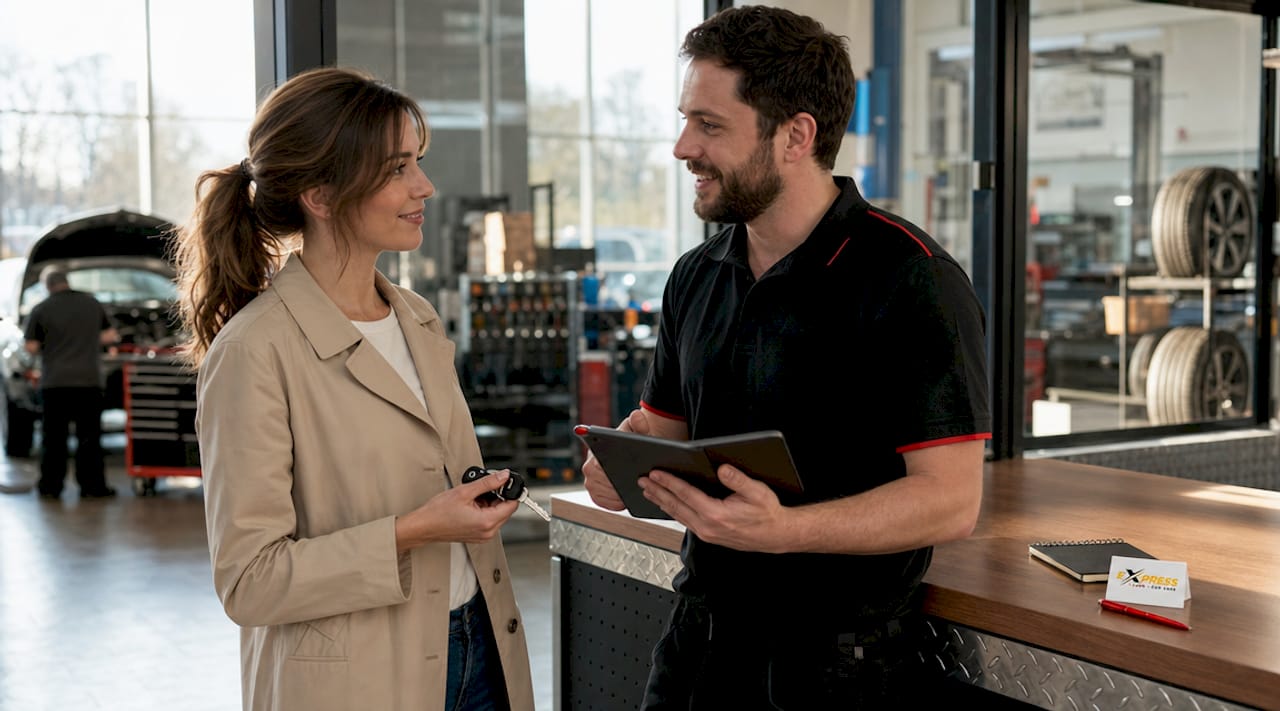
How do neighborhood car care centers ensure service quality and transparency?
Quality at a neighborhood center starts with the technicians. ASE-certified technicians are trained on diverse vehicle models to meet industry standards for vehicle service. ASE stands for Automotive Service Excellence, and it is the nationally recognized credential that tells you a mechanic has passed rigorous testing in their specialty area. When you see that certification on the wall, it is not decoration. It means the person working on your car has demonstrated competence.
Transparency is the second pillar. Here is how reputable centers handle it:
- Upfront diagnostic fee disclosure. You are told what the diagnostic check costs before any work begins, so there are no surprises on the invoice.
- Written estimates before repairs. Customer-approved estimates are provided before work commences, meaning nothing gets fixed without your sign-off.
- Plain-language explanations. A good technician walks you through what is wrong, why it matters, and what happens if you delay the repair. No jargon, no pressure.
- No surprise charges. If the scope of a repair changes, you get a call before the bill changes.
“The core of a neighborhood center is built on honest, no-pressure recommendations prioritizing customer understanding.” — Tino Torres Auto Repair
This approach stands in direct contrast to the upsell-heavy experience many drivers report at dealerships. When a technician explains a repair in plain terms and gives you the choice to approve or decline, you leave feeling respected rather than pressured.
How do neighborhood centers compare to dealerships and national chains?
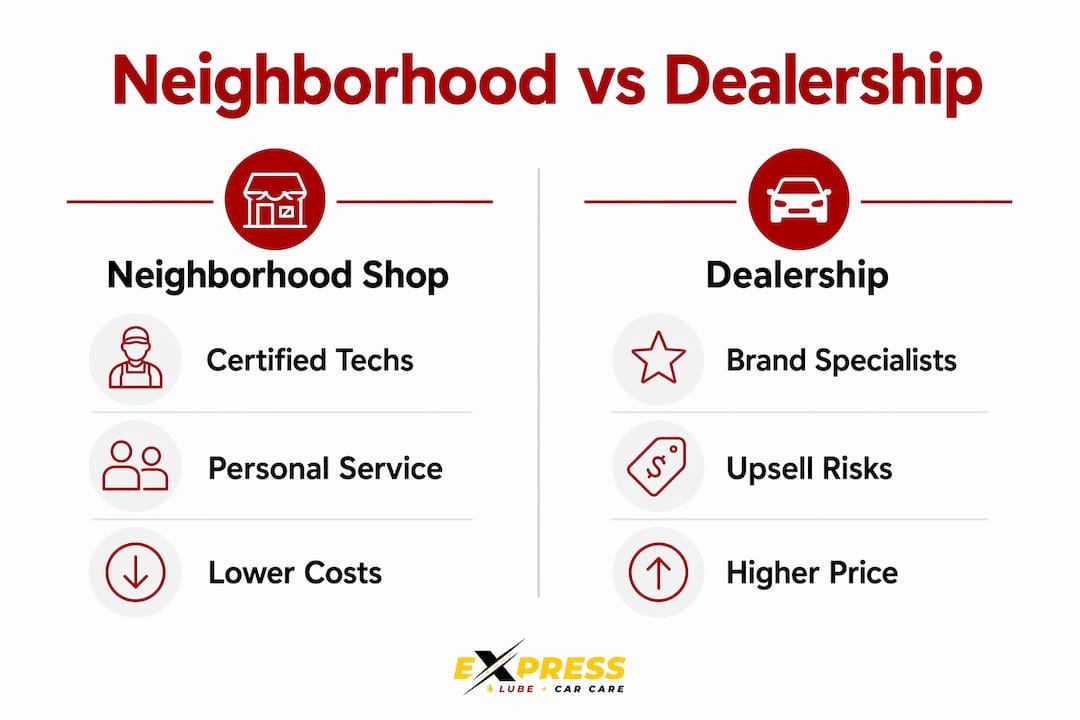
This is where the real value becomes clear. Here is a direct comparison across the factors that matter most to car owners:
| Factor | Neighborhood car care center | Dealership | National chain |
|---|---|---|---|
| Technician certification | ASE-certified, often master-level | Factory-trained for one brand | Varies by location |
| Pricing transparency | Upfront estimates, no surprises | Often higher labor rates | Standardized but less flexible |
| Personal relationship | Knows your vehicle history | Rotates service advisors | Minimal continuity |
| Local knowledge | Tailored to local roads and climate | Generic recommendations | Generic recommendations |
| Appointment flexibility | Walk-ins often welcome | Appointment usually required | Appointment often required |
| Warranty coverage | National warranties available | Manufacturer warranty tied | Varies by chain |
Neighborhood shops are designed to build long-term relationships and maintain vehicle histories in a way dealerships simply do not prioritize. Your dealership service advisor likely does not remember you from your last visit. Your neighborhood mechanic probably does.
Local knowledge is a genuine differentiator. Centers that understand local driving conditions give maintenance advice adapted to local roads and climate rather than defaulting to generic manufacturer schedules. A shop in a region with harsh winters will flag your battery and coolant system differently than one in a mild climate. That specificity matters for your car’s longevity.
Pro Tip: When comparing costs, factor in the auto repair cost comparison between neighborhood shops and dealerships. Labor rates at independent centers are typically lower, and the work quality from ASE-certified technicians is equivalent.
What practical benefits do neighborhood car care centers offer car owners?
Beyond quality and transparency, neighborhood auto repair shops deliver a set of practical advantages that make day-to-day car ownership easier.
- Mobile service options. Some centers now use mobile repair units to perform brake repair, diagnostics, and oil changes directly at your home or workplace. If you cannot get to the shop, the shop comes to you.
- Loyalty programs with real savings. Loyalty programs at neighborhood centers can save regular customers up to 30% annually compared to standard rates, with VIP perks like priority scheduling and discounted services. That adds up fast for a driver who services their vehicle every 5,000 miles.
- National warranty coverage. Many shops provide 24-month/24,000-mile warranties that protect you even when you are traveling far from home. You are not locked into returning to the same location for warranty work.
- Faster turnaround. Without the bureaucratic layers of a dealership service department, neighborhood centers move quickly. Same-day service on common repairs is the norm, not the exception.
- Ongoing vehicle history. A shop that has serviced your car for years knows its quirks. They catch patterns, like a recurring coolant issue or a brake system that wears faster than average, that a new technician seeing your car for the first time would miss entirely.
For drivers who want to find reliable car maintenance without the hassle of dealership scheduling or the anonymity of a national chain, a neighborhood center hits the right balance of expertise, speed, and personal service.
Key takeaways
A neighborhood car care center delivers the best combination of certified expertise, transparent pricing, and personalized service for drivers who want reliable local maintenance without dealership costs or chain-level anonymity.
| Point | Details |
|---|---|
| Certified technicians | ASE-certified mechanics handle everything from oil changes to complex diagnostics. |
| Transparent pricing | Written estimates and upfront diagnostic fees mean no surprise charges on your invoice. |
| Local knowledge advantage | Shops tailor maintenance advice to your region’s roads and seasonal conditions. |
| Loyalty savings | Repeat customers can save up to 30% annually through neighborhood loyalty programs. |
| National warranty protection | Many centers offer 24-month/24,000-mile warranties that cover you anywhere in the country. |
Why I think most drivers underestimate their neighborhood shop
We see it constantly at Express Lube & Car Care. A driver comes in after years at a dealership, slightly skeptical, expecting a lesser experience. Within one visit, that changes. The reason is simple: we actually talk to you. We explain what we found, what it costs, and what happens if you wait. No pressure, no manufactured urgency.
What I have observed over years of local auto service is that drivers often assume bigger means better. A dealership with a glass showroom and a waiting room with espresso feels premium. But the technician working on your car at a dealership is often less experienced with your specific issue than a master-level ASE technician at a neighborhood shop who has seen that exact problem on that exact model a dozen times.
The local auto repair shop advantage is not just about cost. It is about continuity. When the same technician services your vehicle repeatedly, they build a mental model of how your car behaves. That institutional knowledge catches problems early and saves you money over time. I would take that over a rotating cast of dealership advisors any day.
— Express Lube & Car Care
Get fast, honest car care at Express Lube & Car Care Richland Hills
Express Lube & Car Care is the neighborhood car care center Richland Hills drivers rely on for fast, certified, and fairly priced vehicle service. Whether you need a quick oil change or a full diagnostic, our ASE-certified technicians handle it with no appointment required.
Right now, Express Lube & Car Care has oil change and service specials available for drivers who want quality maintenance at a price that makes sense. Walk in, get an honest estimate, and drive out the same day. No surprises, no pressure. Just the kind of straightforward local car maintenance that keeps your vehicle running right and your schedule intact.
FAQ
What is a neighborhood car care center?
A neighborhood car care center is a locally operated auto repair and maintenance shop that provides services like oil changes, brake repair, diagnostics, and wheel alignment to drivers in the surrounding community. These centers are known for certified technicians, transparent pricing, and personalized service.
What services do car care centers typically offer?
Most neighborhood centers offer oil changes, brake repair, wheel alignment, engine diagnostics, air conditioning service, battery replacement, and scheduled factory maintenance for domestic and foreign vehicles. Many complete routine services the same day.
How do I choose a car care center near me?
Look for ASE-certified technicians, written estimates before any work begins, and a shop that has experience with your vehicle’s make and model. Positive local reviews and a clear warranty policy are also strong indicators of a trustworthy shop.
Are neighborhood car care centers cheaper than dealerships?
Neighborhood auto repair shops typically charge lower labor rates than dealerships while delivering equivalent or better service quality from ASE-certified technicians. Loyalty programs at some centers can save regular customers up to 30% annually compared to standard rates.
Do neighborhood car care centers offer warranties?
Many neighborhood shops provide national warranties such as 24-month/24,000-mile coverage, which protects you even when traveling outside your local area. Always confirm the warranty terms before authorizing any major repair.