

A local oil change center is a quick-lube facility focused exclusively on motor oil changes, chassis lubrication, and routine preventive maintenance. The industry term for these businesses is “automotive oil change and lubrication shop,” classified under NAICS code 811191, covering passenger cars, trucks, and vans. You will not find engine rebuilds or electrical diagnostics here. What you will find is a fast, no-fuss service model built around keeping your vehicle running between bigger shop visits. Chains like Jiffy Lube popularized the format, but thousands of independent and regional operators now offer the same core services, often with shorter wait times and more personal attention.
What is a local oil change center and what does it do?
A local oil change center is defined by its narrow, deliberate focus. NAICS 811191 describes these shops as working primarily on oil changes and lubrication, not mechanical or electrical repairs. That focus is a feature, not a limitation. It means the staff is highly practiced at exactly the tasks you need most often, and the whole operation is built around getting you in and out quickly.
The core service is a motor oil change, and most centers offer three oil types to match your vehicle and budget:
- Conventional oil: The standard option, suitable for older vehicles or those with lower mileage.
- Semi-synthetic (blend) oil: A middle-ground option that offers better protection than conventional at a moderate price.
- Full synthetic oil: The standard oil change offering for modern engines, high-performance vehicles, and extreme driving conditions.
Beyond the oil itself, most centers also perform chassis lubrication, oil filter replacement, and a basic multi-point inspection. Many locations add tire rotations, air filter swaps, cabin filter replacements, wiper blade changes, and fluid top-offs for coolant, brake fluid, and transmission fluid. These add-ons are worth asking about because bundling them into one visit saves you time and often money.
Pro Tip: Before you pull in, check the center’s service menu online. Knowing what they offer helps you decide in advance whether to add a tire rotation or filter change, so you are not making that call under pressure at the service counter.
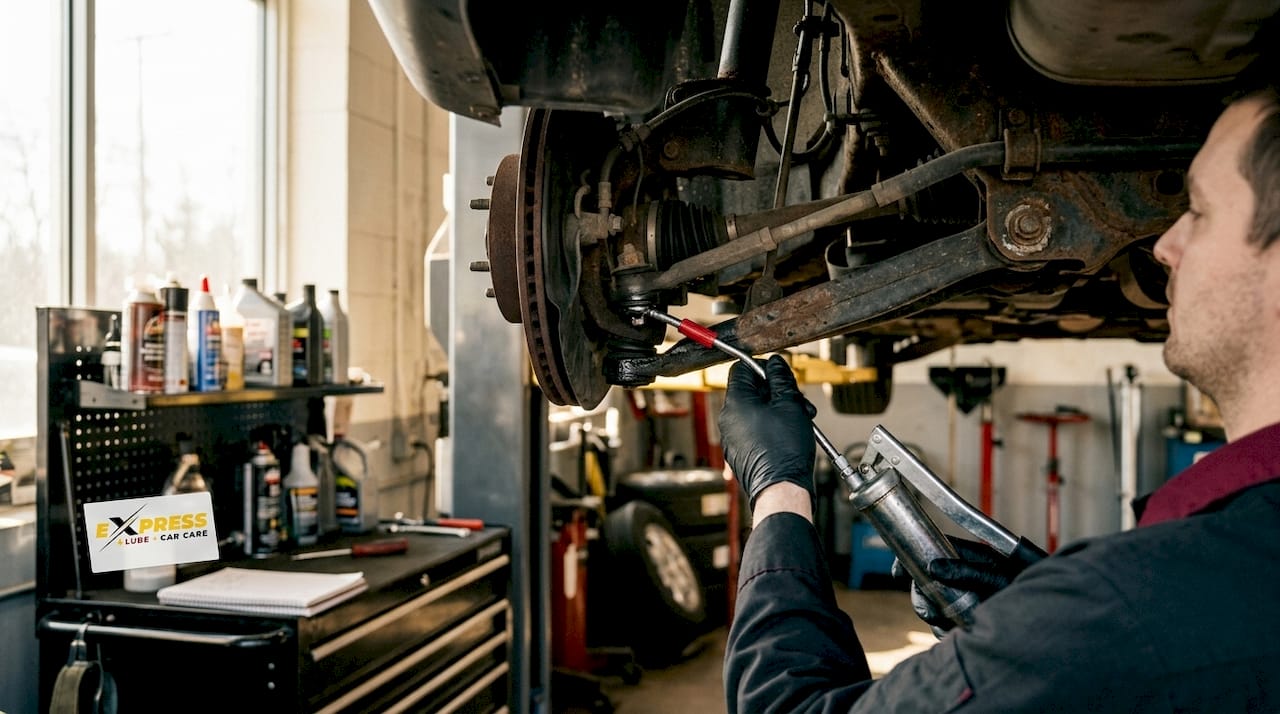
What these centers do not do is equally worth knowing. Oil change services do not include body work, paint, interior repairs, glass replacement, or mechanical diagnostics. If your check engine light is on or your brakes are grinding, a quick-lube center is not the right stop. That distinction matters because confusing the two can leave real problems unaddressed.
How does a quick-lube center differ from a full-service auto repair shop?
The difference comes down to scope and speed. A quick-lube center handles preventive maintenance, while a full-service auto repair shop handles diagnostics, component replacement, and complex repairs. Both serve a purpose. The mistake is using one when you need the other.
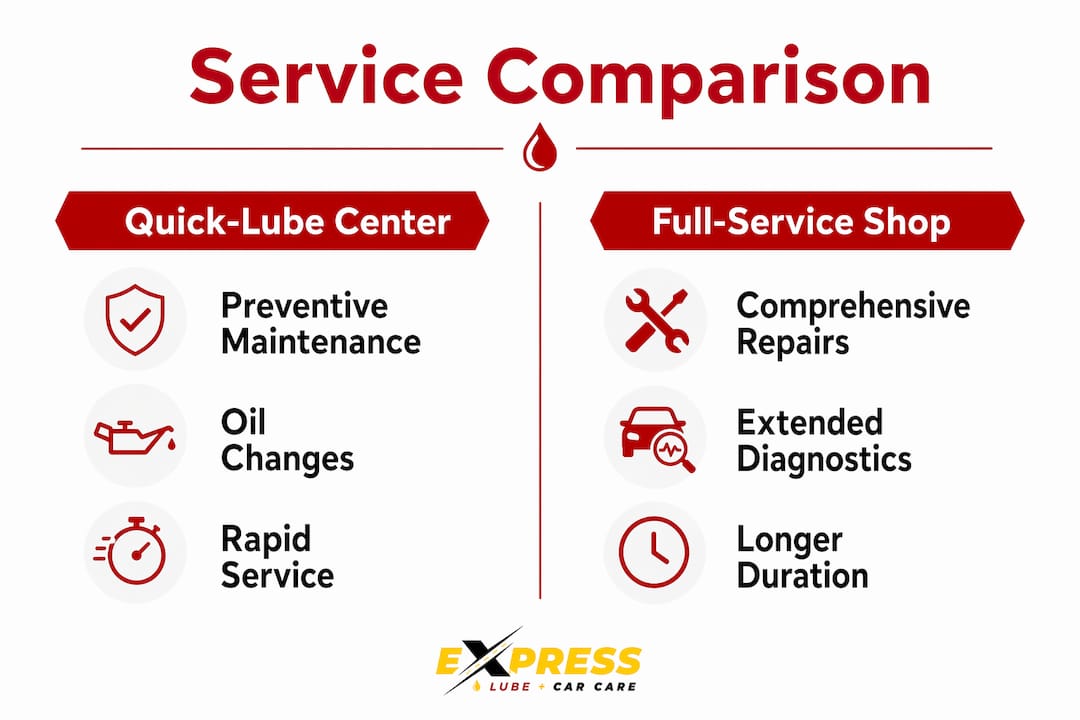
Here is a side-by-side comparison to make the distinction concrete:
| Feature | Local oil change center | Full-service auto repair shop |
|---|---|---|
| Primary focus | Preventive maintenance and lubrication | Diagnostics, repairs, and component replacement |
| Typical wait time | 15 to 30 minutes | 1 hour to several days |
| Appointment required | Usually no | Often yes |
| Oil changes | Yes | Yes |
| Engine or transmission repair | No | Yes |
| Electrical diagnostics | No | Yes |
| Body or paint work | No | Sometimes |
| Pricing for oil change | Generally lower | Generally higher |
Quick-lube centers are specifically designed for rapid service, and many allow customers to stay in their vehicles throughout the process. That model is not just a convenience gimmick. It reflects a deliberate business design where every step is optimized for speed without sacrificing the quality of the maintenance itself.
Full-service shops, by contrast, need more time because their work is more complex. A mechanic diagnosing a rough idle or replacing a timing belt cannot rush the process. The oil change pricing at a full-service shop also tends to run higher because overhead costs are greater and technician time is billed differently.
The practical takeaway: use a local oil change center for scheduled maintenance on a healthy vehicle, and use a full-service shop when something is actually wrong.
What should you consider when choosing an oil change center near you?
Finding the best local oil change comes down to a handful of factors that are easy to evaluate before you ever pull into a bay. Location matters, but it should not be the only thing you weigh.
- Reputation and reviews: Check Google reviews and look for consistent comments about wait times, honest recommendations, and whether the staff tried to upsell unnecessary services. A pattern of positive feedback from local drivers is a reliable signal.
- Certifications: ASE-certified technicians have passed standardized competency tests. Centers staffed by ASE-certified professionals are more likely to perform services correctly and catch legitimate issues during their inspection.
- Pricing transparency: A trustworthy center posts its prices clearly, either on a board in the shop or on its website. Vague pricing or surprise charges after the fact are red flags.
- Oil brands and types offered: Ask which oil brands they stock. Reputable centers use name-brand oils from manufacturers like Mobil 1, Valvoline, or Pennzoil, and they should be able to show you the container.
- Wait time and walk-in policy: Many drivers prefer a center that accepts walk-ins without an appointment. Knowing the typical oil change wait time at your chosen location helps you plan your day.
- Service range: If you want to combine an oil change with a tire rotation or filter replacement, confirm the center offers those services before you arrive.
Pro Tip: Call ahead and ask two questions: “Do you use the oil grade specified in my owner’s manual?” and “What does your multi-point inspection cover?” A center that answers both questions clearly and confidently is one worth trusting.
Pricing is worth a separate note. Local oil change services vary in cost depending on oil type, vehicle make, and region. Conventional oil changes typically run lower than synthetic, and many centers offer coupons or loyalty discounts that bring the price down further. Checking for current specials before your visit is a simple habit that pays off.
How to get the most out of every oil change visit
Using a local oil change center well means treating it as part of a deliberate maintenance routine, not just a reactive stop when the oil light comes on. Here is a straightforward approach that keeps your vehicle in better shape over time.
- Follow your manufacturer’s interval, not just the sticker. Many quick-lube centers place a reminder sticker in your window suggesting a return at 3,000 miles. Modern synthetic oils and newer engines often allow 5,000 to 7,500 miles between changes, sometimes more. Check your owner’s manual and follow that guidance.
- Combine services when it makes sense. If your tire rotation is due at the same interval as your oil change, handle both in one visit. The same goes for air filters and cabin filters. Bundling saves time and keeps your maintenance schedule organized.
- Keep a written or digital maintenance log. Every time you get an oil change, note the date, mileage, oil type, and any additional services performed. This record is useful when selling the vehicle, diagnosing future problems, or verifying warranty compliance.
- Pay attention to what the inspection reveals. Most centers perform a basic visual check of your tires, lights, and fluid levels. If the technician flags something, ask for specifics. A legitimate concern deserves follow-up at a full-service shop. A vague upsell does not.
- Know when to go beyond the oil change. Symptoms like a rough idle, unusual noises, warning lights, or a drop in fuel economy are signals that something mechanical or electrical needs attention. Preventive maintenance at a quick-lube center prolongs vehicle life, but it does not replace a mechanic when real problems arise.
The quick-lube industry has built its reputation on trust earned through consistent, focused service. Operators who stick to core maintenance tasks and communicate honestly with customers are the ones who keep drivers coming back for years.
Key takeaways
A local oil change center is a preventive maintenance facility, not a repair shop, and using it correctly means scheduling regular visits, combining services when appropriate, and knowing when a mechanic is the right next step.
| Point | Details |
|---|---|
| Definition is specific | A quick-lube center handles oil changes and lubrication, not mechanical or electrical repairs. |
| Service range is broader than one task | Most centers also offer tire rotations, filter replacements, and fluid top-offs alongside oil changes. |
| Speed is a design feature | Customers typically wait 15 to 30 minutes, often without leaving their vehicle. |
| Choosing well requires a few checks | Look for ASE-certified staff, transparent pricing, and name-brand oil products before committing. |
| Maintenance logs matter | Recording every service visit helps with warranty compliance, resale value, and future diagnostics. |
What we have learned from years of quick-lube service
Here is something I have noticed after working in this space for a long time: the drivers who get the most value from a local oil change center are the ones who treat it as a relationship, not a transaction. They come in on a regular schedule, they ask questions, and they actually listen when a technician points something out during the inspection.
The quick-lube model works because it is honest about what it is. It does not pretend to be a full-service shop. The best operators I have seen focus on doing a small number of things exceptionally well, and that focus builds the kind of trust that keeps customers loyal for years. The industry has evolved over four decades precisely because that model works.
What I would push back on is the idea that speed and quality are in tension. At a well-run center, speed is the result of good systems and practiced technicians, not shortcuts. The 20-minute oil change at a reputable shop is often better executed than a 90-minute one at a shop where oil changes are an afterthought.
My honest advice: find a center with certified staff, clear pricing, and a track record in your community. Visit consistently. Ask questions. And when something feels off with your vehicle beyond routine maintenance, take it to a mechanic. That combination, routine quick-lube visits plus timely mechanic attention when needed, is the most practical approach to keeping a vehicle running well for the long haul.
— Express Lube & Car Care
Get fast, reliable oil changes at Express Lube & Car Care
Express Lube & Car Care in Richland Hills makes routine maintenance straightforward for busy drivers. Our ASE-certified technicians handle oil changes using quality name-brand oils, and we offer conventional, semi-synthetic, and full synthetic options to match your vehicle’s needs. No appointment is necessary. Walk in, and we will take care of you.
We also offer tire rotations, filter replacements, and fluid services so you can handle multiple maintenance items in a single visit. Check our current oil change specials to see what is available before you come in. If your vehicle needs attention beyond routine maintenance, our team handles engine diagnostics and repair as well. We are here to keep your car road-ready without the runaround.
FAQ
What is the difference between a quick-lube center and a mechanic?
A quick-lube center focuses on preventive maintenance tasks like oil changes, lubrication, and filter replacements, while a mechanic handles diagnostics, component repairs, and complex mechanical or electrical work. Use a quick-lube center for scheduled upkeep and a mechanic when something is actually malfunctioning.
How often should I visit a local oil change center?
Follow the interval specified in your vehicle’s owner’s manual, which typically ranges from every 3,000 miles for conventional oil to every 5,000 to 7,500 miles for synthetic. The sticker placed in your window by the service center is a reminder, not a manufacturer requirement.
Can I stay in my car during an oil change?
Many quick-lube centers are designed specifically to allow customers to remain in their vehicles throughout the service, which is one of the format’s core convenience features. Confirm the policy at your specific location before your visit.
What oil types does a local oil change center typically offer?
Most centers offer conventional, semi-synthetic, and full synthetic oil changes as standard options. The right choice depends on your vehicle’s age, mileage, manufacturer specifications, and driving conditions.
Do local oil change centers perform inspections?
Most quick-lube centers include a basic multi-point visual inspection covering tires, lights, and fluid levels as part of a standard oil change visit. This inspection is not a substitute for a full mechanical diagnostic but can flag visible issues worth following up on with a repair shop.