Local Car Care Convenience Benefits for Richland Hills Drivers
Finding a shop you actually trust close to home is harder than it sounds. You want fast service that does not eat into your workday, honest pricing that does not blindside you at the register, and a technician who treats your car like it matters. These local car care convenience benefits are not just nice to have. For busy Richland Hills drivers juggling work, family, and a commute, they are the difference between a vehicle that runs reliably and one that slowly falls apart from neglected maintenance. This article breaks down exactly what to look for, what to expect, and why local matters more than most people realize.
A nearby shop makes it realistic to keep up with routine maintenance without disrupting your day.
Transparent pricing reduces stress
Fixed-price memberships and upfront quotes eliminate the guesswork from budgeting for car care.
Documentation protects your investment
Keeping service records supports warranty claims and increases your vehicle’s resale value.
Certified techs equal real trust
ASE-certified technicians provide more reliable diagnostics and repairs than uncertified alternatives.
Preventive care saves money long term
Catching small problems early through regular local maintenance avoids expensive emergency repairs later.
1. How to evaluate local car care convenience benefits
Before you commit to any shop, it helps to have a clear checklist in your head. Not all “convenient” options are created equal.
Proximity and accessibility: Can you drop off your car before work and pick it up during lunch? A shop within a few miles of your home or office changes how often you actually go.
Service speed: Does the shop offer same-day or walk-in service, or do you need to book two weeks out?
Transparent pricing: Are quotes given upfront, or do you find out the real number when you pick up your keys?
Maintenance documentation: Does the shop keep records you can reference later for warranty purposes? Detailed maintenance records protect your resale value and warranty claims, according to Consumer Reports.
Pro Tip:Ask any local shop whether they track your service history digitally. If they cannot pull up your last oil change without digging through paper files, that is a red flag for how seriously they take documentation.
The goal is to find a shop where convenience and quality overlap. Speed without accuracy is just fast failure.
2. Proximity and quick service make routine maintenance actually happen
Here is the honest truth about car maintenance. Most drivers know what their car needs. The reason it does not get done is friction. The shop is across town, you need an appointment three weeks out, or the wait time eats up half your Saturday.
A local shop close to home or work removes that friction entirely. You can drop your vehicle off before your first meeting and pick it up at lunch. Some services in Richland Hills move even faster than that. An AC recharge completed in 20 minutes is a real example of the turnaround speed local shops can offer for common service needs.
The auto maintenance advantages here go beyond just saving time. When a shop is nearby and quick, you are far more likely to follow through on the maintenance your vehicle actually needs. That consistency is what keeps small issues from becoming expensive ones.
Consider what proximity makes possible:
Oil changes before work on a weekday morning
Tire rotations during a quick lunch break
State inspections without taking a full day off
Quick diagnostic checks when a warning light comes on
The ease of local vehicle maintenance compounds over time. Every service you keep up with is a potential repair you avoid down the road.
3. Transparent, predictable pricing and membership models
One of the biggest sources of stress for car owners is not knowing what a service will cost until it is already done. That uncertainty causes people to delay maintenance, which costs more in the long run.
The fix is finding a shop with upfront, fixed pricing. Some local providers take this further with membership plans that bundle common services into a predictable annual cost. AAA estimates car maintenance runs about 11 cents per mile, which works out to roughly $1,650 per year for 15,000 miles of driving. Knowing that number upfront helps you plan.
Here is how pay-per-service compares to a membership model:
Factor
Pay per service
Membership plan
Pricing predictability
Variable, quote each visit
Fixed annual cost
Decision required each visit
Yes, evaluate each service
No, coverage is preset
Cost per service
Full retail price
Discounted or included
Included services
Only what you authorize
Oil changes, inspections, and more
Cognitive load
Higher, more decisions
Lower, less to think about
Membership plans reduce decision fatigue by bundling services into a preset package. A basic plan around $199 per year and a plus plan around $400 are examples of what this model looks like in practice. You pay once, and the critical services are covered.
Pro Tip:When comparing membership plans, check whether the included services align with your manufacturer’s recommended maintenance schedule. A plan that covers what your car actually needs is worth far more than one loaded with services your vehicle rarely requires.
The local vehicle service perks of a membership model go beyond dollars saved. You stop putting off oil changes because you already paid for them.
4. Trust benefits from certified technicians and service documentation
Speed and price matter. But if the technician does not know what they are doing, you are just paying to have problems created faster.
Here is what builds real trust in a local shop:
ASE certification: The Automotive Service Excellence credential means the technician has passed standardized testing in specific repair categories. Certified shops provide more reliable diagnostics and repairs according to industry standards.
RepairPal certification: This credential signals the shop meets quality and pricing standards verified by an independent third party.
Service record documentation: Every service performed should be logged. Following manufacturer maintenance intervals and keeping proof of service eases warranty and resale claims significantly.
Transparent recommendations: A trustworthy tech connects every recommendation to a specific manufacturer interval or observed wear condition. That context protects you from unnecessary upsells.
“Convenience in car maintenance is not just about speed. It includes being able to verify what was done, why it was done, and whether it matched your vehicle’s actual needs.”
Building a relationship with a certified local shop means you are not starting from scratch every visit. They know your car’s history, which makes every future service faster and more accurate.
5. Preventive maintenance as a core convenience benefit
Preventive maintenance does not get nearly enough credit as a convenience benefit. Most people think of it as a chore. Reframe it: it is the thing that keeps you from spending an unplanned afternoon waiting for a tow truck.
Preventive maintenance prevents emergency breakdowns by catching wear before it becomes failure. Oil changes, brake checks, fluid flushes, and tire rotations are not just routine tasks. Each one is a checkpoint where a trained tech can spot something developing before it leaves you stranded.
The benefits of nearby car care become most clear in this context. When your local shop is easy to reach and you have a standing relationship with them, you actually go when maintenance is due. And proactive care improves reliability in ways that show up in your daily commute. Fewer unexpected repairs, fewer warning lights, and less anxiety every time you get behind the wheel.
6. Comparing local service types by convenience and speed
Not every service at a local shop is the same kind of convenient. It helps to know what to expect from different service categories so you can plan your time accordingly.
Service type
Typical time
Walk-in friendly
Best scheduled during
Oil change
20 to 40 minutes
Yes
Weekday morning or lunch
Tire rotation
20 to 30 minutes
Yes
Same visit as oil change
State inspection
30 to 45 minutes
Usually
Mid-morning weekday
Brake service
1 to 3 hours
Sometimes
Morning drop-off
Engine diagnostics
1 to 2+ hours
No, appointment best
Early morning drop-off
Filter replacement
15 to 20 minutes
Yes
Any visit, add-on service
Quick services like oil changes and filter replacements are genuinely walk-in friendly and can fit into almost any schedule. Larger repairs require more planning, but having a trusted local shop means you are not starting from zero when something unexpected comes up.
The why-choose-local-auto-shops question often comes down to this table. For the services you need most often, local providers offer real speed advantages over dealerships and regional chains.
7. My take on what “local convenience” really means
In my experience, the drivers who struggle most with car maintenance are not the ones who don’t care. They are the ones who found a bad shop once and now avoid the whole thing. A place that surprised them with a $400 bill for a service that should have cost $80. A tech who talked down to them. A wait that stretched from 45 minutes to three hours with no explanation.
What I have learned from years of working with Richland Hills drivers is that true convenience includes trust. A shop that is five minutes away but makes you anxious about what they will find is not actually convenient. You are just delaying the stress.
The auto maintenance advantages that matter most are the ones that reduce your mental load, not just your drive time. Knowing your oil change is covered in your membership. Knowing your service records are documented and accessible. Knowing the technician working on your car passed a certification, not just a personality test.
My honest advice: find a shop that answers your questions without making you feel dumb for asking, puts the service recommendation in writing, and has good local reviews that mention honesty by name. That combination is rarer than it should be, and worth going slightly out of your way for.
— Express Lube & Car Care
Why Richland Hills drivers trust Express Lube & Car Care
If you are looking for a local shop that puts all of these benefits together in one place, Express Lube & Car Care is worth a serious look.
Express Lube is ASE and RepairPal certified, which means the technicians working on your vehicle have met verified quality standards. Walk-ins are welcome, so you are not locked into a schedule that does not work for your life. Current oil change and service specials make it easy to stay on top of routine maintenance without overpaying. And if you want the full convenience of predictable pricing, ask about their maintenance packages and available maintenance coupons that make budgeting straightforward. For Richland Hills drivers who want honest, fast, and documented car care, this is where it starts.
FAQ
What are the main local car care convenience benefits?
The core benefits are proximity, fast turnaround, transparent pricing, and service documentation. Together, these factors make it realistic to keep up with regular maintenance without disrupting your schedule.
How do membership plans make car maintenance more convenient?
Membership plans bundle services like oil changes and inspections into a fixed annual cost, removing the need to evaluate pricing every visit and reducing the chance you will put off needed service.
Why does technician certification matter for local car care?
ASE-certified technicians have passed standardized testing in specific repair areas, which means more reliable diagnostics. A certified shop is less likely to recommend services your vehicle does not actually need.
How often should I schedule local car maintenance?
Follow your manufacturer’s recommended intervals, typically every 5,000 to 7,500 miles for oil changes and annually for inspections. Keeping records of each service protects your warranty and makes future visits faster.
Is it worth getting a Texas state inspection locally?
Yes. A local TX state inspection from a certified shop typically takes under an hour, can be done as a walk-in, and keeps your registration current without a wasted half-day.


 Preventive maintenance does not get nearly enough credit as a convenience benefit. Most people think of it as a chore. Reframe it: it is the thing that keeps you from spending an unplanned afternoon waiting for a tow truck.
Preventive maintenance prevents emergency breakdowns by catching wear before it becomes failure. Oil changes, brake checks, fluid flushes, and tire rotations are not just routine tasks. Each one is a checkpoint where a trained tech can spot something developing before it leaves you stranded.
The benefits of nearby car care become most clear in this context. When your local shop is easy to reach and you have a standing relationship with them, you actually go when maintenance is due. And proactive care improves reliability in ways that show up in your daily commute. Fewer unexpected repairs, fewer warning lights, and less anxiety every time you get behind the wheel.
Preventive maintenance does not get nearly enough credit as a convenience benefit. Most people think of it as a chore. Reframe it: it is the thing that keeps you from spending an unplanned afternoon waiting for a tow truck.
Preventive maintenance prevents emergency breakdowns by catching wear before it becomes failure. Oil changes, brake checks, fluid flushes, and tire rotations are not just routine tasks. Each one is a checkpoint where a trained tech can spot something developing before it leaves you stranded.
The benefits of nearby car care become most clear in this context. When your local shop is easy to reach and you have a standing relationship with them, you actually go when maintenance is due. And proactive care improves reliability in ways that show up in your daily commute. Fewer unexpected repairs, fewer warning lights, and less anxiety every time you get behind the wheel.
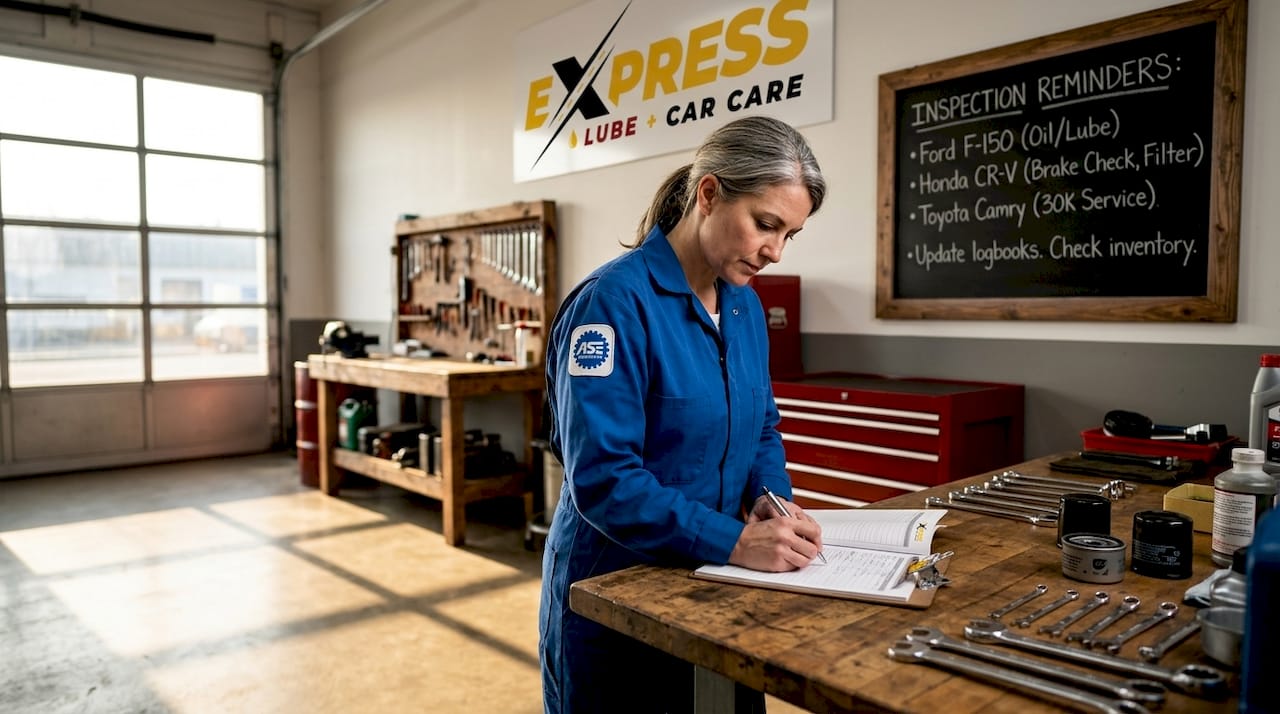 Preventive maintenance does not get nearly enough credit as a convenience benefit. Most people think of it as a chore. Reframe it: it is the thing that keeps you from spending an unplanned afternoon waiting for a tow truck.
Preventive maintenance prevents emergency breakdowns by catching wear before it becomes failure. Oil changes, brake checks, fluid flushes, and tire rotations are not just routine tasks. Each one is a checkpoint where a trained tech can spot something developing before it leaves you stranded.
The benefits of nearby car care become most clear in this context. When your local shop is easy to reach and you have a standing relationship with them, you actually go when maintenance is due. And proactive care improves reliability in ways that show up in your daily commute. Fewer unexpected repairs, fewer warning lights, and less anxiety every time you get behind the wheel.
Preventive maintenance does not get nearly enough credit as a convenience benefit. Most people think of it as a chore. Reframe it: it is the thing that keeps you from spending an unplanned afternoon waiting for a tow truck.
Preventive maintenance prevents emergency breakdowns by catching wear before it becomes failure. Oil changes, brake checks, fluid flushes, and tire rotations are not just routine tasks. Each one is a checkpoint where a trained tech can spot something developing before it leaves you stranded.
The benefits of nearby car care become most clear in this context. When your local shop is easy to reach and you have a standing relationship with them, you actually go when maintenance is due. And proactive care improves reliability in ways that show up in your daily commute. Fewer unexpected repairs, fewer warning lights, and less anxiety every time you get behind the wheel.
 Express Lube is ASE and RepairPal certified, which means the technicians working on your vehicle have met verified quality standards. Walk-ins are welcome, so you are not locked into a schedule that does not work for your life. Current oil change and service specials make it easy to stay on top of routine maintenance without overpaying. And if you want the full convenience of predictable pricing, ask about their maintenance packages and available maintenance coupons that make budgeting straightforward. For Richland Hills drivers who want honest, fast, and documented car care, this is where it starts.