

Picking the wrong repair shop can cost you hundreds of dollars, weeks of frustration, and a car that still isn’t fixed right. Most drivers choose a shop based on proximity or a quick Google search, which is about as reliable as flipping a coin. A solid local auto repair shop checklist changes that. It gives you a clear, repeatable way to evaluate any shop before you hand over your keys, so you stop guessing and start making decisions based on what actually matters.
Table of Contents
- Key takeaways
- 1. Your local auto repair shop checklist starts with reputation
- 2. Certifications and warranties are non-negotiable
- 3. Pricing transparency tells you everything about honesty
- 4. Facility condition reflects the quality of work inside
- 5. Step-by-step: how to research and verify any shop
- 6. Understanding shop types and which one fits your needs
- 7. Pairing your shop with a vehicle maintenance checklist
- My honest take on the checklist approach
- Why Express Lube & Car Care checks every box on your list
- FAQ
Key takeaways
| Point | Details |
|---|---|
| Certifications signal quality | ASE-certified mechanics meet a recognized standard for expertise and ethical repair practices. |
| Reviews need context | Sort Google reviews by newest to spot recent quality trends, not just overall star ratings. |
| Shop type affects fit | Dealerships, independents, and chains each serve different needs depending on your car and repair type. |
| Maintenance schedules matter | Pairing your shop choice with a structured vehicle maintenance checklist prevents missed service and costly surprises. |
| Trust beats lowest price | Consistent service at one reliable shop reduces misdiagnoses and builds a repair history that saves money long-term. |
1. Your local auto repair shop checklist starts with reputation
Before you call a single shop, spend ten minutes reading reviews. Not just the star rating. The actual words people use. A shop with 4.2 stars and 300 reviews tells a very different story than one with 4.2 stars and 11 reviews.
- Look for patterns in complaints. One bad review about wait time is noise. Five reviews in three months about surprise charges is a pattern.
- Check how the shop responds to negative reviews. A defensive or dismissive reply is a red flag. A calm, solution-focused response shows professionalism.
- Ask neighbors, coworkers, or friends. Word-of-mouth still outperforms any algorithm when it comes to finding a trusted mechanic.
- Look for longevity. A shop that has operated in the same location for ten or more years has built enough trust to survive.
Pro Tip: Sort Google reviews by “Newest” before reading. This filters out the shop’s glory days and shows you what customers experienced last month.
2. Certifications and warranties are non-negotiable
This is where a lot of drivers skip a critical step. They assume any licensed shop is qualified. That is not always true.
ASE-certified mechanics hold credentials that Car Talk compares to board-certified professionals in medicine. It is a meaningful standard, not a marketing badge. Ask directly: “Do your technicians hold ASE certification?” If the answer is vague, that tells you something.
Beyond credentials, ask about the repair warranty. A shop that stands behind its work will offer a warranty on both parts and labor. Warranty coverage is one of the clearest trust signals you can find when evaluating a shop. If a shop won’t back its repairs, you should not trust them with your car.
3. Pricing transparency tells you everything about honesty
A trustworthy shop gives you a written estimate before any work starts. Full stop. If a shop is reluctant to put numbers in writing, or if the final bill consistently looks nothing like the estimate, walk away.
Ask these questions upfront: Do you charge a diagnostic fee? Is that fee applied toward the repair cost? Will you call me before adding work that wasn’t in the original estimate? The answers reveal how a shop treats customers once the car is already in the bay.
Pricing transparency does not mean cheapest. It means you know what you are paying for and why. Consistent, honest service avoids the costly cycle of misdiagnoses and repeat repairs that plague drivers who chase the lowest quote.
4. Facility condition reflects the quality of work inside
You can learn a lot about a shop just by walking through the door. A clean, organized shop with labeled bays, visible certifications on the wall, and modern equipment is not just aesthetically pleasing. It signals that the people running it take their work seriously.
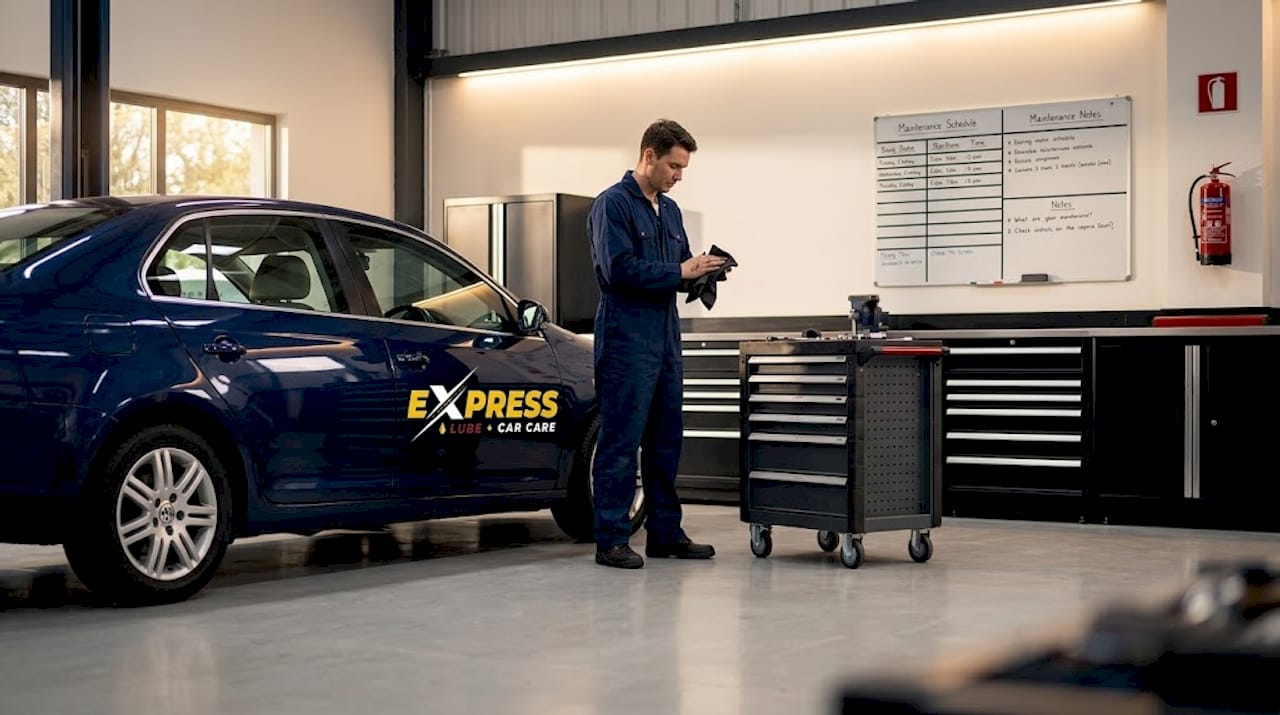
Look for professional signage, a tidy customer waiting area, and technicians who are not rushing around in chaos. A shop that cannot organize its own space is unlikely to organize your vehicle’s repair process with any more care.
Check whether the shop has the equipment your vehicle needs. Some shops lack the diagnostic tools for newer vehicles with advanced electronics. If you drive a hybrid, a European brand, or a vehicle from the last five years, this matters more than you might think.
5. Step-by-step: how to research and verify any shop
This is the practical part of your auto service checklist. Follow these steps before committing to any shop.
- Search Google Maps for auto repair shops near you. Skip the sponsored listings at the top. Organic listings filtered by newest reviews give you the most honest picture of recent customer experiences.
- Call the shop and ask two direct questions: Are your technicians ASE certified? Do you offer a warranty on parts and labor? A confident, clear answer is a good sign. Hesitation or deflection is not.
- Visit the facility before you bring your car in. Walk in, look around, and notice how staff greet you. Are they attentive? Do they explain things clearly? First impressions in a shop are usually accurate.
- Ask about their inspection process. A quality shop should perform a multi-point vehicle inspection that includes VIN logging, odometer recording, system-by-system checks, and a road test when appropriate.
- Request a written estimate for any work discussed. Compare it to one or two other shops if the job is significant.
- Watch for red flags: pressure to approve work immediately, vague explanations, refusal to show you old parts, or a shop that discourages questions.
Pro Tip: A quick visit before your first appointment costs nothing and tells you more than any review. Bring a small question about your car and see how the service advisor responds.
6. Understanding shop types and which one fits your needs
Not every shop is right for every driver. Here is a comparison to help you match your situation to the right type of provider.
| Shop type | Best for | Limitations |
|---|---|---|
| Dealership service | Warranty repairs, recalls, brand-specific diagnostics | Higher labor rates, less flexibility on scheduling |
| Independent shop | Personalized service, most repair types, fair pricing | Quality varies widely, research required |
| Chain/quick-lube center | Routine maintenance, oil changes, tires | Limited diagnostic capability, high technician turnover |
| Specialty shop | Luxury, European, EV, or collision repair | Narrow scope, may not handle general maintenance |
Independent repair shops consistently score high marks for honesty, communication, and quality in Consumer Reports surveys, often outperforming chains on all three measures. That does not make them universally better, but it does mean they are worth prioritizing when your repair is not warranty-related.
Specialty shops matter when your vehicle has unique needs. A luxury car owner, for example, benefits from working with technicians who know the specific tolerances and parts for that brand. The luxury vehicle maintenance requirements for something like a BMW or Mercedes go well beyond what a general oil change center is equipped to handle.
If your car is still under the manufacturer’s warranty, a dealership may be your only option for covered repairs. Once that warranty expires, an independent shop with strong reviews and ASE-certified technicians is often the smarter, more affordable choice.
7. Pairing your shop with a vehicle maintenance checklist
Choosing the right shop is only half the equation. The other half is knowing when to go. A car maintenance schedule by mileage gives you a structured plan so nothing slips through the cracks.
Formal maintenance planning with monthly, quarterly, and annual tasks reduces the chance of missing critical service intervals and helps you schedule shop visits with purpose rather than panic. Your shop should be able to work from your vehicle’s manufacturer guidelines and adjust recommendations based on how hard you drive your car.
Here is what to look for in a shop that handles maintenance well:
- They track your service history and flag upcoming needs at each visit.
- They use digital vehicle inspections that send you photos or videos of issues found, so you can see exactly what they see.
- They explain the difference between what needs to be done now and what can wait a few months.
- They follow manufacturer-recommended intervals rather than defaulting to the old “every 3,000 miles” oil change rule that no longer applies to most modern vehicles.
The best shops treat your maintenance schedule like a partnership, not a transaction. When they know your car’s history, they catch problems earlier and save you money over time.
Sticking with one trusted shop also means your repair history stays in one place. That kind of continuity makes diagnostics faster, recommendations more accurate, and your overall experience far less stressful.
My honest take on the checklist approach
I’ve seen drivers spend more time researching a new coffee maker than they do choosing a repair shop. Then they’re surprised when the shop charges them for work they didn’t need or misses a problem that shows up again two weeks later.
In my experience, the checklist approach works because it removes emotion from the decision. You are not choosing a shop because it’s closest or because the guy at the counter seemed friendly. You are choosing it because it passed a set of objective criteria that actually predict quality: certifications, transparency, inspection process, and reputation over time.
What I’ve also learned is that the cheapest option almost never stays cheap. A shop that quotes low and cuts corners ends up costing more once you factor in repeat visits, wrong parts, and the time you lose dealing with it. Consumer Reports backs this up consistently. Trust is more valuable than the lowest price.
The shops I respect most are the ones that hand you a comprehensive inspection report with photos, explain what they found in plain language, and tell you honestly what can wait. That kind of transparency is not common. When you find it, hold onto it.
— Express Lube & Car Care
Why Express Lube & Car Care checks every box on your list
You now have a clear picture of what a quality shop looks like. Express Lube & Car Care in Richland Hills was built to meet exactly those standards.
Our technicians are ASE and RepairPal certified, which means your car is in the hands of professionals who have earned their credentials, not just claimed them. We offer honest, upfront pricing with no surprise charges, walk-in convenience with no appointment needed, and thorough inspections that give you a real picture of your vehicle’s condition. Whether you need a routine oil change, engine repair, or a full maintenance review, we handle it with the same level of care. Check out our current oil change specials or grab a maintenance coupon to make your first visit even easier. We are here to be your long-term partner in keeping your car safe and running right.
FAQ
What should I look for in a local auto repair shop?
Look for ASE-certified technicians, written estimates, a repair warranty on parts and labor, and positive recent reviews. A clean, organized facility with clear communication is also a strong indicator of quality.
How do I use Google reviews to find a trustworthy mechanic?
Sort reviews by “Newest” to see recent customer experiences rather than relying on overall star ratings. Avoid sponsored listings and focus on organic results with detailed, specific feedback.
Are independent shops better than dealerships?
For most non-warranty repairs, independent shops often deliver better value and more personalized service. Consumer Reports surveys show independent shops consistently score high for honesty and communication.
How often should I bring my car in for maintenance?
Follow your manufacturer’s recommended intervals, which vary by mileage and driving conditions. A structured vehicle maintenance checklist with monthly, quarterly, and annual tasks helps you stay on schedule without over-servicing.
What are the biggest red flags when evaluating a repair shop?
Watch for pressure to approve work immediately, vague or verbal-only estimates, refusal to explain repairs in plain language, and no warranty offered on completed work. These are signs a shop may not have your best interests in mind.