
Most drivers assume the dealership is the safest bet. It feels official, familiar, and backed by a brand name. But that assumption costs real money. Understanding why choose a local auto repair shop over a dealership or national chain can change how you maintain your vehicle, what you pay, and how much you actually trust the people working on your car. This guide breaks down the real advantages of going local, what to look for in a good shop, and how to build a relationship that pays off every time something goes wrong under the hood.
Table of Contents
- Key takeaways
- Why choose a local auto repair shop over a dealership
- How to find a reputable local repair shop
- Local shops vs. dealerships: when each makes sense
- Building a lasting relationship with your local shop
- My honest take on local shops vs. dealerships
- Why Express Lube & Car Care is the right local choice
- FAQ
Key takeaways
| Point | Details |
|---|---|
| Local shops cost less | Independent shops almost always charge less than dealerships for routine and out-of-warranty repairs. |
| Personalized service matters | Local mechanics tailor recommendations to your specific vehicle history, not a corporate service checklist. |
| Certification signals trust | ASE-certified technicians at local shops deliver dealership-level expertise without the dealership markup. |
| Reviews reveal the truth | Consistent positive customer feedback across platforms is the most reliable signal of a trustworthy shop. |
| Loyalty pays off | Building a long-term relationship with a local shop leads to priority scheduling, discounts, and fewer surprises. |
Why choose a local auto repair shop over a dealership
The short answer is value. Not just price, but the full package of cost, communication, and care. A Consumer Reports survey found that independent repair shops deliver better overall customer satisfaction and are more likely to negotiate pricing compared to dealerships. That tracks with what most experienced car owners already know from firsthand experience.
Here is what you actually get when you go local:
- Lower labor rates. Dealerships carry significant overhead. Showrooms, corporate branding, and franchise fees all get baked into your repair bill. Local shops do not carry that weight, which means local shops charge less for the same quality work on routine and out-of-warranty repairs.
- Tailored recommendations. A local mechanic who knows your car remembers that you replaced your brake pads eight months ago, or that your transmission has been running a little rough. That context shapes better advice. You are not getting a generic printout of recommended services based on mileage alone.
- Willingness to communicate. The real choice between a dealership and a local shop often comes down to information transparency and repair quality. Local shops tend to explain what they found, why it matters, and what can wait. That kind of honest conversation is harder to get at a service desk managing fifty cars a day.
- Written estimates and fair pricing. Getting a written estimate before work begins is not just good practice. For repairs over $200, it is often legally required. Local shops are generally more willing to walk you through the numbers and adjust when needed.
- Community connection. When you support a local shop, you are supporting a neighbor. That accountability matters. A shop that lives and works in your community has a much stronger reason to treat you right than a regional chain that replaces staff every few months.
Pro Tip: Ask any shop you are considering whether they can show you the old parts after a repair. Reputable local mechanics almost always say yes. It is a simple way to confirm the work was actually done.
How to find a reputable local repair shop
Not every shop with a friendly sign deserves your trust. Knowing what to look for saves you from a bad experience and helps you land on the best local mechanics in your area.
- Check for ASE certification. The ASE certification signals reliability and scheduling flexibility in a local shop. Technicians who hold ASE credentials have passed standardized tests in specific repair categories. It is not a guarantee of perfection, but it is a meaningful baseline.
- Read the reviews carefully. Do not just look at the star rating. Read the actual comments. Look for patterns: do multiple reviewers mention honest communication, fair pricing, and accurate diagnoses? Consistent feedback across Google, Yelp, and similar platforms tells a more reliable story than any single five-star review.
- Assess shop size and capacity. A shop that is constantly overbooked may rush your repair or push your appointment out for days. A shop that is too small may lack the equipment for complex jobs. You want a place that is busy enough to be good, but not so overwhelmed that your car sits untouched for a week.
- Ask for a written estimate upfront. Getting second opinions on estimates over $500 is a smart move. Any shop that resists giving you a written estimate before starting work is a shop worth walking away from.
- Use RepairPal to verify pricing. RepairPal provides fair-price estimates for common repairs by zip code. If a shop’s quote is significantly higher than the RepairPal range without a clear explanation, ask questions.
Pro Tip: When you visit a shop for the first time, start with something small, like an oil change or tire rotation. It gives you a low-stakes way to evaluate how they communicate, how long they take, and whether the bill matches the estimate.
Local shops vs. dealerships: when each makes sense
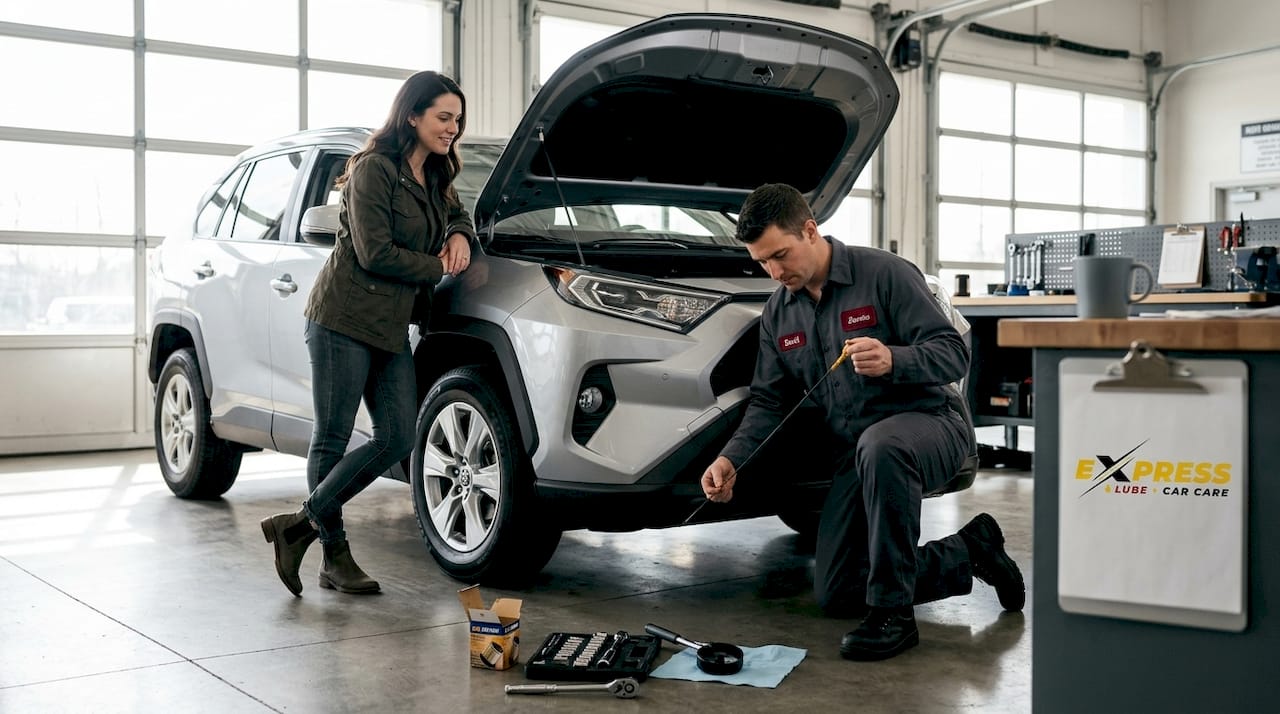
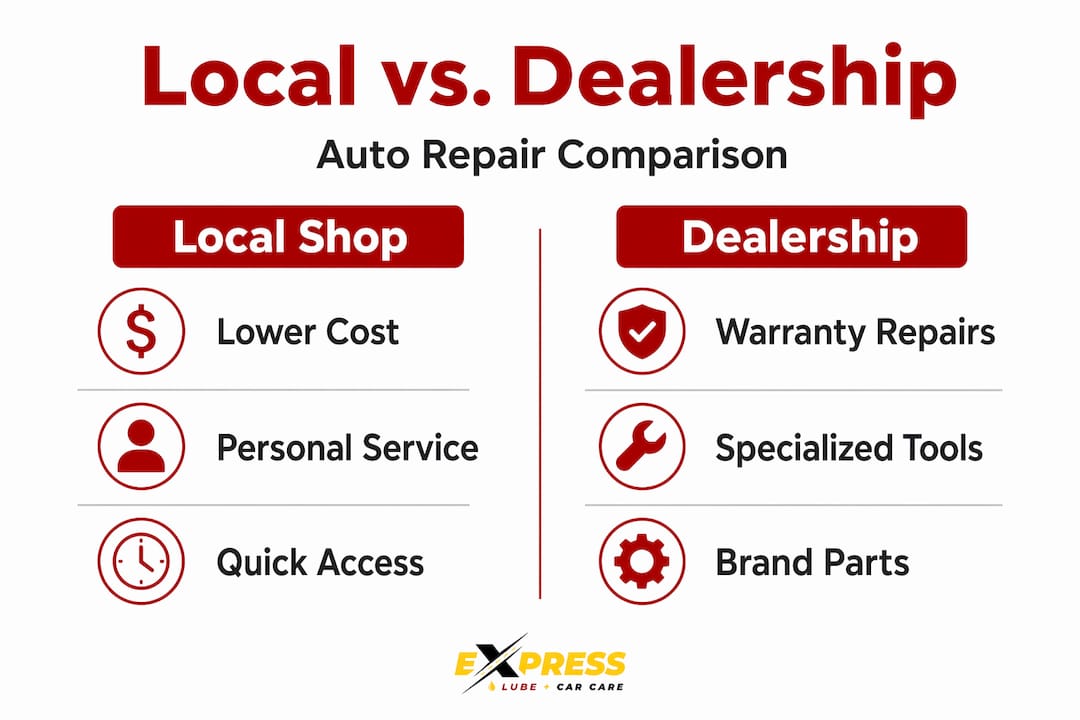
This is not a black-and-white situation. Dealerships do have genuine advantages in specific scenarios, and knowing when to use each saves you time and money.
| Factor | Local auto repair shop | Dealership |
|---|---|---|
| Routine maintenance | Lower cost, personalized service | Higher cost, standardized service |
| Out-of-warranty repairs | Best choice for value and quality | Rarely necessary, often overpriced |
| Warranty work | Not eligible | Required for covered repairs |
| Recall repairs | Not eligible | Required, free of charge |
| Specialized diagnostics | Capable for most makes and models | Advantage for proprietary software |
| Loaner cars and perks | Varies by shop | Dealerships sometimes provide loaners and complimentary services |
| Communication and transparency | Generally stronger | Varies widely |
The practical takeaway is this: use a dealership when you have warranty coverage, a recall notice, or a highly specialized issue tied to proprietary manufacturer software. For everything else, independent shops handle most repairs from oil changes through engine replacements, and they do it for less.
One thing worth understanding is that hourly labor rate is not the whole story. A correct diagnosis reduces total repair costs even when the hourly rate is slightly higher, because accurate work means fewer return visits and fewer misdiagnosed repairs. A shop that charges $110 per hour and fixes your car correctly the first time beats a shop charging $90 per hour that sends you back twice.
Building a lasting relationship with your local shop
One of the most underrated benefits of local auto repair is what happens over time. The first visit is just an introduction. The fifth visit is where the real value shows up.
Here is how to build that relationship intentionally:
- Start with routine maintenance. Oil changes, tire rotations, and filter replacements are low-cost, low-risk visits that let you evaluate a shop without committing to a major repair. Establishing routine maintenance at a trusted local shop reduces the surprise and expense of unexpected repairs down the road.
- Be upfront about your budget. If you are working with a tight budget this month, say so. A good local mechanic will help you prioritize what needs to be fixed now versus what can wait safely. That kind of honest back-and-forth is something you rarely get at a dealership service counter.
- Ask for documentation. Request a copy of every repair order. Keep a folder, physical or digital, with dates, mileage, parts replaced, and costs. This history becomes valuable when you are diagnosing a recurring issue or selling the car.
- Expect and reward loyalty. Many local shops offer returning customers discounts, faster turnaround, and priority scheduling during busy seasons. When you find a shop that treats you well, stick with them. Consistency builds trust on both sides. The mechanic who knows your car will catch things a stranger would miss.
You can find reliable auto repair near you in Richland Hills by starting with these habits and evaluating shops based on the criteria above.
My honest take on local shops vs. dealerships
I have worked with car owners long enough to say this plainly: the dealership loyalty that so many drivers feel is mostly a marketing habit, not a mechanical necessity.
In my experience, the mechanics at independent shops are often just as skilled as those at dealerships. Many of them trained at dealerships and left specifically because they wanted to do better work with fewer bureaucratic constraints. Independent shops combine lower labor rates with experienced technicians, often with dealership backgrounds, which means you get the expertise without the premium price tag.
What I have found actually makes a difference is communication. The shops that earn long-term loyalty are the ones that call you before doing extra work, explain what they found in plain language, and do not pad the bill with unnecessary services. That is not a dealership thing or a local shop thing. It is a character thing. But in my experience, you find it far more often at local shops.
One honest caution: not all small shops are created equal. A one-person operation with limited equipment may not be the right fit for complex repairs or newer vehicles with advanced electronics. When I evaluate a shop, I look at the equipment in the bays, not just the reviews on the wall. A shop that invests in diagnostic tools is a shop that takes quality seriously.
The bottom line is that building a real relationship with a mechanic you trust changes the entire experience of owning a car. It goes from stressful and expensive to manageable and predictable. That is worth more than any dealership perk.
— Express Lube & Car Care
Why Express Lube & Car Care is the right local choice
If you are in the Richland Hills area and ready to experience the benefits of local auto repair firsthand, Express Lube & Car Care is built exactly for drivers like you.
Express Lube is ASE and RepairPal certified, which means you get technicians who meet rigorous standards and pricing that holds up against independent benchmarks. No appointments needed. No surprise charges. Whether you need a quick oil change, A/C service, or full engine repair and diagnostics, the team at Express Lube handles it with the transparency and care that keeps customers coming back. Check out the current oil change service specials to see how affordable quality service can be. Your car deserves a shop that knows your name.
FAQ
Why are local auto repair shops cheaper than dealerships?
Local shops have lower overhead costs than dealerships and do not carry franchise fees or showroom expenses, which means more of your money goes toward actual repairs. Independent shops charge less for the same quality work on most routine and out-of-warranty repairs.
How do I know if a local mechanic is trustworthy?
Look for ASE certification, consistent positive reviews across multiple platforms, and a willingness to provide written estimates before starting work. ASE certification and online reviews are two of the most reliable signals of a shop you can count on.
Can a local shop handle the same repairs as a dealership?
Yes, for the vast majority of repairs. Independent shops perform oil changes through engine replacements and handle most makes and models. The main exceptions are warranty work, recall repairs, and a small number of jobs requiring manufacturer-specific diagnostic software.
When should I go to a dealership instead of a local shop?
Go to a dealership when your vehicle is under warranty, when you have received a recall notice, or when a repair requires proprietary manufacturer tools that independent shops do not carry. For everything else, a trusted local shop is almost always the better value.
What is the benefit of building a relationship with a local mechanic?
A mechanic who knows your car’s history can catch developing problems earlier, give you more accurate repair timelines, and help you prioritize spending. Routine maintenance at a trusted local shop reduces unexpected repair costs over time and gives you a point of contact you can actually rely on.