

Your oil light usually doesn’t come on at a convenient time. It shows up when you’re heading to work, picking up kids, or trying to squeeze three errands into one lunch break. That’s why a local oil change matters so much. It isn’t just routine maintenance. It’s the service that keeps your engine lubricated, your schedule intact, and small issues from turning into expensive ones.
A lot of drivers still think an oil change is just “drain it and refill it.” A professional service should be more useful than that. It should tell you what oil your engine needs, what your car is doing underneath, and whether anything looks off before it becomes a breakdown. When that happens, a quick visit feels less like a chore and more like a practical checkup for the vehicle you depend on every day.
Your Guide to a Fast and Reliable Local Oil Change
You’re driving through Richland Hills, the day is already full, and a maintenance reminder pops onto the dash. Most drivers have the same first thought. “Can I push this a little longer?” Sometimes you can. Sometimes you shouldn’t. The hard part is knowing the difference.
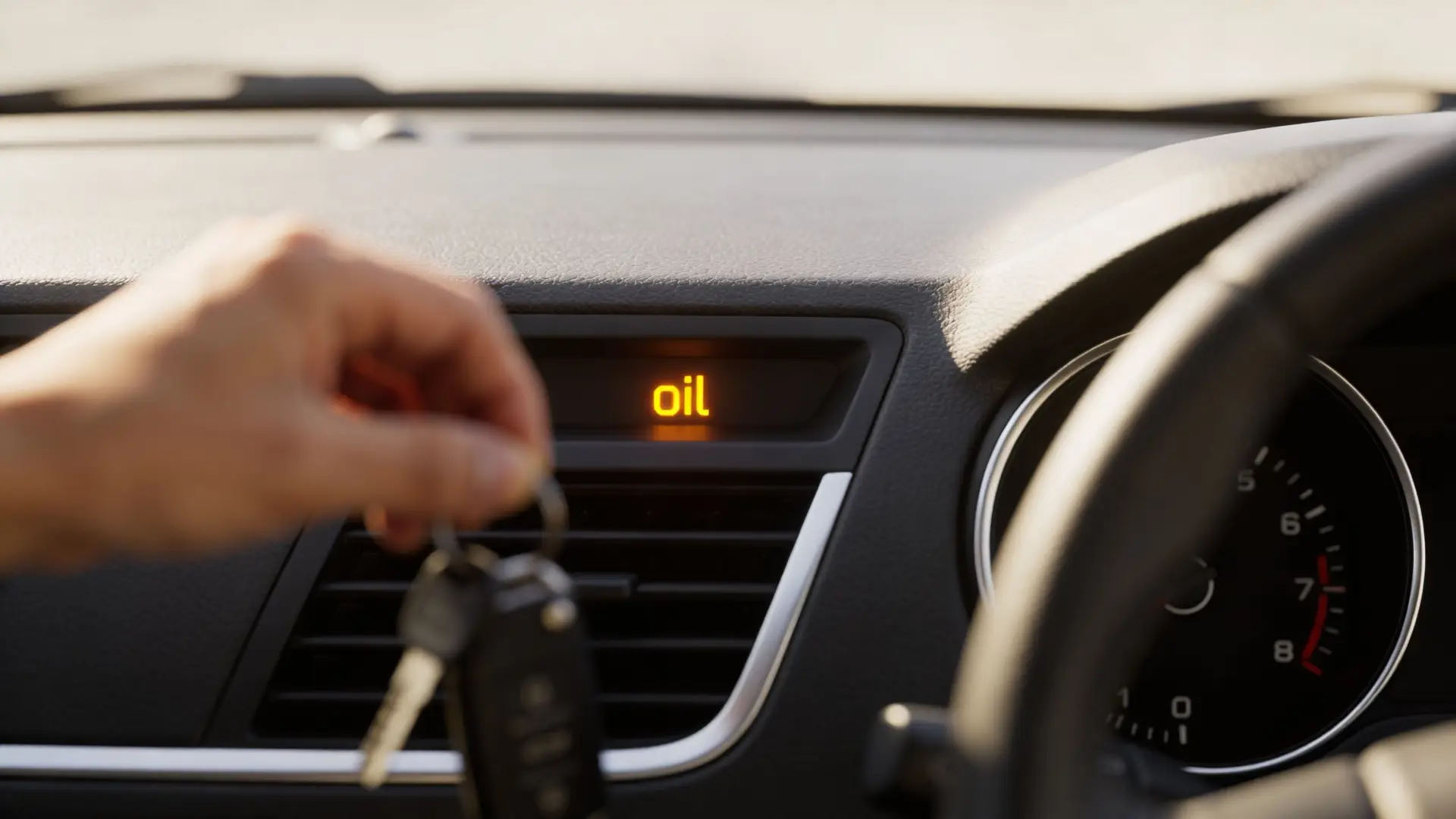
Oil is your engine’s working fluid. It lubricates moving parts, carries heat away from critical areas, and holds contaminants in suspension until the filter catches what it can. Once the oil degrades or the level drops too far, the engine doesn’t get the protection it was designed around.
That’s one reason local oil change shops remain essential. The U.S. oil change services industry grew at a 3.7% annual rate from 2020 to 2025, reflecting how drivers keep relying on nearby shops for this non-discretionary service, according to IBISWorld’s oil change industry data.
What drivers usually want
Customers aren’t looking for a technical lecture. They want a few simple things:
- A fast visit: Get in, get serviced, get back on the road.
- A straight answer: Is the oil due now, or can it wait?
- No surprises: Clear pricing, clear recommendations, no pressure.
- Confidence: The right oil, the right filter, and a technician who checks the vehicle.
Shop-floor reality: A good oil change should leave you with more information than when you arrived, not more confusion.
For shop owners trying to improve how they handle calls, scheduling questions, and missed opportunities, resources on how to improve lead conversion for oil changes are worth reviewing because they show how much the customer experience starts before the car ever reaches the bay.
What a smart visit should give you
A useful local oil change should answer three things before you leave:
- What oil went into the engine
- When you should come back
- What the technician saw while the vehicle was in the air
If you know those three things, you can make informed decisions instead of reacting to a warning light later.
More Than Just Oil A Look Inside Your Service
A quality oil change is closer to a routine health check than a refill service. The oil and filter change is the center of the job, but the value comes from everything checked around it. That’s what helps a driver catch wear early, avoid fluid-related problems, and leave with a vehicle that’s been looked at, not just processed.
What happens in the bay
Once a technician brings the vehicle in, the first step is confirming the correct oil specification and filter. After that, the old oil is drained, the old filter is removed, and a new filter is installed. The drain plug and sealing surface are checked before fresh oil goes in.
Then comes the part many drivers never see. A proper local oil change usually includes a visual inspection of the vehicle’s basic health. That commonly means looking at fluid levels, leak points, and obvious wear items.
Here’s what you should expect a technician to review during a thorough service:
- Engine oil and filter: Old oil comes out completely, and the old filter gets replaced rather than reused.
- Fluid levels: Coolant, brake fluid, washer fluid, and other serviceable fluids are checked and topped off when appropriate.
- Undercar inspection: The technician looks for fresh leaks, wet areas, damaged shields, or signs that a seal may be starting to fail.
- Belts and hoses: Cracks, swelling, glazing, or looseness can show up before a roadside problem does.
- Lights and basic safety items: Burned-out bulbs or obvious concerns can often be spotted during the visit.
If a shop only talks about the oil, you’re missing part of the benefit you paid for.
Why the filter matters more than most drivers realize
Fresh oil poured through an old, overloaded filter isn’t a complete job. The filter traps contaminants suspended in the oil. As it loads up, flow and filtration suffer. Replacing the filter at service time is part of protecting the fresh oil you just paid for.
That’s also why low-price shortcuts can cost more later. A rushed service might skip inspection steps, use a lower-grade filter, or fail to document what was done. Drivers often don’t realize the difference until a leak, warning light, or maintenance record question comes up later.
What good shops do differently
The difference usually isn’t dramatic. It’s disciplined. Good technicians work from a repeatable process, check the obvious trouble spots, and explain findings in plain language.
For auto businesses thinking about how trust is built visually online before a customer ever arrives, examples like web design for Total Recon show how much clean communication and service clarity affect customer expectations.
A fast service shouldn’t feel vague. It should feel organized.
Decoding Your Options Conventional vs Synthetic Oil
Most confusion around a local oil change comes down to one question. “What oil should I use?” Drivers hear terms like conventional, synthetic blend, full synthetic, 5W-30, and high mileage, and it all starts to sound interchangeable. It isn’t.
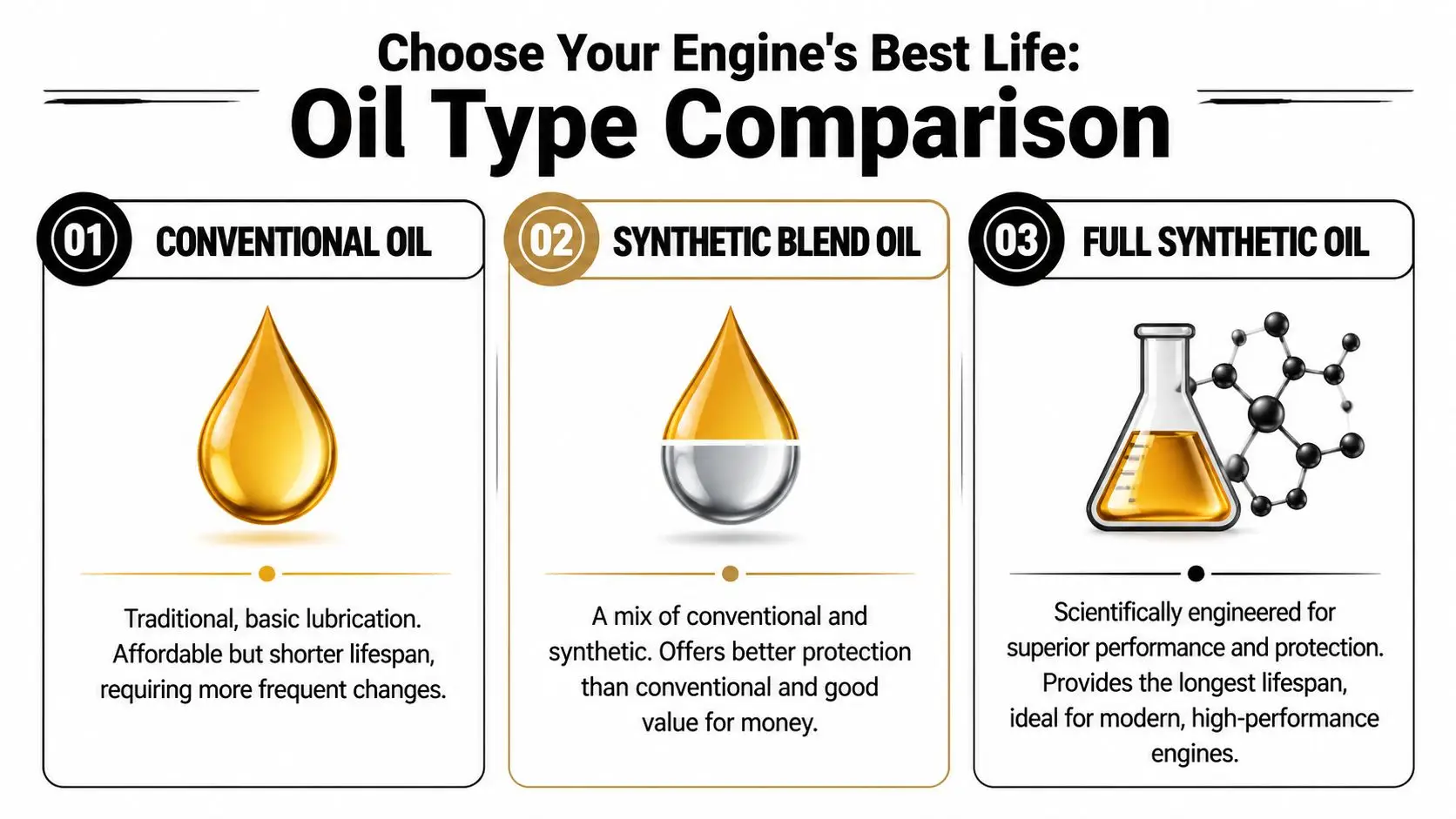
The easiest way to think about oil types is this. Conventional oil is basic daily nutrition. Synthetic blend is a more balanced plan with added support. Full synthetic is engineered performance nutrition for harder conditions, longer durability, and tighter modern engine tolerances.
What viscosity actually means
Viscosity is how the oil flows at different temperatures. A grade like 5W-30 has two parts. The 5W refers to cold-weather flow, and the 30 refers to how the oil performs once the engine is at operating temperature.
That matters in Texas. Even though people think mostly about summer heat, engines also experience wear during startup. Using the correct OEM-specified viscosity helps oil move where it needs to go at startup and maintain protection when the engine is hot. According to Castrol’s guide to choosing the right engine oil, modern synthetic oils can provide up to 6X better wear protection than conventional oil, and the correct viscosity such as 5W-30 is critical for cold-start lubrication and high-temperature protection.
Conventional, blend, or full synthetic
This choice depends on the vehicle, how you drive, and what the owner’s manual calls for. It’s not just about price. It’s about fit.
- Conventional oil works for some older engines and lighter-duty use, but it has a shorter service life.
- Synthetic blend gives drivers a middle ground. It adds some synthetic benefits without moving all the way to full synthetic.
- Full synthetic is usually the right answer for many newer engines, turbocharged setups, hotter operating conditions, and stop-and-go commuting.
The right oil isn’t the one somebody prefers. It’s the one your engine was designed to use.
Motor Oil Comparison at a Glance
| Oil Type | Best For | Change Interval | Key Benefit |
|---|---|---|---|
| Conventional | Older vehicles that allow it and lighter driving use | Shorter interval | Lower upfront cost |
| Synthetic Blend | Drivers who want a middle-ground option | Moderate interval | Better protection than conventional |
| Full Synthetic | Modern engines, demanding driving, hotter conditions | Longer interval | Stronger wear protection and temperature stability |
If you want a deeper breakdown of how these oil categories differ in real-world use, this guide on oil change type options is a practical place to compare them before your next service.
What doesn’t work
Two habits create trouble fast.
First, picking oil based only on price. If the engine requires a specific synthetic grade, using something cheaper because it’s “close enough” can create wear, noise, consumption, or warranty headaches.
Second, choosing based on what worked in an older car. Engine designs have changed. Clearances are tighter, oil passages are smaller, and many systems rely on exact oil behavior to operate correctly.
Understanding Service Intervals and Your Vehicle's Needs
The old blanket rule about changing oil every 3,000 miles still floats around, but it doesn’t fit many modern vehicles. Some engines need service sooner under harsh use. Others can safely go longer when they use the correct oil and operate under milder conditions. The answer is in the owner’s manual, the oil specification, and your driving pattern.

Severe service is more common than drivers think
A lot of local drivers fall into severe service without realizing it. That doesn’t mean racing or towing every day. It often means ordinary use that’s tough on oil.
Examples include:
- Short trips: The engine rarely stays hot long enough to fully burn off moisture and fuel dilution.
- Stop-and-go traffic: Repeated idling and heat cycling wear oil faster than steady highway driving.
- Hot weather and dusty roads: Both conditions put extra stress on lubrication and filtration.
If your routine includes grocery runs, school drop-offs, long idle periods, or heavy traffic around Northeast Tarrant County, your service interval may be shorter than the “ideal conditions” schedule.
Trust the manual, then use common sense
A maintenance monitor is helpful, but it isn’t a substitute for paying attention. If the vehicle sees harder use, the oil level drops, or the engine starts sounding rougher than normal, don’t ignore it just because the monitor hasn’t reached zero.
Some synthetic oils are designed for longer intervals, and some applications support that. But “longer” doesn’t mean “forget about it.” Oil still ages. Filters still load up. Seals still seep.
Practical rule: Mileage matters, but time matters too. A car that isn’t driven much still needs regular oil service because oil degrades even when miles stay low.
If you’re unsure whether to go by mileage, time, or the dashboard reminder, this article on oil change mileage or time clears up the decision in a way most drivers can apply quickly.
The No-Appointment Experience at Express Lube
Most drivers don’t want to rearrange a day around basic maintenance. They want to pull in, get an honest service, and move on. That preference shows up across the market. Quick lube specialists capture nearly 20% of the professional oil change market, which reflects how strongly drivers value speed and convenience, according to Automotive Research on DIFM oil change consumer behavior.

A no-appointment visit should feel simple from the first minute. You pull in, a technician or service advisor confirms your vehicle details, checks the oil requirement, and explains what service fits the car. If the vehicle takes a specific viscosity, synthetic requirement, or filter type, that should be verified before work starts.
What the customer experience should feel like
Clear communication matters more than fancy language. Good shops tell you what they’re doing, what they found, and what needs attention now versus later. They don’t try to create urgency around every small observation.
That’s where a walk-in model works well. It removes scheduling friction, but it still needs process. The car gets checked in, serviced in order, inspected, and documented. If there’s an issue beyond the oil change, the technician should show you the concern or explain it plainly.
For drivers looking for a walk-in service model, no-appointment oil change near me gives a clear picture of how that kind of visit typically works.
What happens if the technician finds something else
Often, people feel uneasy. They worry a basic oil change will turn into a sales pitch. A professional approach is much simpler. The technician tells you what was seen, explains why it matters, and leaves the decision with you unless the issue is an immediate safety concern.
Here’s a look at the pace and workflow many drivers expect from a modern quick-service visit:
In practice, a no-appointment oil change works best when the staff respects the customer’s time and intelligence. One example of that approach is Express Lube & Car Care, which offers walk-in oil change service along with ASE-certified inspection and repair support for drivers in Richland Hills.
Protecting Your Warranty and Ensuring On-Road Safety
An oil change affects more than engine cleanliness. It also affects your paperwork trail and your margin of safety. Those two things don’t get enough attention until a driver has a warranty question or a roadside problem.
Warranty protection starts with the right parts and records
Manufacturers specify oil viscosity and performance standards for a reason. If your vehicle calls for a particular grade or certification, the shop should follow that requirement and document it. Keep your invoices. Make sure they show the date, mileage, oil type, and filter service.
That record matters if an engine-related warranty question ever comes up. A missing paper trail can create unnecessary friction. A clean maintenance history makes your position stronger.
Safety checks are part of the value
During an oil change, the vehicle is already being inspected at close range. That’s the time a technician may notice a fluid leak, worn belt, weak battery connection, underinflated tire, or another issue that affects reliability and safety.
A local oil change is one of the few services drivers do often enough to catch problems early. That’s why it shouldn’t be treated as a rushed commodity. If the technician sees a concern, ask two questions: Is it urgent? and What happens if I wait? Good shops can answer both without dancing around the point.
Catching a small leak or worn component during routine service is usually cheaper and safer than discovering it after a breakdown.
Frequently Asked Questions About Oil Change Services
Drivers usually ask the same practical questions, and they’re good ones. A local oil change should be easy to understand before the vehicle even enters the bay.
How much should an oil change cost
Cost depends on the oil required, the filter, the engine capacity, and whether the vehicle needs conventional, blend, or full synthetic. Some vehicles are straightforward. Others need specialty oil or larger quantities. The important part isn’t chasing the lowest sticker price. It’s knowing what’s included and whether the shop explains the difference clearly.
Can I bring my own oil or filter
Some shops allow customer-supplied parts or fluids, and some don’t. If they do, ask ahead. The key issue is compatibility. The oil has to match the manufacturer requirement, and the filter has to fit properly and meet the service standard the vehicle needs.
What if the technician finds another problem
A good technician should separate observations into three categories:
- Needs attention now: Safety issues or problems likely to worsen quickly.
- Watch soon: Wear items that aren’t urgent yet but shouldn’t be ignored.
- Noted for record: Minor findings that help track the vehicle’s condition over time.
That kind of explanation gives you control. It also helps you budget repairs instead of feeling blindsided.
How is used oil handled
Professional shops play an important role in keeping used oil out of the environment. The EPA notes that 1.3 billion quarts of oil are recycled annually, and responsible handling matters because compliance isn’t automatic everywhere, as noted in this overview of oil recycling and shop responsibility. When a certified shop handles disposal correctly, used oil and filters are managed through proper recycling channels rather than risking contamination.
Are quick oil changes less thorough
They can be, if the shop treats speed as the only goal. They don’t have to be. A well-run quick service can still be methodical, transparent, and technically sound. Fast and careful aren’t opposites when the process is organized.
What should I ask before approving service
Keep it simple:
- Which oil specification does my vehicle require
- What filter are you installing
- What did you inspect besides the oil
- When should I return based on my driving habits
Those four questions tell you a lot about how the shop operates.
If your vehicle is due for service and you want clear answers, documented maintenance, and a walk-in process that respects your time, contact Express Lube & Car Care. A good oil change should leave you with fresh oil, a checked-over vehicle, and no uncertainty about what happens next.