

Most drivers looking for oil change discounts aren't trying to game the system. They're trying to keep a vehicle reliable while everything else costs more too. In Richland Hills and across Northeast Tarrant County, that usually means balancing school pickups, work commutes, weekend errands, and a maintenance budget that never feels quite big enough.
That’s why the right discount matters. A smart deal helps you afford the service your engine needs. A bad deal gets you in the door cheap, then costs you more through the wrong oil, a weak filter, rushed work, or pressure to buy things you didn’t need in the first place.
From the shop side, the difference is easy to see. Some discounts lower the price of a quality service. Others lower the quality of the service to make the price look good. Those are not the same thing.
Why Smart Oil Change Discounts Matter More Than Ever
Oil changes aren’t a small side category in auto care. The U.S. oil change service market reached USD 8.11 billion in 2024 and is projected to reach USD 11.31 billion by 2030, according to Grand View Research’s U.S. oil change service market report. That tells you two things fast. First, drivers depend on this service every day. Second, even routine maintenance adds up, which makes smart savings worth paying attention to.
For a family with two vehicles, or a small business with a few work trucks, every service decision affects the total cost of ownership. The goal isn't to spend the least on one visit. The goal is to keep the engine protected, avoid preventable wear, and stay ahead of larger repair bills.
Cheap and smart are different
A cheap oil change focuses on the ticket price. A smart oil change discount focuses on value.
That value comes from a few practical questions:
- Is the oil right for the vehicle: The discount only helps if the shop uses the viscosity and oil type your manufacturer calls for.
- Is the filter worth installing: A bargain filter can turn a low-cost visit into a poor maintenance decision.
- Is the work done carefully: Fast service is fine. Rushed service isn't.
- Does the visit help you avoid later costs: That’s the true test.
Practical rule: Use discounts to move up in quality, not down in standards.
In the bay, that often means using a coupon or special to make a better service fit the budget. A driver who was on the fence about full synthetic may be able to choose it when the price gap narrows. A fleet manager may use a standing discount to keep vehicles on schedule instead of postponing maintenance another week.
What works in real life
The drivers who save the most long term usually do three things well:
- They match the service to the vehicle.
- They look at the full invoice, not just the ad.
- They choose shops that explain what’s included before the work starts.
That approach is what turns oil change discounts into a maintenance strategy instead of a gamble.
Understanding the True Cost of an Oil Change Service
Before a discount means anything, you need to know what you're comparing. An oil change isn't one product. It's a service package made up of oil, a filter, labor, shop process, and safe disposal.
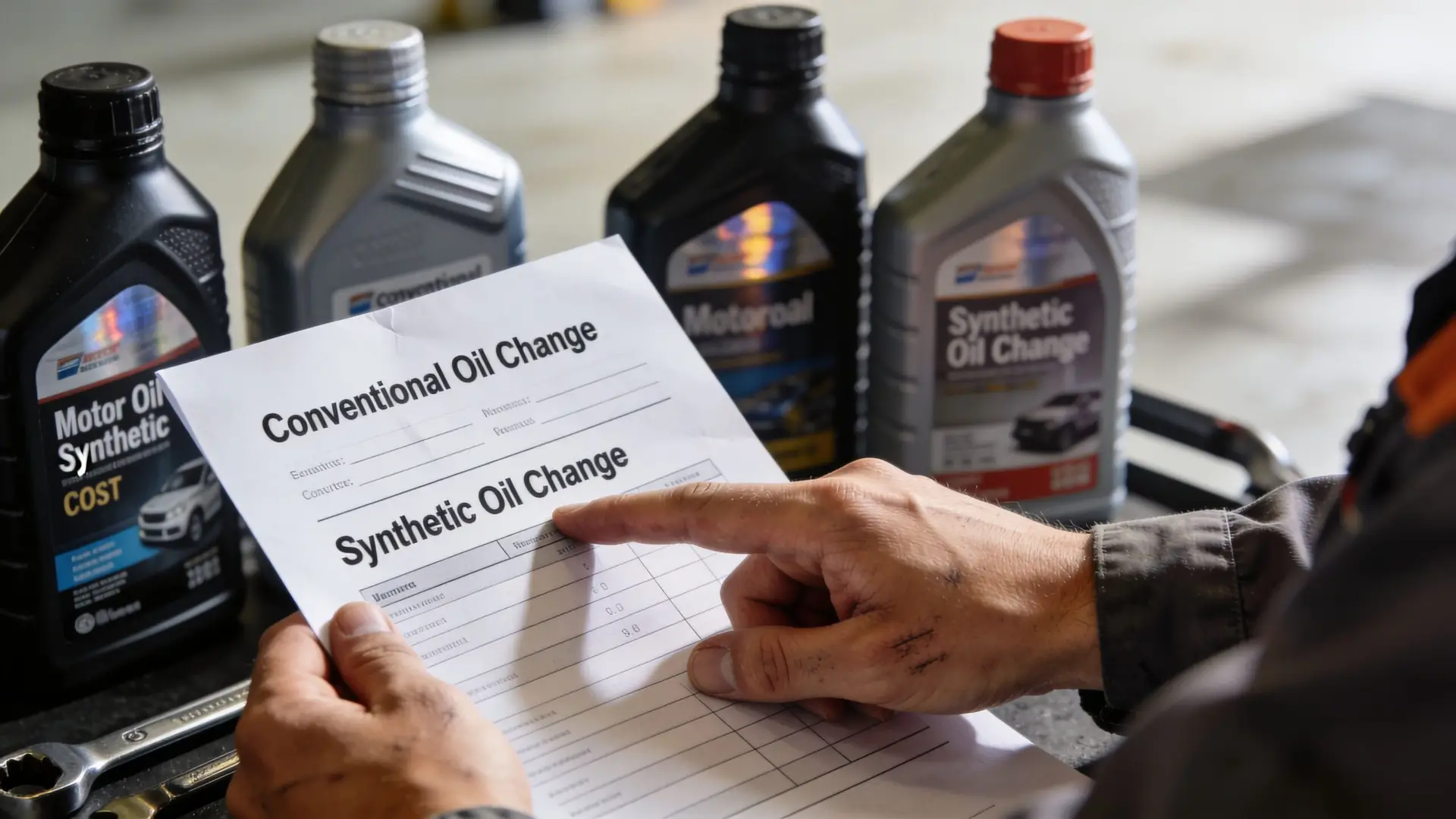
According to the 2025 NOLN Operator Survey, quick lube pricing varies widely. Conventional oil changes commonly cost $40 to $49, while high-mileage or synthetic services can exceed $70, as noted in the 2025 NOLN industry survey report. That gap exists for a reason. Different vehicles need different products, and not all oil changes deliver the same protection.
What you're actually paying for
A proper oil change invoice usually reflects several moving parts:
- Oil type: Conventional, synthetic blend, high-mileage, and full synthetic all cost differently because they perform differently.
- Filter quality: The filter matters more than many drivers realize. Construction quality, media quality, and fit all affect protection.
- Labor and inspection time: An experienced technician isn't just draining and refilling oil. They're checking for leaks, watching for uneven wear, and catching small issues before they grow.
- Disposal and shop handling: Used oil and filters must be handled correctly. That’s part of professional service, whether it gets broken out line by line or built into the price.
Why one low price can hide a weaker service
When a shop advertises a very low oil change price, ask what that price includes. Sometimes it applies only to a narrow oil capacity. Sometimes it covers only the most basic oil type. Sometimes the filter is the lowest-cost option available. And sometimes the advertised price gets you through the door, but the final bill looks very different.
That’s why I tell drivers to compare service packages, not headline numbers.
A simple way to do that is to look for these details before you approve the work:
| What to check | Why it matters |
|---|---|
| Oil specification | Confirms the shop is using what your engine calls for |
| Filter brand or grade | Helps you avoid a no-name part with unknown performance |
| Included inspection items | Shows whether the service adds preventive value |
| Final out-the-door pricing | Keeps the discount honest |
If you want a clearer look at how these pieces affect pricing, this breakdown of how much an oil change costs is useful before comparing coupons.
A good discount makes a solid service more affordable. It doesn't make an incomplete service look attractive.
The local takeaway
In North Texas, plenty of drivers put real miles on their vehicles. Long commutes, stop-and-go traffic, summer heat, and short errand runs all put stress on the oil. That's why the cheapest listed price often isn't the best comparison point. The better question is whether the service supports the way the vehicle is driven.
A Complete Breakdown of Oil Change Discount Types
Most oil change discounts fall into a handful of categories. They look similar in ads, but they work very differently at the register. Some help regular customers save on the service they already need. Others are designed mainly to drive traffic and recover the margin somewhere else.
The reason shops can offer these deals at all often comes down to purchasing scale. As noted by Valvoline Instant Oil Change, major chains can buy oil in bulk, with per-quart costs dropping from $8 to $10 at retail to $4 to $6 in bulk, which makes targeted offers like 15% off for military personnel or 10% for rideshare drivers possible.
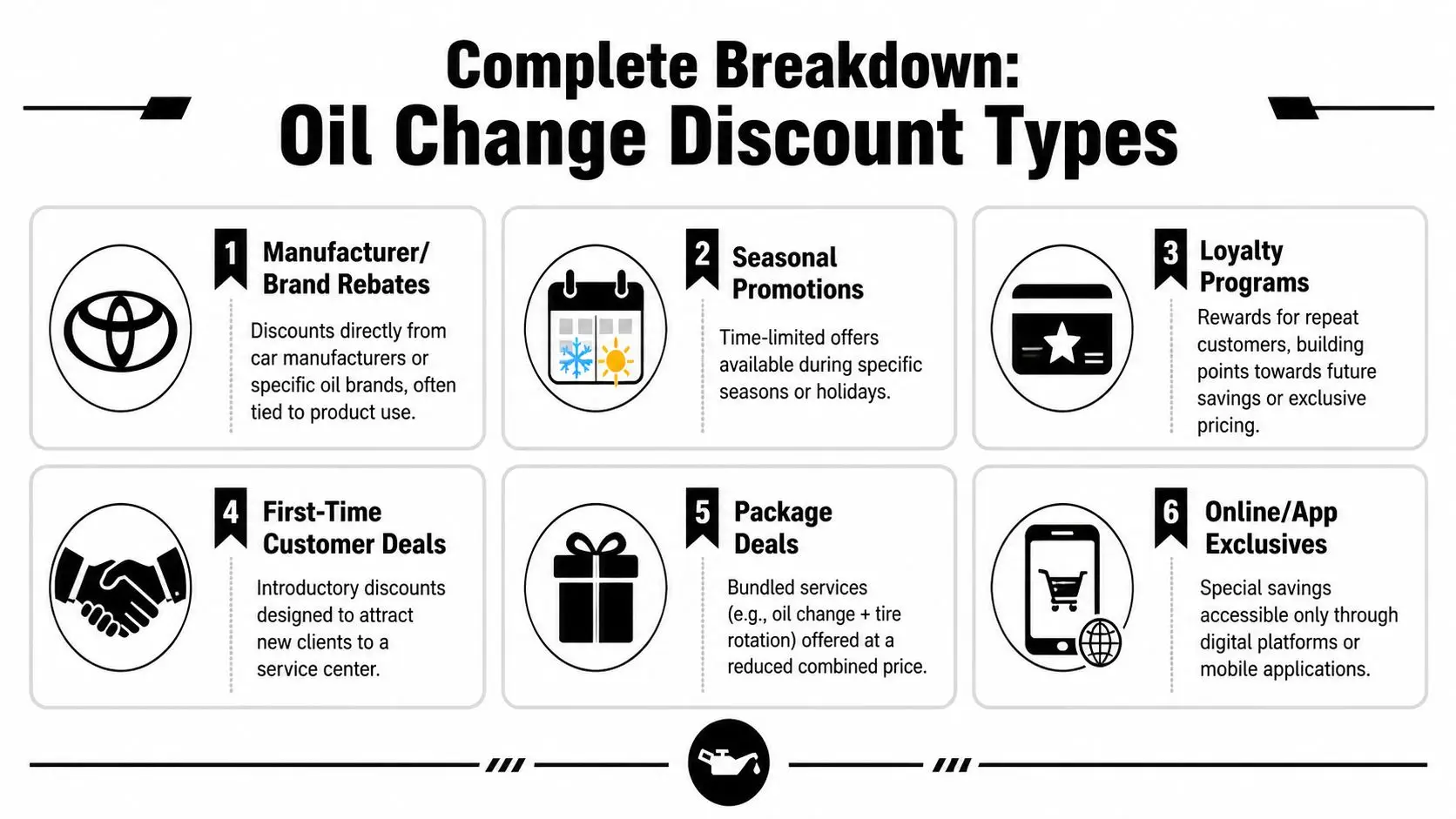
Coupons and one-time promotions
These are the discounts most drivers notice first. They show up in mailers, search results, texts, and social posts.
Pros
- Easy to use
- Good for drivers who don’t want to commit to a program
- Useful when you need service now
Cons
- Terms can be narrow
- Some only apply to one oil type
- Some expire quickly or exclude premium filters and add-ons
These are best when you already know your vehicle’s required oil and can confirm the coupon applies to it.
Loyalty programs and repeat-visit rewards
These work better for drivers who plan ahead and keep maintenance at the same shop. You may get points, member pricing, or periodic discounts tied to visit history.
This type of deal usually delivers the most value for households with multiple cars or drivers who stay on top of intervals. The savings may not feel dramatic on one visit, but the consistency matters.
If you maintain the same vehicle at the same place over time, the service history becomes almost as valuable as the discount.
Affinity discounts
Military, first responder, rideshare, senior, student, and employer-based savings fall into this category. They’re straightforward and often more reliable than seasonal coupon hunting.
A good affinity discount works because it’s predictable. If you qualify, you can factor it into your budget instead of hoping a better special appears at the right time.
Bundled service packages
It is important for drivers to slow down and compare. A bundle can save money, or it can pad the invoice with services you didn’t need that day.
A worthwhile bundle usually has a clear maintenance logic. Oil change plus tire rotation makes sense for many vehicles. Oil change plus a random chemical service you didn’t ask for deserves a closer look.
Here’s a practical comparison:
| Discount type | Best for | Watch out for |
|---|---|---|
| Coupon | Immediate savings on one visit | Narrow terms and upsell pressure |
| Loyalty program | Repeat customers and multi-car households | Savings may be slower to build |
| Affinity discount | Eligible drivers who want predictable pricing | Eligibility verification |
| Bundle | Drivers who already need multiple services | Paying for extras too early |
| Seasonal special | Planned maintenance around promo periods | Expiration dates and exclusions |
| Online or app offer | Drivers who book digitally | Fine print that changes in store |
Manufacturer and brand rebates
These are less common for everyday walk-in shoppers, but they can be worthwhile when tied to a specific oil brand or approved product line. The benefit is usually product clarity. You know what’s being used. The downside is that redemption can be less convenient than a direct in-store discount.
What usually works best
For families, the most useful discount is often the one that helps cover the correct service without turning the visit into a negotiation. For fleet managers, repeatable savings and fast turnaround usually matter more than chasing the biggest advertised markdown.
The strongest oil change discounts are the ones you can understand in one minute. If the offer takes five minutes to decode, it’s probably not as good as it sounds.
Your Guide to Local Savings at Express Lube Richland Hills
Local savings work best when they’re easy to understand and easy to redeem. Most drivers don’t want to dig through fine print while they’re on a lunch break or trying to squeeze in maintenance before school pickup. They want to know whether a special applies, what they need to bring, and whether the service still meets the standard their vehicle requires.
Community discounts that make sense
In a neighborhood shop, the most useful offers are usually the steady ones. They’re easier to remember, and they fit real routines.
At Express Lube & Car Care, drivers commonly look for three kinds of local savings:
- Military and first responder savings: A practical option for drivers who want a standing discount instead of waiting for a holiday promotion.
- Ladies Day specials: Helpful for weekly planning when you already know one day fits your schedule better than the rest.
- Monthly coupon offers: Good for drivers who like to time maintenance around rotating specials.
If you want a current snapshot of the kinds of offers drivers usually check before a visit, this page on finding the best oil change coupons near me gives a useful local reference point.
How local drivers usually use these offers
A parent with two vehicles may use a monthly special to handle one car now and bring the second vehicle in on the next visit cycle. A healthcare worker or first responder may rely on a standing eligibility-based discount because the schedule doesn’t leave much room for chasing short-term promotions. A small business owner may pair planned maintenance with a quieter part of the workday to keep vehicles moving.
That’s the advantage of local offers over random one-off deals from larger chains. Predictability matters.
How to redeem a local offer without hassle
The process is usually simple when the shop keeps things clear:
- Check the current special before you go. Offers can rotate.
- Confirm your vehicle’s oil requirement. The right discount only matters if the service matches the engine.
- Bring any eligibility item you may need. For example, an ID for a community-based offer.
- Ask what the special covers before work begins. That keeps the final invoice aligned with the ad.
Shop-floor advice: The easiest way to save money is to ask one direct question up front: “What does this special include on my vehicle?”
Why location visibility matters
A lot of drivers find local specials through search and map results, not by visiting a website directly. If you manage a local business or just want to understand why some nearby shops show up more clearly with current details, LocalHQ's Google Maps marketing guide gives a solid explanation of how local visibility affects what customers see when they search.
For drivers, the practical takeaway is simple. Check the map listing, hours, and current service details before you head out. That saves time and avoids showing up for an expired or misunderstood offer.
How to Maximize Savings Without Compromising Service Quality
The best savings strategy is boring in the best possible way. It’s planned, consistent, and based on what your vehicle needs, not whatever ad happens to pop up first. That’s how families keep maintenance predictable, and it’s how fleet managers avoid turning routine service into expensive downtime.
Using a discount on the right service can create real long-term value. According to Pep Boys’ oil change offers and service information, using a discount on a full synthetic oil change can reduce engine wear by 40 to 50 percent compared to conventional oils, and synthetic service can support intervals up to 10,000 miles when appropriate for the vehicle. That’s a strong example of why the lowest upfront price isn't always the best financial move.
Use discounts to upgrade the outcome
A lot of drivers make one costly mistake. They use a discount to buy the bare minimum. In many cases, the smarter move is to use the discount to make a better service affordable.
That can mean:
- Choosing full synthetic instead of conventional: Especially for newer engines, turbocharged vehicles, or drivers who put on serious Texas miles.
- Keeping the better filter in the estimate: Don’t erase the value of a good oil choice with a bargain-basement filter.
- Staying on schedule instead of delaying service: A smaller bill today can prevent a larger bill later.
If you want a clearer picture of what’s included when a shop performs more than just a drain-and-fill, this explanation of what a full service oil change includes is worth reviewing before you compare offers.
A simple decision framework
When a coupon lands in your inbox or shows up on your phone, run it through this filter:
| Question | Good sign | Warning sign |
|---|---|---|
| Does it match my vehicle’s oil spec? | Yes, clearly stated | Vague or “starting at” language |
| Does it reduce the cost of the service I actually need? | Yes | It only applies to a lower-grade option |
| Is the final price easy to explain? | Transparent | Hidden exclusions |
| Does the shop inspect obvious wear items during service? | Yes | No mention of checks at all |
Smart timing beats impulse shopping
Drivers usually save more when they stop treating oil changes like emergencies.
Try this routine instead:
- Watch your mileage and maintenance reminders: Waiting until you’re overdue limits your options.
- Check monthly specials before the due window closes: This gives you room to choose a better deal instead of the fastest available one.
- Bundle only related work: If your tires are due for rotation and your oil service is due soon, combining them can make sense.
- Keep records: Good service history helps you make better decisions next time.
Think like a fleet manager
Fleet managers tend to ask a better question than individual drivers. They don’t ask, “What’s the cheapest oil change today?” They ask, “What keeps this vehicle earning and out of the repair bay?”
That mindset works for families too. One missed maintenance interval or one poor-quality service can wipe out months of coupon savings.
A discount is only valuable if it protects the vehicle better than postponing the work would.
What doesn't work
Some habits look frugal but cost more:
- Chasing every lowest-price ad: You lose consistency and often lose service history.
- Approving the cheapest oil without checking the requirement: Wrong product, wrong savings.
- Treating all filters as equal: They aren’t.
- Ignoring the inspection portion of the visit: That quick look under the hood often catches the next problem early.
The strongest oil change discounts lower your total ownership cost, not just the number printed on one receipt.
The Hidden Dangers of a Too Good to Be True Oil Change
Some low-priced oil change offers are legitimate. Some are built to sound irresistible and work out badly once the hood is up. In the shop, the warning signs usually show up fast. The ad is vague. The product details are missing. The final invoice grows. Or the service that should have protected the engine didn’t match the engine at all.
That risk isn't theoretical. A 2025 AAA study found that 62% of drivers using deep-discount oil changes experienced accelerated engine wear when shops pushed improper conventional oil, leading to potential repair costs of over $500 annually for high-mileage drivers in areas like Tarrant County, as summarized on Oil Changers’ discounts page.
Where cheap turns expensive
The biggest problems usually come from three patterns.
- Wrong oil for the application: This is the one that worries technicians most. If the vehicle needs synthetic and gets talked into a cheaper conventional option, the “savings” can disappear fast.
- Aggressive upselling after a bait offer: A very low ad price can become a script. The customer comes in for one thing and gets pushed hard on extras that may not be urgent.
- Low-grade parts and rushed work: A poor filter, an incorrectly installed drain plug, or a missed leak can turn a routine visit into a comeback or worse.
Questions worth asking before service starts
You don't have to be a mechanic to protect yourself. Ask direct questions and listen for direct answers.
- What oil specification are you putting in my vehicle?
- What filter are you using?
- What does this special include, and what would cost extra?
- Are your recommendations based on the manufacturer schedule or shop policy?
- Can you show me anything urgent before you proceed?
If the answers are slippery, generic, or pushy, that’s useful information.
If a shop can't explain the service in plain language before starting work, don't expect clarity after the invoice is printed.
Red flags drivers should trust
A few signs usually mean the deal deserves caution:
- The ad focuses only on the lowest possible starting price
- Nobody asks what vehicle you drive before quoting the offer
- The shop won't identify the oil or filter being used
- Every recommendation suddenly feels urgent
- The service sounds too fast to include even a basic check
For budget-conscious families and local work fleets, the cheapest invoice is not the same as the lowest long-term cost. The safer play is a transparent discount on the correct service.
Frequently Asked Questions About Oil Change Savings
Drivers usually get the basics quickly. The harder questions come up at the counter. These are the ones that matter when you’re trying to save money without making a bad call.
Is it ever okay to say no to an upsell during a discounted oil change
Yes, if the recommendation isn't urgent, doesn't match your maintenance schedule, or isn't being explained clearly.
A good shop should be able to separate urgent, soon, and optional. If a technician shows you a leaking component, severely worn brake material, or another clear safety issue, that deserves attention. If the recommendation sounds generic, ask whether it’s required now, recommended soon, or available today.
A straightforward way to handle it is this:
- Ask for the reason: Why is the service being recommended?
- Ask for timing: Does it need attention now, or can it wait?
- Ask for evidence: Can the technician show you what they’re seeing?
- Ask for documentation: Put it on the inspection notes if you want time to decide
You don’t need to approve every add-on to be a responsible vehicle owner. You do need to understand what’s urgent and what isn’t.
Can I combine a coupon with another special like a military discount
Sometimes, but you should never assume it.
Most shops have one of three policies. They allow stacking, they allow only one offer per visit, or they let you apply the better of two discounts. The smartest move is to ask before the work order is written so there’s no confusion at checkout.
When you ask, keep it simple:
| What to ask | Why it helps |
|---|---|
| Can these offers be combined on my vehicle? | Confirms the policy before service begins |
| If not, which one gives the better final price? | Helps you choose the stronger option |
| Does either offer apply only to certain oil types? | Prevents a mismatch between coupon and vehicle need |
The right answer should be clear and immediate. If it isn’t, slow the process down.
How can I verify the shop used the synthetic oil I paid for
You can verify more than most drivers think.
Start with the invoice. It should identify the oil type used. You can also ask the service writer or technician to note the product clearly on your paperwork before the job is closed. If you want more confidence, ask what product line is being installed and what filter is going on the vehicle.
A careful shop won't be bothered by that question. In fact, an honest technician usually prefers it, because clear expectations prevent disputes later.
Good verification habits include:
- Reviewing the invoice before you leave
- Asking for the oil type and filter to be listed clearly
- Checking your windshield sticker or service reminder details
- Keeping your records for future intervals and warranty support
The best service experiences are the ones where the customer knows what went into the car and when it needs attention again.
Are deep oil change discounts worth it for older vehicles
Sometimes, but only if the service still fits the vehicle’s condition and manufacturer requirements.
Older engines may benefit from high-mileage oil, a better filter, or closer inspection for leaks and consumption issues. In those cases, the bargain ad for a basic service may not be the right fit. The discount can still be useful, but it should reduce the price of the correct service, not push the vehicle into a lower standard.
What’s the smartest way for a family with multiple cars to save
Keep maintenance predictable. Use recurring local specials, maintain service records, and avoid waiting until every vehicle is overdue at once.
Families usually do better with a steady plan than with random coupon chasing. One well-timed local offer on the right service is more useful than three confusing discounts that don’t line up with what each car needs.
If you want straightforward help comparing oil change discounts and choosing the right service for your vehicle, Express Lube & Car Care offers walk-in maintenance and repair service in Richland Hills with ASE-certified technicians, transparent pricing, and community-focused specials that help drivers save without cutting corners.