

TL;DR: Most passenger vehicles take 4 to 6 quarts of oil, but the only 100% accurate amount for your car comes from your owner’s manual or a technician who checks your exact vehicle. As a starting point, 4-cylinder engines typically need 3.5 to 4.5 liters, 6-cylinders need 4.5 to 5.5 liters, and 8-cylinders need 5 to 8 liters, with a little extra needed when the filter is replaced.
You’re probably here because you’re standing in an auto parts aisle, looking at quart bottles, or because your oil light flickered on during a drive through Richland Hills. Either way, the question sounds simple, but the wrong guess can create real problems.
Generic advice online often says “most cars take about five quarts.” That’s close enough to be useful, and close enough to get some people into trouble. Oil level has to be right for your exact engine, your filter, and the way the vehicle was serviced. In Texas heat and stop-and-go traffic, that accuracy matters even more because engines spend a lot of time hot, idling, and restarting.
Why the Right Amount of Engine Oil Matters
A common morning in Richland Hills looks like this. You are sitting in stop-and-go traffic on Airport Freeway, the oil light flickers, and you add a quart at lunch because it seems safer than running low. Then the dipstick reads high, the engine feels off, or the light comes back. At that point, the issue is not just old oil or low oil. It is the wrong oil level.
Engine oil has a narrow safe range. A little low can leave moving parts short on lubrication. A little high can cause the crankshaft to churn the oil into foam. Either condition cuts down the oil film that protects bearings, timing components, and other hard-working parts inside the engine.
What low oil does
When the level drops too far, the oil pump can pull in air along with oil, especially during turns, hard braking, or long idling periods. That breaks up steady oil pressure. Metal surfaces that should glide on a thin film start making more direct contact, which means more heat and faster wear.
Texas heat makes that worse. In Richland Hills traffic, engines spend a lot of time hot, idling, and restarting with limited airflow through the radiator and engine bay. Oil has to carry extra heat away while still lubricating properly.
What too much oil does
Overfilling causes a different problem. As the crankshaft spins through excess oil, it can whip air into it, like shaking a bottle until the liquid turns frothy. Foamy oil does not flow or protect the same way solid liquid oil does, and the pump cannot build stable pressure with bubbles mixed in.
Too much oil can also raise crankcase pressure and push oil where it does not belong, including seals and the PCV system. That can lead to leaks, smoke, and rough running.
Practical rule: Your engine does not want extra oil for a safety margin. It wants the correct level on the dipstick.
This is one reason we measure carefully at Express Lube instead of treating every vehicle like a generic five-quart fill. The right amount depends on the engine design, whether the filter was changed, and how long the engine was allowed to drain. For busy drivers, accuracy beats guesswork every time.
How Much Oil Do Most Cars Need
Pull into a parts store after work in Richland Hills and ask how much oil your car needs, and you’ll usually hear a rough answer like “about five quarts.” That gets you in the neighborhood. It does not guarantee the level will land where your engine wants it.
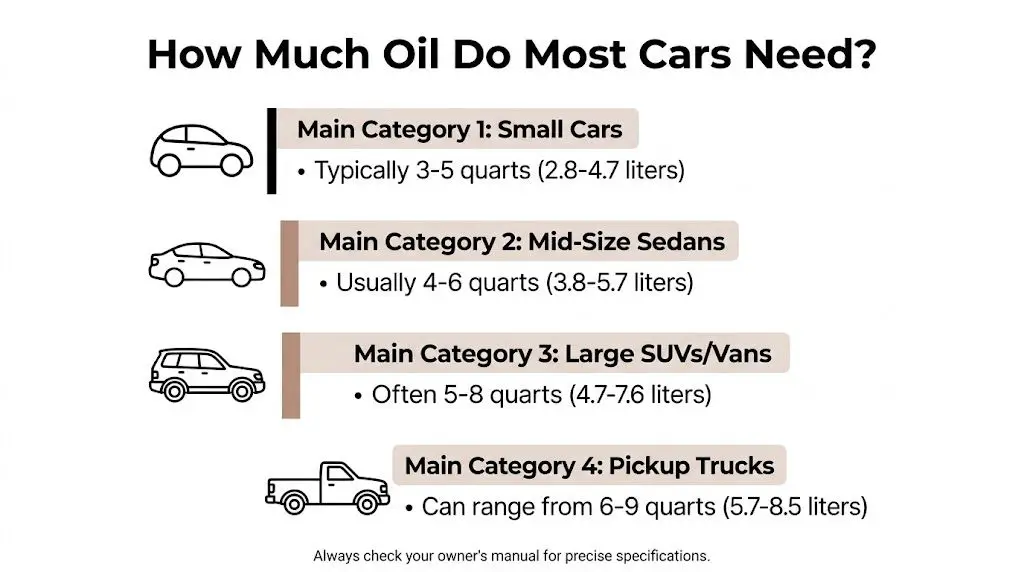
Common capacity ranges by engine size
Most passenger cars fall into a predictable range based on engine size:
| Engine type | Typical oil capacity |
|---|---|
| 4-cylinder | About 3.5 to 4.5 liters |
| 6-cylinder | About 4.5 to 5.5 liters |
| 8-cylinder | About 5 to 8 liters |
That range is useful for quick planning. It helps you know whether to buy a single jug or expect a larger fill on a truck or SUV.
It is still only a range.
A small commuter sedan with a 4-cylinder usually needs far less oil than a full-size V8 pickup, but engine design changes the final number. Turbochargers, oil cooler lines, pan shape, and filter size all affect capacity. Two vehicles parked side by side can both be 4-cylinders and still take different amounts.
The filter changes the final fill
A lot of DIY oil changes miss this step. The filter does not stay empty. Once the engine starts, fresh oil fills the filter and drops the level in the pan.
That is why a car can look full right after you pour the oil in, then read low on the dipstick a few minutes later. In the shop, we account for that from the start, especially on daily drivers that spend their time idling in Texas heat and stop-and-go traffic. Those engines already work hard. They do better with an accurate fill than a close-enough guess.
The range gets you close. The exact spec gets you done right.
Why “about five quarts” can cause trouble
Generic advice is fine for conversation. It is weak for service work.
If you pour in a standard amount without checking the vehicle spec, you can end up low, overfull, or stuck topping off twice. None of that saves time for a busy commuter. The practical answer is simple: use the common range as a starting point, then verify the exact capacity for your engine before the last pour. That extra minute is cheaper than oil smoke, a comeback, or wondering if the level is right on your drive home.
Three Ways to Find Your Car's Exact Oil Capacity
You pull into the driveway after work, the engine is hot, and you want this oil change done before the next Richland Hills school run or commute across Loop 820. That is usually when “about five quarts” turns into a second trip to the parts store. The fast way is to verify the exact capacity before you pour the last bottle.
Check the owner’s manual first
Start with the manual because it is written for the exact vehicle, not a general version of it. Look under specifications, capacities, or maintenance data. In most manuals, the oil amount is listed with the engine details and may separate a fill with filter from one without.
That distinction matters.
A lot of vehicles share a model name but use different engines across trims and production years. I see that mix-up often in the shop. A driver knows the model and assumes the oil spec is the same across the board, but the manufacturer may list a different fill amount for the base engine, the turbo engine, or the heavier-duty setup.
Use the manual to confirm three things:
- The exact engine
- The oil capacity
- The required viscosity
Capacity tells you how much. Viscosity tells you what kind.
Use an online lookup, but enter the vehicle details carefully
If the manual is missing, a parts or service database can get you close to the factory spec fast. Use the year, make, model, and engine size. If the site accepts a VIN, use it. That cuts down on mistakes, especially on vehicles with multiple engine options.
For a busy commuter, this is often the most practical backup. It saves time, but only if the information entered is dead-on. One wrong engine selection can send you home with the wrong filter, the wrong oil grade, and the wrong capacity.
If you want to confirm your level after filling, this guide on how to check your car oil level correctly helps you verify the dipstick reading the right way.
Let a technician verify the spec and fill level
Some engines leave very little room for guesswork. Small turbo engines are a good example. The total capacity may be modest, but the acceptable range on the dipstick can be tight, and the reading is not always easy to interpret when the oil is fresh and clean.
A technician can match the vehicle, filter, oil grade, and fill amount, then confirm the level after circulation and drain-back. At Express Lube & Car Care in Richland Hills, ASE-certified technicians do that every day for drivers who do not have time to cross-check bottle counts and engine codes in a hot driveway.
That matters more on vehicles that spend their lives in Texas heat, short trips, and stop-and-go traffic. Those conditions already make the oil work harder. Starting with the correct amount helps the engine protect itself the way it was designed to.
A practical note on small-capacity and turbo engines
Generic advice breaks down fast on newer engines with smaller oil capacities. Some only need a little less or a little more than a common “grab five quarts” assumption. Half a quart off on one of those engines is a bigger deal than it was on older setups with wider tolerance.
I usually explain it like this. A small engine oil system works a lot like a smaller coffee cup. Add a little too much, and you notice it sooner.
The closer the engine’s oil capacity is to the edge of a common guess, the more that guess can cost you.
Signs Your Oil Level Is Wrong
An engine usually gives clues before a small oil issue becomes a major repair. The trick is knowing what those clues mean. Low oil and high oil don’t always look the same.
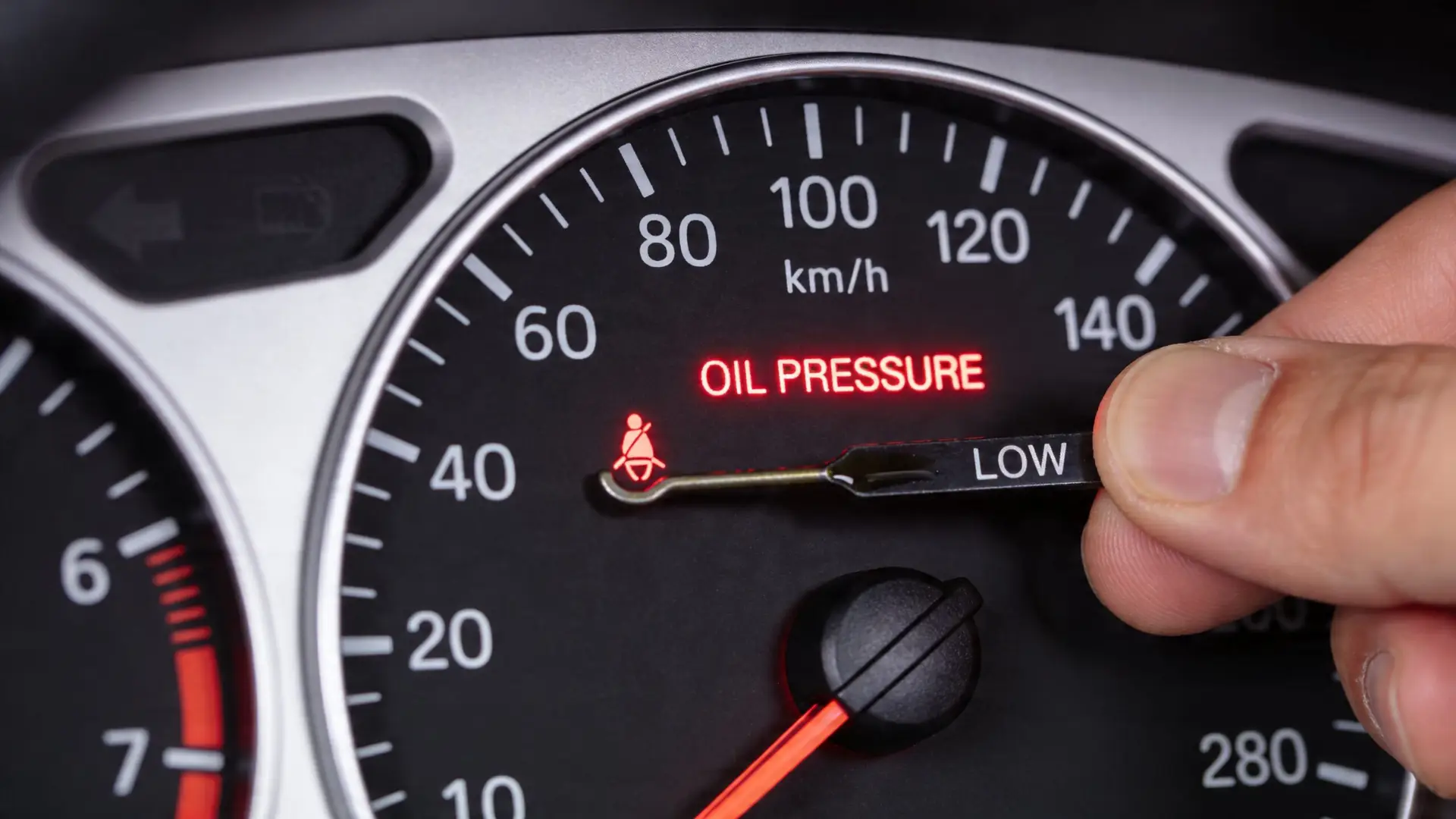
Signs the engine may be low on oil
Low oil often shows up as a warning light, ticking sounds, or a rougher feel from the engine than usual. That ticking can happen because upper engine components aren’t getting a steady oil supply quickly enough.
You might also notice the engine feels hotter or less smooth in stop-and-go traffic. Drivers sometimes describe it as the vehicle sounding “dry” or “busy.” That’s not a technical term, but it’s a common real-world description.
Signs the engine may be overfilled
Too much oil can be harder to recognize. The dipstick may show the level above full. The oil may also look whipped or frothy if aeration is happening. That’s what occurs when moving engine parts churn excess oil into foam.
An overfilled engine can also run poorly because foamed oil doesn’t lubricate the way it should. The problem is not just “extra protection.” It’s reduced oil quality in use.
How to check the dipstick correctly
A bad dipstick reading causes a lot of unnecessary worry. Here’s the process I recommend:
- Park on level ground: If the car is tilted, the reading won’t be trustworthy.
- Let the engine sit briefly after shutdown: That gives oil time to drain back into the pan.
- Pull the dipstick and wipe it clean: Use a rag or paper towel.
- Reinsert it fully, then pull it again: The second reading is the one that matters.
- Read both sides if needed: Sometimes one side smears. The clearer side usually tells the story.
If you want a more detailed walkthrough, this guide on how to check your car oil level is a good companion.
Why dipstick readings fool people
The most common mistake is checking immediately after adding oil and assuming the level is settled. Another is reading a smear high up the stick as the true level. On some engines, the difference between low and full isn’t much visually, so patience matters.
A clear reading beats a fast reading. If the stick is hard to interpret, wipe it and repeat.
How to Safely Top Off Your Engine Oil
If the level is low, topping off is straightforward. The key is to go slowly. Most overfills happen because someone gets impatient and pours in too much at once.
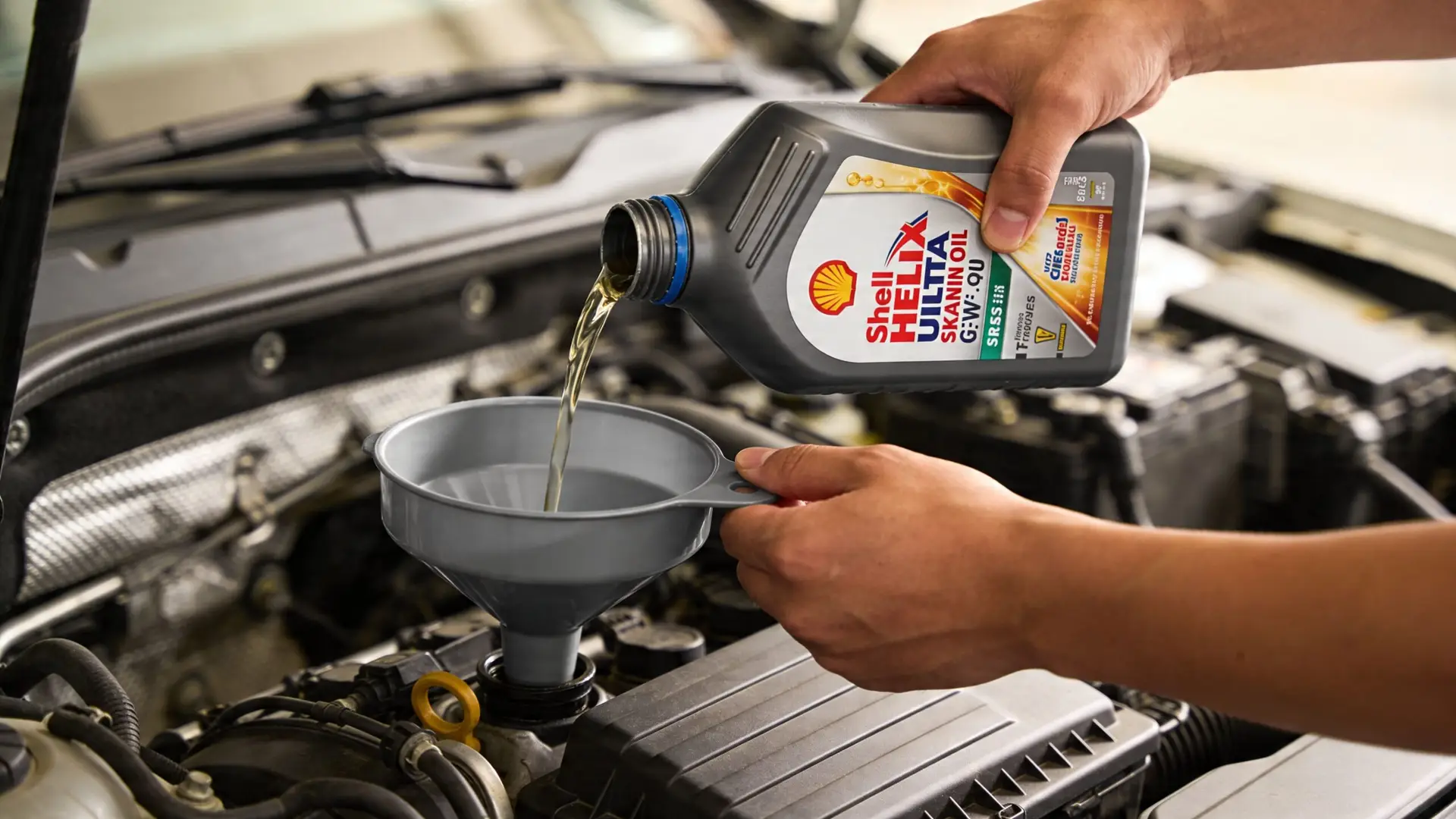
The safe way to add oil
Start by confirming the correct oil grade for your vehicle. If you aren’t sure what viscosity your engine calls for, check your manual or review these oil recommendations for my car before adding anything.
Then follow this sequence:
- Open the oil fill cap: It’s usually on top of the engine and marked with an oil can symbol.
- Use a funnel if you have one: It keeps oil off the engine cover and exhaust components.
- Add a small amount: Don’t dump in a whole bottle just because the dipstick looked low.
- Wait, then recheck: Let the oil settle before reading again.
Why small additions matter
On many vehicles, the space between the low and full marks isn’t a huge amount. A little patience prevents a lot of trouble. If you add oil in small steps and recheck each time, you’re much less likely to overshoot.
One more point matters here. Viscosity has to match the engine and the climate. Tires Plus explains oil viscosity ratings this way: the first number reflects cold-start flow and the second reflects viscosity at operating temperature. In plain language, it's much like syrup. Too thin when hot, and the protective film can break down. Too thick when cold, and it takes longer to reach the parts that need lubrication.
This video shows the basic process in action:
Add oil like seasoning food. You can always add a little more. Taking too much back out is the messy part.
The Easiest Oil Change in Richland Hills
For a lot of drivers, the primary issue isn’t understanding oil. It’s finding time to deal with it correctly. Between work, school pickups, and traffic, a “quick DIY oil change” can turn into a half-day project with a dirty driveway and a second trip to buy the right filter.
Professional service makes sense when you want the oil level, filter, and viscosity handled accurately in one stop. It also removes the common DIY errors: wrong filter, wrong quantity, loose drain plug, or a dipstick reading that gets misread after a rushed refill.
What the cost usually looks like
In 2026, a basic conventional oil change typically costs $35 to $75, while synthetic usually runs $65 to $125, according to SoFi’s breakdown of average oil change costs. That same source notes that neglected or improper oil changes can lead to $1,000+ engine repairs.
That trade-off is pretty straightforward. The service cost is predictable. Engine damage isn’t.
Why accuracy beats guesswork
The value of a professional oil change isn’t just the oil itself. It’s the exact fill, the right filter, and a second set of eyes on the vehicle. That matters if you drive a newer engine, a high-mileage SUV, or anything that sees a lot of Texas heat and idling.
If you’re curious what the process includes, this walkthrough of the steps to change oil shows why details like draining fully, replacing the filter correctly, and verifying level afterward all matter.
Who benefits most from shop service
A shop visit usually makes the most sense for:
- Busy commuters: You don’t have to carve out driveway time or deal with used oil disposal.
- Families with multiple vehicles: Keeping service records and capacities straight gets old fast.
- Fleet owners: Consistent service matters more when downtime costs money.
- Drivers with hard-to-read dipsticks: Some engines aren’t pleasant to check and fill accurately at home.
Frequently Asked Questions About Engine Oil
A few questions come up all the time at the counter, especially from Richland Hills drivers who sit in traffic, rack up short trips, and want to know whether the oil level is still safe before the next service.
How much oil is between low and full on a dipstick
On many engines, the distance between the add mark and full mark is roughly about a quart, but it varies by vehicle. That is why topping off should be done in small amounts, then checked again after the oil settles.
A full bottle can push the level higher than expected.
If I slightly overfill, is it a big deal
A small amount over the line usually does not turn into immediate damage. The risk goes up when the crankshaft starts churning through excess oil and whipping it into foam. Foamy oil does a poor job of protecting bearings and other moving parts because the pump is supposed to move liquid oil, not air bubbles.
If the level is clearly above full, correct it instead of hoping it will work itself out.
Do I need different oil because of Texas heat
Use the oil grade listed by the manufacturer. In North Texas, heat, long idle time, and stop and go driving put extra stress on oil, but that does not mean a random heavier oil is the right answer.
Viscosity works like the thickness of syrup versus water. Too thin for the engine, and protection can drop under heat. Too thick for the engine, and flow can suffer where it matters most. Modern engines are built around a specific oil grade, so sticking with that spec is the smart move.
Can I mix oils if I’m low
If the level is low, adding the correct viscosity is usually safer than driving around a quart down. For a short-term top-off, that can get you by.
Still, mixing different grades or oil types should stay a temporary fix. If you are not sure what is already in the engine, get it checked and filled correctly at your next service.
How often should I check my oil level
Check it more often if your vehicle sees heavy traffic, long idling, high mileage, or a lot of hot-weather commuting. For many drivers around Richland Hills, once a month is a good habit. Check it sooner before a road trip or any time you notice a warning light, rougher engine noise, or a burning oil smell.
If you would rather have someone verify the level and oil spec, Express Lube & Car Care can check it, confirm the correct fill, and help catch small problems before they turn into expensive ones.