

You’re heading down Highway 183, glance in the mirror, and catch a blue puff from the tailpipe. Maybe the oil light flickered for a second at the last stoplight. Maybe you checked the dipstick and realized the level dropped faster than it should.
That gets your attention fast.
Around Richland Hills, a lot of drivers first notice oil burning when the car smells different after a long commute, or when they’re adding oil between changes even though there’s no puddle in the driveway. Texas heat, stop-and-go traffic, and long highway stretches don’t cause every oil-burning problem, but they do make small engine issues harder to ignore.
If the smoke you’re seeing isn’t blue, color matters. A good guide on black smoke from the exhaust can help you separate fuel-related problems from oil-related ones, because those two issues point to very different repairs.
Oil burning doesn’t always mean the engine is finished. Sometimes it’s a simple crankcase ventilation problem. Sometimes it’s wear inside the engine that’s been building for a long time. The key is knowing what you can check yourself, what symptoms mean, and when it’s time to let a technician test it properly.
That Puzzling Puff of Smoke in Your Rearview Mirror
A lot of drivers describe the same sequence. The car feels mostly normal. Then the exhaust shows a bluish haze on startup, or after idling at a drive-thru, or when merging onto the freeway. A week later, the dipstick is low again.
That pattern usually tells me one thing. Oil is going somewhere it shouldn’t.
Why this catches people off guard
Most engines don’t fail all at once. They give clues first.
You might notice:
- Blue or gray smoke: Often more obvious on cold start or hard acceleration.
- A burned-oil smell: Different from raw fuel and different from coolant.
- Oil disappearing with no driveway spots: That points people toward internal consumption instead of an external leak.
- A warning light that comes and goes: Low oil level can trigger symptoms before the problem feels severe.
The stress comes from not knowing whether you’re dealing with a minor fix or major engine wear. That uncertainty is normal. Oil burning sits in that uncomfortable middle ground where the car may still run, but every mile can make the issue more expensive if the level drops too far.
Practical rule: If the oil level is low enough to trigger a warning light, stop treating it like a future problem.
Why local driving can make it feel worse
In this part of Tarrant County, plenty of vehicles live hard lives. Short trips don’t always let the engine fully stabilize. Long summer drives push heat into every system. Towing, idling, and heavy traffic all expose oil consumption problems sooner.
That doesn’t mean local conditions are the root cause. It means they remove the cushion. A weak PCV valve, sticky piston rings, or tired valve seals may stay unnoticed for a while, then suddenly become obvious when the engine spends more time hot and under load.
The good news is that oil burning follows patterns. Once you know what to look for, the problem gets much less mysterious.
Why Your Engine Needs Oil in the First Place
A lot of drivers hear “burning oil” and assume oil is just extra fluid the engine can spare. It is not. Inside the engine, oil is part of the system that keeps metal parts alive under heat, pressure, and constant motion.
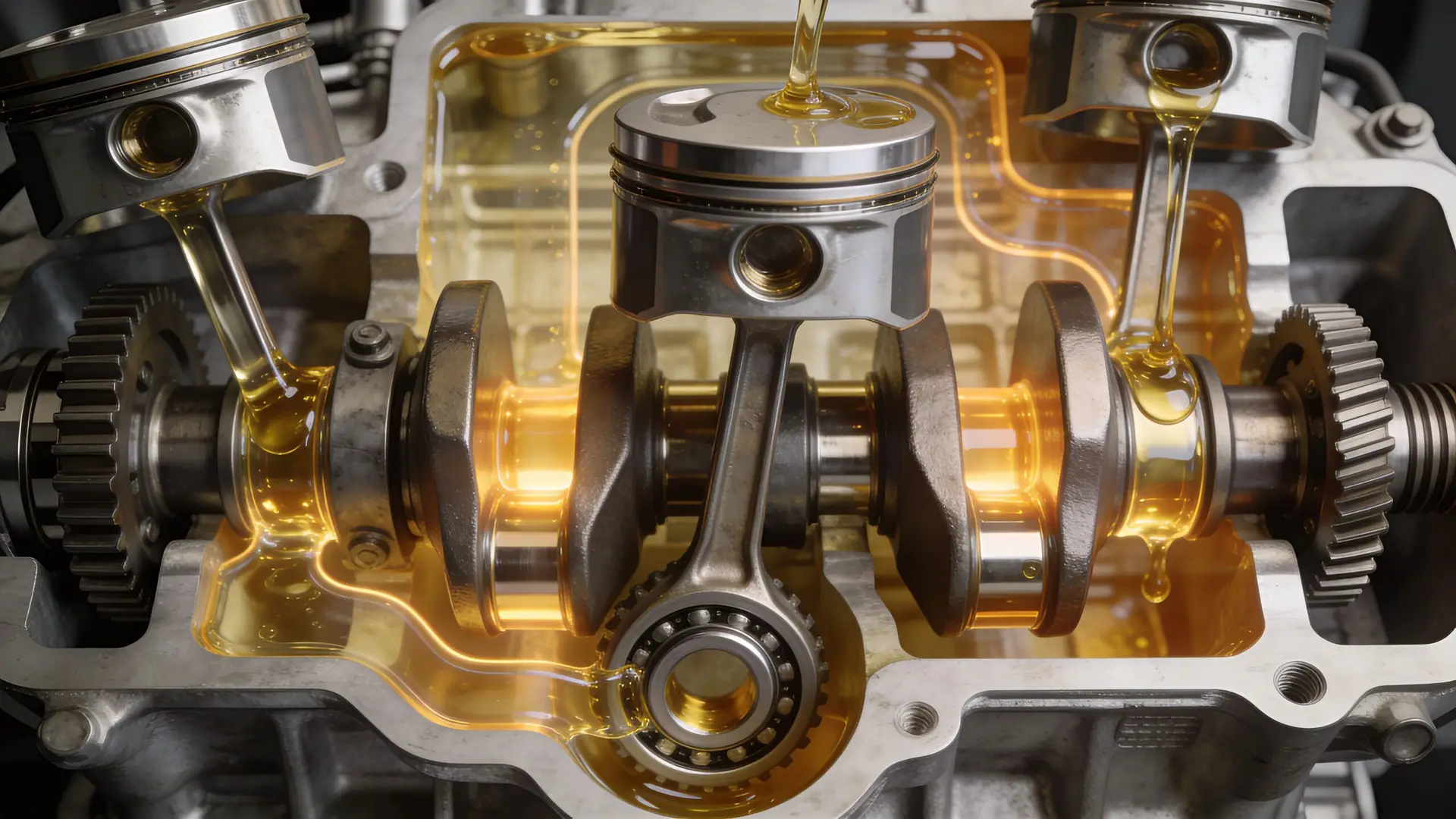
If you want the simple version, oil does three jobs at once. It separates moving parts, helps carry heat away from loaded components, and holds contaminants in suspension long enough for the filter to catch them. Once you understand those jobs, oil consumption makes a lot more sense.
Oil protects moving parts from direct contact
Pistons, bearings, cam lobes, and crank journals all operate on a very thin film of oil. That film keeps metal surfaces from scuffing each other every time the engine turns. Lose enough of that protection, and friction climbs fast.
That is why a driver can have an engine that still runs but is already wearing itself harder than normal.
Oil helps manage heat inside the engine
Coolant handles the big temperature swings, but oil works in places coolant never touches directly. It circulates through hot internal parts and helps pull heat away from bearings, pistons, and valvetrain components.
Pennzoil explains this well in its guide to what motor oil does for your engine. In the shop, I usually explain it this way. Coolant handles the neighborhood around the engine, while oil deals with the heat inside the moving parts themselves.
Oil keeps contamination from sticking where it should not
Combustion leaves behind soot, varnish, and carbon. Normal wear adds tiny metal particles. Oil carries that material through the engine so the filter can trap a good portion of it instead of letting it bake onto rings, lifters, and oil passages.
This is one reason skipped oil changes create problems that snowball. Old oil does a poorer job of keeping debris suspended, and deposits can start sticking rings or restricting flow in the small passages that feed the top end.
Oil has to match the engine
Viscosity matters. So does the oil standard listed in the owner’s manual. If the oil is too thin for the design or operating temperature, it may slip past worn areas more easily. If it is too thick, cold-flow protection can suffer and some components may not get lubricated quickly enough on startup.
For a DIY check, look at two things first. Confirm the oil level is correct on level ground, then confirm the viscosity on the invoice or bottle matches the spec on the oil cap or in the manual. Those are easy checks. If both are right and the level still keeps dropping, the next step is diagnosis, not guesswork.
At that point, a shop visit can save money. A basic oil consumption check or inspection in the Richland Hills area is often far cheaper than running an engine low and turning a manageable repair into major internal damage.
The Most Common Reasons for Burning Oil
A dropping oil level with no puddle under the car usually points to one of four problem areas. The smart way to approach it is to rule out the simple causes first, then decide whether the engine needs testing.
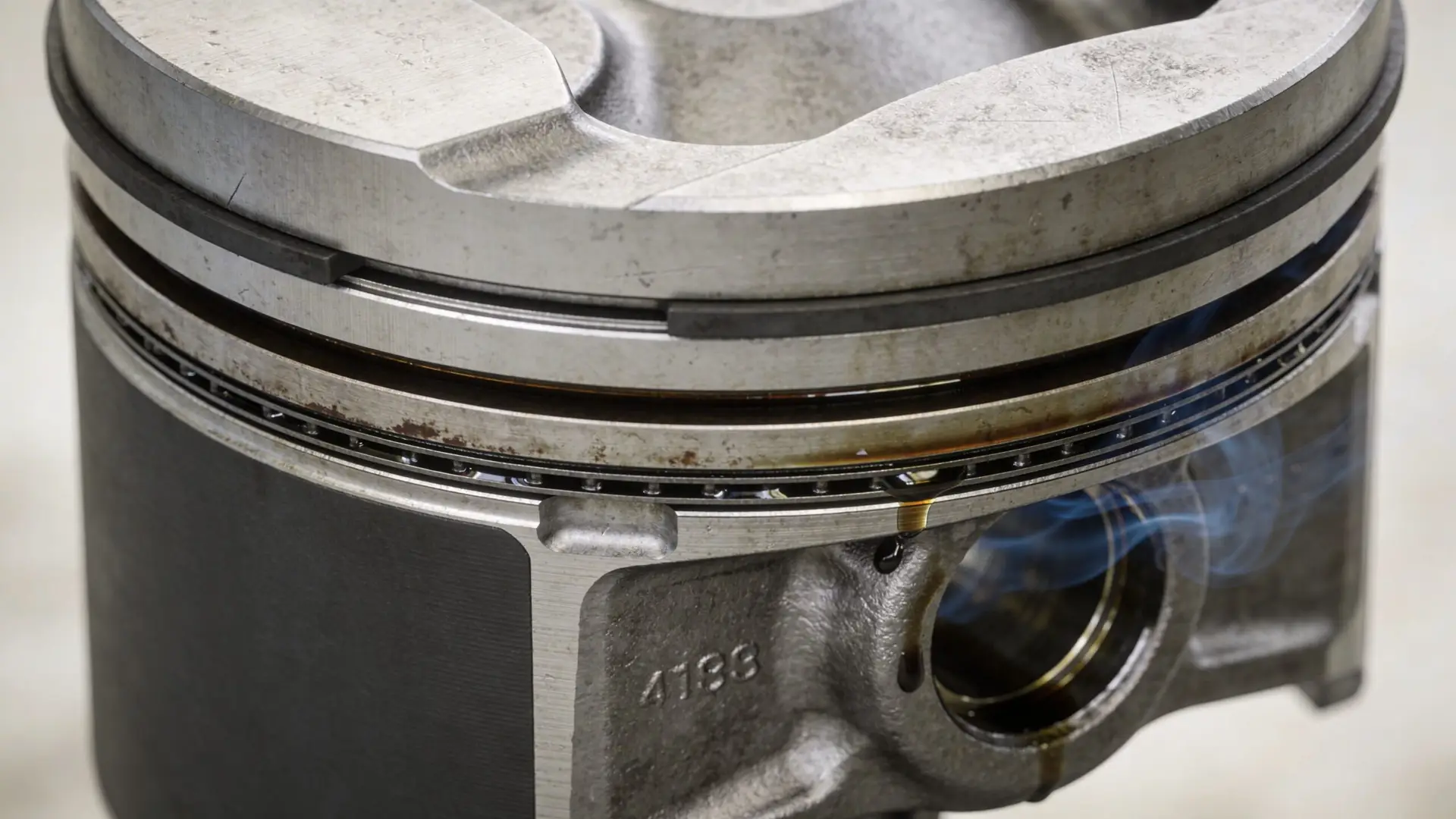
Worn piston rings
Piston rings seal combustion pressure above the piston and help control oil on the cylinder wall. When the rings wear or stick with carbon, oil can get past them and burn in the chamber.
This is the cause drivers worry about most, and for good reason. Ring wear usually brings more than oil consumption. It can also bring weaker compression, more blow-by, rougher performance under load, and a tired feel on acceleration.
A driveway clue is blue smoke during hard throttle. A shop clue is low compression or leak-down numbers that point to ring sealing trouble. DIY checks can tell you something is wrong. They cannot confirm ring condition the way proper testing can.
Valve stem seals
Valve stem seals control how much oil reaches the valve guides at the top of the engine. When those seals get hard and brittle with age, oil can drip into the cylinders while the engine sits or idles.
That pattern matters. If the car puffs blue smoke on startup in the morning, then clears out after a minute, valve seals move higher on the suspect list. If it smokes most during acceleration, rings are often more likely.
I explain it to customers this way. Ring problems usually show up when cylinder pressure rises. Valve seal problems often show up after oil has had time to seep downward.
PCV system problems
The PCV system manages crankcase pressure and routes vapors back into the intake. If the valve sticks or a hose restriction changes the pressure balance, the engine can start pulling oil mist where it should not, or it can build pressure that pushes oil past worn areas.
This is one of the first things I check because it is cheap to inspect and sometimes cheap to fix. On many vehicles, a PCV valve or related hose issue costs far less than internal engine work. Around Richland Hills, a basic inspection may run roughly $50 to $120, while a simple PCV-related repair often lands well below major engine repair territory.
If you are also seeing a warning light or pressure-related symptoms, this guide on what low oil pressure can mean can help you sort out whether the problem looks like consumption, lubrication trouble, or both.
Wrong oil viscosity or poor oil condition
Using oil that does not match the manufacturer spec can increase consumption, especially in an older engine with some wear already present. Oil that is too thin for the application may slip past rings or guides more easily. Oil that is badly overdue for a change can leave deposits that make rings stick and stop doing their job cleanly.
This does not mean heavier oil is the automatic answer. Sometimes thicker oil only masks the symptom for a while and creates cold-start flow problems. The better first step is simple. Verify the viscosity on the bottle or invoice, confirm it matches the cap or owner’s manual, and make sure the oil is not overfilled.
Here is the practical breakdown:
| Cause | What happens | What drivers usually notice |
|---|---|---|
| Worn piston rings | Oil gets past the rings and burns in the cylinders | Blue smoke under throttle, steady oil loss, weaker performance |
| Valve stem seals | Oil seeps into the cylinders from the top end | Smoke after startup or after idling |
| PCV system problems | Crankcase pressure or vapor flow pulls oil into the intake | Oil use with little external leakage, oily intake parts |
| Wrong viscosity or neglected oil | Oil control gets worse, especially in a worn or dirty engine | Increased consumption, possible ticking or rough cold starts |
The big trade-off is time versus certainty. A driver can check oil level, service records, smoke pattern, and the correct viscosity at home. Compression testing, leak-down testing, and intake inspection are where a shop earns its keep, because that is how you avoid throwing parts at the wrong cause.
Symptoms That Signal Your Car Is Burning Oil
You check the mirror after pulling away from a light on Boulevard 26 and catch a brief blue puff behind the car. Then the dipstick reads low again a week later, but there is no fresh puddle in the driveway. That pattern usually points to oil getting burned inside the engine, not leaking onto the ground.
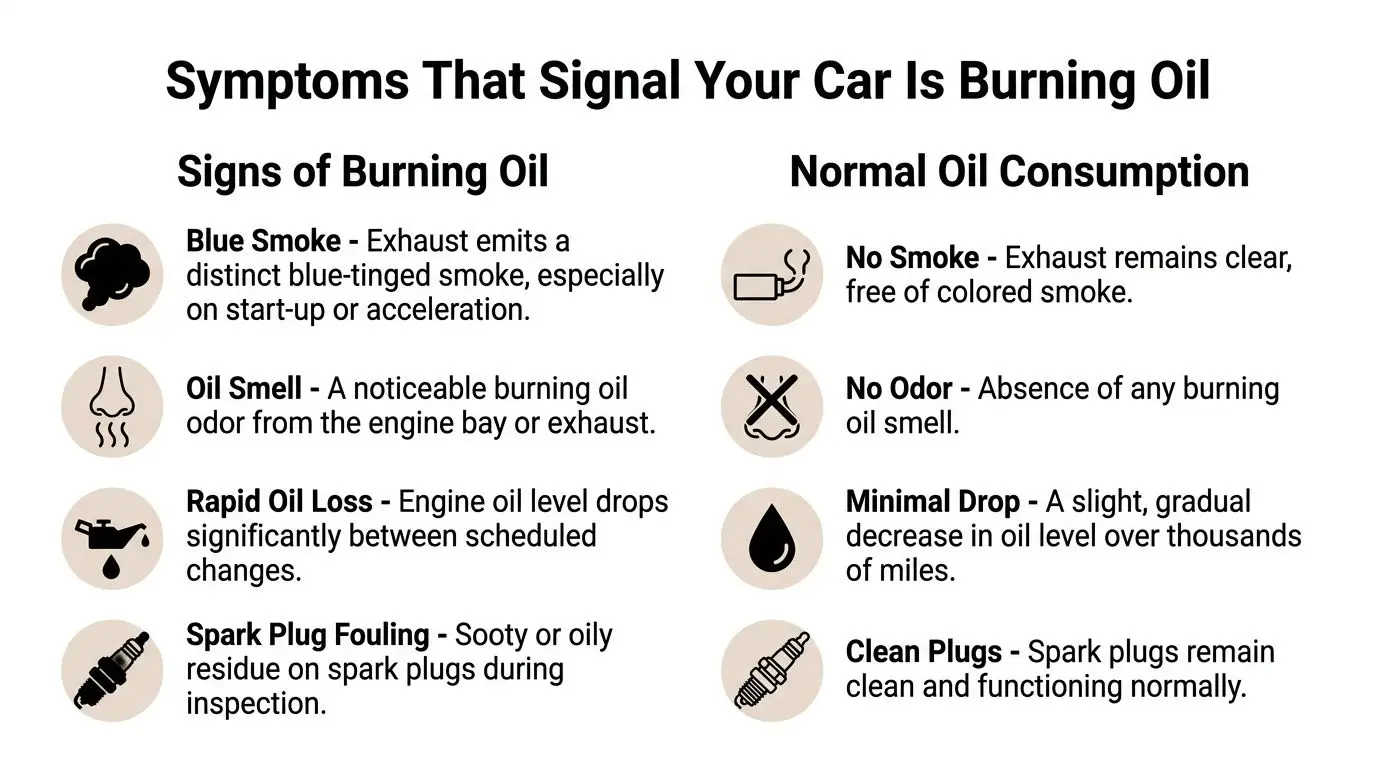
Burning oil versus leaking oil
Drivers in Richland Hills mix these up all the time, and the symptoms can overlap. The fastest way to sort it out is to look for what is coming out of the tailpipe, what is showing up under the vehicle, and how the oil level changes over time.
| If it’s burning oil | If it’s leaking oil |
|---|---|
| Blue or gray exhaust smoke | Spots or drips under the vehicle |
| Burned-oil smell from exhaust | Wet residue around gaskets, filter, pan, or seals |
| Oil level drops with no obvious puddles | Oil level drops and you can often see where it escaped |
| Spark plugs may show oily fouling | Engine exterior may look oily or dirty in one area |
If a warning light is part of the story, this overview of what low oil pressure can mean helps explain why low oil level and low oil pressure sometimes show up together, even though they are not the same problem.
Signs that deserve attention
A burning-oil engine usually leaves a pattern, not just one clue.
- Blue smoke at certain times: Smoke on startup often points one direction. Smoke after idling or on acceleration can point another. The timing matters.
- Burned-oil smell: Often strongest near the tailpipe or after the engine gets fully warm.
- Oil loss between services: If you keep topping it off sooner than you used to, track that change.
- Oily or carbon-fouled spark plugs: A good clue during DIY inspection, especially if one or two cylinders look worse than the others.
One practical check at home is to watch when the smoke appears. Startup smoke after the car sits overnight often lines up with oil slipping past valve seals. Smoke during hard acceleration can suggest ring wear. No smoke at all does not clear the engine, because some vehicles burn oil lightly enough that you smell it or see the level drop before you ever catch visible smoke.
What you can check yourself, and what a shop should confirm
A driver can do three useful checks without tools beyond a flashlight and a clean rag. Look under the car after it has been parked. Check around the valve cover and oil filter area for fresh wet oil. Then monitor the dipstick every few days under the same conditions.
That gives you a baseline.
Professional diagnosis becomes the smart move when the level keeps falling and the simple checks do not show an obvious leak. At that point, a shop can inspect the PCV system, look inside the intake for oil residue, and test cylinder sealing instead of guessing. A basic inspection for oil consumption concerns is often far cheaper than replacing parts on a hunch. Around Richland Hills, simple diagnostic time may run roughly $75 to $150, while deeper testing costs more but can save you from chasing the wrong repair.
What normal looks like
Some engines use a small amount of oil over a long service interval, especially as mileage climbs. What gets my attention is a change in pattern. If the engine used to hold level well and now needs regular top-offs, that is the clue to take seriously.
Watch the trend, not one dipstick reading. When smoke, smell, and oil loss show up together, the engine is asking for a closer look.
Your Step-By-Step Guide to Diagnosing Oil Consumption
You check the dipstick on a Saturday morning, and the level is down again even though there is no puddle in the driveway. That is the point where guessing gets expensive. A clean diagnosis starts with a simple routine and a few notes.
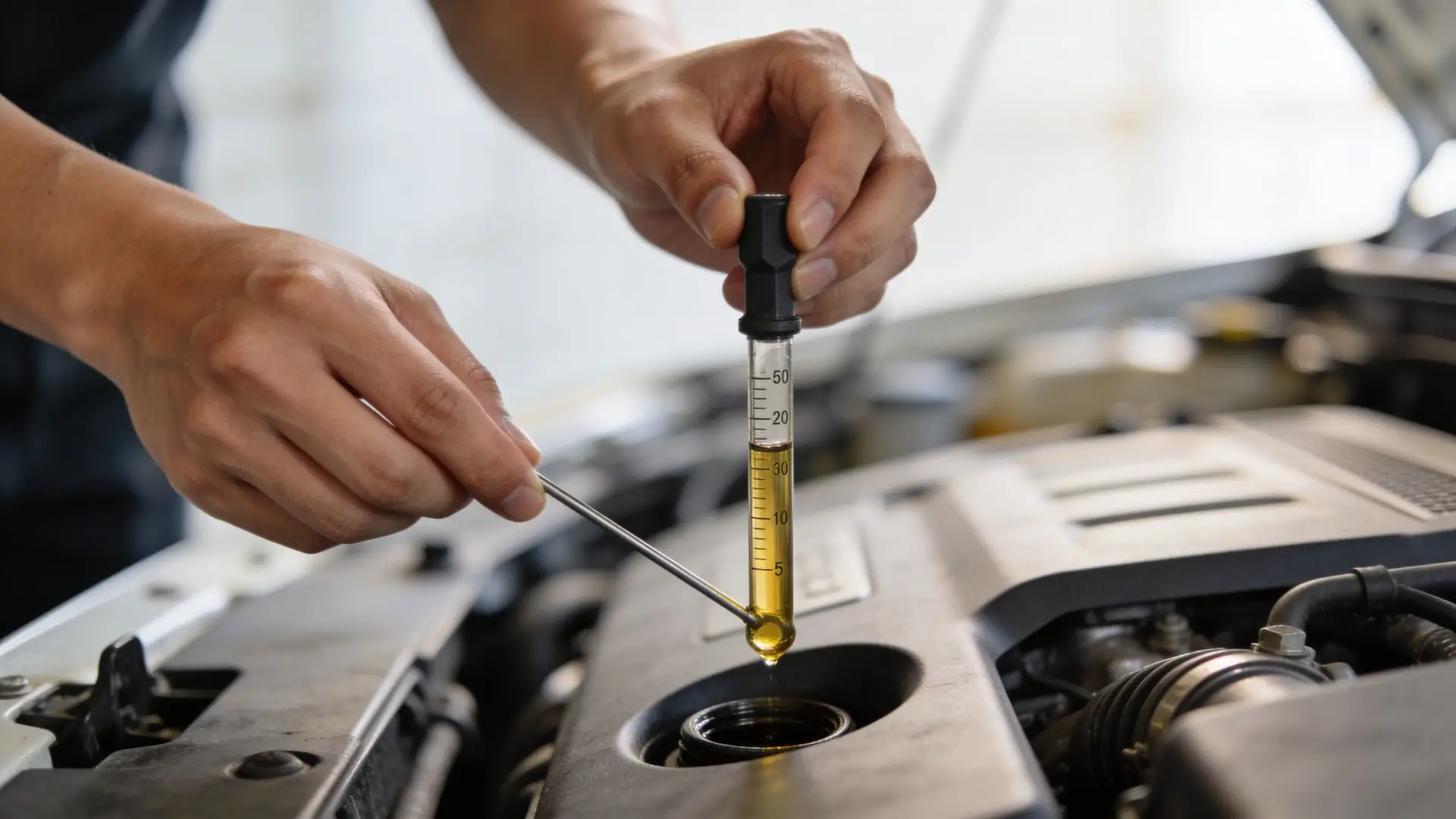
At the shop, I want to know three things first. How much oil is it using, how fast is it dropping, and under what driving conditions does it happen. A car that uses oil on short in-town trips can point in a different direction than one that drops level after long highway runs or extended idling.
Step 1, measure the oil level the right way
Check it on level ground with the engine off and given a few minutes for the oil to drain back to the pan. Pull the dipstick, wipe it clean, reinsert it fully, then read it again.
If you want a quick refresher, this guide on how to check your car oil level walks through it clearly.
Then start a small log in your phone or glove box. Write down:
- Date and mileage
- Oil level on the dipstick
- How much oil you added, if any
- Driving since the last check, such as short trips, highway miles, towing, or long idle time
- Any smoke, burning smell, or warning lights
This is the part drivers skip, and it matters. Good notes separate a consumption pattern from a one-time low reading.
Step 2, rule out an external leak before you assume the engine is burning oil
Use clean cardboard under the engine overnight. Check it the next morning.
Then open the hood and inspect with a flashlight. Look around the valve cover gasket, oil filter housing, drain plug area, timing cover, and the front and rear edges of the engine. Fresh wet oil on the outside changes the diagnosis fast. Oil can blow backward while driving, so the leak source is often higher up than the wet spot you first notice.
If the engine is dirty, cleanup helps. Shops sometimes clean oily areas before rechecking so fresh seepage is easier to trace. For heavily coated parts removed during repair, some technicians also use ultrasonic cleaners for car engine parts to get residue off tight passages and small components.
Step 3, match the symptom to the driving condition
The timing of the smoke or oil loss gives useful clues.
- Smoke on startup often points to oil slipping past valve stem seals while the engine sits.
- Smoke after a long idle, then taking off can suggest oil entering from the top end.
- Smoke under hard acceleration raises concern about worn piston rings or cylinder wear.
- Oil loss with little or no visible smoke keeps the PCV system, turbocharger on equipped vehicles, and small leaks in play.
A quick visual explanation can help if you’re trying to understand what technicians are looking for during diagnosis.
Step 4, do the low-cost checks before authorizing bigger repairs
Here, local drivers can save money. Start with the simpler items that fail more often and cost less to fix.
A PCV valve issue, clogged hose, or oil pulled into the intake can sometimes mimic a larger engine problem. A basic inspection for oil consumption concerns around Richland Hills often falls in the $75 to $150 range. If the technician finds a ventilation problem, that repair is usually far cheaper than internal engine work.
If the easy checks do not explain the oil loss, then it makes sense to pay for deeper testing.
Step 5, let a shop confirm engine condition with the right tests
Two tests tell us a lot.
Compression test
This checks how well each cylinder builds pressure. Low numbers can point to wear, but compression alone does not always identify where the pressure is escaping.
Cylinder leak-down test
This is the more precise follow-up. The technician brings each cylinder to the proper position, adds compressed air, and listens for where it leaks. Air noise at the oil fill can suggest ring sealing trouble. Air at the intake or tailpipe can point toward valve sealing problems.
That distinction matters because the repair paths are very different. A PCV repair or valve cover job is one conversation. Ring wear or cylinder damage is a much bigger one.
Expect deeper diagnostic testing to cost more than a basic inspection, but it can keep you from replacing parts on a hunch. That is usually the cheapest path in the long run.
Prevention Tips and Likely Repair Costs
Oil burning usually gets expensive when drivers wait too long or throw parts at the problem without confirming the cause first. The cheaper path is simple. Use the right oil, check the level regularly, and treat a change in oil use like a new symptom, not just an older-car quirk.
Good prevention starts with the basics you can control:
- Use the oil grade the engine was designed for: Too thin, too thick, or the wrong spec can increase consumption and leave deposits behind. If you are unsure what your engine needs, our guide to oil recommendations for your car is a good starting point.
- Stay consistent with oil changes: Old oil breaks down, thickens with contamination, and leaves more varnish and carbon inside the engine.
- Check the dipstick between services: Older engines, turbo engines, and high-mileage commuters around Richland Hills benefit from quick level checks every few fill-ups.
- Fix small breathing problems early: A restricted PCV system can pull oil where it does not belong and create symptoms that look worse than they are.
- Pay attention to heat: Turbocharged engines run hot. Shut-down habits, overdue oil changes, and low-quality oil can all shorten seal life over time.
Deposits can also turn a manageable oil-use issue into a bigger repair. If you want a clearer picture of how carboned-up components are cleaned during parts reconditioning, this guide to ultrasonic cleaners for car engine parts gives useful background.
What the common repairs look like
Repair cost depends less on the smoke itself and more on where the oil is getting past the engine’s normal sealing points.
| Repair type | What it addresses | Budget reality |
|---|---|---|
| PCV valve or hose service | Crankcase ventilation problems | Often one of the least expensive fixes |
| Valve cover gasket or related top-end sealing repair | External leaks or oil entering places it should not | Usually moderate, depending on access |
| Valve stem seal repair | Oil slipping past valve guides into the combustion chamber | Labor-heavy on many engines |
| Piston ring or cylinder repair | Wear in the lower end of the engine | Major repair, often teardown-level work |
| Turbocharger-related repair | Oil passing through worn turbo seals or bearing wear | Cost varies widely by engine and turbo design |
Here is the trade-off I explain to drivers at the shop. A simple ventilation repair may cost less than a tank or two of fuel. Internal engine work can run into the thousands. Around Richland Hills, a basic PCV-related fix may land under $100 to a few hundred dollars, while valve seal, turbo, or ring-related repairs can climb fast once labor and parts stack up.
That is why prevention and diagnosis go together. Catching a low oil level early may save the catalytic converter, the spark plugs, and the engine itself. Waiting until the exhaust smokes every morning usually narrows your low-cost options.
The smartest money is usually spent in order. Check the oil. Confirm the pattern. Repair the simple cause first if the tests support it. Then approve bigger work only when the evidence points there.
When to Visit Express Lube & Car Care in Richland Hills
You check the dipstick on a Friday afternoon, and the level is low again even though you topped it off not long ago. Maybe you caught a puff of blue smoke at a stoplight, or you smell burnt oil after parking in the driveway. That is the point where guessing starts to get expensive.
Some oil use is normal on certain engines, especially older vehicles and some turbo models. A sudden change is different. If the oil level drops faster than it used to, the warning light flickers, or smoke shows up more than once, it is smart to have the car checked before a small repair turns into spark plug, catalytic converter, or engine damage.
Signs it’s time for a professional check
Bring the vehicle in if:
- You’re adding oil between services: A steady pattern matters, but a new pattern matters more.
- Smoke shows up at startup, idle, or acceleration: When it happens helps narrow down the cause.
- The oil light flickers or comes on: Low oil level can damage internal engine parts fast.
- The level keeps dropping and you do not see a driveway leak: That often points to oil being burned inside the engine.
At the shop, one of the first jobs is separating a simple problem from a major one. A stuck PCV valve or hose issue can sometimes mimic bigger engine wear, and that is usually a far cheaper fix than valve seals, turbo trouble, or piston ring work. I always tell drivers the same thing. Approve the basic checks first, then spend bigger money only if the test results support it.
What a good shop should do
A solid inspection follows a clear order, because the sequence matters.
They should:
- Confirm whether the engine is burning oil, leaking it, or both
- Inspect the PCV system and check crankcase pressure behavior
- Look for wet sealing surfaces, residue, and oil contamination
- Recommend compression or leak-down testing when internal wear is likely
That process protects you from paying for parts that do not fix the problem. It also gives you a better idea of budget before the repair list grows.
Around Richland Hills, a basic diagnostic visit or minor oil-consumption check is usually manageable. If the problem turns out to be a PCV issue, the repair may stay in the lower end of the range. If testing points to valve stem seals, turbo seals, or ring wear, costs can climb quickly because labor goes up fast on internal engine work.
If your vehicle is smoking, using oil, or making you question whether it is safe for the next commute, bring it in while the symptoms are still clear and the options are wider.
If your car is showing signs of burning oil, don’t wait until the dipstick is dry or the warning light stays on. The ASE-certified team at Express Lube & Car Care can inspect the vehicle, check for leaks, evaluate the PCV system, and help determine whether you’re dealing with a simple fix or a deeper engine issue. Walk in for a fast, honest diagnosis and practical next steps you can trust.