

If you’ve ever found yourself searching for “tune-ups near me,” you’re not alone. But what exactly is a modern car tune-up?
Put simply, it's a preventative maintenance service that focuses on inspecting and replacing key engine parts like spark plugs and filters. The goal is to bring back the performance and fuel efficiency your car had when it was new—think of it as a comprehensive health check for your engine.
What a Modern Car Tune Up Really Means

The old idea of a mechanic tinkering with a carburetor under the hood is a thing of the past. For any car made in the last few decades, the term "tune-up" has evolved completely. It’s no longer about manual tweaking; it’s about diagnostics, analysis, and replacing worn-out components before they can cause a breakdown.
You can think of it like an annual physical for your car. A doctor runs tests to find potential issues before they become serious problems, and that's exactly what a tune-up does for your engine. It's a proactive step to keep your vehicle healthy and performing its best, not just a fix for something that's already broken.
The Shift From Mechanical to Digital
Today's cars run on complex computer systems that constantly monitor their own performance. A modern tune-up involves plugging specialized diagnostic tools right into this onboard computer. This scan pulls "trouble codes" that can pinpoint problems with everything from your fuel system to your emissions, often long before you’d ever notice a symptom.
This approach is more important than ever, especially since people are keeping their cars longer. In 2024, U.S. light-duty aftermarket sales soared to $413.7 billion, partly because drivers are investing more in maintaining their vehicles. It’s telling that an estimated 75% of this work happens at independent shops like ours, not at the dealership.
To give you a clearer picture, here’s a quick breakdown of what a modern tune-up typically covers.
Modern Car Tune Up Services At a Glance
| Service Component | Purpose | Benefit |
|---|---|---|
| Spark Plug Replacement | Ignites the fuel-air mixture in the engine cylinders. | Prevents misfires, improves fuel economy, and ensures smooth engine starts. |
| Filter Inspection/Replacement | Ensures clean air and fuel enter the engine. | Boosts performance and efficiency while protecting engine components from debris. |
| Fluid Level Checks | Verifies oil, coolant, and other vital fluids are full and clean. | Prevents overheating and ensures proper lubrication and system function. |
| Belt & Hose Inspection | Checks for cracks, wear, and proper tension on critical belts and hoses. | Avoids sudden failures of key systems like the alternator or water pump. |
These services form the core of modern vehicle maintenance, and they all work together to keep your car reliable.
A tune-up is an investment in reliability. By replacing inexpensive wear-and-tear items on a schedule, you can prevent chain-reaction failures that lead to expensive, unexpected breakdowns and keep your car running efficiently.
Instead of waiting for a rough idle, poor gas mileage, or a check engine light to appear, a scheduled tune-up ensures these key systems are always in top shape. It’s the smartest way to get the most life out of your car.
The Key Components of a Comprehensive Tune Up
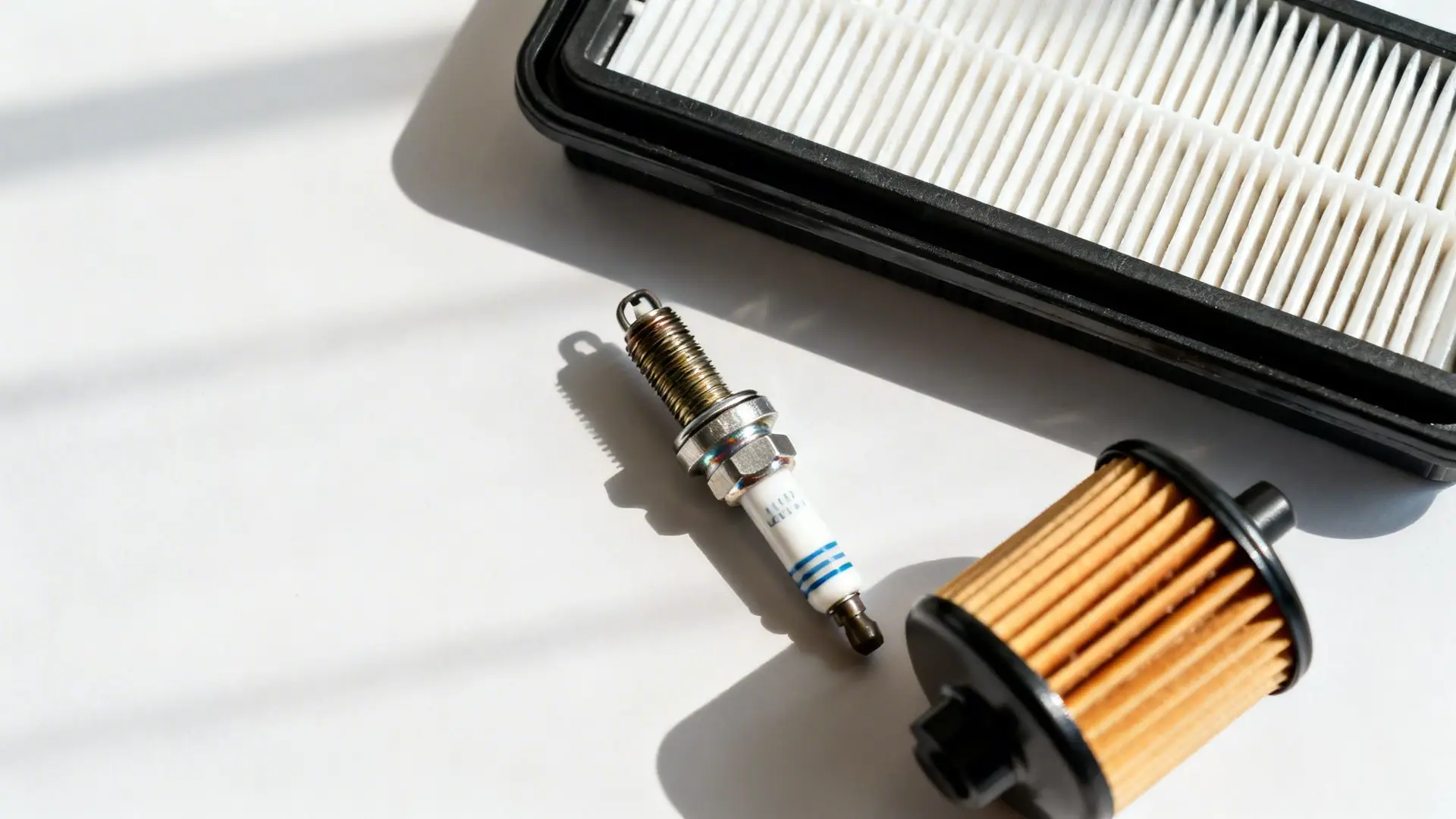
When you bring your car in for a tune-up, you're really investing in its core health. Think of it less as a random check and more as a focused service on the parts responsible for creating power and running efficiently. It goes way beyond a quick peek under the hood to target the components that wear out over time.
A good technician won’t just start swapping parts. They follow a specific checklist to get your car’s ignition, fuel, and emissions systems working together perfectly again. It’s this careful process that brings back lost performance and helps you dodge bigger, more expensive repairs down the road.
The Ignition System Refresh
The heart of your engine’s power is all about igniting fuel at precisely the right moment. The key players here are the spark plugs—they create the spark that starts the combustion. Over thousands of miles, they get worn out, leading to weak sparks, bad gas mileage, and a rough-running engine.
A single misfiring spark plug can cut your car's fuel efficiency by up to 30%. Replacing them is one of the quickest ways to get that lost power and mileage back.
During a tune-up, a technician will:
- Replace Worn Spark Plugs: A fresh set guarantees a strong, reliable spark for the best possible combustion.
- Inspect Ignition Coils and Wires: These parts send the electricity to the plugs. We check them for any cracks or wear that might be causing a misfire.
Fuel and Air System Cleaning
Just like us, your engine needs to breathe. To run right, it needs a perfect mix of clean fuel and clean air. Over time, your filters get clogged with all the dirt, dust, and grime they stop from getting into your engine.
Replacing these filters is a huge part of a proper tune-up. A clean air filter lets the engine pull in air without struggling, and a new fuel filter stops gunk from clogging up your sensitive fuel injectors. This simple step can make a noticeable difference in your car’s acceleration and responsiveness.
While a tune-up is a broad service, it works hand-in-hand with other essential maintenance, like a routine oil and filter change. Getting these services done together ensures every critical system—from ignition to lubrication—is in top shape.
Signs Your Car Is Asking for a Tune Up

Most cars don't just break down out of the blue. They usually give you little hints that something isn’t right. If you learn to spot these clues, you can avoid a major headache and an expensive repair bill down the road.
Think of it as your car trying to tell you it needs help. A shaky idle, for instance, is a lot like an unsteady heartbeat—it’s a clear sign the engine isn't running smoothly. Catching these problems early is the key.
Common Warning Signs to Watch For
Pay attention to how your car feels and sounds on your daily drive. If you notice any of these common issues, it’s probably time to search for tune ups near me.
- Worse Gas Mileage: Making more trips to the gas station than usual? A sudden drop in fuel economy is a classic signal that your engine is working too hard, often because of worn-out spark plugs or a dirty air filter.
- Rough Idling or Stalling: Your car should feel steady when you're stopped. If it starts to shake, vibrate, or even stall at a red light, your ignition system likely needs some attention.
- Engine Hesitation or Sluggishness: Does your car pause or struggle when you hit the gas? That lag in acceleration often points directly to a problem with the fuel or ignition system.
The most obvious sign is also the one people ignore most often: the check engine light. A steady light can mean a lot of things, but a flashing one is a serious warning. It usually signals a misfire that can destroy your catalytic converter if you don't get it looked at right away.
Recognizing these symptoms and acting on them is one of the smartest things you can do for your car. A proactive tune-up will get your performance and fuel efficiency back where they should be, all while saving you money by replacing worn parts before they fail completely.
How to Choose a Trustworthy Local Auto Shop
Finding a mechanic you can trust is just as critical as the tune-up itself. A great shop saves you from headaches and surprise costs, turning car maintenance from a chore into a simple, confidence-building check-in.
The key is knowing what to look for before you hand over your keys.
First and foremost, look for ASE certification. Think of the Automotive Service Excellence (ASE) Blue Seal as proof that the technicians working on your vehicle have passed tough, comprehensive exams and are experts in their field.
Look for Experience and Transparency
Experienced mechanics are worth their weight in gold, especially since a huge part of the workforce is nearing retirement. The U.S. Bureau of Labor Statistics expects around 70,000 job openings for auto technicians every year, largely to replace these retiring pros.
This makes finding an established shop with a certified, experienced team a very smart move.
Beyond credentials, just listen to how they talk to you. A great shop will explain the problem clearly, offer you different options without high-pressure sales tactics, and give you a clear, itemized estimate before starting any work. Honesty is everything. Learning how to read auto repair shop reviews can also help you spot the good guys.
Questions to Ask a Potential Auto Shop
Before you agree to any work, have a few questions ready. A good shop will have a complete plan for your vehicle's health, often using a detailed guide similar to a professional fleet vehicle maintenance checklist.
A shop's willingness to answer your questions patiently is a huge green flag. It shows they care about service and doing the job right.
Here are a few questions you should always ask:
- Are your technicians currently ASE certified?
- Do you use OEM-equivalent parts for your repairs?
- What kind of warranty do you offer on parts and labor?
- Can I get a detailed, written estimate before you start the tune-up?
Their answers will tell you everything you need to know about their standards, helping you pick the right partner to keep your car running smoothly.
The Express Lube Advantage in Richland Hills

At Express Lube & Car Care, we understand that you don’t have time to wait. That’s why we’ve built our service around a simple promise: no appointment needed, ever.
Just walk in whenever your car needs attention, and our ASE-certified professionals will get right to work. We pair this convenience with the clear, honest advice you deserve. You won’t find surprise fees or confusing jargon here—just straightforward solutions from people who live and work right here in Richland Hills.
A Focus on Speed and Trust
In an industry where repair times keep getting longer, we’re proud to get you back on the road faster. Recent industry analysis shows the average time to repair a vehicle has jumped from 49 to 81 minutes. We beat that trend with efficient processes and an experienced team.
At the same time, over 70% of drivers say transparent communication is their top priority when choosing a shop. We couldn’t agree more. We explain every step, provide clear updates, and build the community trust that sets a neighborhood shop apart.
We believe great car care is about more than just technical skill—it’s about respect for your time and your trust. Our goal is to make every tune-up quick, easy, and stress-free.
To thank our community, we proudly offer:
- Monthly Specials: Keep an eye out for our rotating discounts on key services.
- Community Discounts: We give special pricing to all military members and first responders.
Choosing Express Lube & Car Care means choosing dependable, convenient service that keeps you moving safely.
Common Questions About Car Tune Ups
So, what's the real story with tune-ups? Even if you know the basics, you probably have a few practical questions about cost, timing, and what to expect.
We hear the same questions all the time from drivers searching for tune ups near me. Let's get you some straight answers so you know exactly what your car needs.
How Often Does My Car Need a Tune Up?
This really depends on your car's age, make, and model. Many newer vehicles can easily go 30,000 miles or more between major tune-ups. Your owner's manual is always the best guide for your specific car.
But let's be realistic—manufacturer specs are for perfect conditions. If you do a lot of stop-and-go city driving, tow anything heavy, or just feel like your car isn't running right, it's smart to have it checked out sooner. We can give you a recommendation that’s based on your actual car and driving habits.
Is a Tune Up the Same as an Oil Change?
Not at all. They’re two completely different services, and your car needs both. An oil change is a single, specific job: drain the old oil, replace the filter, and add fresh oil. It’s essential, but it’s just one task.
A tune-up is a much broader service package that inspects and replaces key parts in your ignition and fuel systems—things like spark plugs, filters, and wires that wear out over time.
Think of it this way: An oil change is like getting a drink of water—absolutely vital. A tune-up is more like a full physical with diagnostic tests—a complete check-up to make sure everything is working together for long-term health.
How Much Does a Tune Up Usually Cost?
The cost can vary quite a bit, mostly depending on what kind of car you drive and what parts it needs. For a basic tune-up on a standard 4-cylinder car, you can generally expect to pay somewhere between $150 and $400.
If you have a luxury vehicle, a truck with a big V8, or a car that needs more than just the basic parts, the cost can be higher. At Express Lube & Car Care, we’re all about transparency. We'll always inspect your vehicle, give you a clear and detailed estimate, and get your OK before we start any work. No surprises.
Will a Tune Up Turn Off My Check Engine Light?
In many situations, yes. A lot of the common problems that trigger a check engine light are tied directly to parts that get replaced during a tune-up—like a bad spark plug, a failing oxygen sensor, or a clogged fuel filter.
When you come in, the first thing we do is run a diagnostic scan to read the specific error code from your car’s computer.
- If the code points to a worn-out part, the tune-up will fix the problem and we can clear the light.
- If the code reveals a different issue, our technician will explain exactly what’s going on and what repair is needed.
Ready to give your car the attention it deserves? Visit Express Lube & Car Care today for a fast, reliable tune-up with no appointment needed. Find out more at https://www.expressluberichlandhills.com.