

So, how long do oil changes usually take? The honest answer is: it really depends on where you go.
If you swing by a dedicated quick lube shop, you can be in and out in as little as 15 to 30 minutes. But if you take it to a full-service dealership, you’re more likely looking at 45 to 90 minutes.
Decoding Oil Change Wait Times
The big difference in time comes down to the business model. Think of a quick lube shop like the express lane at the grocery store—it’s built for one thing: getting a routine task done fast so you can get on with your day.
A dealership, on the other hand, is more like a full doctor's check-up. They often bundle the oil change with deeper vehicle inspections, warranty checks, or other scheduled maintenance items, which naturally pads the time you'll spend in the waiting room. Knowing this difference upfront helps you pick the right service for your schedule.
This graphic breaks down the typical time commitment perfectly.
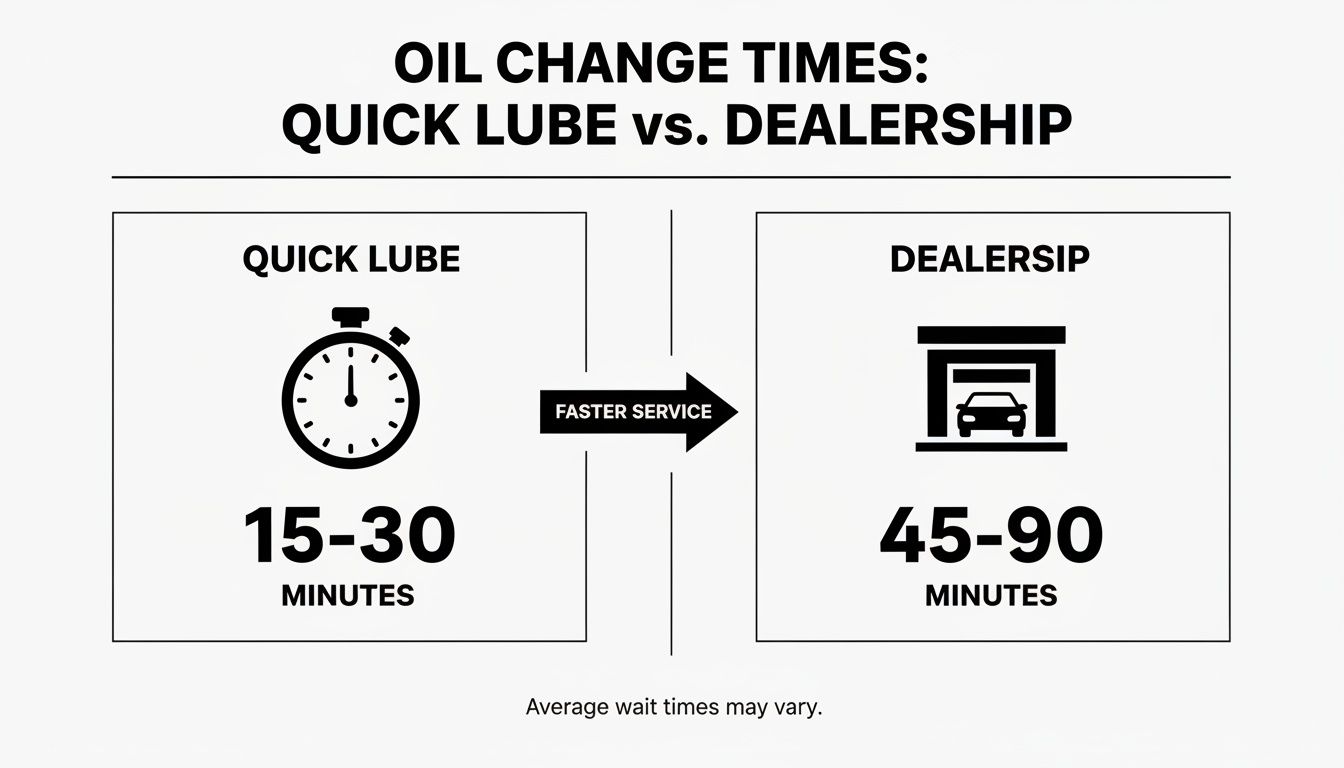
As you can see, if speed is what you're after, a quick lube is your best bet.
To give you a clearer picture, here’s a quick comparison of what to expect at different types of shops.
Oil Change Service Time at a Glance
| Service Venue | Typical Time | What's Included | Best For |
|---|---|---|---|
| Quick Lube Shop | 15-30 minutes | Oil & filter change, basic fluid top-offs, tire pressure check. | Drivers needing fast, routine maintenance without an appointment. |
| Dealership | 45-90 minutes | Oil & filter change, multi-point inspection, warranty checks. | Vehicle owners who want a comprehensive check-up or have warranty work. |
| Independent Mechanic | 30-60 minutes | Oil & filter change, plus any requested inspections or repairs. | Building a long-term relationship with a trusted mechanic. |
Ultimately, the right choice depends on whether you need a quick pit stop or a more thorough vehicle review.
Local Service Speed and Efficiency
For drivers here in Richland Hills, that efficiency is a huge deal. While the industry average for a quick lube service is around 12-15 minutes just for the oil change itself, our skilled ASE-certified technicians at Express Lube often get the entire job done—start to finish—in just 10-20 minutes.
That kind of speed matters for Northeast Tarrant County commuters, who rack up an average of 13,500 miles a year and can’t afford to lose an hour on basic maintenance. Keeping that engine healthy without the long wait is what it's all about, a point echoed by expert insights on machinery lubrication.
What Really Happens During an Oil Change
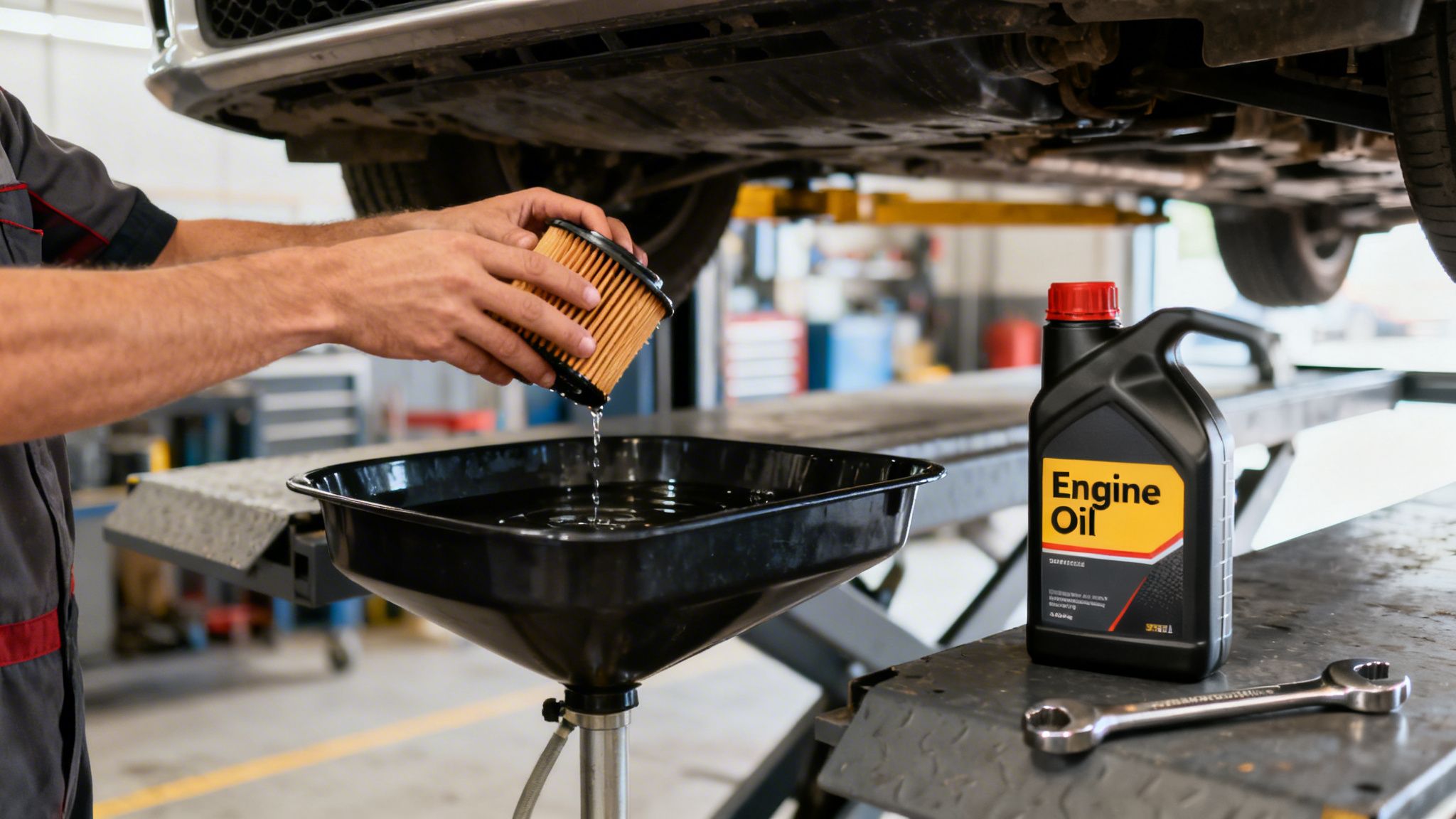
An oil change isn't just about draining old fluid and pouring in new stuff. It’s a precise, multi-step process that protects your engine's most important parts. Understanding what’s going on under your car helps explain why even a "quick" service takes a certain amount of time to do right.
The moment your car rolls into the service bay, the process begins. A technician will carefully guide it onto a lift, making sure it’s positioned safely and securely before raising it to get access to the undercarriage. This is a non-negotiable safety step.
Draining Old Oil and Replacing the Filter
With the vehicle safely in the air, the real work starts. The technician slides a large catch pan under the engine and removes the drain plug. Gravity takes over from there, letting all the old, contaminated oil—full of gunk and tiny metal particles—drain out completely.
While that's happening, the old oil filter gets removed. This little canister plays a huge role in trapping harmful debris and preventing it from circulating through your engine and causing damage.
Think of it this way: skipping a new filter is like taking a shower and putting your dirty clothes right back on. It instantly pollutes the fresh, clean oil.
Once a brand-new filter is installed and the drain plug is tightened, the car is lowered. Now it's time to refill the engine with the exact type and amount of motor oil your vehicle’s manufacturer recommends. Using the wrong kind can hurt your engine’s performance and even cause long-term problems.
Finally, any decent shop will perform a quick multi-point check. This usually includes:
- Checking key fluid levels: Coolant, brake fluid, and windshield washer fluid are inspected and topped off if they're low.
- A quick visual inspection: They'll glance at your wiper blades, belts, and engine air filter for obvious signs of wear.
- Checking tire pressure: All tires are inflated to the correct PSI for better safety and fuel economy.
This whole routine, from start to finish, is designed to get your vehicle back on the road running smoothly and safely. To learn more about this crucial service, check out our professional oil and filter change service.
What Affects Your Wait Time?
Ever been stuck in the waiting room wondering why your "quick lube" is taking forever, while the person who arrived after you is already leaving? It’s usually not about how busy the shop is. A few key things can turn a 15-minute pit stop into a much longer affair.
First off, your vehicle itself is a huge variable. Think of it this way: some engine bays are laid out cleanly, making everything easy to get to. Others are a tangled mess. A technician might have to remove a big plastic skid plate just to reach the oil drain plug, which adds time right off the bat. The same goes for oil filters tucked away in hard-to-reach spots.
Shop Traffic and Unexpected Surprises
Of course, the time of day matters. A Saturday morning is almost always going to be busier than a Tuesday afternoon. To get a better sense of how shops manage this, it's interesting to look into what a queue management system is and see how the pros try to keep things moving, even when it’s slammed.
But sometimes, the real delays come from little mechanical surprises—the kind nobody can plan for.
- A Stuck Drain Plug: If the last person to change your oil went a little too crazy with the wrench, the drain plug can get seized. A good tech has to work slowly and carefully to get it off without stripping it.
- A Cracked Filter Housing: On many newer cars, the oil filter housing is made of plastic. If it's cracked or the threads are stripped, it has to be replaced to prevent a massive leak.
- Cross-Threaded Parts: This is another gift from a previous rushed job. A cross-threaded filter or plug is a nightmare to remove and takes patience to fix without causing more damage.
A longer wait doesn't always mean bad service. More often, it means a technician found a problem and is taking the time to fix it right, saving you from a much bigger headache down the road.
When these things pop up, a tech can’t just muscle through it. They need to take the extra 10 to 20 minutes to handle it properly, making sure your car leaves safe, sound, and leak-free.
Quick Lube vs. Dealership: Which Is Faster?
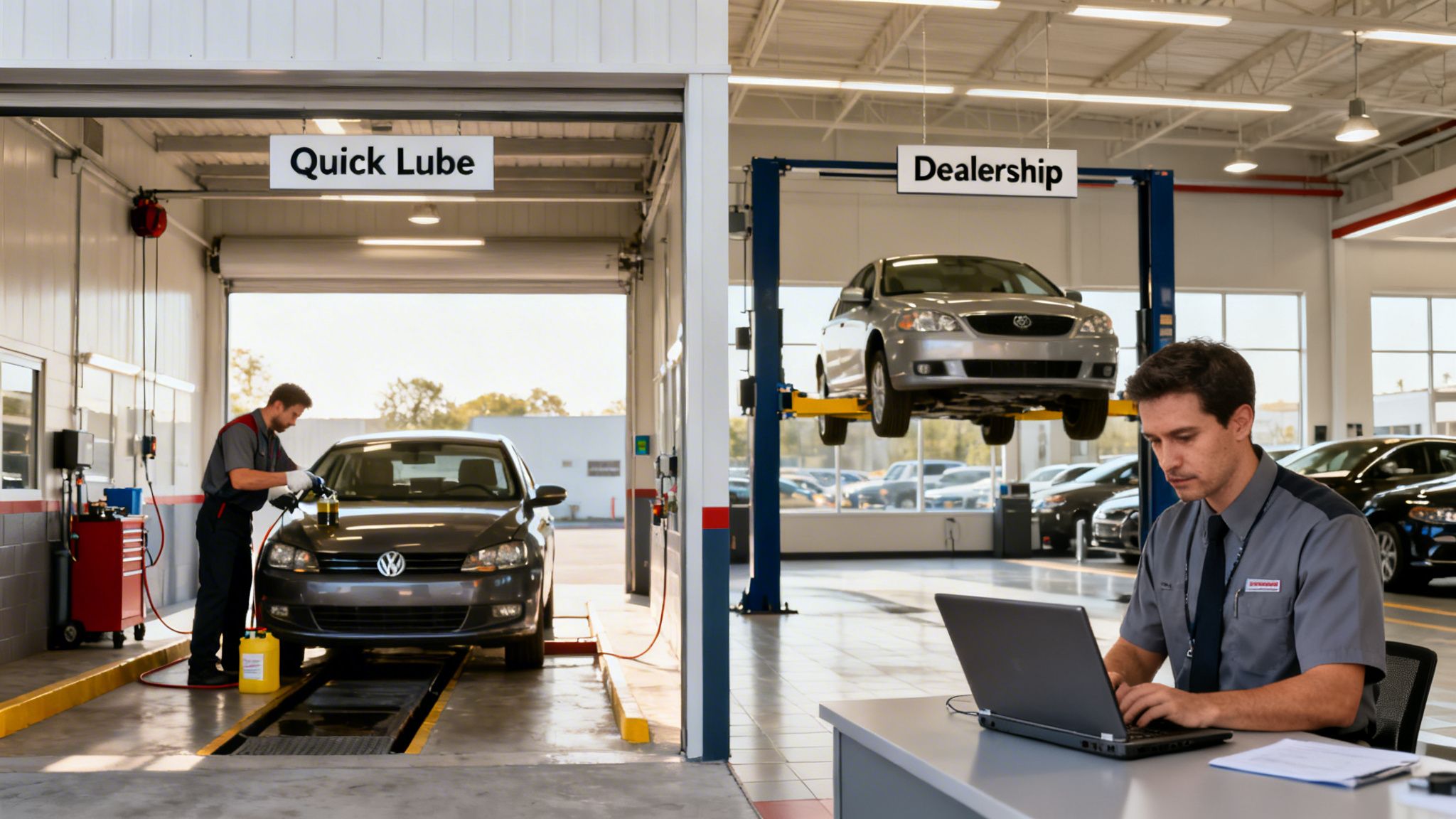
Where you get your oil changed is one of the biggest factors in how long you'll be waiting. Think of it like grabbing a bite to eat. A quick lube shop is the fast-casual spot with a focused menu—it’s built for one thing, and that’s getting you served and on your way.
A dealership, on the other hand, is more like a full-service, sit-down restaurant. The experience is naturally slower because it’s part of a much bigger operation that might include multi-point inspections, warranty claims, and even software updates that tack on extra time.
The Quick Lube Advantage: Speed and Focus
Quick lube shops are all about walk-in efficiency. The technicians are specialists, performing the same few core services all day, every day. That repetition builds incredible speed and precision, letting them knock out a full service in just 15 to 30 minutes.
This model is perfect when you just need an oil change and don't have time to waste. For busy drivers, being able to swing by without an appointment is a game-changer. We dive deeper into this convenience in our article about finding a no-appointment oil change near me.
When a Dealership Makes More Sense
Sure, a dealership might take 45 to 90 minutes, but that extra time is usually for a good reason. They often run comprehensive vehicle health checks specific to your car's make and model. If your car is still under warranty or has an active recall, the dealership is absolutely the right place to be.
While the old 3,000-mile rule is a thing of the past, modern cars still demand consistent care. Experts now recommend changing your oil every 5,000 to 15,000 miles, depending on the oil type. At a shop like Express Lube Richland Hills, we deliver these essential services in under 20 minutes with no appointment needed, helping busy families stay on schedule without the hassle.
How to Handle Upsells That Add Time and Cost
When you’re in for a quick oil change, the last thing you want is a surprise sales pitch. A good technician will inspect your vehicle and point out potential issues, but it’s crucial to know the difference between a critical safety warning and an optional upsell.
A common one is the classic dirty air filter demonstration. They show you a filthy filter next to a new one, and yes, a clogged filter absolutely hurts performance and should be replaced. But what about a recommendation for an "engine flush"? That's often a less urgent add-on, especially if it’s not listed in your vehicle’s factory maintenance schedule.
Know What Questions to Ask
The key to navigating these suggestions is to ask the right questions. This turns a sales pitch into a real conversation about your car’s health and shows the technician you’re an informed owner.
Here are a few simple but powerful questions to keep ready:
- "Can you show me what you're seeing?" Any honest shop will gladly walk you over and point out the worn part or dirty fluid they’re concerned about.
- "Is this part of my car's recommended maintenance schedule?" Your owner's manual is the ultimate source of truth. Comparing their suggestion to the manual is a smart move.
- "What happens if I hold off on this for a bit?" This question cuts right to the chase—is this a "fix it now or you'll break down" problem, or can it wait until your next service?
The goal isn't to be difficult, but to get the facts. A technician's job is to advise, but you're the one who makes the final call based on safety, necessity, and your budget.
Asking these simple questions helps ensure you’re only paying for what you actually need, keeping your visit quick and the final bill honest. If you want to get a better sense of what services cost, check out our guide on oil change prices and what they include.
Tips for Your Fastest Oil Change Experience
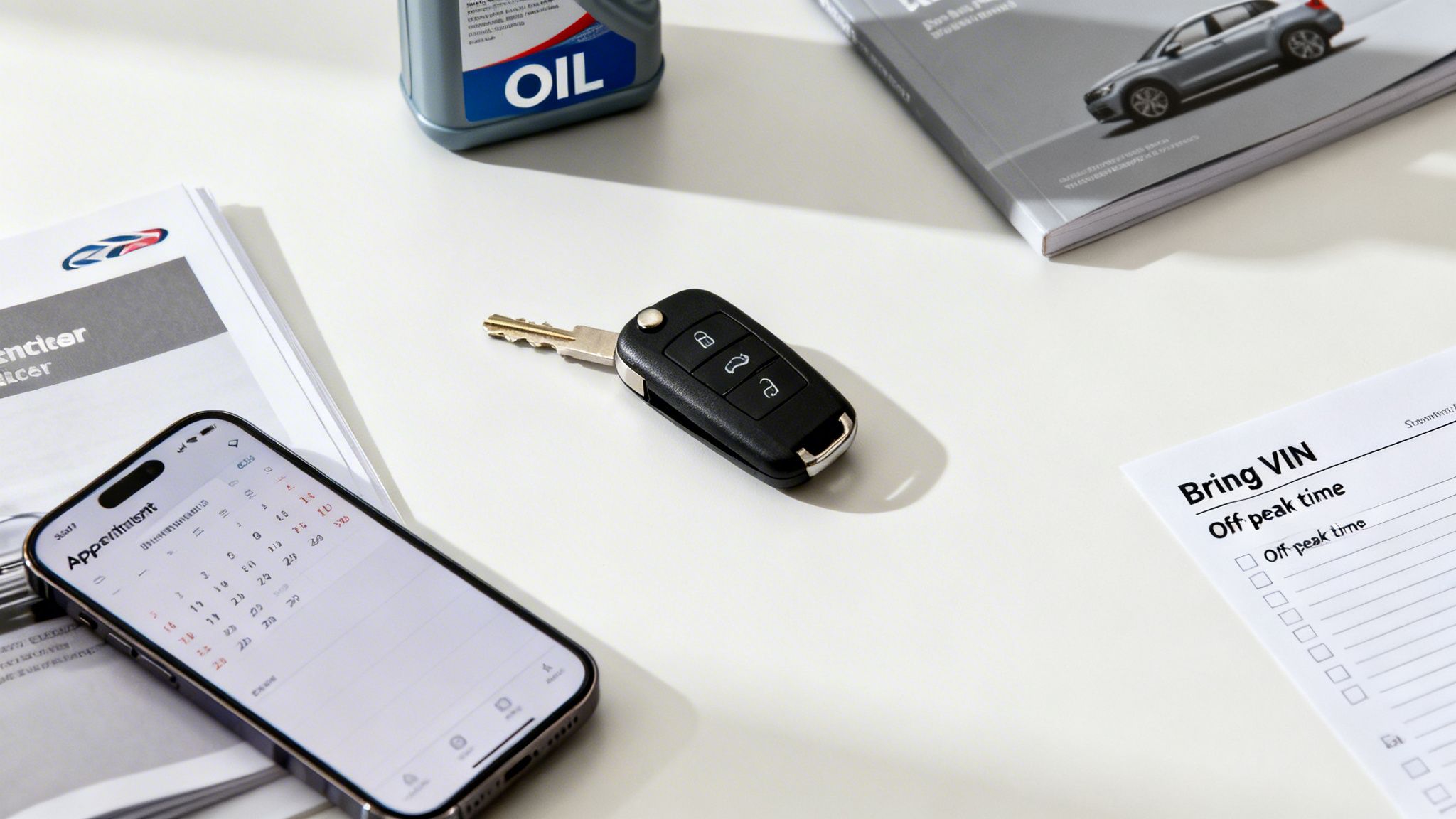
While you can't control how busy a shop is, you can definitely take a few steps to make your visit as quick as possible. A little bit of planning goes a long way in helping the service team work efficiently and get you back on the road.
The easiest way to shorten your wait time is by avoiding peak hours. Just like a coffee shop, every auto shop has a rush. For us, that's typically during lunch hours (12 PM to 2 PM) and pretty much all day Saturday. If you can swing a mid-morning or mid-afternoon visit during the week, you're already ahead of the game.
Come Prepared to Speed Things Up
A few minutes of prep before you leave home can easily save you double that time in our waiting room. Here's what you can have ready:
- Your Car's Oil Type: Not sure what your car takes? A quick peek at your owner's manual will tell you the specific oil needed (like 5W-30 synthetic, for example). Knowing this upfront prevents any guesswork or delays.
- Basic Vehicle Info: Have your car's year, make, model, and current mileage ready for the service advisor.
The single best tool for a fast visit is being direct. If you're in a hurry and just need the standard oil change, tell us right away. That lets the advisor make a note of it and helps the technician focus on getting the core service done first.
By clearly stating your needs, you help us help you. Letting the team know you need a quick turnaround means they can perform the essential service perfectly and save any other recommendations for your next visit.
A Few More Questions About Oil Change Times
Even after breaking it all down, you might still have a couple of questions. Let's run through the most common ones we hear from drivers around Richland Hills.
Does Synthetic Oil Take Longer to Change?
This is a big one, but the answer is simple: no.
The actual job—draining old oil, swapping the filter, and pouring in the new stuff—is exactly the same whether it's conventional, a synthetic blend, or full synthetic. The only thing that changes is the product going into your engine, not the time it takes the technician to do the work.
Why Do Some Shops Take So Much Longer?
If a quick lube place can get you out in 20 minutes, why does a dealership sometimes quote an hour or more? It all comes down to their business model.
Quick lube shops are built for speed and volume on routine maintenance. Full-service repair shops and dealerships, on the other hand, are set up to handle everything from oil changes to major engine work. They often have longer queues and include more detailed, time-consuming inspections with every service.
If a mechanic finds a separate issue during that inspection—like a worn belt or a fluid leak—they'll stop the oil change to let you know. They’ll explain what they found, give you an estimate, and let you decide whether to approve the extra work now or schedule it for another time.
Can I Stay in My Car During the Oil Change?
At most quick lube spots, absolutely. In fact, that's part of the design. Letting you stay in your car is a key reason they can keep the process so fast.
This usually isn't an option at dealerships or full-service shops. Their bay setups and safety rules require you to head to a waiting area while they work on your vehicle.
For a fast, reliable oil change that respects your time, trust the ASE-certified team at Express Lube & Car Care. We get the job done right, getting you back on the road in minutes. Visit us today at https://www.expressluberichlandhills.com