

When you're looking for a reliable "brake service near me," you need more than a quick fix—you need a shop you can trust. At Express Lube & Car Care, we're Richland Hills' go-to spot for fast, expert brake inspections and repairs, and best of all, no appointment is necessary. Our ASE-certified technicians are here to keep you safe with honest, transparent service every single time.
Your Trusted Stop For Brake Service In Richland Hills
Your braking system is hands-down the most critical safety feature on your vehicle. It's not just an on/off switch; it’s a complex system where pads, rotors, and hydraulic fluid have to work together perfectly to bring you to a smooth, controlled stop. Ignoring the subtle warnings it gives you can lead to much bigger, more expensive repairs down the road and, more importantly, put your safety at risk on the busy roads of Northeast Tarrant County.
Learning to understand what your car is telling you is the first step. Think of it like a doctor listening to a patient's symptoms—certain sounds and feelings point to specific problems. A high-pitched squeal is a totally different issue than a deep, metallic grind, and our technicians are trained to read those clues and get it right.
Common Brake Problems and What They Mean
Your car will almost always let you know when it's time for a brake check. Paying attention to these signs helps you catch problems before they get out of hand. For a quick overview, this chart helps you figure out what might be wrong based on the sounds you're hearing.
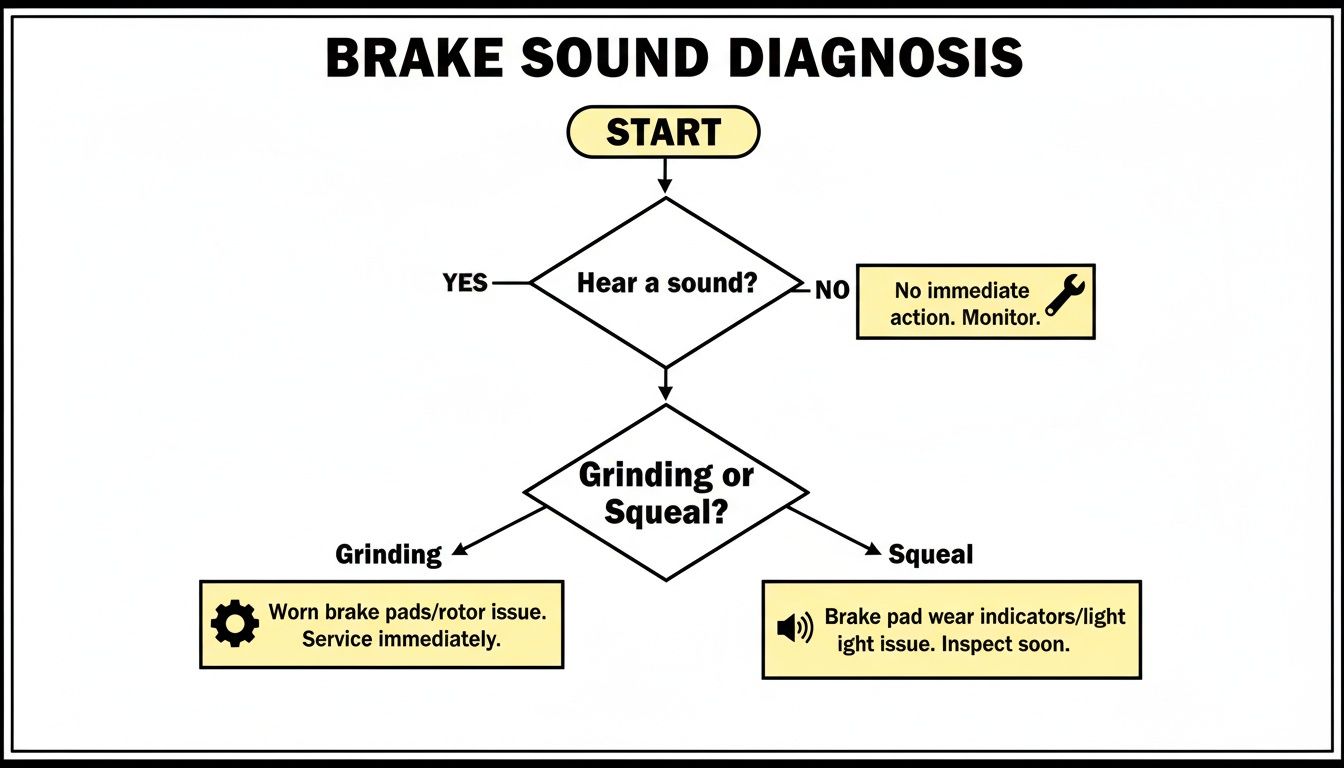
As you can see, a squeal is a heads-up that you need an inspection soon. But that grinding noise? That’s a red flag telling you to get your car looked at immediately.
This kind of expert diagnosis is crucial, especially as vehicle technology keeps advancing. The global brake system market was valued at USD 19.7 billion in 2020 and is expected to hit USD 25.6 billion by 2026. For drivers in Richland Hills, that growth means access to better parts and highly skilled technicians—exactly what you’ll find here.
Quick Guide To Common Brake Problems
To make it even simpler, we've put together a table summarizing the most common brake issues our customers come in with.
| Warning Sign | Potential Cause | Recommended Action At Express Lube |
|---|---|---|
| Squealing or Squeaking | Worn brake pads (wear indicator is exposed) | Walk in for a brake inspection to check pad thickness. |
| Grinding Noise | Brake pads are completely worn, metal-on-metal contact | Stop driving immediately. Come in for an urgent inspection. |
| Spongy or Soft Pedal | Air or moisture in the brake lines, failing master cylinder | We’ll inspect the brake fluid and bleed the system if needed. |
| Car Pulls to One Side | Unevenly worn brake pads or a stuck brake caliper | Our techs will diagnose the caliper and ensure even braking. |
| Vibrations or Pulsing | Warped or uneven brake rotors | We can measure rotor thickness and recommend replacement or resurfacing. |
These are just the most common signs. If something feels off, it's always better to get it checked out.
At Express Lube & Car Care, we don’t just fix parts; we restore your peace of mind. We give you clear explanations and honest advice so you can drive away with confidence, knowing your car is safe for you and your family.
Our whole goal is to be the convenient, trustworthy shop you find when you search for "brake service near me." Whether it’s just routine maintenance or a serious problem, our walk-in service and expert team are ready to help. You can learn more about our entire brake repair process in our detailed guide.
What a Comprehensive Brake Service Actually Includes
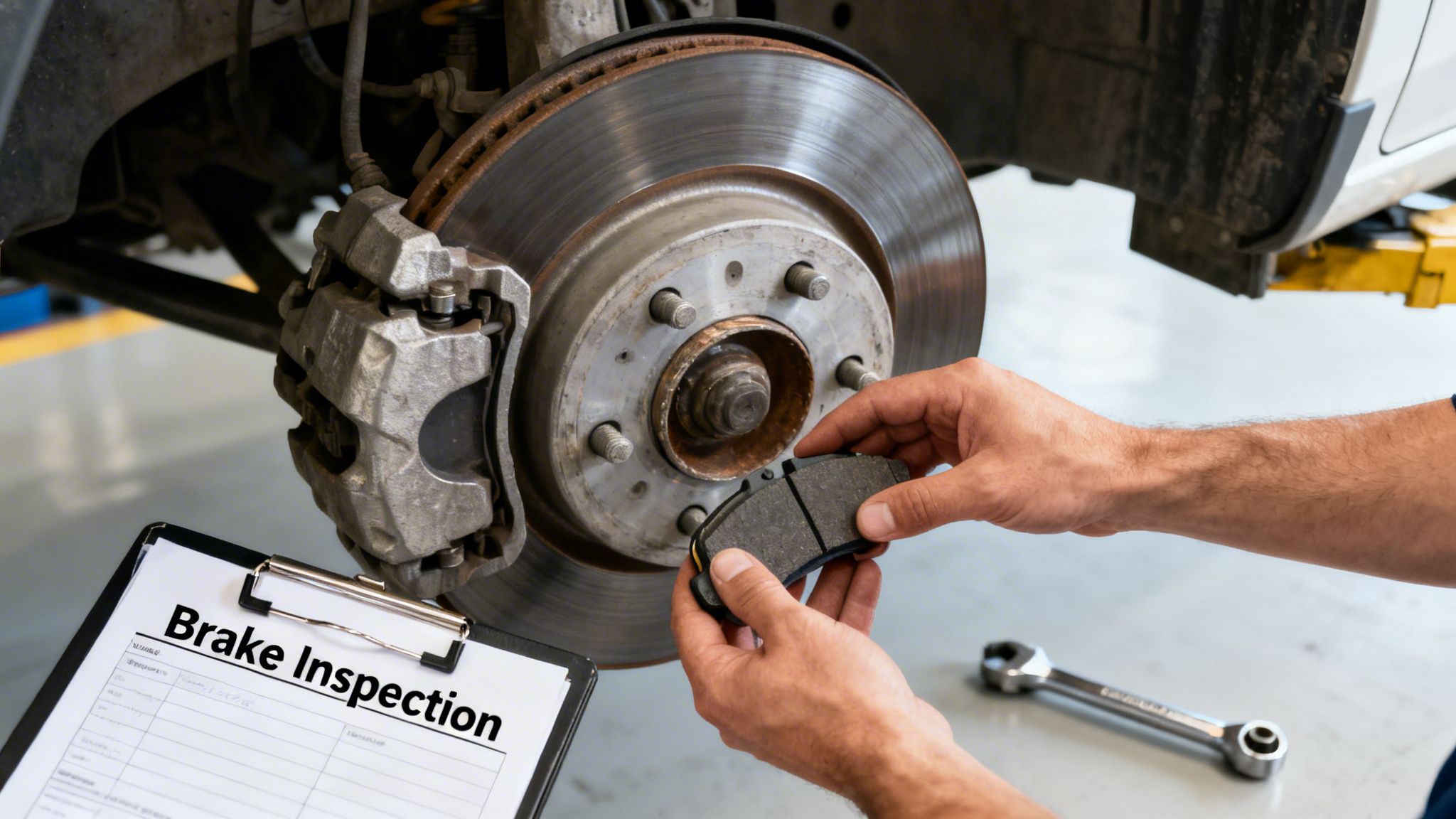
When you ask for a "brake service," you're getting much more than a quick parts swap. It's really a complete health check for your car's most important safety system.
Think about a simple bicycle handbrake. Now, imagine a far more complex version with interconnected parts that all have to work in perfect harmony to bring thousands of pounds of metal to a safe, controlled stop. That's your car's braking system.
At Express Lube & Car Care, our ASE-certified technicians perform a meticulous inspection covering every single aspect of this system. We don’t just fix things; we show you what we’re looking at and explain why it matters, so you can make confident decisions about your car.
The Four Pillars of Your Braking System
A thorough brake job isn't just about one part—it's about the four key components that work as a team every time you hit the pedal. Each one has a critical job to do.
- Brake Pads: These are the workhorses. They’re the friction material that presses against the rotors to slow your wheels. Because they’re designed to wear down over time, regular checks are a must.
- Brake Rotors: These are the big metal discs your brake pads squeeze. If they get warped from heat or worn too thin, you’ll often feel a frustrating vibration or pulsing in the brake pedal.
- Brake Calipers: The calipers are like powerful clamps that hold the pads. When you brake, hydraulic pressure makes the calipers squeeze the pads against the rotors.
- Brake Fluid: This hydraulic fluid is what transfers the force from your foot all the way to the calipers. Over time, it can absorb moisture from the air, which makes it less effective and can even corrode parts from the inside out.
A complete brake service isn't just about replacing what's worn out today; it's about anticipating what could fail tomorrow. By inspecting the entire system, we help you prevent more expensive repairs and ensure your peace of mind on the road.
Why a Full System Check Is Non-Negotiable
Ignoring one part of the braking system almost always causes a chain reaction. For instance, slapping new brake pads on warped rotors will just cause the new pads to wear out unevenly and way too fast. It's a waste of money that compromises your safety.
Likewise, old and contaminated brake fluid can lead to that awful "spongy" pedal feel or, in a worst-case scenario, total brake failure under heavy use.
Taking care of the whole system is a key part of broader vehicle management that ensures your car stays safe and performs well for the long haul. Our technicians will measure pad thickness, check rotor smoothness and depth, look for caliper leaks, and test your brake fluid. This complete diagnosis means you get a repair that actually lasts, keeping you confident and secure behind the wheel.
Warning Signs That Your Brakes Need Immediate Attention
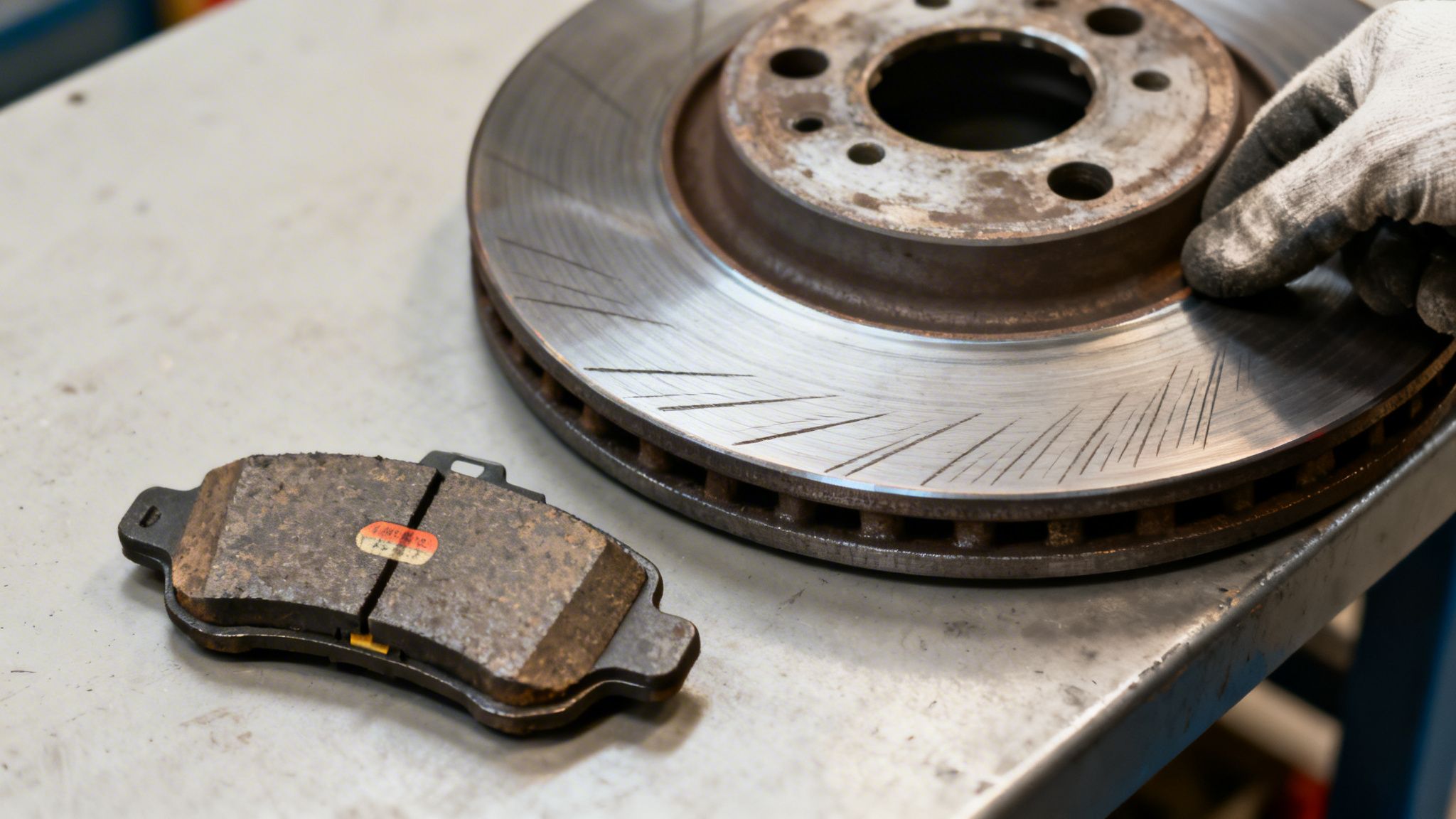
Your car has its own way of telling you something’s wrong, and when it comes to your brakes, you need to listen closely. Ignoring these clues doesn’t just risk a more expensive repair down the road—it compromises your safety on it.
Think of these signs as your vehicle’s way of asking for help before a small issue snowballs into a serious problem. Learning to spot them is the first step. By paying attention to new sounds, smells, or feelings when you drive, you can catch brake trouble early.
Sounds You Should Never Ignore
Often, your ears are the first to know. Keep them open for these classic signs of brake wear.
- High-Pitched Squealing: This is the most common early warning. Most brake pads have a tiny metal tab called a wear indicator. When the pad material gets thin, this tab scrapes against the rotor, creating that unmistakable squeal. It’s a built-in alert telling you it’s time for a check-up.
- Deep Grinding or Growling: This is a much more serious sound. A harsh, metallic grinding noise means your brake pads are completely gone. Now, it's metal grinding against metal—specifically, the brake caliper chewing into your rotor. This is actively damaging your brake system and needs to be addressed immediately.
This isn’t just a local concern; worn brakes are a huge deal globally. The automotive brake pads market is on track to hit USD 8.56 billion by 2026. And with the average car in the U.S. now 12.5 years old, brake jobs are more common than ever, especially here in Texas where the heat can make parts wear out faster.
Feelings That Signal Brake Problems
Sometimes, you can feel brake trouble through the pedal or steering wheel long before you hear it. Your car is giving you direct feedback that something isn't right.
A change in how your brake pedal feels is one of the most direct messages your car can send. A responsive, firm pedal is a sign of a healthy system; anything else warrants a closer look.
If you notice any of these sensations, it’s a clear signal to get your brakes inspected right away.
- Spongy or Soft Pedal: Does your brake pedal feel mushy or sink toward the floor? This often means there's air in the brake lines or a potential problem with the master cylinder.
- Vibrating or Pulsing Pedal: If you feel a shaking or pulsing through the pedal when you brake, it's a classic symptom of warped rotors.
- Car Pulling to One Side: When you hit the brakes, does your car try to veer left or right? This usually points to a stuck caliper or brakes that are wearing unevenly on one side.
Knowing when your brake pads are due for a change is key to avoiding these bigger problems. For more details, check out our guide on how often you should replace brake pads for your specific vehicle.
Why No Appointment Is Necessary At Express Lube
Let's face it, your schedule is already packed. A sudden brake problem, like a grinding noise or a mushy pedal, shouldn't force you to rearrange your entire week just to get an appointment. That’s the whole idea behind our service model here at Express Lube & Car Care—we’re built for how you actually live and work.
Our no-appointment, walk-in system is designed to handle your car care needs on your timeline, not ours. Maybe you're a busy parent juggling school runs, a commuter heading home from a long day, or a local business owner with a truck that needs to get back on the road ASAP. Whatever your situation, you can drive in whenever you need a brake service near me. We've built our entire workflow around getting you in, diagnosed, and safely back on your way without sacrificing an ounce of quality.
The Express Lube Difference: ASE-Certified Technicians
So, how do we make an efficient walk-in service work so well? It all comes down to the expertise of our team. Every single technician at Express Lube & Car Care is ASE-certified, which is the gold standard in the automotive repair industry.
This isn't just a fancy title; it's your guarantee that the person working on your car has proven their skills through tough testing and has the know-how to spot problems accurately and fast.
This level of expertise lets us streamline the whole inspection and repair process. Our techs can quickly pinpoint the root cause of a problem, whether it's simply worn-out pads, warped rotors, or a more complex hydraulic fluid issue. That diagnostic speed means less time waiting in our lobby and more confidence in the work being done.
At Express Lube & Car Care, convenience and quality go hand-in-hand. Our no-appointment model is powered by expert technicians who provide fast, reliable service you can trust—without the hassle of scheduling days in advance.
Honest Communication Without The Upsell
Another key part of how we operate is straightforward, honest communication. When you bring your car to us, we give you clear advice without the high-pressure sales tactics you might have run into elsewhere. We're here to build trust with our Richland Hills community, not to hit a sales quota.
Here’s what you can always expect from us:
- Clear Explanations: We'll actually show you what we find during the inspection and explain in plain English what it means for your car’s safety.
- Transparent Quoting: You’ll get a straightforward quote with a clear breakdown of parts and labor before any work begins. No surprises.
- No-Pressure Recommendations: We tell you what's necessary for your safety and your vehicle's health. We'll never push services you don't actually need.
Our goal is to be your go-to, hassle-free solution for expert car care. By combining the convenience of a walk-in service with the reliability of ASE-certified professionals, we deliver a better, simpler experience for every customer who pulls into our bay.
How Much Does Brake Service Cost and How Long Does It Take?
Let's get right to it. When it comes to car repairs, the first two questions are always the same: "What's the damage to my wallet?" and "When can I get my car back?"
If you're looking up "brake service near me," you need straight answers. The final price tag and the time it takes can swing a bit depending on a few things, but we're all about being upfront so you can plan your day and your budget without any guesswork.
It makes sense that just swapping out your brake pads will cost less than a full-blown brake job with new rotors and calipers. The cost really depends on what kind of car you drive (parts can vary a lot) and just how much wear and tear we find once we get the wheels off.
Breaking Down The Costs
There’s no single, flat price for brake service. Your final bill is a mix of a few key things:
- Parts Quality: We can use reliable aftermarket parts that are easy on the wallet or go with original factory (OEM) components. It’s your call, and we’ll explain the difference.
- Labor: How much work is involved? A simple pad swap is pretty quick. If we need to resurface rotors or replace a sticky caliper, that adds a bit more time.
- Your Vehicle: A big truck or a high-performance car will have bigger, more complex brake systems than your average family sedan, and the parts cost reflects that.
Did you know the market for automotive brake pads is expected to grow by a massive USD 11.04 billion between 2026 and 2030? That’s because cars are staying on the road longer here in North America. This trend, highlighted by industry researchers at Technavio, shows just how important it is for local shops like ours to offer fair, clear pricing on such a common repair.
We never start any work without giving you a detailed, easy-to-understand estimate first. Our techs will literally show you what’s wrong and explain why it needs fixing, so you can make a smart decision with zero pressure.
How Long Will I Be Without My Car?
We know your time is valuable. That's why we have a no-appointment, walk-in system. Our ASE-certified technicians are pros at getting brake jobs done right and done efficiently.
Most of the time, a standard brake pad replacement will have you in and out in about an hour.
If the job is a bit more involved—say, we need to replace or resurface your rotors—it might take closer to two hours. Either way, we’ll give you a solid time estimate right when you pull in. To get a better idea of the numbers, you can read our guide on estimating your brake repair cost.
Get Your Free Brake Inspection In Richland Hills
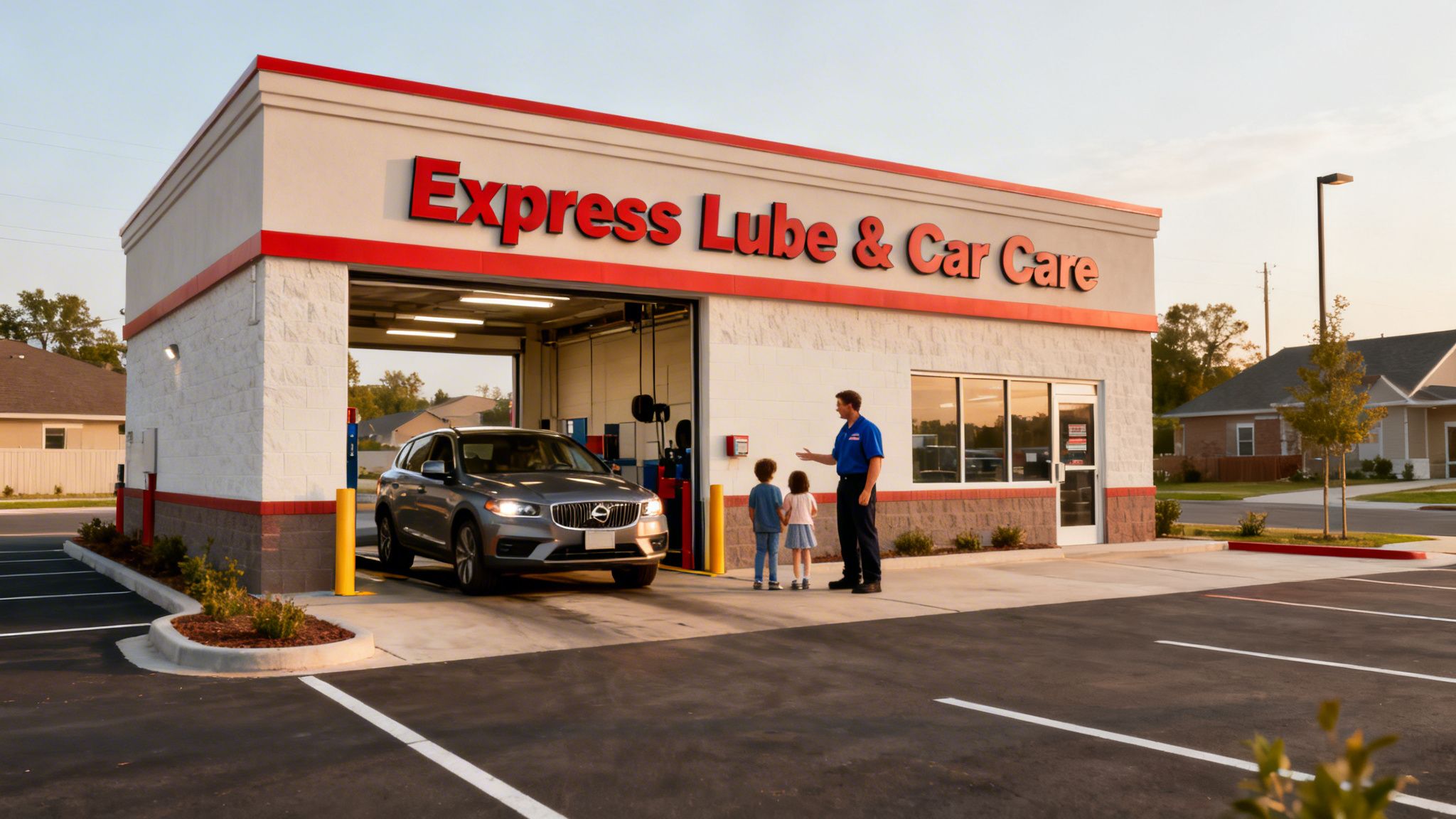
Ready for some peace of mind on the road? The easiest first step is stopping by Express Lube & Car Care for your complimentary brake inspection. Seriously, there's no need to call ahead or make an appointment—just swing by when it works for you.
We're conveniently located right here in Richland Hills, and our crew is ready to give your vehicle the expert attention it deserves. Think of it as the simplest answer to that "brake service near me" search. Our ASE-certified technicians will perform a detailed check to make sure every part of your braking system is in solid working order. We’re all about safety, so you'll only get honest, clear feedback with absolutely zero pressure.
Visit Us Today
Let our trusted team make sure your vehicle is safe for you and your family. We love serving our community and look forward to earning your trust.
- Address: 6401 NE Loop 820, Richland Hills, TX 76180
- Phone: (817) 581-5400
- Hours:
- Monday – Friday: 8:00 AM – 6:00 PM
- Saturday: 8:00 AM – 5:00 PM
- Sunday: Closed
At Express Lube & Car Care, we give you the speed of a quick lube with the deep expertise of a full-service repair shop. Your safety is what matters most, and a free inspection is the first step toward driving with confidence.
Our shop is easy to find, and our walk-in model means you can get the answers you need, right on your schedule. Stop by today
Your Brake Service Questions, Answered
Even after getting the rundown, it’s totally normal to have a few more questions. When you're looking up "brake service near me," you want to feel confident you're making the right call. We get it.
Here are the straight-up answers to the most common questions our techs hear from folks right here in Richland Hills.
How Often Should I Get My Brakes Checked?
As a good rule of thumb, we tell everyone to get a professional brake inspection at least once a year or every 12,000 miles. But that’s just a baseline.
Your driving habits and local conditions really change the game. All the stop-and-go traffic around Northeast Tarrant County puts a lot of extra stress on your brakes, so checking them more often is a smart, proactive move. If you notice any warning signs—a new squeal, a grinding sound, or a pedal that feels soft—don't wait. Bring your car in right away.
What’s The Difference Between Ceramic And Semi-Metallic Brake Pads?
Great question. This gets into how you want your car to feel and perform. These are the two most common types you'll see, and they each have their own strengths.
- Ceramic Pads: These are the quiet ones. They produce very little of that black brake dust that gets all over your wheels and they last a long time. If you’re a daily commuter who just wants a smooth, clean, quiet ride, these are a perfect choice.
- Semi-Metallic Pads: These pads have metal fibers mixed in, which gives them serious stopping power and helps them handle heat really well. This makes them the go-to for heavier vehicles like trucks and SUVs, or for anyone with a more aggressive driving style.
Our ASE-certified technicians will chat with you about how you drive and recommend the right fit for your car and your budget.
Do I Really Need To Replace My Brake Fluid?
Yes, 100%. This is probably the single most overlooked piece of brake maintenance, but it's incredibly important. Brake fluid is "hygroscopic," which is just a fancy way of saying it naturally sucks up moisture from the air.
Over time, that water contamination lowers the fluid's boiling point. Under heavy braking, this can cause the fluid to boil, creating air bubbles and leading to a dangerously soft pedal that goes straight to the floor. That moisture also causes rust inside your brake lines and calipers, setting you up for much bigger, more expensive repairs down the road. Most carmakers recommend a full brake fluid flush every two to three years to keep everything working safely.
Your braking system is hydraulic. It depends on clean, pure fluid to transfer the force from your foot on the pedal to the brakes at the wheels. Old, contaminated fluid jeopardizes the entire system and is a major safety risk.
Can I Just Replace The Pads And Not The Rotors?
Sometimes, but it’s not always the best move. It all comes down to the condition of your brake rotors. If they’re still thick enough and aren't warped or deeply grooved, we can often "resurface" them. This process shaves off a tiny layer of metal to give the new pads a perfectly smooth, flat surface to grip.
However, if the rotors are too thin, warped, or damaged, they have to be replaced. Slapping new pads on worn-out rotors is a waste of money—it will chew up the new pads in no time, cause vibrations, and hurt your stopping power. Our techs will always measure your rotors and show you exactly what they're seeing, so you'll know we only recommend replacement when it's absolutely necessary for your safety.
When you need fast, reliable answers and service you can count on, visit Express Lube & Car Care. Our no-appointment model and ASE-certified technicians are here to keep you safe on the road. Find out more at https://www.expressluberichlandhills.com.