

A coolant flush service is a complete, deep-cleaning treatment for your car’s entire cooling system. This isn't just about topping off your antifreeze; it's a full-system reset that pushes out all the old, contaminated fluid and any gunk that’s built up inside.
Once the system is spotless, we refill it with fresh, premium coolant to keep your engine running at the perfect temperature.
Understanding Your Car's Coolant System
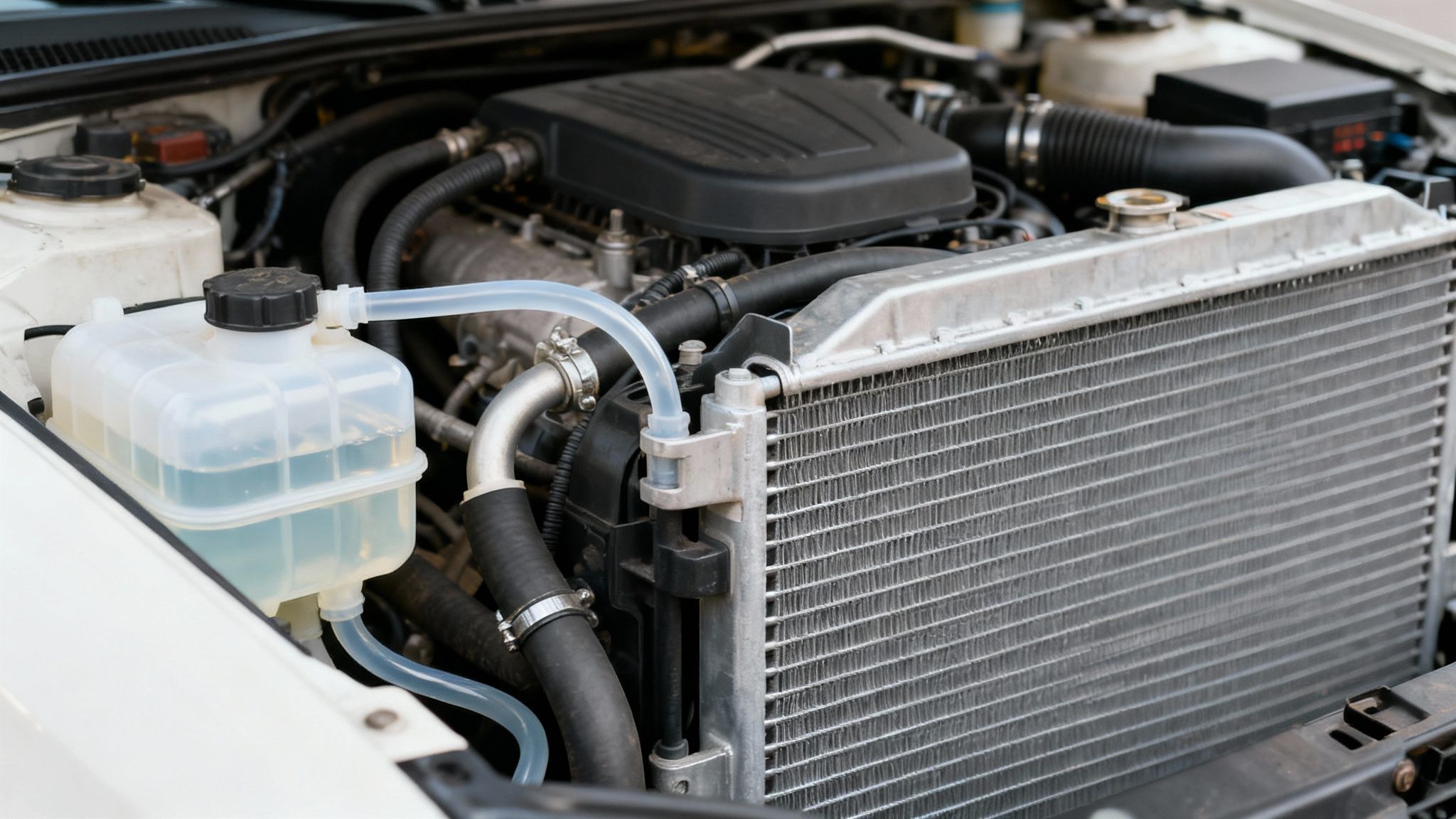
Think of your engine as the heart of your car and the coolant as its lifeblood. This fluid is constantly circulating, pulling intense heat away from critical engine components to prevent overheating. Without it, your engine would suffer catastrophic damage in a matter of minutes.
But just like anything else, coolant doesn't last forever.
Over time, the protective additives in the antifreeze break down. It gets contaminated with rust, scale, and other debris, turning it into a corrosive, sludge-like mess that spells trouble for your engine.
The Dangers of Contaminated Coolant
Old, dirty coolant is a silent killer for your engine. Not only does it lose its ability to transfer heat, but it also turns acidic, eating away at your cooling system from the inside out. This slow decay leads to major—and expensive—problems.
- Clogged Radiator: Grime and debris can easily block the tiny passages in your radiator, strangling its ability to cool the fluid.
- Heater Core Failure: That same gunk can clog up the heater core, which is why you might suddenly lose heat on a cold winter day.
- Water Pump Damage: Contaminants act like sandpaper, grinding away at the water pump’s delicate seals and bearings until they fail.
- Hose Degradation: Acidic coolant weakens rubber hoses, making them soft, brittle, and prone to bursting when you least expect it.
A professional coolant flush is all about prevention. It’s not just swapping fluids; it's about getting rid of the harmful deposits that are actively trying to destroy your engine.
Coolant Flush vs A Simple Drain and Fill
So, what's the difference between a proper flush and just draining the radiator? A lot, actually. A simple drain-and-fill is better than nothing, but it leaves a significant amount of the old, contaminated coolant behind.
Here’s a quick comparison to show you what I mean:
| Feature | Comprehensive Coolant Flush | Basic Drain and Fill |
|---|---|---|
| Old Fluid Removal | Removes 95-100% of old fluid and contaminants | Removes only 50-60% of old fluid |
| System Cleaning | Actively flushes out rust, scale, and sludge | Leaves most debris behind in the engine block |
| Component Protection | Provides maximum protection against corrosion | Leaves corrosive old fluid to keep damaging parts |
| Effectiveness | A complete system reset for optimal performance | A temporary fix that mixes old fluid with new |
As you can see, a flush is the only way to ensure your engine gets the 100% fresh start it needs. It's a critical part of a healthy maintenance schedule, right alongside other essential fluid services. You can learn more by checking out our guide on other essential fluid flush services.
This isn't just a local issue, either. The global demand for automotive coolant is expected to hit USD 9.7 billion by 2030. That's a massive number driven by one simple fact: every car on the road needs a healthy cooling system to stay reliable.
Recognizing the Warning Signs of Bad Coolant
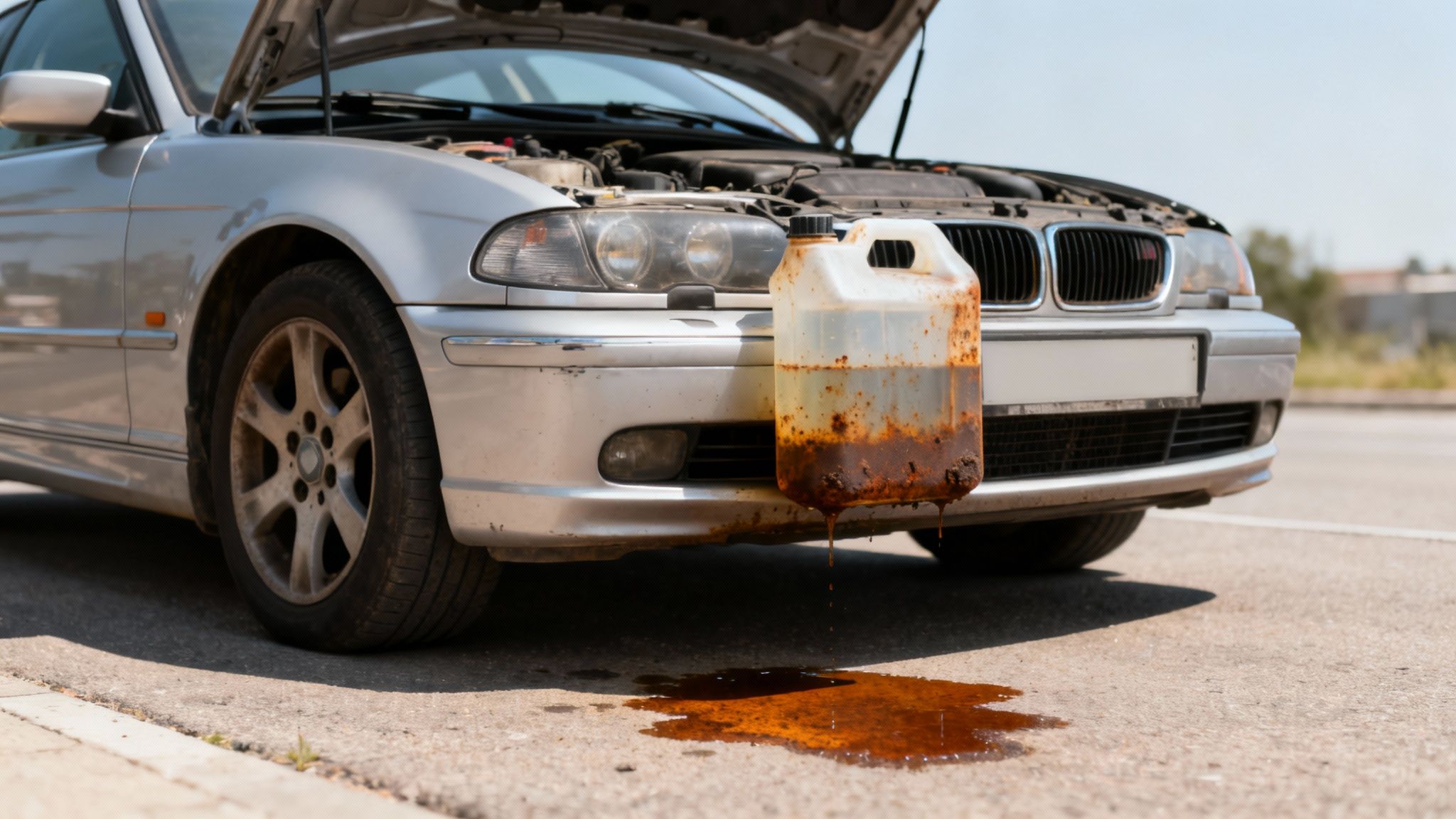
Your car has ways of telling you its cooling system is in trouble, long before the engine actually overheats and leaves you stranded. Learning to spot these clues lets you get ahead of the problem, saving you from the stress and wallet-draining expense of a major breakdown. Often, a timely coolant flush service is all it takes to fix it.
Think of these signs as your car’s check engine light, but for the cooling system. Paying attention is one of the smartest things a driver can do.
What You Can See and Smell
Some of the clearest red flags are things you can easily spot with your own eyes and nose. These are direct signs that the fluid is either leaking out or has completely broken down.
- Sweet-Smelling Puddles: Antifreeze has a very distinct, syrupy-sweet smell. If you catch a whiff of that around your car or spot bright green, pink, or orange puddles underneath, you’ve got a coolant leak.
- Rusty or Gunk-Filled Coolant: Pop the hood and take a look at the coolant reservoir tank. The liquid inside should be a clean, bright color. If it looks like rusty water, is dark brown, or has sludge floating around, the anti-corrosion additives have failed.
- That Sweet Smell Inside the Car: If you smell that same syrupy scent coming through your vents when the heat is on, that's a classic sign of a leaking heater core—a small radiator tucked away inside your dashboard.
When coolant turns brown, it means your engine is literally rusting from the inside out. All that rust and debris will eventually clog up the tiny passages in your radiator and heater core, leading to overheating and no heat in the winter.
How Your Car Is Behaving
Besides the obvious sights and smells, your car’s performance will also tell you it’s time for a coolant flush service. These symptoms mean the cooling system just can’t keep up anymore.
- Temperature Gauge Climbing High: This is the big one. If your temp gauge is consistently running hotter than usual or, worse, spiking into the red, your coolant isn’t pulling heat away from the engine effectively.
- Weird Engine Noises: A grinding or whining sound from the front of the engine often points to a failing water pump. Old, gritty coolant is a terrible lubricant, and it wears out the pump’s internal bearings way too fast.
If you’re noticing any of these signs, especially a high-temperature reading or a visible leak, you need to get it looked at by a pro. While some problems require more than just a flush, knowing the symptoms helps you make a smarter decision. If you want to learn more, check out our guide on what to do when you need radiator repair. Ignoring these warnings can lead to catastrophic engine damage, turning what should be simple maintenance into a massive repair bill.
The Real-World Benefits of a Coolant Flush
Thinking a coolant flush service is just about preventing your car from overheating is missing the bigger picture. It’s like saying an oil change is just to keep things slippery. The truth is, the benefits go way deeper, protecting your entire engine and saving you from some seriously expensive repairs down the road.
Honestly, this simple service is one of the smartest things you can do for your car's long-term health.
The main goal here is to get rid of all the nasty gunk that builds up over time. After thousands of miles, your coolant is full of rust, scale, and tiny metal shavings. This gritty sludge is like liquid sandpaper, grinding away at delicate parts like the seals and bearings in your water pump. A proper flush physically forces all that abrasive junk out of the system.
Extend the Life of Your Engine Parts
By flushing out all that contamination, you’re doing more than just cleaning things up—you're actively making critical parts last longer. Your water pump, radiator, and heater core all depend on clean coolant to do their jobs right. When you keep corrosion from taking hold, these components are far less likely to fail out of the blue.
Fresh coolant is also packed with a new set of anti-corrosion additives. This is a huge deal for modern engines, which use a mix of metals like aluminum and cast iron. These additives form a protective film that stops rust and electrolysis—a chemical reaction that literally eats away at metal—before they can start.
Improve Your Car's Performance in Every Season
A clean cooling system isn't just for battling the summer heat; it's just as important for staying warm and safe in the winter. The heater in your car gets its warmth from the same hot coolant flowing through the engine. If that fluid is sludgy or the heater core is clogged, you’ll get lukewarm air—or no heat at all.
A professional coolant flush clears out the heater core so hot fluid can flow through it freely. That means you get strong, reliable heat and a defroster that actually works on those frosty mornings, keeping you comfortable and your windshield clear.
A coolant flush is your best defense against catastrophic engine failures like a blown head gasket or a cracked engine block. By keeping temperatures stable and stopping corrosion, you're buying peace of mind and a longer life for your vehicle.
This isn't some obscure service—it's a maintenance cornerstone for millions of drivers. In fact, regular passenger cars account for over 45% of the entire automotive coolant market, which shows just how vital this fluid is for the vehicles we all drive every day. A flush gets rid of the contaminants that cause coolant to break down, preventing widespread problems like clogged radiators and head gasket failures that sideline countless cars every year. You can learn more about trends in the global antifreeze market to see just how big this is.
Professional Service vs. a DIY Coolant Flush
So, it's time for a coolant flush. Now comes the big question: do you tackle it yourself in the driveway or bring it to a pro? While going the DIY route can seem like a good way to save some money, it’s a surprisingly tricky job with some real risks you need to know about before you start wrenching.
An at-home flush isn't as simple as just swapping out fluids. You'll need the right gear—a big drain pan, specific funnels, and the correct wrenches, for starters. But the real challenge is getting the procedure right. One of the toughest parts is bleeding the system to get every last air bubble out. If you don't, that trapped air can cause hot spots inside your engine, leading to the exact overheating problem you were trying to prevent.
The Challenges of a DIY Flush
Deciding to do it yourself means you're on the hook for more than just the labor. Handling and getting rid of old antifreeze is a serious responsibility.
- Proper Fluid Disposal: You can't just dump old coolant down the drain or in the yard. It's considered hazardous waste and has to be disposed of at a certified collection center.
- Choosing the Right Coolant: Today's engines are picky. Using the wrong coolant can trigger a chemical reaction that gunks up the whole system with sludge, potentially causing thousands in damage.
- Risk of Incomplete Flushing: Without a shop's equipment, you’ll never get 100% of the old, contaminated fluid out. A simple drain-and-fill can leave as much as 40% of the old stuff lingering in the engine block and heater core.
The Advantages of a Professional Coolant Flush
Bringing your vehicle to a trusted shop like Express Lube & Car Care for a professional coolant flush takes all that guesswork and risk off your shoulders. Our ASE-certified technicians have the right training, specialized equipment, and hands-on experience to do the job perfectly and safely.
A professional power flush is more than just a drain. It uses pressure to actively force out all the stubborn gunk, sediment, and corrosion from every corner of your cooling system. It’s a complete clean that a DIY job just can't replicate, giving your water pump, radiator, and engine the protection they need.
Plus, we handle the messy part for you. The market for antifreeze coolant disposal is growing for a reason—it was already valued at USD 85.5 million back in 2025 as environmental rules get tighter. At Express Lube & Car Care, we manage the entire process correctly, giving Northeast Tarrant County drivers one less thing to worry about.
What to Expect from a Professional Coolant Flush
Ever wondered what really happens behind the garage door when you bring your car in for a coolant flush service? It's easy to picture a simple drain and fill, but a true professional service is a whole lot more involved. It’s a complete reset for your car’s cooling system, designed to protect your engine and keep it running at its best.
Let's walk through what a good shop actually does.
The whole thing starts with a careful look-over, not with a tool. Before a single drop of coolant is drained, a sharp technician will inspect your entire cooling system. They're looking for tell-tale signs of trouble: hoses that look brittle or feel mushy, faint stains that signal a leak near the radiator or water pump, and even the condition of the radiator cap. That little cap is a big deal—it's what keeps the system properly pressurized.
This initial check is crucial. It ensures there aren’t any hidden problems that a flush could either mask or make worse.
The Flushing and Refilling Process
Once we know the system is solid, the real work begins. We hook up specialized equipment that uses pressure to force out all the old, worn-out coolant. A simple DIY drain from the bottom of your radiator might leave as much as 40% of the old stuff behind, trapped in the engine block and heater core. Our machine, on the other hand, gets a near 100% removal.
Next up is the deep clean. We circulate a professional-grade cleaning solution through the system to break down and dissolve all the gunk—the rust, scale, and sludge that builds up over time. This is the step that really makes a difference, scrubbing away the abrasive particles that can prematurely wear out your water pump or clog the tiny passages in your radiator.
The final steps are just as important. The system gets flushed one more time with water to clear out the cleaning agent. Then, we fill it with the exact type and amount of premium coolant your car's manufacturer specifies. Using the wrong kind of coolant is a recipe for disaster, so we don't guess.
Finally, the technician "burps" the system to remove any trapped air pockets, which are a common cause of overheating. A final pressure test confirms everything is sealed up tight and ready to go.
This diagram gives a great side-by-side look at doing it yourself versus having it done by a pro.
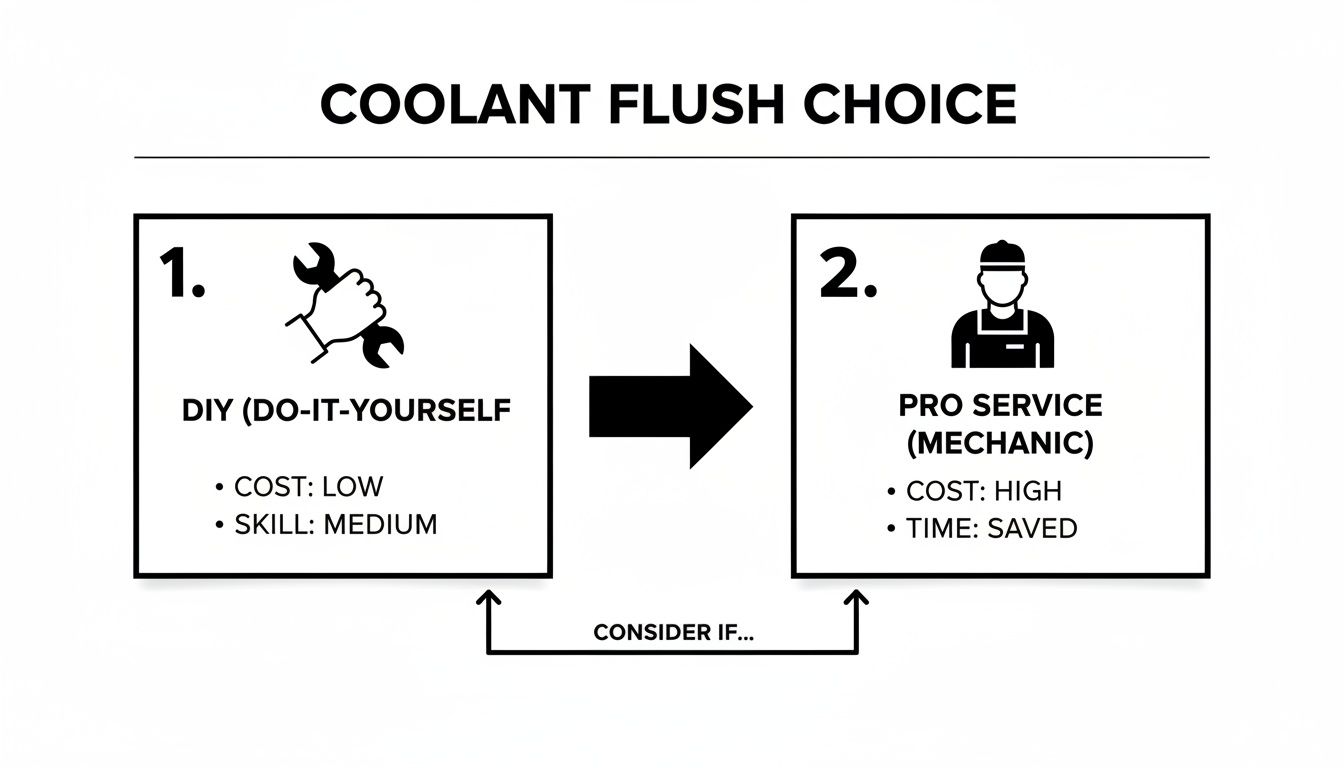
While you can save a few bucks doing it yourself, a professional service delivers a thoroughness and peace of mind that's tough to match at home. For drivers who want to be sure the job is done right, a professional touch is the way to go for all comprehensive fluid exchange services.
Common Questions About Coolant Flush Services
When it comes to keeping your car healthy, a coolant flush service often brings up a few questions. It’s a vital part of maintenance, but it’s definitely not talked about as much as a simple oil change. To clear things up, we've gathered the most common questions we hear from drivers every day and provided some straightforward answers.
Our goal is simple: give you the clear, no-nonsense information you need to make the right call for your vehicle.
How Often Should I Get a Coolant Flush?
This is the big one, and the answer isn't the same for every car on the road. A good rule of thumb is to schedule a professional coolant flush every 30,000 to 50,000 miles, which usually works out to every 3 to 5 years.
Your owner's manual is always the best place to check for your manufacturer's exact recommendation. Keep in mind, though, that real-world conditions matter. If you're stuck in stop-and-go traffic often or your car bakes in the Texas sun, your coolant is working overtime and might need to be serviced sooner.
How Much Does a Coolant Flush Cost?
The cost of a coolant flush can vary, but it’s one of the most affordable and high-value preventative services you can get. The final price tag depends on a few things specific to your vehicle.
A few factors that influence the cost include:
- Vehicle Size: A big truck or SUV has a larger cooling system, so it naturally needs more coolant.
- Coolant Type: Modern engines are picky. They require specific coolant formulas, and the cost of these specialized fluids can differ.
- Labor: Some vehicles are just a bit more complex to work on, which can slightly affect the time it takes to do the job right.
Think of a professional coolant flush as a small investment in your engine's future. It's far cheaper than replacing a radiator, water pump, or fixing a warped cylinder head caused by overheating.
Does the Type of Coolant Really Matter?
Yes, absolutely. This is one of the most critical parts of the service and a huge reason why letting a pro handle it is a smart move. Using the wrong coolant is like putting diesel in a gasoline engine—it’s going to cause some serious, expensive problems.
There are three main "families" of coolant, and they should never be mixed:
- Inorganic Additive Technology (IAT): This is the classic green stuff you see in older cars. It works well but needs to be changed more often.
- Organic Acid Technology (OAT): Usually orange or red, this is a long-life coolant found in many newer GM, VW, and other vehicles.
- Hybrid Organic Acid Technology (HOAT): A blend of the other two, this coolant comes in colors like yellow, gold, or pink and is designed for manufacturers like Ford and Chrysler.
Mixing these different types can trigger a chemical reaction that turns your coolant into a thick, gooey sludge. That gunk will clog up everything from your radiator to your heater core, leading to catastrophic system failure. An ASE-certified technician will always use the exact coolant specified for your car's year, make, and model, giving you total peace of mind.
Ready to give your engine the protection it deserves? The ASE-certified technicians at Express Lube & Car Care are here to provide a fast, thorough, and reliable coolant flush service. No appointment is needed—just stop by today and let us help you keep your vehicle running smoothly for years to come. Find out more at https://www.expressluberichlandhills.com.