

That strange groaning sound you hear when pulling into a parking spot? Or that new, heavy feeling in the steering wheel? Those aren't just random quirks—it's your car trying to tell you something is wrong.
The most common power steering fluid leak symptoms are a whining noise when you turn, a steering wheel that suddenly feels stiff or unresponsive, and finding reddish-brown fluid puddles under your car. Think of them as early warnings that could save you from a much bigger, more expensive repair down the road.
Is Your Car Trying to Tell You Something?
Your power steering system is the hydraulic muscle that makes turning the wheel feel effortless. The fluid is its lifeblood, creating the pressure needed for smooth, easy turns. When you have a leak, that hydraulic help disappears, and you’re left wrestling with the wheel.
Ignoring these signs is a bit like ignoring a leaky roof. A small drip can quickly become a major problem. A minor fluid leak can starve the power steering pump for lubrication, causing it to overheat and fail. Suddenly, a simple hose replacement has turned into a costly pump replacement.
Learning to decode these messages from your vehicle is the first step toward smart, proactive maintenance.
Quick Guide to Power Steering Leak Symptoms
To make it easier, here's a quick reference guide. If you notice any of these signs, it's time to pay closer attention to your power steering system.
| Symptom | What It Looks, Sounds, or Feels Like | Urgency Level |
|---|---|---|
| Puddles Under the Car | A reddish-brown, oily spot on your driveway. | High – Active leak needs immediate attention. |
| Whining or Groaning | A high-pitched whine or low groan, especially when turning the wheel. | Medium – Pump is struggling due to low fluid. |
| Heavy or Stiff Steering | Turning the wheel feels like a workout. | High – Significant loss of hydraulic assist, a safety concern. |
This table helps you connect what you're seeing, hearing, or feeling to a potential power steering issue and understand how quickly you should act.
This handy flowchart can also help you trace the problem back to its likely source.
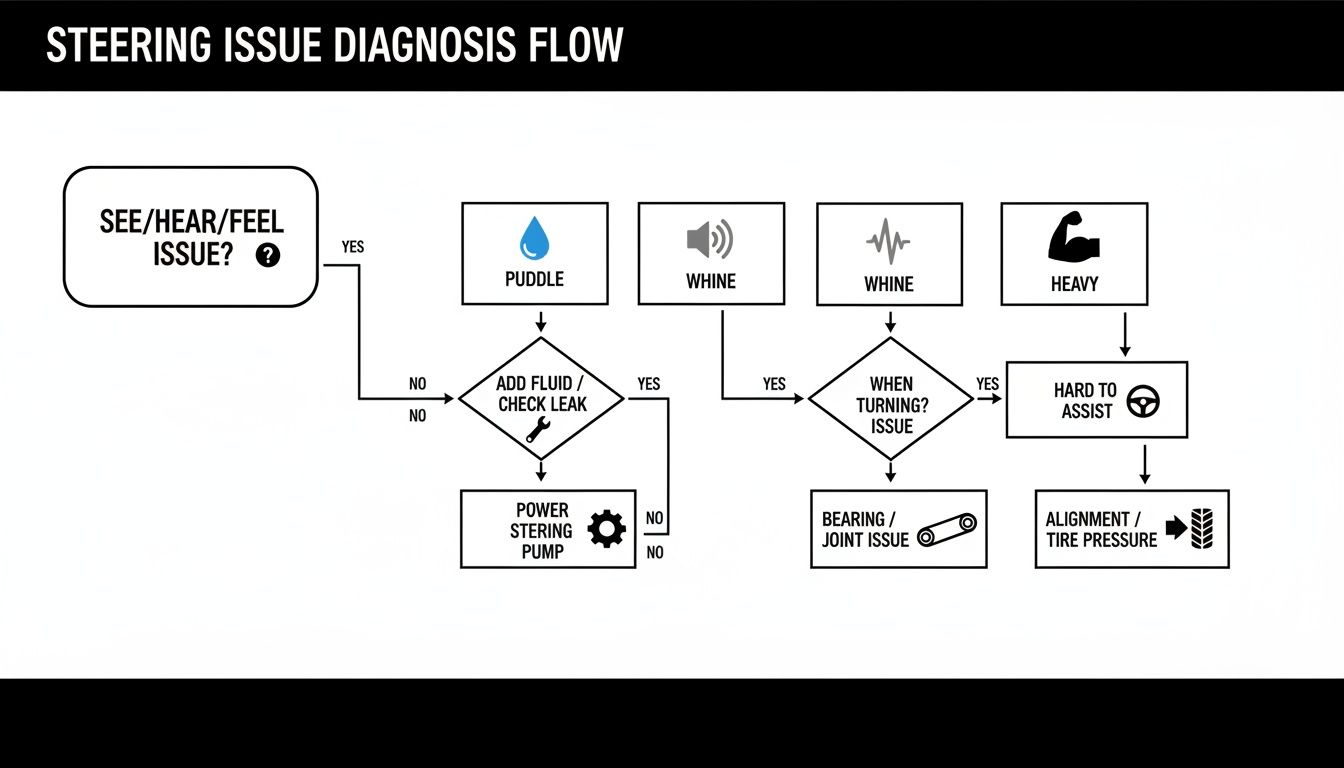
As you can see, whether you spot a puddle, hear a strange noise, or feel a change in the steering, a fluid leak is a very common culprit. If you want to get a better handle on what different car sounds and sensations mean, you can learn more about how to diagnose car problems in our more detailed guide.
The Most Obvious Power Steering Leak Symptoms
Some power steering problems aren't subtle at all. They're the big, flashing warning signs your car sends up when something's wrong, and ignoring them is a recipe for a much bigger repair bill down the road.
If your car is trying to tell you its power steering system is in trouble, these are the two main ways it'll get your attention.
Heavy or Stiff Steering
Suddenly feel like you're wrestling a bear just to turn into a parking spot? That's a classic sign your power steering fluid is low. The system relies on hydraulic pressure to make turning the wheel easy, and when there's a leak, that assistance disappears.
What you're left with is pure muscle power, similar to trying to turn the wheel when the car is off. This stiffness is especially noticeable during low-speed maneuvers, like navigating the parking lot at Northeast Mall or trying to parallel park. That extra effort you're feeling is the system struggling without enough fluid, which can quickly damage the pump. In fact, industry data shows that 15-20% of all fluid-related issues on cars over five years old are tied to power steering leaks. For a deeper dive, check out these expert mechanic insights on steering system failures.
Visible Fluid Puddles Under Your Car
The other can't-miss symptom is a puddle on your driveway or garage floor. Before you panic, you need to play detective and figure out what kind of fluid it is.
Power steering fluid has a few telltale signs that help identify it:
- Color: It’s usually a reddish-brown or pink color when new. If it's old and contaminated, it can look dark brown or black.
- Consistency: The fluid feels thin and oily to the touch.
- Smell: Some people say it smells slightly sweet, almost like burnt marshmallows, especially if the leak is causing the system to overheat.
A reddish, oily puddle near the front of your car is the smoking gun for a power steering leak. Think of it as a warning siren—the longer you ignore it, the worse (and more expensive) the problem gets.
If you're not sure, try this simple trick: slide a clean piece of cardboard under the front of your car and leave it overnight. In the morning, check for drips. That reddish stain is your confirmation of a power steering leak, setting it apart from a dark brown oil leak or a bright green/orange coolant leak. Once you see it, it's time for an inspection.
Decoding the Sounds of a Steering Problem
Long before you spot a puddle under your car or have to wrestle with the steering wheel, your ears are often the first to know something’s wrong. Those strange new noises aren’t just random quirks; they’re specific alerts coming directly from your power steering system.
The most common sign is a high-pitched whining or groaning sound that gets much louder whenever you turn the wheel. This isn't just a minor annoyance—it's the sound of your power steering pump crying for help.
The Sound of a Starving Pump
Think of the power steering pump as the heart of the system, responsible for circulating fluid that makes steering feel effortless. When a leak drops the fluid level too low, the pump starts pulling in air instead of fluid. That process is called cavitation, and it’s what creates that signature whining protest.
Those air bubbles collapse under pressure inside the pump, creating a noise that’s a direct signal of poor lubrication. The sound often changes pitch or gets louder when you turn because that’s when you’re putting the system under the most demand.
This is an incredibly common symptom. In fact, reports suggest that 70% of drivers hear a whining or groaning noise before their power steering fails completely. It often gets worse at low speeds, like when you're navigating a parking lot in Richland Hills, and usually kicks in once fluid levels drop below 25% of what’s needed. With power steering issues being one of the top five fluid leaks in the U.S., it's a sound no driver should ever ignore. You can find more detailed explanations of these automotive system failures at Springs Auto.
Translating the Noises into Action
Knowing what these sounds mean is the key to stopping a small leak from turning into a massive, expensive repair. The pump wasn't designed to run on air. Doing so creates a ton of friction and heat, which will quickly destroy its internal parts.
When you hear a persistent whine from your steering system, you are hearing the sound of damage happening in real-time. Fixing the leak promptly doesn't just quiet the noise—it saves the pump from a premature and costly death.
Here are the key auditory clues to listen for:
- A consistent whine: You might hear it even when driving straight, but it gets much more intense during turns.
- A groaning noise: This is a lower-pitched groan that can be more obvious in cold weather when the fluid is thicker.
- A squeal on startup: This can be confused with a worn belt, but if the noise changes when you turn the wheel, the power steering pump is the likely culprit.
By catching these power steering fluid leak symptoms early, you turn a confusing noise into a clear warning sign. It gives you the chance to fix a simple leak before it takes a critical and expensive component down with it.
Why Your Power Steering System Is Leaking

So, you’ve noticed the tell-tale signs of a power steering fluid leak. What’s actually going on under the hood? A leak rarely happens out of nowhere. It’s almost always the result of parts slowly giving up after years of enduring constant pressure, heat, and vibration.
Think of your power steering system like the plumbing in your house. The fluid is the water, the pump is the main pressure valve, and all the hoses and seals are the pipes. A leak is simply a crack or a bad connection somewhere along the line.
The Role of Aging Hoses and Seals
More often than not, the prime suspects behind a power steering leak are the system's rubber components. We’re talking about the high-pressure hoses, low-pressure return lines, and all the little O-rings and seals that keep the fluid contained.
It helps to picture an old rubber band you find in a junk drawer. It's become hard, brittle, and snaps the second you try to stretch it. Your power steering hoses face a similar fate, but instead of just sitting there, they’re battling intense heat from the engine and the constant force of pressurized fluid.
This one-two punch of heat and pressure robs the rubber of its flexibility. Over time, tiny cracks start to form, giving that pressurized fluid an escape route. What starts as a barely noticeable drip can quickly become a much bigger problem as the crack grows.
The vast majority of power steering leaks start small with simple, age-related failure. A worn-out seal or a brittle hose is usually the root cause, which is why routine inspections are your best defense.
Catching this wear and tear early during a regular maintenance check can save you from a much bigger headache and protect the more expensive parts of your steering system from damage.
Common Failure Points in the System
While a leak can technically spring from anywhere, our technicians almost always find them originating from a few usual suspects. Knowing where to look helps us track down the source of the trouble fast.
Here’s a quick rundown of the most frequent leak sources:
- Worn Power Steering Hoses: These are the flexible lines running between the pump, reservoir, and steering rack. Between the constant engine vibration and high heat, they’re the #1 failure point.
- Failed Pump Seals: The power steering pump itself is sealed up to hold pressure. As these internal seals degrade, fluid can start weeping directly from the pump body.
- Steering Rack or Gearbox Seals: The steering rack (found in most cars) or gearbox (common in trucks and SUVs) has its own set of seals. When these go, it’s usually a more involved repair.
- Cracked Fluid Reservoir: It’s less common, but the plastic reservoir holding the fluid can become brittle with age and develop small cracks.
Each one of these parts is essential. When a single component fails, it compromises the whole system and leads to the symptoms you see, hear, and feel from the driver's seat. The key is to see the leak for what it is—a maintenance issue, not a catastrophic failure—so you can get it fixed before it becomes a bigger, more expensive problem.
How to Perform a Five-Minute Steering Fluid Check
You don't need a garage full of tools or a mechanic's license to get a jump on steering problems. A quick, five-minute check in your own driveway can tell you almost everything you need to know about the health of your power steering system. It's the best way to spot a leak before it gets serious.
Making this simple inspection a regular habit will not only build your confidence but could also save you from a major repair bill down the road. It’s all about knowing what you’re looking at.
Locating and Reading the Reservoir
First things first: pop the hood and find the power steering fluid reservoir. It’s usually a small, cylinder-shaped container tucked near the belts on one side of the engine. The cap should have a little steering wheel icon or simply say "Power Steering Fluid." If you're having trouble, your owner's manual will point you right to it.
Once you’ve found it, you’ll see one of two designs for checking the level:
- A Translucent Reservoir: Most newer cars have a see-through plastic tank. You'll see lines marked ‘HOT’ and ‘COLD’ or ‘MIN’ and ‘MAX’ right on the side. This makes it super easy—just peek at the side to see where the fluid level is.
- A Dipstick: On older vehicles, you’ll often find a dipstick built into the reservoir cap. To get a good reading, unscrew the cap, wipe the dipstick clean with a cloth, screw it all the way back in, and pull it out again.
Pro tip: Always check the fluid when the engine is cool. This gives you an accurate reading against the 'COLD' line and prevents you from overfilling the system, which can create too much pressure and cause its own set of headaches.
Assessing Fluid Color and Condition
The fluid level is only part of the story. The color and smell are huge clues that can help you spot power steering fluid leak symptoms before they become a real problem.
Healthy power steering fluid should be a clear, reddish-pink color. Think clean and transparent.
But as the fluid gets old or the system starts overheating from a leak, it’ll look completely different. Here’s what to watch out for:
- Dark Brown or Black Fluid: This is a dead giveaway that your fluid is old, burnt, and full of gunk. It’s not lubricating anything properly anymore.
- Murky or Foamy Appearance: Bubbles or foam mean one thing: air is getting into the system. This is a classic sign of a leak somewhere.
- Burnt Smell: If the fluid has a sharp, burnt odor, it's been overheating. That usually happens when the pump is starving for fluid and working way too hard.
If your fluid is low, dark, or looks like a foamy mess, that's your car telling you it's time to see a professional. Staying on top of all your vehicle's fluids is a crucial part of smart maintenance. You can learn more in our guide on when to change your car's essential fluids. Catching these things early keeps your car safe and saves you money.
What to Expect from a Professional Repair
Bringing your car into the shop for a power steering leak can feel a little intimidating, but knowing what to expect makes the whole process easier. When you get here, the first thing a technician will do is a thorough diagnostic inspection. Just refilling the fluid is a band-aid fix—we need to find the real source of the problem.
Our tech will start with a visual check. Think of it like a detective following clues. They'll put the system under pressure and inspect all the key components: the pump, the high-pressure and return lines, the steering rack, and the reservoir, looking for any wet spots, active drips, or old, brittle hoses.
Common Repair Solutions
Once we've pinpointed the leak, we can get to the fix. The right solution depends entirely on which part has failed, but the good news is that not all power steering fluid leak symptoms end with a huge repair bill.
Here are the most common repairs we see:
- Hose Replacement: This is easily the most frequent fix. Over time, rubber hoses get hard, brittle, and crack. Swapping them out is a straightforward and pretty affordable job.
- Seal and Gasket Replacement: The small seals inside the pump or at different connection points can wear out and start weeping fluid. Replacing these stops the leak and gets the system sealed up tight again.
- Steering Rack or Pump Replacement: This is a more serious repair, usually needed when a leak has been ignored for too long and has damaged the main components. A full replacement is more involved and costs more, but it’s essential for safe steering.
Understanding the repair process empowers you as a vehicle owner. It transforms a stressful situation into a manageable one, allowing you to ask informed questions and make confident decisions about your car's health.
Knowing what’s involved helps you prepare for the potential costs and see the value in the work being done. In most cases, catching a leak early means a simpler, cheaper fix.
To give you a clearer picture, here’s a breakdown of what you might expect to pay for common power steering repairs.
Estimated Repair Costs for Power Steering Leaks
| Repair Action | Typical Cost Range | What's Involved |
|---|---|---|
| Hose Replacement | $150 – $400 | Includes the cost of the new hose, labor to drain the old fluid, replace the part, and refill/bleed the system. |
| Seal/Gasket Replacement | $200 – $500 | Labor-intensive, as it often requires removing the pump or other components to access and replace the failed seals. |
| Power Steering Pump Replacement | $400 – $800+ | Covers the cost of a new or remanufactured pump, plus labor to install it, flush the system, and add fresh fluid. |
| Steering Rack Replacement | $800 – $1,500+ | The most expensive repair, involving a new steering rack, significant labor, a full system flush, and a wheel alignment afterward. |
Keep in mind these are just estimates—the final cost depends on your vehicle's make and model. But having a general idea helps you budget and avoid surprises.
After any repair, the technician will refill the system with fresh fluid, bleed out any trapped air, and test-drive the car to make sure the steering is smooth and responsive again. Keeping your vehicle's fluids in good shape is one of the best ways to ensure it lasts, and you can learn more about the benefits of a professional fluid flush service right here on our blog.
A Few Common Questions About Power Steering Leaks
Even when you know the symptoms, a few questions always pop up. Here are some straightforward answers to what drivers most often ask about power steering leaks.
Can I Keep Driving with a Power Steering Leak?
Technically, you can, but you absolutely shouldn't. It’s highly unsafe.
When the fluid gets too low, your steering wheel becomes incredibly hard to turn, especially when you're moving slowly or parking. That sudden loss of control is a serious accident risk. Plus, you’re starving the power steering pump for lubrication, causing it to overheat and burn out fast. A simple hose fix can quickly turn into a much pricier pump replacement.
Don't gamble with a power steering leak. It's not just a mechanical issue; it's a major safety hazard that can make your car dangerously unpredictable.
What Color is Power Steering Fluid?
Fresh power steering fluid is usually a clear red or pink, though some types are clear. But it doesn't stay that way.
Over time, it picks up tiny bits of gunk from inside the system and darkens to a brown or even black color. If you see a thin, oily puddle under the front of your car that looks reddish-brown, a power steering leak is the number one suspect.
How Often Should I Check My Power Steering Fluid?
A good habit is to check the fluid every time you get an oil change, or at least twice a year.
If you have an older car or you're already hearing that faint whining sound when you turn, checking it once a month is a smart move. Catching a leak early is the best way to prevent a bigger, more expensive headache down the road.
If any of this sounds familiar, don't wait for the problem to get worse. The ASE-certified technicians at Express Lube & Car Care can find the leak fast and get you back on the road safely. Stop by for an honest inspection—no appointment needed. Find out more at https://www.expressluberichlandhills.com.